The inflation that fuels shrinkflation
The generalised rise in prices and fall in the purchasing power of the general population is complicating the accounts of many households and businesses. This economic downturn has led some companies to use unseemly business practices to camouflage the rising prices of their products. In this episode of Territori 17 we talk about this and much more with Xavi Viñolas, Content Manager of 11Onze, and Gemma Vallet, Director of 11Onze District.
Shrinkflation is the name given to the technique used by some brands to subtly raise the price of their products without you noticing. This practice consists of charging the same price for a given product, despite the fact that the usual amount of product contained in the packaging has been slightly reduced.
As Viñolas explains, “this is not a new practice, it is something that has already been done in the past, but it is more evident now that manufacturers want to reduce costs, and that consumers are looking more closely at prices“. Faced with the avalanche of complaints received from consumers, the OCU was forced to report six companies to the National Commission for Markets and Competition (CNMC) for unfair and non-transparent practices.

La Plaça | Territori 17: Shrinkflation
Legal but misleading practice
Although this is not an illegal practice, since the information on product labelling complies with current legislation, it is, at the very least, questionable and unethical when it aims to mask a price increase by subtly reducing the quantity of the product to mislead consumers. This has led to a debate on whether this practice should be regulated or banned.
Vallet argues that perhaps it should be banned, “because in the end you give messages that mislead the consumer, and advertising law makes this very clear. Despite the fact that by applying the technique of shrinkflation, companies make more profit, perhaps the time has come to modify a law that, in principle, is designed to protect consumers.
11Onze is the community fintech of Catalonia. Open an account by downloading the super app El Canut for Android or iOS and join the revolution!



No ho podem negar: les rebaixes són un estrès. Però alhora ens en podem beneficiar. Ara que s’acosta el Black Friday, des d’11Onze t’expliquem per què aquests descomptes tenen més virtuts que defectes.
El Black Friday està en auge, com tantes altres dates que s’han anat fent un forat en el calendari comercial. Quan és el Black Friday? Tot i que comença el 25 de novembre, ara ja no es limita només a un dia: s’allarga tota la setmana i finalitza el 28 de novembre amb el Cyber Monday. Els beneficis econòmics per a les botigues són més que evidents: el 2018 cada persona va gastar una mitjana de 250 euros i el 2019 la venda en línia va facturar prop d’1,5 bilions d’euros.
Durant aquestes rebaixes prenadalenques, les marques aprofiten els descomptes per fidelitzar els clients, per atraure compradors nous i per alliberar estoc de productes. El Black Friday pot ser una bona oportunitat per començar a fer servir la targeta d’11Onze. Això sí, amb moderació i responsabilitat, i sense caure en l’anomenada oniomania o compra compulsiva.
- L’e-commerce evita les cues als comerços. El fet que el Black Friday fomenti amb força les compres virtuals, permet al consumidor evitar les cues a les botigues, triar el producte que més li convé amb paciència i comparar sense presses entre les diverses ofertes, però també entre diferents botigues. Les compres virtuals són cada vegada més habituals i, ara, amb les targetes virtuals el client pot tenir la seguretat que tota la transacció està ben protegida.
- Pots avançar les compres de Nadal. Una de les coses per les quals el Black Friday s’ha convertit en una data imprescindible pels consumidors és que permet comprar per avançat tots els regals de Nadal. I a més, amb descomptes. Així mateix, enguany, la crisi energètica i de transports que s’ha anat coent aquest octubre pot dificultar que les compres virtuals arribin a temps i, per això, a 11Onze recomanem que es faci servir el Black Friday com a eina de previsió.
- Els descomptes estalvien diners. A més, el Black Friday pot ser una bona manera d’estalviar en productes que veritablement necessitem. Durant aquests dies, hi ha rebaixes de fins al 70% en productes seleccionats, hi ha ofertes amb paquets especials, compres de 2×1, ofertes que s’activen per un dia i amb compte enrere i, fins i tot, cupons. A més, moltes marques opten per les devolucions gratuïtes.
11Onze és la fintech comunitària de Catalunya. Obre un compte descarregant la super app El Canut per Android o iOS. Uneix-te a la revolució!



The Bank of England has been forced to urgently intervene in the debt market to stem the sterling’s slide and calm investors. Even so, the collapse of the national currency has sent demand for gold soaring, leaving some dealers without stocks of coins and bullion.
The economic chaos in which the UK finds itself has been reflected in a gradual deterioration of the national currency and the stability of the country’s sovereign debt. Liz Truss, the new British prime minister who took over from Boris Johnson, announced a fiscal stimulus package to revive the economy.
It is a government plan that is expected to cost around 160 billion euros over the next five years, and which presents a series of tax cuts to generate more disposable income with the aim of reactivating consumption and economic activity. Although this economic programme could help to avoid a recession, it could generate more inflationary pressure on an economy that is suffering from runaway inflation of 10% and in danger of stagflation, i.e. high inflation, low productivity and high unemployment.
This was the view of the International Monetary Fund (IMF), which sharply criticised the tax cuts proposed by Liz Truss’s administration, arguing that the government’s plan could increase inequality and raise prices, counteracting the Bank of England’s monetary policy to curb inflation.
Punishing the pound and government bonds
The lack of specifics on how this tax cut would be financed, as well as the contradiction in fiscal and monetary policy, in which the government and the central bank seem to be going in opposite directions, has created uncertainty among investors that has caused the pound sterling to fall and the risk premium to rise.
A context of economic uncertainty that we are also seeing in other countries, where sovereign and currency assets are losing value in favour of safe-haven assets such as gold or more stable currencies such as the dollar. This scenario is especially complicated in countries such as the UK, with a trade balance deficit, which imports much more than it exports and, therefore, a currency devaluation increases inflationary pressure.
The Bank of England’s announcement that it will buy British public debt, Treasury bonds, up to a value of 72.5 billion euros, has temporarily calmed the markets and slowed the fall of the pound in the panic generated by the measures announced by the government. Even so, it is a measure to deal with the more immediate crisis that will last until 14 October. Still, it does not guarantee the financial stability of the United Kingdom, even with the last-minute reversal announced by the Truss government.
The exponential increase in physical gold buying
The tsunami of bad news in the UK bond and currency markets has increased the attractiveness of safe-haven assets such as precious metals. Gold dealers have seen demand double to the point of depleting stocks of coins and bullion. The British public has followed the same pattern we saw in Russia, as the rouble plunged and purchases of physical gold soared.
While currencies such as sterling and the euro continue to lose value against the dollar, gold’s performance in 2022 confirms not only its inflation protection, but also establishes it as the perfect antidote to falling currency values.
Despite the occasional downward trend experienced by the value of gold for a few months, spurred on by the rise in interest rates, in the first ten months of the year, its value has risen by 6.44%. In other words, a purchase of €10,000 in gold in January 2022 would now be worth €10,644, while the same €10,000 in the bank would have lost €900 to inflation.
The growing global economic uncertainty and the inability of governments and central banks to cope with a major crisis that seems inevitable, suggests that Russia and the UK will not be the last countries where a large part of the population does not trust politicians’ promises and empowers itself to secure its savings with a tangible value.
If you want to discover the best option to protect your savings, enter Preciosos 11Onze. We will help you buy at the best price the safe-haven asset par excellence: physical gold.

By now, we are all aware that inflation is known as a generalised rise in prices that makes our savings lose value. Albert Chic, an agent at 11Onze, analyses the current economic situation and details possible solutions for dealing with runaway inflation.
“In the second half of 2021, inflation at home exceeded 5%. A figure unprecedented in the last 30 years,” says Albert Chic. This rise in prices, together with the loss of the real value of the currency, leads to a huge reduction in the monetary wealth of the population, who see their savings vanish without even leaving the bank.
The disruption to the supply chain and the increase in the price of raw materials caused by the health crisis explain part of the rise in prices, but as Chic explains, “also another phenomenon such as Greenflation”, a rise in prices caused by the increase in demand for minerals essential for renewable energies, “such as electric cars, wind turbines or solar panels”.

Inflation, the woodworm of savings
Inflation could fall in the second half of 2022
As the 11Onze agent explains, “although the impact of the Spanish government’s palliative measures remains to be seen, forecasts indicate that inflation will remain high during the first half of 2022“, followed by a few months of “a downward phase”.
If these measures prove insufficient to reduce the inflation rate, the European Central Bank (ECB), “will be forced to apply a more drastic policy, accelerating the withdrawal of economic stimulus, raising interest rates, and reducing debt account programmes,” Chic notes.
If you want to know more about superior options to make your money profitable, go to Guaranteed Funds. From 11Onze Recomana we propose you the best options in the market.
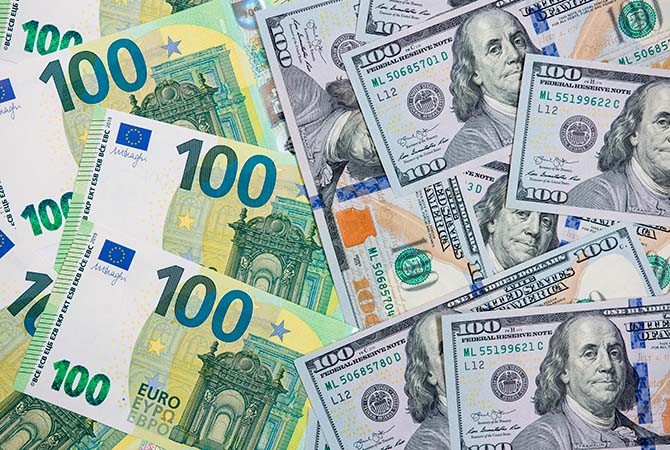
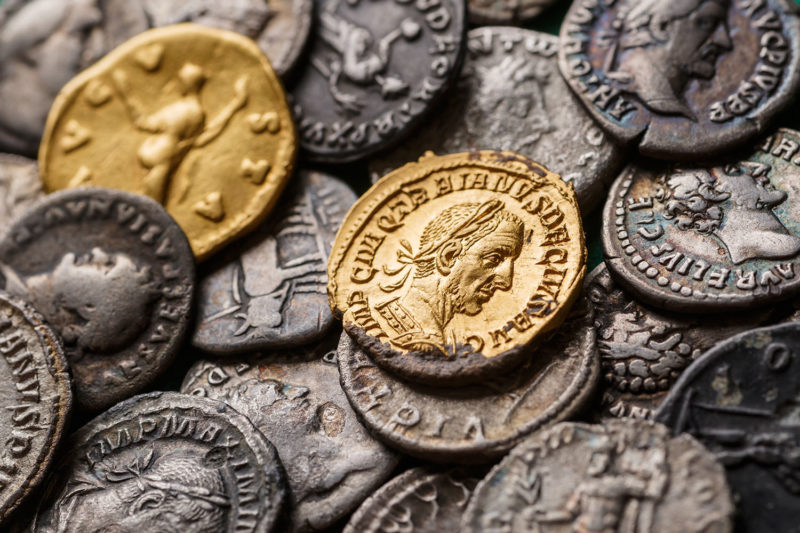
Despite central banks’ manoeuvres to prevent gold prices from soaring, recent history shows that their ability to contain prices is limited in time. In a crisis context, gold is a highly appreciated asset for investors. That is why its value more than quadrupled between mid-2005 and mid-2011.
It is well known that soaring gold prices are not in the interest of central banks. It is just another competitor on the financial markets as a safe-haven asset against their currencies in times of crisis. Moreover, a sharp rise in the price of this precious metal could destabilise the traditional financial system, which speculates on the futures market with paper gold. This is why central banks have, on more than one occasion, manoeuvred to control the evolution of its price.
One example is what happened between the end of the 1990s and the end of the first decade of this century, when central banks sold a significant part of their reserves to limit price rises. A study published in ‘International Business Research’ indicates that between 1998 and 2008, central banks’ gold reserves fell from more than 30,000 tonnes to around 26,500 tonnes.
A first-hand witness
As reported in the book ‘The big reset: gold wars and the financial endgame’, in a private conversation in September 1999, the Governor of the Bank of England, Eddie George, acknowledged the manoeuvres to control the price of the precious metal because they were facing “the abyss, if the gold price rose further”, so “at any cost, central banks had to quell the gold price”. And he acknowledged that “the US Fed was very active in keeping the gold price down, so was the UK”.
Even so, central banks’ manoeuvres could only moderate the rise of gold prices for a limited time. From mid-2005 onwards, the price rise became more acute. In six years, its value more than quadrupled from just over 400 dollars an ounce to over 1,800 dollars in August 2011.
In that time, central banks had given up their sell strategy and were again accumulating gold reserves. Added to this, the 2007 crisis encouraged many investors to buy gold to safeguard their savings.
Can history repeat itself?
Some analysts see parallels between then and now. In the first half of 2022, the price of gold has risen by 8%, while the stock market has fallen by 14% and bonds by 10%, according to Bloomberg.
This appreciation of gold has occurred despite the fact that some central banks are injecting part of their gold reserves into the market to contain the price. For example, the Bank of England has sold more than 4% of its reserves in just six months, between December 2021 and June 2022.
However, as already demonstrated in the first decade of this century, the selling strategy is not sustainable for long. It is possible that rising interest rates on sovereign debt will partly contain the rise in gold prices, as some investors may turn to these assets because of their higher yields. But in the medium to long term, the price of gold is likely to soar again, especially if the crisis deepens.
The attractiveness of physical gold
In fact, the strategy of dedicating 10-20% of the portfolio to the gold market is becoming more and more widespread among large investors. A priori, it is a good formula to diversify assets and protect against inflation, with high revaluation expectations in the coming months.
As the newspaper ‘Business Standard’ points out, the forecast made in January by Goldman Sachs for this year contemplates a 25% increase in the price of gold. Moreover, more and more experts are predicting a bullish mega-cycle for commodities in general.
In any case, Jordi Sánchez, product owner at 11Onze, stresses the importance of acquiring physical gold “because of the risk of manipulation that exists with paper gold”. The fact that the derivatives market allows sales that are not backed by physical gold can lead to “high-risk situations”.
If you want to discover the best option to protect your savings, enter Preciosos 11Onze. We will help you buy at the best price the safe-haven asset par excellence: physical gold.


We use water in practically every stage of our lives, from daily domestic use to supplying industries, agriculture, or the tourist sector. Water is a precious commodity without which life is inconceivable, but do we consume it consciously?
On average, a person can consume up to 130 litres of water a day, according to data from the Agència Catalana de l’Aigua (ACA). If we stop to think about how often we turn on the tap, run the washing machine or clean the house, we will quickly realise that our consumption is probably much higher than we thought.
Studies by the ACA have found that a person can consume between 2 and 18 litres just to wash his hands or clean his teeth. Filling a bathtub can consume up to 200 litres, while taking a shower can use between 30 and 80 litres. Even flushing the toilet can waste between 6 and 10 litres per flush.
Here are some daily actions we can take to achieve a double benefit: reducing the bill and avoiding wasting water.
How to reduce domestic water use:
- Turn off the tap. When brushing your teeth, shaving, or soaping up the dishes. This is the number one water-saving rule.
- Limit the water we use. For example, when cleaning our teeth, we can choose to fill a glass of water with the amount we will use for rinsing. When shaving, you can leave a few centimetres of water in the sink to clean the razor.
- Check for water leaks. A quick way to check this is to check the meter before going to bed and check it again in the morning. If the meter moves, you may have a leak.
- Do not throw things in the toilet. As well as clogging the pipes, the more often we flush, the more water we waste.
- Take showers for a limited period of time. Substituting a bath for a shower can help, as long as the shower is just for the right length of time. For children, it may be more useful to half fill a bathtub.
Household appliances, silent consumption
- Do full loads. Running the dishwasher or washing machine can consume up to 90 litres. In the long run, it also pays to invest in eco-labelled appliances that reduce both water and electricity consumption.
- Reduce toilet flushing. Especially for single-flush toilets, where the load can be reduced by half.
- Do not rinse dishes before putting them in the dishwasher. All dishwashers are now programmed to do this.
Limit water use in outdoor spaces and gardens
- Avoid using hoses. Watering is best done at dusk, and avoid light-surface watering, which will evaporate in a short time and can be wasteful. If we have to wash the car, we prioritise using a soapy sponge, and limit water only for the final rinse.
- Do not water excessively. Water plants only when they need it, as overwatering can lead to a loss of nutrients.
- Adapt the outdoor watering system. Depending on the size of the garden and the water needed to maintain it, consult the resources available to reduce water consumption, such as collecting and using rainwater.
- Choose plants adapted to the area where you live. If it is a dry area, give priority to plants that are more drought-tolerant, such as: portulaca, bougainvillea, lithops or moss rose, lantana, verbena, or some type of shrub such as oleander.
Instilling water values in children
When there are children in the house, water consumption can increase considerably, so it is worth paying attention. Teaching them to value water and use it efficiently will give them a vital advantage and, at the same time, reduce their water bills. Not forgetting that the best learning experience is the example we can set for them.
If you want to discover how to drink the best water, save money and help the planet, go to 11Onze Essentials.



In February, the Canadian government temporarily blocked the savings accounts of more than 200 supporters of the truckers’ protests in Canada. It did so under a law designed for extremely serious situations. In this context, the lack of clarity in the draft bill for the reform of the Spanish National Security Law fuels fears of legal uncertainty over our savings accounts.
In an unprecedented decision, Canadian Prime Minister Justin Trudeau announced on 15 February the possibility of freezing bank accounts without judicial supervision. The aim was to put an end to the mobilisations against the measure that obliges truck drivers not vaccinated against Covid-19 to maintain quarantine upon entering the country. These protests had intensified since a convoy of trucks arrived in Ottawa three weeks earlier.
To implement this measure, the Canadian government appealed for the first time in history to the Emergency Act, passed in 1985. This law was intended for urgent and critical situations of a temporary nature that “seriously endanger the life, health or safety of Canadians” or seriously threaten “the ability of the Government of Canada to preserve sovereignty, security, and territorial integrity”.
Paradoxically, Justin Trudeau had previously shown his public support for Indian farmers who, for months, held roadblocks on highways leading to New Delhi.
The order to block bank accounts without judicial oversight was in place for a week. The police claimed to have applied it to more than 200 accounts of people who had participated in or donated to the protesters. According to local media, those affected ranged from a single mother on minimum wage who had donated 50 Canadian dollars to an account holder with 3.8 million.
Controversial reform
On the same day that the Canadian prime minister announced his intention to block bank accounts, the Spanish government sent the draft bill to Congress to reform the National Security Act. In a global context of increasing restrictions on fundamental freedoms, the modification of this law has aroused many misgivings in legal, economic, and associative circles due to its scope, lack of limits on its application, and legal formula.
In the new wording, the economic and financial sphere is considered to be one of special interest for national security, so financial assets could be affected by various sections of the new text.
On the one hand, the draft bill details that “the competent authorities, following the directives of the National Security Council or the functional authority, may proceed to the temporary seizure of all types of assets”, and to the “suspension of activities”.
In another point, the draft bill establishes that “the government may agree to the suspension of the liberalisation regime” in the case of acts, businesses, transactions, or operations that “affect or may affect activities related, even if only occasionally, to the exercise of public power, or activities directly related to defence or national security, or activities that affect or may affect public order, public safety, and public health”.
Criticism from several quarters
The broad power granted to the public authorities to deal with very ill-defined crisis situations has raised concerns about a possible authoritarian interpretation of this new legal framework. Even the Council of State issued an opinion critical of the draft bill because, among other things, it does not consider the “exclusion of the right to compensation in compulsory personal provisions” to be justified.
It cannot be overlooked that the Constitution protects private property and establishes that “no one may be deprived of their property and rights except for justified reasons of public utility or social interest, by means of the corresponding compensation and in accordance with the provisions of the law”. On the other hand, the Magna Carta already contemplates the states of Alarm, Exception, and Siege to deal with emergency situations that require limitations on fundamental individual liberties.
From various quarters, it is questioned whether these new restrictions on fundamental freedoms can be articulated through an ordinary law instead of an organic law, as required by Articles 53 and 81 of the Constitution.
In short, if the reform of the National Security Law were to pass through the parliamentary approval process without substantial modifications, legal uncertainty could affect accounts based in Spain.
11Onze is the fintech community of Catalonia. Open an account by downloading the super app El Canut on Android and Apple and join the revolution!
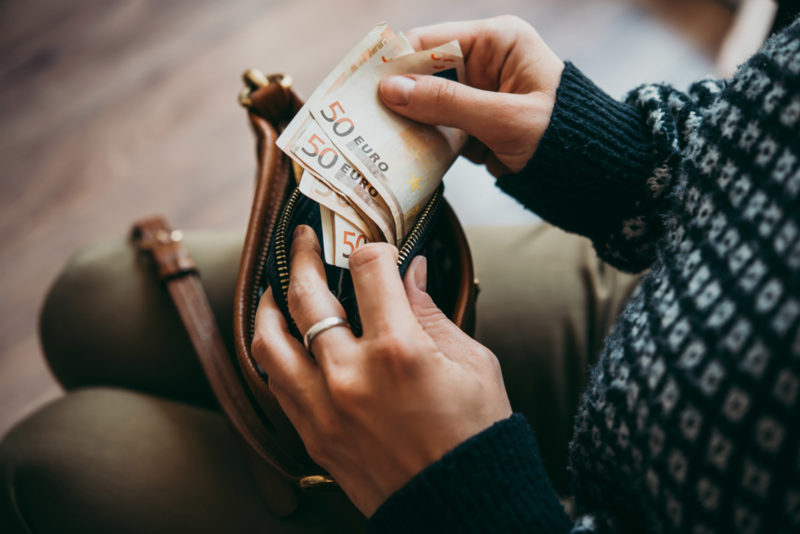
Savings figures have set a record in 2021 due to the pandemic and restrictions. In total, the Bank of Spain calculates that families have saved 943.7 billion euros in deposits, 4.8% more than the previous year. Even so, they are unable to take advantage of it. Inflation and the zero profitability offered by traditional banks could truncate the milestone achieved with so much effort. We talked about this with 11Onze’s executive assistant, Núria Rambla.
Experts warn that, nowadays, filling the savings bag in Spain does not give any return. And there are two main reasons for this. The first is that most families save their income “in traditional products, in the same current account or in cash,” Rambla argues. Therefore, not only are they not making any profit, but they are also losing money! The explanation is simple: in an inflationary context such as the one we are living in, with skyrocketing living costs, inflation is eating away at this hard-saved income.
The second, and more important, reason is that even if households are saving their money in a deposit account, financial institutions are not offering sufficient returns. “The financial sector has cut the interest rates on these deposits by a huge amount, leaving them almost all at 0%, even in long-term products,” Rambla explains. In fact, according to the Bank of Spain itself, this profitability has fallen by 98% in the last ten years.
In other words, for a person to save the same amount as ten years ago, he or she needs to invest 100 times more. Thus, if a decade ago the banks paid an average of 500 euros for every 10,000 euros invested in a deposit per year, today we only get five. The reason, says Nuria Rambla, lies in the interest rates set by the European Central Bank (ECB), which encourage borrowing, not saving.
“The ECB charges interest to traditional banks for holding excess money, it charges them negative interest, in other words, they even have to pay the ECB to hold these deposits for them. That’s why traditional banks can’t offer good returns to individuals. And for corporations or larger companies, if you have a higher balance for more than a certain number of days, they start charging you,” Rambla explains.
“The financial sector has cut interest rates on deposits a lot, leaving them almost all at 0%, even in long-term products.”
Purchasing power plunges in a decade
Just a decade ago, the average yield offered by deposits was 2.74%. In 2008 it even exceeded 5%. By contrast, in September this year, the average was 0.05%. A real blow to savers. And that is if customers are able to find a financial product that offers them a return, because recently some traditional banks in Spain have already started to market deposits with a zero return. “There are very few that offer almost 1%, but they are an exception,” Rambla argues.
So what is the solution? “To maintain purchasing power, you don’t have to leave your money idle. You have to invest,” the executive assistant at 11Onze argues. That is why, in Spain, many savers are betting on diversifying their savings and investing in investment funds, in ETFs or investment packages that are easier to manage, and even in cryptocurrencies or precious materials such as gold or silver. However, all these products always involve risk. That’s why 11Onze will soon be announcing new products that can help savers, and we’ll keep you posted!
If you want to wash your clothes without polluting the planet, 11Onze Recommends Natulim.

The minimum reference wage for a worker to live a decent life in Barcelona and its metropolitan area is 1,322 euros per month. This is much higher than the minimum interprofessional wage. We analyse the data collected.
A report by the Metropolitan Area of Barcelona (AMB) quantifies the minimum reference wage (SMR) at 1,420 euros to live in decent conditions in Barcelona city, 1,322 euros if you live in any other city in the metropolitan area. The indicator, which is non-binding, aims to give visibility to people who, despite having a full-time job, cannot make ends meet because their wages are insufficient in relation to the cost of living.
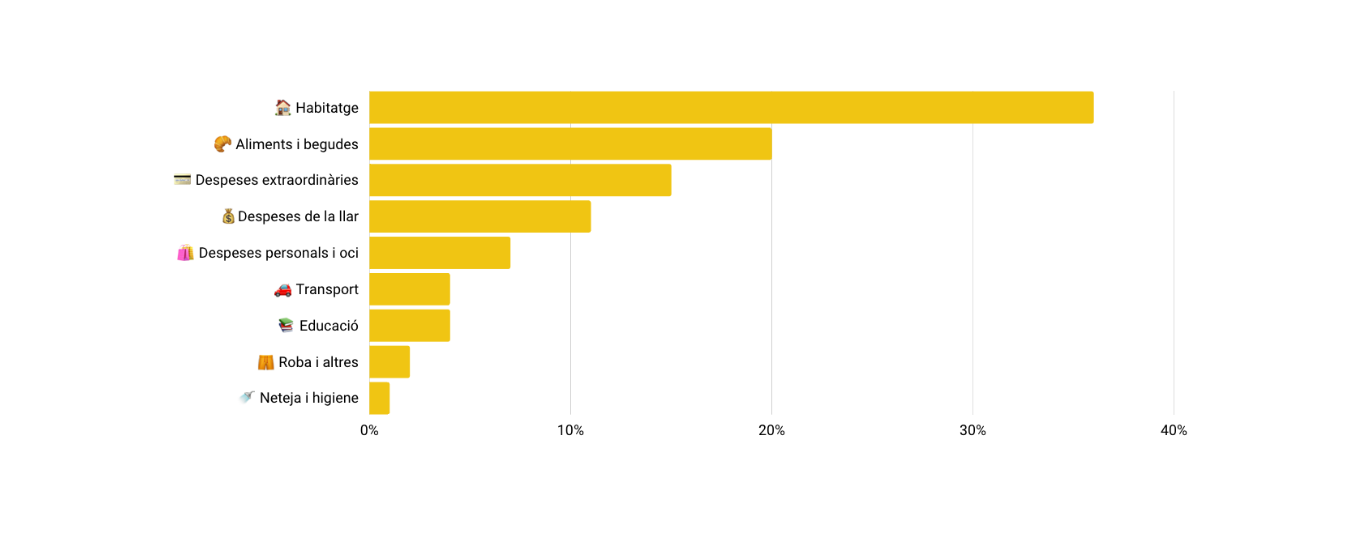
The estimate of this minimum reference wage is calculated taking into account the cost of services and basic needs, such as housing, which accounts for 34% of expenditure, 45% if we include supplies. As for the purchase of food, this represents 20% of expenditure, while the rest of the costs are divided between leisure, education, and transport, among others.
Even so, this is a study that sets the minimum wage needed for 2020, taking into account the figures for household spending in the metropolitan area in 2019, and therefore does not take into account the high inflation and other effects of the Covid-19 pandemic, which is why AMB sources concede that the minimum wage proposal may not be in line with current reality. A discrepancy that may be significantly increased due to the conflict in Ukraine and the skyrocketing cost of energy supplies, raw materials, and basic foodstuffs, which further reduce purchasing power.
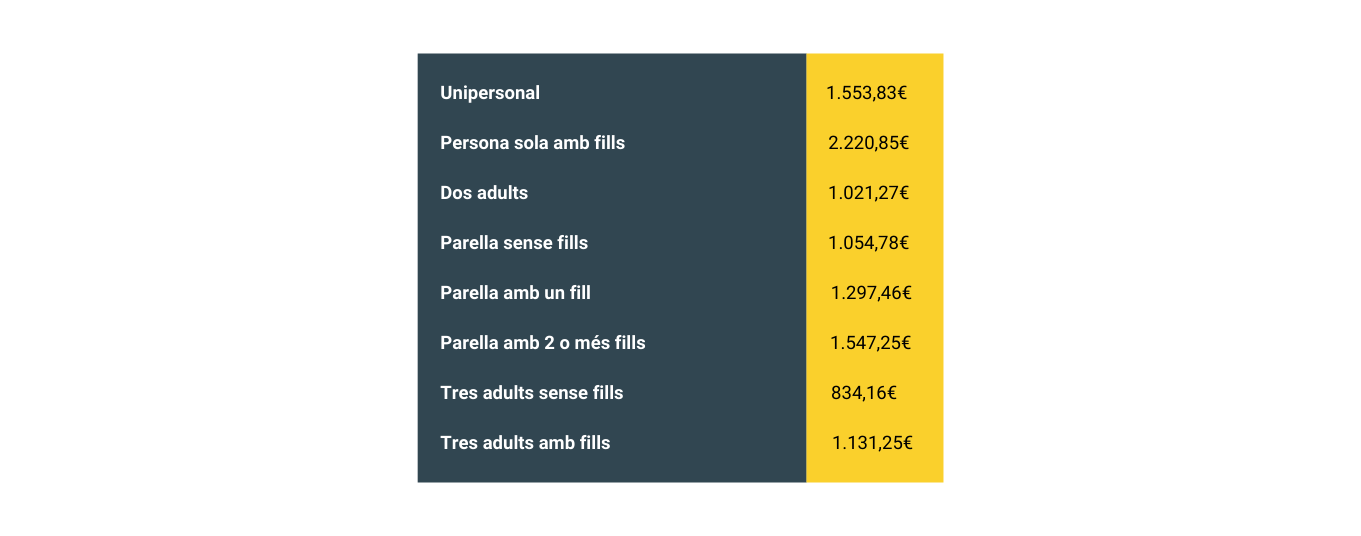
Minimum wages by type of family
The proposal for minimum wages is based on monthly expenses according to the type of household. Thus, in the case of a couple without children, it is calculated that they need 1,039 euros per person, and almost 1,585 euros for a couple with two or more children. In the case of a person living alone with children, a salary of 2,168 euros would be required to cover all expenses, or 1,508 euros if there are no children.
Figures that are far from the Minimum Interprofessional Wage (SMI) of 950 euros per month, 22% lower than the reference wage in the municipality of Barcelona, and which highlight the precariousness of employment. Part of what the AMB calls the ‘working poor’, i.e. those who earn less than 1,322.52 euros, and who represent 32.8% of Barcelona and the metropolitan area.
On the other hand, the Generalitat de Catalunya’s lack of powers to apply its own minimum wage of 1,239.5 euros, proposed in 2019, is a pending issue. It could be partially resolved if the Catalan Minister for Enterprise and Employment, Roger Torrent, finally manages to carry out negotiations with social partners, trade unions and employers’ organisations for a Catalan minimum wage.
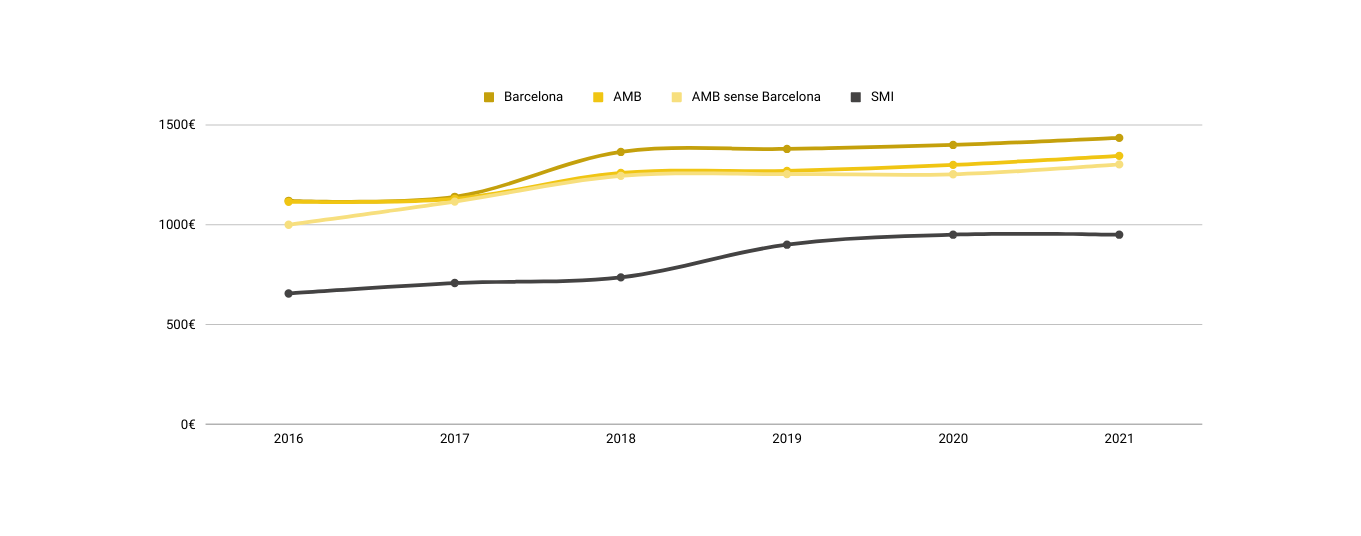
Can I save?
Even so, according to INE sources, in 2020 in Catalonia the median gross salary increased by 0.7%, reaching €2,158 gross per month. Therefore, a person earning this amount would have to be able to live in Barcelona or its metropolitan area with a savings margin of around €700 gross per month. For people who have a salary of this kind and do not manage to save enough, 11Onze is developing a series of content and tools to learn how to increase savings without giving up anything essential.
If you want to wash your clothes without polluting the planet, 11Onze Recommends Natulim.



Inflation is a word that has crept into our daily lives. And it doesn’t exactly affect us in a positive way. But what exactly is inflation and how does it affect us? Agent 11Onze Miriam Frías gives us a summary.
“Inflation is the generalised rise in prices sustained over time,” Frías defines just for starters. In fact, inflation comes from the word “inflate.” And why? Simple, because the prices of basic goods increase. So inflation affects the most common household expenses: the shopping basket, the cost of supplies, the price of household appliances… As a result, there is a loss of purchasing power.
But why does inflation occur? There are three main causes, Frías says. The first is due to consumption or demand, i.e. when there is a high demand for a product in excess of its supply, prices tend to rise, because the people who need that product will be willing to pay any price.
Secondly, production costs, i.e. when raw materials, such as energy or oil, rise, then manufacturers have to guarantee themselves a percentage profit and pass this price increase on to the consumer. And the last one, self-constructed inflation, in which, when prices are expected to rise, manufacturers raise prices progressively so that the impact is not so great in the long run.
Want to know all about inflation? Just watch the video below!
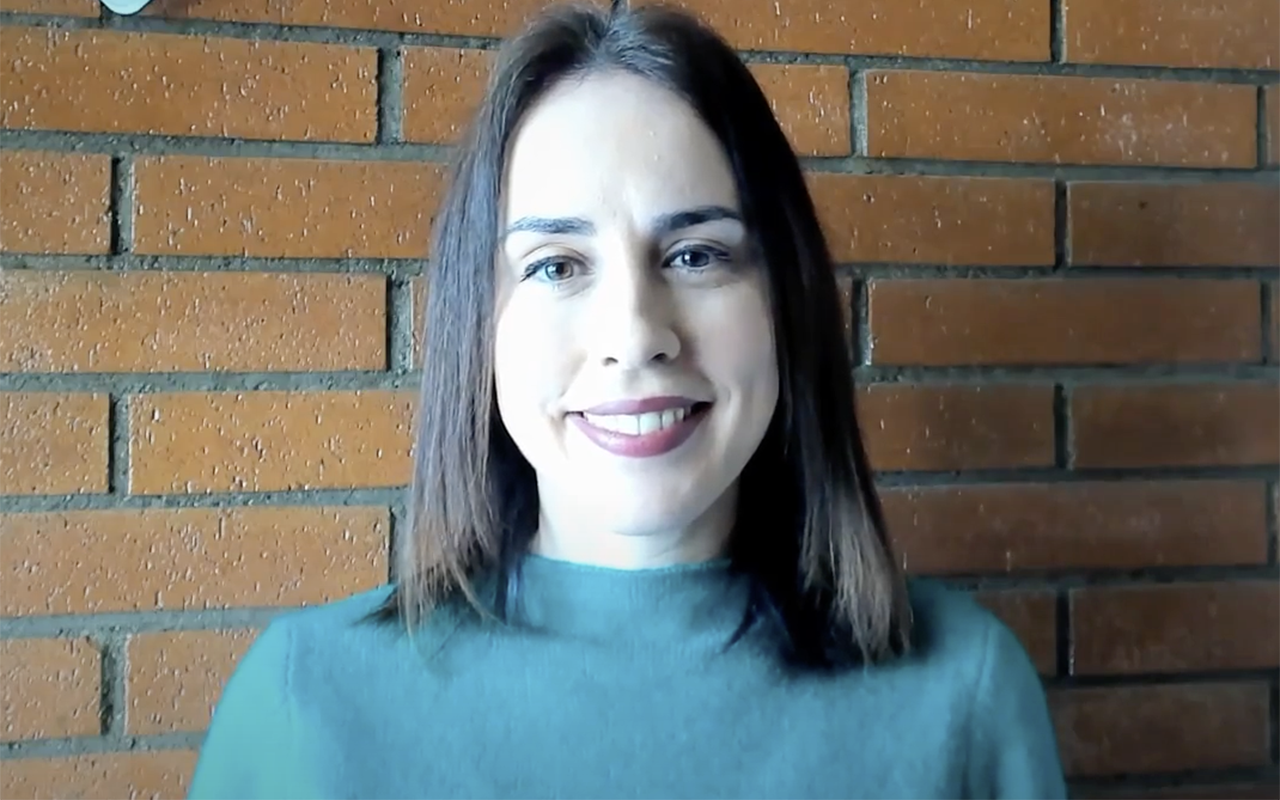
Inflation, the enemy of our savings
If you want to discover the best option to protect your savings, go to Preciosos 11Onze. We will help you buy at the best price the ultimate safe haven asset: physical gold.