21st-century feminism: the struggle continues
Finalitzem el recorregut cronològic que ens ha apropat a la història de la reivindicació del ‘jo femení’, a través de cinc dones que han marcat el curs de la història contemporània, escrita en femení i des de casa nostra. Segles d’història que han donat peu a petites i grans victòries per a la normalització d’un punt de vista basat en pures convencions socials que poc tenen a veure amb la naturalesa humana. Ara, el feminisme al segle XXI continua alçant la veu per una de les reivindicacions històriques més antigues: la igualtat entre dones i homes.
Mirar enrere ens serveix per a comprovar que, malgrat que la història ha estat escrita per homes, les dones han tingut un paper clau. En tots els àmbits i des de totes les lluites. Protagonistes a l’ombra de la història de la humanitat, on cada lluita i cada dret adquirit a favor del gènere femení s’ha debatut de nou més endavant. Una història circular que ens evoca constantment i independentment del país o del moment a un mateix punt: tot el camí recorregut ens ha permès avançar, en més o menys mesura, segons la societat i el prisma subjectiu amb el qual ho mirem. Un avenç, però, insuficient. La lluita no s’atura. La igualtat encara queda lluny per a les joves generacions.
La superioritat masculina i el #patriarcat
La superioritat moral (i res més que moral) entre sexes, ètnies, cultures o classes socials no fa més que evidenciar un afany de control que, lluny de ser natural, neix de construccions socials basades en el poder, sovint vinculat als diners o directament a la força física. Qualsevol raonament o comportament que neixi de la superioritat no podrà ser considerat just i, per tant, no hauria de ser considerat feminista. L’eternització de la lluita feminista ens evoca a múltiples conclusions. En posem una sobre la taula: per continuar avançant, els homes han de prendre partit.
La història ha estat escrita per l’home, el món ha estat liderat per l’home i inclús les religions són altament masculines. Podem parlar de progrés si encara comptem cada dona que per primera vegada accedeix a un lloc de poder? Si calen lleis per aconseguir paritat laboral? Si el cos de la dona, les decisions maternals o la forma de vestir es decideixen per homes arreu del món o si la violència masclista continua assassinant i violant a nenes, noies i dones al costat de casa nostra? Si tot això és el que constitueix el món actual en el qual vivim, canviar-ho ha de ser, sens dubte, una qüestió genèrica. No es pot redefinir el paper de la dona sense redefinir el de l’home. I tot recau en l’educació, que ha d’allunyar-se del patriarcat, el terme que defineix l’organització social dominada per homes.
#NotAllMen, però sí totes les dones
La meitat de la població encara viu sota l’estigma del sexe dèbil, sota el control del patriarcat i amb la certesa que, tot i no veure’s directament afectada una mateixa o les dones del meu entorn, mirant a banda i banda tothom té alguna història propera que evidencia tota la feina que queda per a fer. Al llarg de la història, el feminisme ha passat per diversos estadis que, seguint el context de cada moment, han implicat un tipus de lluita o altra, basada en ideals conservadors, liberals o reivindicatius. Són moltes les dones a les quals podríem posar cara i de les quals podem explicar la història. Algunes d’elles han fet grans avenços per a les dones, altres simplement van aplanar el camí amb idees, obres o obrint portes que fins aleshores restaven tancades.
El feminisme, entès com la recerca d’igualtat entre homes i dones, té tantes interpretacions, corrents o significats com persones en parlin. Interpretacions que varien segons l’educació rebuda, la tradició familiar o els comportaments que cadascú ha vist a casa seva. És comprensible, doncs, que apareguin pensaments com ara que les dones feministes són unes “exagerades”, que “no existeixen desigualtats avui en dia” o que la vida s’ha de viure “tal com s’ha fet tota la vida”, justificant que les tradicions, per més misògines que siguin, s’han de respectar abans que canviar-les per aconseguir paritat. Davant aquesta realitat, amb més èmfasi cal recalcar que el feminisme ha de partir del respecte, la base a partir de la qual s’aspirarà a la llibertat. Pot ser lliure qui viu amb la mirada posada en els altres?
De l’alliberament a la normalització sexual #lovewins
Són moltes les societats que han acceptat que l’orientació sexual no ha de ser motiu d’odi, i molt menys d’agressions o sentències legals. Es normalitza la llibertat sexual i es deixen enrere alguns estigmes vinculats a la sexualitat, especialment entre les generacions joves i en els països occidentals. Una desestigmatització que neix en la consciència sobre el propi cos, la llibertat de decisió, i el respecte cap a altres ideologies. També en la construcció de parelles proliferen corrents com el poliamor o les relacions obertes, que més enllà de l’anhel propi de qualsevol generació de joves per a descobrir-se, provar coses noves i viure experiències, també evidencia i atorga esperança davant un futur que es pronostica com a respectuós i de mentalitat oberta. Judicis morals, els mínims. Llibertat i respecte per sobre de tot.
Una vegada més, i lamentablement, no hi ha cap situació o context lliure d’agressions per part de persones que per sexe o orientació sexual se senten amb superioritat respecte a qui és diferent. L’orientació sexual encara és motiu d’agressions, i no s’aturen tampoc les relacions amoroses conservadores i amb rols de gènere marcats per la presència masculina. Tampoc s’aturen les relacions forçades, la violència física, mental i sexual cap a les dones, la sexualització del cos femení o el judici social i individual cap a les dones per gaudir d’una sexualitat plena i fonamentada amb la seva llibertat. Llibertat, però, que la societat s’esforça a remarcar que és limitada, sempre dins de cànons socials, estàndards i subjecte a múltiples crítiques als ulls del món. Potser per aquest motiu, perquè l’avenç mai és suficient ni generalitzat, la lluita feminista constantment comparteix espai amb la lluita d’altres minories o col·lectius en recerca de la llibertat que per naturalesa hauria de ser adjudicada.
La lluita serà compartida o no serà #MeToo
La realitat de moviments com el #MeToo corrobora que en el moment que una dona alça la veu per a fer una denúncia, n’apareixen milers al seu costat que han viscut el mateix i, sigui per desconeixement, per por, o pel sentiment de normalitat davant d’actituds que no haurien de ser-ho, han preferit callar durant anys. Això és perquè, quin tipus de normalitat pot ser viure en ple segle XXI, on prevalen uns minuts de satisfacció sexual d’un home davant la vida d’una dona? Són moltes les batalles guanyades, els avenços i els escenaris on s’està assolint la paritat. Són molts els homes que han estat educats i eduquen des d’aquest prisma del respecte, independentment del sexe o l’orientació sexual, i també cada vegada són més els joves que creixen sense l’estigma del patriarcat de base i les joves que identifiquen i denuncien qualsevol situació que va en contra de la seva llibertat.
De totes les coses positives que podríem llistar i sentir-nos orgulloses, principalment per respecte a totes les que han dedicat la seva vida a la causa i fins i tot l’han perdut, n’hi ha una que ressalta per damunt de totes: la lluita per la vida. En el moment que desaparegui la superioritat moral que sentencia vides a canvi d’ideals arreu del món, el feminisme podrà fer el pas definitiu per a començar a parlar de llibertat.
11Onze és la fintech comunitària de Catalunya. Obre un compte descarregant l’app El Canut per Android o iOS. Uneix-te a la revolució!
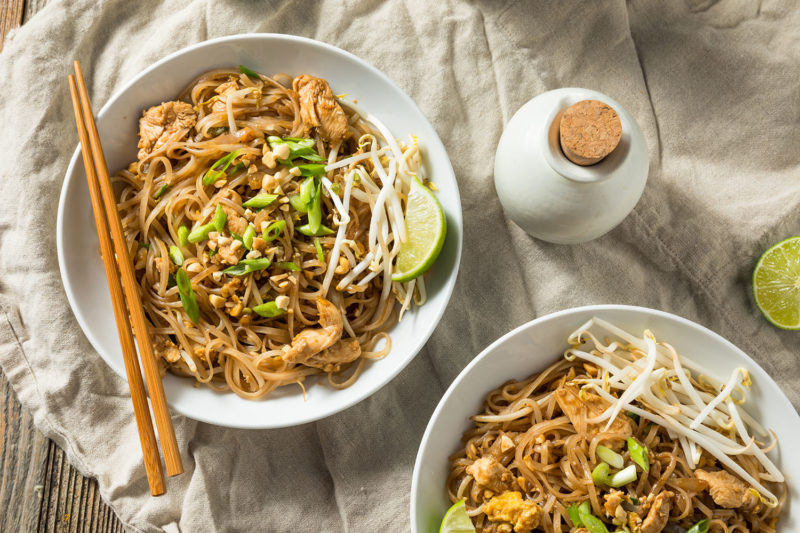
Food prices are still skyrocketing and have grown by 15.4% although the overall inflation has decreased. Is it possible to eat well and well priced? At 11Onze we propose 11 dishes to get the most out of your budget.
Data from the INE (National Statistics Institute) reveal a fact that people had already noticed, for sure, when shopping: that food prices do not stop rising. This has caused, according to the OCU, that 90% of the citizens modify their shopping habits, that they buy 23% less food, that they have reduced by 18% the purchase of fruit and vegetables and that 3 out of 10 have limited the purchase of meat and fish.
This may cause families’ diets to shift towards cheaper and perhaps less healthy purchases. Reviewing the data, there are basic products such as milk that have risen by 33.4%, eggs by 22.9% or potatoes by 18.9%. Meats went up between 13% and 25%, while legumes and vegetables went up between 11% and 15%. Fruit has risen by 4%, but it should be borne in mind that it is one of the most expensive products.
Freezing, the great ally
So what to do? There is a risk of tending to a diet based on processed foods, pasta and flour, which have better prices but are worse for our health. For this reason, it is advisable to take advantage of the offers to buy in bulk, which allows to reduce the cost per unit and to freeze the leftovers. Obviously, it is necessary to take advantage of the offers of fresh meat and fish at a discount due to a near expiration date, because we can freeze them directly. But this can also be done with other products. Cheeses such as cheddar or mozzarella can be frozen if you plan to use them for melting. You can also freeze butter, or boiled eggs. And as far as fruit is concerned, it is best to use it to make compote or cakes that can be frozen.
Traditional recipes against inflation
If you don’t want to give up traditional flavors or healthy cooking, you can dive into the Corpus of Catalan Culinary Heritage. You’ll find recipes that make the most of the most expensive ingredients. We have selected 11.
- Omelette with juice. An omelette stuffed with vegetables or potatoes and accompanied by sofrito. A simple dish, to dip bread.
- Chicken with chanfaina. One of the least expensive and healthy meats, accompanied by one of the most common resources of Catalan cuisine.
- Chickpeas with cod and spinach. The legumes are the base product, the cod and spinach complement them.
- Onion soup. A good way to take advantage of the dry bread and make a tasty soup.
- Sausage with pears. With some ripe pears we can prepare a dish of contrasting flavors with one of the classic meat dishes in Catalonia.
- Scudella of pumpkin and beans. Little meat and a good spoon dish.
- Escudella Montserrat. Conger eel (or similar) and cauliflower are the stars of this dish that also has rice, chickpeas and noodles.
- Rice in the casserole. A classic of Catalan cuisine and a good way to serve very good dishes with a modest investment.
- Cut-up rice. If you buy a whole chicken to roast, take advantage of the trimmings to make this dish.
- Rice a la Piula. With a base of anchovies, a good rice with a seafood flavor.
- Sardines with potatoes and smashed eggs. If you like the famous “huevos estrellados”, here you have a version with sardines.
This is just one of the thousands of recipes in the Culinary Corpus of Catalan Heritage. Very often, our ancestors used to cook making the most of a small portion of meat or fish. Accompanied with legumes, potatoes, vegetables or rice, the portions that could be served with that more expensive ingredient multiplied. What they did not know then, perhaps, is that this also made the dish a nutritionally more complete and healthier meal.
Now, with food inflation rising to 15.4%, perhaps it is a good time to recover this way of cooking. Surely, in addition to saving money, we will gain health.
And you, what recipes do you prepare at home?
11Onze is the community fintech of Catalonia. Open an account by downloading the super app El Canut for Android or iOS and join the revolution!
‘Stock market psychosis’, “Wall Street goes mad”, “The market goes into depression”. How many times have we read in the press expressions comparing the economy to mental health disorders? Organisations such as Obertament believe that economic jargon stigmatises and needs to be remedied.
‘I have seen them in all colours. Even a professor of economics, in an opinion article, said ‘schizoid economics’, because, in his opinion, ‘the economy entered into a dissociation between two simultaneous and contradictory trends’’. He denounces it openly to Dani in Obertament‘s blog, where the organisation teaches about inclusive language with hundreds of first-person witnesses. The complaint is repeated over and over again.
It was precisely the habitual use of the words ‘psychosis’ and ‘schizophrenia’ as pejorative metaphors that set off all the alarm bells. Since then, Obertament has produced up to five reports with the help of Grup Barnils, with their corresponding campaigns and training sessions throughout the country to raise awareness of the stigma attached to mental health in the media and, specifically, in international, opinion, political and economic news. ‘The schizoid personality has nothing to do with economics – don’t mix apples and pears,’ says Dani.
Because, undoubtedly, the first offence is to use metaphors that consolidate the stigma without taking into account what it means to have a mental health disorder. According to the World Health Organisation (WHO), one in four people have it or will have it during their lifetime, and it can appear at any time, from childhood to old age. According to the latest Obertament report, for example, the WHO estimates that nearly 300 million people in the world have had depression, 4.4% of the global population.
And yet, these people often feel discriminated against in their family and work environment. In fact, according to a study published by the Autonomous University of Barcelona and Spora Sinergies, 80.1% of people with a mental health problem in Catalonia have suffered discrimination and stigma, and 54.9% have been discriminated against very often.
Disorders have nothing to do with violence
Therefore, when the media or economic and political professionals link mental health with conflicts, crises or difficult contexts, they further reinforce this discrimination. The second offence, in fact, is to link mental health disorders with violence. In this sense, the Audiovisual Council of Catalonia (CAC) warns in a guide that ‘the risk of aggression is exaggerated, fear and mistrust are encouraged and the gap of ignorance about mental health issues is widened’.
When we do so, we unwittingly reproduce a discourse that describes the economy as an aggressive environment, where competition without morals rules and suspicions pull the strings of the market. Is that really the image we have of how the economy works? The ACC also recalls that using terms such as ‘schizophrenic’, ‘bipolar’, ‘psychosis’, ‘depressive’ to describe chaotic, irrational, extravagant situations or to disqualify the opponent; using negative activation; or opting for alarming and morbid statements, ‘perpetuates false beliefs and stereotypes’.
Stereotypes that are almost insults
And, of course, the third offence is stereotyping, as Obertament denounces. We often use expressions that, because they are so normalised, we do not realise how derogatory they are. For example, current economic issues that are irreversible are frequently linked to mental health, which is wrongly associated with an incurable illness that prevents people from leading a normal life.
In this way, a mental disorder is regularly confused with a mental disability or dementia. The organisations also warn that, believing that we are being empathetic, we fall into ‘a paternalistic and compassionate tone’. This idea, moreover, is reinforced by illustrations that arouse rejection, sadness, or a dark and desperate inner abyss. Nothing could be further from the truth. In the end, as Obertament denounces, we end up turning mental health into ‘a catch-all’.
That is why, on the contrary, the organisations recommend using expressions such as ‘A person who has or has had…’, using adjectives and resources that do not refer to mental health, contextualising mental health disorders, listening to and respecting people with this diagnosis more, highlighting stories of overcoming mental health problems and avoiding sensationalism.
In the end, all this advice means that the focus is not on the person, but on the society that causes common disorders such as anxiety or depression. If we come to collectively change the economy and build a fairer, more honest and more ethical banking system, instead of reproducing prejudices, we might just turn it all around like a sock. Let’s start with the language.
11Onze is the community fintech of Catalonia. Open an account by downloading the app El Canut for Android or iOS and join the revolution!


The emerging states that comprise the BRICS group represent five of the world’s largest economies. A rising force that aims to redefine the international political and economic order, hitherto dominated by organisations created by Western powers.
The association comprising Brazil, Russia, India, China and South Africa, a group of major emerging economies known as the BRICS, represents more than 40% of the population and almost 25% of the world’s GDP. A strategic alliance that has laid the foundations for a new international political and economic order, designed to offer an alternative to the Western model, until now subject to the hegemonic power of the United States and the dollar as the world’s reserve currency.
Many other countries have expressed interest in joining the bloc: Iran and Argentina applied for membership in 2022, while Saudi Arabia, Turkey, Algeria and Egypt have also expressed interest. Given that some of these countries are major oil producers, the impact that these accessions would have on strengthening the alliance’s sphere of influence cannot be underestimated.
Democratising globalisation
With the creation of a new development bank and a financial stability fund, the BRICS will play a key role in shaping the global financial system. The aim is to provide alternative sources of finance to developing countries. These initiatives are expected to challenge the status quo of traditional Western-dominated financial institutions such as the International Monetary Fund (IMF) and the World Bank.
The need to set up this alternative structure has arisen, in part, because the IMF has not adapted to the new economic situation of a multipolar world. The new emerging powers are no longer content to be treated as the backyard of the United States, countries where for decades governments have been set up, with the complicity of the IMF, to serve the interests of American corporations, as it is happening in Ukraine.
The persistent US veto of proposals to give emerging countries voting rights more in line with their weight in the world economy, together with the refusal to reform restrictive policies in the face of economic crises that ensure misery for the population and huge profits for multinationals, have spurred a paradigm shift that will rebalance the distribution of global power.
Disengaging from the dollar
Russia and China signed agreements decades ago to initiate de-dollarisation programmes to protect and shield their economies from US government and International Monetary Fund (IMF) sanctions. The trade war against China and the unprecedented economic sanctions against Russia as a result of the conflict in Ukraine have accelerated this process of de-dollarisation, which more and more countries are joining every day, concerned about the abuse of privilege by the American giant when it comes to militarising access to and the use of the dollar to serve its economic and geopolitical interests.
In this context, the BRICS are considering the creation of their own currency, a common currency as proposed by Brazilian President Lula da Silva, which would further weaken the ability of the United States to pursue its aggressive foreign policy. President Vladimir Putin announced in June 2022 that the idea would be discussed at the BRICS summit in South Africa in August 2023.
In addition, the central banks of China, Russia, Turkey, Uzbekistan, Qatar and India are buying and accumulating gold reserves in record amounts, the likes of which have not been seen for 55 years. A phenomenon that some geopolitical analysts see as an unmistakable sign that they are diversifying their economies to break free from the hegemony of the dollar.
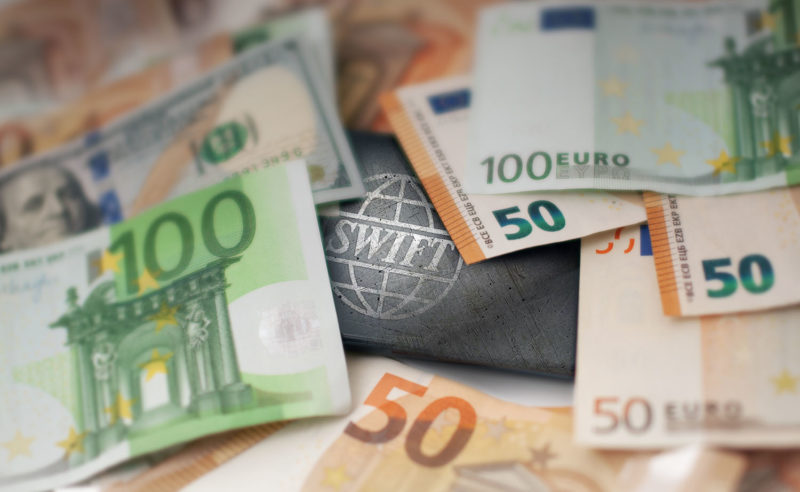
On the other hand, the use of economic sanctions to exclude banks from the SWIFT interbank communications protocol has consolidated efforts to create alternative systems such as the Chinese (CIPS) or the Russian (SPFS), to which 52 financial entities from 12 countries already have access, and which is already available for the connection of banks from the five countries that make up the BRICS alliance.
11Onze is the community fintech of Catalonia. Open an account by downloading the super app El Canut for Android or iOS and join the revolution!
Gold is certainly not from this planet. Scientists agree that it was brought to Earth by a meteor shower. Its origin may lie in the explosion of a supernova or the collision of two neutron stars.
Gold as we know it is too precious a mineral to have an ordinary origin. In fact, it comes from something as bright as stars and arrived on Earth about four billion years ago, long after the formation of our planet’s core.
In its early days, some 4.5 billion years ago, the Earth was basically a ball of magma. During the cooling process, the denser materials sank towards the centre. As a result, they were drawn into the core, which is composed mainly of iron, most of the heavier metals.
This is why the large amount of gold and other precious metals in the Earth’s mantle today is not understood. Several scientific investigations have concluded that the presence of this gold can only be explained by the impact of meteorites loaded with gold and other precious metals.
One study, published in the journal ‘Nature’, estimates that the meteorite storm may have brought some 20 trillion tonnes of material to Earth. And another study, published in the journal ‘Science’, considers that our planet would not have been the only recipient of these minerals, as they would also have reached Mars and the Moon similarly.
Where did the gold come from?
Scientists believe that gold, like most elements heavier than iron, is produced by both supernova nucleosynthesis and the collision of neutron stars. But it is not known which of these two processes originated the gold that we can currently extract from the Earth’s mantle.
Nuclear fusion processes are constantly taking place inside stars. The most abundant and simplest element is hydrogen, whose atoms contain one electron and one neutron. When two of these atoms fuse together under pressure and gravity, a helium atom is produced. In turn, the fusion of helium produces lithium. And the fusion processes continue until iron is produced, which begins to form when there is no more fuel left in the star to fuse.
Supernovae are massive stars that can no longer develop thermonuclear reactions in their core. The pressure causes them to suddenly contract and collapse. It is in this process that many scientists think that heavy materials such as gold are formed, although some astrophysicists doubt that the neutron flux inside the supernova is sufficient to create the necessary amount of heavy elements.
The other possible origin for our gold would be a collision of neutron stars, which form after the collapse of supernovae. Very recently, on 17 August 2017, one such cataclysmic event was detected. It is estimated that two neutron stars of only about ten kilometres in diameter collided, containing as much matter as the Sun.
Scientists believe that such an event could have generated as much gold as the mass of the Earth. This requires iron to be in a very neutron-rich environment in order to capture neutrons very quickly. As some of these neutrons undergo rapid radioactive decay and are converted into protons, iron, which has 26 protons and 30 neutrons, can be transformed into gold, which has 79 protons and 118 neutrons.
Gold precipitation
According to the main theories, the great meteorite shower with the precious metals caused an upheaval of the Earth’s mantle, which eventually led to the appearance of the deposits of these minerals. The asteroids would have been introduced into the Earth’s mantle by massive convection processes.
Gold is mainly found in areas with seismic or volcanic activity, which brings the gold to the surface. During earthquakes, variations in pressure along the fault can cause water in the rock to evaporate rapidly. And substances that dissolve in the water, such as gold and silicates, later precipitate on the surface. In the case of volcanoes, many minerals found in deeper layers of the earth’s mantle are ejected during eruptions, and one of them is gold.
Although gold can be found all over the world, the geographical distribution is very uneven. The United States, Canada, Australia, China, Russia and South Africa are the countries with the highest concentration of this precious metal.
The first chapter of the series The Golden Thread, which deals with the importance that gold has in different areas of our lives, focuses on the fundamental role that this precious metal has played in the exploration of space.
If you want to discover the best option to protect your savings, enter Preciosos 11Onze. We will help you buy at the best price the safe-haven asset par excellence: physical gold.

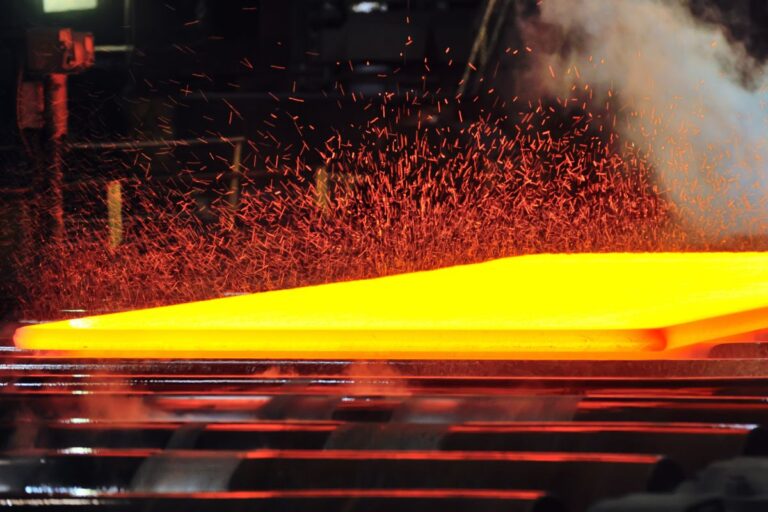
Young people should also have a vocation for entrepreneurship. If we give them the tools, perhaps they will be encouraged to become entrepreneurs. The Escola i Empresa programme of the Fundació d’Empresaris de Catalunya (FemCAT) was created with this aim in mind. We talked to its president and CEO of Vertix, Elena Massot.
The training offered by FemCAT is no small feat. In the ten years of activity, up to 770 teachers and 300 top-level entrepreneurs have given courses in high schools, and more than 100,000 students have benefited from them. Massot explains that the Escola i Empresa programme was created in 2009 to achieve “a positive and encouraging impact”, which would help to understand the importance of business in the country’s social fabric. In addition, it seeks to recognise the work of entrepreneurship. “We want to show the need for business in society, awaken interest in this world among young people, give an inspiring vision of business and, finally, show some of the skills that an entrepreneur needs”, summarises the president.
- To convey the relevance of business, first-hand experience is very important, isn’t it? That’s right. That’s why the activity is actually a dialogue between the entrepreneur, who is usually in a management position, and the students who take part in it. The speaker explains the relevance of the company in the social fabric and, more importantly, describes his or her experience. This allows the students to reflect on the skills that are necessary to take over a business. The conversation and reflection on the motivations that lead someone to start a business, the narration of the day-to-day life, helps students to highlight aspects of the business from a different perspective. Schools can receive these talks free of charge, and the speakers are volunteers.
- Thus, the entire organisation is the responsibility of FemCAT? Yes, throughout the territory, several entities take on the coordination and contact with the centres in their area. In order for the speakers to participate, the Catalan organisations from the business world propose volunteers who are willing to explain their experience.
- And during the pandemic, how did you organise the training sessions? From the outset, and even more so during the pandemic, it is clear that we have seen the importance of local management. That’s why we have tried to keep the activity at the centre, and we have brought in speakers from companies located in the area and close to these centres. For business or economic promotion organisations, this training is an opportunity to get closer to the students and the local business fabric. In the end, the programme also helps to bring the entrepreneur closer to the territory, so that he/she can better understand the environment he/she is working in.
- What feedback do you receive, both from students and speakers? In order to maintain the quality of the programme, we always ask for an evaluation of the sessions, both from the speakers and the teaching staff. Using the Net Promoter Score, the teachers have evaluated this training with a median score of 85.71 out of 100. As for the speakers, they find the experience very rewarding, and most of them recommend that business people they know take part in it, because they can have a dialogue with the students. For our tenth birthday, for example, we conducted a survey in 106 schools across Catalonia that had participated in the programme and around sixty entrepreneurs. The result was encouraging: 98% of teachers believe that the students’ opinion of the business world has changed after the session. They found the programme to be enriching, motivating, and a useful window into the real world. For their part, the students become aware of the entire business network through real cases narrated in first person.
- Do you hope to return to pre-pandemic activity this academic year? Until the 2018-2019 academic year, the programme reached almost 15,000 students each year, with around 400 sessions throughout the country. And we have 160 active entrepreneurs participating in them. And this academic year has started with a good volume of requests from schools, so we think that, after two academic years marked by Covid-19, we will be able to reach 15,000 students again.
- Do you do training courses in universities or for start-up companies beyond secondary schools? Yes, because bringing business closer to society is one of the pillars of FemCAT’s activity. In addition to the dialogue with students, we also have the programme Periodisme i Empresa, through which we bring Catalan SMEs closer to journalism students through visits and talks. At the same time, we have had an agreement with the Catalan Parliament since 2007, thanks to which we organise visits to business sectors for members of parliament. We also work with universities and research centres to facilitate knowledge transfer contacts. Many FemCAT members collaborate with mentoring programmes in social entities and start-ups. We do not consider any of these activities to be conventional training. Rather, we propose an exchange, because FemCAT’s main strength is that it brings together active entrepreneurs, who transmit the challenges and potentials of Catalan business through their experiences.
- Finally, what is the current state of the Catalan business fabric? In the last fifteen years, we have lived through two very tough crises, and the pandemic has been a significant shock to the sector. Right now, the recovery is very uneven. There are sectors that have quickly recovered and have made up for lost time, but in others, it almost seems that the activity before the pandemic will never return. The ups and downs and uncertainty are still expected to continue, and it will require the business world to maintain the flexibility and speed of response that we have been forced to practise in recent months.
Do you want to be the first to receive the latest news about 11Onze? Click here to subscribe to our Telegram channel
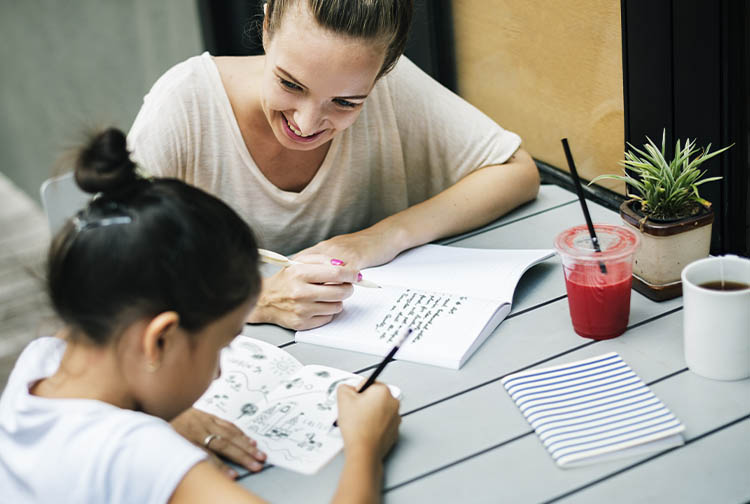


It is difficult for us to talk about death, but it is even more difficult to talk about the cost of dying. We want to break the taboo and take a look at the procedure and costs of funeral services, historically criticised for their high prices and lack of transparency.
The Covid-19 pandemic has left us with very unpleasant figures, headed by the 23,000 deaths that have been recorded in Catalonia since the beginning of the pandemic. Added to this number is the desperation of many families when it comes to paying for the funeral to have a dignified farewell for their loved ones, either due to a lack of financial resources, the high costs of the funeral home, or, in some cases, because they cannot afford or do not have burial insurance.
Barcelona creates a protocol of good practice
The first obstacle encountered by many families begins at the medical centre itself: due to lack of information, in many cases, they are unaware of the procedure for contracting funeral services at the hospital for the death of a family member. In response to this need, Barcelona City Council has created a protocol of good practices on funeral services, to which ten of the city’s hospitals have already signed up.
The aim of this protocol is to provide families with information on the steps to follow and to promote freedom of choice as to which funeral company they want to use. For this reason, the medical centres, together with the cemeteries of the city of Barcelona, provide a leaflet with information on prices, rights, funeral homes operators, the procedure to follow in case of having insurance, free services, and subsidised services. The protocol also details how all this information must be provided by medical personnel in a designated area, in order to maintain privacy.
Price of burials limited by the coronavirus
The impact of the pandemic and the situation of helplessness in which many families have found themselves has led the Generalitat to establish that “under no circumstances, the prices of funeral services maybe be higher than those in force prior to 14 March 2020”. This malpractice had already been denounced by some funeral homes customers, who warned of prices that were too high for those who died of coronavirus.
Currently, due to the lack of transparency and information from funeral homes and the aggravation of the coronavirus, it is difficult to establish an average burial price in Catalonia. But to give us an idea, in Barcelona, the limit for funeral services during the pandemic was 1,948.10 euros.
The recurrent lack of transparency
In 2020, the Organització de Consumidors i Usuaris (OCU) carried out a study analysing the websites of 50 funeral homes in different cities in Spain, and concluded that the lack of transparency is constant and recurrent in this sector. Only five funeral homes out of the 50 that were analysed reported and detailed their prices; others showed the price of certain services or simply the total cost, and the remaining 37 did not report prices at all.
In addition to this lack of transparency, there is a lack of freedom to choose funeral homes, especially for people with burial insurance, who can only choose from the options indicated by the insurer. In Spain, practically half of the deceased population in 2020 had insurance (46.6%) and, therefore, their choice was limited. The association of small funeral homes Esfune alerted the National Commission for Markets and Competition this year to this lack of freedom of choice, which according to its study affects 70% of families, with or without insurance.
Nothing spares us from death. That is why it is so important that the funeral sector offers facilities and guarantees to families and is committed to transparency. Because the duty of funeral homes is to provide a good death.
Do you want to be the first to receive the latest news about 11Onze? Click here to subscribe to our Telegram channel



The Catalan economy is made up of a veritable “great spider’s web,” as Roger Vinton calls it in the title of his book. Faced with this idea, and with the suspicion that the knots and actors in this web are poorly explained, a good number of books have appeared on a recurring basis that attempt to untangle it. We review them in La Plaça.
The reflections that follow, whether in the form of memoirs, such as those by Josep Pla and Cristian Segura, or in the form of journalistic essays, such as those by Roger Vinton, Gemma Garcia Fàbregas, Jordi Amat, Pere Cullell and Andreu Farràs, describe how the productive and financial economy works in the hands of elites who prefer to remain in the shadows.
- Homenots (1958-1962) by Josep Pla. ‘Homenots’ is a series of 60 profiles by Josep Pla on figures of his time. They were published between 1958 and 1962 by Editorial Selecta and between 1969 and 1974 by Editorial Destino in four volumes. In the preface to one of the volumes, Pla stated that, for him, “a ‘homenot’ is a singular, unusual type, a person who has been significant, in any activity, in a remarkable way”. Among these profiles are those of Prat de la Riba, Jaume Bofill, Joan Miquel Avellí and Ramon Godó, among many others, who make up the economic and political substratum of the country.
- L’oasi català (2001) by Pere Cullell and Andreu Farràs. The Catalan oasis refers to the close relations that developed between the Catalan bourgeoisie and the centralism of the Madrid court in the 19th century. The term seems to have been coined by the journalist Manuel Brunet. And it seems that, today, there would be some 400 people who would represent this Catalan elite spread across cultural and economic centres. With this expression, the journalists Pere Cullell and Andreu Farràs titled their essay, in which they explain the family, educational and summering relationships of a good part of these leading figures of Catalan society, who embrace the entire Catalan political spectrum.
- Els senyors del boom (2014) by Gemma Garcia Fàbregas. The journalist touches in depth a very sensitive story, that of the real estate gold rush experienced in the Catalan Countries and its social, political and economic impacts, with first-hand information and a highly documented analysis that opens a new perspective on the reasons for a catastrophe foretold as was the real estate bubble.
- La gran teranyina (2017) by Roger Vinton. ‘La gran teranyina’ reveals the opaque structure from which certain agents exercise the power through which they control events and situations that affect our society on a daily basis. This book allows us, in Vinton’s own words, to “open our eyes and become aware of the immense power of the individual”. A profound investigation that changes the perception of Catalonia and that some have considered a true reference manual or compass in the jungle of power.
- El fill del xofer (2020) by Jordi Amat. Following the dark figure of Alfons Quintà -journalist, lawyer, merchant navy officer and judge, who on 19 December 2016 murdered his wife and then committed suicide with a hunting rifle-, Jordi Amat reflects on power. Behind a dazzling journalistic career, which spans from the direction of TV3 to the talk shows of Intereconomía, a dark trajectory is hidden, full of blackmail, sexual persecutions, abuses of authority and various tricks, which shows how the sewers of power work in Catalonia.
- Gent d’ordre (2021) by Cristian Segura. Halfway between an essay, a memoir and a journalistic chronicle, Cristian Segura writes an exhaustive portrait of Barcelona’s elites. A society in transformation due to globalisation, the consolidation of the welfare state and also the hegemony of Catalan nationalism. Elites do not disappear, they are transformed. And Barcelona is the paradigm of this.
11Onze is the fintech community of Catalonia. Open an account by downloading the app El Canut on Android and Apple and join the revolution!



Conscious capitalism is a whole economic and political philosophy. Its aim is to make capitalism the most powerful system of social cooperation and human progress that has ever existed. Chief Agent Mireia Cano explains why some experts argue that this change is possible.
The creators of the concept of “conscious capitalism” are entrepreneur John Mackey and marketing professor Rajendra Sisodia. They have founded the NGO Conscious Capitalism to spread their idea and influence policy and economics around the world. Mackey and Sisodia believe in the power of business to transform the world and create positive impact.
But how can this be achieved? Can capitalism, which is based on the defence of private property and the generation of individual wealth, be changed to become a tool for collective progress? According to both authors, the key lies in business management, which they summarise in terms of four basic objectives:
- Define a higher purpose, i.e. that the company has a ‘raison d’être’ beyond its profit.
- To be oriented towards our stakeholders, i.e. to create an ecosystem to benefit the entire community that is part of the company.
- Place conscious leaders at the helm, to generate real added value.
- Generate a conscious corporate culture, which upholds and implements our purpose.
There are already many companies working with these four tips in mind and there are also more and more consumers looking to buy products in a more conscious way. Want to know more about conscious capitalism? Watch the video below.
Can capitalism be conscious?


Every January, after the Christmas feasts, we return to the work routine, to earn our bread, as it is commonly called. But where does this salary thing come from, and why do we exchange time for money with our work? Agent 11Onze Míriam Frías explains it to us.
Salary comes from the Latin word “salarium”, which means “salt”. We have to go back to the time of the Roman Empire to understand why the income we get each month from work is called a salary. The Via Salaria was the trade route along which shipments of salt were transported and the workers who worked there were paid with salt. Here is the origin.
Salt, or white gold, became a bargaining chip, because it was of great value for preserving food and even as a remedy for healing wounds. Why did salt become so important and what else could be bought with this precious salt? Just watch the video below!
Why does salt make us to earn money?