Buying gold: to keep it at home or in custody?
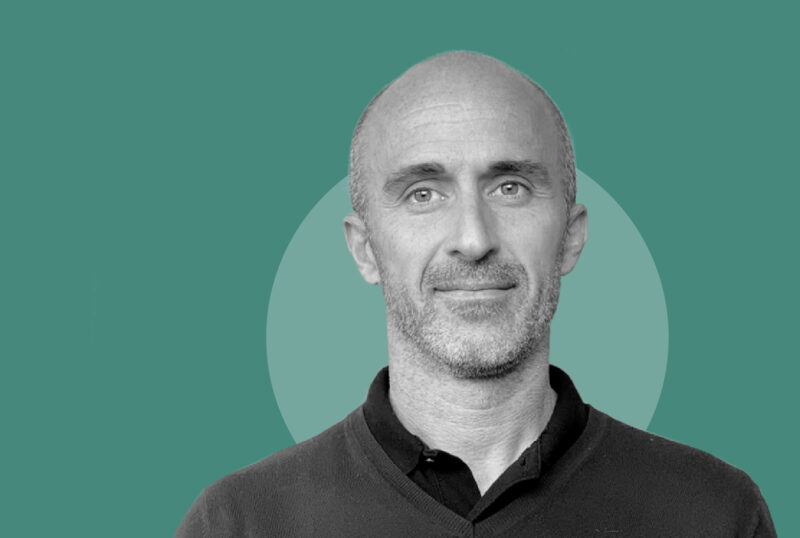
The collective purchase of gold through 11Onze Preciosos continues to be a success, but some customers wonder whether it is better to receive the physical gold pieces at home or leave them in custody. Càrol Rafales, senior sales specialist at 11Onze, explains the advantages and disadvantages of each option.
One of the most recurring questions among clients who invest in the purchase of physical gold is where and how they should store the bars or coins once the purchase has been made. Do I store the gold at home in a safe? Under the mattress? Or do I leave it in custody in a vault of a specialised company? Each option has its advantages and disadvantages.
Home storage
If you decide to store your gold at home, you will have easy access to the pieces and this will allow you to admire your bullion and coin collection without relying on a third party for safekeeping. However, before deciding to store gold at home, there are a few factors to consider.
Firstly, we must ensure that the gold pieces are stored in a suitable environment to be preserved in perfect condition over time, i.e. that they do not deteriorate due to humidity or other corrosives, as this would diminish their value and make it difficult to sell them when we want to recover our investment.
On the other hand, you may have to take additional security measures to ensure that your gold is well hidden and protected. You may also need to take out specific insurance if you do not have home insurance to cover these valuables. Of course, you have to be careful not to reveal too much information about your purchase. As Rafales explains, “having gold at home is something we have to keep secret, and it requires additional security measures”.
Physical gold at home or in custody?
Under the custody of a specialised company
Precious metals experts recommend that safekeeping should be carried out at the premises of companies specialising in the safekeeping of securities, thanks to the high level of security offered by these companies. As Rafales points out, “having our physical gold in custody in a specialised company gives us peace of mind, and the gold is 100% insured“.
Perhaps even more important than the security offered by companies specialising in storing precious metals, is the ease of resale. You will be able to sell your gold easily, without having to worry about finding a buyer or an establishment you can trust.
Finally, you have to bear in mind that storing gold at home or in custody has a cost that may vary depending on the circumstances of each individual. Even so, Càrol Rafales analyses the pros and cons of each of these options and helps you decide which option suits you best.
If you want to discover the best option to protect your savings, enter Preciosos 11Onze. We will help you buy at the best price the safe-haven asset par excellence: physical gold.

There is plenty of scope for savings in the use of electrical appliances at home. Standby mode alone accounts for more than 6% of household electricity consumption.
Have you left your mobile phone charging all night? Did you switch off the TV with the remote control when you went to bed? Do you have your game console on standby? A report by the University of California estimates that the sum of all the energy we waste on household appliances and electrical devices accounts for 5 to 10% of our household electricity consumption and 1% of CO₂ emissions.
Every day hundreds of watts fly through televisions, games consoles, air-conditioning systems, microwaves, stereos, DVD players, set-top boxes or charging computers, toothbrushes, cordless phones and mobile phones while we are not using them. In fact, any appliance with a display screen or an internal clock consumes energy 24 hours a day.
The Instituto para la Diversificación y Ahorro de la Energía estimates that the standby mode of electrical appliances alone accounts for 6.6% of household electricity consumption in Spain. The Organización de Consumidores y Usuarios (OCU) has a calculator on its website to check the annual consumption and expenditure involved in this standby mode in different electrical appliances.
Surrounded by electrical vampires
These electrical vampires are spread throughout the house: kitchen, living room, bedrooms and bathroom.
In the kitchen we can find the microwave, the oven, the electric coffee machine, the kettle, the washing machine or any appliance with a digital clock. It is likely that some of them accumulate more electricity consumption when they are not in use than when they are switched on.
As for the living room, the television, games console or stereo are typical energy vampires if left on standby. And the router consumes a considerable amount of unnecessary energy while we sleep.
Leaving the mobile phone charging all night in a socket in your bedroom is also a waste of energy. And other potential sources of incessant consumption in bedrooms include clock radios, computer equipment, extra televisions and consoles.
Even in the bathroom we can be wasting energy 24 hours a day, for example, through the electric toothbrush charger if we do not unplug it when we have finished charging.
How to protect yourself from electrical vampires
A few simple habits can help you reduce your electricity bill and CO₂ emissions:
- Unplug chargers when you have finished charging devices. Chargers consume electricity whenever they are plugged in, even if you are not charging a device, or it has already been fully charged. This doesn’t just apply to mobile phone and laptop chargers. The base of your electric toothbrush also consumes electricity if you leave it plugged in.
- Avoid standby mode. Anything other than completely switching off a device that you are not using is an unnecessary waste of energy that means a lot of money a year on your bill.
- Do not constantly open the fridge. Every time you open and close the fridge or freezer, they lose temperature and increase their electricity consumption, especially if you do it abruptly.
- Use power strips with switches. If you use several electrical devices together, such as your computer, screen and printer, plug them into the same power strip with a switch. That way you can easily switch them off with a single click at night or when you go on holiday.
- Take advantage of the residual heat from the ceramic hob. You can switch it off a little before the food has finished cooking so that the residual heat is not wasted.
- Keep electrical appliances that you do not use frequently unplugged. If you have a stereo system that you only listen to on Sundays, for example, it is better to keep it unplugged the rest of the time to avoid unnecessary consumption.
- Unplug the router when you are not using it. Unless you are downloading files at night, it is unnecessary to keep your router switched on while you are sleeping or away from home.
Invest to save
Beyond these measures, which require virtually no investment, it is possible to cut electricity bills even further by investing in more efficient appliances and light bulbs. In the case of appliances, the classification ranges from A (the most efficient) to G (the least efficient). As for light bulbs, LED bulbs offer significant energy savings and have a longer lifespan.
11Onze is the community fintech of Catalonia. Open an account by downloading the super app El Canut for Android or iOS and join the revolution!

If you are subscribed to more than five platforms to watch series and films, music or documents, this article is of interest to you. Every day new platforms are born and, with them, new services that allow you to share streaming subscriptions in order to reduce your subscription fee. At 11Onze we give you the keys to manage them.
Netflix has gained 37 million users in the last quarter of the year, 31% more than in 2019. The platform reported 5,466 million euros during the fourth quarter, 21.5% more than a year ago. Subscriptions have become a must and living without them is no longer conceivable. It is true that our consumption habits have changed; now, with all the digital TV platforms, it’s hard to go back to having to watch ads every 15 minutes. Now everything is à la carte, how, when, and where you want. Of course, what is not so fun is the amount of fees, even if they are tiny, that you end up paying monthly. In this article we are going to give you some recommendations to save money and manage your subscriptions.
If we go back 20 years, surely you remember Canal+, one of the first private channels, which allowed you to watch films and shows; the cost was quite high, so only a few privileged people could enjoy it. With the arrival of Netflix, HBO, Disney +, Filmin, Amazon, and so on, annual subscriptions are between €10 and €15 per month, which seems a totally manageable amount, taking into account that going to the cinema costs much more. Now, you have to bear in mind that once you subscribe and start scrolling, on many occasions, you waste more than half an hour choosing a film: the variety is so extensive that it is difficult for us to determine (depending on our mood that day) what we want to see each time, and for that reason, you end up having several platforms.
Following the thread, once you subscribe to any of the indicated platforms, you realise that the film or series you have just been recommended or you think you cannot miss is on another platform, so you automatically download the app and start entering your data. You are seduced by the subscription price, so without realising it, you have more than 5 platforms to watch millions of films, documentaries, and series.
What to do if you identify with this?
- Check your subscription plan. If it allows more users and devices, ask your relatives and acquaintances if they are in the same situation; in this way, you can share the monthly expense. Of course, we recommend that you plan everything a year before, divide the fee, and have your friends pay you, for example, through Bizum, so that they do not forget. That is, if the monthly fee is €15 and you are going to share it among 3 people, they must pay you €60 each, and if you have paid €180 annually, you will only pay €60, so you will save €120.
- Permanency or not? A great advantage of this type of platform is that they do not ask you to stay, so you can unsubscribe when you have finished watching your favourite series and seen that there is nothing else that may interest you. You can stay 1 or 2 months, or as long as you need, and you can unsubscribe until a new order.
- Take advantage of promotions. You have to be careful, because if you have not signed up for a platform, as a new customer, you might be given a free month. If you think it’s worth continuing, you can share it again, if possible, with other users. Of course, check the conditions properly once you sign up, since sometimes, if you do not cancel the subscription, you may automatically be charged for the next subscription the following month without prior notice.
- Rental available for 24 hours. If you don’t like having fixed costs, there are platforms, such as Apple TV+, that allow you to rent a film for 24 hours at a low cost and, after this time, it expires; it is an option, but if your purpose is to save, we advise you to consider monthly plans, since they are always cheaper.
- Monthly subscription without interruption. There are other platforms, like Spotify, that allow you to listen to all the music without interruptions with a monthly subscription. They also have plans that you can share with more people, thus reducing the monthly fee. On the other hand, Apple features a family plan, with which we can even purchase paid applications that can be used in the plan, and we can also share books in digital format with the whole family.
Do you know Together Price?
If you have Netflix, Spotify, Office 365, Nintendo Switch, or Xbox Live, among others, this is for you. Together Price helps groups of people share the cost of their multi-user plans in an easy and safe way. If you are the account owner, you can indicate available users and add your acquaintances so they can participate. In this way, when you register, you will automatically receive the amount from your friends and family.
And what is the use of this all?
Thanks to all these platforms, the OCU reports that 77% of respondents no longer download films or music illegally. Finally, it is important to review and ask the experts, when we buy a mobile phone, to explain to us if we have these services. Remember the example we mentioned: with only one platform you can save up to €120 and, if you do the same with other platforms, much more. Go ahead and share this with your friends and family.
It is time to review your subscriptions, consider which ones you use, and share to minimize your expenses.
11Onze is becoming a phenomenon as the first Fintech community in Catalonia. Now, it releases the first version of El Canut, the super app of 11Onze, for Android and Apple. El Canut, the first universal account can be opened in Catalan territory.


Inflation, the low-interest rates offered by banks and the fear of a banking crisis continue to fuel a deposit flight towards safer and more profitable securities such as gold or Treasury Bills.
As we have been warning for months, the rise in ECB interest rates has not been reflected in a significant improvement in the remuneration of savings. During the first two months of the year, Spanish bank customers withdrew 18 billion in deposits from their savings accounts in search of a better return on their money.
The rising cost of living due to inflation has led to a loss of purchasing power for many families who have decided to diversify their savings by taking their money out of banks in favour of other products and investments that offer a better return on their money. A fact that largely explains why the demand for precious metals, especially gold, is still booming.
The case of Spain is not unique, the low profitability of bank deposits has been compounded by the fear of a new crisis caused by the bank collapses of recent months, which has led to a deposit flight in many parts of the world. Moreover, if this accelerates because of fears about the safety of deposits, the banks concerned will reduce the assets on their balance sheets, lending less and restricting credit to individuals and businesses.
A globalised deposit flight
The United States is one of the countries that has seen the greatest reduction in deposits, especially to higher-yielding investment funds. After the collapse of Silicon Valley Bank and Signature Bank, Federal Reserve data showed that between 1 and 15 March deposits worth 146 billion euros were withdrawn. A figure that rises to 574 billion euros if one looks at the evolution of the loss of bank deposits over the last year.
The picture is also worrying in the United Kingdom, where news of the collapse of US banks and Credit Suisse caused Britons to withdraw 5.5 billion euros from their bank accounts in March, the largest-ever drain of deposits.
The European Union’s largest economy was not spared from the outflow of deposits. Continuing with data from March, Germany is another country where banks have experienced a significant drain of deposits. Germans withdrew 18 billion euros from their banks, either because of fear of the banking crisis or because they were looking for higher returns in other financial institutions or investment products.

Concern about the safety of money in banks
Not surprisingly, in the midst of the turmoil in the US banking system, 48% of Americans are concerned about the safety of their money in banks. This sentiment, however, is not limited to the United States but is widespread throughout other Western countries whose economies are interconnected to the American giant.
The situation is so serious that the Japanese Finance Minister, Shunichi Suzuki, has announced that at this week’s meeting with the G7 group of nations, measures will be considered to try to stop the flight of bank deposits. In addition, the latest bank failures have called into question the degree of deposit protection. In this regard, the European Commission has adopted an emergency proposal to strengthen existing deposit insurance in the EU, with a particular focus on small and medium-sized banks.
Governments and regulators keep repeating that we do not have to worry about our money and the stability of the financial sector. Yet there seems to be no turning back, the lack of confidence in banks has been accentuated by the domino effect of the banking collapse, and the data shows that people have decided to look for other options in order to protect their savings.
Protect yourself from economic crises with the ultimate safe-haven asset: gold. If you want your savings to keep or increase their value, Preciosos 11Onze.

The price and demand for gold have reached record highs over the past two years and show no sign of faltering in 2024. Central banks added 39 tonnes of gold to global reserves in January. We analyse the main macroeconomic factors affecting stock markets and their implications for investment assets such as gold.
Although gold demand during 2023 fell slightly short of the annual record achieved in 2022, the latest report published by the World Gold Council (WGC) confirms that it was another year of massive gold purchases by central banks.
Annual gold demand (excluding OTC) of 4,448 tonnes was only 5% lower than the previous year. Including OTC flows, it stands at 4,899 tonnes, the highest recorded since 2010. While annual net purchases of 1,037 tonnes almost matched the 2022 record, falling just 45 tonnes short.
Despite some fluctuations during the year, the price of gold rose 15% in 2023 to an all-time high of $2,135.40 per troy ounce on 4 December. The US banking crisis, geopolitical tensions, war conflicts and the US Federal Reserve’s stance on maintaining interest rates were among the main factors contributing to gold’s continued safe-haven status for investors.
Thus, yet another year confirms that the gold market continues to receive support from central banks of countries that want to diversify their reserves to shield their economies, which suggests that gold prices could continue to rise significantly throughout this year.
Central banks start the new year adding more gold to their reserves
According to IMF data, central banks’ global gold reserves increased by 39 tonnes in January this year. This is more than double December’s net purchases and the eighth consecutive month of net purchases.
Turkey’s central bank was the main buyer, adding 12 tonnes of gold to its reserves for a cumulative total of 552 tonnes. It was followed by the People’s Bank of China, which continued to accumulate the golden metal at a steady pace, increasing its reserves by 10 tonnes, the 15th consecutive month of gold purchases by the Chinese central bank.
Meanwhile, on Tuesday 5 March, the price of gold reached a new all-time high of $2,140.6 per troy ounce, surpassing the record set at the end of last year. Well into 2024, economic and geopolitical uncertainty persists.
Inflation has fallen, but the world faces similar challenges to those of recent years. The WGC notes that the rebound in gold purchases in January supports its forecast that “2024 will be another solid year for central bank demand for gold”, and warns that “the world looks no less uncertain”, so “the reasons to own gold are as relevant as ever”.
The impact of the current macroeconomic environment on the gold market
With the Federal Reserve (Fed) and the European Central Bank (ECB) expected to cut rates from June, and given that monetary and fiscal policy is one of the main drivers of precious metals prices, elections in the US and elsewhere may directly impact gold prices.
Let’s not forget that gold prices experienced a major rally in 2020, increasing in value by nearly 25% just before the US presidential election. Likewise, when Barack Obama left office in 2017, the gold price was 40% higher than when he took office in 2009.
In a recently released WGC podcast discussing the current macroeconomic environment, Karim Chedid, Head of EMEA Investment Strategy at iShares and Managing Director at BlackRock, notes that “in the context of the election calendar, historically, a traditional safe-haven asset such as gold tends to perform well and is likely to be in demand this year”.
As for the outlook for global economic growth, after a year marked by contraction or stagnation of some economies, with the European Union narrowly escaping recession, and a slow but stronger-than-expected recovery in the United States, Russia and Asia, many analysts expect growth to slow down despite falling inflation. Still, Karim Chedid explains that this will depend on the region, “for the global economy, we forecast that growth will continue to be low” but in regions such as Europe, “there will be an upward trend”.
Key factors of portfolio performance
BlackRock has introduced a framework it calls “asset allocation drivers”, which go beyond macroeconomic factors but will continue to play a key role in the economy over the long term. These are energy transition, artificial intelligence, geopolitical fragmentation, the future of finance and demographic ageing.
“Each of these major forces influences growth, influences inflation and therefore influences interest rates and asset allocation,” says the BlackRock executive. That said, Chedid reminds us that during 2023, “central bank gold purchases were a more important driver of growth than money flows”.
The correlation between stock and bond returns has been positive for much of history but is periodically negative and, as Chedid points out, “unreliable” right now, making the importance of diversifying our investment portfolio with physical gold more relevant than ever. An observation that is in line with Goldman Sachs’ analysis from December last year, when it predicted a rise in the performance of commodities such as gold over the next 12 months.
To discover the best option to protect your savings, enter Preciosos 11Onze. We will help you buy the safe-haven asset par excellence, physical gold, at the best price.
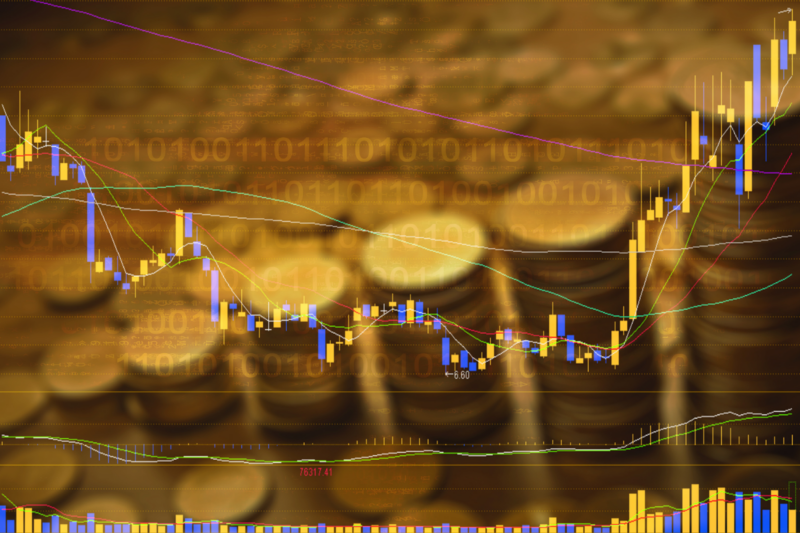


Although it experienced some fluctuations throughout the year, the price of gold rose 15% in 2023 to an all-time high of $2,130.20 per ounce, more than offsetting the headline inflation of 3.1% in Spain.
In February 2022 we launched Preciosos 11Onze, offering members of our community the opportunity to buy gold to protect themselves against inflation. Rising prices caused by geopolitical uncertainty and the energy crisis, together with currency tension due to the loss of value of the euro against the dollar, caused many families to lose much of their purchasing power.
In addition, having money in a bank account had become a problem, as bank fees on money held in current accounts were excessive and remuneration on savings was at a record low after a year of negative interest rates.
This led to a flight from deposits by many families who decided to diversify their savings by taking their money out of banks in favour of other products and investments offering higher returns. In this context, buying gold was not an investment or an instrument of speculation, but one of the few options people had to safeguard their money.
In that first year of Preciosos 11Onze, year-on-year inflation in Spain was 8.4%, while gold appreciated by 9.5%. This increase in the value of the golden metal more than compensated for the rise in prices, solidifying its reputation as a true safe-haven asset that protects our savings, especially in times of economic crisis.
Gold prices reach new all-time highs in 2023
Against a backdrop of high-interest rates, the US banking crisis, geopolitical tensions, military conflicts and emerging market demand, gold outperformed expectations to reach its record price of $2,130.20 per ounce on 4 December, rising in value by 15% over the previous year.
This is a much higher return than other low-risk savings or investment options, such as time deposits or Treasury bills. More importantly, it more than offsets the 3.1% headline and 3.7% core inflation in Spain in 2023.
Looking ahead, the gold price is likely to remain bullish through 2024. Geopolitical tensions continue to worsen in the Middle East, raising near-term inflationary risks. According to a Reuters survey of 30 analysts and market participants, gold prices will rise during 2024 from this year’s average.
On the other hand, the Bank of Spain forecasts that economic growth will be slower this year and that inflation will remain around 3.3%. This means that, for yet another year, Preciosos 11Onze’s gold will once again be an optimal choice for correcting inflation and safeguarding our savings.
If you want to discover the best option to protect your savings, enter Preciosos 11Onze. We will help you buy at the best price the safe-haven asset par excellence: physical gold.
The low yields offered by traditional bank deposits are pushing people to look for safe alternatives to avoid money depreciation. 11Onze offers savings ranging from small to large amounts, always with very low risk.
One of 11Onze’s objectives is to help its community protect their savings and purchasing power. This means trying to get a return on their money, and doing it safely. Currently, 11Onze accumulates proposals that allow you to save from €225 to more than €125,000. We review all the options in a conversation with 11Onze’s product manager, Isaac Sène. In this podcast, we discover not only the current products, but also the three new products that will be made available to the community.

About 11Onze | Savings for everybody
Savings options for everyone
Which savings option suits you best? Choose one based on the minimum capital.
- €222. This is the cost of the Vienna Philharmonic gold coins.
- €3.000. Buy gold from Preciosos 11Onze. Bullion in custody or at home. In the first year of pooled purchases, Preciosos 11Onze has proven that it is able to protect savings from inflation.
- €3.000. Investing in 11Onze, as El Gran Salt investors did.
- €4.000. Available soon. A new product linked to gold. Discover it by listening to the podcast.
- €25.000. Available soon. New product from an external supplier. All the information soon on 11Onze Recommends. Find out more clues about this fund with the principal sum insured and returns above inflation.
- €125.000. On 11Onze Recommends, you can find all the information about Guaranteed Funds. Yields between 2.5% and 165%.
Security at the core
Saving with 11Onze is always based on one maxim: they must be safe propositions. That is why we have made a firm commitment to gold, because of its historical role as a store of value. The fact that money cannot be lost is also clear with the products selected by 11Onze Recommends, funds that guarantee the capital invested. But the clearest proof that security is at the core is provided by El Canut. The 11Onze current account does not work like a normal bank account, which can use the money from the deposits for its expenses. The 11Onze accounts are off-balance sheet, because that is how Electronic Money Institutions (EMI) are regulated. In addition, there is an insurance that guarantees 100% of the amount in the accounts.
What else will 11Onze bring to your community in the near future? The product manager, Isaac Sène, warns that “the next step will be crypto”. Of course, as always, with security at its core.
If you want to discover the best option to protect your savings, enter Preciosos 11Onze. We will help you buy at the best price the safe-haven asset par excellence: physical gold.
If you liked this article, we recommend you read:

The best gift of the festive season comes from 11Onze, and the procedure for buying it is very simple. We explain how to do it in a podcast!
If you want to give a present for tomorrow’s future that won’t lose its value, the best option is gold.
In this conversation with Càrol Rafales and Coral Santacruz, product managers at 11Onze, they explain the procedure for purchasing the Krugerrand and Britannia coins that we offered last year, the same process you have to follow to buy the Vienna Philharmonic coin that we have available this year.

About 11Onze | For Tomorrow
If you would like more information about buying gold coins for tomorrow’s future, you can fill in this form and an 11Onze agent will contact you. “Once everything is done, payment can be made directly by credit card,” explains Rafales. The customer can choose the Vienna Philharmonic coin (€225) and, immediately afterwards, will start preparing the shipment.
All the information about the history of this mythical coin can be found here. All the information about the history of these mythical coins can be found here. Shipping costs €9.99, except for El Canut users, who get free shipping.
What will we receive at home?
A few days later you will receive the 11Onze Christmas card for tomorrow’s future, the gold coins and a gold voucher for each final recipient. “The gold voucher is personalised with the value of the purchase, the name of the buyer and for whom it is for”, says Art Director Laia Gubern. In this way, each child, grandchild or nephew, will have an exclusive gold voucher that confirms the purchase that has been made for him or her.

For tomorrow’s future is an exclusive 11Onze campaign designed to protect the future savings of the next generation. In the context of the depreciation of the euro due to inflation and competition from the dollar, with a growing distrust of fiat currencies, we had to find a way to give something away for the same purpose. If up to now we have been giving away money for tomorrow’s future, logic suggests that perhaps the best thing to do now is to give away gold.
With Preciosos 11Onze you can buy gold bars and Vienna Philharmonic gold coins. For what lies ahead, gold.
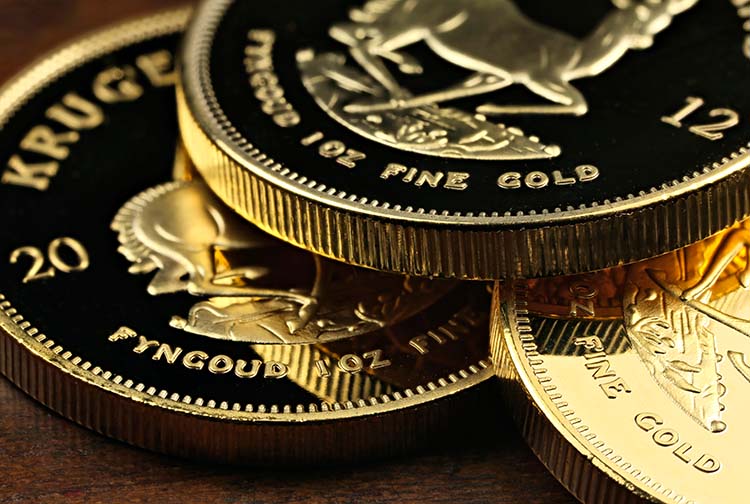
After a 2023 in which the value of the golden metal has risen to record highs, financial analysts expect the value of gold to continue to rise during 2024, thanks to falling interest rates and strong demand from central banks.
So far in 2023, the price of gold has risen by 13% compared to the same period last year, exceeding expectations in a high-interest rate environment. This is a much higher return than other low-risk savings or investment options, such as fixed-term deposits or Treasury bills.
The US banking crisis, geopolitical tensions, military conflicts and the US Federal Reserve’s stance on maintaining interest rates have been some of the main factors contributing to the fact that gold continued to be a safe-haven asset for investors throughout the year.
Although gold prices started in a downward trend in October – after falling during September – the outbreak of a new armed conflict between Palestine and Israel pushed the price of the precious metal up by more than 10%, surpassing the mythical figure of $2,000 on the 4th of September, when it reached $2,130.2 per ounce, thus offsetting the losses that had occurred since the highs of May.
Gold prices are likely to remain high through 2024
According to a Reuters survey of 30 analysts and market participants, the price of gold will rise during 2024 from this year’s average. Specifically, they forecast an average price of $1,986.5 per ounce in 2024, up from this year’s forecast of $1,925.
This is based on the assumption that global central banks will begin to loosen monetary policy and the fact that tensions in the Middle East continue to drive gold as a safe-haven asset for investors. “Gold has had a long history of being a geopolitical hedging instrument and has performed true to its reputation,” said Nitesh Shah, commodity strategist at WisdomTree.
Most economists agree that the Federal Reserve will end its interest rate hikes and start cutting rates in the first half of 2024, encouraging a revaluation of gold. Marko Kolanovic, head of markets at JPMorgan, advises investors to bet on safe-haven assets such as gold and bonds as tensions in the Middle East escalate, while Goldman Sachs expects commodity yields such as gold to rise over the next 12 months.
Still, as Carsten Menke of Julius Baer (an international reference in wealth management) says, “A return towards record-highs should only be possible in case of a severe slowdown of the U.S. economy, leading into a longer-lasting and broader-based recession.”
Preciosos 11Onze makes it easy to buy gold, at the best price and with total security. Protect yourself from economic crises with the ultimate safe-haven asset: gold. If you want your savings to keep or increase their value, Gold Patrimony.


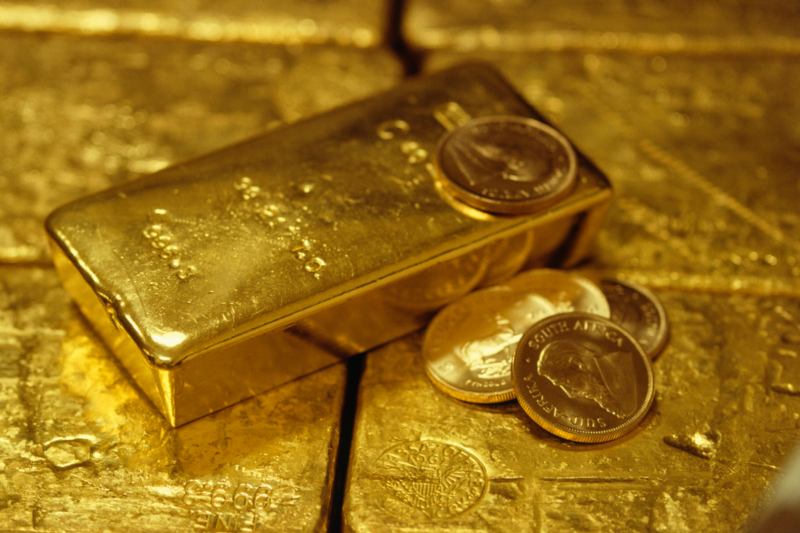
Despite the digitalisation of the economy, in many households, there is still the custom of keeping cash to deal with possible emergencies. This is why the Bank of Spain has issued a series of recommendations on the amount of cash it is advisable to keep at home.
Although digital payment methods are becoming increasingly popular, paying in cash for day-to-day expenses and keeping cash at home are still widespread practices among a large part of the population. In fact, according to a report by the Bank of Spain, the use of banknotes and coins continues to be the most widely used means of payment daily (65%) by Spaniards in physical establishments.
While people generally keep their savings in a bank account or protect them from economic uncertainty by buying safe-haven assets such as gold, they also tend to keep a certain amount of cash at home to deal with possible unforeseen events or payments that still need to be made in cash.
Currently, there is no regulation limiting the amount of cash that citizens can keep at home. The Bank of Spain clarifies that there is no maximum amount of money that we can keep at home and that it is a legal practice, as long as the origin of the money is legal and has been previously declared to the Tax Agency.
The Bank of Spain itself recommends that citizens keep cash at home for emergencies. It also stresses the importance of physical money for the population as a whole, pointing out that it is “within everyone’s reach and allows those who do not have bank accounts to make payments”.
As for the amount of money we should keep at home, this depends on the circumstances of each household. Therefore, personal needs and fixed expenses in areas such as housing, food and transport, among others, must be taken into account. The Bank of Spain does not give a specific figure but recommends that this amount should cover between 6 and 12 months of fixed monthly expenses.
Risks of keeping cash at home
Security is one of the main factors to consider if you keep cash at home. No matter how well-hidden our money is, there is always the possibility of theft. In this context, it is essential to take out home insurance to cover these possible losses.
Another variable to bear in mind is inflation. The Bank of Spain warns that, while keeping money at home is entirely legitimate, inflation can devalue the amount of money we keep at home over time. In other words, money will not grow at the same rate as inflation if we keep it under the mattress.
On the other hand, when it comes to using the money we keep at home, we must keep in mind that, for more than two years now, cash payments are limited to a maximum of €1000. Although the law allows for certain exceptions, exceeding this legal limit will result in a hefty fine from the tax authorities.
To discover the best option to protect your savings, enter Preciosos 11Onze. We will help you buy the safe-haven asset par excellence at the best price: physical gold.