The winter of precious metals
This 2025 has been a year that will go down in history for the true explosion of gold. Beyond occasional spikes, the yellow metal has reaffirmed its role as a safe haven, a diversification asset, and a sign of distrust toward conventional assets. Now, with the 2026 horizon ahead, it is worth asking: is this only a temporary surge or the prelude to a new cycle? And above all, what will it mean for savers and investors like you?
For almost a decade, gold lived in a kind of exile. Modest returns, institutional disinterest, and a dominant narrative proclaiming that technological assets —and even cryptocurrencies— were “the future.” In this context, the yellow metal seemed like a relic useful only at specific moments of turbulence.
But 2025 has completely turned this script upside down. The price of gold has not only climbed; it has done so by breaking psychological and structural levels it had not breached for years. Financial demand has regained unexpected vigour: in the United States alone, gold ETFs recorded a 58% year-on-year increase in the third quarter, according to World Gold Council data. It is a move that had not been seen in a long time and reveals a profound shift in investor sentiment.
This reappearance is not accidental. It responds to a cocktail of factors that, combined, create the kind of scenario that has historically fueled gold bull markets:
- Geopolitical uncertainty. Conflicts in Europe, rising tension in the Middle East, and a reconfiguration of global power among blocs. When political maps tremble, capital seeks refuge.
- Inflation that does not give way. Despite the slowdown from the 2023 peak, inflation remains above central bank targets. The loss of purchasing power becomes a real threat… and gold returns as the traditional shield against this phenomenon.
- Structural doubts about the dollar. U.S. fiscal policy, runaway debt, and de-dollarization moves led by emerging countries put pressure on the hegemonic currency. When the dollar hesitates, gold advances.
Taken together, these factors have made gold, far from being “out of place,” regain center stage in the financial arena, reaffirming its key function as an asset for preserving value.
The new driving force
If in the past retail investors were the ones who set gold’s bull cycles, 2025 has made a deeper change evident: demand has come from the system’s major players. And when central banks move, the market listens.
Over recent years, these institutions have been strengthening their gold reserves as part of a strategy of gradual de-dollarization and risk diversification. According to the World Gold Council, this trend will not only continue but will accelerate, and there is no indication that it should slow. Emerging countries —led by China, India, and Turkey— are at the center of the movement, but even some European central banks, have resumed purchases after decades of inactivity.
Added to this institutional demand is another engine: listed financial capital. In the United States, ETFs linked to physical gold have absorbed more than 37,000 million dollars in net inflows through September, a figure not seen since the last major bull cycle. The entry of these volumes shows a return of “smart money” toward tangible, resilient assets that are independent of monetary policy.
This context, combined with solid fundamentals, has led multiple international analysts to revise their forecasts upward. According to Mining, the price of gold could stand between 4,400 and 5,300 dollars per ounce in the coming year, a scenario that would place the metal in territory it has never reached.
But one of the most discussed predictions is Goldman Sachs’s, which anticipates an additional 6% increase through mid-2026. The determining factor, according to the institution, will not be jewelry demand or speculative funds, but the structural accumulation by central banks, a slow, steady, and extraordinarily powerful market force.
The key factors that explain this rise are mainly:
- Weakening of the dollar: the loss of confidence in the dollar’s role as the hegemonic currency pushes entire economies to strengthen tangible alternatives such as gold.
- Expectations of rate cuts in the U.S.: lower rates reduce bond yields and make gold —which does not generate cash flows but preserves value— more attractive.
- Geopolitical and trade tensions: global fragmentation creates an environment in which risk assets suffer and safe havens thrive.
- Accumulation of reserves outside the West: emerging countries seek to shield themselves against sanctions, devaluations, and financial instability.
Taken together, these elements do not describe a simple cyclical rebound. They point to a reconfiguration of the monetary order, where gold once again acts as a natural counterweight to fiat currencies and to an increasingly fragile financial system.
Where are markets looking in 2026?
If it is confirmed that gold can reach 4,400–5,300 dollars per ounce, we are facing a profound mutation of the market: gold would cease to be an “alternative asset” and become, de facto, an essential asset for preserving value. And this idea, which until recently seemed exaggerated, is today a serious hypothesis in many research offices.
The levers sustaining this possible new stage are clear. On the one hand, institutional and central-bank demand maintains a solid pace, driven by the need to diversify reserves and reduce monetary dependencies. In addition, the macro environment continues to play in the metal’s favor: if inflation persists or central banks choose to keep interest rates high, gold strengthens its role as a natural hedge against the loss of purchasing power.
Geopolitics adds even more pressure, because any shock between China and the U.S., a new episode in the Near East, or tensions in supply chains can immediately reactivate flows into safe-haven assets. And if, in parallel, bonds offer meager returns and stock markets enter phases of volatility, the metal shines again as a stable alternative amid the noise.
Even so, the path is not free of risks. An unexpected tightening of interest rates or a rebound in the dollar could slow the rise. There is also the phenomenon known as gold fatigue: when everyone takes for granted that it will keep rising, the market can lose momentum. And finally, it cannot be ruled out that other emerging assets, such as certain cryptocurrencies or industrial metals such as silver, capture part of investor attention.
Despite these nuances, the consensus is clear: if 2026 confirms the current trajectory, we will not be talking simply about a rebound, but about a change of era in gold’s role within the global financial system.
Impact for savers, investors, and the Fintech ecosystem
In an environment of persistent uncertainty, gold once again acts as a protective cushion for the saver: it does not replace a complete portfolio, but a moderate exposure can help soften monetary or stock-market shocks. At the same time, the Fintech revolution has democratized access to the metal: today it can be invested in through physical purchase, ETFs, digital platforms, fractional investment, or tokenization systems that were previously unthinkable.
For the end customer, the rule remains the same as always: balance and diversification. Neither concentrating everything in gold, nor ignoring an asset that has shown resilience when other markets weaken. And it should be kept in mind that, in many European countries, investment gold enjoys a specific tax treatment, an element that can influence the real return of any strategy.
If 2025 has been the year of the breakout, 2026 could be the year of consolidation. But nothing is automatic: gold’s trajectory will depend on inflation, the dollar, geopolitics, and central bank decisions. Gold is not a magic wand, but it is a key piece within a broader financial puzzle that the 11Onze community must observe with a critical and informed outlook.
If you want to discover the best option to protect your savings, enter Preciosos 11Onze. We will help you buy at the best price the safe-haven asset par excellence: physical gold.



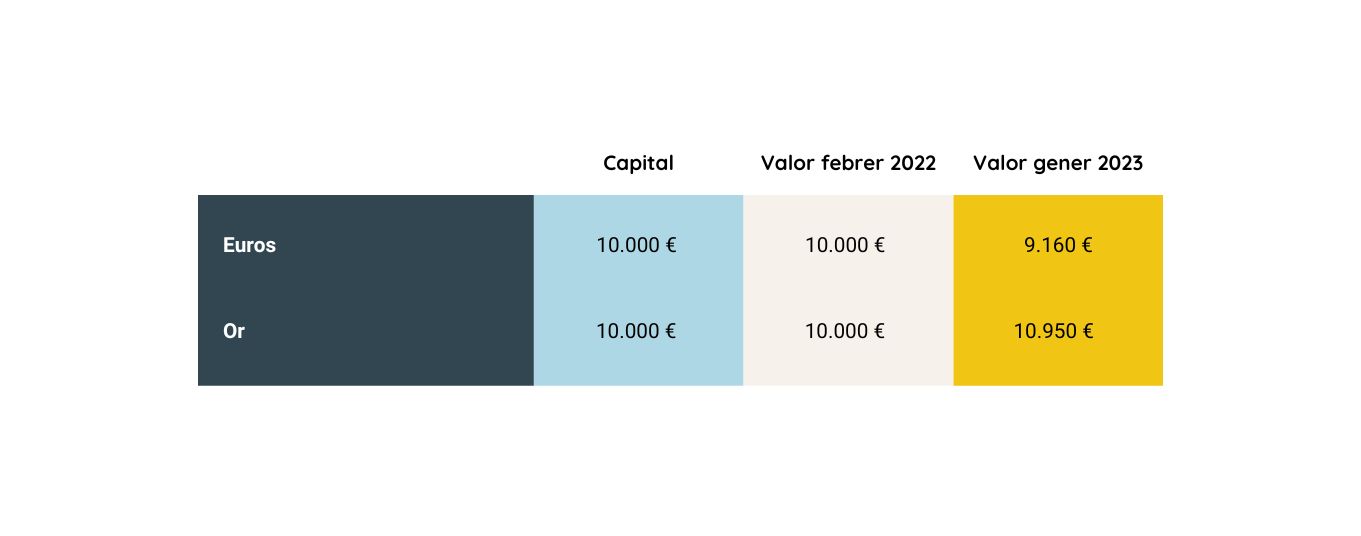
Year-on-year inflation in Spain in 2022 was 8.4%. Preciosos 11Onze gold has appreciated by 9.5%. In February 2022 we launched Preciosos 11Onze, offering members of our community to buy gold to protect themselves against inflation. Almost a year later, the gold price confirms the forecast.
It is no secret that an analysis of the historical evolution of the value of gold shows that, despite some occasional downward fluctuations, it is a real safe-haven asset that protects our savings, especially in times of economic crisis. This was obvious during the three-year period of the sanitary crisis, when gold prices increased by 40%.
After the return to ‘normality’, 2022 was seen as the year to consolidate the economic recovery. Even so, geopolitical uncertainty and the energy crisis, together with high inflation and currency tension due to the loss of value of the euro against the dollar, caused many families to lose much of their purchasing power.
A safe haven in the face of uncertainty
In this context, buying gold was not an investment or an instrument of speculation, but one of the few options people had to safeguard their money. That is why we launched Preciosos 11Onze, as a tool for our community to protect their savings in an extremely turbulent context.
The strength of the dollar and uncertainty about the possible rise in interest rates contributed to the fluctuation in the price of gold during 2021, but by early 2022 a new upward trend was confirmed. So, since then, has it maintained its reputation as a safe-haven asset? Without a shadow of a doubt, yes. When we launched Preciosos 11Onze, an ounce of gold was trading at €1.599, and today it is priced at €1.749, a rise in value of almost 9.5%.
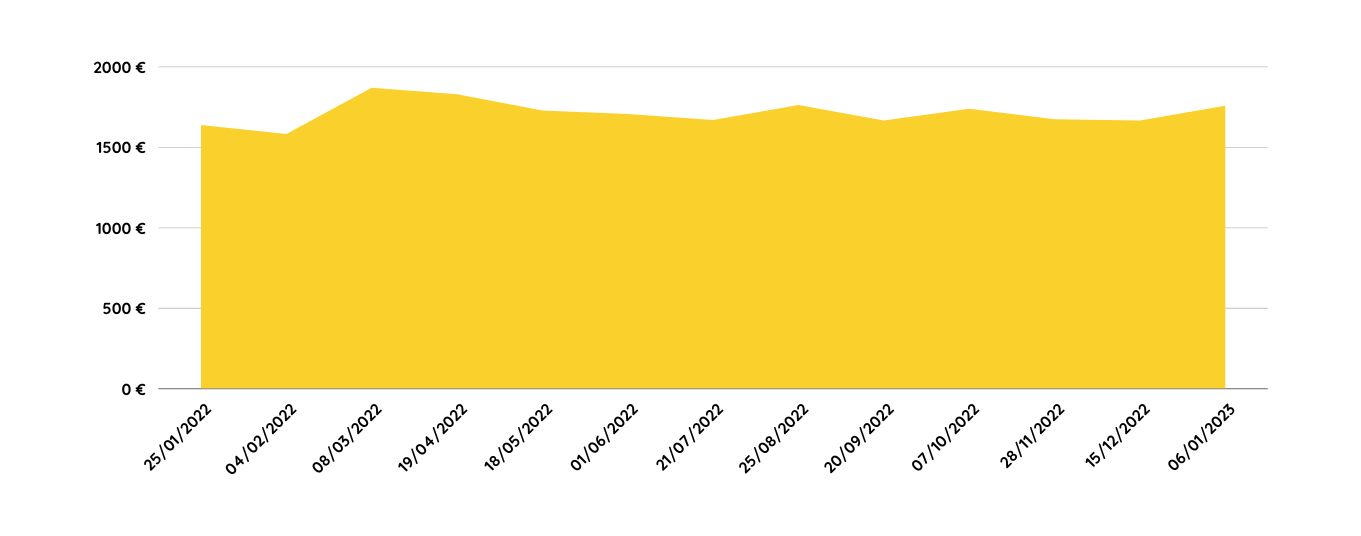
This means that in the face of the depreciation of the euro due to inflation and competition from the dollar, having your money in gold would not only have prevented the loss of its value, but would have increased it considerably. Of course, it should be borne in mind that historical returns are not indicative of future returns and that any purchase of precious metals carries some risk, but as we have seen, leaving your money in the bank can be much worse.
If you want to discover the best option to protect your savings, enter Preciosos 11Onze. We will help you buy at the best price the safe-haven asset par excellence: physical gold.
Starting a new year is like starting a notebook. This 2022 has to be, by force, a year of plenty, because the previous two years have been pandemic and have been a real lesson for us, as well as helping us to prioritise our lives. As well as helping us to prioritise our lives, they have certainly helped us to learn how to save, and now it’s time to put all these lessons into practice!
To start the year off on the right foot, agent Silvia Granado gives us 11 tips for saving for 365 days. So that you have enough money left over to go on that weekend getaway you’ve been thinking about for a long time, or to shop during the sales, or to pay for that language course you know you need.
Let’s start with the basics: buy what you really need, organise a box with 12 envelopes for the 12 months of the year where you can hide some notes that will add up to a good amount at the end of the year, save the extra payments right away in the savings account, make a budget for holidays and divide the amount by 12 months to know how much you have to save each month, reduce lunches and dinners out and review subscriptions to content platforms. Want to know more tips? Check out the other half in the video below!

11 tips to start the year saving


We close a year in which the general rise in prices has made it difficult for many families to make ends meet. How will the economy evolve in 2023? What can we do to adjust the family budget? We talk about it with Xavi Viñolas, Editor of 11Onze and Gemma Vallet, Director of 11Onze District, in a new episode of La Plaça, Territori 17’s radio show.
With a year-on-year inflation rate of 8.4%, 2022 has been disastrous for many families who have seen their purchasing power fall to unsustainable levels. Runaway price rises have pushed up the cost of living at a time when many households were just recovering from the shock of the pandemic. What lies ahead for 2023?
This year, we will see whether central banks can halt the rise in prices without neutering the recovery of economies. Financial analysts predict that inflation will fall to 5%, but as Viñolas points out, “in a context of uncertainty and high economic volatility, we have to take any economic forecast with a grain of salt, the same experts told us that current inflation would only last a few months”.

La Plaça – Territori 17: Cost of living
Proactivity in reducing expenses
Now, more than ever, it is necessary to have a piggy bank for possible unforeseen events. But, faced with an economic context that does not favour saving and where our money has lost a good part of its value, it is not easy to reduce our monthly expenses in order to save.
The editor of 11Onze suggests we be proactive and look at reducing some fixed expenses, which are not always difficult to cut. Services contracted on a permanent basis, such as home or car insurance, can be renegotiated, or we can simply switch to a provider that offers a policy without permanence and more suited to our needs, which can be much cheaper.
Likewise, suppliers of utilities, such as electricity, can give us some room for manoeuvre, changing the contracted power or switching from the free market to the regulated market. Modifying the contract or looking for more reasonable offers can mean considerable savings and help us to balance the budget at the end of the month.
If you want to discover fair insurance for your home and for society, check 11Onze Segurs.

The limitation of the price of gas has lowered the price of electricity and gas compared to 2022. However, energy consumption is one of the most expensive fixed costs for Catalan households, so we propose ideas to reduce consumption.
We leave behind the holidays and winter begins to peek timidly to the head. This combination forces us to consider how to save on heating, because the pockets are shorter than ever at the beginning of the year. For this reason, from 11Onze the head of agents Mireia Cano raises 5 tricks to heat the house saving to the maximum.

This winter, save!
- Avoid sudden changes. When heating the house or a room, either with a stove or heating, do it gradually. Set a low temperature and raise it as the room warms up. If you set the temperature too high all of a sudden, the energy demand will be much higher.
- Take advantage of the hours of sunshine. We do it little in winter, but it is important. During the hours of sunshine, remove the curtains. If it is not cold at midday, take the opportunity to open the windows. The sun’s rays will warm the floor and the interior walls of the house. It’s not much, but every little helps!
- Insulate well. It is necessary to have good insulation, if not you can lose 30% of the heat of the house. Windows and doors are key. In the video, Mireia Cano suggests some homemade ideas that can help you. Something very simple and important is to lower the blinds every night so that the coldness does not radiate through the windows.
- Heat efficiently. It is not necessary to heat the whole house if you do not use all the rooms. Do you need the dining room? The bedroom? The bathroom? Then heat these spaces. It is obvious that air circulation will tend to balance the temperature, so what you should do is close the doors of the rooms you do not need.
- Invest in fabrics. If you don’t want it to get cold, keep the house warm. What does this mean? That the fabrics retain heat very well, therefore, carpets and curtains will help us to have a warmer home.
And finally, Mireia Cano adds an extra tip: heat the bed the way our grandparents did, with hot water bottles. Or, if you want, with bags of seeds that are heated in the microwave. Saving is key, for the pocket and for the planet. Applying these tricks won’t make you rich, but it sure will save a little. And as the saying goes, every stone makes a wall.
11Onze is the community fintech of Catalonia. Open an account by downloading the app El Canut for Android or iOS and join the revolution!

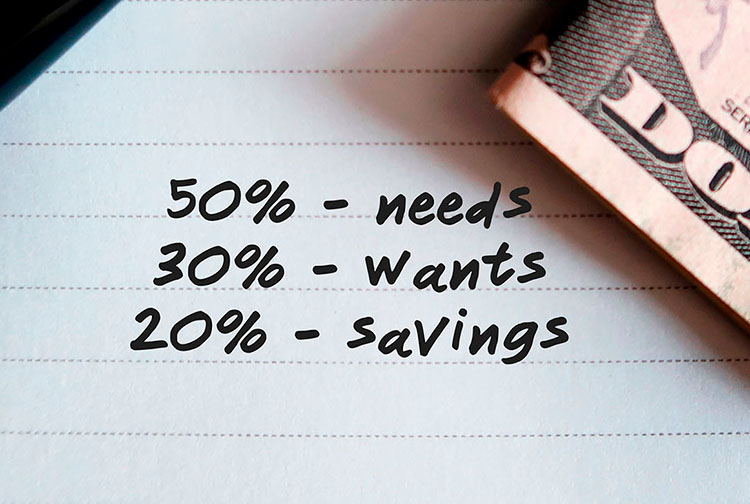
En la situació econòmica actual, estalviar és un objectiu que a tots ens agradaria assolir, però que sembla pràcticament impossible. Et presentem un mètode d’estalvi que es basa en percentatges i que et permet estalviar una quantitat mensual de diners més fàcilment del que et penses.
“És un mètode que s’utilitza habitualment per tots els que, no només volen estalviar, sinó que volen portar un control mensual de les seves despeses”, afirma Coral Santacruz, especialista de màrqueting d’11Onze.
Aquest mètode consisteix a separar el sou en tres percentatges diferents, “el 50% s’ha de destinar a les despeses fixes, el 30% a les despeses evitables, i el 20% es destina a l’estalvi”, detalla Santacruz. Seguint aquesta regla és fonamental que no destinem mai més de la meitat dels ingressos mensuals a cobrir les nostres necessitats bàsiques.
Com explica l’especialista de màrqueting, “per assegurar-nos de poder utilitzar aquest mètode sempre que puguem”, hem d’intentar posar-lo en pràctica “just quan rebem la nòmina, per no córrer el risc de gastar més durant el mes”.

Mètode d’estalvi 50 30 20
Si vols descobrir la millor opció per protegir els teus estalvis, entra a Preciosos 11Onze. T’ajudarem a comprar al millor preu el valor refugi per excel·lència: l’or físic.



Si et preocupa la qualitat de l’aigua que beu la teva família, probablement carreteges grans quantitats de garrafes o d’ampolles d’aigua mineral que al cap de l’any et costen més de 1.000 euros. Amb un filtre a la teva aixeta pots continuar gaudint d’aigua de qualitat, reduir per 15 la teva despesa, ajudar el planeta i estalviar-te maldecaps i d’esquena.
Estalviar no significa necessàriament privar-se de moltes coses. Sovint significa evitar sobrecostos innecessaris en productes essencials. Per això neix Imprescindibles 11Onze, perquè puguis reduir despeses en productes dels quals no pots prescindir.
El primer d’aquests productes disponibles a la web d’11Onze està relacionat amb l’aigua, el líquid essencial per a la vida. Hem de beure’n dos litres diaris i el més habitual és que acabem comprant un munt d’ampolles o garrafes de plàstic, amb el consegüent impacte mediambiental del plàstic que comporten.
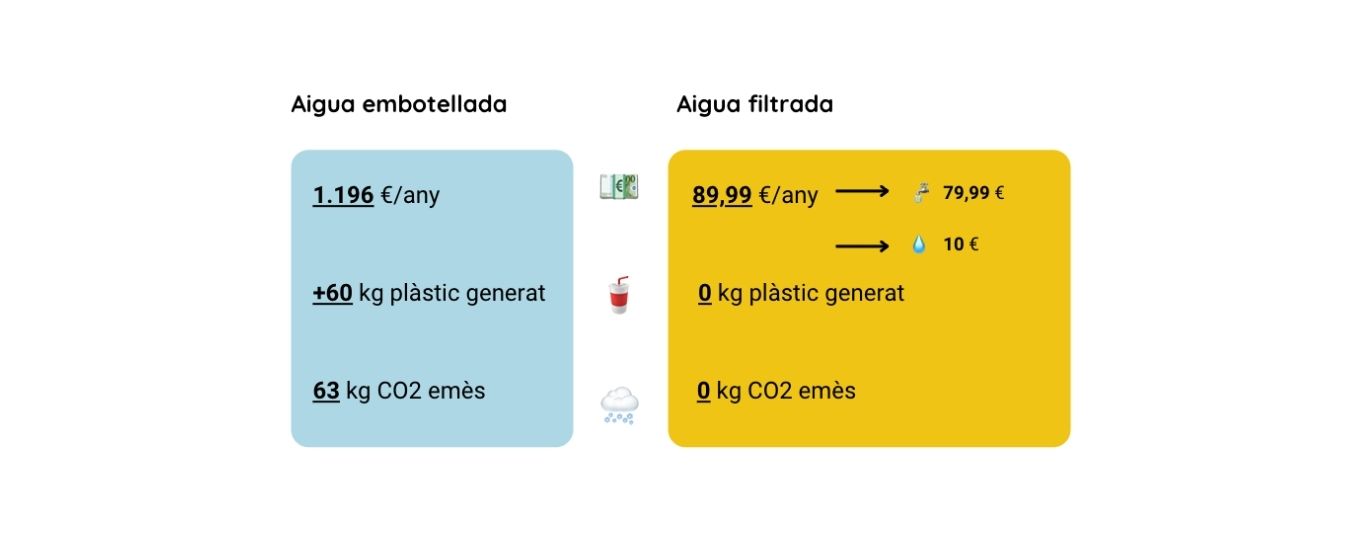
Una família de quatre membres hauria de beure una mitjana de 2.920 litres d’aigua a l’any. Això equival a una despesa mínima de 1.196 euros si comprovem els preus de les ampolles d’1,5 litres més populars als principals supermercats d’Espanya i fem la mitjana.
En termes mediambientals, aquest consum suposa més de 60 kg de plàstic abocats al planeta i una quantitat de CO₂ similar emès a l’atmosfera durant la seva fabricació i transport.
Més de mil euros d’estalvi
És possible beure aigua de bona qualitat, amb bon sabor, estalviar i ajudar a preservar el planeta? La resposta és sí. Tan senzill com substituir el consum d’aigua envasada per aigua filtrada. El filtre Tappwater, que està fet en un 70 % de closca de coco, captura fins a 100 substàncies que podem trobar a l’aigua corrent, metalls pesants inclosos.
Pel que fa a l’estalvi econòmic, la senzilla instal·lació d’aquest filtre, que no requereix cap eina, equival a un estalvi de més de 1.100 euros a l’any per a una família de quatre membres. De gairebé 1.200 euros que suposa la compra d’aigua envasada es passa a menys de 90 euros en total.
El kit amb el filtre i els recanvis necessaris per al consum anual costen 79,99 euros. I a això només s’han de sumar menys de 10 euros de consum d’aigua de l’aixeta, tenint en compte que el preu mitjà a Espanya és d’aproximadament 0,0019 euros per litre i que amb el paquet anual de Tappwater es poden filtrar fins a 4.800 litres.
El planeta també s’estalvia plàstic i CO₂
Addicionalment, el medi ambient s’estalvia unes 1.947 ampolles de plàstic que no hauràs de carregar fins a casa i 63 kg de CO₂. I també t’assegures que l’aigua està lliure dels microplàstics que poden desprendre els envasos de plàstic quan es degraden per l’escalfor, i que ja s’ha demostrat que arriben al nostre torrent sanguini.
Tots els productes de Tappwater passen estrictes proves de qualitat abans de ser enviats als clients, i per això ofereixen una garantia d’un any.
Si vols descobrir com beure la millor aigua, estalviar diners i ajudar al planeta, entra a Imprescindibles 11Onze.



Fixed-term deposits, Treasury bills and mutual funds are the three main options chosen by households seeking to increase the returns on their savings to fight inflation. Even so, which alternatives offer better returns?
Despite the low remuneration for savings still offered by large banks, according to data published in December by the Bank of Spain, households have moved more than 50,000 million euros to fixed-term deposits since the beginning of 2023, for a cumulative total of more than 115,000 million euros in these products at the end of November.
The Spanish banking sector has shown itself to be one of the slowest in the European Union to reflect the European Central Bank’s interest rate hike with a better return on savings. The Spanish average of 2.45% remuneration on deposits of up to one year is still well below the 3.27% of the eurozone.
While Spanish banks suffered the worst flight of bank deposits in Europe during the first two quarters of the year, the public increased its investment in the Treasury to more than 28 billion euros in 2023, an unprecedented record. The high yield offered by short-term public debt has reached 4% (3.7% in the last auction) compared to the 2.45% average traditional banks offer for deposits.
On the other hand, households have also sought to make the most of their savings through guaranteed fixed-income investment funds, which promise investors, as of the maturity date, the recovery of the initial capital and also a predetermined fixed return. The low risk associated with these funds often comes with a low return, but in the current context, they can still be a good alternative to the fixed-term deposits offered by banks.
The savings options that 11Onze Recommends
Saving with 11Onze is always based on one maxim: they must be safe propositions. That is why we have decidedly opted for gold, because of its historic role as a store of value. With Preciosos 11Onze you can buy gold bars from £3,000 or Vienna Philharmonic gold coins from £225. We offer gold bullion in two formats that have counteracted the effect of inflation over the past two years: Gold Patrimony and Gold Seed.
A Guaranteed Fund with full security and an accrued interest of between 2.5% and 165%. The capital and returns are 100% insured by one of the world’s leading insurers. Therefore, you avoid market fluctuations and know for certain that you will get up to 35% interest on your money in 10 years.
If you want your savings to generate monthly income, 11Onze Recommends Monthly Return, a product that yields 22% in 2 years. It is a high-return, low-risk product, with the funds covered by insurance.
Social justice does not have to be at odds with generating returns on your savings. Thanks to Litigation Funding, you can help others who have been deceived by banks or the government, while earning returns of between 9% and 11% on your money.
If you want to discover the best option to protect your savings, enter Preciosos 11Onze or have a look at the products that 11Onze recommends in our Marketplace.

Spanish banks are the ones that pay their clients the least for their deposits. Currently, several academics attribute the responsibility for the Great Inflation of the 70s of the 20th century to the fact that citizens stopped seeing their savings remunerated, pushing them to spend and boost inflation.
Spanish banks pay 0.04% for their clients’ demand accounts and 0.64% for deposits. They are, by far, the stingiest in Europe since in the EU they pay, on average, 70% more. This happens while posting record profits. The data not only speaks of crazy greed on the part of the Spanish banking system, it could also be a threat to the economy as a whole. And the reduction in the remuneration of savings was key to causing the Great Inflation of the 1970s in the United States, with a devastating effect on economies around the world.
Fewer returns, more spending
All this is explained in a scientific article by economist Itamar Drecshler, professor at the University of Pennsylvania and author of the aforementioned article, in collaboration with two researchers from New York University. In the article, the academics propose a rereading of the triggers of one of the biggest financial crises in history, which took away the savings of millions of people. Then, the inflationary period lasted from 1965 to 1982 and reached 14%.
At that time, a series of factors came together that terribly affected the economy: the enormous public spending to pay for the Vietnam War with the consequent abandonment of the Gold Standard due to the impossibility of supporting that volume of debt; the oil crisis and also a wage-price spiral that was chasing and pushing each other. All of this could not be brought under control until Federal Reserve Chairman Paul Volcker aggressively raised the price of money, pushing the country into a recession, to restore the Fed’s authority.
But there is one more element on the table that, until now, had not been pointed out as responsible for inflation and that could have had a lot to do with it. In 1965, financial legislation known as Regulation Q was implemented. In practice, it imposed a limitation on the remuneration of savings, which limited citizens from benefiting from possible interest increases. Penalizing savings in this way caused many people to stop seeing any point in saving, so they preferred to spend. As a consequence, the increase in demand caused prices to rise. Inflation evidently had the effect of reducing savings even further, because more money was needed to buy previously cheaper consumer goods. This spiral intensely damaged the United States economy and spread internationally.
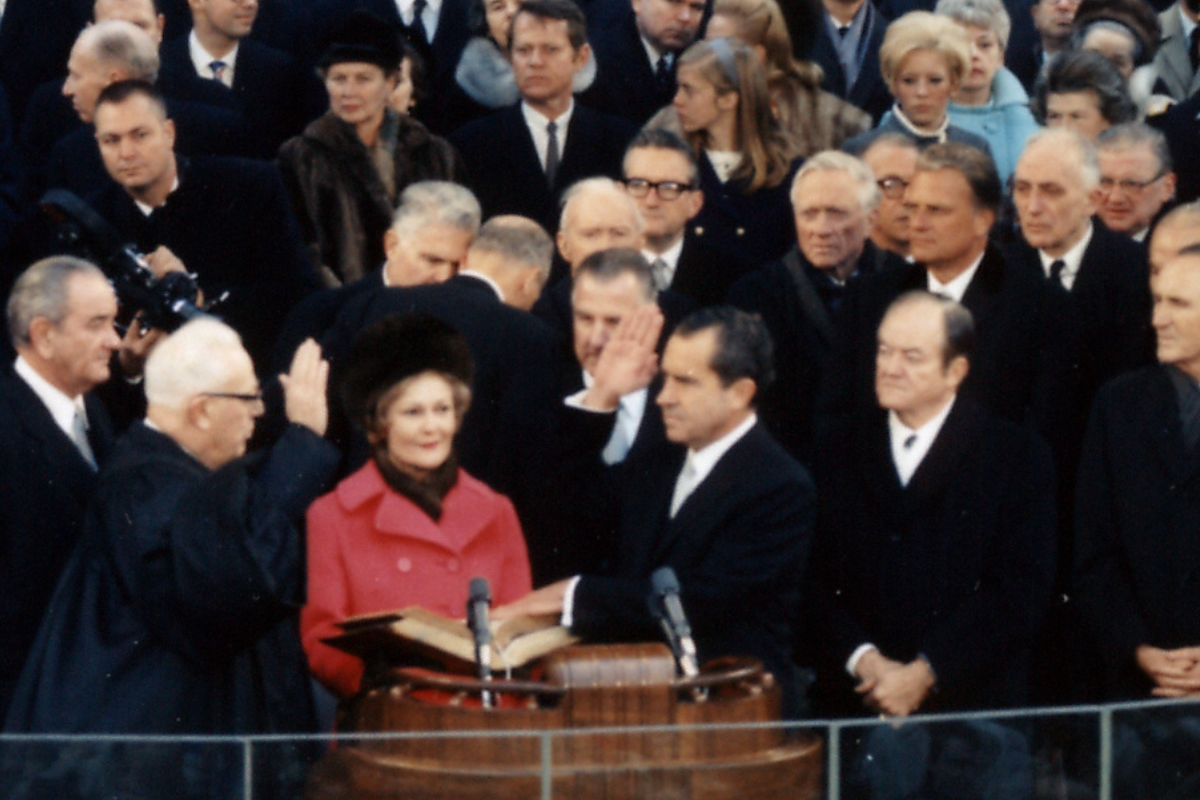
“The President of the United States, Richard Nixon, made the country leave the Gold Standard to continue printing dollars to invest in the Vietnam War.”
History repeats itself?
The current scenario has points in common with what was experienced in the 70s or, at least, some errors are being repeated. The main thing could be to penalize citizens’ savings in an inflationary cycle. Because both the Federal Reserve and the ECB have already decidedly raised interest rates, but the banks have not passed this on to their clients. In this context, it is worth remembering that in 2021 inflation in Spain was 3.1%, in 2022 it was 8.4%, and in 2023 it returned to 3.1%. This implies an average price increase of 14.5% in 3 years. But, in addition, we must take into account that for some basic products in the shopping basket, prices have risen by more than 30%. If we add the very high public spending to support the ongoing war conflicts, we have a panorama surprisingly familiar to what happened in the 70s. And, not learning from historical mistakes, banks continue to be driven by greed instead of passing on the benefits to client returns generated by the ECB’s high interest rates.
One of the best options at an individual level to begin to stop this spiral is to find savings formulas that avoid excessive consumerism that further fuels the inflationary whirlwind. At 11Onze we strive to offer options so that our users do not see their savings degraded. We do this through products such as Preciosos 11Onze’s Gold, but also through products such as Litigation Funding that 11Onze recommends and that allow us to achieve profits of more than 9% for the money contributed. What, without a doubt, does not help stop inflation is spending our savings on products overvalued or letting the money dwindle in accounts without returns.
If you want to discover the best option to protect your savings, enter Preciosos 11Onze. We will help you buy at the best price the safe-haven asset par excellence: physical gold.


Tot i que qualsevol moment de l’any és bo per començar a estalviar, també és veritat que fàcilment podem trobar una excusa per no fer-ho mai. La pèrdua de poder adquisitiu per la inflació desbocada, els sous baixos, les rebaixes, el Black Friday! No obstant això, hi ha mètodes d’estalvi que requereixen un mínim esforç i estan a l’abast de quasi tothom. Càrol Rafales, de l’equip de producte d’11Onze, ens en presenta un de ben senzill de seguir.
Són moltes les persones que tracten d’estalviar per fer front a imprevistos, preveure futures compres o planificar unes bones vacances. Tantes com les que no saben com fer-ho, o que comencen a estalviar tot animades, però ho deixen córrer al cap de poc temps. Potser la clau està en anar pas a pas i començar a estalviar petites quantitats. Com apunta Rafales, “veritat que si us dic d’estalviar un euro la primera setmana, i dos la segona, no us sembla tan difícil?”.
Doncs en això es basa el repte d’estalvi de les 52 setmanes. Un mètode per estalviar fàcilment que consisteix a posar una quantitat de diners, durant 52 setmanes, en una guardiola, pot o el que t’agradi més, equivalent al número de la setmana que toqui.
El mètode d’estalvi de les 52 setmanes
De mica en mica s’omple la pica
Estalviar un euro la primera setmana, dos la segona, i així successivament, ens pot semblar ridícul, però si tenim en compte que al cap de l’any haurem estalviat 1.387 €, estem parlant d’una xifra que no és gens menyspreable. I que en tot cas, si tens un nivell d’ingressos prou elevat, “pots començar amb una xifra més elevada de” per exemple “21 €, per aconseguir més de 2.300 € al final de l’any”, explica Rafales.
Si no ens en refiem de la nostra constància en seguir aquest mètode, sempre podem programar una transferència setmanal a un compte d’estalvi, que fins i to ens pot donar uns interessos. A més, d’aquesta manera ens assegurem que aquests diners siguin de difícil accés ràpid, evitant temptacions de trencar la guardiola.
Si vols descobrir com beure la millor aigua, estalviar diners i ajudar al planeta, entra a Imprescindibles 11Onze.