Is the mortgage opening commission clause abusive?
The opening commission clause charged by banks when we ask for a loan can be considered abusive if certain transparency requirements are not met. Several courts have ruled on their nullity as they consider that they do not correspond to any effective service provided by the bank.
On 16 March, the Court of Justice of the European Union overturned the approach of Spanish jurisprudence and opened the door to the opening commission of a loan or mortgage being considered an unfair term. The CJEU ruling establishes that the opening fee for a loan or mortgage does not constitute a part of the main object of the contract, having an “ancillary” nature and, therefore, can be an unfair fee.
The European court was responding to the case between CaixaBank and a customer after a court forced the bank to return 845 euros that it had charged him as the opening commission on a mortgage-backed loan, considering this fee to be abusive.
After unsuccessfully pursuing the matter, CaixaBank decided to take the case to the Supreme Court, which asked the CJEU to rule on a specific Spanish law, which considers that the opening commission regulates an essential element of the contract and cannot be considered abusive if it is drafted in a clear and comprehensible manner.
Even so, for the CJEU it is a non-essential obligation of the contract, or in other words, it considers that it is an invention of the bank in order to make money, which does not really obey any specific service or expense differentiated from the activity of the loan itself.
On the nullity of the opening commission
Firstly, it should be borne in mind that an opening commission will not always be declared abusive. The nullity of this fee will be determined after investigating whether the bank duly accredited, prior to the signing of the contract, that it carried out a risk study of both the client and the financial operation, and once the judge has assessed whether there is a significant imbalance between the rights and obligations of the two parties, evaluating whether the client was informed in a clear and comprehensible manner.
That said, to date, several courts have already ruled that some of these commissions are null and void, considering that they do not correspond to any service provided or justified expenses, and forced banks to refund the amount of these fees plus interest since the initial fee was paid. Therefore, banks could face a new wave of legal claims, as happened after the European court also overturned the “ground clauses” and the IAJD.
In the event that you consider that the opening commission for your mortgage may be abusive, you can complain directly to the customer service department of your bank to demand that they refund the fee you have been charged. On the other hand, you can contact a legal advisor to contract the services of a lawyer who can advise you on your particular case and defend your rights.
Fund lawsuits against banks. Do justice and get returns on your savings above inflation thanks to the compensation the banks will have to pay. All the information about Litigation Funding can be found at 11Onze Recommends.


Que sí, que la joventut és per gaudir-la i cal aprofitar cada moment, encara que això impliqui gastar més del compte en viatges, roba i oci. Però a partir dels 30 anys, hauries d’haver après a dominar alguns hàbits financers per aconseguir estalviar pel futur.
Si ets jove, atent, perquè a 11Onze recollim cinc consells que et poden ser útils per començar a organitzar les teves finances: aprendre a fer un pressupost, estalviar, no fer-se il·lusions espúries, no endeutar-se massa i guardar sempre una mica més. Aquestes són les claus per assolir la desitjada independència econòmica. I, si no en tens prou, la cap d’agents Mireia Cano t’aconsella com crear el teu primer pla d’estalvi al vídeo de sota!
- Aprèn a fer un pressupost. Això ho hem explicat a La Plaça alguna altra vegada, però la independència econòmica només s’aconsegueix si aprenem a complir amb un pressupost. Per això, cal saber quants diners guanyem i, sobre aquests ingressos, haurem de calcular el que volem gastar per assolir l’objectiu d’estalvi que ens hàgim posat.
- Estalvia entre un 10% i un 20% del que guanyes. I quina és la meta d’estalvi que ens hem de posar? Els experts recomanen, com a mínim, estalviar entre el 10% i el 20% del que ingressem, sobretot si el teu sou és molt baix.
- No t’expliquis el conte de la lletera. Amb les teves finances has de ser realista. Si tens una feina corrent amb un sou comú, no pots somiar a fer-te ric. Quina edat tens i què t’agradaria aconseguir a la vida? Quant de temps creus que hauràs d’invertir amb els diners que guanyes ara? Així sabràs quants diners has d’estalviar.
- Si t’endeutes, tu controles. Si a partir dels 30 anys, necessites endeutar-te per pagar el cotxe, la hipoteca o els estudis, controla que no tinguis cap deute acumulat i, si necessites demanar un préstec, avalua que això no sigui una llosa que arrosseguis massa anys. En aquest sentit, un bon mètode és llistar els teus deutes del més gran al més petit, i invertir els teus ingressos a pagar-los en aquest ordre.
- Guarda sempre una mica més, per si de cas. No saps mai quan tindràs una despesa inesperada i urgent. Per això, està bé sempre tenir un fons d’emergència pel que pugui passar. Per això, està bé esbossar un pla per guardar un percentatge del teu estalvi a aquest fons de contingència.

Com crear el teu primer pla d’estalvi



For years, stock buybacks by large companies, especially financial institutions, have been the norm. These operations can bring legitimate strategic benefits, but they can also be used to disguise accounting results and manipulate stock prices.
For most of the 20th century, share buybacks were considered illegal because they were believed to be a way of manipulating the stock market. It was in the 1980s that neoliberal policies allowed share buybacks to become one of the most popular financial engineering tools.
What is a stock buyback?
A share or stock buyback is a financial transaction whereby a company buys back its shares and redeems or disposes of them. The company’s overall financial position does not change, but by reducing the number of outstanding shares, each shareholder’s stake in the company increases.
Companies often argue that they do this in order to give value to shareholders, since this activity can increase the share price. In some cases, share buybacks can be used to prevent a shareholder or group of shareholders from acquiring sufficient shares to take control of the company.
Another advantage of share buybacks for shareholders is that, unlike dividend remuneration, as it is an indirect remuneration to shareholders this transaction has no tax implications unless they choose to sell the shares, in which case they would be taxed if they realised a capital gain. On the other hand, while the dividend is a distribution of past profits, when a share buyback materialises, it is in anticipation of future profits.
Potential market manipulation
The problem arises when these buybacks are carried out not to genuinely improve the financial situation of the company, but to make the shares look more attractive to short-term investors or to reward the managers of these companies who have bonuses linked to share performance.
This practice has become widespread and has overtaken dividend payouts, especially in the United States, where many corporations have prioritised short-term returns to management and shareholders overinvestment in the company’s future. One of the clearest examples of the negative consequences this business strategy can have is the crisis facing the Boeing company, where in a recent US Senate hearing its executives were accused of ‘strip-mining’ the company for profit.
Financial institutions have been one of the sectors that have made the most use of this practice, especially after the 2008 financial crisis and after many of these institutions were bailed out with public money. Stock buybacks have been financed by using accumulated profits or, in some cases, by increasing debt. Often, these operations are carried out at the expense of access to credit for businesses and consumers, improved services to customers, higher salaries for employees or through job cuts.
Critics also point out that stock buybacks distort market reality. Under the pretext of increasing shareholder returns or attracting new shareholders, buybacks can be used to disguise companies’ accounting results and artificially increase share prices, which should reflect their real economic situation. The need for strong regulation and transparency to prevent malpractice is obvious, yet the process of extracting value from capital seems likely to remain focused on short-term profit and to the detriment of productive investment.
Fund lawsuits against banks. Get justice and returns on your savings above inflation thanks to the compensation the banks will have to pay. All the information about Litigation Funding can be found at 11Onze Recommends.


Accelerating digitalisation has been one of the most important challenges for SMEs during the pandemic. The data say that 70% of companies in Spain have been digitalised during the pandemic, according to the consulting firm IPG. This means that 7 out of 10 have opened an online store.
While many SMEs have been thinking about digitalisation for years and it was one of the outstanding issues, the pandemic has accelerated and made many companies go online in record time and, probably thanks to this, they have not had to close. A company with less than 250 employees whose turnover does not exceed 5 million Euro is considered an SME.

The cost of digitalisation
When an SME searches the internet for a way to go digital, it will probably come up with many offers and very cheap prices from companies that are dedicated to this task. It can even buy a domain, which will cost less, as you can have one for €10 a year. It can also find many pages that provide with templates and, if it is accompanied by images, it can make a website on its own.
But, as the saying goes, you can’t teach an old dog new tricks.
There are many elements to consider when creating an e-commerce. It depends on the business you have, whether you have an extensive catalogue, whether you work internationally, or if you constantly have new products. The best thing to do when digitalising your business is to hire an agency to help you get this big project up and running. There are many things to keep in mind, and having a good e-commerce that works perfectly and that does not have errors will be the key to success.
Things to keep in mind
Before launching an online store, keep in mind:
- Make an analysis of the competition: surf the internet (visit websites and social networks).
- Make an analysis of the own company: identify your own e-commerce. Decide if it can be done by the company’s staff or if external help is needed, for example, an agency specialising in web pages.
- Take into account the stipulated time required to make a web page, as there may always be some surprise. Therefore, the launch date of the business must not be shared with the networks until it is 100% sure.
- Once the website is up and running, it needs to be constantly updated.
- You must be very fast: when a user asks about a product or service, you must answer as soon as possible because, otherwise, there is a risk that they may end up buying it elsewhere.
The pandemic has changed consumer habits, and it has also made it clear that if you want to keep the business going, you need to have an online site for potential customers to find and see what is offered.
We are in the age of omnichannelity, and you need to have the ability to satisfy both a customer who buys in the physical store and a customer who buys online, through a phone call, through an email, or even through the social media of the business.
The past
Years ago, it was unthinkable that a company could earn customers with a website. Until then, the usual technique for getting buyers was having a sales team that, along with a marketing strategy, did what is called “cold calling”, that is, selling the product or service from scratch. This commercial task, on many occasions, could last for weeks or months.
The present
Today, when you open a business, even if services are offered, you need to have a website where potential customers can see what is being offered, what has been done, the team that makes up the company, and an essential thing, its business philosophy (mission and vision). With just this information, the potential customer can get an idea of who they are.
Apparently, it may seem much easier to reach the customer through a website than doing it with a sales team, but it’s not quite that good. It’s not all about having a website. Social media is another tool that must be kept in mind in today’s society, which is permanently connected.
During the pandemic, companies have had to digitalise their businesses. This has been the only way to earn income. The data tells us that 7 out of 10 companies that did not have an e-commerce before the confinement had to go digital if they didn’t want to close the business. The food, fashion, electronics, beauty, and household products sectors are the ones that have benefited the most from having taken this step.
Do you want to be the first to receive the latest news about 11Onze? Click here to subscribe to our Telegram channel



The fear of a recession in the United States, generated after the publication of worse-than-expected employment and industrial activity data, created a contagion effect which, together with the poor results of some technology companies and the rise in interest rates in Japan, that led to heavy losses on the world’s stock markets.
Tokyo’s Nikkei index had plunged 12.40%, its worst fall since the 1987 crash, spreading to other Asian markets. Wall Street also dropped on Monday: the Dow Jones Industrials, the S&P 500, and the Nasdaq, even affecting the European stock markets, which closed the day’s session in the red. The IBEX suffered losses of more than 2% of its value, its worst session since March 2023.
Stock market volatility during August is nothing new when trading volumes and market makers are at their lowest. Still, this market instability has not been seen since the start of the Covid-19 pandemic. What was happening in the world’s stock markets?
In the shadow of a recession
On the one hand, all eyes were on the US on Friday after it presented data showing that fewer jobs were created in July than expected and that the unemployment rate had risen. These figures called into question the strength of the world’s leading economy and stoked investors’ fears that the Federal Reserve would keep interest rates on hold until September.
In recent months, the US economy has shown clear signs of slowing, which has led many investors to expect the Fed to cut interest rates for the first time since the inflation crisis began. The markets’ reading is that the Fed has been late in containing inflation, which may push the country into a recession.
In this context, there is already talk of the possibility of an urgent interest rate cut by the Fed, after the US central bank missed the opportunity to loosen monetary policy last week, an action it can only take outside scheduled meetings in extreme cases.
On the other hand, the Nasdaq index recorded significant falls in technology companies such as Amazon, Apple, Intel, Google, Meta, Microsoft and Nvidia, which together lost some five hundred and twenty billion dollars in market capitalisation on this black Monday. The worst performer was the chipmaker Nvidia (6%), followed by Apple (3%).
Japan’s rate hike
The volatility and slump in Japan’s benchmark index, both the Japanese stock and bond markets were stopped, started last week when the Bank of Japan raised interest rates for the second time this year and announced plans to reduce its bond purchases.
The central bank’s board had decided to end a period of negative rates and set the price of money between 0% and 0.1%, to address inflationary pressure. This was a change in monetary policy in Japan, where economic growth has been weak for years and where the central bank had previously refused to raise rates for fear that it might trigger a recession.
It seems that the worst predictions of some experts a few weeks ago, that any instability in the country with the largest debt relative to the size and output of its economy could trigger a chain reaction in global financial markets, were not too far off the mark.
Protect yourself from economic crises with the ultimate safe-haven asset: gold. If you want your savings to keep or increase their value, Gold Patrimony.


When you ask for information to assess whether to make an investment, the first step is to sign a document certifying you as a qualified investor. This document does not compel you to make any investment, but it is a legal requirement for them to inform you.
It is highly recommended that you never make an investment without understanding it. We make investments with the intention of making a profit, but all investments involve risk. Sometimes the risk may be losing the capital, sometimes it may be not making a profit, and sometimes it may even put your assets at risk if you use them as collateral for the investment. In any case, before making an investment, it is essential to sign a document stating that we are aware of the risks and of our skills as investors.
11Onze Recommends Litigation Funding
In the case of 11Onze Recommends, the fact that the provider offering Litigation Funding is British means that it must comply with UK regulations. Therefore, before the provider can give you the full details of the product, what is known as a Self-Certified Sophisticated Investor document must be completed. Self-Certified Sophisticated Investor is the concept that the regulator responsible for supervising financial services in the UK, the Financial Conduct Authority (FCA), defines as an investor who meets certain criteria of knowledge and experience in financial matters.
In other words, it is the way in which the investor communicates to the investment firm or platform that they know what they are doing and are comfortable being informed of the risks involved in the investment. It is a requirement for investors in certain investment products or services offered from the UK, so that the business can be assured that its client understands the transaction.
What does self-certification require you to do?
Signing the document self-certifying you as an investor does not compel you to do anything. It only authorises the company to provide you with information about a sophisticated investment product. This allows clients to access certain types of investments that are not available to the general public, such as private company shares and other unlisted securities. Likewise, it helps protect less experienced investors from making potentially risky investments that they may not fully understand and to make better-informed decisions.
But filling it in does not mean you end up making the investment. In any investment, once you have the information you have to analyse it, ask all the questions you need to, understand the risks (if any) and decide if it is worth it. In the case of Litigation Funding, the provider is supervised by 11Onze to ensure quality and transparency in the management. Likewise, the 11Onze community can make any suggestions it deems appropriate. It was at the request of the community that 11Onze Recommends renegotiated the terms and conditions of Litigation Funding, simplifying them.
To invest or not to invest
All investments require investors, but not all investors are the same. Investing can be a complex decision, especially for beginners, so before making an investment it is important to know our investor profile and whether we have the basic knowledge to invest in a given product. We need to tailor investments to our possibilities and always understand what we are doing with our money. At a time of low yields on bank deposits and high inflation, it is necessary to learn how to invest safely so as not to lose purchasing power. At 11Onze we try to ensure that our community can do this with as little risk as possible, which is why 11Onze recommends 11Onze Litigation Funding to its community.
If you want to find out how to get returns on your savings with a social justice product, 11Onze recommends Litigation Funding.


Banking activity plays a key role in inflation. When credit is not dedicated to the productive economy, with the generation of new products or services, it artificially increases purchasing power, which breaks the balance between supply and demand and drives up prices.
The banking business does not work exactly as most people think it does. We tend to think of banks as mere financial intermediaries that receive money from their customers in the form of deposits to lend to other customers in the form of loans. And their profits are supposed to come from the spread between the interest they pay on the money they deposit and the interest they charge on the money they lend.
The reality is much more complex. What we call “deposits” are not deposits because they are not held in custody, but should be considered loans we make to the bank. At the same time, credits granted by a bank are not really loans as we understand them.
When we sign a loan, what the bank does is to buy our commitment to repay the nominal amount granted, which would be a promissory note. There is not necessarily a physical transfer of money from the bank to our account because what we call a “deposit” is nothing more than a book entry of an amount that the bank owes to the holder of that account.
This is how commercial banks artificially create money, as the Bank of Spain explains. In fact, the vast majority of deposits are generated out of thin air when banks grant credit, without being backed by real money.
Productive or unproductive credit?
When this fictitious creation of money serves to finance the productive economy, making possible investments that generate new goods and services, the balance between supply and demand is maintained. There is more nominal money, but also more goods and services that can be purchased, so inflation does not increase.
However, if the bank artificially generates money for consumption and this is not followed by an increase in the volume of goods and services available on the market, the supply-demand equilibrium is broken. With more money available to buy the same volume of goods and services, inflation is generated. And, unfortunately, most lending is not productive, but rather is engaged in financial transactions that simply allow the transfer of property rights.
Hence, the desirability for regulation to provide for the categorisation of credit in order to avoid excessive speculative lending that triggers inflation. If most bank credits were used for productive purposes, we would have a more stable financial system and a healthy economy without inflation.
The current regulatory framework is flawed because it is based on the premise that banks are simply financial intermediaries, when in fact they artificially create money and cause an inflationary spiral, which often ends in the bursting of logical financial bubbles.
A possible solution
Some countries have managed to avoid this problem thanks to financial systems dominated by community banks, which do not prioritise financial speculation but productive credit. In Germany, for example, such small banks dominate the market and allocate most of their lending to SMEs.
Undoubtedly, much of Germany’s economic success over the last 200 years is due to its financial system, which has never needed public money to bail out any of its banks, nor has it ever made its customers lose deposits.
In order to stabilise and improve our economy, it would be advisable to break with the current logic of our financial system and promote the creation of community banks that prioritise the financing of the productive economy.
If you want your business to make a giant leap, use 11Onze Business. Our business and freelancer account is now available. Find out more!



Summer is here and Catalans will spend an average of 1,203 euros on holidays. What if we told you that with Litigation Funding, which 11Onze Recommends, you can get enough returns to pay for a great holiday next year?
With summer comes the long-awaited holidays and, according to a recent study, Catalans will splash out when it comes to having a good time. Each one of us is expected to spend an average of 1,203 euros on our summer holidays. In other words, you’re about to spend your hard-earned money.
And you don’t mind, because after working for a whole year, you’ve earned a well-deserved break. But why not put your money to work too, so it can give you a holiday? How would you like to be able to go on holiday without spending your savings?

Get the most out of your savings
Litigation Funding, which 11Onze Recommends, offers you the chance to get a return of between 9 and 11% on your money by financing the legal costs of law firms that pursue claims from citizens who have been mistreated by banks or the administration. With your money 100% insured and with a success rate of more than 90% of litigation, you have no excuse for leaving your savings at a standstill!
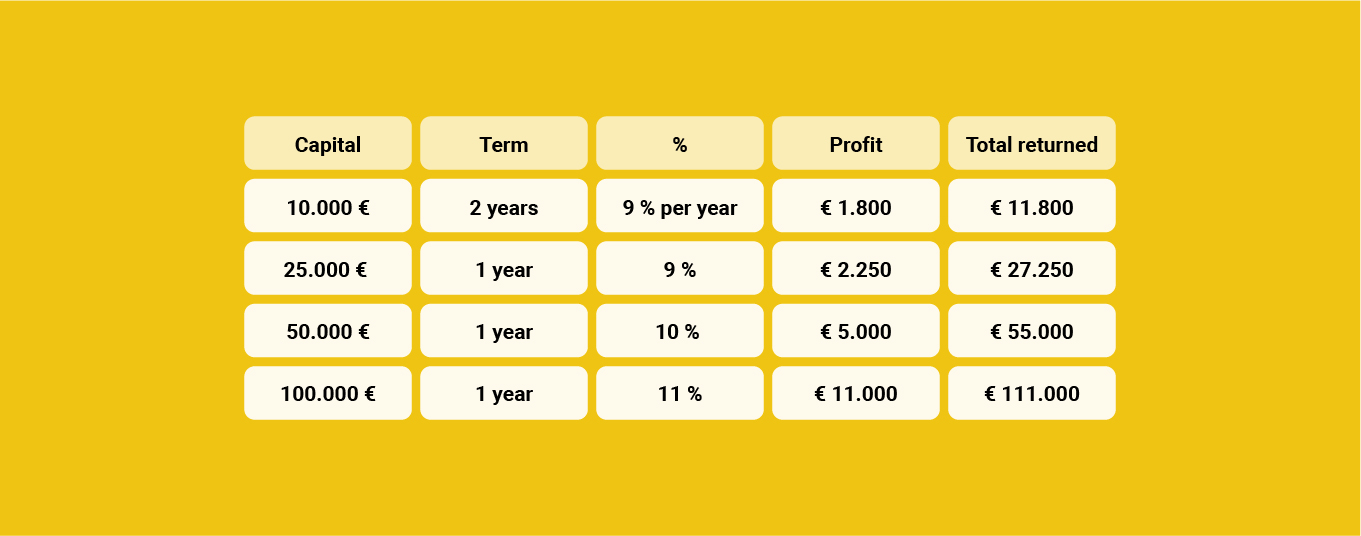
If you want to know how to get returns on your savings with a social justice product, 11Onze Recommends Litigation Funding. So that next summer, your holidays are paid for!

A vulture is a bird of prey that feeds mainly on carrion. A term that also serves as a statement of intent when it comes to defining a type of investment fund that acquires debt from companies or states on the verge of bankruptcy. Laura Bunyol, 11Onze agent, explains the origin of vulture funds and who is behind them.
Vulture funds are high-risk investment funds that aim to buy public and private debt securities of companies or countries whose solvency has been seriously compromised. Unlike the scavenger birds that give them their name, these funds do not perform an essential and beneficial sanitary task, quite the contrary, in fact, they have been labelled as modern usury and a threat to human rights.
Their business model is based on buying assets at the lowest possible price and, in the short or medium term, selling them to other investors for high returns. So far, it all seems a perfectly normal and logical investment concept. But from whom are these assets bought at such a good price? And who pays the consequences?

What are vulture funds, and where do they come from?
When malpractice is legal
As Bunyol explains, “in 2008 the state created the ‘bad bank, FROB, to absorb the banks’ deteriorated assets”, that is, the state bought the banks’ toxic assets with public money, and then sold them at a bargain price, between 20% and 30% of their nominal value, to the so-called vulture funds.
On the other hand, in the midst of the Spanish real estate crisis, vulture funds focused on buying up banks’ mortgage loans en masse. After pressuring debtors who could not assume the debt, these funds proceeded to denounce and subsequently initiate the foreclosure process.
A practice that was not always possible because many of these real estate assets were council flats that could not be converted. Therefore, the managers of these funds opted to change the rental contracts “to double the original price of the rents”, suffocating the tenants, says the 11Onze agent.
If you want to discover the best option to protect your savings, enter Preciosos 11Onze. We will help you buy at the best price the safe-haven asset par excellence: physical gold.



A Golden Cross is an indicator within the technical analysis of trading that investors use to predict a potentially bullish reversal in a market. It occurs when the short-term moving average of an asset’s price rises above its long-term moving average, which has just occurred in the gold market.
It is essential to understand, identify and predict price movements to make the best investment decisions in stock markets. For this purpose, there are two contrasting analytical techniques, but they can be used complementary when deciding whether to buy or sell certain assets.
On the one hand, we have fundamental analysis, which attempts to calculate the real value of an asset by studying the primary variables of a company, such as the balance sheet of sales and profits or cash flow, which affect its current and future value, to find out whether it is a good or bad investment.
On the other hand, a technical analysis predicts when to buy or sell securities based on statistical indicators displayed on graphs, assuming that a thorough study of them will help us to forecast their future value. Specifically, it studies market movements, observing the price of the asset and stock market volume, using futures markets and stocks to determine upward or downward trends that complement fundamental analysis.
Moving averages, trend lines and crossovers
In charts used in technical analysis, a moving average is a technical indicator that combines prices of an asset over a set period and divides them by the number of data points collected to give a trend line. This trend line connects a variety of data points that reflect the highs or lows of prices over a given period.
Moving averages are intended to smooth out price fluctuations, thus helping us to see the trend of the security or index over time, beyond one-off or insignificant fluctuations. A moving average of prices can be calculated over the short (10 days), medium (50 or 100 days) or long term (150 or 200 days), and can be simple (all data are treated equally when calculating the average) or weighted (greater weight is given to more recent data).
A crossover occurs when the actual price line of an asset or index crosses the prediction line made by the moving average. In this case, it is considered that there is a change of trend, either bearish when it crosses it downwards or bullish when it crosses it upwards.
Golden Cross indicates an uptrend
When a short-term moving average crosses above a long-term moving average, it is called a Golden Cross, and is considered a clear indicator that the trend of the index is upward, therefore prices will continue to rise. It is in contrast to a Death Cross, a crossover below which indicates a long-term bear market.
Golden crosses have three key stages: first, there is a downtrend in the price of a stock that eventually bottoms out, followed by a crossing of the stock’s shorter moving average over its longer moving average, which triggers a change in trend. Finally, the stock continues its ascent towards higher prices.
This is what has taken place recently in the gold market. Although it has experienced a slight, one-off drop in value after making new all-time highs, the golden metal has formed a Golden Cross chart pattern, a sign that, some analysts say, more gains are coming and a prolonged upward cycle is beginning.
Protect yourself from economic crises with the ultimate safe-haven asset: gold. If you want your savings to keep or increase their value, Gold Patrimony.