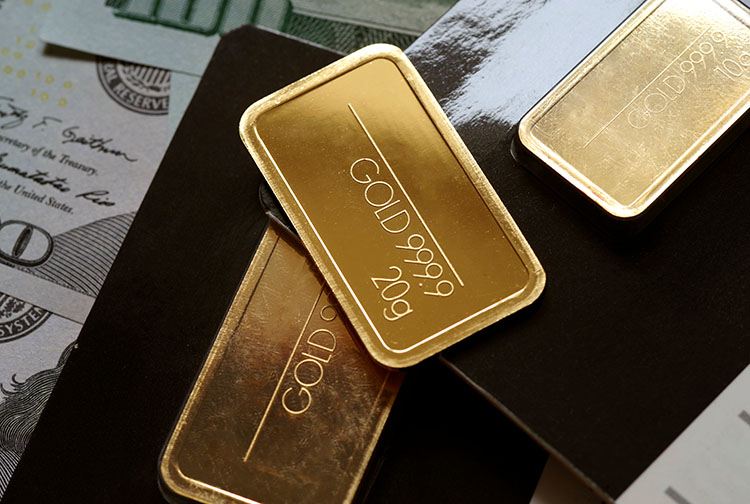
Three tips to save on airfares
Airline tickets can make up a significant percentage of the cost of your holidays when travelling to distant destinations. Keeping the following recommendations in mind can allow you to save a good handful of euros.
As we explained in the article “When there is no money for holidays”, one of the big trends for travel this year is “the search for maximum savings”. With 20% of the budget, transport is one of the main planned expenses, according to a study by the National Observatory of Outbound Tourism, and we must bear in mind that this percentage can skyrocket if we travel far away. That’s why we offer some recommendations for saving on airline tickets.
- Book in advance. Bear in mind that it is essential to book your desired flights in advance in order to get the best prices. The closer you get to the date of travel, the more expensive the tickets tend to be, as airlines increase prices as the plane fills up. If you are flexible with your destination, another alternative is to wait until the last minute in case a flight does not fill up and a last-minute offer comes up.
- Better during the week. Flights on weekends are usually more expensive than during the week, so having flexibility in dates will help you pay less for the same journey.
- Reduce your luggage. Carrying a small amount of luggage will save you from having to pay for checked luggage. In addition, light luggage will make it easier to get around and to use public transport. To minimise your luggage, it is a good idea to take clothes that dry quickly and can be easily combined with each other.

Tips for saving on this summer holidays
In addition to saving money, one recommendation for making the most of your holidays when you are travelling to distant destinations is to take advantage of stopovers: choosing connections that are sufficiently spaced out in time can allow you to visit the city where you are making the stopover.
Do you love to travel? With 11Onze Viatges you can book accommodation at the best price, without stifling the travel industry.



Amb l’actual inflació, els diners al banc no fan més que perdre valor dia rere dia. Però sempre és necessari mantenir una mica de liquiditat per si sorgeix algun imprevist. Per això els experts recomanen tenir un “matalàs” d’efectiu en els teus comptes d’estalvi que cobreixi com a mínim tres mesos de despeses.
La vida està plagada d’imprevistos. També en el pla econòmic. A vegades són positius, com un augment de sou, però a vegades hem d’afrontar sorpreses desagradables que fan mossa en la nostra butxaca. Pot ser des d’una despesa puntual extraordinària, com quan hem de reposar un electrodomèstic vell de casa, fins una cosa més seriosa, com patir una malaltia incapacitant o quedar-nos sense treball.
Per fer front a aquestes eventualitats, és necessari disposar d’un fons d’emergència. L’antic costum de guardar els diners en el matalàs o en qualsevol altre amagatall de la casa et permet disposar d’ells de manera immediata, però és poc recomanable pel risc de robatori i la nul·la rendibilitat.
És preferible recórrer a les entitats bancàries, tot i que has de tenir en compte el límit del Fons de Garantia de Dipòsits d’Entitats de Crèdit per a que els teus diners sempre estiguin protegits.
Assegura els teus estalvis
Com detalla el seu web, aquest organisme “té per objecte garantir els dipòsits en diners i en valors o altres instruments financers constituïts en les entitats de crèdit, amb el límit de 100.000 euros per als dipòsits en diners”.
Això desaconsella tenir més de 100.000 euros en comptes i dipòsits a termini d’una mateixa entitat, ja que el fons només cobrirà fins a 100.000 euros per titular en cas que el teu banc faci fallida.
Si, per exemple, tinguessis 120.000 euros en una entitat que ha fet fallida, encara que fora en diversos comptes o dipòsits, aquest organisme només et retornaria 100.000 i perdries els altres 20.000. D’aquí la conveniència de repartir els diners entre diverses entitats per a que els comptes i dipòsits no superin el límit garantit en cap d’elles.
De quant parlem?
Només en casos molt excepcionals el nostre fons d’emergència hauria d’assolir aquests 100.000 euros, especialment en un moment com aquest, en el qual l’elevada inflació fa que els diners dipositats al banc perdin valor mes rere mes. De totes maneres, l’import òptim dependrà en última instància de les nostres circumstàncies personals: bàsicament, quines són les nostres despeses previstes i amb quins ingressos podríem comptar en cas d’un esdeveniment negatiu.
Els experts solen recomanar que el coixí financer cobreixi com a mínim tres mesos de despeses. Cal tenir en compte que mantenir un saldo massa baix en el nostre compte ens pot fer entrar en números vermells amb facilitat, la qual cosa generaria despeses financeres pel descobert.
L’OCU, per exemple, indica que una quantitat prudent en els comptes corrents “pot ser l’equivalent a tres mesos del teu salari”. No recomana més perquè aquests comptes “no són el millor lloc per a mantenir els nostres estalvis, ja que pràcticament cap entitat les premia amb interessos”.
Quant al màxim, no sol recomanar-se més del necessari per a cobrir sis mesos de despeses. De fet, el portal ‘Finances per a tots’, una iniciativa del Banc d’Espanya, la Comissió Nacional del Mercat de Valors i el Ministeri d’Assumptes Econòmics i Transformació Digital, aconsella “acumular un fons equivalent a entre tres i sis mesos de despeses”. A partir d’aquí es tracta de buscar inversions que garanteixin una bona rendibilitat.
11Onze és la fintech comunitària de Catalunya. Obre un compte descarregant la super app El Canut per Android o iOS. Uneix-te a la revolució!
Although the major international economic organisations try to send a reassuring message about controlling inflation, the UK’s experience in the 1970s raises serious doubts. Gold appears to be an interesting option to protect against the depreciation of money amid a “bear market” cycle that could last longer.
For months now, inflation has been far exceeding the optimistic forecasts of the major international economic organisations. The harsh reality means that time and again these institutions are forced to recalculate their forecasts upwards.
They all coincide in sending out a reassuring message. The mantra is that this year’s out-of-control rates will tend to moderate in 2023 and that by 2024 a rate close to the desired 2 % will be restored. The interest rate hikes by the major central banks should make a decisive contribution to this.
The latest to make this point is the International Monetary Fund, which, in a report, predicts that wage restraint will prevent a dangerous inflationary spiral.
Learning from the past
However, some economists warn that there are parallels between the current situation and the stagflation experienced in the UK half a century ago. Since 1970, the British government had been doping the economy with expansionary budgets and lower interest rates. As a result, inflation soared to 9.1 % in 1973, similar to today’s rate.
As now, interest rates had started to rise. Between June and November 1973 they rose from 7.5 % to 13 %, which led to the bursting of the housing bubble and the ensuing banking crisis. Moreover, between May 1972 and January 1975, the main stock market index lost 74 % of its value. The economic slowdown did not prevent inflation from spiralling out of control: it reached 16% in 1974 and a whopping 24.2% in 1975.
The big concern is that history will repeat itself. The bad news is that the spread between the inflation rate and interest rates is now much wider than it was then, so the monetary policy correction could have a much more devastating effect on the economy. The overall contraction in bank credit will be severe and many firms will become insolvent.
At current inflation rates, interest rates and the cost of government debt would logically soar. And, predictably, central banks will do what they have always done in the past to deal with this type of crisis: print more banknotes, which will further reduce their real value.
Gold, a safe-haven asset
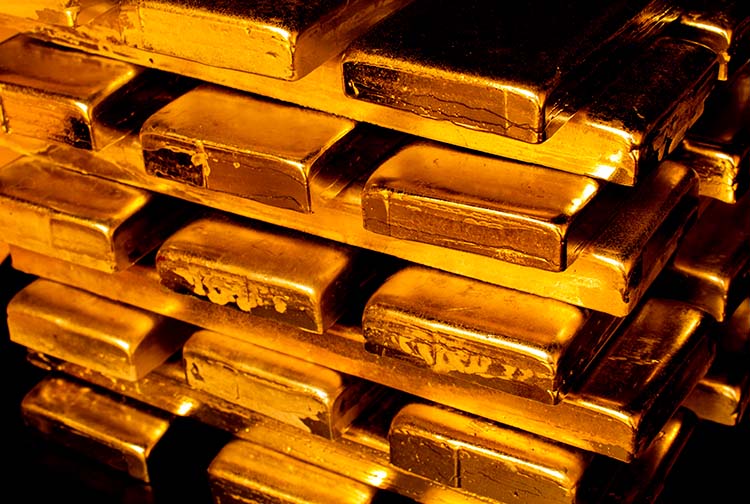
The rise in interest rates in the early 1970s was no obstacle to the appreciation of gold: it went from less than £18 per ounce when interest rates were 6% to more than £40 when they rose to 13% in November 1974. For, as the founder of J.P. Morgan said, “gold is really money, everything else is credit”.
Since the suspension of the Bretton Woods agreements in 1971, which meant abandoning the gold standard, the sum of banknotes and commercial bank credit has increased more than 30-fold, which is equivalent to its devaluation. In fact, middle-class single-earner households were common before 1970 and are now a utopia. Buying a house or even a car without going into debt has become a privilege only within the reach of a few rich people.
Gold, on the other hand, has taken the opposite path to that of the money supply and its value has increased 38-fold. In fact, since December 2015, gold has appreciated by more than 40% against the euro.
Endorsed by the biggest hedge fund
Hence, the recommendation by Bridgewater Associates, the world’s largest hedge fund, to buy physical gold is not surprising, despite the fact that many investors see the current depreciation of many other financial assets as a buying opportunity.
Rebecca Patterson, chief investment strategist at Bridgewater, says the reason for going into gold is the need to protect against a “bear market” phase that is set to continue over time. Consequently, the logic of buying assets in the economic downturn, when prices are low, only to sell when the economy expands and rises again may not hold true this time around.
Moreover, both the Chinese and Indian economies are regaining their historical appetite for gold, which will contribute to gold prices in the short term.
If you want to discover the best option to protect your savings, enter Preciosos 11Onze. We will help you buy at the best price the safe-haven asset par excellence: physical gold.
Around ten thousand years ago, humanity underwent a radical transformation: we left nomadism behind and discovered agriculture. This change meant settling on the land, domesticating herds and organising ourselves around an agricultural calendar that marked the life of communities. Each month brought specific tasks, moments of celebration and also rituals of protection against the uncertainty of the future.
That natural rhythm, based on work, perseverance and foresight, was the key to the survival of peasant societies. In today’s world, marked by economic and financial instability, that ancestral wisdom remains valid. What used to be harvesting grain, picking grapes or storing reserves for the winter is now organising expenses, saving and protecting wealth.
And what does this have to do with saving and gold? Just as our ancestors relied on the agricultural calendar to ensure the life of the community, we need a financial calendar to guide us. Recovering peasant wisdom means understanding that only with foresight, effort, and perseverance can we secure the future. Preciosos 11Onze gold is its modern expression: the seed that, sown today, guarantees fruit tomorrow.

An ancestral tradition
Just as the agricultural calendar marked the rhythm of sowing, tending and harvesting, we can also think of saving as a farming cycle. Each stage has its tasks and lessons, and all are equally important to ensure a good final harvest. Preciosos 11Onze, with its Gold Seed, and Gold Patrimony modalities, adapts this ancient wisdom to the present, turning gold into an asset that accompanies us at every stage of the journey. These phases are:
- Prepare for growth. Farmers began the year by pruning the vineyards and ploughing the fields. Dead branches had to be removed and the soil aerated. It was invisible work, but essential for the future harvest.
The same is true in finance. Before investing, it is necessary to get your affairs in order: reduce unnecessary expenses, set a budget and plan your savings. In a context where wages are growing less than the cost of living and taxes are particularly burdensome for the middle classes, preparing the ground well is more necessary than ever. Gold Seed represents this first step of foresight: laying the foundations for solid savings. - The value of getting started. The sowing of cereals and the sprouting of trees symbolised the birth of the agricultural cycle. A small seed was transformed into future food.
The same is true of saving: the hardest part is making the first contribution. But it is in that gesture that growth begins. Every gram of gold in Gold Patrimony is a seed for your financial future, a sprout that heralds stability in the midst of a volatile market. In a world where monetary digitalisation (CBDC) threatens economic freedom, starting with tangible assets is a commitment to autonomy. - Take care of what you have sown. The time had come to graze the cattle and watch over the fields. Harvesting wheat required perseverance and discipline. Without care, months of work could be lost. In finance, we must also take care of what we have started. Saving is not a one-off act, but a habit sustained over time. Just as the farmer watches over his fields, we must be consistent with our contributions and resistant to the temptations of easy spending. Only in this way can savings in gold be consolidated and prevent inflation from robbing us of our purchasing power.
- The fruit of constant labour. Summer was the time to separate the wheat from the chaff and harvest ripe fruit. It was the time to see tangible rewards after months of work.
In the financial arena, this step is equivalent to distinguishing the essential from the worthless. Gold has always been a safe and stable asset, capable of withstanding currency collapses and economic crises. When we begin to accumulate it, the first benefits become apparent: we gain peace of mind and confidence. Unlike speculation with cryptocurrencies, gold offers real and secure returns. - Transforming what you have harvested. The grape and olive harvests represented transformation: grapes into wine, olives into oil. Foods that last much longer than fresh fruit.
The same is true of Preciosos 11Onze gold. What we have accumulated does not remain inert, but is transformed into a lasting reserve, insurance against crises. Like wine and oil, which are stored for future consumption, gold is an asset that retains its value and is passed down from generation to generation. In the face of growing de-dollarisation and global financial instability, owning a timeless asset is a protective strategy. - Reserves for winter. The slaughter of the pig and the fire in the hearth symbolised foresight. It was time to secure reserves to withstand the cold and hardships of winter.
In finance, this winter takes the form of recessions, persistent inflation and geopolitical uncertainties. In the face of this, gold acts as our energy reserve, capable of keeping us stable when markets fluctuate. In the midst of a carbon bubble that threatens the banking system and with historic fiscal pressure, having tangible savings is synonymous with security.

‘Recover the ancient wisdom of saving.’

‘To grow, you have to know how to cut back.’

‘Who prepares savings, gains security.’

‘The future is built seed by seed.’

‘Green shoots signal savings.’

‘What you care for today sustains you tomorrow.’

‘Who sows with patience, reaps the future.’

‘Real value remains. The chaff flies away.’

‘Each fruit is testimony to a job well done.’

‘Time turns fruit into treasure.’
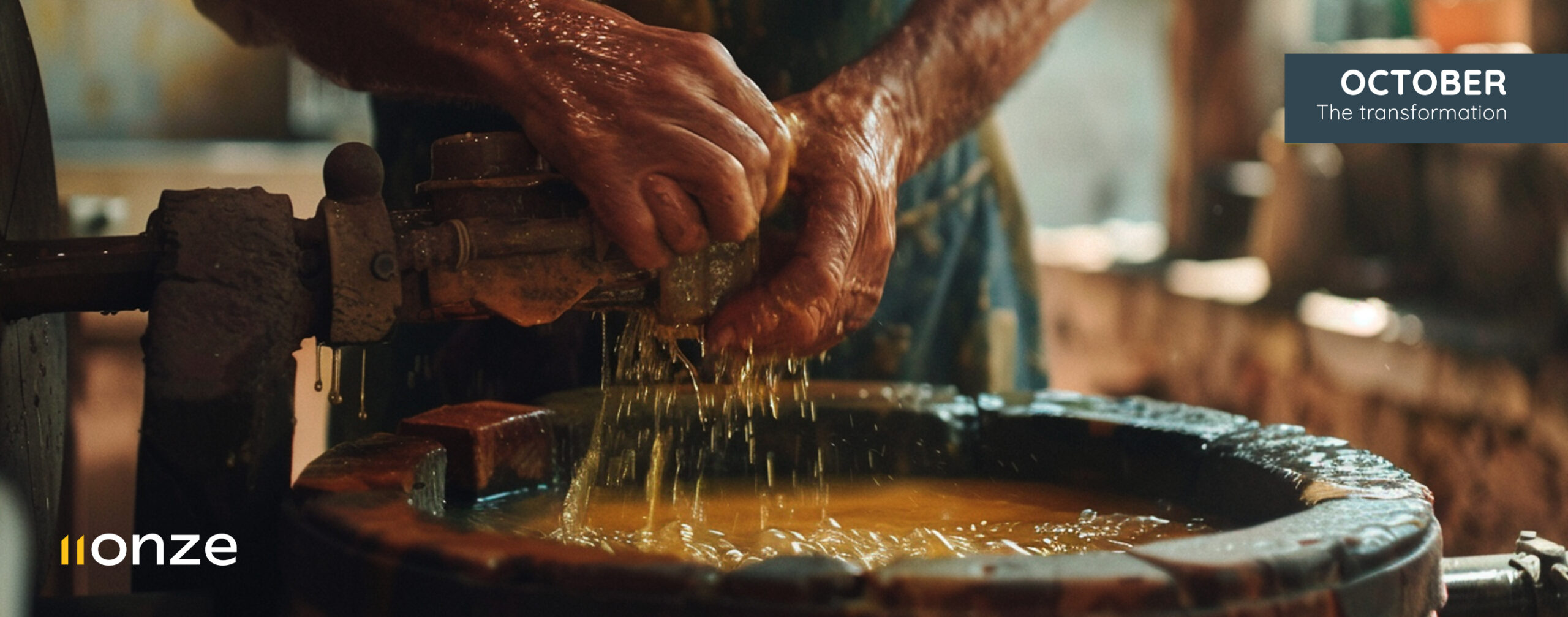
‘From the olive, the oil; From perseverance, the future.’

‘Those who plan ahead never go hungry.’

‘Winter is better spent with full reserves.’
Preciosos 11Onze: ancient wisdom, modern solution
Just as our ancestors stored grain, wine, or oil to ensure the livelihood of the community, today we can store gold to protect our children’s future. The cycle of the earth reminds us that every effort bears fruit and that foresight is the best ally in the face of uncertainty.
With Preciosos 11Onze, we recover this ancestral wisdom in a modern key: tangible, secure and universal savings, capable of accompanying us in times of prosperity and, above all, in difficult times.
Because, at the end of the day, life is cyclical. And just as the countryside always returns to its roots, gold is the seed that guarantees continuity, stability, and the future. A legacy that not only protects the present, but also future generations.
If you want to discover the best option to protect your savings, enter Preciosos 11Onze. We will help you buy at the best price the safe-haven asset par excellence: physical gold.



Realment sabem en què gastem els nostres diners? Som conscients del que és important i del que no ho és? Càrol Rafales, especialista sènior de vendes d’11Onze, ens explica en què consisteix el mètode d’estalvi Kakebo i com podem adaptar-lo a la nostra situació personal.
El mètode d’estalvi Kakebo, que es tradueix com a “llibre de comptes domèstics”, va ser ideat el 1904 per la periodista japonesa Motoko Hani. En una època on les dones depenien dels diners que els donaven els seus marits, Motoko volia proveir a les japoneses “d’una eina que els hi permetés gestionar les finances domèstiques d’una manera eficient”, apunta Càrol Rafales.
Què ens cal per posar en pràctica aquest mètode d’estalvi? Doncs ben poc, perquè està pensat per ser molt senzill. Com explica Rafales, “un llibret en blanc, un llapis, i moltíssima constància”. Tanmateix, podem comprar un llibre Kakebo, específicament dissenyat com una agenda on fer el seguiment dels nostres ingressos i despeses.

KAKEBO: el mètode japonès per a estalviar
Consum conscient
A més de gestionar els nostres diners, el mètode Kakebo ens ajuda a evitar compres innecessàries que de vegades realitzem de manera irracional. Només posant el focus en analitzar com desapareixen els diners del nostre compte, serem realment conscients dels nostres hàbits de consum. Els gràfics i eines que trobarem al llibre ens ajudaran en la presa de decisions abans de fer compres i controlar despeses recurrents.
El Kakebo divideix les despeses mensuals en quatre categories: supervivència, oci, cultura, i altres (que inclouen imprevistos). Basant-nos en aquests blocs, Rafales ens puntualitza la premissa bàsica del mètode, “anotem els ingressos previstos del mes, restem despeses fixes, i a l’import restant li traiem l’objectiu d’estalvi que tenim. El que quedi serà el pressupost per les despeses variables”. Per una explicació més detallada de com funciona el Kakebo, dona-li un cop d’ull al vídeo de més amunt.
Si vols descobrir la millor opció per protegir els teus estalvis, entra a Preciosos 11Onze. T’ajudarem a comprar al millor preu el valor refugi per excel·lència: l’or físic.


Podem canviar el món? Quina és la nostra capacitat real d’impacte sobre l’entorn que ens envolta? Lara de Castro, HR Business Partner d’11Onze, explica què és el consum conscient i com podem contribuir a la sostenibilitat del planeta amb les nostres decisions de compra quotidianes.
Sovint subestimem l’impacte que els nostres actes individuals tenen sobre l’entorn que ens envolta. Però totes les accions, per petites que siguin, contribueixen a modelar el món. Lara de Castro ho deixa clar al següent vídeo amb un exemple molt evident.
Com ella mateixa adverteix, hi ha moltes persones que pensen que un acte individual sovint “és massa feble” per a tenir un impacte significatiu en l’entorn, “però no és així”. Cada acció compta i té conseqüències que es poden acumular a les de la resta de la comunitat. La realitat és que “les nostres decisions més quotidianes són rellevants, per petites que siguin”. En aquest sentit, és molt evident el paper que juguen totes les decisions de compra si som consumidors conscients.
Consumidors conscients que poden canviar el món
Què és el consum conscient?
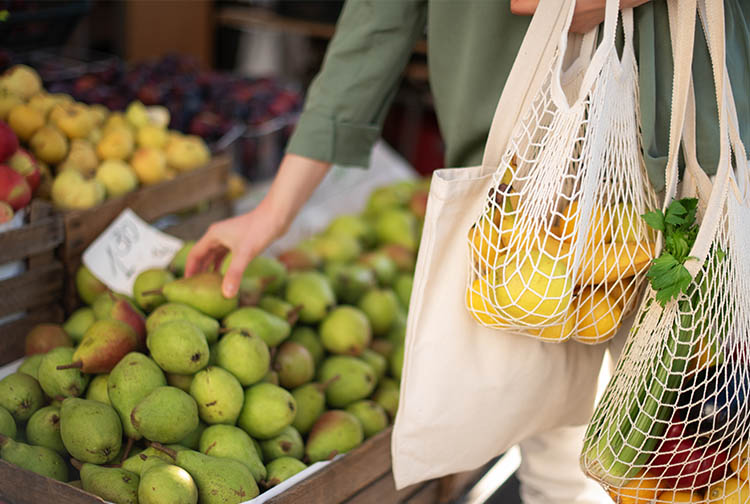
Els consumidors conscients són persones que escullen els productes i els serveis amb criteris que van “més enllà de la relació qualitat-preu”, ja que inclouen l’impacte ambiental i social com un element decisori en els seus hàbits de compra. Una conseqüència és l’aposta pel comerç de proximitat, que “és una manera de donar suport als productors locals i evitar l’impacte econòmic i ambiental del transport”, com explica Lara de Castro.
Un altre exemple de consum conscient el trobem en l’aigua. Si volem reduir la contaminació al planeta, podem substituir el consum d’aigua embotellada, “amb totes les conseqüències que sabem que té el plàstic”, per aigua de l’aixeta tractada amb filtres sostenibles.
Com indica Lara de Castro al final del vídeo, si tots som més conscients “en els petits detalls de la vida quotidiana” la realitat és que “sí que podem canviar el món”. La decisió és nostra.
Si vols descobrir com beure la millor aigua, estalviar diners i ajudar al planeta, entra a Imprescindibles 11Onze.

Physical gold is considered a safe-haven asset not because we at 11Onze say so, but because of how it has behaved historically in major economic crises. The 11Onze product team offers, in the Learning area, a course that analyses the evolution of gold during big crises.
The crash of 1929, the oil crisis of the 1970s, the Black Monday of 1987, the recession of the 1990s, the dotcom bubble, the financial crisis of 2008… History is full of major economic crises that have caused a lot of pain for savers. These major crashes in the financial markets have always ended up affecting ordinary citizens, whether or not they are investors in these financial markets.
This is why 11Onze launched Preciosos 11Onze, to give ordinary people a savings protection tool that would not normally be available to them. But let’s put this into context, analyse the history and confirm whether or not physical gold is really an interesting safe haven for our savings in times like these.
With this in mind, the 11Onze product team, with Jordi Sánchez, Sara Casals and Amadeu Vilaginés, has prepared a course on the evolution of gold in the main crises in history. If you don’t know how to answer the questions Casals asks in this video, you have to watch the whole course!

If you want to discover the best option to protect your savings, enter Preciosos 11Onze. We will help you buy at the best price the safe-haven asset par excellence: physical gold.

There are currently 238 active gold mines in 36 countries on every continent except Antarctica, often in remote and impoverished areas. A World Gold Council report shows that responsible gold mining greatly contributes to many local communities’ economic and social development.
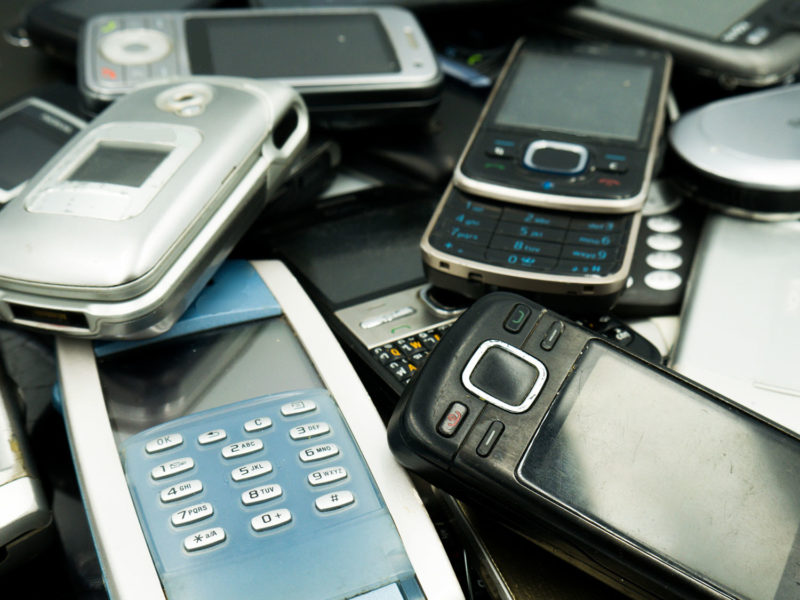
Gold has been a unique precious metal with great emotional, cultural and financial value throughout history. In addition, gold has an increasing number of technological applications, including in mobile phones, medical test kits and airbags for vehicles.
Gold resources are also a key source of opportunities in many developing countries. As a World Gold Council report shows, responsible gold mining generates numerous jobs, facilitates the construction of infrastructure, contributes to the development of local communities, and brings in substantial revenues through taxes and royalties.
Well-paid employment
Analysis of the operations of the 29 member companies of the World Gold Council shows that in 2023 they contributed 57.52 billion euros to their countries’ economies, supporting 212,000 direct jobs and 163,000 businesses. In addition, each job in the gold industry generates another six indirect jobs in the supply chain, or almost that many more if spin-off occupations are included.
Workers in the gold industry are well paid, averaging six times the national average wage. It should be noted that 95 % of the employees belong to the country where the mine is located. The percentage of expatriates has halved in the last seven years.

To have a harvest, you must first sow.
Development of local communities
Companies in the sector recognise the mutual benefits of integrating as much as possible into the local economy, using indigenous people and supply chains. This underpins their “licence to operate” and allows the community to benefit from the economic and social development of the mine.
Indeed, operating in an isolated enclave while ignoring the local community is no longer a viable option for any mining company. To be successful, they must generate sustainable benefits for local people, especially in the poorest and most remote locations, where there are often few alternative avenues for economic activity and community progress.
This has resulted in World Gold Council member companies spending more than €620 million in community investment by 2023, an increase of €77 million over the previous year. In addition to meeting the needs of a gold mine, it is clear that investments in roads, water supply and electricity will be of long-term benefit to local businesses and communities.
We must add almost €8 billion paid in taxes and royalties, which go back into improving public services, education, health, and infrastructure in the countries where the mines are located. In many developing countries, these taxes constitute a significant proportion of the national tax base and benefit both mining and non-mining areas.
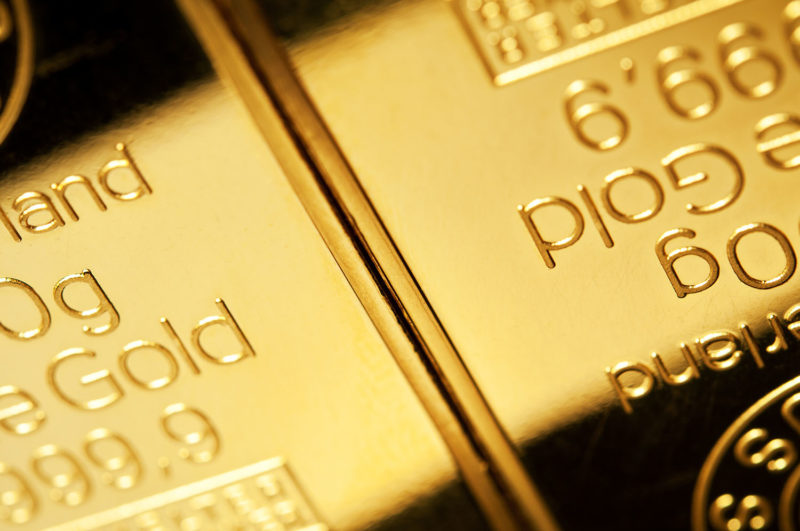
Having gold means having assets capable of resisting recessions and periods of inflation.
A significant contribution to GDP
In total, the contribution of these companies to the GDP of the 36 countries where they operate is estimated at around 57 billion euros. For every euro of gold production, at least 63 cents ended up as wages, taxes, or income for local business owners.
While historically mining operations have not always led to improvements in the human and social development of local communities, there is a growing trend towards strict environmental, governance and social protocols as a condition of operating. As a result, the gold industry is becoming an important economic and social driver for many countries around the world.
If you want to discover the best option to protect your savings, enter Preciosos 11Onze. We will help you buy at the best price the safe-haven asset par excellence: physical gold.


With inflation continuing to rise, gold’s resilience throughout history as a store of safe-haven investment value cannot be underestimated. Even so, it is not the only precious metal in which we can invest our savings; silver, platinum or palladium can be good alternatives. But which metals offer the best returns?
The ability of precious metals to maintain much of their value during crisis periods, and to offer inflation protection based on their intrinsic value, makes them a must-buy if we want to diversify and make our savings more profitable. However, there are differences in the returns offered by different metals. In this analysis we do not make forecasts for the future, we simply focus on the evolution of the prices of these four assets: gold, silver, platinum, and palladium, over the last year and the last three years, so that we can easily see which have been the most profitable.
Performance over the last three years
The combined historical performance of the metals over the last three years is very positive, and attributable to the global pandemic, which caused a shortage of resources in the industry, rising inflation and unstable markets.
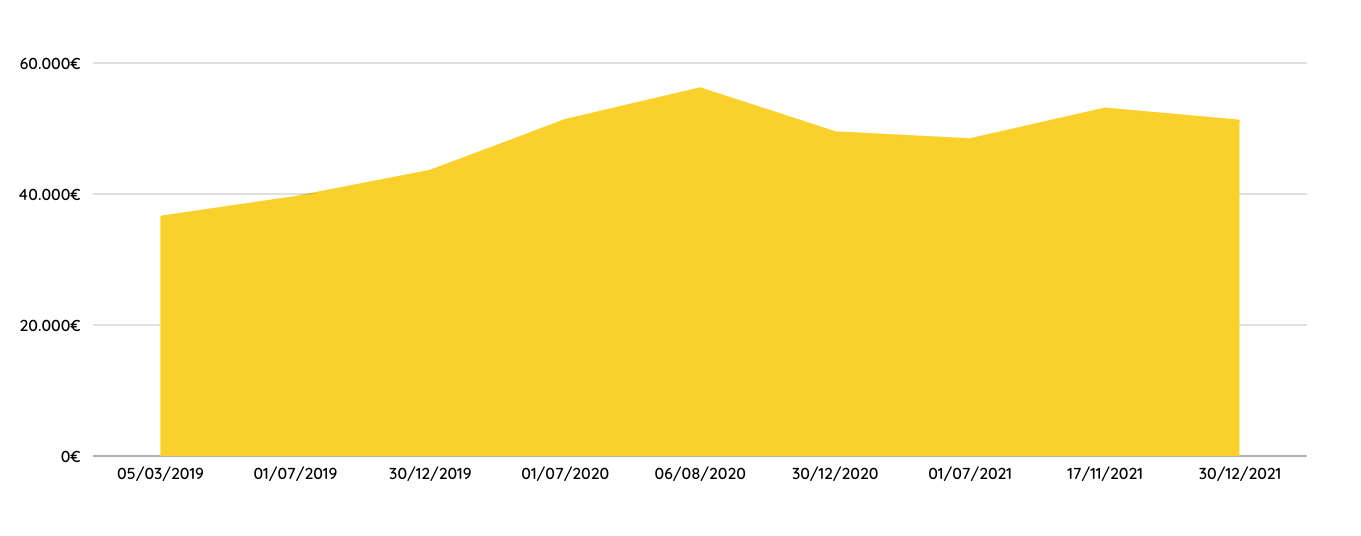
Gold and silver have experienced growth of over 40% in the face of the economic uncertainty caused by the pandemic, and are consolidating their position as safe-havens in the event of a crisis. Even so, it should be kept in mind that investors tend to increase their exposure to gold and silver when interest rates are low and inflation high in order to protect the value of their money, and in the absence of interest payments. A situation that can be reversed if inflation turns out to be transitory and interest rates rise.
The continued demand for platinum keeps its value on an upward trend with almost 27% appreciation, but palladium is growing at a spectacular rate of 75%, as it is a scarce metal in high demand by industry. Even taking into account its progression, it is not highly recommended for long-term investment due to its price volatility, and the fact that the trend towards electrification of the automobile industry means that the demand for catalysts is likely to decrease.
If we look at the following graph of the price evolution over the last three years, we see that gold has appreciated by more than 40% and silver by almost 47%. If we take into account that inflation in Spain in 2021 rose to 6.55%, we can affirm that people who bought gold and silver more than avoided the devaluation of savings suffered by people who had euros in their current accounts.
Evolution of the last year
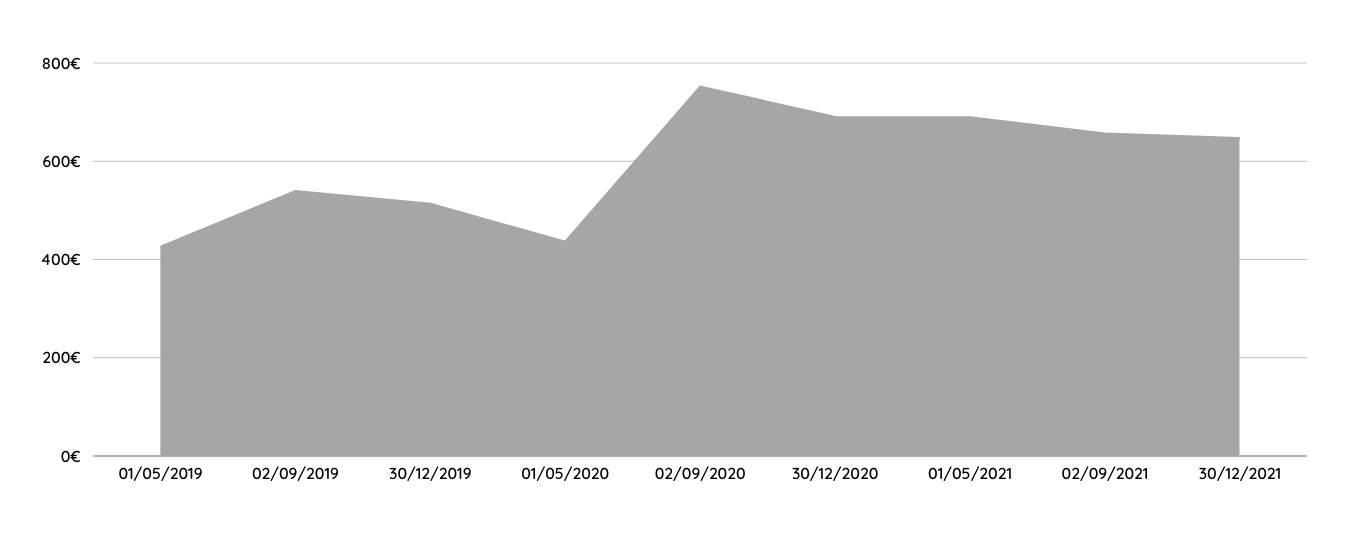
During 2021, the fluctuation of the prices of precious metals has been different. All metals, except silver, recorded a positive, albeit moderate, price increase. Gold is the most stable of the metals, with price rises and falls always tending towards stability, but during the first quarter of the year, it suffered a loss in value. A fall in price linked to the economic stimulus of 1.9 billion dollars by the Biden administration, which would be repeated every time the US government announced a new package of measures to combat the pandemic, but still ending the year in positive territory.
Despite silver‘s upward trend at the start of 2021, it recorded a significant drop in price at year-end, contrary to predictions, because of declining industrial demand. While platinum and palladium prices also initially plummeted due to weak demand for autocatalysts, thanks to falling sales, platinum stabilised and ended the year in positive, and palladium ended the year on the unstoppable growth trend seen in previous years.
Whether we decide to invest in one metal or another, we must bear in mind that historical performance is not indicative of future performance and that any purchase involves a certain risk of loss of value. A risk that we assume whether we buy precious metals or not, because the value of the money we have in the bank depends directly on the decisions of the powers that be to print more currency (devaluing the currency in circulation) or not.
If you want to discover the best option to protect your savings, enter Preciosos 11Onze. We will help you buy at the best price the safe-haven asset par excellence: physical gold.
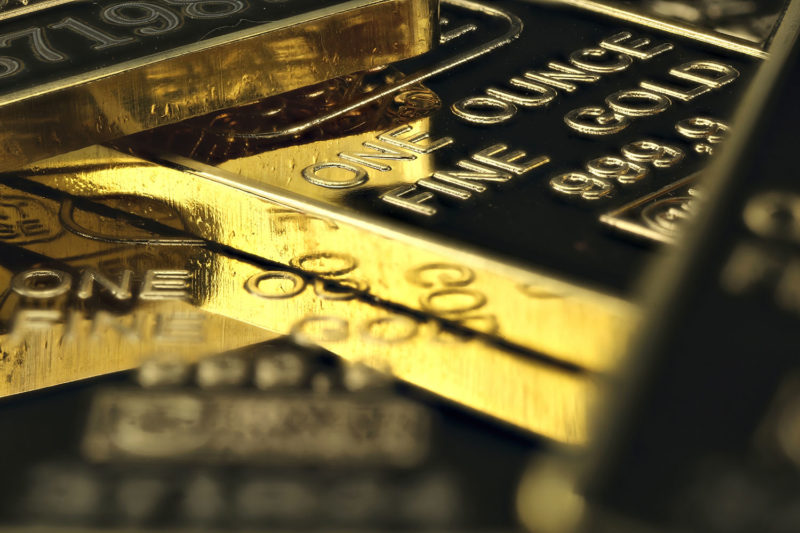

Es consideren dipòsits de valor aquells actius, divises i mercaderies que no es devaluen amb el temps. L’or i altres metalls preciosos han estat històricament els dipòsits de valor per excel·lència, mentre que en les últimes dècades s’han fet evidents les grans deficiències de les monedes fiduciàries.
Com indica la Investopedia, “un dipòsit de valor és essencialment un actiu, mercaderia o divisa que pot guardar-se, recuperar-se i intercanviar-se en el futur sense que es deteriori el seu valor” quan l’intercanviem per productes o serveis: si avui equival a deu pomes, passat un temps haurem de poder intercanviar-lo per, com a mínim, deu pomes també.
L’or i altres metalls preciosos han estat considerats al llarg de la història els dipòsits de valor per antonomàsia perquè la seva vida útil és pràcticament il·limitada. I, si comprovem l’evolució del preu de l’or en les últimes dècades, veurem que una unça ha passat de cotitzar per sota dels 300 dòlars quan va entrar en circulació l’euro l’any 2002 a superar els 1.900 dòlars en l’actualitat.
En l’altre extrem, productes peribles com les pomes són pèssims dipòsits de valor perquè en pocs dies es descomponen i perden tot el seu valor. Tot i que determinats productes bàsics com els aliments poden pujar de preu temporalment en funció de la situació del mercat, el seu caràcter perible impedeix considerar-los dipòsits de valor.
Els diners moderns suspenen com a dipòsit de valor
Òbviament, l’euro i la resta de les monedes fiduciàries són dipòsits de valor molt deficients perquè no es revaloren al mateix ritme que els productes i serveis que permeten adquirir. Encara que les nostres monedes haurien de ser un dipòsit de valor raonablement estable, la inflació fa que el cafè que fa uns anys compràvem en un bar per un euro avui dia ens costi bastant més. Els nostres diners es deprecien dia rere dia.
Richard Nixon va posar fi al patró or l’any 1971, que fins llavors obligava als països del Fons Monetari Internacional (FMI) a mantenir un tipus de canvi fix respecte al dòlar i a la Reserva Federal dels Estats Units a recolzar la seva divisa amb or. Des de llavors, utilitzem monedes fiduciàries, és a dir, monedes que són de curs legal però que no estan recolzades per cap bé valuós. Tots els bancs centrals poden fabricar diners segons la seva conveniència i el seu únic aval és la confiança dels ciutadans.
Com és lògic, si la quantitat de diners en circulació augmenta a un ritme més elevat que els béns i serveis que es poden adquirir amb ells, el desequilibri entre l’oferta i la demanda fa que s’apugin els preus. Per tant, els nostres diners es devaluen.
Una moneda raonablement estable és essencial per a la salut de l’economia. Una unitat monetària que funciona malament com a dipòsit de valor desincentiva l’estalvi i dificulta el comerç. Els seus efectes nefastos són evidents si donem un cop d’ull als casos d’hiperinflació que han viscut alguns països al llarg de la història.
Els metalls preciosos com a valor refugi
Al llarg de més de dos mil·lennis, moltes economies han utilitzat l’or i altres metalls preciosos com a moneda de canvi per la seva durabilitat, relativa escassetat i fàcil transport. A més, en les últimes dècades l’or ha tingut un paper important com a valor refugi. La seva demanda ha tendit a disparar-se en moments d’incertesa econòmica, com demostren les dades de l’any passat, el de major demanda des de 2011. La llarga experiència amb l’or permet avalar la seva capacitat per exercir com a dipòsit de valor a llarg termini.
En general, altres actius com els béns immobles, les obres d’art, les antiguitats o alguns objectes de col·lecció també han demostrat que poden tenir aquest rol. Tot i que el seu valor pot caure en moments puntuals, tendeixen a revaloritzar-se a llarg termini gràcies a una demanda més o menys constant i una oferta molt limitada.
El seu gran inconvenient respecte a l’or és que es tracta d’actius molt poc líquids: és difícil vendre’ls de manera immediata si volem fer-ho per un preu raonable. A més, aquests mercats exigeixen un bon coneixement i es ressenten especialment en les crisis econòmiques, quan més es tendeix a recórrer als dipòsits de valor.
I els criptoactius?
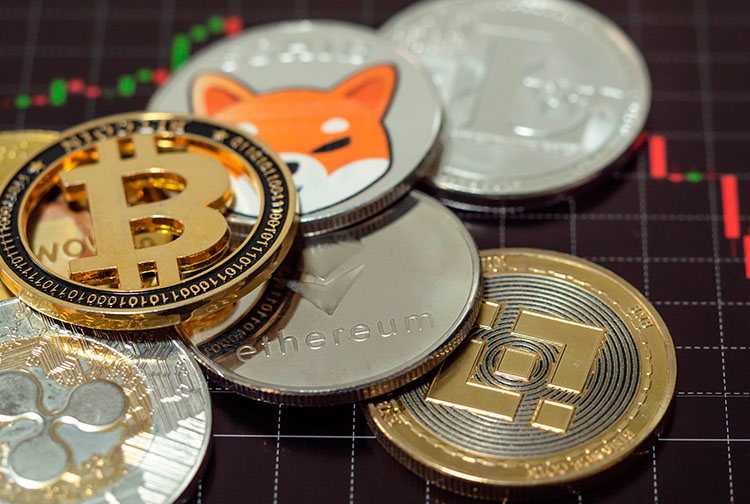
Més difícil és valorar si els criptoactius arribaran a considerar-se algun dia com a dipòsits de valor, ja que són massa recents. És cert que el bitcoin es basa en el principi d’escassetat, una característica pròpia dels dipòsits de valor: cada any es genera un número limitat de bitcoins i existeix un topall predeterminat. No obstant això, com tants altres criptoactius, el seu gran inconvenient és que manca d’un valor intrínsec. Gairebé tot el seu valor és ara com ara subjectiu, la qual cosa és terreny adobat per a la volatilitat.
Això sí, en la mesura que el bitcoin sigui acceptat de manera massiva com a mitjà de pagament i s’empri en un nombre creixent de transaccions, el seu valor s’enfortirà i augmentaran les probabilitats que arribi a ser un dipòsit de valor a llarg termini, més enllà de volatilitats puntuals.
Si vols descobrir la millor opció per protegir els teus estalvis, entra a Preciosos 11Onze. T’ajudarem a comprar al millor preu el valor refugi per excel·lència: l’or físic.