The job of the future: 56 skills to success
What will the job of the future look like and what skills will we need to succeed? To answer these two questions, the McKinsey Global Institute has conducted extensive research and concluded that we will need to master at least 56 skills to secure a job, higher wages and greater well-being at work.
The institute has classified these 56 skills in the study into four broad blocks: manual and physical skills, which will be of decreasing interest; and high-value technological, social and cognitive skills, which are gaining in importance. The McKinsey Global Institute surveyed more than 18,000 people in 15 countries and aims to get governments and companies to prioritise work teams that meet these requirements.
For starters, the institute points out in the report that, while there will continue to be many skilled jobs, the new technological revolution we are heading towards, which has been accelerated by the pandemic, will increasingly require more dynamic, creative and digital people. It will therefore be essential to add value to the automated and artificially intelligent systems that are taking hold in many companies. It will also be necessary to adapt and train constantly in the digital environment, achieving new skills. For this reason, they believe that governments need to start promoting new educational plans to prepare adults and young people for the new scenario.
Cognitive skills: creativity and adaptability
- Solving problems in a structured way.
- Control logical reasoning.
- Understanding differential features.
- Knowing how to search for relevant information.
- Organise a work plan.
- Prioritise tasks within a given time.
- Agility of thought.
- Ease of learning.
- Good public speaking skills.
- To get the right questions right.
- Synthesising messages.
- Listening skills.
- Imagination and creativity.
- Transferring knowledge to different contexts.
- Adopting different perspectives.
- Adaptability
Interpersonal skills: empathy and collaboration
- Modifying the role when necessary.
- Reaching consensus.
- Always having an inspiring vision.
- Organisational awareness.
- Demonstrate empathy.
- Inspire trust.
- Maintain humility.
- Be sociable.
- Encourage diversity.
- Motivate emotional situations.
- Resolving conflicts.
- Collaborate.
- Helping.
- Empower
Leadership skills: integrity and motivation
- Understanding the emotions of others.
- Having self-control.
- Knowing one’s own strengths.
- Integrity.
- Knowing how to motivate oneself.
- Self-confidence.
- Taking risky decisions.
- Leading change and innovation.
- Energy, passion and optimism.
- Break the mould.
- decisiveness
- Clear direction.
- Persistence and perseverance.
- Accepting uncertainty.
- Striving for emancipation.
Technology skills: cybersecurity and ethics
- More digital literacy.
- Expanding digital knowledge.
- Knowledge of digital collaboration networks.
- Digital ethics.
- Learn programming.
- Know how to analyse data and statistics.
- Have algorithmic thinking.
- Be trained in Big Data.
- Know about cybersecurity.
- Be up to date in intelligent systems.
- Know how to translate technology into useful actions.
Skills searched in companies in the post-covid era
If you want your business to make a giant leap, use 11Onze Business. Our business and freelancer account is now available. Find out more!



If you are subscribed to more than five platforms to watch series and films, music or documents, this article is of interest to you. Every day new platforms are born and, with them, new services that allow you to share streaming subscriptions in order to reduce your subscription fee. At 11Onze we give you the keys to manage them.
Netflix has gained 37 million users in the last quarter of the year, 31% more than in 2019. The platform reported 5,466 million euros during the fourth quarter, 21.5% more than a year ago. Subscriptions have become a must and living without them is no longer conceivable. It is true that our consumption habits have changed; now, with all the digital TV platforms, it’s hard to go back to having to watch ads every 15 minutes. Now everything is à la carte, how, when, and where you want. Of course, what is not so fun is the amount of fees, even if they are tiny, that you end up paying monthly. In this article we are going to give you some recommendations to save money and manage your subscriptions.
If we go back 20 years, surely you remember Canal+, one of the first private channels, which allowed you to watch films and shows; the cost was quite high, so only a few privileged people could enjoy it. With the arrival of Netflix, HBO, Disney +, Filmin, Amazon, and so on, annual subscriptions are between €10 and €15 per month, which seems a totally manageable amount, taking into account that going to the cinema costs much more. Now, you have to bear in mind that once you subscribe and start scrolling, on many occasions, you waste more than half an hour choosing a film: the variety is so extensive that it is difficult for us to determine (depending on our mood that day) what we want to see each time, and for that reason, you end up having several platforms.
Following the thread, once you subscribe to any of the indicated platforms, you realise that the film or series you have just been recommended or you think you cannot miss is on another platform, so you automatically download the app and start entering your data. You are seduced by the subscription price, so without realising it, you have more than 5 platforms to watch millions of films, documentaries, and series.
What to do if you identify with this?
- Check your subscription plan. If it allows more users and devices, ask your relatives and acquaintances if they are in the same situation; in this way, you can share the monthly expense. Of course, we recommend that you plan everything a year before, divide the fee, and have your friends pay you, for example, through Bizum, so that they do not forget. That is, if the monthly fee is €15 and you are going to share it among 3 people, they must pay you €60 each, and if you have paid €180 annually, you will only pay €60, so you will save €120.
- Permanency or not? A great advantage of this type of platform is that they do not ask you to stay, so you can unsubscribe when you have finished watching your favourite series and seen that there is nothing else that may interest you. You can stay 1 or 2 months, or as long as you need, and you can unsubscribe until a new order.
- Take advantage of promotions. You have to be careful, because if you have not signed up for a platform, as a new customer, you might be given a free month. If you think it’s worth continuing, you can share it again, if possible, with other users. Of course, check the conditions properly once you sign up, since sometimes, if you do not cancel the subscription, you may automatically be charged for the next subscription the following month without prior notice.
- Rental available for 24 hours. If you don’t like having fixed costs, there are platforms, such as Apple TV+, that allow you to rent a film for 24 hours at a low cost and, after this time, it expires; it is an option, but if your purpose is to save, we advise you to consider monthly plans, since they are always cheaper.
- Monthly subscription without interruption. There are other platforms, like Spotify, that allow you to listen to all the music without interruptions with a monthly subscription. They also have plans that you can share with more people, thus reducing the monthly fee. On the other hand, Apple features a family plan, with which we can even purchase paid applications that can be used in the plan, and we can also share books in digital format with the whole family.
Do you know Together Price?
If you have Netflix, Spotify, Office 365, Nintendo Switch, or Xbox Live, among others, this is for you. Together Price helps groups of people share the cost of their multi-user plans in an easy and safe way. If you are the account owner, you can indicate available users and add your acquaintances so they can participate. In this way, when you register, you will automatically receive the amount from your friends and family.
And what is the use of this all?
Thanks to all these platforms, the OCU reports that 77% of respondents no longer download films or music illegally. Finally, it is important to review and ask the experts, when we buy a mobile phone, to explain to us if we have these services. Remember the example we mentioned: with only one platform you can save up to €120 and, if you do the same with other platforms, much more. Go ahead and share this with your friends and family.
It is time to review your subscriptions, consider which ones you use, and share to minimize your expenses.
11Onze is becoming a phenomenon as the first Fintech community in Catalonia. Now, it releases the first version of El Canut, the super app of 11Onze, for Android and Apple. El Canut, the first universal account can be opened in Catalan territory.



Cansat de treballar des de casa? Fes-te nòmada digital i porta l’oficina allà on vagis. Un nou format de teletreball que et permet sortir de la rutina i viure experiències que mai viuries des del menjador de casa.
La premissa: sortir de la rutina. Perquè fora de la zona de confort és on passen coses, i quan ens trobem en una situació relaxada és quan sorgeixen les millors idees. La rutina, l’estrès de la ciutat o la jornada laboral al mateix despatx durant anys i anys ja no és l’única opció. Cada vegada són més les empreses que aposten pel teletreball, amb alts índex de resultats pel que fa a productivitat i eficiència. I una tendència, també, a la qual cada vegada més treballadors s’apunten.
L’auge ha estat especialment significant en persones joves, però cada vegada es difon més l’edat, en una tendència que suma més beneficis que inconvenients. Actualment, els estudis demostren que el 85% d’empreses augmenten la productivitat gràcies al teletreball. La mitjana d’edat dels nòmades digitals se situa a 32 anys i, només als Estats Units, el nombre de nòmades digitals ha passat de 4,8 milions (2018) a 10,9 milions (2020). D’aquests, només el 34% té planejat tornar a l’oficina passat un any.
Espanya, destí de nòmades digitals
ETIAS, el sistema europeu d’informació i autorització de viatges, ja contempla el teletreball, és a dir, els nòmades digitals, com un dels principals atractius per a molts països. A partir del 2022, els ciutadans europeus podran moure’s per l’anomenada Àrea Schengen durant 90 dies consecutius gràcies a l’autorització d’ETIAS.
A Espanya, aquest mateix any s’aprovava la Llei de Start-ups, que crea un nou tipus de visat per seduir als teletreballadors d’arreu del món i aconseguir així que escullin el país com a destí de treball. Això sí, des d’una mentalitat diferent, i és que per als nòmades digitals viure i conèixer l’entorn passa fins i tot per sobre de la rutina laboral.
Croàcia, Estònia o Les Bahames també es posicionen al capdamunt de la llista de millors països on ser nòmada digital. I tot i que a cada país la normativa és diferent, s’intenta adaptar-la per facilitar els tràmits de residència i, fins i tot, beneficiar-los en el pagament d’impostos.
Què cal tenir en compte abans de començar?
- No oblidis que vas a treballar. Busca llocs que t’assegurin bona connexió a internet i accés a punts d’energia.
- Sigues productiu. Aquesta aventura ha de servir per treure la teva part més creativa, no permetis que les distraccions del nou hàbitat suposin un inconvenient.
- Crea la teva rutina. Tinguis horaris de treball definits per l’empresa o no, crear una rutina de treball serà el teu millor aliat per ser eficient, i així poder gaudir del temps lliure.
- Atreveix-te a socialitzar i conèixer cada lloc que visitis amb profunditat, especialment si viatges sense acompanyant.
- Escull un país que econòmicament et sigui beneficiós. La relació entre el teu sou i el cost de vida del país de destí t’hauria de permetre viure més còmodament.
- Aprendre a viure amb menys. L’únic imprescindible serà l’ordinador i el mòbil.
- Desenvolupa noves habilitats. Aprendre un idioma, fer noves activitats, formar-te en línia… tindràs accés a més ventall formatiu i, el més important, a un major mercat laboral.
Avantatges i inconvenients s’entrellacen en aquesta nova modalitat de teletreball marcada per la llibertat d’escollir el rumb de la teva vida, dia a dia. I tu, series capaç de deixar l’oficina i convertir-te en nòmada digital?
Vols ser el primer a rebre les últimes notícies sobre 11Onze? Clica aquí per subscriure’t al nostre canal de Telegram



According to the Idescat, this June 2021 there were 445,862 unemployed people. Of these, more than half (54%), specifically 240,564 people, belong to the age group of more than forty-five years.
These shocking data reflect that it is people close to the age of fifty who find it most difficult to get a job. What is happening?
We need to ask ourselves if we can move forward as a society without counting on people who can best add value to jobs. How can the people who can bring experience, seriousness, rigour, and talent to a company be the people who find it most difficult to get a job?
Being over fifty: difficulty or opportunity?
Everything basically points to a problem of business culture, given that experience is undervalued. Apart from wanting to save and not value enough the opportunity involved in having a young worker and a senior worker together, an unstoppable tandem, the resumes of senior professionals are automatically ruled out. So, until there is a change of mindset, it will be difficult to find a solution to this nefarious problem. One of the worries of people around the age of fifty looking for work is that they are closer to retirement age. But this should not be a hindrance, as they are people with more professional background and more experience than young people, and this is an added value.
Now, what can we do if we are in this situation? Here are 11 tips we give you so that finding a job beyond your fifties is an opportunity:
- Be always eager to learn, especially digital skills.
- Keep training. This attitude is one of the most valued.
- Be optimistic and ask for help to find a job. Be positive and consistent!
- Have patience and hope, know how to manage negative feedback, and work on resilience.
- Make a curriculum designed for each job offer.
- Even if you have a very long work experience, explain only that of the last 15 or 20 years.
- Be clear on which sector you want to work.
- Do not include in your CV your marital status, children, or too personal data.
- Take advantage of public resources offered by your city council, County Council… You will surely find some resources to help you find a job.
- Look for opportunities in the sectors that have been strengthened by the health crisis: technology, pharmacy, education, health, and so on.
- Get active on social media. Make a good LinkedIn profile, a good network of contacts, and make yourself known!
Being positive is one of the first things we need to be clear about when it comes to finding a job. Remember that no matter what happens, and no matter what it costs to find it, the opportunity is always there, because the sun rises every day.
Do you want to be the first to receive the latest news about 11Onze? Click here to subscribe to our Telegram channel


Sometimes it is not easy to find the terms “ethics” and “business” together. It is popularly believed that the essence of one eliminates the other and in this we justify the lack of a network of companies that are truly committed to guaranteeing conditions, but society has changed and needs the working environment to change as well. A paradigm shift where company dynamics put in place fairer structures for all, for example, could be one of the ways to change the working environment.
When we talk about ethics in business, we basically concentrate on the ethical “choice” between possible options for a concrete and defined problem. We like to think that when faced with a problem, there are several options, and we can rank them from very unethical to very unethical. Therefore, it all boils down to using ethical criteria, ranking the options, and choosing the most ethical of the possible options. Thinking that this is possible and trying to deal with business ethics in this way gives us peace of mind, but it is a false security. It implicitly leads to the conclusion that all problems have ethical and unethical solutions, and that the simple fact of choosing the right decision criteria will lead us unequivocally to choose options from the group of ethical solutions.
Ethics as an isolated subject
The worst thing comes when we want to do business’ ethics training thinking this way, then the mess can be monumental, as well as the frustration afterwards. And if we look at most business training, ethics is a simple “little pill” that is given outside the core subjects, as if the manager can separate the decisions that need “ethics” from those that do not. In highly technical decisions, this may be possible, but in most decisions the ethical part is inseparable from the unethical part.
But in management training there is a tendency towards a curious specialisation. Ethics courses are held separately and many managers believe that they will receive the basic prescriptions that will enable them to make ethical choices from a range of possible options. The very fact of taking a business ethics course leads to the simple thought that there is an ethical painting page that automatically transforms solutions into ethical solutions. The manager may think that in this specialised training he or she will learn to paint any decision in a rosy colour. In reality it is the way one approaches the problem and the justification behind it, if the options are exhaustive, that the real ethics lie.
Working on empathy also with employees
Thus, ethics is not only to be found in any given choice between several options, but also in the very definition of the existing business problem. And also in which options we consider as a possible solution to the specific problem. For example, let us imagine that we have considered that we have two options: to dismiss or not to dismiss an employee. What we should do is to take a step back and look at what we want to dismiss. We define the problem and we see we have a member of staff who is always late. But we have to go one step further and find out why he is late, and somehow do something to compensate for his lateness. Also the implications of the fact that he is late: does it hurt anyone, does it affect the smooth running of the company? And once the problem has been defined, we should look at the possible options to solve it (not simply to fire or not to fire). It does not seem that dismissal is the only option. A change of working hours, a reprimand, a warning that being late affects productivity, and a long list of other options could also be considered.
It seems quite clear that the ethical component of managerial action is crucial to the whole process: how we define the problem, what possible solutions we propose, and how we choose the most appropriate one. Ethics cannot be reductionist and go straight to the choice. But it must also be transversal and permeate all business management disciplines. Reducing ethics to a mere ethical choice strips the manager’s task bare. It makes the manager less complete and his or her task is not shown in all its importance. It dwarfs him or her and also dwarfs the result of good management: the common good in capital letters.
If you want your business to make a giant leap, use 11Onze Business. Our business and freelancer account is now available. Find out more!



The uncertainty that accompanies economic crises can have serious psychological consequences for the people who are suffering from them. Lara de Castro, from the Human Resources team at 11Onze, gives us some advice on how to maintain our emotional well-being in adverse situations.
All crises are followed by a recovery process, but in recent years we seem to be linking crisis after crisis. Just as we were recovering from the impact of the pandemic, we found ourselves facing a disastrous economic and geopolitical situation that could worsen at any moment and culminate in a recession by the end of the year.
The consequences for our emotional well-being were evident during the confinement, and the economic crisis only adds fuel to the fire of the symptoms of stress, anxiety and depression accumulated by a large part of the population. As de Castro points out, “stressful life events can lead to illness for human beings”.

Management to cope with an economic crisis
Focusing on the things we can control
Despite the discomfort we may feel, keeping calm and focusing on the aspects of our personal situation that we can improve is key to avoiding the emotional saturation caused by sustained stress over time.
De Castro urges us to reinvent ourselves, “diversify and grow, both personally and professionally“, without forgetting the importance of a good social network “fundamental to relieve stress on a personal level”, surrounding ourselves with people with whom we feel good.
And although it may seem obvious in the face of an economic crisis, planning our savings can avoid unnecessary stress. As de Castro explains, “we must try not to create absurd needs” and remember that “it is not those who have the most who are richest, but those who need the least”.
11Onze is the community fintech of Catalonia. Open an account by downloading the super app El Canut for Android or iOS and join the revolution!


With the costs of flights, hotels and car rental expected to rise significantly in 2023, planning ahead for your business trip has never been more important if you want to ensure you don’t go over your budget.
According to a report by the Global Business Travel Forecast, business travellers will see airfares rise by 8.4%, hotel rates by 8.2%, and car rental charges by 6.8% in 2023. This is in addition to the 2022 increase in air fares of 48.5%, hotel rates of 18.5%, and car rental charges of 7.3%.
Despite the popularity of remote working and video calls, business travel is, in some cases, still necessary in order to increase sales, customer base or revenue. Therefore, pre-planning a trip, so we can reduce unnecessary expenses, becomes imperative. Here are a few tips to save on overall business travel costs and maximize the success and effectiveness of your business meetings:

Source: Bidroom
Advance Planning
You can often save money if you book business flights and hotels months or weeks in advance. Also, consider using travel apps or agencies that you can save on bookings at a package rate.
Set a budget
Set a budget limit for business trips. If the trip exceeds the set limit, have an internal discussion on whether the event or meeting can be done virtually, as business travel requires some level of accountability. Set a per diem for meals and lodging and educate employees on the changes.
Leverage membership loyalty
Working exclusively with certain vendors to plan your business travel can save you money. Encouraging employees to sign up for their loyalty programs will also help. These strategic partnerships can pay off with benefits like select discounts and preferred booking for trips.
Be flexible with dates and times
Leaving a day later or a day earlier could save money on flights as well as room rates. If you’re flexible with dates and can move things around, you can often get great deals you wouldn’t otherwise.
Consider Location
Compare locations when planning a company-wide outing, like a retreat or an off-site team building event. When attending events, book a hotel outside large cities and take public transport. Airport hotels or hotels in the city centre tend to be more costly.
Pre-set appointments & follow-up
Before attending events, reach out to event attendees or presenters that you want to meet. Gather information about the client’s wants and needs to maximize your time together. Set goals for each client meeting, whether it be the initial meeting, presenting benefits or closing a deal. A week before the meeting, reach out again to confirm the appointment.
Selecting a hotel for a business meeting
If your company is hosting an event or meeting, researching hotels is important to find the perfect meeting space. There are a lot of differences among meeting rooms in hotels — each location will have different features, amenities and support. For example, audiovisual equipment may or may not be included. Make sure to look at reviews to ensure service meets your standards and visit the place beforehand if possible. Don’t forget to ask if the hotel offers any special packages or perks, as many are happy to throw in discounts for large groups.

Source: Bidroom
Here are some business-friendly hotels that we recommend in the following cities:
London
Barcelona
Milan
Milano Verticale | UNA Esperienze
Prague
Strasbourg
Kyriad Strasbourg Nord Palais des Congrès
Bordeaux
Warsaw
Do you love to travel? With 11Onze Viatges you can book accommodation at the best price, without stifling the travel industry.



Are you convinced that your financial decisions are always guided by reason? We are sorry to disappoint you. Some 180 biases have been identified that can condition our analysis of reality and our choices. From 11Onze, we present eleven of the most common ones.
Although we all like to think that we are rational and that our logic is infallible, the truth is that our decisions are constantly exposed to the influence of cognitive biases and some mental shortcuts that distort the analysis of reality. Their impact can condition the choices we make every day if we are unaware of their importance, including in the financial arena.
The scientific literature has already identified some 180 traps in our minds that can lead us to make wrong judgements. Some are quite obvious and you may recognise them in yourself or others. But others are so subtle that they are almost impossible to detect.
Keep in mind that attention is a limited resource, so we cannot evaluate all the details and possibilities when making a decision. As a result, we often get carried away by emotions and subjective opinions, or resort to mental shortcuts that speed up our ability to make judgements and can lead us into error. From 11Onze, we present eleven of these traps and how to avoid them.
- Confirmation
This bias means that we tend to pay more attention to information that confirms our beliefs than to information that questions them. Who doesn’t like to be proved right? Overvaluing data that confirms our biases inhibits our critical capacity and prevents us from considering all facts logically and rationally.
So if we think that investing in a particular asset might be a good investment or that switching electricity companies will help us save money, we should not just look for information to support that decision. It is always good to listen to critical voices. Only by comparing the data for and against and weighing them objectively can we make a well-informed decision.
- Anchoring
We are prone to be overly influenced by the initial information we receive, which we take as a point of reference. Thus, the first figure that appears in a price negotiation often becomes an anchor point for subsequent negotiations. It has been shown that even hearing a random figure can influence our estimates on a completely unrelated subject.
This is a bias to bear in mind when, for example, we negotiate the price of a house. If we are asked for a very high price and we manage to lower it a little, we may end up accepting the deal with the feeling that we have negotiated well even though the final amount is still above the market price. In reality, however, our counteroffer was probably heavily conditioned by the first price we asked for. Hence the importance of being well informed and avoiding rushing into a decision.
- Availability
This mental shortcut is designed to save us time when trying to determine risk. It leads us to estimate the probability of something happening based too much on the most accessible information in our brain, such as the number of examples that come to mind.
We tend to overestimate the likelihood of something happening based on how easily we remember something similar happening. This means that, for example, we often decide whether or not to take out home insurance based on whether one of our acquaintances recently suffered a serious domestic mishap. For this reason, it is always advisable to expand our information with external and more global data, which give a more realistic picture of the probability of something happening.
- Familiarity
This bias, which is closely linked to the availability bias, is summed up in the saying “better the bad you know than the good you don’t know”. We tend to trust the familiar and distrust the unfamiliar.
This is one of the main reasons why many people prefer to invest in domestic assets rather than foreign ones, even though the returns on the latter may be considerably higher.
- Exaggerated optimism
We tend to overestimate our capabilities and the likelihood of good things happening to us, while underestimating the likelihood of negative things happening to us. This bias is rooted in the availability shortcut, as we tend to accumulate more memories of the negative things that happen to other people and the good things that we experience ourselves. Hence, we find it more likely that negative events will affect others.
The good thing about this tendency towards optimism is that it motivates us to pursue our goals, but we should be humble and not relativise the risks we take. If the economic situation around us worsens, it is foolhardy to turn our backs on saving, thinking only that we will not be affected by the crisis.
- Representativeness
We think that two things are more likely to happen when they are similar or similar to each other. Our prejudices lead us to create stereotypes that serve as a basis for judgement. If we have had good experiences with expensive products, it is easy for us to assume that a product is of good quality simply because it has a high price, and this is not always the case. It never hurts to listen to the opinion of other users before purchasing.
- Halo effect
The initial impression we get of a person influences what we think of them in general. This is why we tend to believe that attractive people are also smarter, nicer and funnier. And, financially, that products marketed by such people are also more valuable.
One factor that can influence the halo effect is our tendency to want to get it right. If our initial impression of someone was positive, we will tend to look for evidence to confirm our first impression. Hence the importance of always maintaining a critical spirit.
- Hindsight bias
This bias leads us to see events, even random ones, as more predictable than they really are. Yes, it is the typical “I knew it already” bias whereby so many people claim to have seen a crisis coming when they are already in the midst of it. It happens for a combination of reasons, including our ability to “misremember” previous predictions and the tendency to see events as inevitable.
The truth is that we make predictions all the time, so some of them are bound to come true. Our poor memory of the ones we fail to remember makes it easy for us to become overconfident about our predictions. And this can sometimes lead us to take unwise risks. The antidotes are prudence and humility.
- Gambler’s fallacy
This false belief describes our tendency to think that something will happen because it hasn’t happened yet. For example, if we play roulette and the last few times the ball has landed on red, we might mistakenly assume that the probability that the next outcome will be black is higher. However, these events are independent of each other, so there is no relationship between the probability of the two outcomes. This is something we should bear in mind when chaining bad investments together. Each must be accompanied by a specific analysis.
- Framework effect
As explained in another article, this cognitive bias means that the same information, presented in different ways, can lead to different conclusions. For example, you are more likely to agree to a financial transaction if you are told that there is a 60% chance that it will go well than if you are warned that there is a 40% chance that it will go badly.
This is a very important bias when making decisions that affect your finances. You should carefully assess the information they give you about any proposal they make to you, as it is probably designed to achieve their objectives, and rephrase the data so that it is as aseptic as possible.
- Loss aversion
Our fear of losing is often stronger than the pleasure we experience when we win. When we lose an amount of money, our sense of disappointment is greater than the joy we feel when we win the same amount of money. That is why, when faced with similar probabilities of success or failure, we tend to choose the conservative option.
Ground rules against biases
As the list of cognitive biases is very long, it is useful to apply four basic rules that will help you avoid most of them:
Reflect on past decisions. If you have been in a similar situation before, reflect on the outcomes of the decisions you made to avoid repeating certain biases. For example, because we tend to underestimate the amount of money we need, you can track your spending over the past few months to see how much money you need to budget.
Challenge your point of view. Try to see the weaknesses in your logic, however inconsequential they may seem to you, which is helped by lists of pros and cons. You may be more convinced of your decision if it stands up to serious and critical scrutiny.
Don’t make decisions under pressure. Haste is not a good companion. Although it may not seem like it, very few cases require immediate decisions.
Include outside viewpoints. A second opinion is never a bad thing, so consult someone who is objective and has no stake in the decision. They can provide different points of view, challenge your opinions and detect your cognitive biases.
If you want your business to make a giant leap, use 11Onze Business. Our business and freelancer account is now available. Find out more!

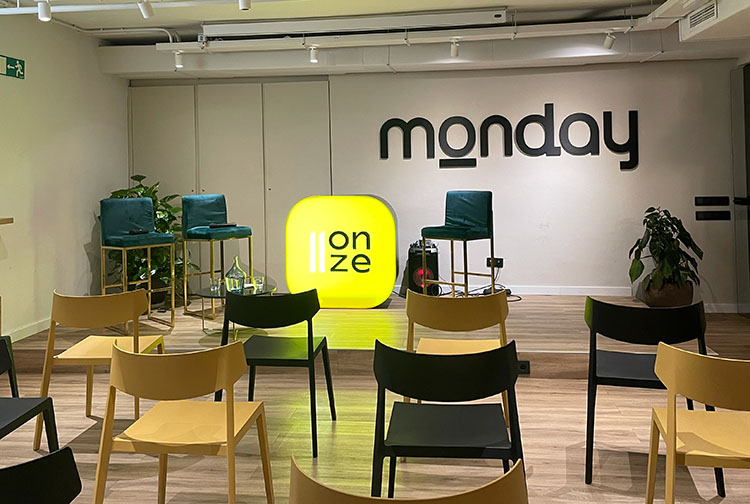

No, no està tot inventat, però és veritat cada vegada sembla més complicat tenir una idea innovadora que es pugui convertir en un negoci rendible. Sílvia Granado, agent 11Onze, ens detalla els avantatges i desavantatges de crear empreses innovadores.
L’esperit emprenedor, la creativitat i la innovació són fonamentals per desenvolupar noves tecnologies i productes que satisfacin les nostres necessitats. En el context econòmic actual, on moltes empreses han de competir en un mercat globalitzat en constant canvi, i on està plenament demostrat que res dura per sempre, innovació que aporti valor als consumidors és la clau de la supervivència.
Vendre o produir un producte que ja està consolidat en el mercat, així com proporcionar un servei per al qual hi ha molta competència sovint implica marges comercials molt petits i un creixement poc sostenible al llarg del temps. No obstant això, avançar-se a la competència amb idees de negoci disruptives no és fàcil, i comporta certs riscos que cal tenir en compte.
Crear una empresa innovadora
Com explica Granado, creant productes innovadors “podràs anar per davant de la teva competència i atrauràs inversors amb més facilitat”, però no podem oblidar que “les noves idees costen més de sortir a la llum i s’ha de treballar molt intensament”.
Per altra banda, és important fer la distinció entre una empresa innovadora en la qual la innovació és central a la seva raó de ser, i una empresa que innova puntualment en un producte o servei en funció de les necessitats de cada moment. Però siguin quins siguin els criteris que hi ha darrere d’una idea disruptiva, “és un orgull crear un projecte des de zero, i veure com els teus competidors et posen com a exemple”, apunta Granado.
Si vols que el teu negoci faci un gran salt, utilitza 11Onze Business. El nostre compte d’empresa i autònoms ja està disponible. Informa-te’n!


The economic analysis of the results of a company’s operations is essential to know whether it makes or loses money with its activity. Oriol Tafanell, Financial and Human Resources Director of 11Onze, explains the basic concepts that we need to understand in order to be able to interpret the annual accounts of a company.
Any businessman, entrepreneur or investor must have a minimum of economic and business notions that will help him in the analysis for the appropriate decision-making about an investment, financing needs or the financial health of a business. Decisions that will be based on correctly interpreting the company’s annual accounts.
Before calculating the profit or loss of a company based on the difference between income and expenses, we must have a good understanding of the calculation method to be followed and the different concepts. As Tafanell explains, “the first thing we have to ask ourselves when we read a company’s results is, are they talking about operating profit, before tax or after tax”.
Company results: how to read them
The operating result “is what tells us if the company is well managed”, says the Financial Director of 11Onze. Essentially, it is derived from the activity to which the company is dedicated and is calculated by the difference between income and operating expenses during the reference period.
If you want your business to make a giant leap, use 11Onze Business. Our business and freelancer account is now available. Find out more!