Will physical money disappear?
Els mitjans de pagament digitals, les criptomonedes, les divises digitals impulsades pels propis bancs centrals… Tot plegat està arraconant cada cop més els diners físics com a eina d’intercanvi de béns i serveis. T’oferim algunes claus de com està canviant el sistema monetari internacional.
La covid-19 va fer que l’any 2020 les targetes desbanquessin per primera vegada l’efectiu com a mitjà de pagament preferit pels ciutadans a molts països. Al Regne Unit, per exemple, l’ús de l’efectiu es va reduir a la meitat.
El sistema monetari està en ple procés de transformació amb la irrupció de les criptomonedes i fins i tot la creació de monedes digitals impulsades pels propis bancs centrals. En aquest context, la moneda física sembla tenir els dies comptats.
Tot i que els diners en efectiu es resisteixen a deixar de ser la principal eina per comprar i vendre, es calcula que actualment els diner físics només suposen entre un 5 % i un 8 % de tots els diners que existeixen nominalment al planeta. En pocs anys els mercats financers s’han omplert de nous productes, divises i actius de tota mena.
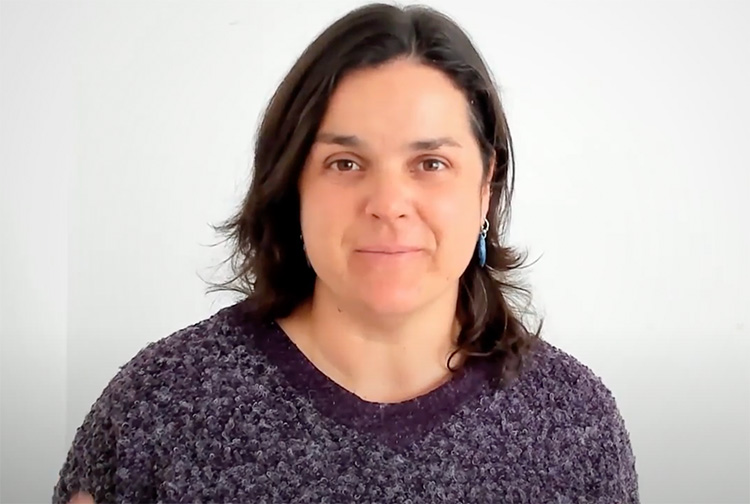
De la mateixa manera que les primeres monedes encunyades pels orfebres van canviar els sistemes econòmics de les societats antigues, els diners electrònics canviaran l’economia tal i com la coneixem avui. Com explica l’agent d’11Onze Laura Bunyol, en aquesta nova etapa de la globalització, sembla que “el sistema vol fer canvis estructurals”.
Els diners a la butxaca o al telèfon?
Cap a les divises digitals
La popularització d’Internet i la telefonia mòbil juntament amb l’auge de les criptodivises ens empenyen cap a un món de diners digitals que suposaran “la mort del diner físic”. De fet, com explica Laura Bunyol, l’any 2019 el llavors governador del Banc d’Anglaterra “ja va plantejar la creació d’una moneda digital global, recolzada per diversos bancs centrals”, que substituís el dòlar com a moneda de referència mundial.
Suècia ja compta amb una e-corona en fase de proves, que s’utilitza per a algunes transaccions. I tant als Estats Units com a Europa s’estan realitzant estudis relacionats amb la implementació de les monedes digitals. De fet, ja existeix el projecte d’un euro digital, com expliquem a l’article “L’euro digital, el final dels diners físics?”.
Encara existeixen moltes incògnites sobre com seran les divises digitals, però sembla que, com les criptomonedes, també es basaran en la cadena de blocs o ‘blockchain’ per garantir-ne la seguretat. De tota manera, el xifratge dels seus codis no serà dissenyat per quedar fora de la vigilància dels bancs centrals. I sembla que serà un recurs útil per als governs per acabar amb l’economia submergida.
El paper dels bancs centrals
Els bancs centrals no poden obviar la progressió de les criptomonedes, així que s’han d’adaptar als nous temps o perdran els seu sentit i “a la llarga deixarien d’existir”, com apunta Laura Bunyol. Els Estats no es poden permetre el luxe de perdre el control de les polítiques monetàries.
De fet, el sistema financer tradicional s’està esforçant de valent per regular i incorporar les criptodivises a la seva lògica de funcionament. L’’establishment’ sap que, de no fer-ho, corre el risc d’acabar arraconat en el panorama econòmic mundial.
Tot apunta que, com indica Bunyol, és probable que en un futur no gaire llunyà haguem de buscar fòrmules alternatives al cara o creu o l’actual sistema de desbloqueig dels carros dels supermercats.
11Onze és la fintech comunitària de Catalunya. Obre un compte descarregant la super app El Canut per Android o iOS. Uneix-te a la revolució!



Una empresa xinesa va presentar a Davos l’Universal Digital Payments Network (UDPN), un nou sistema de pagaments transfronterers dissenyat per facilitar la interoperabilitat amb stablecoins i monedes digitals emeses pels bancs centrals (CBDC).
La Xarxa Universal de Pagaments Digitals (UDPN) es va presentar oficialment en el Fòrum Econòmic Mundial de Davos (Suïssa). L’objectiu d’aquesta nova xarxa, desenvolupada per Red Date Technology amb la col·laboració d’altres empreses del sector, és oferir a particulars i empreses una forma segura i sense fissures d’efectuar pagaments digitals amb stablecoins i CBDC.
L’empresa xinesa ho explicava d’aquesta manera: “Així com la xarxa SWIFT va crear l’estàndard comú original per a la missatgeria entre institucions financeres a través de diferents sistemes de liquidació, la UDPN tindrà el mateix propòsit per a la generació emergent de CBDC i stablecoins”
Compatible amb la majoria de CBDC i stablecoins
Les stablecoins o monedes estables, són un tipus de criptomoneda vinculada al valor d’una moneda fiduciària, com el dòlar estatunidenc. Això significa que el seu valor no fluctua tant com el d’altres criptomonedes, la qual cosa les fa més atractives per al seu ús en pagaments digitals. Per altra banda, les CBDC són monedes digitals emeses i controlades pels bancs centrals de cada país, que emulen a la moneda fiduciària del país on circulen.
La UDPN facilitarà l’intercanvi de stablecoins i CBDC entre diferents plataformes i moneders, la qual cosa permetrà a particulars i empreses fer-les servir per a una àmplia gamma de transaccions. La xarxa també proporcionarà un alt nivell de seguretat, utilitzant l’última tecnologia blockchain per a garantir que les transaccions siguin segures, ràpides i barates.
La xarxa ja està sent adoptada per grans empreses i institucions financeres, i s’espera que continuï guanyant tracció en els pròxims mesos i anys. Alguns dels principals bancs, HSBC, Standard Chartered, Bank of East Asia i Deutsche Bank, ja han anunciat la seva intenció a participar en la fase de proves.
Un gran interès del sector financer que demostra el potencial d’aquesta nova xarxa per a revolucionar la forma en què efectuem els pagaments digitals. Però que també posa en relleu la importància de la col·laboració internacional en el desenvolupament de noves tecnologies i plataformes.
Si vols que el teu negoci faci un gran salt, utilitza 11Onze Business. El nostre compte d’empresa i autònoms ja està disponible. Informa-te’n!


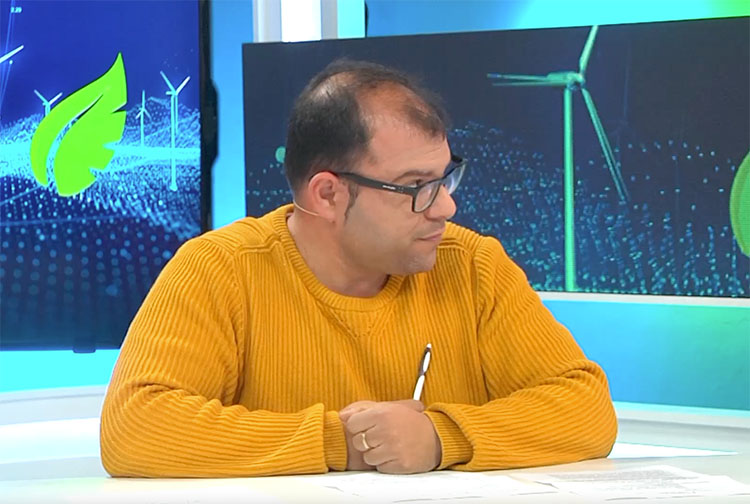
The energy transition to renewable energy sources will be key to avoiding the worst effects of climate change. However, there are certain players in the economic world who have a vested interest in slowing down this transition. Toni Mata, Content and Media Director of 11Onze analyses this in a new edition of Energia.
It is no secret that the fossil fuel industry has much to gain from maintaining the status quo of our dependence on hydrocarbons. The industry’s lobbying against renewable energy policies and its disinformation campaigns are well known.
It has recently come to light that one of the world’s largest oil companies, ExxonMobil, has known since the late 1970s that burning fossil fuels would cause climate change. As Mata points out, “those reports were hidden in order to continue making money, while in public they said that climate change was an invention”.
The energy challenge
Energy companies and banking
Some energy companies have been criticised for not investing enough in renewable energy and for opposing policies that would encourage the transition. Bearing in mind that the big banks are shareholders in 174 energy companies and that the energy crisis has pushed up the price of energy and, therefore, the profits of these companies, it is not surprising that they want to maintain their business model.
On the other hand, it is also true that there are banks and oil corporations that are investing in some of the large renewable energy projects, but as the content director explains, “it is probably more in the interest of continuing to control energy production and money than anything else”.
11Onze is the community fintech of Catalonia. Open an account by downloading the super app El Canut for Android or iOS and join the revolution!


The VAT reduction on basic foodstuffs is controversial because of the risk that it will have a very limited impact on consumers’ pockets and end up widening the commercial margins of distribution chains. Given the precarious situation of many families, some experts believe it would be preferable to extend direct aid.
Faced with the rising cost of the shopping basket, one of the Spanish government’s latest decisions in 2022 was to reduce VAT on a large proportion of staple foods over the next few months.
The measure provides for the abolition of this tax on a series of basic products to which the “super-reduced” rate of 4% was applied: bread, bread flour, milk, cheese and eggs, as well as fruit, vegetables, pulses, tubers and cereals. VAT on pasta and olive and seed oils is also reduced from 10% to 5%.
These tax cuts are expected to remain in force until 30 June, although if the year-on-year rate of core inflation (excluding energy and unprocessed food) in March is below 5.5%, they will end on 1 May.
A controversial measure
Theoretically the initiative should serve to alleviate the economy of many families, especially those on low incomes, but there are critical voices that question both its scope and its effectiveness.
The Organisation of Consumers and Users (OCU) considers this reduction to be insufficient. According to this organisation, it should have included “other foods that are also necessary, such as fresh meat or fish”, which will maintain the 10% VAT rate. In addition, the OCU calls for this measure to be applied above all to foods with “a healthier nutritional profile”, such as wholemeal bread.
For its part, the consumer organisation Facua reported to the National Markets and Competition Commission (CNMC) that seven distribution chains had not correctly passed on the VAT reduction in the first week of application. The percentage of irregularities was particularly high in Dia (17%), Carrefour (10%) and Eroski (9%).
More profits for retail chains?
Although the government’s decree-law obliges the tax reduction to be passed on to consumers, one of the great fears is that the distribution chains will take advantage of the VAT reduction to increase their profit margins.
It should be borne in mind that the year-on-year CPI for food stood at 15.3% in November, well above the general CPI. Moreover, December is usually a month when food prices tend to rebound. Therefore, the natural drop in prices that many foodstuffs experience every year in January could be used to justify the application of the VAT reduction.
Faced with this possibility, both Facua and the OCU have called for more controls to avoid non-compliance. In this regard, Nadia Calviño, First Vice-President and Minister for Economic Affairs and Digital Transformation, has warned that the CNMC will ensure the application of the reduction. However, to date it has not been specified how this control will be carried out, nor the possible sanctions.
Little proven effectiveness
The tax technicians’ union, Gestha, considers this VAT rebate to be “ineffective” in the fight against inflation. According to its calculations, the impact on the price of the shopping basket will be hardly noticeable: the reduction of VAT from 4 % to 0 % will save on average 3.85 euros for every 100 euros of purchase, while the reduction from 10 % to 5 % on oil will mean a saving of 1.36 euros for every 25 euros of purchase of this product.
Members of the Catalan Association of Economists also see these types of measures as ineffective in combating inflation, as shown in the Association’s autumn Economic Situation survey. Only 28% of its members rate tax measures aimed at companies and families, such as the reduction in VAT on foodstuffs, positively. Temporary taxes on energy companies (60%), large fortunes (59%) and banks (54%) are much better viewed.
On the other hand, some experts point out that it would have been preferable to use the 661 million euros that the VAT reduction on food will cost to extend the 200 euro cheque that the Spanish government will grant to low-income families. Around eight million people with incomes of up to 27,000 euros will be able to benefit from this direct aid to compensate for the increase in prices.
11Onze is the community fintech of Catalonia. Open an account by downloading the super app El Canut for Android or iOS and join the revolution!

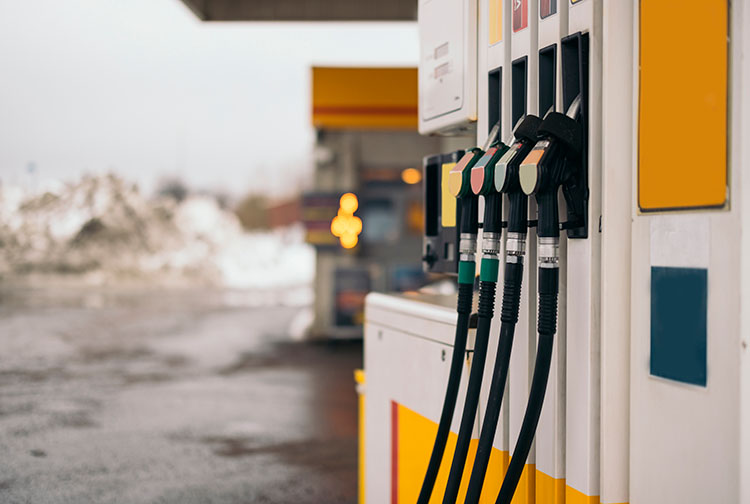
Rising interest rates have created a gap between the income of Europe’s central banks and the interest they now have to pay to private financial institutions for their deposits. As a result, most of them will record losses in the coming years and may see their independence compromised.
Sharp interest rate hikes by the European Central Bank (ECB) will cause the central banks of the eurozone countries to record losses in the coming years. The cause of the red numbers is none other than the gap between what they earn and what they pay out.
The public debt acquired by these banks in recent years earns them hardly any interest. This was not a problem until July last year because until then they did not have to pay interest on the deposits entrusted to them by private financial institutions. The 0% rate set by the ECB allowed them to do so. In recent months, however, the interest rate has risen to 2.5%, which has upset the balance sheet equilibrium.
Bad times for central banks
Already in September, the Dutch central bank (DNB) warned in a letter to the Dutch prime minister that it was suffering from the financial consequences of the ECB’s change in monetary policy. In it, the DNB had to cope with increases in the rates it pays on deposits entrusted to it by banks, while the income from purchased bonds was not increasing accordingly. And it extended this problem to “all central banks that implement [debt] purchase programmes, both in the euro area and outside it”.
A few weeks later it was the governor of the Bank of Spain (BdE), Pablo Hernández de Cos, who acknowledged that this body, “like the vast majority of central banks in the Eurosystem”, would record losses in 2023. In an appearance in December, he added that this situation will last several years.
This will not entail a cost for the State in the short term, as the BdE has provisions of more than 30 billion euros to cover financial risks. However, it will eliminate the contribution made by this institution to the public coffers in recent years. Its profit in 2021 was already reduced by 16% in 2021 to 1,785 million euros. Of this amount, 925 million was paid into the Treasury, as required by Royal Decree 2059/2008. It has yet to publish its 2022 accounts.
Losses also for the ECB?
Reuters pointed out a few weeks ago that the European Central Bank itself is also exposed to going into the red, as it has to pay a huge amount of interest to commercial banks, whose deposits with the ECB amount to around five trillion euros globally.
The European banking regulator is largely owned by the national central banks of the countries that have adopted the euro. Therefore, some analysts point out that these losses could even force some of these central banks to request a bailout.
However, it should be borne in mind that the ECB has significant resources at its disposal to avoid such a scenario. In addition to exhausting its provisions, it could draw on any income that national central banks earn in their monetary policy operations, such as bonds and loans, to improve their accounts. It also has the possibility of deferring losses by booking them on its balance sheet as a credit against future profits.
Central banks can continue to operate despite incurring losses that exhaust their capital. However, as the ECB itself points out, “the principle of financial independence implies that, ultimately, national central banks should always be sufficiently capitalised“. This is the only way to guarantee their independence from the governments of the day.
11Onze is the community fintech of Catalonia. Open an account by downloading the super app El Canut for Android or iOS and join the revolution!

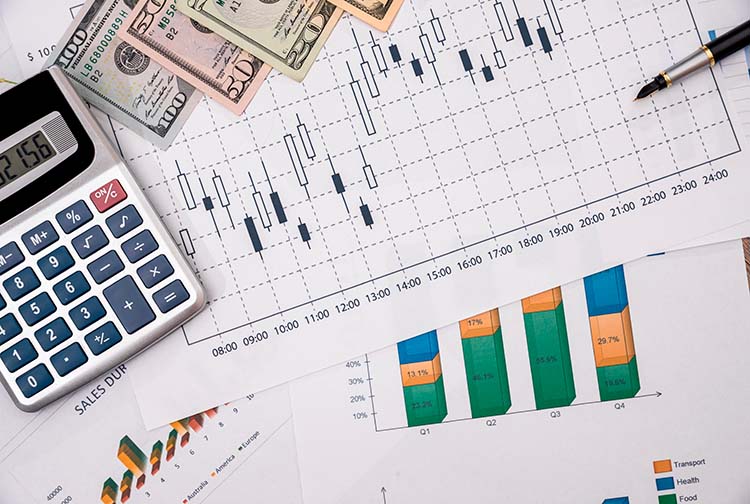
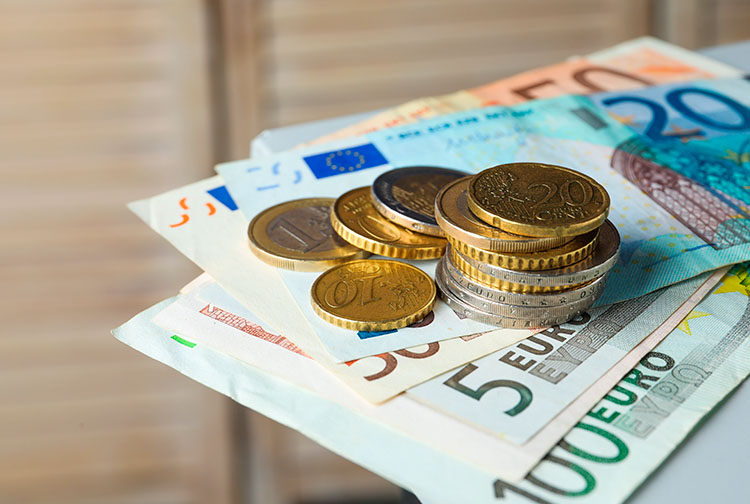
Les últimes dades proporcionades per l’Institut Nacional d’Estadística (INE) apunten que al juliol els preus van pujar un 10,8% interanual. Una taxa d’inflació que no es veia des de l’any 1984. Però, què passaria si els preus seguissin augmentant ràpidament i sense control? Joan Benedicto, agent 11Onze, ens explica què és la hiperinflació i en detalla alguns exemples històrics.
Abans d’entendre què és la hiperinflació hem de tenir clar què és la inflació, com explica Benedicto, “la inflació es defineix com l’augment generalitzat i sostingut dels preus dels béns i serveis d’un país en un període determinat de temps”. Tanmateix, quan es produeix “una pujada de preus descontrolada, excessivament elevada, i de com a mínim un 1.000%”, podem parlar d’hiperinflació.
La ràpida pujada de preus, juntament amb la pèrdua del valor real de la moneda, provoca una gran reducció del patrimoni monetari de la població. Com detalla l’agent d’11Onze, “si compro una barra de pa, i en el meu país hi ha una inflació del 1.000%, aquesta barra de pa, al cap d’un any, costarà 11 € en comptes d’1 €”.
A més, cal tenir en compte que en casos reals d’hiperinflació al llarg de la història, les pujades de preus han estat molt més desmesurades que en l’exemple anterior. Així mateix, les conseqüències socials i econòmiques d’aquestes hiperinflacions encara segueixen afectant de manera important a l’economia mundial.

Hiperinflació: Alguns exemples històrics.
Hiperinflacions al llarg de la història
El cas recent d’hiperinflació més paradigmàtic és, possiblement, el de Veneçuela, que l’any 2018 “va passar a tenir una inflació aproximada del 130.000%”, apunta Benedicto. Tot i que la seva economia ha mostrat una significativa recuperació, amb “una inflació per sota del 700% l’any 2021”, i la fi de l’espiral inflacionària el 2022, l’efecte d’aquesta llarga crisi es reflecteix en la realitat quotidiana dels veneçolans, que veuen com una part significativa de la població continua patint el risc de pobresa extrema i inseguretat alimentària.
Un altre cas és el del 1923 en la República de Weimar, l’actual Alemanya. Després de la Primera Guerra Mundial, el país estava greument tocat en l’àmbit econòmic i sense reserves d’or per poder fer front als pagaments del Tractat de Versalles. El marc es va devaluar i, com explica l’agent d’11Onze “cinc anys després de la guerra, van arribar a una inflació de 665 milions per cent”.
No podem concloure aquest breu recull d’hiperinflacions al llarg de la història sense parlar de la hiperinflació d’Hongria del 1946. Després de la devastació de la Segona Guerra Mundial, l’economia va quedar tan malmesa que els preus es duplicaven cada dia i, com puntualitza Joan Benedicto, “la hiperinflació va arribar a uns màxims de 41.900 bilions per cent, sens dubte, el pitjor cas d’hiperinflació que s’hagi conegut mai”.
11Onze és la fintech comunitària de Catalunya. Obre un compte descarregant la super app El Canut per Android o iOS. Uneix-te a la revolució!



The lack of manpower and the shortage of qualified personnel are some of the common complaints in the business world. On the other hand, high unemployment and low wages are endemic problems in our country that perpetuate job insecurity. Is there a solution to all this? What does the future hold for our young people? In the last ‘Que no faltin!’ of this year, David Garrofé, has answered these questions with the participation of the public of La Plaça of 11Onze.
The good performance of the labour market in our country is one of the few positive aspects in the current context of economic uncertainty. Despite the slight increase in the unemployment rate in Catalonia last November, the Catalan labour market continues to recover with respect to the previous year.
Even so, the Spanish state continues to double the unemployment rate of the European Union, although it has narrowed the gap thanks to strong growth. That said, comparisons of unemployment rates with other countries are only relatively useful, since, as the businessman and ex-secretary of Cecot explains, “the system we have for quantifying the unemployed is very imprecise, there are many people who are working who are counted as unemployed, and there are also many young people who do not sign up to the employment services”.
Regardless of the accuracy of the official figures, it cannot be denied that the unemployment rate in our country is excessively high. Likewise, we have “an economic model that is very focused on the services sector, with low added value and focused on tourism, which conditions a job profile with low salaries”, Garrofé points out.

Que no faltin! | Episode 3
Youth unemployment is a pending issue
With the highest youth unemployment rate in Europe – one in five of the unemployed is under 25 years of age – the precarious employment situation of young people in our country is a real problem that must be urgently addressed. What will our sons and daughters work as? What skills and abilities will they have to acquire? Will they have to leave the country to find a job?
These high unemployment figures seem incongruous to employers who cannot find the skilled labour they need, but as Garrofé explains, there are two factors to consider, “a large part of these qualified young people have not yet been born”, and what is worse, “there is a certain perception that formation is of no use“, and he continues, “those who do not invest in formation will have a very bad time, and will be permanently dragged along by subsidies”.
On the other hand, there has been an evolution of values in the new generations, which should not be confused with a lack of values, whereby flexibility at work and personal fulfilment that allow a better balance between work and personal life become more important.
Likewise, low salaries do not help, as they are uninspiring and lose loyalty, “we have created a financial bubble in which it is much more profitable to play with money than to invest in people“, so while “capital income has been rising, labour income has been falling”, says Garrofé.
11Onze is the community fintech of Catalonia. Open an account by downloading the super app El Canut for Android or iOS and join the revolution!



On one side of the Atlantic, French President, Emmanuel Macron, claims that “we are living the end of abundance”. Across the ocean, US Federal Reserve Chairman, Jerome Powell, warns that the fight against inflation will be “painful” for families and businesses. And beyond words, more and more data point to a “major upheaval”.
On the first council of ministers held after the holidays, Emmanuel Macron warned that France is facing a “turning point” that will require “sacrifices”. The French President was very explicit when he stated that “we are witnessing a great upheaval, a radical change”. He concluded that, in essence, “what we are experiencing is the end of abundance”.
The current economic system seems exhausted, with the uncontrolled printing of money by central banks in recent years. However, leaders such as Macron continue to point to more conjunctural issues, such as the war in Ukraine or droughts caused by climate change, as being responsible for the crisis.
The “sacrifices” demanded by Macron have already provoked trade union rejection in a country that does not hesitate to mobilise to defend its rights. Philippe Martinez, leader of the CGT, warned that there will be protests in September to demand wage increases and control inflation. And it is logical that social conflict will tend to intensify in the face of probable cuts in the pension and unemployment benefit systems, which are in the process of being reformed in France.
Messages to prepare the ground
On the other side of the Atlantic, the chairman of the Federal Reserve also acknowledged shortly afterwards that restoring price stability will bring “problems for households and businesses”. Jerome Powell admitted that controlling inflation “will take some time” and will involve growth “below” estimates.
This is a very optimistic forecast, as many economists have stopped talking about slowing growth to assume a recession scenario. In fact, after raising interest rates in the United States by 0.75% in July, another unusually large increase is expected in September. And the move will further strangle the economy.
Papal urgencies
In this context of rising interest rates, which promises more economic difficulties, some moves come as no surprise. For example, the Pope has just ordered all the organs of the Holy See to transfer their financial assets to the Institute for Works of Religion (IWR), better known as the Vatican bank.
And they must do so in haste, according to the papal request: “The Holy See and the institutions linked to the Holy See that hold financial assets and liquid assets (…) in financial Institutions other than the IWR must inform the IWR and transfer them to the IWR as soon as possible within 30 days from 1 September 2022”.
Why such a rush? The Vatican bank acknowledged in the latest annual report, published in June, a net profit of about 19 million euros in 2021. This is less than half of what it achieved in the previous two years. And the figures could be even worse so far in 2022. The Pope’s request is therefore interpreted as a desperate attempt to consolidate the IOR’s accounts before the crisis worsens.
Central banks continue to accumulate gold
At the same time, central banks continue to stockpile gold to protect themselves from a sovereign debt crisis. Buying activity was particularly intense in July, when the price of gold fell below 1,700 euros per ounce.
During that month, Qatar‘s central bank increased its reserves by 14.8 tonnes and Uzbekistan‘s central bank bought 8.7 tonnes, according to Krishan Gopaul, an analyst at the World Gold Council. In the case of the Qatari state, this is the largest monthly increase in reserves since records began. In the case of Uzbekistan, the data confirms its buying strategy, as it is a similar volume to what it had acquired in the previous month.
In recent months, the price of gold has been affected by the increase in interest rates decreed by many central banks, which has boosted the investment attractiveness of deposits. However, despite these headwinds, many analysts maintain bullish forecasts for the precious metal in the long term, with estimates placing the price of gold at over 3,000 euros per ounce.
Central banks want the end of the era of abundance predicted by Macron to catch them with gold deposits bursting at the seams.
If you want to discover the best option to protect your savings, enter Preciosos 11Onze. We will help you buy at the best price the safe-haven asset par excellence: physical gold.
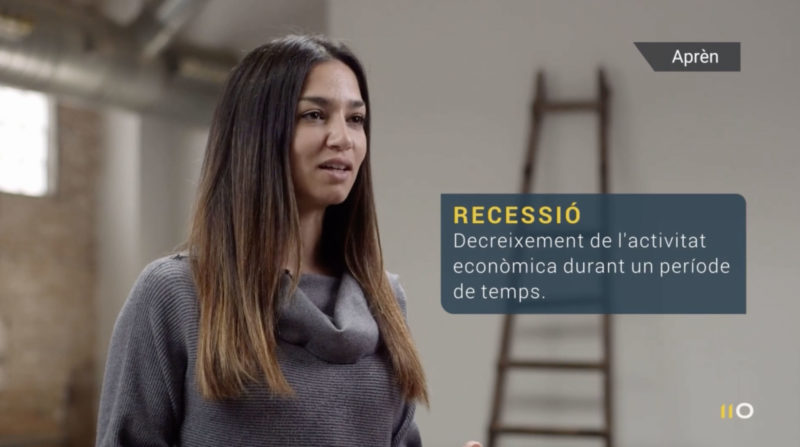

The two great world powers, China and the United States, know that they will have to face an imminent global debt crisis, but each has decided to take opposite paths. While Beijing needs to continue stimulating the economy of emerging countries, Washington believes that interest rates must be raised to control inflation. Behind these two divergent strategies, there are strong geopolitical motives. At 11Onze, we take a closer look.
Behind the scenes of the economy, there are always political motives that we are often unaware of. If Xi Jinping and Joe Biden want economic conditions to stabilize, it is not only to safeguard the economy of their respective countries, but also because both of them will have to face a re-evaluation of their political leadership in the autumn of 2022. To achieve this, they know that important interest rate decisions must be made. Yet each is approaching this challenge from very different perspectives and strategies.
While the United States (US), like the UK and the European Union, is concerned about an economy under pressure from high inflation and supply constraints, which has pushed up prices and sent the purchasing power of citizens plummeting; China is worried that a rise in interest rates will hurt the sovereign debt of the emerging economies with which it has trade deals —and there are many of them, as we shall see— which could trigger an unprecedented global crisis. Which of the two hegemonic economies will emerge as the winner in this contest?
US: controlling inflation to withstand the onslaught
This is how, at one end of the planet, US President Joe Biden will have to face the elections to renew Congress in November. If this contest does not favor the Democrats, he will lose the ability to manage the inflation crisis, in a context in which his popularity continues to fall. For this reason, Biden is convinced that public opinion must be satisfied by attacking the disproportionate increase in the prices of basic consumer products due to inflation.
In this sense, and in line with classic economic movements, he considers it an essential strategy to raise interest rates. And this task, it is clear, falls to the US Federal Reserve. In fact, leading economic analysts are certain that the Fed wants to start raising interest rates in March.
Moreover, the US is not alone in tackling this runaway rise in inflation. The decision is in line with what the Bank of England wants to do. And, likewise, it remains to be seen what decision the European Central Bank will finally take, which has decided, for the moment, to leave interest rates at 0%. Despite this, it is under increasing pressure to raise them to at least 0.5% to show that the eurozone also has enough determination.
But the balances in the economy are precarious: if action is taken to lower inflation at a time when most countries, especially in emerging markets, have off-limit sovereign debt, this could lead to a debt crisis of biblical proportions. As we have explained in 11Onze, analysts such as Bill Dudley in ‘Bloomberg’ warn that as the Federal Reserve begins to tighten monetary policy, “funding costs will rise and less credit will be available.” This is because interest rates reduce the incentive for investors to seek the kind of returns offered by these emerging countries.
And all this has to happen at the same time as the moratorium by the International Monetary Fund (IMF) and the World Bank agreed with the G-20 countries during the pandemic comes to an end. Dudley proposes that the IMF leave the aid tap open, so that emerging countries can assume their sovereign debt and no longer continue to be subjugated to private lenders and large lenders such as China.
China: the risks of colonizing the emerging market
On the other side of the world, Xi Jinping needs the US Federal Reserve and the European Central Bank to continue their soft monetary policy, which has stimulated the world economy throughout the pandemic. And he needs it, first, because he wants to get to the fall National People’s Congress through the big door, since it is the political event that has to endorse his leadership for a third five-year term. And, second, because the Asian giant’s colonizing economy is faltering.
“If the major economies slow down their trajectory or make a U-turn in their monetary policies, it will have serious negative repercussions and challenge global economic and financial stability. Emerging countries will bear the brunt,” the Chinese leader said at the last Davos conference.
In fact, if China’s GDP has shown signs of recovery after the pandemic, it has only been thanks to exports, which have increased by 30% throughout 2021. In contrast, wholesale and retail sales within the same country do not exceed 1.7% and 3.9% respectively, compared to 2020, the year in which the Asian leader’s growth came to a screeching halt due to the effects of Covid-19.
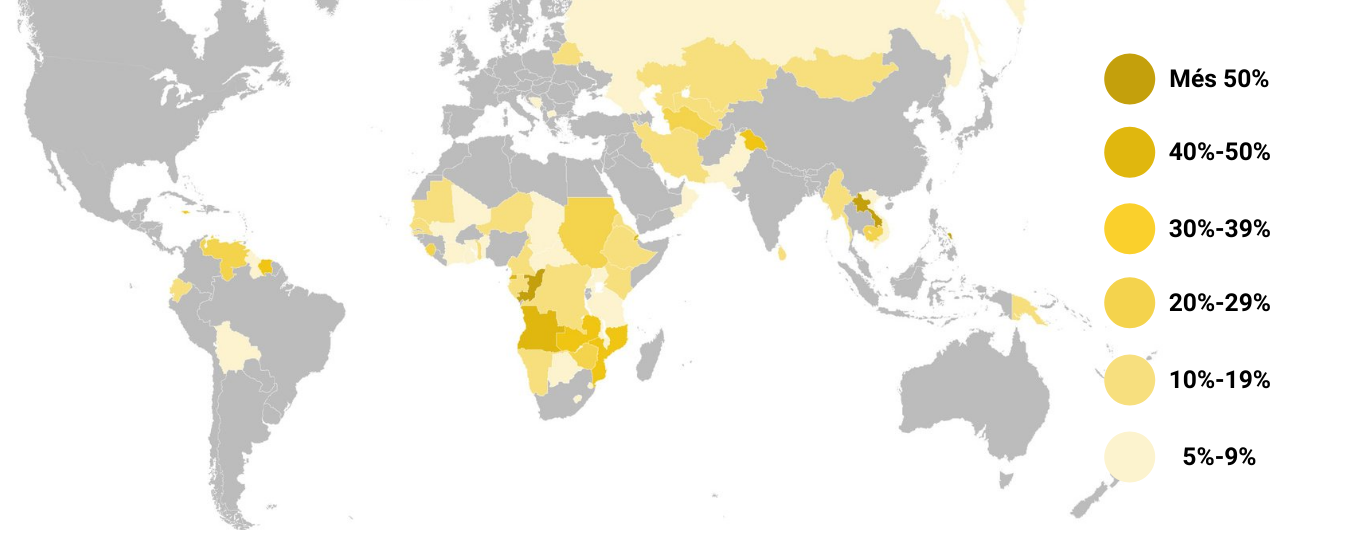
As things stand, it is much more in China’s interest to continue exporting smoothly than to control inflation. And it has good reason to want to do so. According to a report by the College of William & Mary, China has literally colonized the emerging market in recent years. As the chart above shows, nearly 70 developing countries have incurred debts to China in excess of 5% of their GDP.
If a combined action by the US Federal Reserve, the European Central Bank and the Bank of England raises interest rates, this threatens the strength of these emerging economies, which will have serious problems repaying sovereign debt, as Dudley explains. In this context, the main loser is China, which has granted many of these debts.
A chain crisis of unknown dimensions
Experts warn that the first effects of this chain debt crisis will drag down the entire Chinese real estate sector, which has already shown good signs of tension in recent months with the bankruptcy of the country’s second largest real estate group, Evergrande, due to dubious financial policies that have given wings to sovereign debt – and now put it at risk.
As the World Bank predicts, “the risks and potential costs of contagion from a sharp deleveraging of large firms, especially in the real estate sector —with combined onshore and offshore liabilities amounting to almost 30 percent of GDP and strong linkages to various parts of the economy— far exceed any potential damage from the collapse of a typical large industrial company.”
Be that as it may, and provided that the monetary policy decisions of the capitalist West are confirmed, complicated months lie ahead, both for the emerging economies and for the Asian giant —and, therefore, for the entire planet—. If the most pessimistic predictions come true, we will have to start taking measures to face this debt crisis that already seems inevitable.
If you want to discover the best option to protect your savings, enter Preciosos 11Onze. We will help you buy at the best price the safe-haven asset par excellence: physical gold.



The digitalisation of the economy has spurred the popularity of cryptocurrencies in recent years. A revolution in the financial system that has led some governments’ central banks, initially reluctant to introduce them, to start issuing their own digital currencies. We analyse the reasons behind this change of mentality.
The capitalisation of financial markets by digital currencies, especially cryptocurrencies such as bitcoin, continues to increase year after year. Technological automation and distrust of traditional banking institutions due to banking abuses have led to the emergence of cryptocurrencies based on blockchain technology, which makes them more secure than physical currencies, and which do not depend on a central bank.
It is precisely this decentralisation of monetary creation, which characterises cryptocurrencies, that has been the spearhead of their popularity. In other words, they democratise the creation of currency while diluting the banking monopoly, hitherto exclusive to governments and central banks. This paradigm shift is a threat to those who have always held economic power, and one of the most obvious changes to the status quo that has facilitated the entry of digital currencies into the global economy.
This obviously does not please everyone, especially states and the financial institutions that serve them, which see their power of coercion and control of the population diluted. It is therefore not surprising that governments, central banks, and financial institutions such as the International Monetary Fund (IMF) or the World Bank, which were previously opposed to decentralised cryptocurrencies, are now more optimistic when it comes to digital currencies under their control, the so-called central bank digital currencies (CBDC).
If you can’t beat them, join them
Several central banks are working on the development of digital currencies, but some countries, such as China, are well advanced in the testing process. The Asian giant already has 261 million people using the digital yuan, e-CNY, which was used to make payments of more than 280,000 euros a day during the Beijing Winter Olympics.
In this context, the European Central Bank (ECB) does not want to be left behind and is developing its own electronic currency. The digital euro, managed and supervised by the ECB, can be used by citizens and businesses alike, but it will not replace cash, but complement it. The European Commission expects the regulation to be ready by early 2023 and the currency to be operational by 2025.
Other countries such as Sweden, Uruguay, and the United States are also experimenting with centralised digital currencies. This trend is gaining momentum as many central banks consider issuing their own digital currency to prevent their physical currency from losing ground.
Even so, in addition to the potential of digital currencies to drive innovation in new products, processes, and services that can be incorporated into business models, there is also an economic and geopolitical aspect. In other words, a whole set of interests of various players make it easy to predict that the rise of digital currencies is here to stay.
11Onze is the fintech community of Catalonia. Open an account by downloading the super app El Canut on Android and Apple and join the revolution!