Working less thanks to technological progress
The automation of work is creating an occupational metamorphosis, in which tasks usually done by humans are transferred to a set of technologies. Economics is not spared, and artificial intelligence is also gaining ground. But are economic forecasting algorithms a real alternative to economists?
As a result of the digitisation process of the last decades, huge amounts of data are being generated that are transforming the methods by which we analyse statistical models. Storing, registering, and analysing this constant flow of information has become an essential task for many sectors of the economy.
A technological revolution has opened up new possibilities in economic and financial forecasting capabilities. The analysis of these large databases, known as ‘big data’, would not be possible without artificial intelligence (AI). A rather broad term that encompasses a whole range of ideas.
Even so, there are two concepts in this field: machine learning (ML) and deep learning (DL), mathematical algorithms that allow computers to identify patterns in data and make predictions by imitating humans. Two computational advances that form the basis of economic forecasting with artificial intelligence.
An algorithmic crystal ball
Experts often compare algorithmic forecasting to “a crystal ball”. Indeed, this metaphor is the title of an internal study published by the International Monetary Fund (IMF), in which the authors of the research, Jin-Kyu Jung, Manasa Patnam and Anna Ter-Martirosyan, try to establish whether macroeconomic forecasting algorithms can improve on the results predicted by IMF economists themselves.
The study applies three different machine learning algorithms to a common economic forecasting problem, and the results are surprising. In all three cases, the algorithmic prediction far surpassed the benchmark performance of IMF economists.
In their observations, the authors warn that there are still factors that require further research. They also state that, for these predictions to be truly effective, real-time observations would have to be included. They explain that there is some freedom in the introduction of the parameters used by the algorithms, and that this may be key to determining their effectiveness.
Even so, in their conclusion they agree on the fact that the potential of machine learning in terms of statistical analysis of economic data is evident; and that, although these predictions made by algorithms cannot fully replace the work of economists, they represent a valuable additional reference when making decisions on economic forecasting.
11Onze is the community fintech of Catalonia. Open an account by downloading the super app El Canut for Android or iOS and join the revolution!


Europe could once again be talking about food rationing. This is not an alarmist headline: it is a direct warning from the heart of the financial system. The question is not only whether it will happen, but what this scenario really implies. Above all, what it says about the fragility of the current economic model and our dependence on factors we do not control. And, even more importantly, what consequences it may have for the daily lives of millions of European citizens.
When Christine Lagarde speaks, markets listen. But this time the message goes beyond monetary policy. The President of the European Central Bank has opened the door to extreme measures such as food rationing if geopolitical and energy tensions persist. It is not the central scenario, but nor can it be ruled out in an increasingly volatile context.
To understand the scope of the warning, we need to look at the global context: an economy still wounded by the pandemic, strained by the war in Ukraine and subject to persistent inflation. Now, the focus is shifting towards the Middle East and critical points such as the Strait of Hormuz. If this key route is disrupted, the world could lose up to 13% of its daily oil supply, with an impact that would go far beyond fuel and end up affecting the entire economic chain.
Energy, scarcity and control: the return of an old ghost
Energy is the circulatory system of the economy. When it fails, everything is affected. It is not only a matter of fuel or electricity: it is the root of all productive activity. When energy costs rise, everything that depends on them becomes more expensive, from industry to the most basic services.
More expensive fertilizers. More expensive transport. More expensive production. The result is inevitable: more expensive food. We have already experienced this recently. After COVID and the war in Ukraine, the cost of living soared while wages lagged behind, causing a sustained loss of purchasing power. And that was in a scenario without extreme supply disruptions.
The problem is that this time it could go further. We are not only talking about inflation, but about possible physical interruptions in supply chains. When there are not enough resources for everyone, the logic of the market gives way to the political management of scarcity. And it is at this point that rationing ceases to be a memory of the past and becomes a real option.
CBDCs: the piece that fits too well
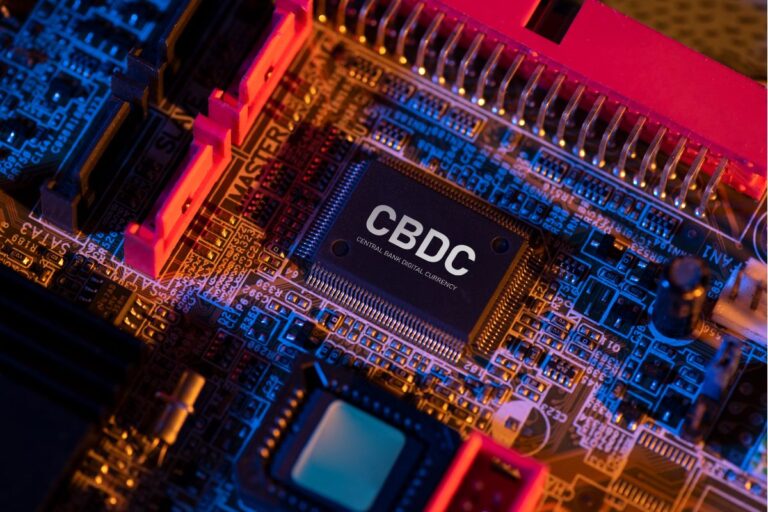
In parallel with these warnings, central banks are accelerating the rollout of digital currencies —CBDCs—. On paper, they are presented as a natural evolution of the financial system: more efficient, faster and with lower transaction costs. A logical adaptation to an increasingly digitalized economy.
But this innovation incorporates a differentiating element that cannot be ignored: control. As has been analyzed at 11Onze in several articles, CBDCs allow full traceability of transactions and open the door to mechanisms of direct supervision over citizens. It is not only a new way to pay, but a tool that could redefine the relationship between the State and money.
Unlike cash, these currencies could:
- Limit what you can buy
- Determine where you can spend
- Impose expiry dates on money
- Apply negative interest rates directly
- Block accounts in real time
In other words, a system in which economic policy ceases to be an indirect tool and begins to act in real time on citizens. Decisions are no longer limited to interest rates or taxes, but can directly affect how, when and on what money can be used. A paradigm shift that transforms economic management into a mechanism of immediate control.
Crisis and control: the logic of the system
This combination —systemic crisis and increased control— is not new. The current economic model has been built, to a large extent, on major shocks: wars, financial crises or global emergencies. These are exceptional moments that allow measures to be implemented which, under normal conditions, would generate strong social rejection.
It is what some economists —such as Naomi Klein— define as the “shock doctrine”. When fear and uncertainty dominate, the room for manoeuvre of governments expands. Citizens, seeking stability, accept profound changes that transform the rules of the economic and social game.
In parallel, pressure on the middle classes continues to grow. Inflation not only increases the cost of living, but also silently increases tax revenue, making citizens pay more without any explicit tax increase. The result is a delicate scenario: less purchasing power, a greater tax burden and a growing dependence on public subsidies which, in an environment of programmable digital currency, could also end up conditioning how and on what they can be spent.
And while all this is happening… gold returns to the centre
In a context of growing uncertainty, central banks are strengthening their reserves with this precious metal, recovering a pattern of behaviour that has been repeated throughout history. This is not a casual decision, but a response to mistrust towards a system that is increasingly under strain.
Gold does not depend on any government, it cannot be created out of nothing or easily manipulated. It is tangible, limited and universally accepted. In this sense, it represents almost the antithesis of digital currencies issued by central banks. That is why, as money becomes digitalized, interest in physical assets also grows. In the end, everything comes down to a question of trust.
But the underlying debate is not technological, but political and social. The uncomfortable question is inevitable: what price are we willing to pay for stability? If energy and food crises become entrenched, exceptional measures may cease to be temporary. And what is presented today as an emergency solution may end up defining the rules of the game in the long term.
We have all the ingredients of a perfect storm: geopolitical tensions, energy dependence, structural inflation, high debt and an accelerated digitalization of the monetary system. Understanding this scenario is not alarmism, but rather responsibility. The system is changing rapidly. And only those who understand what is happening will be able to protect their wealth and their economic freedom.
Protecting savings with physical gold has been one of 11Onze’s main contributions to its community and, now, the range of products is being expanded. That is why, in the face of volatility, still-high inflation and the growing crisis of confidence in the banking system, gold is once again strengthening as a safe-haven asset. Discover Gold Seed at Preciosos 11Onze.
If you would like to learn more about this topic, we recommend:
 Tecnologia
Advantages and disadvantages of CBDCs
6 min readIn a context where the use of cash is in decline and digital...


You’ve probably heard a lot about tokens lately, especially in connection with cryptocurrencies, the blockchain, and the metaverse. But what exactly are they? What are they for? We are already surrounded by tokens in our daily lives, although we are not sufficiently aware of it. Núria Rambla, executive assistant at 11Onze, gives us all the clues.
‘A token is a token, a symbol, a code. Tokens are objects similar to a currency, but not legal tender,’ Rambla explains. This means that they only have value within the market where it has been established that they will be used and only for the purpose for which they have been created. Tokens have been around for many years and the clearest example is casino or fairground tokens, those plastic coins that can only be used to play slot machines or poker or to ride the witch train or bumper cars.
And what characterises tokens? ‘They have no value, they are issued by institutions or private companies, they are made of low-value materials, they have a control system, and they are secure and cannot be counterfeited,’ says the executive assistant. In the digital world, tokens use the infrastructure of cryptocurrencies, the so-called blockchain, to circulate. We could say, in fact, that a cryptocurrency is a token, although a token is not exactly a cryptocurrency.
‘While a cryptocurrency has its own blockchain, a token always takes advantage of an existing blockchain, so it is cheaper for digital platforms’, argues Rambla.
In the virtual world, tokens have infinite applications: they can serve as security codes that are validated when we enter a website, as redeemable points in video games, as miles flown by airlines… In the world of finance, they are also used in the so-called ‘tokenisations’, that is, to protect our data when we make online payments, through a code that validates the transaction with total security. And in terms of investments, there are ‘security tokens’, i.e. investment securities in ‘tokens’. Want to know more? Just watch the video below!

Tokens



Beyond its popularity in the jewellery sector and as a store of value for investors and savers, gold is a precious metal whose physical properties give it a wide range of industrial applications, from electronics to medicine.
Throughout history, gold has been regarded as the ultimate store of value, making it an essential asset for individuals seeking to protect their savings and investors seeking to diversify their portfolios in economic uncertainty.
Its intrinsic value comes from its durability and relative scarcity. However, it is also due to a large and sustained demand from various sectors, from central banks and private investors, who accumulate bullion and coins of this precious metal, to the jewellery industry. Its physical properties also make it highly versatile enough for various industrial applications, for example:
- Electronics industry. Gold has excellent electrical conductive qualities, as well as very good resistance to corrosion and oxidation. This makes it an ideal metal for use in electronic components, such as connectors, chips and integrated circuits found in computers and mobile phones. It is estimated that around 300 tonnes of gold are used in electronic components every year, and that 7% of the world’s gold is found in such devices.
- Automobiles industry. Apart from being used in electronic components, the automotive industry takes advantage of the excellent quality of gold as thermal insulation to prevent high temperatures from damaging the mechanics of F1 cars and supercars from brands such as McLaren and Koenigsegg.
- Aerospace industry. Just as it is prized in the automotive industry for its thermal protection, and beyond its use in electronic components, the aerospace industry uses gold leaf to coat parts of aircraft engines, satellites, and space capsules to protect them against extreme temperatures and radiation. Gold is also used as a component of aircraft windscreen coatings to help reflect infrared radiation.
- Medicine industry. Because it is non-reactive and non-toxic, gold is used in prostheses and implantable medical devices, such as pacemakers. On the other hand, gold nanoparticles are used in biomedicine in diagnostic techniques for the detection of cancer cells. They are also used in the treatment of rheumatoid arthritis and muscle pain.
If you want to discover the best option to protect your savings, enter Preciosos 11Onze. We will help you buy at the best price the safe-haven asset par excellence: physical gold.



Instant payments, banking apps, digital money. Everything seems convenient. But behind financial technology there are political and power decisions.
Financial technology has integrated into everyday life with surprising speed. We pay with our phones, send money in seconds, contract financial services with two clicks. Everything is more agile, more efficient, more “user-friendly”. But this convenience has a downside that often goes unnoticed: financial technology is not neutral. It has never been.
Every digital infrastructure incorporates a worldview. And, in the case of money, this vision has profound consequences for economic freedom, privacy, and the decision-making power of citizens.
The end of anonymous money
For centuries, money has allowed something fundamental: anonymity. Buying, selling or saving without leaving a trace. Not as a criminal privilege, but as a basic expression of individual freedom.
The total digitalization of the financial system radically changes this paradigm. Electronic payments, cards, banking apps and digital currency projects imply absolute traceability. Every transaction is recorded. Who pays, how much, where and when?
What is regularly presented as efficiency and the fight against fraud also opens the door to an unprecedented level of control. Not only by financial institutions, but also by states. In this context, initiatives such as central bank digital currencies —promoted, among others, by the European Central Bank— generate a legitimate debate: how far does convenience go and where does surveillance begin?
Eliminating cash is not only a technological change. It is a change in the social contract.
When every action leaves a trace
In a fully digitalized system, money ceases to be just a medium of exchange and becomes data… and data has value.
Consumption habits, payment frequency, types of merchants, geographical location. Everything can be analyzed, cross-referenced and exploited. Not necessarily with bad intentions, but with clear incentives: risk control, customer segmentation, profit optimization.
The problem is not only who collects this data, but who decides how it is used. And here the citizen frequently remains in a passive position, with little room for manoeuvre and limited capacity for oversight.
Algorithms that decide for you
Credit granted or denied. Spending limits. Insurance premiums. Financing conditions. More and more financial decisions pass through automated systems.
These algorithms are not objective by definition. They are models designed by humans, trained with historical data and oriented toward maximizing certain outcomes. Often, efficiency and risk reduction for the institution, not necessarily the well-being of the client.
The problem is opacity. When a person decides, it can be questioned, negotiated or appealed. When an algorithm makes it, the answer is usually “does not meet the criteria”. Without clear explanations. Without context. Without a real right to reply.
This creates a new asymmetry of power: systems that decide over people’s economic lives without them understanding how or why.
Automation and dependency
Financial technology promises autonomy, but it can generate dependency. Dependency on platforms, private infrastructures and criteria we do not control.
When everything goes through apps and digital systems, being excluded —by age, knowledge, resources or personal choice— implies real marginalization. Access to money ceases to be universal and becomes conditional.
Moreover, technological concentration in few hands reinforces power dynamics that are difficult to reverse. The system becomes efficient, yes. But also more fragile and less plural.
Technology yes, but with critical thinking
Technology is neither good nor bad in itself. It depends on who designs it, with what incentives and under what rules. Accepting it uncritically is as naive as rejecting it altogether.
The challenge is not to stop innovation, but to govern it. To ensure that financial digitalization respects fundamental rights such as privacy, freedom of decision and universal access. It is necessary to ensure that technology serves citizens, not only the financial system or institutional control.
This requires regulation, transparency and, above all, informed citizens. Without knowledge, there is no capacity to choose. And without the capacity to select, freedom dissolves.
Knowledge as defense
Understanding how digital financial systems work is not a technical issue reserved for experts. It is a tool of personal sovereignty.
Knowing what it means to pay without cash. Understanding how automated decisions are made. Questioning what data we give away and in exchange for what. All this is part of a new essential literacy.
In a world where money is increasingly digital, ignorance is no longer neutral. It plays against you. Understanding financial technology is essential to preserve economic freedom.
If you want to discover the best option to protect your savings, enter Preciosos 11Onze. We will help you buy at the best price the safe-haven asset par excellence: physical gold.
If you would like to learn more about this topic, we recommend:
 Tecnologia
Algorithms now also play at being economists
4 min readThe automation of work is creating an occupational...


Brussel·les proposa els pilars legals per garantir l’acceptació de l’euro digital i la seva coexistència amb els diners en efectiu. Els bancs comercials seran els encarregats de distribuir i limitar les quantitats d’aquesta divisa digital. Però respectaran la privacitat i l’anonimat dels ciutadans?
La Comissió Europea i el Banc Central Europeu han presentat un paquet de propostes legislatives per convèncer al Parlament Europeu i al Consell de la UE de donar suport al llançament de l’euro digital. Les autoritats europees justifiquen la necessitat d’una CBDC perquè cada vegada hi ha més ciutadans -un 55% segons les seves enquestes- que prefereixen pagar a través de mètodes electrònics.
Es tracta d’un conjunt de mesures que busquen oferir un mètode de pagament alternatiu i complementari als diners en efectiu per als ciutadans i les empreses. El Banc Central Europeu decidiria qui podrà fer servir l’euro digital, com es farà servir internacionalment, i els bancs comercials s’encarregarien de distribuir i limitar les quantitats d’aquesta nova divisa digital.
Per una banda, es vol garantir que els euros en efectiu continuïn sent accessibles i àmpliament acceptats per totes les persones i negocis de tota la zona euro i, per l’altra, s’estableix el marc legal per a un possible euro digital com a complement dels bitllets i monedes en euros, que serà d’acceptació obligatòria en els comerços de l’eurozona, “excepte entre comerciants molt petits que optin per no acceptar pagaments digitals”.
Tranquil·litzar als bancs i als ciutadans
Segons les autoritats europees, les propostes presentades permetrien als ciutadans emmagatzemar fins a 3.000 euros digitals en moneders segurs que garantiran la privacitat. “Tenir un moneder digital en euros recarregat en el telèfon -o un altre dispositiu- serà el mateix que tenir monedes i bitllets en la butxaca. Podràs pagar amb la mateixa facilitat. Ni tan sols serà necessari tenir connexió a Internet“, apuntava durant la roda de premsa Valdis Dombrovskis, vicepresident executiu de la Comissió, però afegia que “la quantitat estaria subjecta a un límit màxim com a manera de protegir l’estabilitat financera i evitar sortides substancials de diners dels bancs”.
En aquest context, la protecció de la privacitat és una de les qüestions que més preocupen a l’Eurocambra, a les associacions de consumidors i als ciutadans que van deixar comentaris durant el període de consulta pública del projecte. El vicepresident de la Comissió afirma que no hem de patir per la nostra privacitat i protecció de dades que “les dades personals estarien totalment protegides. Els bancs, ni tan sols el BCE, no veurien ni podrien rastrejar les dades o detalls personals de la gent. Els pagaments sense connexió oferirien un nivell de privacitat similar al que ofereix avui els diners en efectiu”.
Això, però, és un punt contenciós entre els proponents i crítics d’aquestes mesures legislatives. Mentre que possibilitar pagaments fora de línia per a petits imports, en els quals no quedin registrats les dades del pagador i el beneficiari, pot garantir un cert nivell de privacitat, la tecnologia permet reconstruir aquestes transaccions si les autoritats pertinents ho requereixen.
De la mateixa manera, no es pot garantir l’anonimat que ofereixen les transaccions en efectiu. Com admetia Christine Lagarde, presidenta del Banc Central Europeu, “L’anonimat total -com el que ofereix els diners en efectiu- no sembla una opció viable. Contravindria altres objectius de política pública, com garantir el compliment de les normes contra el blanqueig de capitals i lluitar contra el finançament del terrorisme. I també faria pràcticament impossible limitar l’ús de l’euro digital com a vehicle d’inversió”.
Centralització vs. descentralització
Tot i que l’euro digital podria ajudar a reduir l’economia submergida i el risc de frau gràcies a la completa traçabilitat sobre la major part de les transaccions, els governs tindrien un control sobre els nostres diners sense precedents. La qual cosa els permetria saber exactament com els gastem i els atorgaria la capacitat de parar pagaments o confiscar-los, com va passar amb les protestes dels camioners contra el govern canadenc.
En aquest context, les criptomonedes ofereixen una alternativa a la banca centralitzada controlada per l’Estat, democratitzant la creació de moneda mentre dilueixen el monopoli bancari tradicional. A més, en termes pràctics, la introducció de les CBDC no acaba de ser entesa del tot per una ciutadania que, de fet, ja fa transaccions digitals bancàries i en el comerç diàriament a través dels mètodes de pagament existents.
I és precisament en aquest punt, on la suposada necessitat d’introduir un nou mètode de pagament, o encara més important, on els conceptes de privacitat, anonimat i llibertat que ara tenim amb els diners físics i les criptodivises poden ser decisius en determinar si la proposta d’un euro digital no és res més que una solució a la recerca d’un problema -almenys pel que pertoca als interessos dels ciutadans- que està destinada al fracàs a no ser que sigui imposada per la força.
11Onze Recomana Bitvavo, les criptomonedes de manera fàcil, segura i a baix preu.



The startup ecosystem in Catalonia, primarily located in the metropolitan area of Barcelona, continues to grow and consolidate the city as one of the leading technology hubs of innovation and digital entrepreneurship in Europe.
The development of the digital start-up ecosystem in Catalonia has turned Barcelona into a leading technology hub that attracts some of the top global companies. The synergy between public administration, universities, institutions and entrepreneurs has positioned the Catalan capital as the leading technology cluster in Southern Europe.
The latest report on the startup ecosystem in Catalonia by ACCIÓ identified a total of 1,902 startups in 2021 – a growth of 11.4% over the previous year – with a turnover of 1,710 million euros and employing 19,300 people. These figures confirm the upward trend seen in recent years of a digital ecosystem that thrives from its ability to attract talent and investors, and which the government hopes will reach 4,000 start-ups by 2030.
The maturity of the Catalan technology sector is evident in the study recently published by CaixaBank and IESE, confirming the leadership of Catalonia, which concentrates 18% of the startups in the whole of Spain, most of these in the counties of Barcelonès and Vallès Occidental.
An international and multicultural sector
Numerous studies confirm that cultural diversity has a positive impact on innovation, so it is not surprising that the success of many start-ups is closely linked to their ability to attract international talent, where entrepreneurs and employees from various backgrounds work in small teams driven by the same strategic objective.
In this sense, 26% of the employees and 17% of the founders of startups in Catalonia are foreigners. This trend is expected to increase, given that 73% of these start-ups have international clients, accounting for almost half of their turnover.
The support for digital entrepreneurship, the privileged location of Barcelona, the technological ecosystem of Catalonia, and the entrepreneurial spirit of the Catalan culture have made it easier for startups to gain more and more points every day to take over a large part of the country’s business fabric, making Barcelona the second preferred hub in the European Union to create a startup.
If you want your business to make a giant leap, use 11Onze Business. Our business and freelancer account is now available. Find out more!



Since 2021, when the European Commission called for a feasibility study on the creation of an asset register for all citizens, alarmism in the alternative press and on social networks about the inevitable implementation of this asset register to have absolute control over the population has become the norm. What are the facts, beyond media sensationalism?
In the context of the fight against money laundering and tax evasion, in July 2021, the European Commission launched a tender for a feasibility study for a centralised European register of the assets of all its citizens.
This project aimed to analyse the feasibility of establishing an asset register that could later be discussed as a future policy initiative. Its objective was to study how to collect and link available information on asset ownership from various sources and Member States and to analyse the design, scope, and challenges of such an EU asset register.
In addition, the Commission requested that the study consider ‘the possibility of including in the register, data relating to the ownership of other assets, such as cryptocurrencies, works of art, real estate and gold’. The intention was to get an overview of the possible resources that would be needed to carry out such a registry, as well as the operational and IT challenges, and the political and legal feasibility of the proposal.
A call for civil resistance
As soon as the call for a tender was made public, harsh criticism emerged against the proposal, arguing that it represented a danger to the freedom and civil rights of European citizens. That these new measures were prescribed without sense or understanding and out of pure greed for power by the political caste.
This prompted an avalanche of questions in the European Parliament: on what legal basis does the Commission intend to set up this central register of assets, can the Commission rule out the possibility of additional taxes on EU citizens being introduced in future via this register, and does the Commission intend to bring the register into line with data protection legislation?
Rolf von Hohenhau, president of the Association of European Taxpayers (TAE), warned that ‘If citizens give their support, they will lose all their personal rights through a bureaucratic back door. Under the pretext of preventing money laundering, we will all be investigated’. And he instigated the population to ‘take to the streets like the yellow waistcoats in France.’
Dutch lawyer Ellen Timmer gave an analysis of the initiative and noted that ‘It is not explained why the asset registers held by the tax authorities are not sufficient and what additional value is to be expected from the new asset register.’ At the same time, social media exploded with content going viral warning about the European Commission’s plan.
Meanwhile, a Commission spokesperson told EURACTIV that ‘The feasibility study is in no way indicative of any plans to establish an EU-wide asset register’, adding that such a register was not included in the Commission’s package of legislative proposals to combat money laundering.
Sanctions against Russia
On 17 March 2022, the European Commission launched the Freeze and Seize Taskforce, to facilitate coordination between member state authorities in implementing sanctions against Russian and Belarusian oligarchs.
In this context, Theresa Neef, Gabriel Zucman and Thomas Piketty of the EU Fiscal Observatory and the Global Inequality Lab presented a proposal for a European Asset Register that would connect information on the ownership of European assets across the EU. In other words, supporting the European Commission’s project under the justification of strengthening sanctions against Russia.
The Greens/EFA party, on the other hand, was clearly in favour of this new regulation: ‘All EU countries should create registers with beneficial ownership information including all these types of assets. These registers would have to be interconnected and freely accessible through a single European access point’.
The study’s conclusions
In March 2024, the conclusions of the study requested by the European Commission were presented: ‘The creation of comprehensive registers denoting the ownership and value of assets, which are exhaustive and complete, proved mostly unfeasible from an operational point of view for this group of assets’.
Earlier, European Commission spokesman Eric Mamer had already clarified that: ‘The European Commission has no intention of establishing a central database on EU citizens’ assets. It is true that the Commission is currently carrying out a study at the request of the European Parliament on the practicality of registering assets to EU Member States. This general study only shows what mechanisms are in place in the 27 Member States. The Commission is not planning any activities based on the results of this study’.
If you want to discover the best option to protect your savings, enter Preciosos 11Onze. We will help you buy at the best price the safe-haven asset par excellence: physical gold.

Brussels wants to secure the EU’s sovereignty by improving the autonomy, competitiveness and resilience of its industrial sector to reduce its dependence on other global players.
The EU’s industrial sector still accounts for more than 20 per cent of its economy, generates some 35 million jobs and is equivalent to 80 per cent of exported goods. Yet, it is in danger of lagging behind the world’s two major powers, China and the United States, which are promoting massive reindustrialisation processes.
The disruption of the raw materials and semiconductor supply value chains caused by the pandemic and the sanctions on Russia highlighted the need to reflect on how to promote reindustrialisation policies that guarantee the strategic autonomy of the 27 member states.
It was evident that the structural base in key sectors, such as dual-use high technology, energy supply, raw materials, rare earth and the defence industry, had to be strengthened while favouring the energy transition towards a new economic model less dependent on hydrocarbons.
Financing technological sovereignty and energy transition
In this context, the EU’s Next Generation funds were launched, a programme agreed as an economic response to the COVID-19 pandemic and endowed with 800 billion euros to finance the digital and ecological transitions.
However, much of the allocation of this funding has been hampered by bureaucracy. By December 2023, only around 30% of available grants and loans had been disbursed, according to EU figures. This disastrous management of the programme’s aid is making it difficult to transform the economic model that was intended to be changed.
Also in December, EU ministers agreed to increase the production of green technologies through the Zero Emissions Industry Regulation. The aim is to cover 40% of the EU’s needs in strategic technology products, such as solar photovoltaic panels or wind turbines, to be able to compete with China.
Likewise, the “Chips for Europe” initiative was launched to boost the continent’s technological sovereignty, ensuring that Europe meets its digital decade target of doubling its share of the global semiconductor market to 20%. A project that has been reinforced by state initiatives such as Spain’s PERTE or Germany’s subsidies of more than 22 billion euros to semiconductor manufacturers to set up production plants in its territory.
Sovereignty means acting as a sovereign entity
One point that European institutions cannot ignore is that ensuring industrial sovereignty must not only be based on the use of subsidies but also a change of mindset in the geopolitical sphere. Europe needs to impose its own foreign policy rather than acting as an entity subservient to US economic interests.
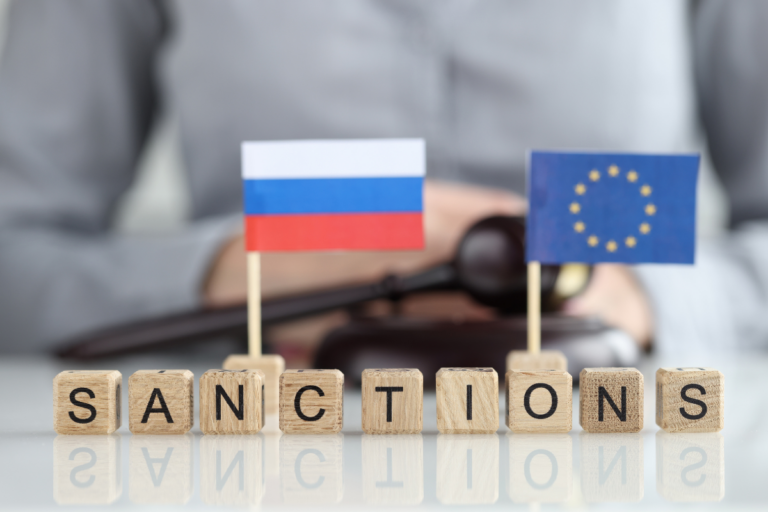
The economic sanctions imposed by the US on Russia, Iran and China in recent decades, but especially on Russia in the wake of the war in Ukraine, call into question the ‘cui bono’ behind the economic interests of the actors involved in these conflicts. These economic sanctions have greatly benefited the US and have had devastating consequences for the economies of EU member states.
The growing tensions between the United States and China are the prelude to a repetition of the geopolitical tug-of-war seen with Russia, which has led to war in Europe and has greatly damaged the European industrial sector. The European Union economic bloc has enough bargaining power to look after the interests of its industrial sector vis-à-vis the major global players, but this means facing up to an inescapable fact: the European Union will either act as a sovereign entity or it will cease to be.
11Onze is the community fintech of Catalonia. Open an account by downloading the app El Canut for Android or iOS and join the revolution!
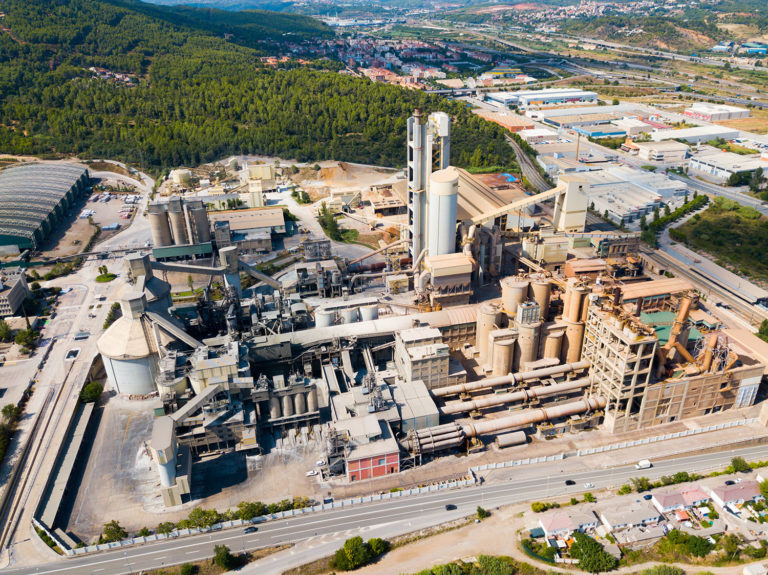

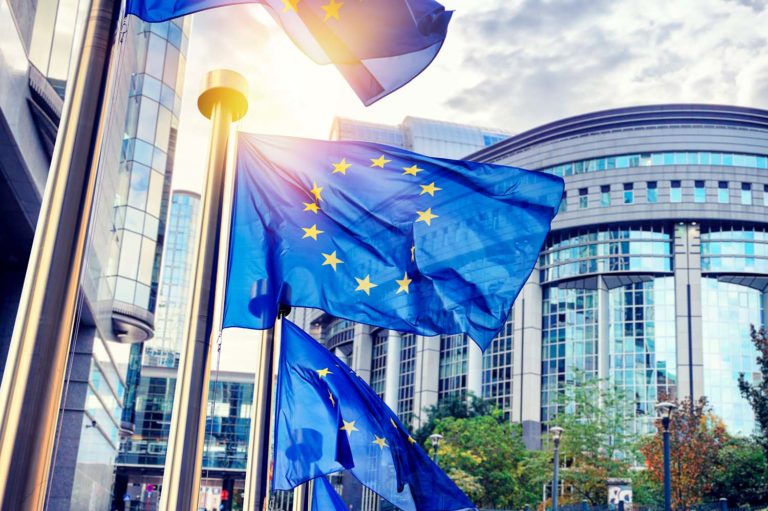
El Banc Central Europeu detecta deficiències fonamentals en la manera en què els bancs de l’eurozona aborden la ciberseguretat i avisa que estan perdent milions d’euros per culpa del cibercrim, sistemes de gestió antiquats i la baixa qualitat dels serveis tecnològics externalitzats.
El sector bancari ha introduït importants canvis tecnològics en els últims anys, especialment arran de la necessitat d’actualitzar-se davant del canvi de paradigma en la gestió de les finances que han esperonat les fintech. La inversió en tecnologies de la informació a la banca ha estat notablement superior a la de la majoria d’indústries, però aquesta transició cap a la digitalització de les finances per a millorar l’eficiència bancària no ha estat fàcil.
En aquest context, el Banc Central Europeu (BCE) ha realitzat una enquesta entre els bancs de l’eurozona que supervisa i ha dut a terme 22 inspeccions des de 2020 per a comprovar fins a quin punt estan preparats per a fer front al cibercrim. L’estudi del BCE deixa una imatge preocupant sobre la preparació del sector bancari europeu, arribant a la conclusió que els problemes són “més greus i generalitzats” del que es preveia.
Pel que fa a l’incompliment dels contractes per part dels serveis tecnològics externalitzats, l’enquesta feta per la institució de la UE indica que això ha comportat un cost addicional de 148 milions d’euros als bancs el 2022, un augment del 360% respecte a l’any anterior.
Tot i que el BCE explicava que aquestes pèrdues es deuen principalment per la manca de disponibilitat o mala qualitat dels serveis subcontractats, aquestes “es van concentrar en unes poques entitats significatives i, per tant, no indiquen una tendència sectorial”. Així mateix, constatava que “els acords de subcontractació dels bancs sovint no abordaven prou els requisits de seguretat informàtica”.
Es dupliquen les operacions fraudulentes a la banca espanyola
Segons l’últim informe del Banc d’Espanya, corresponent a 2022, les reclamacions per operacions fraudulentes han augmentat un 109,1%, duplicant-se des de l’any anterior. Concretament, es van tramitar 34.146 reclamacions en el Departament de Conducta d’Entitats del Banc d’Espanya.
La pràctica del phishing en destaca com una de les principals causes (10.361 de les denúncies) que hi ha al darrere de l’increment d’aquestes reclamacions sobre targetes i transferències, motivades per operacions presumptament fraudulentes. Recordem que el phishing consisteix a crear una pàgina web molt semblant a alguna que tu utilitzes normalment, per fer-t’hi entrar i robar-te certa informació.
A més, cal tenir en compte que durant el 2022 encara no hi havia peticions de clients sobre el nou Codi de Bones Pràctiques, que es va aprovar a la fi de l’exercici, i que ha fet augmentar les reclamacions en el 2023. Per entitats, CaixaBank, BBVA i Banc Santander són les que més reclamacions reben, gràcies a la seva major quota de mercat. En tot cas, en el conjunt europeu, el BCE avisa que aquests resultats “plantegen serioses preocupacions de supervisió que confirmen la necessitat de continuar les inspeccions in situ juntament amb converses entre bancs i supervisors”.
Si vols descobrir com aconseguir guanys pels teus estalvis amb un producte de justícia social, 11Onze Recomana Finança Litigis. Finança les demandes contra els bancs. Fes justícia i aconsegueix rendiments pels teus estalvis per damunt de la inflació gràcies a les indemnitzacions que hauran de pagar.