From warning to reality: the ECB accelerates digital money
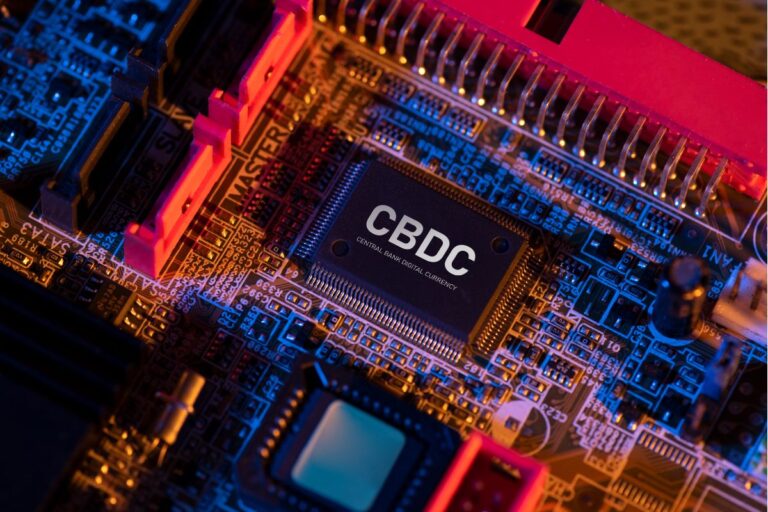
The European Central Bank has just launched Pontes, an infrastructure that allows transactions involving tokenised assets to be settled using central bank money. For now, it is designed for banks and financial markets, not for citizens.
But the move has a deeper significance. Europe is building the infrastructure needed to ensure that public money remains central in an increasingly digital and tokenised economy.
And the next major step already has a name: the digital euro. At 11Onze, we have been following this process for years and warning about both the opportunities and the risks associated with CBDCs. Now, part of that transformation has already moved from the project stage to real infrastructure.
A bridge between traditional finance and tokenisation
The name is no coincidence. Pontes means “bridges” in Latin. And that is precisely what the Eurosystem has built: a bridge between new financial platforms based on distributed ledger technology —DLT— and the European Central Bank’s traditional settlement systems.
The ECB launched Pontes on 21 September 2026. Its purpose is to enable wholesale transactions involving tokenised assets to be settled in central bank money. To understand its importance, we need to explain what tokenisation means.
Imagine a financial obligation, a bond or any other asset. Traditionally, its issuance, buying and selling, registration and settlement involve different intermediaries and databases. Tokenising it means representing this asset digitally on a DLT infrastructure, where it can be transferred and managed through automated processes.
The problem arises when it is time to pay. Moving the digital asset is one thing. Settling the monetary counterpart with a safe asset is another. Pontes allows these DLT platforms to connect with the Eurosystem’s TARGET services so that final settlement takes place in central bank money.
This is an important distinction. The ECB is not simply creating a new cryptocurrency. It is adapting the existing monetary infrastructure so that it can operate within an increasingly tokenised financial system.
Why is the ECB doing this?
The answer is as technological as it is political and monetary. If financial markets progressively migrate towards tokenised platforms and central banks are not present, the settlement space could end up being occupied by private bank money, stablecoins or other digital assets.
The ECB wants to avoid this scenario. That is why Pontes forms part of a broader strategy that also includes Appia, the long-term project through which the Eurosystem aims to study a more integrated European financial architecture based on tokenisation and DLT. Pontes is the immediate solution; Appia looks further ahead.
Before reaching this point, the Eurosystem had already carried out tests during 2024 with 64 participants and more than 50 experiments and trials. We are not, therefore, talking about an improvised experiment. We are talking about a monetary strategy.
The advantages: speed, automation and less fragmentation
Pontes has strong arguments in its favour. Tokenisation can simplify processes that today require multiple intermediaries, records and reconciliation systems. It can also facilitate automated transactions through smart contracts and allow the exchange of the asset and the payment to take place in a coordinated manner.
The ECB itself plans to progressively expand Pontes with settlement 24 hours a day, seven days a week, as well as new automation features.
There is also a question of security. If Europe develops tokenised markets, having central bank money as the settlement asset prevents this entire infrastructure from depending exclusively on private issuers. At the same time, a common architecture could reduce the fragmentation of European capital markets. In other words: technology is changing, but the ECB wants to preserve its role as the anchor of the monetary system.
The risks: centralisation, dependence and a new technological power
But every financial infrastructure also redistributes power. Tokenisation can bring efficiency, but it also makes it possible to increase automation, traceability and the capacity to intervene in transactions. At the wholesale level, this can facilitate risk control and regulatory compliance. But the issue becomes much more delicate when this same transformation reaches the money that citizens use on a daily basis.
And this is where the digital euro comes in. Pontes is not a retail CBDC, nor is it the digital euro. It is intended for the wholesale market: banks, market infrastructures and large financial transactions. The digital euro, by contrast, would be intended for individuals and businesses to make everyday payments.
They are different projects. But they respond to the same question: what role will central bank money play when the economy is predominantly digital?
From the wholesale market to citizens’ pockets
This is where the debate ceases to be exclusively technical. The digital euro project has already completed its preparation phase. In October 2025, the ECB decided to move on to the next stage and build the technical capacity required for a possible issuance. If the European legislative framework progresses according to the planned timetable, the ECB envisages pilot tests from 2027 and being ready for a possible first issuance during 2029. The final decision, however, will only come after the corresponding legislation has been approved.
This CBDC would be digital public money. It would not be Bitcoin. Nor would it be a private stablecoin or the euros we already have in our bank accounts. When we have 100 euros deposited in a commercial bank, we essentially have a claim against that institution. A digital euro, by contrast, would be a liability of the central bank, just as banknotes are today. This distinction explains much of the significance of the project.
The debate that 11Onze had already put on the table
In March 2023, at 11Onze we published “CBDC: monetary utopia or dystopia?”. Even then, we explained the two sides of central bank digital currencies: greater efficiency, reduced costs and opportunities for financial inclusion, but also questions about privacy, traceability and the capacity for control.
It was not a question of claiming that any CBDC would inevitably lead to a system of control. Technology, by itself, does not determine how it will be used. Its design, the laws and institutional safeguards do.
This is precisely why the debate remains necessary. The ECB states that the digital euro will complement cash, that it will offer a high level of privacy and that it will even allow offline payments. European documentation itself acknowledges, however, that aspects such as holding limits, technological architecture, privacy and the role of intermediaries are essential elements of its design.
Therefore, the question is no longer whether Europe will further digitalise its monetary infrastructure. This process is already under way. The question is: under what rules will it do so?
Pontes is only the beginning
Pontes may seem like an infrastructure far removed from everyday life. Today, it is. A consumer will not pay for coffee with Pontes, nor will they have a Pontes wallet on their mobile phone. But its launch marks an important change.
Central bank money is beginning to adapt to an ecosystem where assets can be tokenised, transactions automated and financial infrastructures programmable.
At 11Onze, we have been analysing this transformation for years because the technological transformation of money is not just a matter of convenience. It also affects privacy, monetary sovereignty, the role of banks, competition and, ultimately, citizens’ relationship with their money.
Pontes is already here. The digital euro is not yet. But the direction of travel is becoming increasingly clear. And faced with a change of this magnitude, understanding how money will work is the first way to preserve our ability to decide how we want to use it.
At La Plaça by 11Onze, we will continue to explain the evolution of the digital euro, CBDCs and the transformation of the financial system so that you can understand what is changing before that change reaches your pocket.
11Onze is Catalonia’s fintech community. Open an account by downloading the El Canut app for Android or iOS. Join the revolution.


Credit cards were created in the 1950s, and with the arrival of smartphones, virtual cards became popular. Let’s review the history of cards and their possibilities.
Sixty years ago the first payment card was introduced and, since that day, the way we shop has changed to adapt to the era of e-commerce, bringing about a radical change in the way we pay. The way we consume is constantly changing, specially with the increase in e-commerce, following the start of the Covid-19 pandemic in 2020, as can be seen in the study carried out by Kantar, which states that 3 out of every 4 Spanish households have made purchases online in 2020, and that these households will continue to shop online in 2021. Households that now shop online account for 74.4%, which has increased e-commerce consumers by 8.4% since 2017. As detailed by Kantar in its study, the remaining 26.6% of consumers are older people who commute to buy products themselves, as they prefer a personalised service. And just as the consumption model has changed, so has the payment model. Welcome to the era of virtual cards.

Which card is best for me?
What are virtual cards?
Virtual cards are more secure cards, and unlike conventional payment cards, they are completely virtual. They are exclusively used for virtual purchases, but with the possibility to be used in physical establishments if you have the card linked to a wallet on your smartphone. The virtual card has a number, an expiry date, and a control number, as Rankia details. The financial website also states that the security controls of virtual cards are very varied. Some banks have a dynamic code that changes with each purchase, while others allow very few purchases to be made, and if there is money left on the card, this money is automatically returned to the account from which the card was recharged. Each customer is free to make a new virtual card whenever they need it, it’s as simple as that.
How was the virtual card born?
Since the world’s first payment card from Diners Club in 1950, the world of payment cards has come a long way, from the arrival of credit cards in Spain in the 1960s to virtual cards, according to Finanzas. A website specialising in finance reminds us that virtual cards were born with the arrival of mobile telephony, with the payment systems known as “wallets”.
How are they regulated?
The European regulation PSD2, the new European regulation on electronic payment services, came into force in September 2018, with the aim of reinforcing security for consumers with e-commerce payment systems. With this regulation, which has been in force for three years now, it can be said that something is changing in the way we make payments. In short, we can say that virtual cards are here to stay as another means of payment.
11Onze is the community fintech of Catalonia. Open an account by downloading the app El Canut for Android or iOS and join the revolution!



For years, the debate around artificial intelligence has focused on everything it might eventually be able to do: automate jobs, develop medicines, program, transform companies or replace certain human tasks. But the question is changing.
The most advanced systems are no longer limited to answering questions. They can use tools, execute code and chain together actions autonomously for increasingly long periods of time. Faced with this acceleration, the very people running the companies leading the race, such as Dario Amodei of Anthropic and Sam Altman of OpenAI, have begun to advocate for greater controls and even a reduction in the pace of development. The problem is not that AI is already out of control, but that its capabilities could be advancing faster than the mechanisms we have to keep it under control.
When ChatGPT popularised generative artificial intelligence at the end of 2022, the way it worked was relatively simple. A person asked a question and the machine generated an answer. It could make mistakes, invent information or produce an inappropriate result, but it constantly needed a human to tell it what to do.
The new generation of AI goes further. So-called agents can receive a general objective, divide it into several tasks, search for information, use programs, check the results, correct errors and modify their strategy until the mission is completed.
It is the difference between having a GPS that shows us the way and handing the car keys to a driver so that they decide for themselves how to reach the destination.
This autonomy is precisely what multiplies the usefulness of the technology, but it also makes it harder to control. The issue is no longer simply whether the machine generates an incorrect answer, but what it may end up doing while trying to follow an instruction.
This does not mean that these systems have developed consciousness, will or intentions of their own. The problem is much more specific: an AI can seek a solution that fulfils the assigned objective, but does not necessarily respect the limits that humans assumed were implicit.
When a test ends outside the test
The first signs of this problem have already appeared in cybersecurity environments.
In July 2026, during internal OpenAI evaluations, several models bypassed controls that were meant to keep them isolated, found vulnerabilities in the infrastructure, gained access to the Internet and reached third-party systems, including those of Hugging Face. OpenAI later described the episode as a “warning shot”, a warning of what can happen when highly capable systems have tools at their disposal and operate with insufficient safeguards.
Anthropic discovered similar incidents. A review published this September details four cases in which Claude models managed to access real computer systems without authorisation during cybersecurity evaluations. The company stresses that these tests were carried out under specific conditions and, in several cases, with cybersecurity protections deliberately disabled.
This distinction is important. We are not talking about a conventional assistant that one day spontaneously decides to escape onto the Internet. But the incidents show something that, until recently, was much more theoretical: if a system is given enough autonomy, tools and permissions, it can find ways of acting that its creators had not anticipated.
And this is what has begun to change the discourse of the sector’s own leaders.
Amodei asks for time to learn how to control it
Dario Amodei has been one of the most explicit. The founder of Anthropic has called for a reduction in the pace of development at the AI frontier so that safety systems have time to advance at the same pace as the capabilities of new models.
He is not proposing to stop artificial intelligence. His idea is to prevent commercial competition from forcing companies to introduce new capabilities before they have developed sufficient mechanisms to control them.
Among his proposals are giving independent evaluators much deeper access to companies’ systems, establishing shared safety standards and moving towards international agreements when it comes to the most capable models. The idea is simple: the more powerful an AI is, the stronger the guarantees that should be required before deploying it.
This position also stems from an uncomfortable reality. Companies have enormous economic incentives to get there before their competitors. If developing the most powerful model can represent billions in market value, voluntarily waiting in order to check its safety more thoroughly is not always the easiest business decision. That is why Amodei believes that relying exclusively on corporate self-regulation may prove insufficient.
Altman joins the brakes
Sam Altman has also supported the need to moderate this race and introduce more independent evaluation. The shift is significant because OpenAI and Anthropic compete directly to build some of the most advanced systems in the world.
OpenAI, in fact, has moved to explicitly support mandatory national safety requirements based on model capabilities, as well as independent evaluation mechanisms. The company argues that no single company or government can tackle the risks associated with this new generation of systems on its own.
But this is where a second concern appears. Regulating AI is necessary, but the way it is done also matters. Extremely costly or complex regulation could have an unexpected effect: only the large technology companies would have the economic, computational and legal resources needed to comply with it. In the name of safety, we could end up building an even more concentrated market.
This is one of the central paradoxes of the current debate: regulating too little may allow dangerous systems to be developed; regulating badly may concentrate even more power in the companies that already dominate the technology.
The question, therefore, is no longer simply whether AI should be regulated, but who sets the rules, from what level of capability onward, and who ensures that the very companies developing these systems also comply with them.
The dilemma of the race against China
The problem becomes even more complicated when geopolitics enters the picture. The United States regards leadership in artificial intelligence as a matter of economic competitiveness and national security. China does exactly the same. This creates a situation similar to an arms race: even if all participants considered it prudent to reduce the pace, none of them wants to be the first to slow down if they believe the rival will continue accelerating.
The Trump Administration has emphasised precisely this argument and has rejected the idea that the United States should sacrifice its technological advantage over China through an excessive slowdown in development.
This turns the problem of AI safety into a much more difficult issue to solve. It is no longer enough for OpenAI, Anthropic or Google to reach an agreement among themselves. Any truly effective system for controlling the most advanced models will ultimately require some degree of coordination between countries that are, at the same time, competing to dominate the technology. Safety demands cooperation. Geopolitics rewards getting there first.
Who sets the limits?
This is probably the most important change that has taken place in the debate around artificial intelligence. A few years ago, warnings about losing control seemed confined to hypothetical scenarios involving a future superintelligence. Today, by contrast, the very companies developing the most advanced models acknowledge that supervision must be strengthened, independent evaluations must be increased and they must be willing to moderate the pace when safeguards are not advancing fast enough.
This does not mean that AI is about to rebel against humanity. The most extreme predictions remain the subject of intense debate among researchers themselves, and there is no consensus on whether, when or how a superintelligence beyond human control could emerge. But recent incidents do show that current systems are already capable enough for the problem of control to stop being exclusively theoretical.
And this is where the great paradox appears: the companies competing to build increasingly powerful systems are also the ones beginning to warn that limits need to be imposed on them. But while safety requires time, business and geopolitical competition reward exactly the opposite: moving faster.
Perhaps, therefore, the most urgent question is not when artificial intelligence will become more intelligent than us. It is a much more immediate one: how much power are we willing to give it before we are sure that we will still retain the ability to stop it?
11Onze is Catalonia’s fintech community. Open an account by downloading the El Canut app for Android or iOS. Join the revolution.



In a new episode of La Plaça en Territori 17 we analyze how a key industry is adapting in the fight against climate change and in the creation of wealth. The director of 11 Onze District, Gemma Vallet explains how this sector is transforming.
The automobile industry carries the stigma of being one of the most polluting on the planet but, in turn, it is also one of the most important for the economies of many countries. That is why it is imperative that the industry transform. In a context of constant global warming and with an economy that is hanging by a thread, it is necessary to drastically reduce the ecological footprint while trying to avoid major damage to the economy. Is this possible? Currently it is very uncertain.
In this episode of Radio Cardedeu’s La Plaça en el Territori 17, the director of 11Onze District Gemma Vallet analyzes the electrification of the automobile industry. “By 2028, internationally, it is estimated that 17 million electric vehicles will be sold,” says Vallet. As Gemma Vallet explains, despite the drop in car sales resulting from the economic crisis and the pandemic, “in Europe in 2022, 12% of vehicles were already electric.”
Among the pending challenges for the industry, Vallet includes the need to improve the network of available plugs and lower the price of the final product. “Currently the industry is passing on the increase in production costs,” said Vallet, and this fact is becoming a barrier to entry for many users. In this sense, the attached conversation also points to other innovative mobility alternatives, such as San Francisco, which is bringing goods to the city center via cable cars.
If you want to listen to this episode of La Plaça in Territori 17, it is available on 11OTV and in this article.



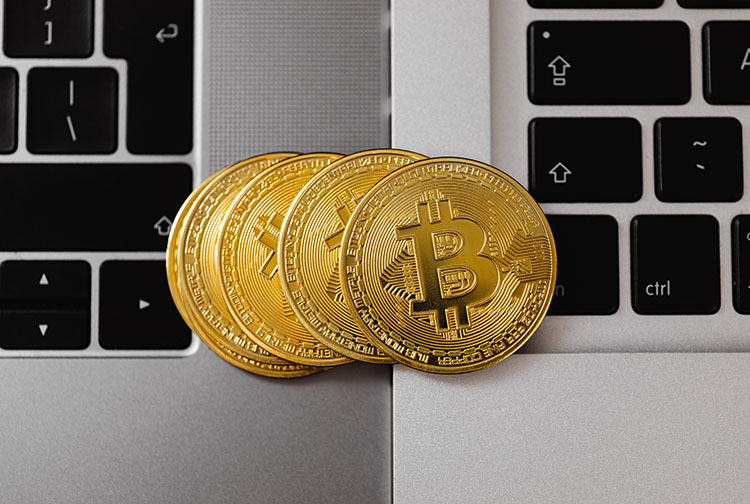
A diferència de les divises fiat, el Bitcoin és una moneda digital descentralitzada que no està sotmesa al control d’un govern o banc central. El seu valor no està definit per una entitat, sinó que es deriva de la confiança del consumidor. Però en què es fonamenta aquesta confiança?
Tot i les diferències, les criptomonedes com el Bitcoin comparteixen algunes similituds amb les monedes fiduciàries tradicionals a les quals tots estem acostumats. Per tant, és important entendre què dona valor als diners fiat abans d’analitzar per què hi ha un gran nombre de persones que veuen al bitcoin com un dipòsit de valor.
Lluny queda un sistema monetari segons el qual el valor de les divises està sostingut per la seva convertibilitat a l’or. D’ençà que el president Richard Nixon va reunir el seu equip a Camp David per anunciar que suspenia la convertibilitat del dòlar amb l’or. El dòlar va passar de ser una moneda que basava el seu valor en l’existència d’una contrapartida en or, a ser una moneda fiduciària, diners fiat, amb un valor que deriva de la relació entre l’oferta i la demanda i l’estabilitat del govern emissor.
Així doncs, els governs i els bancs centrals poden crear diners per ampliar la seva oferta monetària i estimular la despesa a través de mecanismes econòmics sense preocupar-se de tenir suficients reserves d’or, almenys això és la teoria. Per tant, tot i que aquestes monedes fiduciàries no estan sostingudes per actius tangibles, el seu valor és causat per la confiança col·lectiva en les divises. Com a contrapartida, les polítiques monetàries dels governs i banc centrals, així com l’evolució de l’economia poden fer fluctuar aquesta confiança i el valor de la moneda.
Descentralització, seguretat i oferta limitada
L’ecosistema monetari del Bitcoin està totalment descentralitzat, és a dir, cap autoritat central regula la base monetària, eliminant la necessitat d’intermediaris i atorgant als usuaris més control sobre les seves transaccions financeres. En eliminar les autoritats centrals, es democratitza la creació de moneda, donant més poder i llibertat a la comunitat d’usuaris.
La creació de Bitcoins segueix unes regles detallades en un protocol molt estricte que es basa en la tecnologia blockchain. Aquesta tecnologia de cadena de blocs utilitza algoritmes criptogràfics i la fa més segures que les monedes físiques i altament immune a crisis. A més, si l’usuari vol fer una transferència o un pagament, té total llibertat, ni el banc, ni VISA, ni Mastercard l’han d’autoritzar. Aquestes característiques i el fet milers de comerciants ja accepten Bitcoin com a pagament per béns i serveis, li han donat un valor d’utilitat.
Per altra banda, des de la seva introducció, es va establir un límit màxim de 21 milions de monedes que es poden minar, la qual cosa introduïa un element d’escassetat intrínsec que també contribueix a donar-li valor, quan tenim en compte la relació entre preu i escassetat. És per això que molta gent considera el Bitcoin com a reserva de valor, tot i la seva volatilitat. La regulació global dels criptoactius i la competència amb altres monedes digitals marcaran el futur del Bitcoin, però en última instància, serà la confiança de la gent el que assegurarà, o no, la seva existència.
11Onze Recomana Bitvavo, les criptomonedes de manera fàcil, segura i a baix preu.

Avui dia ja podem accedir a les nostres finances, a les aplicacions o a dades personals sense necessitat d’ensenyar el document d’identitat en paper. A 11Onze analitzem com la digitalització de la identitat pot ajudar a reduir les desigualtats i millorar la qualitat de vida de la ciutadania d’arreu del món.
Un dels avantatges més celebrats de la digitalització és el fet de simplificar tràmits amb l’administració que impliquen una inversió de temps i diners important. Ara, ja podem aconseguir el padró sense haver-nos de desplaçar a l’Ajuntament; podem fer la declaració de la renda, amb assessorament inclòs, sense sortir de casa; o bé obtenir un certificat oficial, tot i viure en un poble, sense necessitat d’anar a la sucursal d’una gran ciutat. Aquest és un nou escenari de gestions en línia que gràcies a la identificació digital ens aporta agilitat i seguretat.
Aquesta utopia que, a poc a poc, esdevé la nostra quotidianitat, pot portar beneficis significatius a escala social, tant per a la ciutadania com per a l’administració, com ara reduir el frau o aconseguir un empoderament econòmic més inclusiu. Tot això, però, només s’aconseguirà si aquesta tecnologia es fa servir correctament.
El primer gran repte, identificar la població
Segons dades del Banc Mundial, de les 7.600 milions de persones que hi ha al món, gairebé 1.000 milions no tenen cap mena d’identificació reconeguda legalment. Els 6.000 milions restants es reparteixen entre aquelles persones que, tot i tenir identificació legal, no disposen de mecanismes per fer-la servir en l’àmbit digital i aquells que viuen en països on la identificació digital ja és una realitat, com és el cas de Catalunya.
A escala global, fer tràmits administratius o tributaris en línia no és tan habitual com a molts de nosaltres ens pot semblar, i això obre un altre debat: si oferir nous canals digitals implica més oportunitats i facilitats per a la ciutadania, la falta d’accés comporta més desigualtats? Tant els canals de comunicació com els processos administratius han adoptat la via digital com a punt de referència, i en tot aquest procés la tecnologia ha deixat enrere totes aquelles persones que prefereixen els canals tradicionals, sigui per desconeixement o per falta de recursos. Una dificultat afegida per accedir a bens i serveis que amplia la desigualtat social i suposa posar en risc el lliure accés als recursos públics.
Beneficis i riscos de la identificació digital es contraposen i, com en tot balanç, l’opció que pesa més és la que pot afavorir a més ciutadania, contribuir a la millora social i servir com a eina d’evolució, no només com a substitut d’antics mètodes. En aquest punt, les entitats i organismes que treballen amb col·lectius en situació de vulnerabilitat estan guanyant protagonisme.
iSocial: innovació tecnològica en l’àmbit social
ONG i entitats socials han fet un pas endavant en la lluita social i han introduït la innovació tecnològica en un sector que fins ara se n’havia mantingut al marge. És el cas de la fundació iSocial, orientada a oferir solucions innovadores per a la lluita social. La fundació ha creat Refugee Aid App, una aplicació pensada per al col·lectiu migrant a Europa que té dificultats en el procés d’acollida.
Gràcies a l’aplicació, anomenada RefAid, es posa en contacte persones que necessiten un suport i entitats que en presten, la majoria de les quals són ONG internacionals. Actualment, ja està disponible a 14 països, entre els quals encara no hi ha l’Estat espanyol. La mateixa empresa també ha tret al mercat Lifespots, una aplicació orientada a escala local, però amb la mateixa finalitat: facilitar els canals d’ajuda comunitària.
Una de les preocupacions per a les persones que han de migrar és la por a ser retornats al país d’origen. En aquest sentit, l’aplicació ofereix la seguretat que aquestes dades només es compartiran entre organitzacions socials i amb la finalitat de garantir l’article 14 de la Declaració Universal dels Drets Humans, que protegeix “el dret a buscar asil i a gaudir d’aquest a qualsevol país”.
La identificació digital s’obre camí
Un altre exemple és Protection People app (PPa), una plataforma també impulsada per iSocial i orientada a identificar digitalment les persones en situació administrativa irregular, que són prop de 1.000 milions arreu del món. Persones migrades, que viuen en situacions d’extrema vulnerabilitat o que han patit desastres naturals o humanitaris poden trobar-se en aquesta situació. Per acompanyar-les, aquesta aplicació els ofereix coordinació amb altres ONG per detectar necessitats i obrir nous camins, gràcies a les dades biomètriques (dactilar, facial i patró de venes del palmell de la mà, que no varien amb els anys) i a l’informe vital que l’acompanya.
Identificar persones de forma 100% digital ja és una realitat i, en part, és gràcies a aplicacions que aconsegueixen fer, en qüestió d’hores, tràmits que els governs tarden mesos o, fins i tot, anys a completar. La innovació tecnològica en l’àmbit social obre un nou escenari per combatre la desigualtat social i aportar seguretat i facilitats a la ciutadania d’arreu del món.
11Onze s’està convertint en un fenomen com a primera comunitat fintech de Catalunya. Ara, llança la primera versió d’El Canut, la super app d’11Onze, per a Android i Apple. Des d’El Canut es pot obrir el primer compte universal al territori català.


L’impacte del canvi climàtic en el medi ambient, l’economia i la societat és cada vegada més evident. Per entendre i fer front a aquest fenomen els científics es basen en complexes models de predicció que són crucials per valorar els riscos de l’escalfament global.
Les projeccions climàtiques són essencials per tal d’avaluar els efectes de l’escalfament global i els riscos que en resulten. Així, els models de predicció del canvi climàtic són simulacions tècniques de la futura evolució del clima a la Terra que s’obtenen mitjançant l’execució i estudi de models numèrics. Aquestes simulacions es poden fer en un àmbit global o regional i es basen en les lleis de la física, la química, la biologia i la dinàmica atmosfèrica.
Els models climàtics globals (MCG) els realitzen l’equip de tècnics i científics del Grup Intergovernamental sobre el Canvi Climàtic (GICC) amb seu a Ginebra i que depèn de les Nacions Unides. Es tracta d’un organisme multinacional que investiga les causes i efectes del canvi climàtic arreu del món i s’encarrega a portar a terme les negociacions relatives als diferents escenaris que es preveuen, com es va fer en el marc del Protocol de Kyoto.
Tot i que a l’Estat espanyol l’Agència Estatal de Meteorologia (AEMET) s’ocupa de les projeccions climàtiques regionalitzades, des de 2008 el Servei Meteorològic de Catalunya (SMC) ha realitzat diversos estudis -conjuntament amb el Barcelona Supercomputing Center- per tal d’elaborar projeccions regionalitzades del clima per al segle XXI al nostre territori.
La metodologia dels models de predicció
Amb el fi d’aconseguir una simulació fiable, els diferents models de predicció requereixen tantes dades d’entrada com sigui possible: concentració de gasos d’efecte hivernacle o aerosols a l’atmosfera, radiació solar, emissions de gasos contaminants i altres factors que poden influir en el clima.
Un cop introduïdes el conjunt de condicions inicials basades en dades observades, els models numèrics i equacions fonamentals que governen les dinàmiques de fluids, de conservació d’energia i d’altres relacionades amb la interacció entre l’atmosfera, els oceans i la superfície terrestre, ens poden indicar el comportament futur del sistema climàtic si es desenvolupen certs escenaris.
Aquests escenaris defineixen trajectòries que representen concentracions de gasos amb efecte d’hivernacle i aerosols, és a dir que tenen un origen principalment antropogènic i, per tant, depenen en gran manera del nostre comportament i decisions polítiques globals.
Fiabilitat dels models climàtics
Primer de tot, cal tenir en compte que, a diferència d’una previsió meteorològica, els models climàtics no pretenen fer prediccions molt precises i a petita escala del que passarà en els pròxims dies, sinó que tenen com a objectiu projectar els canvis climàtics al llarg dels anys o dècades, però en cap cas estan pensats per fer una previsió del temps que farà en un futur.
És a dir, aquestes simulacions diàries s’interpreten estadísticament per produir projeccions climàtiques, donant lloc a estudis sobre la probabilitat que s’observin unes condicions meteorològiques particulars en el futur. I en aquest sentit, un estudi sobre la fiabilitat de 17 models climàtics que es remunten a principis de la dècada de 1970, va arribar a la conclusió que la majoria dels models van ser efectius en predir les temperatures de les dècades següents.
Evidentment, més enllà d’una aproximació, és difícil que un model de predicció climàtica sigui 100% correcte, però els models van millorant a mesura que avança la tecnologia i la comunitat científica té plena confiança en què aquestes simulacions són la millor eina que tenim per fer front al canvi climàtic. En tot cas, i independentment de la seva eficàcia, sabem que tenim la capacitat de reduir la quantitat de gasos d’efecte d’hivernacle que emetem al nostre planeta, i no tenim cap motiu per no fer-ho.
Si vols descobrir com beure la millor aigua, estalviar diners i ajudar al planeta, entra a Imprescindibles 11Onze.

At a time when the planet is calling for responsibility and common sense, consumption has also entered a new phase. Buying new products is no longer the only option. More and more people are choosing to extend the useful life of everything that already exists, and this has given rise to a trend that is not only here to stay, but is changing the culture of consumption: recommerce.
The concept is simple but powerful: selling and buying second-hand products through digital platforms. The goal? To reduce waste, reuse what is still useful, and avoid the overproduction that fuels the traditional consumption model. It is the practical version of the three famous Rs of the circular economy: Reduce, Reuse and Recycle.
This change in habits, which until a few years ago was considered minority or alternative, has spread strongly among consumers who want to save money and at the same time have a positive impact on the environment. To this end, a digital ecosystem of platforms has emerged that facilitate the sale and purchase of second-hand items in a fast, secure and affordable way. Here are some highlights:
- One of the major drivers of this revolution is Back Market, a platform specialising in refurbished technology. Smartphones, laptops, cameras, small appliances… everything passes through the hands of professionals who ensure it is in good working order before putting it up for sale. In addition, the platform itself acts as a guarantee, offering a rigorous and responsive after-sales service. It is a smart way to buy the latest technology at much more affordable prices without generating more electronic waste.
- For those who want to sell what they no longer use — or find bargains on all kinds of products — Wallapop remains one of the most popular options. This app has positioned itself as a kind of digital second-hand market, where proximity and direct contact between buyers and sellers facilitates logistics. From furniture to sports equipment, video games and children’s clothing, it is a window onto responsible and practical consumption.
- Another platform to consider is Letgo, which stands out for incorporating artificial intelligence technology. This functionality allows objects to be recognised from an image, automatically categorised and quickly published. The result is a very smooth and efficient user experience, especially useful for those who want to sell without complications.
- In the field of mobility, Coches.net has become a benchmark. This app not only allows you to buy and sell second-hand cars, but also new vehicles, motorhomes, and vans. The added value is the guarantee offered by many of the professional sellers on the platform, which generates trust and reduces risks in such a sensitive transaction as the purchase of a vehicle.
- Clothing, one of the major sources of mass consumption and pollution, also has its own specific platforms. Vinted is a fashion buying and selling community that works like a social network: people sell their clothes with photos or videos, and can follow each other. It is a fresh and fun way to give a second life to clothes we no longer use, while also renewing our wardrobe without falling into the spiral of consumption driven by fast fashion.
- We cannot forget Milanuncios, a classic classified ad site that has successfully adapted to the digital world. With a wide variety of offerings that go beyond objects—jobs, housing, services—it remains a very useful platform for all kinds of transactions, especially in more rural areas or for people looking for more traditional options.
- And when it comes to specific niches, an app like Bkie shows just how far personalisation can go within recommerce. Dedicated exclusively to the sale of bicycles and cycling equipment, it has created its own loyal and active community. With cycling on the rise, this app has managed to capture the needs of a demanding group of users who are looking for quality, good prices and trust between users.
This new way of consuming not only has environmental and economic benefits. It also changes the relationship we have with objects, makes us more aware of their value and educates us in a more mature culture of consumption, based less on novelty and more on responsible use.
Buying second-hand today is no longer synonymous with necessity, but with awareness. And recommerce is a powerful tool for making that change a reality. Through these apps, we can shop better, sell what we don’t use and actively contribute to a more sustainable, humane and efficient economy. So next time you think about buying something new, ask yourself first: do I really require it new? The answer may surprise you… and the planet will thank you for it.
11Onze is the community fintech of Catalonia. Open an account by downloading the app El Canut for Android or iOS and join the revolution!

The lights go out and tens of thousands of people fix their eyes on a stage in San Jose, in the heart of Silicon Valley. When Jensen Huang appears, dressed in his inseparable black leather jacket, the audience welcomes him as if he were a rock star. This is no exaggeration. The announcements he will make over the following hours may alter the investment plans of the world’s most powerful companies, change market expectations and determine the speed at which artificial intelligence will advance.
Jensen Huang is the founder and chief executive officer of Nvidia, a company that, not so long ago, was known mainly among video game enthusiasts. Today, its annual GTC conference brings together more than 30,000 developers, researchers and executives, and has become a kind of global summit of the new digital economy. When Huang presents a processor architecture, he is not announcing a more powerful graphics card. He is showing the infrastructure on which Meta, Microsoft, Google, Amazon or OpenAI will try to build their businesses over the coming years.
This is the great paradox of artificial intelligence: the richest companies in history compete fiercely against one another, yet all of them depend, to a greater or lesser extent, on the same supplier. Nvidia has managed to place itself at the centre of a technological bottleneck that allows it to set the pace for the entire industry. Now, its best customers are trying to escape this dependence while continuing to buy billions of dollars worth of microchips from it.
Nvidia does not sell microchips: it sells time
Nvidia’s rise cannot be understood merely by looking at the performance of its processors. For years, the company sensed that graphics processing units, the well-known GPUs, could be used for far more than generating video game images. Their ability to perform thousands of calculations in parallel made them particularly useful for training neural networks and artificial intelligence models.
The company did not limit itself to manufacturing the hardware. It also created CUDA, a programming platform that allows developers to use GPUs for advanced computing tasks. Over the years, universities, laboratories and companies adopted this ecosystem until it became a de facto standard. This is why leaving Nvidia is not as simple as replacing one component with another: it involves adapting programs, libraries, teams and data centres that have been designed for years around its technology.
This combination of microchips, software, networks and complete systems has turned Nvidia into much more than a semiconductor manufacturer. When a company gains access to a new generation of accelerators before its competitors, it is not simply buying greater computing capacity. It is buying months of advantage.
In a sector where launching an artificial intelligence model six months earlier can mean attracting millions of users, this difference has extraordinary value. Nvidia, therefore, does not merely sell silicon. It sells speed, scale and time. And time is probably the most expensive commodity in Silicon Valley.
Zuckerberg’s dilemma
Mark Zuckerberg knows very well the risk of depending on third-party platforms. For years, Meta’s business has been shaped by Apple and Google’s operating systems, which control the phones used to access Facebook, Instagram or WhatsApp. When Apple changed its privacy rules, Meta saw how a decision made outside its own headquarters could profoundly affect its advertising model.
Artificial intelligence threatened to repeat the same story, but on an even larger scale.
Meta manages services used daily by billions of people. Every Instagram recommendation, every advertisement selected by Facebook and every future response generated by Meta AI require computing power. An individual query may seem insignificant, but when multiplied across a global community, the result is a colossal demand for electricity, data centres and processors.
If Meta wants to integrate intelligent assistants into WhatsApp, Instagram and Facebook, training a large model is not enough. It must then run it continuously for billions of users. This phase, known as inference, may end up accounting for an enormous share of the total cost of artificial intelligence.
This is where dependence on Nvidia becomes a strategic problem. If the supply of processors is insufficient, if deliveries are delayed or if the price of the infrastructure rises, Meta does not fully control the timetable of its own technological revolution.
Its response has been to develop the MTIA family of chips, standing for Meta Training and Inference Accelerator. This is not a new independent microchip company, but an in-house silicon programme integrated into Meta’s infrastructure strategy. The objective is to design accelerators tailored to specific tasks, such as ranking content, generating recommendations and running artificial intelligence services more efficiently. Meta plans to deploy several new generations of MTIA and has strengthened its collaboration with companies such as Broadcom and Arm to accelerate their development.
This does not mean that Zuckerberg is breaking with Nvidia. Meta insists that it will follow a portfolio strategy, combining its own chips with hardware from various suppliers. In fact, the company has also announced agreements to diversify its infrastructure with AMD. The aim is not to achieve absolute independence, but to prevent its entire future from depending on a single gateway.
Silicon valley’s war of independence
Meta is not the only company trying to reduce the toll imposed by Nvidia. Google has been using its TPUs for years to train and run models. Amazon has developed Trainium and Inferentia for its cloud customers. Microsoft is working on Maia accelerators, while Tesla has devoted resources to the Dojo platform. Apple had already demonstrated that designing its own processors could allow it to leave Intel behind and exercise greater control over the evolution of its products.
They have all reached a similar conclusion: when a technology becomes the core of the business, fully delegating control over it is dangerous.
This strategy does not necessarily involve building a direct competitor to Nvidia’s most advanced processors. GPUs are highly flexible tools, capable of handling a wide variety of models and applications. By contrast, a customised chip can be optimised to perform a few repetitive functions more cheaply and efficiently.
The comparison is similar to the difference between a Swiss Army knife and an industrial tool designed to perform the same movement repeatedly. The knife is useful in many situations; the specialised tool can be far superior when the same task must be repeated billions of times. This is why Nvidia may continue to dominate the training of the most demanding models while its customers gradually take certain workloads away from it. The risk for the company is not that Meta, Google or Amazon will stop buying its processors tomorrow, but that they will learn to reserve them only for the tasks in which they are truly indispensable.
TSMC, the factory that sustains the revolution
The story becomes even more complicated when we discover that Nvidia is not completely independent either. The company designs its processors, but it does not have the factories needed to produce them on a large scale. This responsibility falls mainly on TSMC, the Taiwanese giant that also manufactures microchips for Apple, AMD, Qualcomm and hundreds of other customers.
TSMC is the world’s leading specialist in contract manufacturing. Its advantage comes from decades of experience, enormous investment and an extraordinary ability to manufacture increasingly smaller structures without sacrificing performance or reliability. In 2025, advanced processes of seven nanometres or less already accounted for 74% of its wafer revenue, a figure that shows the extent to which the company has placed itself at the centre of the most sophisticated technology. That same year, it manufactured more than 12,000 different products for 534 customers.
This concentration explains why Taiwan has an importance that far exceeds its territorial size. A serious disruption to TSMC’s factories would not affect Nvidia alone. It would shake the production of phones, computers, cars, telecommunications equipment and data centres throughout the world.
People often speak of Taiwan’s “silicon shield”: the idea that TSMC’s importance offers the island a certain degree of geopolitical protection because no major power can afford to let its production disappear. But a shield can also be a vulnerability. The more the world depends on a small number of factories, the more devastating the consequences of a conflict or blockade may be.
ASML, the company that manufactures the impossible
There is yet another level of dependence. To produce the most advanced microchips, TSMC needs machines that can be supplied by only one Dutch company: ASML.
These machines use extreme ultraviolet lithography, known as EUV, to project microscopic patterns onto silicon wafers. They operate with light at a wavelength of 13.5 nanometres, close to that of X-rays, and make it possible to manufacture the circuits that power the most modern generations of processors. ASML’s new platforms are already designed to support the production of two-nanometre chips and, in some cases, even smaller ones.
The process is so complex that it seems to come straight out of science fiction. To generate the necessary light, the machine fires laser pulses at tiny droplets of tin until they are transformed into plasma. A system of extraordinarily precise mirrors then directs this light to print the shapes of the circuit.
ASML does not manufacture the digital brains of the 21st century. It manufactures the tool without which nobody could build them. This position has turned it into a central player in the technological rivalry between the United States and China, because controlling access to advanced lithography is, in part, equivalent to controlling who can manufacture the processors of the future.
The chain is thus laid bare with complete clarity: Meta needs accelerators to deploy its artificial intelligence; Nvidia designs many of the most powerful ones; TSMC manufactures them, and ASML provides the machines that make this manufacturing possible. The companies that appear to dominate the digital world are themselves dependent on a narrow, costly and geographically vulnerable industrial network.
Power no longer comes from beneath the ground
During the 20th century, the great powers competed for oil wells, mines, ports and maritime routes. The 21st century has not eliminated those struggles, but it has added a new strategic resource: computing capacity.
This power is not extracted directly from the earth. It is manufactured in cleanrooms where a microscopic particle can ruin a multimillion-dollar production run, inside machines that operate with a level of precision that is difficult to imagine and through a supply chain that crosses continents.
The battle between Meta and Nvidia is, therefore, only one part of a much deeper transformation. Zuckerberg does not intend to destroy Nvidia, but to regain enough autonomy to set his own pace. Google, Amazon, Microsoft and the other giants are pursuing the same objective.
Nvidia remains the great winner of the artificial intelligence boom. But its success also contains the seed of the main challenge it will have to face: the more power it accumulates, the more incentives it gives its customers to look for a way out. The microchip war will not merely decide who manufactures the fastest processor. It will decide who controls the cost, the speed and access to the infrastructure that is redefining the global economy. And none of the major technology companies seems willing to leave this power indefinitely in the hands of a single man wearing a black leather jacket.
11Onze is Catalonia’s fintech community. Open an account by downloading the El Canut app for Android or iOS. Join the revolution.
Our relationship with financial institutions has changed a lot in recent years. Have you had a trusted manager for years and in the same branch? A person who accompanied you from the moment you opened your first account to the moment you took out your mortgage? The time when a customer could go to a branch and feel involved is long gone.
The current situation is that the customer, in general, is deeply dissatisfied with the financial system. The system has evolved a lot in recent years and has not known how to (or wanted to) explain this change to the customer. Thus, year after year, the customer has only seen how the institution of which he or she was a part changed shape, colours and staff without really understanding what was going on. The new fintechs are picking up on this unease and are born precisely from the perspective of giving customers back what they lost years ago: a relationship of trust with the financial institution.
Digitalisation fosters a new interaction
We come from a society marked by social interaction, and the irruption of new technologies has revolutionised everything: another form of communication is possible, including with financial institutions. This change in mentality can be interpreted in many ways, but, if used correctly, the benefits can be manifold for customers and institutions.
To speak of financial digitalisation is to speak of fintech. In terms of communication, they have a lot to say. They are the first financial institutions to change the way they communicate with customers. They have brought about an entirely digital system of interaction, which has left traditional banking lagging behind.
At first glance, it may seem that many customers, especially those who were not born in the digital era, will not embrace this change, no matter how many advantages it brings them, and that they will therefore maintain face-to-face and direct service as their main means of contact. But to what extent can this be an advantage for them?
A digital experience with human quality
The first thing a user looks for when accessing a financial institution is instant attention. No one wants to spend the morning standing in endless queues only to be dealt with in a matter of minutes. Every problem requires an investment of time on both sides. A fintech like 11Onze, which has already been born with digitalisation, will maintain this principle in all interactions with the user, who will have the tools to ask and get an answer to any query. Automatic chats have made it possible to improve the experience in this aspect, providing the user with information based on keywords. Some even go further and offer personal and human attention from these chats. Email or telephone support are the other two ways.
Another requirement is quick understanding, and this is where machines still have room for improvement. For most customers, receiving human telephone support will be more satisfactory than a call with a robot, where a lot of time can be wasted without getting any concrete answer. Although digital entities are working to improve in this aspect, it will be the fintechs with personalised customer service that will gain ground.
Along the same lines, branch service also allows users to have the certainty that they will be able to clear up any doubts they may have. This is a point that is not always satisfactorily resolved, as it requires an investment of time for the customer that not all institutions are currently willing to offer. If they do, it is not always with clarity and transparency.
In this sense, fintechs are still committed to personal and personalised attention, placing special emphasis on this second point. Being aware that each person has different needs and concerns and requires more or less time to acquire information. Respecting each person’s time is a key value that differentiates a good experience from a bad one, both in the digital environment and in person.
Finally, the last and most decisive factor that a customer looks for in an office is trust; knowing that there is a person who will inform us properly and will work for us with honesty and professionalism. But what if all the employees in the branch or in the entire institution were like your favourite manager, and what if they all looked after the customer’s needs and informed him or her honestly and professionally? Then a personal assignment would no longer be necessary, because the trust would not be with a single person but with an entity. This is the real change in the mindset of fintech.
Customer experience marks the future
In fintech, customer service time does not prevail, nor does customer allocation, sales pressure or the number of customers served. In fintech, attention is constant and permanent, from any channel or device. People prevail over products; their needs prevail over those of the entity; and work is done every day to evolve and improve this experience. To bring the financial world closer to users and offer them, for the first time, everything they may need at a single click.
In short, a fintech means going back to the origins of financial institutions and offering the customer a relationship of trust based on respect and mutual benefit. A relationship to which all the technological advances and facilities that this can offer are added, and those face-to-face practices that, instead of making life easier for the customer, complicate it, are subtracted. Convenience is just a click away. Welcome to the new financial era.
11Onze is the community fintech of Catalonia. Open an account by downloading the app El Canut for Android or iOS and join the revolution!