Save 1,000 euros a year by drinking filtered water
Si et preocupa la qualitat de l’aigua que beu la teva família, probablement carreteges grans quantitats de garrafes o d’ampolles d’aigua mineral que al cap de l’any et costen més de 1.000 euros. Amb un filtre a la teva aixeta pots continuar gaudint d’aigua de qualitat, reduir per 15 la teva despesa, ajudar el planeta i estalviar-te maldecaps i d’esquena.
Estalviar no significa necessàriament privar-se de moltes coses. Sovint significa evitar sobrecostos innecessaris en productes essencials. Per això neix Imprescindibles 11Onze, perquè puguis reduir despeses en productes dels quals no pots prescindir.
El primer d’aquests productes disponibles a la web d’11Onze està relacionat amb l’aigua, el líquid essencial per a la vida. Hem de beure’n dos litres diaris i el més habitual és que acabem comprant un munt d’ampolles o garrafes de plàstic, amb el consegüent impacte mediambiental del plàstic que comporten.
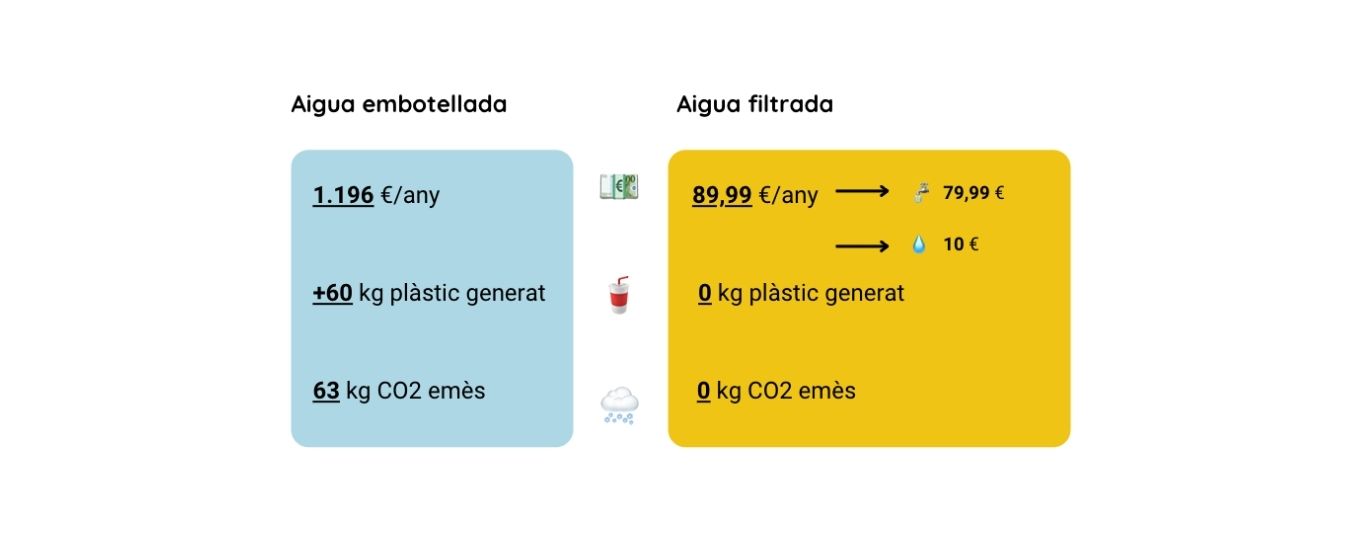
Una família de quatre membres hauria de beure una mitjana de 2.920 litres d’aigua a l’any. Això equival a una despesa mínima de 1.196 euros si comprovem els preus de les ampolles d’1,5 litres més populars als principals supermercats d’Espanya i fem la mitjana.
En termes mediambientals, aquest consum suposa més de 60 kg de plàstic abocats al planeta i una quantitat de CO₂ similar emès a l’atmosfera durant la seva fabricació i transport.
Més de mil euros d’estalvi
És possible beure aigua de bona qualitat, amb bon sabor, estalviar i ajudar a preservar el planeta? La resposta és sí. Tan senzill com substituir el consum d’aigua envasada per aigua filtrada. El filtre Tappwater, que està fet en un 70 % de closca de coco, captura fins a 100 substàncies que podem trobar a l’aigua corrent, metalls pesants inclosos.
Pel que fa a l’estalvi econòmic, la senzilla instal·lació d’aquest filtre, que no requereix cap eina, equival a un estalvi de més de 1.100 euros a l’any per a una família de quatre membres. De gairebé 1.200 euros que suposa la compra d’aigua envasada es passa a menys de 90 euros en total.
El kit amb el filtre i els recanvis necessaris per al consum anual costen 79,99 euros. I a això només s’han de sumar menys de 10 euros de consum d’aigua de l’aixeta, tenint en compte que el preu mitjà a Espanya és d’aproximadament 0,0019 euros per litre i que amb el paquet anual de Tappwater es poden filtrar fins a 4.800 litres.
El planeta també s’estalvia plàstic i CO₂
Addicionalment, el medi ambient s’estalvia unes 1.947 ampolles de plàstic que no hauràs de carregar fins a casa i 63 kg de CO₂. I també t’assegures que l’aigua està lliure dels microplàstics que poden desprendre els envasos de plàstic quan es degraden per l’escalfor, i que ja s’ha demostrat que arriben al nostre torrent sanguini.
Tots els productes de Tappwater passen estrictes proves de qualitat abans de ser enviats als clients, i per això ofereixen una garantia d’un any.
Si vols descobrir com beure la millor aigua, estalviar diners i ajudar al planeta, entra a Imprescindibles 11Onze.


Extreme weather events pose the greatest risk to humanity over the next decade, according to the World Economic Forum’s latest Global Risks 2024 Report. Still, misinformation and economic uncertainty are the main concerns in the short term.
The World Economic Forum’s annual Global Risks report analyses the main challenges facing the world two and ten years ahead. It also examines possible partnerships and different approaches to address these global risks.
While preparing the 2024 report, 1,490 experts from academia, business, government, the international community and civil society were surveyed. To complement this data, the Executive Opinion Survey (EOS) of 11,000 business leaders in 113 economies has been added to identify the risks that pose the most serious threat to each country.
A total of 34 global risks are analysed, including technological and economic factors, as well as social and geopolitical risks. A global risk is defined as the possibility of an event or condition occurring that would adversely affect a significant proportion of the world’s GDP, population or natural resources.
Main global risks linked to climate change
Changes related to the climate emergency, such as extreme weather events, loss of biodiversity, collapse of ecosystems or scarcity of natural resources, represent the greatest threat to humanity in the next ten years.
Two-thirds of respondents are concerned about extreme weather events over the next decade, a factor that also ranks second in terms of risk over the next two years. In this case, 5 of the top 10 global risks are related to the environment and climate change.
Among the heads of civil society organisations, Kirsten Schuijt, Director General of WWF International, warned that “unless we take urgent action, the threat will only intensify and bring us closer to inflicting irreversible damage on society and ecosystems”. Indeed, studies show that potentially irreversible changes to the planet could occur by the 2030s if temperatures continue to rise.
Increased risk of disinformation and social polarisation
Disinformation, including that generated by artificial intelligence, and social and political polarisation are second and third in the ranking of concerns. Polarised societies are more likely to rely on information (true or false) that confirms their biases. In the short term, disinformation may affect 4 billion people who will vote in 60 countries in 2024.
The report warns that governments will increasingly be in a position to determine which narrative is considered “the truth”, which could allow political parties to monopolise public discourse and suppress dissenting voices. Disinformation is therefore expected to continue to be used by domestic and foreign actors to widen socio-political divisions.
In this context, social polarisation emerges as one of the main risks that are interconnected with economic recession and lack of opportunities. Moreover, geopolitical tensions and armed conflicts are severely affecting the livelihoods of millions of people, and increase the possibility of war with global consequences.
If you want to discover the best option to protect your savings, enter Preciosos 11Onze. We will help you buy at the best price the safe-haven asset par excellence: physical gold.

European farmers are up in arms. Rising costs, the removal of subsidies, new environmental measures and cuts to finance the war in Ukraine are strangling a sector that is essential to the continent’s food sovereignty and has become the scapegoat of the Eurocrats.
After seeing the images of half of Germany blocked by the avalanche of tractors heading towards the Brandenburg Gate, one might think that you reap what you sow. Europe’s political class has long been fomenting discord against the agricultural sector, and it was only a matter of time before one day or another it paid the consequences.
These protests are the latest in a series of farmers’ demonstrations across Europe. Previously, similar demonstrations have been seen in the Netherlands, Belgium, France, Spain and other European states, where farmers have also taken to the streets to express their dissatisfaction with the effects of planned environmental reforms and high production costs.
The casus belli of the German rural revolt
Although grouping all the demonstrations under a common denominator is tempting, they have mainly been triggered by specific national situations. The German agricultural sector is opposed to proposed cuts in fuel subsidies used in agriculture. An austerity policy that the German government argues became necessary after a Constitutional Court verdict prohibited the coalition government from transferring 60 billion euros in appropriations to mitigate the effects of the pandemic on the fight against climate change.
The cuts were intended to eliminate the existing tax benefits for diesel and the road tax exemption for agricultural and forestry vehicles. This would have allowed the federal government to save almost 1 billion euros in additional revenue from the official amount it has to save in the 2024 fiscal year – still pending parliamentary approval – of around 17 billion euros out of a budget of 450 billion euros.
This is against the backdrop of the war in Ukraine and sanctions on Russia. The war, instigated and perpetuated by the US and its client states in Europe, has been devastating for the German economy and industrial sector. Yet Berlin has pledged more than 17.1 billion euros in military aid to Ukraine from 24 January 2022, the same amount it would have to save through cuts during 2024.
But of course, these billions of euros in military “aid” are recycled into the German military-industrial complex which, like the one of the United States, is making a killing from this war, courtesy of the taxpayers and farmers who suffer the cuts because there is no money and the Ukrainians who serve as cannon fodder for the corporate interests behind these conflicts. As President Biden keeps repeating to keep the funds flowing, the money going to “Ukraine” is a good investment.
Climate targets vs. food sovereignty
Despite the loss of more than 5 million farms since 2005, a decline of 37%, Europe is generally self-sufficient in most foodstuffs. However, support for farmers provided by the Common Agricultural Policy is essential in ensuring the continuity of farms and crops in the EU. Especially since the increased costs caused by the sanitary crisis, the logistical funnel and the war in Ukraine.
Eurocrats in Brussels are nervous about the agricultural revolt on the continent. The EU has set a global goal of zero emissions by 2050, and EU officials are concerned that the outpouring of protests could set back the ambitious climate targets set by the European Commission.
According to Greenpeace, the current system, which pushes farmers to run large, intensively industrialised farms is broken and protesting for business as usual will not help. In any case, the situation of political neglect in which the rural world finds itself is unsustainable. The transition to a more sustainable model has to guarantee much more than the mere survival of the sector.
11Onze is the community fintech of Catalonia. Open an account by downloading the super app El Canut for Android or iOS and join the revolution!
24 October marks International Climate Change Day to raise awareness of one of our major challenges. Human activities are estimated to have caused the global temperature to rise by 1°C above pre-industrial levels. And global warming could reach an additional 1.5°C between 2030 and 2052 if drastic action is not taken.
Human-induced global warming is intensifying. It is estimated that the Earth’s temperature has risen by 0.08°C per decade since 1880, although the rate since 1981 has doubled. The temperature is now rising at a rate of almost 0.2°C per decade, although in regions such as the Arctic the rate is up to two to three times faster. Worse still, it could rise by a further 1.5°C between 2030 and 2052, according to a UN report.
Most of the warming has occurred in the last 40 years. In fact, the nine years between 2013 and 2021 are among the ten warmest years on record, according to US government measurements. And 2016 and 2020 are estimated to have been the warmest on record.
The search for culprits
Natural phenomena such as volcanic activity or variations in the Earth’s orbit play a role in global warming, but the changes observed in the planet’s climate since the mid-20th century are mainly due to human activity.
The main cause is the burning of fossil fuels, which has increased as the human population has grown. Their combustion generates greenhouse gases that trap the sun’s rays in the Earth’s atmosphere, raising the average temperature of the Earth’s surface.
The gases that contribute most to the problem are carbon dioxide, chlorofluorocarbons, water vapour, methane and nitrous oxide. Their concentrations in the atmosphere are at their highest levels in the last two million years.
Ice blocks extracted from Greenland, Antarctica and some glaciers reveal that the current rate of warming is ten times higher than it was immediately after the last ice age. Carbon dioxide from human activities is increasing about 250 times faster than that from natural sources.
Not all countries contribute equally to global warming: the 100 countries with the lowest emissions account for 3% of total emissions, while the ten with the highest emissions account for 68%.
The impact on the oceans
Global sea levels have risen by about 20 centimetres in the last century. However, the rate in the last two decades is almost double that of the last century and accelerating slightly each year. No wonder. According to NASA, Greenland lost an average of 279 billion tonnes of ice per year between 1993 and 2019, while Antarctica lost about 148 billion tonnes per year.
In addition, it is estimated that since the beginning of the Industrial Revolution, the acidity of the ocean’s surface waters has increased by 30% due to rising carbon dioxide emissions. The ocean has absorbed 20-30% of the emissions generated by mankind in recent decades and the upper 100 metres show a warming of more than 0.3°C since 1969.
Persistent effects
The bad news is that warming caused by human-induced emissions from the pre-industrial period to the present will persist for centuries or millennia and will continue to cause further long-term changes in the climate.
However, future climate-related risks will depend on the rate, peak and duration of warming. Overall, they will be greatest if global warming exceeds 1.5°C in the coming decades. And, unfortunately, global warming is projected to reach about 3.2°C by the end of the century.
Although more and more countries are committing to achieving zero greenhouse gas emissions by 2050, half of these reductions need to occur before 2030 to keep warming below 1.5°C. In fact, fossil fuel production should decrease by about 6% per year between 2020 and 2030.
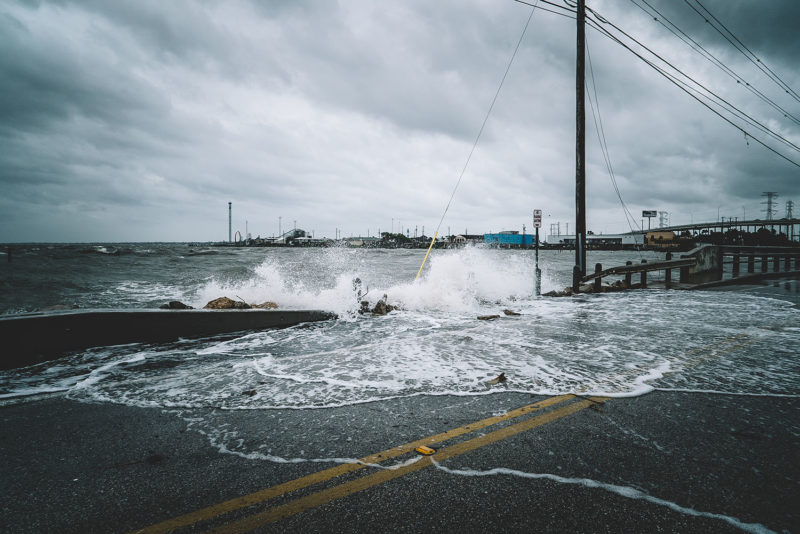
Global warming is already causing changes in weather patterns and poses a serious threat in terms of the extreme events it triggers: intense droughts, severe fires, catastrophic storms and a serious decline in biodiversity.
We can pay the bill for energy change now or pay the bill for climate change in the coming decades.
If you want to wash your clothes without polluting the planet, 11Onze Recommends Natulim.
There is an increasing consensus in our society that accepts that economic growth must respect sustainability standards, and that debates how to link ecology and economy.
Economic growth, as a pillar of the capitalist system, has often been associated with the urban condition, the growth of cities, and the unrestricted expansion of their metropolitan areas. Both the services and the infrastructure needed are expanding, changing the territory and, in return, leaving aside the natural environment and the consequences of its alteration.
It is now clear that this has caused an ecological emergency, and many consciences have changed. They have now the opinion that the economy cannot forget nature, which is an increasingly accepted idea. It is probably outside the more purely urban fabric that more steps are taken in this direction, driven by the sensitivity of landscape conservation and natural heritage.
Following this goal of protection and appreciation of this heritage, the local world created the Landscape charters. Since 2006, Decree 343 of the Generalitat develops Law 8/2005 for the protection, management, and planning of the landscape, although some counties such as Alt Penedès have already had their own since 2002.
How does economy fits in sustainability?
The promotion of those sectors that are better adapted to nature and territory, such as wine, are one of the most common bets. It is a type of industry that combines agriculture and tourism, bringing benefits to the region in a minimum of two ways and enhancing the landscape. Some studies show that sales increase when the buyer links them to an environment.
Maintaining this sustainability, however, is sometimes not that simple. The first issue is related to tourism, about which we have talked, and the protection of the landscape as an exclusive setting against overcrowding. This can affect, in fact, the comfort and daily life of the inhabitants themselves. Secondly, we could go back to everything that the industry requires, which will eventually give jobs and leave profits in the form of taxes, such as the creation of industrial estates.
5 Tips to help the environment and contribute to ecology
A matter of mobility and energy
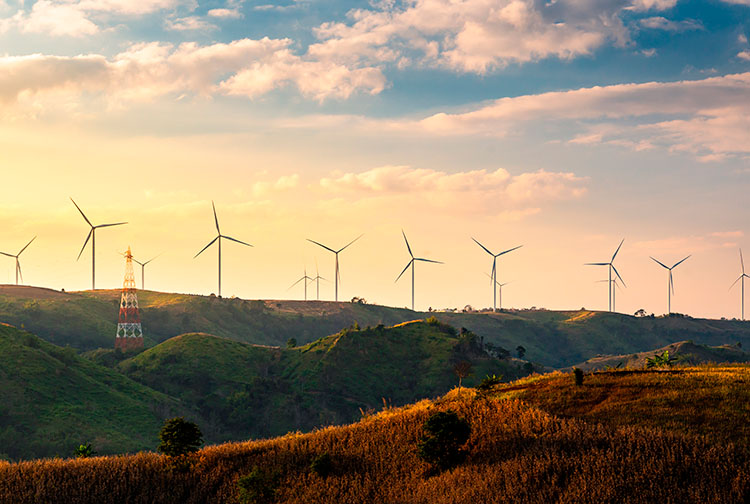
The infrastructures for mobility and transport and the generation of energy needed to move everything are perhaps the two factors where the economy finds it more difficult to become sustainable. The local world has responded with great caution and concern to the increasingly imminent plans for the creation of wind or photovoltaic parks that, while seeming to lead to the generation of cleaner energy, are thought to clash in full with landscape care.
One of the territory’s arguments is that if urban areas are the big consumers of energy, they should also be impacted by generating them—and proposals have been made, such as covering the roofs of industrial areas with solar panels. However, the paralysis of decisions due to the debate—in Catalonia only a wind turbine has been installed in twelve years—does not stop what others can do, and there are those who consider that opportunities are being missed. Recently, for example, a wind farm project was presented in Aragon to feed our country with renewable energy.
But big cities have more open debates between growing or guaranteeing ecological minimums and, as we have mentioned, transport is a key one. Recently, the proposal to expand El Prat Airport has returned to the forefront, a project that from a business sector is seen as a country project, essential to position Barcelona and Catalonia as an attractive and accessible hub for business, whereas many citizens and groups see it as completely unsustainable, as they call for a much deeper discussion about how and how much we want to grow. Surely the latter is the key to the debate we need to face soon.
If you want to wash your clothes without polluting the planet, 11Onze Recommends Natulim.
Després d’una reducció temporal provocada per la pandèmia, la petjada de carboni torna a créixer i el canvi climàtic s’accelera. Individus, empreses i reguladors poden contribuir a minorar l’emissió de gasos d’efecte d’hivernacle. Vegem com està evolucionant i quines mesures contribuirien a mitigar-la.
Només les necessitats energètiques de l’activitat humana van generar 36.000 milions de tones de diòxid de carboni (CO₂) el 2021, segons l’Agència Internacional de l’Energia. Una referència per a assimilar la magnitud d’aquesta xifra? Pensa que tota la població mundial posada en una balança no arribaria als 400 milions de tones. És a dir, el CO₂ que emetem en només un any multiplica per cent el pes de tota la humanitat.
El diòxid de carboni és el gas d’efecte hivernacle més abundant i que més ha contribuït a l’escalfament global en les últimes dècades. Les emissions directes i indirectes d’aquest gas, juntament amb el metà, l’òxid de nitrogen, l’hexafluorur de sofre, els hidrofluorocarburs i els perfluorocarburs, conformen el que es coneix com a “petjada de carboni”. Es tracta d’un indicador ambiental encunyat als anys noranta per a mesurar la contribució de l’activitat humana a l’escalfament del planeta.
La realitat és que estem molt lluny dels objectius marcats per a aturar el canvi climàtic. Els científics adverteixen que les emissions netes de CO₂ haurien de reduir-se a zero d’ara el 2050 si volem evitar les seves conseqüències catastròfiques. L’augment de temperatura global porta aparellats fenòmens meteorològics extrems i una pujada del nivell del mar a causa del desglaç.
Emergència climàtica
L’ONU estima que des de 1990 les emissions de diòxid de carboni s’han incrementat gairebé un 50 %. De fet, l’Organització Meteorològica Mundial apunta que els nivells actuals de CO₂ a l’atmosfera són similars als de fa tres milions d’anys, quan la temperatura mitjana de la Terra era 3 °C més elevada i el nivell del mar se situava molt per sobre de l’actual.
Per això, és lògic que un dels Objectius de Desenvolupament Sostenible establerts per l’ONU incideixi en la necessitat d’aturar el canvi climàtic. La fórmula demana prendre mesures que en els pròxims anys ens portin a una economia baixa en diòxid de carboni.
De fet, la immensa majoria de països del món van signar el 2015 l’Acord de París, un tractat internacional que pretén limitar l’escalfament global. Així i tot, la nostra petjada de carboni ha continuat creixent. Les emissions de gasos d’efecte hivernacle només es van reduir el 2020. I la raó va ser l’aturada econòmica que va provocar la pandèmia.
L’informe Climate Transparecy Report calcula que les emissions dels països del G-20, responsables del 75% dels gasos d’efecte hivernacle, van tornar a créixer un quatre per cent el 2022. La Xina, l’Índia, Indonèsia i l’Argentina ja estan en nivells superiors als de 2019.
Per zones geogràfiques, la Xina, els Estats Units, la Unió Europea i l’Índia sumen més de la meitat dels gasos emesos a l’última dècada. Quant a activitats, les que produeixen més CO₂ són la generació d’energia i calor (40%), el transport de béns i persones (20%) i l’activitat industrial (20%).
Calcula la teva petjada de carboni personal
La quantitat de gasos d’efecte hivernacle que genera cada individu a la seva vida quotidiana en desplaçar-se, alimentar-se i consumir recursos es coneix com a petjada de carboni personal. Per a evitar un augment de temperatura global superior als 2 °C, The Nature Conservancy, una ONG mediambiental, calcula que hauríem de reduir-la a la meitat abans de 2050.
Existeixen nombroses eines per a calcular la petjada de carboni personal. En concret, la calculadora de l’ONU té en compte aspectes com les característiques de la nostra llar, el consum d’energia, el tipus de transport que utilitzem diàriament, la quantitat de vols que realitzem, els nostres hàbits alimentaris i quant reciclem.
Algunes mesures per a reduir la nostra petjada de carboni personal són apostar per un consum responsable, moure’s de forma més sostenible, moderar la despesa energètica i rebaixar la quantitat de residus que generem.

Què és la "Carbon Footprint"?
El pes de les empreses
Bastant superior a la petjada de carboni personal és la que deixen les empreses en processos com la fabricació o el transport de mercaderies. És el que es coneix com a petjada de carboni corporativa. D’aquí la importància d’incidir en aquest apartat per a reduir l’escalfament global.
Les companyies poden reduir el seu impacte mediambiental millorant la seva eficiència energètica o incrementant el percentatge d’energia renovable que consumeixen. També poden recórrer a eines de compensació, com la inversió en projectes mediambientals, el pagament d’impostos verds o la compra de drets d’emissió de CO₂.
Una tendència a l’alça
Milers d’empreses ja publiquen la seva petjada de carboni, però no totes la calculen igual. La major part de les grans multinacionals obvien les emissions indirectes, aquelles que formen part de la seva cadena de valor, però que no depenen directament d’elles.
Un exemple paradigmàtic és el d’Amazon. La pressió d’activistes i inversors va portar a aquest gegant del comerç en línia a fer pública la seva petjada de carboni per primera vegada l’any passat. No obstant això, s’acaba de conèixer que en el seu informe només comptabilitzava una petita part de les emissions generades amb les seves vendes.
A diferència d’altres comerços, Amazon només comptabilitzava l’impacte mediambiental total dels productes propis, que suposen únicament l’1% de les seves vendes. La companyia no assumeix les emissions generades per l’ús d’un producte d’una altra marca una vegada que els seus repartidors el lliuren al client.
Un incentiu per a la sostenibilitat
El gran impacte de l’activitat empresarial en el medi ambient ha fet que cada vegada més veus reclamin l’obligatorietat per a les companyies de publicar la seva petjada de carboni als informes anuals.
Tant és així que la Securities and Exchange Commission, el regulador borsari dels Estats Units, acaba de proposar que les empreses cotitzades en aquest país hagin de revelar les seves emissions de gasos d’efecte d’hivernacle. I, molt important també, que ho facin seguint uns mateixos criteris.
Segons molts experts, obligar les empreses a publicar la seva petjada de carboni pot contribuir decisivament a escurçar el camí cap a una economia lliure d’emissions contaminants. Cada cop més inversors valoren les qüestions mediambientals en les seves decisions d’inversió.
11Onze és la fintech comunitària de Catalunya. Obre un compte descarregant l’app El Canut per Android o iOS. Uneix-te a la revolució!
Si t'ha agradat aquesta notícia, et recomanem:
 Sostenibilitat
Els mercats de carboni combaten la pol·lució
4 min readSegons Greenpeace, el canvi climàtic és el mal del nostre...
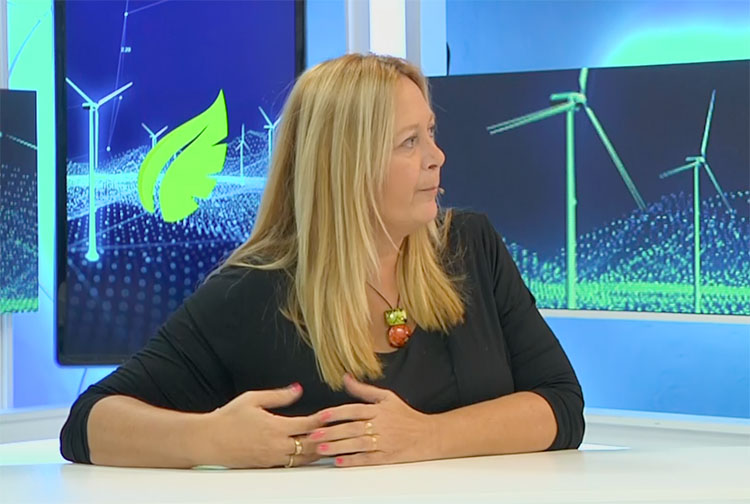

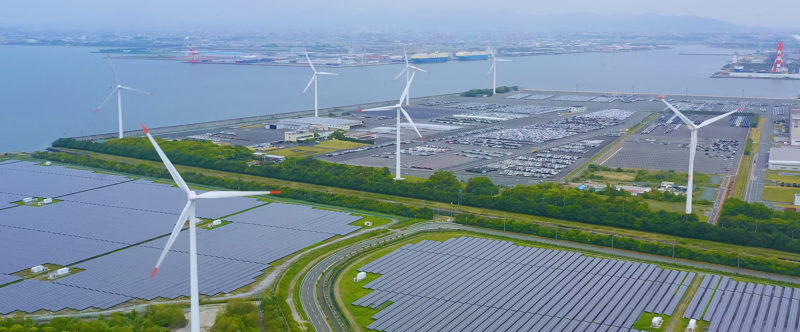
Widespread price hikes are also affecting the energy transition, specifically in the rising cost of materials and minerals used in green technologies. Marifé Fariñas, from 11Onze’s Back Office team, explains how the green revolution is driving up the price of raw materials.
No, the green revolution is not the cause of high inflation, but it is true that part of the price increase is attributable to the energy transition. As Fariñas explains, “the green revolution has increased the price of raw materials, some by as much as 90%”. This price increase, directly related to the materials and minerals used in favour of renewable energies, is known as ‘greenflation’.
This phenomenon is a paradox that necessarily goes with the effort to fight climate change, “fleeing from fossil fuels increases the demand for renewable energies, but this demand increases the price of the materials that make up these products,” says Fariñas.
Greenflation
Although a reduction in the demand for these raw materials cannot be the solution if we want to achieve the energy transition goals, economies of scale, more financing for green projects, and above all, reducing the cost of this financing, can offset part of the effects of green inflation.
Making these changes implies increasing production, but as the Back Office agent says, “although this implies production costs, experts do not believe it will be a threat to the viability of green energy”.
If you want to wash your clothes without polluting the planet, 11Onze Recommends Natulim.
If you liked this article, we recommend you read:
 Sustainability
ESG criteria
2 min readESG criteria are a new investment trend that is helping to make the most of our money
L’increment d’esdeveniments climàtics extrems suposa un repte per als governs i la població. Quines són les conseqüències econòmiques del canvi climàtic? Com ens podem preparar per als desastres naturals que afecten el nostre territori? En parlem amb Gemma Vallet, directora d’11Onze District i Carolina Rafales, de l’equip de producte.
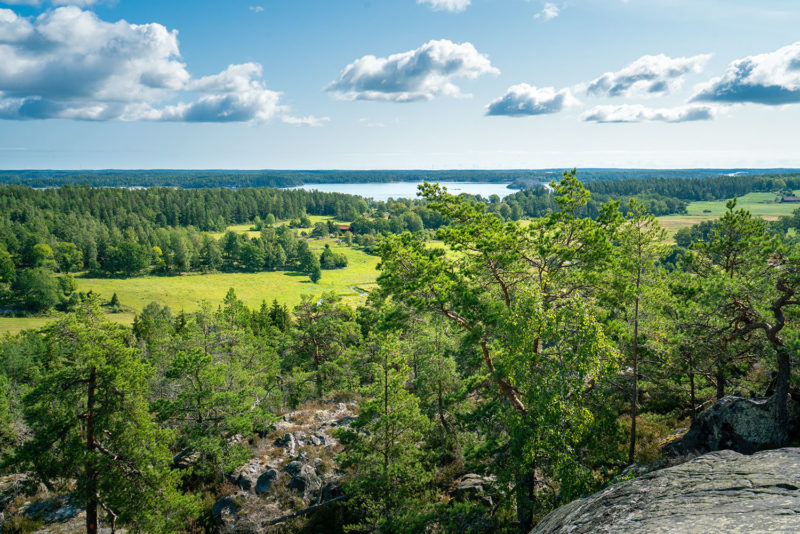
Es preveu que l’estiu d’aquest any sigui un dels més calorosos de la sèrie històrica, es tracta d’una previsió que sembla repetir-se any rere any. Una entrada d’estiu marcada per un temps inestable i tempestes. Cada vegada més sovint, els meteoròlegs avisen que ve una nova DANA (depressió aïllada a nivells alts), més coneguda com a gota freda, que pot provocar precipitacions intenses durant hores o dies.
Els efectes del canvi climàtic són cada cop més palpables i no ens queda més remei que adaptar-nos i prendre les mesures necessàries per pal·liar els efectes econòmics i socials que acompanyen aquests esdeveniments climàtics extrems. Com explica Carolina Rafales, “Aquests fenòmens meteorològics poden presentar tempestes violentes i pedregades, per això cal estar preparats”.

Com fer front a una DANA
Aquest fenomen meteorològic es caracteritza per les precipitacions torrencials, sovint violentes i acompanyades de forts vents, que poden produir inundacions. El fet que aquestes precipitacions es produeixin en poc temps i en zones molt localitzades fa que puguin causar d’anys a les infraestructures i edificis perquè es fa difícil canalitzar tanta quantitat d’aigua.
Si la regió on vivim pot ser afectada per una gota freda “és essencial estar informats del desenvolupament de la tempesta i evitar sortir de casa a peu o en cotxe”, apunta Rafales.
Així mateix, ens recorda que “cal assegurar-se que les canonades i desaigües de casa nostra estan lliures d’obstruccions”.
De la mateixa manera, no estaria de més preparar-nos per si marxés la llum, un dels efectes negatius que sovint acompanyen aquestes tempestes. Rafales ens aconsella tenir sempre els mòbils ben carregats, o bateries externes auxiliars. En casos d’inundacions extremes haurem d’abandonar l’àrea afectada i buscar refugi en una zona alta, per la qual cosa és aconsellable tenir reparat un kit d’emergències que inclogui roba de recanvi, llanternes, una ràdio, una farmaciola i provisions.
Si vols conèixer una assegurança justa per a la teva llar i per a la societat, descobreix 11Onze Segurs.

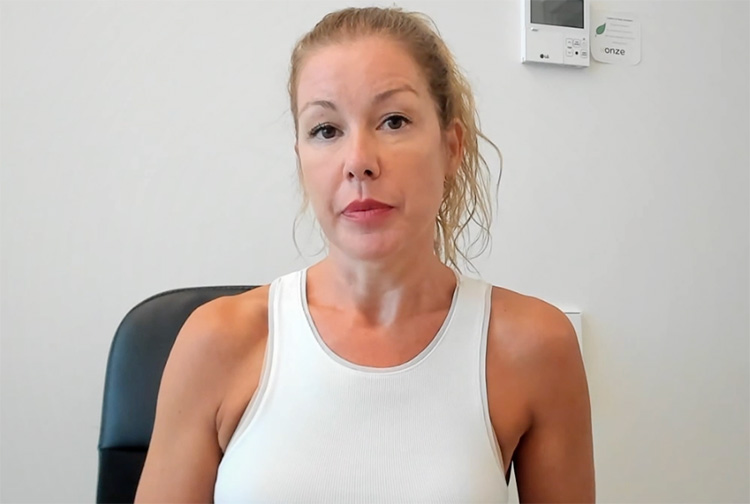
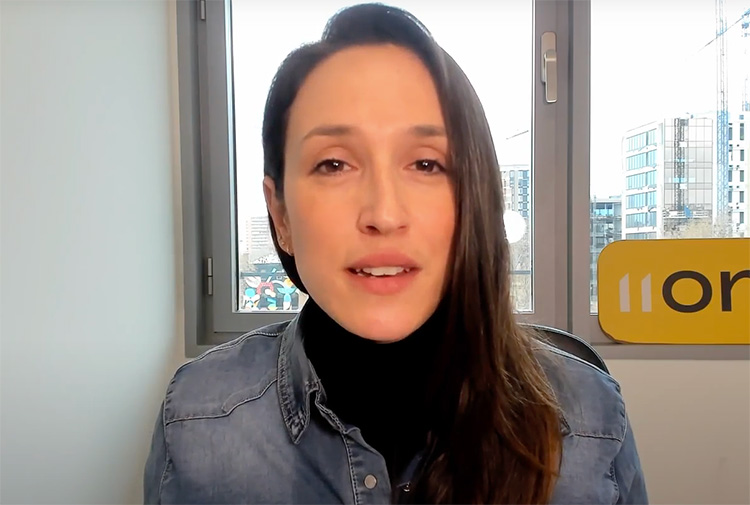
Podem canviar el món? Quina és la nostra capacitat real d’impacte sobre l’entorn que ens envolta? Lara de Castro, HR Business Partner d’11Onze, explica què és el consum conscient i com podem contribuir a la sostenibilitat del planeta amb les nostres decisions de compra quotidianes.
Sovint subestimem l’impacte que els nostres actes individuals tenen sobre l’entorn que ens envolta. Però totes les accions, per petites que siguin, contribueixen a modelar el món. Lara de Castro ho deixa clar al següent vídeo amb un exemple molt evident.
Com ella mateixa adverteix, hi ha moltes persones que pensen que un acte individual sovint “és massa feble” per a tenir un impacte significatiu en l’entorn, “però no és així”. Cada acció compta i té conseqüències que es poden acumular a les de la resta de la comunitat. La realitat és que “les nostres decisions més quotidianes són rellevants, per petites que siguin”. En aquest sentit, és molt evident el paper que juguen totes les decisions de compra si som consumidors conscients.
Consumidors conscients que poden canviar el món
Què és el consum conscient?
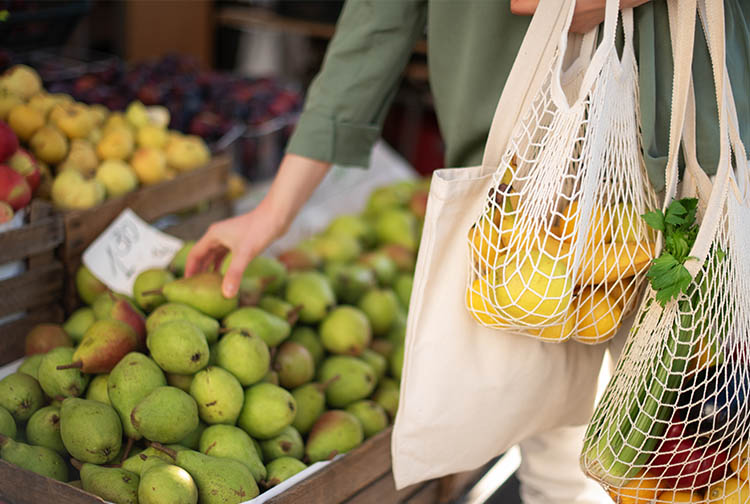
Els consumidors conscients són persones que escullen els productes i els serveis amb criteris que van “més enllà de la relació qualitat-preu”, ja que inclouen l’impacte ambiental i social com un element decisori en els seus hàbits de compra. Una conseqüència és l’aposta pel comerç de proximitat, que “és una manera de donar suport als productors locals i evitar l’impacte econòmic i ambiental del transport”, com explica Lara de Castro.
Un altre exemple de consum conscient el trobem en l’aigua. Si volem reduir la contaminació al planeta, podem substituir el consum d’aigua embotellada, “amb totes les conseqüències que sabem que té el plàstic”, per aigua de l’aixeta tractada amb filtres sostenibles.
Com indica Lara de Castro al final del vídeo, si tots som més conscients “en els petits detalls de la vida quotidiana” la realitat és que “sí que podem canviar el món”. La decisió és nostra.
Si vols descobrir com beure la millor aigua, estalviar diners i ajudar al planeta, entra a Imprescindibles 11Onze.
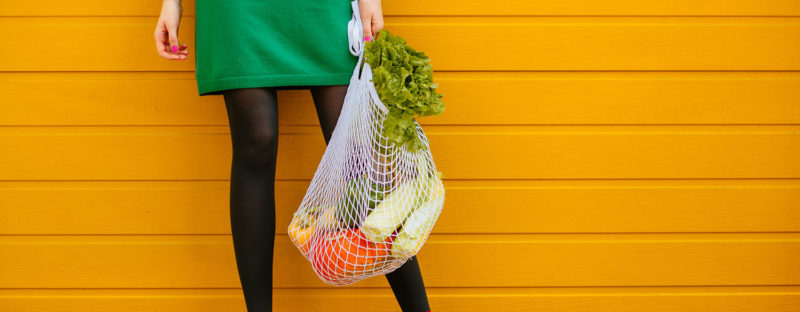
We are not sufficiently aware of the power we have as consumers to influence the economy. But we have to start believing it: citizens can change the market and make local and sustainable trade even more important.
The pandemic has made us rediscover the importance of community and proximity. Restrictions on mobility have made us realise that relying on products from the other side of the world makes no sense. In fact, we are still suffering from delays in the supply and trade of products because of the global confinement we have experienced and the geopolitical turmoil that never stops.
When we talk about local products, we often only think of food products, but we must also think of services: telephony, health care, energy, finance… All these services are usually offered by large corporations that have their headquarters outside Catalonia and, therefore, do not invest their profits in the citizens of Catalonia.
On the other hand, if we contract the services of companies, businesses or cooperatives in Catalonia, the profits obtained are invested in our community, and also contribute to providing work for thousands and thousands of people.
11Onze is the community fintech of Catalonia. Open an account by downloading the super app El Canut for Android or iOS and join the revolution!
If you liked this article, we recommend you read:
 Culture
Betting on the Catalan market and shopping online
3 min readDuring the Christmas holidays we are likely to resort...