When the West stops being the center of the world
For decades, the West lived with the feeling that prosperity was almost a natural right. But today many European and North American citizens feel that their standard of living is deteriorating. Housing is more expensive, job stability seems more fragile, and social mobility has slowed down. The question is inevitable: have Western middle classes actually become poorer?
Some economists, such as the renowned specialist in global inequality Branko Milanović, qualify this narrative. According to his research, Western middle classes have not become poorer in absolute terms. What they have lost is something else: their privileged position within the global economy. And although this distinction may seem technical, it is key to understanding one of the major transformations of the 21st century.
If we observe the evolution of real incomes in Europe or the United States over the past three decades, the conclusion is clear: middle classes have not become poorer in strictly economic terms. Incomes have continued to increase, but at a very modest pace, often below 1 % annually. This growth is sufficient to avoid a widespread decline in living standards, but too slow to generate a clear sense of progress. In absolute terms, many Western households today have broader access to goods and services than thirty years ago, from digital technology to international travel or a much wider cultural and educational offering.
However, this gradual progress has occurred in parallel with much faster transformations in other areas of the global economy. On the one hand, the enormous concentration of wealth in the hands of a minority within Western countries themselves has widened internal inequalities. On the other hand, the rapid rise of new middle classes in major emerging economies has altered the global economic balance. This double movement —the accumulation of wealth at the top and rapid growth outside the West— has profoundly changed the perception of prosperity and has fueled the sense that the economic center of gravity of the world is shifting.
When comparison reshapes the perception of prosperity
For much of the 19th and 20th centuries, Europe and the United States occupied an almost undisputed position within the global economic system. The Industrial Revolution, technological leadership and control over the main international financial institutions placed the West at the center of the world economy. But this order is evolving. In recent decades, economies such as China, India, Indonesia and Vietnam have undergone extraordinary processes of industrialization and growth, allowing hundreds of millions of people to access income levels that were once exclusive to developed countries.
This process has produced a significant paradox: while global inequality between countries is decreasing, the map of economic power is being redistributed. The West still concentrates a very large share of global wealth, but it is no longer the only center of prosperity. The rise of new emerging economies is gradually modifying the commercial, technological and financial balances that for decades defined the international economic order.
This shift also has a social and psychological dimension. Sociologists speak of relative deprivation to describe the perception that arises when other groups or regions prosper more rapidly. It is not necessarily a real impoverishment, but rather a constant comparison. In a hyperconnected world, where the internet and social networks expose lifestyles and economic opportunities from all over the planet, this comparison multiplies.
Products, technologies and experiences that once seemed exclusive to the West are now part of the everyday consumption of millions of people in other regions of the world, inevitably transforming the perception of one’s own economic status.
The end of a historical exception
The sense of economic insecurity running through many Western societies has deeper roots than the evolution of wages or the cost of living. What is changing is the global economic order that was built after the Second World War. For decades, institutions such as the International Monetary Fund and the World Bank reflected a balance of power dominated by Western economies, consolidating a system in which Europe and the United States occupied the center of global financial power.
Today, however, this balance is being redefined. The growing economic weight of emerging economies is forcing a reconsideration of the rules of the international game and a redistribution of influence within the global system. This does not necessarily imply the decline of the West, but it does mark the end of an exceptional situation: that of a small group of societies concentrating a disproportionate share of global wealth. When a society moves from being clearly dominant to simply competitive, the perception of loss can be intense, even if living standards continue to improve.
Understanding this transformation is key to interpreting the political, economic and social debates of our time. The questioning of globalization, tensions between economic blocs or the rise of disruptive political movements are all part of this same process of global rebalancing.
At La Plaça of 11Onze, we analyze these changes with a critical and pedagogical perspective to help the community understand how the global economy is evolving and, above all, how we can make more informed financial decisions in a world that no longer revolves around the West.
If you want to discover the best option to protect your savings, enter Preciosos 11Onze. We will help you buy at the best price the safe-haven asset par excellence: physical gold.


Marc Vidal, lecturer and commentator, warns that 2023 could be the year of a crisis that would leave all previous crises as a “pure anecdote”, as predicted in 2019 in a book by Marc Friedrich and Mathias Weik. A confluence of different circumstances could create the perfect storm.
Is the mother of all crises looming? That is the question posed in the book ‘The biggest crash of all time’ by Marc Friedrich and Mathias Weik, which was a bestseller in Germany in 2019. The book predicts that a big economic crash will come this year, with an unmitigated collapse of the European stock markets. In short, “a crisis that will make any previous crisis a mere anecdote”, according to the lecturer and commentator Marc Vidal.
The book also features central banks that are “printing money as if there were no tomorrow”, bank deposits for which they charge you, and a catastrophic commercial situation. To these ingredients, we must add the increase in interest rates, which the authors of the book did not foresee and which is already being implemented by institutions such as the US Federal Reserve.
The burden of public debt
Marc Vidal warns that the interest paid by Spain each year amounts to 26.8 billion euros, which represents 2.15% of GDP and nearly 7% of the budget or, in other words, “half the cost of public education”. And he stresses that this is “only to pay interest, not to pay off debt”. In fact, the lecturer clarifies that “no state amortises a single euro of debt, what they do is refinance it every year”. And he points out that Spain has to refinance “237 billion” euros this year.
Vidal’s analysis of the Spanish situation is bleak: CPI above 8%, GDP barely growing by 0.3%, domestic demand falling by 3.7%, public debt at 118%, the forgotten risk premium at 100, unemployment at 13.65%, and energy once again at unacceptable levels. According to the writer, in order to rebalance the accounts, budget cuts would have to be “almost 10%”.
To deal with such a crisis, Marc Vidal explains that the authors of the book recommend investing in “real assets”, such as gold, and fleeing from the stock market and physical money, which will be devalued by the large amount of money issued by central banks. He adds that “it’s time to get moving, not standing still”.
If you want to discover the best option to protect your savings, enter Preciosos 11Onze. We will help you buy at the best price the safe-haven asset par excellence: physical gold.


Europe has woken up. Or so it says. After years settled in the comfort of the single market, the welfare state and regulation as a hallmark of identity, the European Union has assumed that the world has changed. The war in Ukraine, the rivalry between the United States and China and the global technological race have left an uncomfortable reality: Europe depends too much on others.
Now European leaders speak of “strategic sovereignty,” industrial autonomy and digitalization. But the question is inevitable: can Europe transform its economic model or will it arrive late to the new global game?
For decades, Europe prospered thanks to a system based on cheap Russian energy, American defense and technology developed in Silicon Valley or Shenzhen. Now, that balance has been broken.
According to Eurostat data, before the war in Ukraine, more than 40% of the gas imported by the EU came from Russia. In this way, energy dependence was structural. On a technological scale, the situation was no better, since in 2023 more than 65% of the global cloud computing market was in the hands of American companies such as Amazon, Microsoft and Google.
Meanwhile, the United States was promoting the Inflation Reduction Act, with more than 369 billion dollars in green subsidies, while China consolidated a model of technological state capitalism with direct industrial planning. As a result, Europe has come to understand that globalization is no longer cooperation, but rather a matter of geopolitical competition.
From regulatory power to productive power?
The European response has been dressed in an ambitious name: open strategic autonomy. An expression that sounds technical, but which hides a deep concern — the fear of being trapped in a world where technology, energy and money are decided outside its own borders.
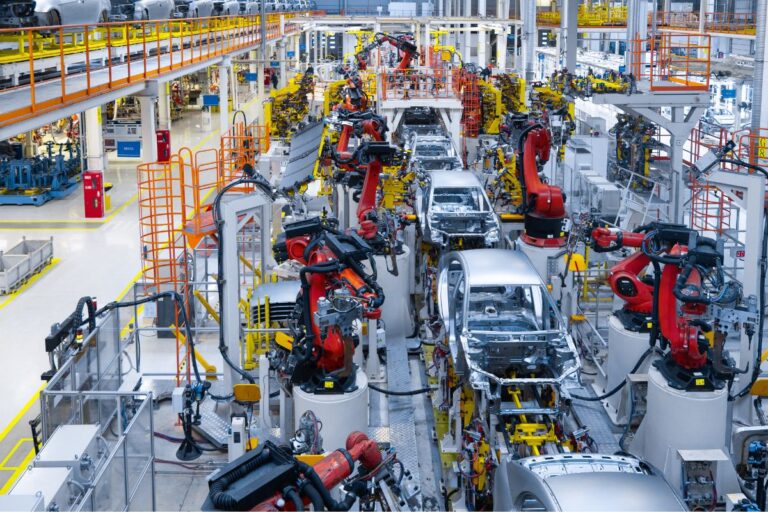
Europe has understood that it cannot continue depending on Asian chips to manufacture its cars, nor on American servers to host its data. For this reason, it has put billions on the table to reactivate the semiconductor industry and regain weight in a value chain that it barely controls today. The objective is clear: to stop being a spectator in the great technological race.
At the same time, the European Union has decided to mark its territory in another decisive field, artificial intelligence, not only to use it but also to define its rules. And while large platforms compete to dominate algorithms, the European Central Bank moves forward quietly toward a digital euro that guarantees that, at least in the monetary sphere, sovereignty does not depend on external infrastructures.
In this way, Europe does not want to limit itself to regulating the game of others, but wants to play again: producing technology, retaining data and ensuring that its currency continues to be a tool of power.
But this is where the contradiction appears. Because competing in a world of giants requires more than good intentions and regulatory frameworks. It requires muscle, speed and a cohesion that Europe is still trying to build.
Europe’s Achilles’ heel
The problem is not only geopolitical, but structural. Europe grows less because it produces less. The euro area’s potential growth has been lower than that of the United States over the past decade. European labor productivity advances more slowly, while the American economy has better capitalized on the digital revolution.
Added to this is a silent but decisive factor: Europe is aging. The fertility rate remains below replacement level in most member states. A smaller active population implies less economic dynamism, more pressure on the welfare state and greater difficulty sustaining the European social model.
In this context, digitalization is not an aesthetic option, but rather a necessity to compensate for a shrinking workforce.
Expensive energy, weak competitiveness
Reindustrialization requires competitive energy and, after the break with Russia, Europe has diversified suppliers and accelerated the energy transition. But energy costs remain higher than in the United States, where natural gas is much cheaper thanks to domestic extraction.
This places European industry in a complex position, as it competes with American companies that have cheaper energy and with Chinese companies that receive direct state support. Therefore, reindustrializing without competitive energy may become an exercise in voluntarism.
Europe’s great decision
In this way, Europe faces a profound dilemma: competing in the new global economy with fiscal and institutional rules designed for another era. With a tax burden exceeding 40% of GDP and a high average debt, the euro area aspires to lead the digital transition while maintaining a fragmented political architecture and strict budgetary discipline.
But without a strong European treasury, without large-scale domestic venture capital and with productivity growing more slowly than its competitors, the question is inevitable: can a real industrial policy exist without financial muscle?
In this context, digitalization is not only a technological bet, but rather a matter of power. Global payment infrastructures continue to be dominated by American actors. Digital platforms managing European data are mostly external. And therefore, the semiconductor value chain is heavily concentrated in East Asia.
Consequently, the debate over the digital euro or data sovereignty reflects a much deeper decision: to remain a global power or to become a sophisticated periphery in a world dominated by Washington and Beijing. Sovereignty today is not proclaimed. It is invested in. Therefore, it is necessary to be prepared to understand — and protect — our economic future in a world that is no longer what it once was.
If you want to discover the best option to protect your savings, enter Preciosos 11Onze. We will help you buy at the best price the safe-haven asset par excellence: physical gold.
If you would like to learn more about this topic, we recommend:
 Economy
The European car industry is in dire straits
5 min readThe European automotive industry is at a critical juncture...


La pujada generalitzada de preus està complicant les finances de moltes llars. Cada vegada és més difícil quadrar els comptes per a arribar a final de mes i encara més dedicar una part dels nostres ingressos a l’estalvi. Davant aquesta situació, recollim onze consells per a millorar l’economia familiar.
- Aplicar la fòrmula del 50/30/20. Es tracta d’intentar distribuir els nostres ingressos de forma que el 50 % es dediqui a les despeses (llum, aigua, lloguer, hipoteca, telèfon, menjar, estudis…), el 30 % al nostre oci (les nostres sortides en esmorzars o dinars fora de casa, vacances, regals…) i el 20% restant a l’estalvi.
- Retallar subscripcions innecessàries. A quantes plataformes digitals estem subscrits? Les fem servir totes? Cal que les continuem pagant? I aquella subscripció a aquella revista que mai acabem llegint? Totes les subscripcions automàtiques s’han de revisar per valorar si són necessàries. Avui en dia existeixen diferents plataformes amb contingut en línia que són legals i gratuïtes, només cal fer una ullada per Internet per trobar-les. I recordem que les biblioteques també són una gran font de llibres i contingut audiovisual.
- Revisar els nostres contractes de llum, gas i telèfon. Cal revisar amb molta cura els contractes que tenim amb les diferents companyies de serveis. És una de les partides on més diners se’ns en van sense adonar-nos al cap de l’any. No podem prescindir d’aquestes despeses, però sí reduir-les.
- Fer més àpats a casa. Reduir les vegades que sortim a menjar fora de casa o que comprem menjar per emportar-nos pot arribar a ser una molt bona font d’estalvi. No cal deixar d’anar als restaurants, però sí reduir la quantitat d’àpats que fem fora de casa, i més si som una casa de família nombrosa.
- Reutilitzar. Quan una cosa se’ns faci malbé, mirem si podem reparar-la i allargar-ne la vida abans de llençar-la a les escombraries. També és una bona eina d’estalvi comprar roba de segona mà, llibres, mobles i fins i tot electrodomèstics.
- No comprar impulsivament. Una de les raons principals per les quals no fem un bon ús dels nostres diners són les compres compulsives. A partir d’ara, quan vulguem una cosa, donem-nos un marge de temps per saber si de veritat la necessitem. Ens sorprendrà comprovar que podem prescindir de gran part de les coses que volem comprar a cop de targeta.
- Comparar preus. Quantes vegades ens ha passat que comprem un telèfon mòbil, per dir un exemple, i l’endemà veiem una oferta del mateix producte en una altra botiga? Això ens passa per no comparar. Hem d’aprendre a comparar tot el que comprem, fins i tot el menjar.
- Fer servir menys el cotxe. Tot i que molta gent no pot prescindir del transport privat, sí que en podem reduir l’ús. Mirem d’utilitzar el transport públic o compartir cotxe si és possible. I fem ús també de la bicicleta, i sobretot, de les nostres cames, que caminar és sa i gratuït.
- Escollir una bona entitat financera. Són necessàries totes les nostres targetes de crèdit? Quines comissions ens cobra la nostra entitat financera? Revisem si aquesta entitat financera ens ajuda a tenir una bona economia personal, o si, per contra, cal que fem un canvi. Actualment, hi ha moltes entitats financeres amb eines que ajuden a controlar les teves despeses i que alhora et donen un cop de mà per estalviar: escollim una bona entitat financera pel nostre futur.
- Adaptar-nos a la nostra butxaca. Si ingressem una certa quantitat de diners, no fem més del que la nostra economia es pot permetre. No cal “estirar més el braç que la màniga”, com diem els catalans. Fem un ús responsable dels nostres diners segons els nostres guanys.
- Ser previsors. Hem d’analitzar l’evolució de les nostres despeses en els últims mesos per comprovar en què se’ns va els diners i on podem retallar. Davant l’actual situació inflacionària, en alguns casos serà necessari aplicar una “economia de guerra” segons com estimem que evolucionaran els nostres ingressos i despeses.
Ja fa dies que sabem que els diners no fan la felicita. Però podem aportar estabilitat a la nostra economia personal per evitar-nos disgustos. A més, en aquests temps d’incerteses econòmiques, val la pena recordar la frase que ens va deixar el filòsof Sèneca: “No és pobre qui té poc, sinó qui molt desitja”.
Si vols descobrir la millor opció per protegir els teus estalvis, entra a Preciosos 11Onze. T’ajudarem a comprar al millor preu el valor refugi per excel·lència: l’or físic.


The March CPI stood at 9.8%, the highest rate since 1985. This means that in the last year we have lost almost 10% of purchasing power. But also, the savings we have in bank deposits have been devalued by the same percentage.
The Consumer Price Index (CPI) for March stood at 9.8%, the highest year-on-year rate since 1985. Prices rose by 3% in March compared to February, according to the leading indicator of the CPI published by the National Statistics Institute (INE). This is the biggest monthly increase since the 1970s.
The main culprits for this runaway inflation were electricity, fuel and food. It should be noted that the price of electricity generation stood at 283 euros/MWh at the end of March, compared with 45 euros/MWh a year earlier.
Core inflation, which does not take into account energy products and fresh food, stood at 3.4%. Although this is significantly lower, it is the highest since September 2008.
The last time year-on-year inflation in Spain exceeded double digits was in 1984, also driven by oil and energy prices. At that time, the government resorted to devaluing the peseta to halt the inflationary spiral, something that is not possible today.
Worse than expected
The CPI data worsen the forecasts that had been made by different organisations. For example, Funcas had calculated a year-on-year CPI of 8.6% for March.
Although the impact of the war in Ukraine is evident in this negative evolution, the increase is higher than in other European countries that are also suffering its consequences. German inflation in March, for example, is estimated to have been around 7% despite the fact that Germany is particularly affected by the energy crisis.
Inflation has developed very negatively with the recovery in consumption in recent months, which has coincided with some problems in supply chains and a significant increase in the cost of maritime transport.
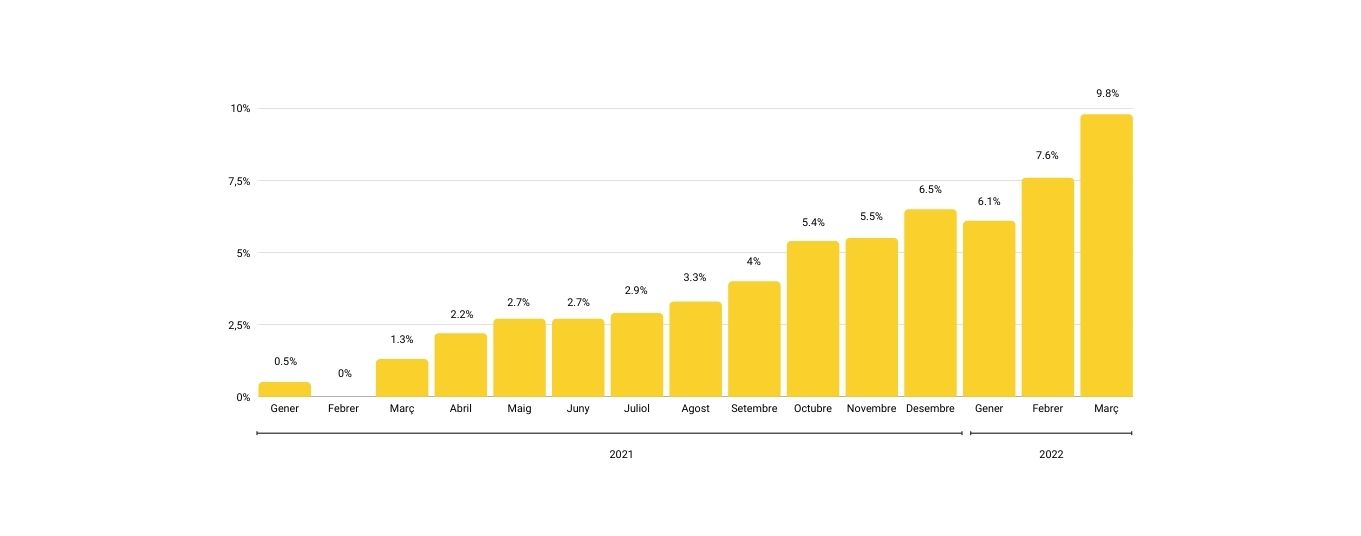
Annual Rate of Change in Spanish CPI
Source: Spanish Statistical Office – INE
Devaluation of bank deposits
The almost 10% increase in the CPI is equivalent to the de facto devaluation of bank deposits of households and firms. At the end of 2021, these accounted for 958.9 billion euros in case of households and 322.7 billion euros in the case of companies, according to the Bank of Spain. This means a loss of more than 90 billion for the former and some 30 billion for the latter.
Household and corporate savings reached record levels in 2021. In the case of individuals, the total volume increased by 4.6% compared with the previous year and in the case of companies, growth was close to 9%.
While deposit holders are being hit hard by inflation, at the other end of the equation are those with mortgages. The former have seen their savings lose almost 10% of their value, but those who pay mortgages benefit from the appreciation of their assets due to inflation without any increase in their repayments.
If you want to know more about superior options to make your money profitable, go to Guaranteed Funds. From 11Onze Recomana we propose you the best options in the market.

All economic forecasting rates indicate that we are heading for a global financial crisis. For at least a year now, renowned economists such as Nouriel Roubini, Robert Kiyosaki and Mervyn King have been warning that government debt is growing too high. This runaway debt now comes on top of rampant inflation and a galloping energy crisis. In 11Onze we summarise the keys to understanding the inevitable global debt crisis.
Uncertainty, uncertainty, uncertainty. Possibly the most repeated word since the beginning of 2022. The leading economic newspapers, prestigious economists and investors, and economic analysts all agree: an unprecedented financial crisis is approaching —”a historic crisis,” in the words of Kiyosaki— and there are several indicators that, combined, are a real time bomb: debt, inflation and rising fossil fuel prices.
As Nouriel Roubini, professor of economics at New York University and one of the few economists who previewed the 2007 crisis, has explained, the current scenario adds up to worse ingredients than those that gave rise to the inflationary crisis of the 1970s and the debt crisis of 2007. The result, he warned, could be a crisis that mutates into an economic depression that could last for years.
Public debt sets off alarm bells
To begin with, says Roubini, there are record levels of private and, above all, public debt. Moreover, he explains that the context of stagflation, i.e. a scenario of high inflation, a slow rate of economic growth, and high unemployment, together with unprecedented fiscal and monetary policies is further increasing this debt of states. And he argues why this debt crisis, coupled with inflation and rising prices, has never happened before.
He argues that, during the inflation crisis of the 1970s, advanced economies and most emerging markets had much lower public debt than they do now. In any case, that inflation did not have a negative impact on debt, because “unexpected inflation in the 1970s wiped out the real value of nominal debts at fixed rates, thus reducing many advanced economies’ public-debt burdens.” Now, however, in order to reduce debt, states need such high levels of inflation that they may become unaffordable for citizens, who may lose purchasing power and thus become impoverished.
If we take the financial crisis of 2007 as a reference, Roubini recalls that the levels of public and private debt led to a major global debt crisis, which was aggravated by the bursting of the real estate bubble. However, the recession that followed that debt crisis led to low inflation, almost deflation. Today, by contrast, the runaway debt crisis coincides with stagflation that is beginning to look alarming.
Roubini’s hypothesis coincides with the view of former Bank of England governor Mervyn King, who early last year warned of a possible eurozone financial crisis. Already then, in an interview in ‘El País’, he stated forcefully: “A new debt crisis is coming, and it will be soon.”
In that conversation, King argued that global debt is indeed above 2007 levels, a debt that has not stopped growing with the pandemic. “When the crutches of the state are withdrawn, there will be corporate bankruptcies, and most likely sovereign debt crises in emerging countries,” he said. And he warned that having all this happen at the same time could cause a “serious problem.” “It is impossible to know when and where it will happen, because of the radical uncertainty, but the system is creaking on the debt side,” he said.
The collapse of emerging markets
Just a few days ago, economic analyst Bill Dudley made the same forecast as King ‘Bloomberg’. The expert warns of the possible bankruptcy of emerging countries, due to the impossibility of assuming their public debt. Even so, he points out some ways out. Dudley considers it very likely that 2022 will be a “very difficult” year for low-income countries and emerging markets, because they have been the big borrowers in the sovereign debt market.
“A series of crises concentrated in these countries seems almost inevitable,” he says. And he predicts that as the US Federal Reserve begins to tighten monetary policy, funding costs will rise and less credit will be available, because interest rates reduce the incentive for investors to seek the kind of returns offered by these countries.
Added to this situation is the fact that the debt moratorium agreed during the pandemic by the International Monetary Fund (IMF) and the World Bank with the G-20 countries will soon come to an end. And this will mean that these emerging countries will need to get into debt again. Dudley therefore proposes that the IMF increase aid, but also admits that the measure only “postpones the day of reckoning” and subordinates these emerging markets to “private lenders” and large state lenders, such as China.
As such, Dudley believes that the best thing to do is a far-reaching reform of the sovereign debt regime, to make it more robust and resilient to the adverse economic backdrop. And he calls for much more transparency. “In many cases, it is impossible to judge how large the obligations are, when they will come due, their interest cost and other terms and conditions, including what collateral that may have been pledged to secure the borrowing,” he says.
The year of the big crisis, how to prepare for it
The president of 11Onze, James Sène, agreed with this analysis. In a conversation that you can revisit on the 11Onze Podcast, he detailed how to face the onslaught of a debt crisis on an international scale. Public debt and inflation, he explained, make it essential to seek refuge for people’s savings, so that citizens do not once again have to pay the price of an economic crisis.
If you want your business to make a giant leap, use 11Onze Business. Our business and freelancer account is now available. Find out more!

The BRICS group, which brings together the two big emerging economies (China and India) and three major commodity producers (Brazil, Russia and South Africa), is working on its own currency. China is the driving force behind a currency that, unlike the dollar or the euro, could be backed by gold and other commodities.
During a visit in Shanghai to the New Development Bank, created by the BRICS, Luiz Inácio Lula da Silva, President of Brazil, insisted a few days ago on the idea of finding an alternative to the dollar in international payments. “Why can’t an institution like the BRICS bank have a currency to finance trade relations between Brazil and China or between Brazil and all the other BRICS countries,” he said.
China and Russia have been the main promoters of this idea, which has been well received by the rest of the BRICS and other emerging countries.
Vladimir Putin announced in the middle of last year that the BRICS group was working on the development of a new reserve currency based on a basket of currencies for its member countries. And Russian Foreign Minister Sergei Lavrov indicated in January that the issue would be discussed at the BRICS summit in South Africa at the end of August.
First steps in a multipolar world
These statements should be seen in the context of Russia’s new foreign policy, recently announced by Vladimir Putin, which places India and China at the forefront and aims to boost Moscow’s role in groupings such as the BRICS in order to “adapt the world order to the realities of a multipolar world”.
For the time being, Beijing has intensified its efforts to use its own currency in foreign trade. A few weeks ago, the presidents of China and Russia agreed to encourage the adoption of the Chinese yuan as a settlement currency with emerging economies. And Brazil and China took steps last month to facilitate the settlement of their transactions in each other’s currencies. The goal is to reduce financial costs by eliminating a third currency from transactions.
A new currency for a new world
The Deputy Chairman of Russia’s State Duma, Alexander Babakov, said a few days ago that “the transition to settlement in national currencies is the first step”. According to him, the next move would be “to put into circulation a digital currency or any other fundamentally new form of currency in the near future”.
The fact is that in recent times there have been increasing contacts between representatives of Brazil, Russia, India, China, and South Africa to launch a new currency which, according to Russian sources, would be backed by gold and other commodities.
In this respect, it should be borne in mind that in November and December last year alone the Chinese central bank announced the purchase of 62 tonnes of gold, bringing its total reserves to more than 2,000 tonnes for the first time in history, according to data from the World Gold Council. And it seems that the pace of gold purchases by various central banks has intensified so far in 2023.
A very heterogeneous group
Critics of this new currency project point to the great differences that exist between the five countries in the group in terms of production, growth and financial openness. Suffice it to say that real GDP per capita at constant prices between 2008 and 2021 increased by 138% in China, 85% in India, 13% in Russia and 4% in Brazil, while it contracted by 5% in South Africa.
Another distorting factor is China’s overwhelming weight in the group. The most recent data from the International Monetary Fund indicate that the Asian giant accounts for 72% of the combined GDP of the five countries. And China’s dominance is reinforced by the fact that it is a key trading partner for commodity exporters.
Moreover, the strategic interests of the five members of the group are not closely aligned precisely because of the vast differences in their economies.
However, the idea of a new currency is taking shape. And other countries such as Argentina, Iran, Indonesia, Turkey, Saudi Arabia and Egypt have already expressed their interest in joining this economic bloc. The international financial system could be on the verge of a radical change, perhaps back to the gold standard or something similar.
If you want to discover the best option to protect your savings, enter Preciosos 11Onze. We will help you buy at the best price the safe-haven asset par excellence: physical gold.
The emerging countries that comprise the BRICS group are leading a geopolitical paradigm shift towards a fairer and more equitable global economic balance, as opposed to the dominance of the G7 in an increasingly multipolar world. While there is still a long way to go, the pillars of a new world order are being formed.
The geopolitical tug-of-war of recent years between East and West has revealed a paradigm shift that is becoming increasingly evident. Economic cycles and financial markets are becoming less and less centred on the US-dominated monetary system, giving way to alternatives that are rebalancing the map of global economic power.
In this context, Western hegemony is threatened by increasingly influential coalitions of emerging countries that, through their cooperation and competition, shape the global economic and political order to the detriment of a status quo of power that has hitherto regarded them as second-division players with no say.
Of course, the transition to a new world order will not be easy, nor will it happen overnight. It is a long process full of variables and challenges that, rather than drastically changing the existing international system, aims to reform and complement an outdated economic and geopolitical model that is out of touch with reality.
Xi Jinping, President of the People’s Republic of China, defined the strategy: “China, as a developing country and a member of the Global South, has always shared the same destiny with other developing countries, firmly defended their common interests and pushed to increase the representation and voice of emerging market countries. We need to abandon the Cold War mentality and bloc confrontation, oppose unilateral sanctions and go beyond small hegemonic groupings. No matter how much resistance there is, the BRICS countries, a positive and healthy force, will flourish.”
The voice of emerging markets
The Shanghai Cooperation Organisation (SCO), which addresses regional security issues, and institutions such as the Asian Infrastructure Investment Bank (AIIB), which focuses on economic issues, complement BRICS trade cooperation and are pieces of the same ecosystem designed to offer an alternative to alliances such as the G7.
You don’t have to be a guru of geopolitics to know that economic power decides who gets to call the shots on the global stage. In this sense, the BRICS+ account for 45% of the world’s population, contributing 25% of trade and 31.5% of global GDP.
This is less than the G7’s 43% of global GDP, but the gap will narrow as major BRICS countries, such as India, continue to grow at an above-average rate and as the alliance welcomes more members in the future.
It should be borne in mind that, although the Western bloc has more wealth, the emerging countries have more population and concentrate oil production. With the addition of Saudi Arabia, the United Arab Emirates and Iran, the BRICS more than doubled its members’ share of global oil production to 43 per cent.
Currently, many of the BRICS member countries have higher real GDP growth rates than their G7 counterparts. Moreover, according to Goldman Sachs, they are expected to achieve an average GDP growth rate of between 189% and 205% by 2050, compared to an average G7 growth rate of 50%.
In short, although much work remains to be done, it cannot be denied that the voice of the Global South is becoming louder and clearer on the world’s geopolitical chessboard. Therefore, the reform of institutions and mechanisms that are supposedly multilateral, but have so far favoured the Western geopolitical bloc, seems inevitable in the face of a more balanced distribution of global power.
If you want to discover the best option to protect your savings, enter Preciosos 11Onze. We will help you buy at the best price the safe-haven asset par excellence: physical gold.

For months, official inflation figures have appeared to moderate. But the feeling in supermarkets, in rents, and in bills tells a different story. The question is no longer whether inflation will fall, but whether it will ever return to what it once was.
Recently, institutional discourse has insisted on conveying calm, claiming that inflation was transitory. Or at least a simple accident caused by the pandemic, logistical bottlenecks, or energy prices. And that once the situation normalized, prices would return to their place. Today, that promise rings hollow. And more and more economists admit what many households already know: perhaps we have entered a new normal of high prices.
For decades, Western economies lived within a historical exception: stable prices, low-interest rates, and abundant money. Any inflationary spike was considered a temporary anomaly that central banks would quickly correct. The key word was “control.”
That narrative broke in 2020. The pandemic disrupted global supply chains built on extreme efficiency criteria. The war in Ukraine sent energy and basic food prices soaring. And the response from governments and central banks — massive monetary expansion and unprecedented public debt — injected an enormous amount of liquidity into the economy.
According to Eurostat data, inflation in the euro area reached historic highs in 2022. Despite subsequent moderation, the general price level has not fallen; it has simply stopped growing as quickly. And this distinction is crucial: while inflation can decline, prices rarely do.
Structural Factors Pushing Prices Up
The problem is not merely cyclical. There are underlying forces pointing toward a change in economic regime. De-globalization is one of them. Companies are reconfiguring production chains to reduce geopolitical dependencies. Producing closer to home is safer, but also pricier. The energy transition, necessary and inevitable, involves multi-billion investments that are passed on to final costs. Demographic ageing pressures public systems and reduces the working population. And permanent geopolitical tensions introduce volatility that is no longer exceptional, but structural.
Added to all this is an often overlooked element: debt. States carry levels of indebtedness that make it very difficult to return to a world of low real interest rates without creating new distortions. In this context, moderate but persistent inflation acts as a silent tool of fiscal rebalancing.
Rising Prices, Wages That Do Not Keep Up
This is where inflation shows its most uncomfortable face. Despite wage revisions recently, purchasing power has not recovered. Data from Spain’s National Statistics Institute (INE) show wage increases that, often, only partially offset the rise in the cost of living.
The result is a progressive erosion of middle incomes. It is not a tax approved by Parliament, but it acts as if it were. Savings lose value. Salaries barely stretch to the end of the month. And the ability to plan long term diminishes.
Housing is the clearest example. Soaring rents, limited supply, and wages that cannot keep pace. But it is not the only case. Food, insurance, basic services. What was once exceptional is now routine.

An Uncomfortable New Normal
Assuming that prices will not return to past levels is not pessimism. It is realism. The economy ahead will be more expensive, more volatile, and less predictable. Waiting for a return to a world of cheap money and contained prices may be a strategic mistake, both personally and collectively.
This does not mean resignation. It means adaptation. Understanding how structural inflation works. Reviewing consumption habits. Rethinking savings and wealth protection in an environment where idle money loses value year after year.
It also means demanding transparency. Macroeconomic figures may improve, but if they do not translate into real well-being, something is wrong. The gap between statistics and citizens’ perception is not a communication problem: it is a model problem.
Facing Inflation Head-On
Inflation is not just an economic indicator. It is a daily experience. And, like any persistent experience, it ends up shaping behaviors, expectations, and life decisions. Ignoring it or dressing it up with reassuring speeches does not help in making good decisions.
Understanding that we may have entered a new normal of high prices is uncomfortable, but necessary. It is the first step toward stopping looking back with nostalgia and starting to think strategically about how to protect the present and the future. Understanding structural inflation is the first step toward protecting oneself from it.
If you want to discover the best option to protect your savings, enter Preciosos 11Onze. We will help you buy at the best price the safe-haven asset par excellence: physical gold.

Demand for gold rises by 176% in the first quarter of 2023, according to the World Gold Council. Against a backdrop of widespread economic fears, the rise in physical gold indicates that it is one of the most sought-after safe-haven assets. Will you be the last one to protect your savings?
As 11Onze anticipated almost a year and a half ago, physical gold is becoming an indispensable tool for protecting long-term savings. That is why Preciosos 11Onze offers several tools to enable the community to use gold to better withstand the period of economic turbulence we are experiencing. On the one hand, there is Gold Seed, which allows short-term gains to be made by taking advantage of the constant revaluation of gold. On the other hand, there is Gold Patrimony, where the idea is to buy physical gold with the long term in mind.
Gold Patrimony
This is what we have called the gold that we have been selling from day one at Preciosos 11Onze, to differentiate it from Gold Seed. They are gold bars of various sizes, with a minimum purchase of 3,000 euros. And the gold is delivered to your home or can be kept in safe custody in a vault.
Why can gold be considered an asset like a house? Because it is an asset that tends to appreciate in value and is highly liquid. In recent years, gold has appreciated by 40% and, during 2022 alone, its price increased by 9.5%. It should be remembered that in 2022 average inflation in Spain was 8.4%. Therefore, people who had their savings in gold gained a little purchasing power, while those who had them in euros lost it.
But Gold Patrimony has to be seen in perspective. So we should remember that in January 2008 an ounce cost $883, while today it is around $1,960 – $2,000, an increase of more than 100% in 15 years. The outlook, however, remains bullish. Why? Because central banks are making record purchases of gold, probably looking for a safe and tangible asset on which to support huge public debts. The World Gold Council noted that central banks had bought 4,741 tonnes of gold during 2022, a figure not seen for 55 years.
Turbulence and indicators
The banking crises of the last few months have generated doubts among depositors. From Silicon Valley Bank to Credit Suisse, via First Republic Bank, history is repeating itself. Add to this the FDIC’s view last November that the volume of debt is not sustainable, and it is only natural that many people are looking for safe options for their money. Withdrawals from bank accounts are very high in Spain, the UK and the US. The trend indicates, as also noted by the FDIC, that people with more money and information are somehow protecting their savings by taking them out of banks, a behaviour that may accelerate further collapses.
What now?
One of the questions to be answered is what to do with the money once it is out of the bank. In complicated scenarios, you have to look for safe options. These can be bonds, property or products with insurance (such as Guaranteed Funds or Litigation Funding). But if there is one product that stands out for its historical security, it is always Gold Patrimony.