Catalonia, leader in Business Innovation
Numerous reports and studies from institutions like the Mobile World Congress, l’Agència per la Competitivitat de l’Empresa (ACCIÓ) or the Fundación de Estudios de Economia Aplicada not only confirm that Catalans do something indeed, but that we do it quite well. So year after year Catalonia tops rankings on business’ innovation.
The report done by ACCIÓ is conclusive: “Catalonia leads in the number of innovative businesses in Spain, with 22% of the total. Catalonia leads in both product and business process innovation.” The above figures are not by accident but the result of a conscious and proactive support from both, industry as and the public administration, increasing growth by 10.7% from the previous three years as shown by the study.
Innovation that is always linked to investment in R&D, a key factor because one cannot understand one without the other, and here data also shows an increase of 2.4% in 2019 compared to the previous year, third year of continuous growth and the highest figure in the historical series although below the Spanish State (4.2%) and the European Union (4.5%).
There is no doubt that we Catalans have the talent, the science, the industrial fabric and the entrepreneurial spirit, but perhaps we lack a national strategy that knows how to coordinate academia with industry. We must be able to prevent the brain drain that we have worked so hard to train. And for that we need more funding.
Foreign investment and financing resources
According to data from the Ministry of Industry, Trade and Tourism and the National Innovation Company (ENISA), 36% of Catalan small and medium-sized enterprises have received participative loans from the State, well above the Spanish average and at the top of the ranking by a considerable margin.
It should be noted that, by area of activity, SMEs in the information and communication technologies (ICT) sector account for the majority of this financing. A business fabric that seems to be immune to the pandemic and continues to grow with employment figures that are the envy of the sector.
This is confirmed by a study conducted by the economic studies office of the Cambra de Comerç de Barcelona and the Laboratorio de Transferencia de Análisis Cuantitativo Regional de la Universitat de Barcelona (AQR-Lab), which shows that the ICT sector employed 128,700 people in the third quarter of 2020, 19.1% more than in the same period of 2019 and an all-time high.
In terms of foreign investment, the Barcelona Chamber of Commerce confirms that Catalonia also leads in productive investment by asset value. These data are particularly significant because they are not based on quarterly or annual data prone to volatility, but on clean investment accumulated over periods of more than ten years and which, therefore, allow trends to be identified.
In short, all these reports, studies and analyses confirm that when it comes to innovation, it is not enough to do things, and do them well, but they must be accompanied by a vision of the country that supports them.
If you want your business to make a giant leap, use 11Onze Business. Our business and freelancer account is now available. Find out more!



High inflation, energy crisis and rising interest rates are creating the conditions for a perfect storm in the European economy. More and more data are lending credence to those predicting a depression in the coming months.
Some 20,000 SMEs disappeared in August in Spain and 90,000 are in technical bankruptcy. Moreover, up to 700,000 have serious liquidity problems. This is according to the latest barometer of the Consejo General de Colegios de Gestores Administrativos de España.
As if we are already getting used to the exorbitant inflation figures that shake us every month, these data on the evolution of the productive fabric highlight the magnitude of the crisis in SMEs, the main engine of the Catalan economy.
The truth is that the economic slowdown is advancing by leaps and bounds not only in Catalonia, but throughout Europe. Non-performing loans to companies are on the rise across the continent. Businesses will find it increasingly difficult to survive in a context of high inflation and energy crisis. One revealing fact is that production costs in Germany have risen by 45.8 % in just twelve months. All indications are that an “avalanche” of company and household bankruptcies is on the horizon.
Is collapse imminent?
Tuomas Malinen, professor of economics at the University of Helsinki and CEO of the consultancy firm GNS Economics, is one of the leading voices that have been warning for months that European economies are “on the verge of collapse”.
The Finnish economist points out that fixing Europe’s energy deficiencies is likely to take years, which could lead to the permanent closure of many industries in the absence of Russian gas supplies. He is not alone in this view, as a recent article in The Economist also warned against the risk of deindustrialisation.
Unfortunately, Europe’s business sector faces a triple challenge. First, high energy prices are pushing companies to cut production and close factories. Secondly, high inflation is eroding demand. And third, interest rate hikes – from 0% to 1.25% in little more than two months – are making credit more expensive, both for businesses and consumers.
Ten steps towards disaster
In February, Malinen posted a Twitter thread detailing ten steps that could happen if war broke out between Russia and Ukraine.
- The West would likely respond with sanctions.
- Russia would respond by shutting off gas to Europe.
- This would lead to a massive increase in energy prices in Europe, pushing the continent into a recession with high inflation pressures (stagflation).
- Inflation would reach double digits in two to three months.
- Asset markets would first fluctuate sharply, and then collapse.
- Runaway inflation would force the European Central Bank to raise rates rapidly and stop the Emergency Purchase Programme (EPPP) and quantitative easing (QE).
- The European banking sector would collapse.
- Sovereign bond yields would soar.
- The eurozone would unravel.
- Europe would fall into a depression.
Half of his predictions have already come true, so all indications are that we are heading for a severe economic depression.
The limit situation
Malinen says the speed at which the economy is deteriorating is enormous and that “chaos” is a matter of “weeks, months at most”. He recently recommended stockpiling cash, water, food and wood to cope with the economic and social crisis that is looming.
The current conditions could kill the market economy and increase state interventionism. For example, the first measure of Lis Truzz, the new British prime minister, was to freeze the price of electricity bills and compensate for it by issuing debt. And more than thirty countries have introduced food export restrictions, which could lead to a new food crisis.
Moreover, Tuomas Malinen warns that China will not be able to come to the rescue of Western economies as it did after the 2007-2008 financial crisis because it is an economic giant with “feet of clay”, as its growth since 2007 has been based on “relentless and totally unsustainable debt stimulus”.
In short, a growing number of economists believe that the collapse of the European economy is already underway.
If you want to discover the best option to protect your savings, enter Preciosos 11Onze. We will help you buy at the best price the safe-haven asset par excellence: physical gold.
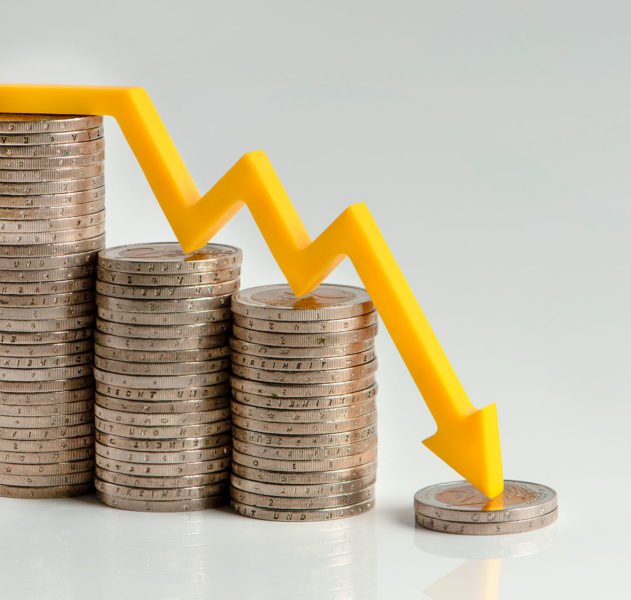

The government’s planned Financial Customer Ombudsman Authority is expected to be able to impose fines on financial institutions of up to 5% of their revenues and make its rulings binding on complaints of up to 20,000 euros. It would be financed by a levy on banks of 250 euros for each admissible complaint.
The draft bill to create the Autoridad Administrativa Independiente de Defensa del Cliente Financiero is already at the public hearing stage. Following this process, the Council of Ministers will approve the draft law, which is expected to be adopted in the second half of 2022.
To finance this body, financial institutions will have to pay a fee initially set at 250 euros for each complaint admitted. The aim is to encourage the complaints and claims services of the financial institutions themselves to resolve citizens’ disputes quickly. The service will be free of charge for customers, who will be able to make claims without the need for a lawyer or solicitor.
The draft bill envisages fines for financial institutions of up to 5% of their income for serious infringements, which will be those that can be considered particularly relevant due to “the number of people affected, the repetition of the conduct or the effects on customer confidence and the stability of the financial system”. Moreover, the resolutions of this body will be binding when the amounts claimed are less than 20,000 euros.
Three levels for dealing with complaints
The creation of this authority complements the institutional system for resolving complaints in the financial sphere, which is currently divided into three levels: firstly, the customer services of the financial institutions themselves; secondly, the complaints services of the supervisory bodies; and finally, the judicial bodies.
This body will centralise the current complaints services of the Bank of Spain, the Comisión Nacional del Mercado de Valores (CNMV) and the Dirección General de Seguros y Fondos de Pensiones. This will allow joint and coordinated treatment of complaints from financial customers and should result in better analysis of disputes and speed of service.
Resolution model
Both individuals and legal entities will be able to file complaints with the new body for breaches of rules of conduct, good financial practices and usages, as well as for abuse of clauses declared as such by the relevant courts in relation to financial contracts.
The draft bill affects all financial institutions: credit institutions, investment services companies, insurance companies, financial credit institutions, participatory financing platforms, lenders and credit intermediaries, payment and electronic money institutions and issuers and service providers in the fintech and crypto-asset sector.
In order to ensure adequate and inclusive access to this dispute resolution system, the draft bill establishes the principle of personalised attention. Therefore, the age, the characteristics of the geographical area and the level of skills of citizens will be taken into account.
11Onze is the fintech community of Catalonia. Open an account by downloading the super app El Canut on Android and Apple and join the revolution!

Germany faces a historic energy crisis that could cripple its important export base, trigger a recession, and threaten to cause a domino effect on the rest of Europe. Much of the problem is self-inflicted and demonstrates the dangers of following the sanctions policies dictated by the United States.
Germany remains, along with France, the EU’s main engine and the world’s third-largest exporter, behind the United States and China, which is in first place. Still, the trade wars initiated by the United States and the subsequent sanctions and counter-sanctions between the EU and Russia have combined with the logistics and supply crisis resulting from the pandemic to finally shake the foundations of the German economy.
German economists and industry groups warn that rising energy prices, 35.6 per cent higher than in the same period last year, pose a growing risk to the small and medium-sized enterprises that form the basis of the economy. A German industry almost paralysed by energy shortages, significant price rises and runaway inflation of 7.9 % is among the economic data suggesting that Germany could be heading for an economic recession, if it has not already entered a recession in the last quarter.
A survey of companies conducted by the German industry association (BDI) between mid-August and early September painted a bleak picture of the sector, with a third of companies saying their existence was threatened by rising prices and almost 25% considering the option of relocating part of their business, or in the process of doing so.
The inevitable cost pass-through to businesses and consumers
The German government is sending out often contradictory messages that are fuelling public unrest. On the one hand, Economy Minister Robert Habeck stated in mid-August that Germany must reduce its gas consumption by 20 per cent if it wants to avoid energy shortages this winter. A figure that can only be achieved if the industrial activity is considerably reduced.
On the other hand, after criticism from economists and businessmen, a few days later he announced that German gas tanks are almost 83% full and will reach 85% of their capacity in early September, well before the self-imposed October limit.
In this context, Olaf Scholz’s government has agreed on a new economic aid package of more than 65 billion euros to alleviate the impact of the energy crisis on the population, which will be of little use when after rescuing Uniper, Germany’s leading gas supplier, the same will have to be done with the country’s second gas company, VNG, which ensures a new blow for consumers when, from 1 October, the energy companies will have the go-ahead to raise the price of bills again.
Winners and losers
While oil-producing countries are making a killing, Europe is sinking and preparing for a winter where it looks like it will barely be able to keep the lights on. Sanctions on Russia have proved more effective in countering the European economic recovery than in weakening a Russian economy that is all and sundry and the reduction in hydrocarbon exports to Europe is reaping record profits thanks to higher prices because of the restrictions imposed by the United States and the European Union.
At the same time, the United States has become the world’s largest exporter of liquefied natural gas (LNG) in the first half of 2022. The business is extremely lucrative, as it sells this gas three times more expensively to Europe and weapons in countries adjacent to Ukraine.
The geopolitical tug-of-war between the US and Russia or China is inevitable. It is even understandable, given the US interest in wanting to stem the loss of its hegemonic power in the face of an increasingly multipolar world. What is surprising is the EU’s foreign policy servility.
The energy crisis, and more specifically the gas crisis, was easily avoidable. The EU and specifically Germany, could have refused to participate in the US tactical war against Russia, which spurred the energy crisis by halting the Nordstream 2 pipeline. Now, without a clear supply alternative, since the EU had also stopped the MidCat pipeline, German industry will be hard-pressed to maintain its productivity. Germany’s ability to generate an economic surplus is key to the financing of the EU and dependent countries like Spain. What will happen if Germany is no longer able to sustain the European economy with its profits? Winter could be very difficult, not just in Germany.
If you want to discover the best option to protect your savings, enter Preciosos 11Onze. We will help you buy at the best price the safe-haven asset par excellence: physical gold.
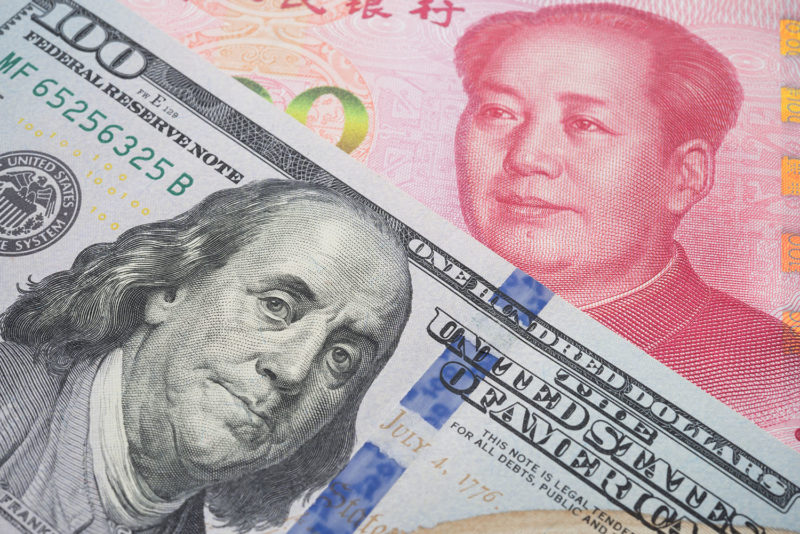
The bursting of the real estate bubble in China could deal a severe blow to the ailing world economy. Bear in mind that China accounts for one-fifth of the world’s GDP and almost one-third of global economic growth, so the serious crisis in a sector such as real estate, with an enormous weight in its economy, is already a problem of global dimensions.
The real estate sector and associated industries account for nearly 30% of China’s gross domestic product (GDP), almost double that of countries such as the United States. The fiscal stimulus and credit easing plans that started in 2008 to promote consumption have led to uncontrolled growth in the sector over the past 15 years, so the government decided in 2020 to take measures to deflate the huge real estate bubble.
One of them was to force developers to meet strict financial health indicators in order to obtain loans from banks and other financial institutions with a two-fold objective: on the one hand, to curb speculation to reduce prices and make housing accessible to the middle classes again and, on the other, to reduce the weight of the real estate sector in the Chinese economy.
The reality is that many developers have accumulated huge debts. Unable to borrow under the new rules, the sector has encountered serious liquidity problems. The difficulties faced by large groups such as Evergrande and Kaisa Group Holdings and the bankruptcy of many construction companies highlight the extent of the crisis.
The mortgage revolution
In recent months, the closure or lack of liquidity of these construction companies has led to the delay or paralysis of many developments, so tens of thousands of buyers have decided to refuse to continue paying the instalments on their loans, with the problem this poses for the financial system. The loans affected by these protests could amount to 145 billion euros, according to the consultancy S&P Global Ratings, and other analysts even calculate that the amount could be higher.
In less than a year, real estate prices have fallen by up to 30 %. And the Chinese economy is suffering the consequences of the paralysis of the real estate market. The scenario is beginning to look a lot like the one Europe and the United States faced from 2007 onwards, with the creation of ghost cities and ghost airports, so Chinese leaders are struggling to contain what could be the biggest property crash the world has ever seen. Its consequences could shape global economic developments for the next decade.
So far, in the second quarter of the year, China grew by only 0.4% year-on-year, when it was forecast to grow by 1%. And if we compare GDP with that of the first quarter, there was a decline of 2.6%.
In addition to the crisis in the real estate sector, the “zero-Covid” policy, which has caused major mobility restrictions and production problems, as well as the fall in foreign demand due to the recession in the global economy, have weighed heavily on these figures. As a result, youth unemployment is already close to 20 %.
Winds of crisis
The situation looks set to worsen. While the country has increased its share of global manufacturing since the pandemic began, foreign demand looks set to plummet over the next 12 months because of the global recession.
Hence, the huge package of measures unveiled by the government in August, including a 300 billion yuan (44 billion euros) investment in infrastructure, a 500 billion yuan extension of loans to local governments and lower interest rates.
It should be borne in mind that China accounts for almost a fifth of the world’s GDP and its growth accounts for nearly a third of global growth, so a slowdown in the Asian giant may cause serious structural problems in the global system. Moreover, whereas in the previous global financial crisis China came to the economy’s rescue by buying huge amounts of debt from other countries, such a possibility will now be highly unlikely.
In a 2019 study, the US Federal Reserve estimated that an 8.5% fall in China’s GDP would lead to a 3.25% decline in advanced economies and almost 6% in emerging economies.
A tough autumn
China faces the Communist Party Congress in autumn, at which the current president, Xi Jinping, is expected to be elected for a third term, with many uncertainties. He will have to deal with serious structural problems, slowing growth in the face of declining foreign demand and a very high unemployment rate among young people. He may even have to deal with the departure of many foreign companies operating in the country.
Just as Europe catches a cold when Germany sneezes, the world’s economic woes will be aggravated if the Chinese economy loses its vigour.
If you want to discover the best option to protect your savings, enter Preciosos 11Onze. We will help you buy at the best price the safe-haven asset par excellence: physical gold.
Many economies are moving inexorably towards recession. For the moment, it has already reached the United States, which has now posted two quarters of negative growth. And it is expected to reach the Eurozone and other developed countries in the coming months.
Many of the world’s main economies will enter recession in the coming months, if they have not already done so, as is the case with the United States, which has seen two quarters of contraction in its Gross Domestic Product (GDP). Among those affected would be the Eurozone, Canada, the United Kingdom, Japan, South Korea and Australia, according to a report by financial services provider Nomura, reported by CNBC.
The situation in these economies is aggravated month by month by the aggressive monetary policies of central banks, which try to control inflation with sharp interest rate hikes. As a result, the economy tends to slow down, as financing for businesses and households becomes more expensive. Buying a house, a car or any other good in instalments is becoming increasingly expensive.
The United States is already in recession
The US economy has now experienced two consecutive quarters of declines in GDP and is technically already in recession. In the first quarter of the year it contracted by 0.4 % and in the second quarter by 0.1 %.
It should be borne in mind that the US Federal Reserve (Fed) raised the official interest rate by 0.75 points in both June and July, and does not rule out another “unusually high” increase in September depending on how inflation evolves. In June the year-on-year CPI stood at 9.1 %, the highest rate in more than 40 years, and in July it fell back to 8.5 %.
In this inflationary context, many analysts believe that the recession could be extended until 2024 because of the need to continue raising interest rates, as Paul Volcker did in the early 1980s at the cost of unemployment levels that reached over 10 %. In this regard, Bank of America forecasts that unemployment will rise from 3.6 % to 4.6 %.
US weakness is expected to spill over to Canada, which is also expected to enter recession in the first half of 2023.
Europe, following in the footsteps of the US
US developments are very important for Europe because of the pulling power of the world’s leading economy. As Bloomberg indicates, Goldman Sachs estimates that the Eurozone will enter recession at the end of the year, after a GDP contraction of 0.1 % in the third quarter and 0.2 % in the fourth quarter.
In this regard, the composite purchasing managers’ index, which measures manufacturing activity, fell in August from 49.9 to 49.2 points, its lowest level in 18 months. Germany suffered its sharpest decline in two years and activity in France fell for the first time in a year and a half. Falling demand means that the manufacturing sector continues to accumulate unsold finished goods.
In the Eurozone, stagflation could occur, with GDP falling by up to 4 % and inflation in the double digits, peaking in October of this year, according to Moody’s.
Germany and Italy could be particularly hard hit by the economic slowdown. In the case of the Italians, political instability will have a negative influence, while for the Germans, the evolution of the flow of Russian gas will be fundamental, as a large part of German industry depends on it.
Brexit will not save the UK from recession. The Bank of England estimates that UK GDP will start to contract in the last quarter of the year and will continue to fall until the fourth quarter of 2023. Further interest rate rises are on the way and inflation could rise to over 13% by October this year.
Uncertainty in Catalonia
Fortunately, the Catalan economy is among the least affected in the Eurozone. For the moment, GDP continues to grow, with an increase of 1.5 % in the second quarter of the year, although we cannot ignore the fall in activity in the industrial sector, which has been hard hit by the rising cost of raw materials and energy. Nor should we forget the destruction of employment in July and August. These are data that do not invite optimism.
On the other hand, the Bank of Spain has already noted the tightening of financing conditions for households and companies. The banking regulator warns in a report of “a contraction in the supply of credit to SMEs in the coming months”, while “requests for loans for house purchase have continued to grow” despite the increase in interest rates.
Lights and shadows of the Chinese giant
Its situation is not idyllic, but China remains far from recession for the time being, although its GDP contracted by 2.6 % in the second quarter of the year because of the closures. It should be noted that in March and April total or partial closures were imposed in the country’s main centres.
On the other hand, against the general trend, the Central Bank of China decided to lower its interest rates by surprise in order to bring some oxygen to the economy. In year-on-year terms, China’s economy grew by a pyrrhic 0.4 % in the second quarter, well below the 1 % estimated by experts.
If you want to discover the best option to protect your savings, enter Preciosos 11Onze. We will help you buy at the best price the safe-haven asset par excellence: physical gold.
The start of the school year on 5 September is accompanied by an increase of up to 23% in the price of basic items and school supplies compared to last year. The only factor that can compensate for the inflationary spiral is lower public transport fares.
The rise in prices that families will feel is added to the usual financial stress of the back-to-school period between August and September, which accounts for 60% of a pupil’s total expenditure during the school year. A return to routine marked by runaway inflation implies an extraordinary expense for many families that they can ill afford.
The pandemic and logistical problems have increased the price of paper by up to 45%, which, nonetheless, according to data from the National Statistics Institute (INE), has only translated into a relative increase of 23% in the prices of stationery items, such as notebooks and paper, mainly due to the fact that most orders had already been closed for months. Even so, textbooks are among the school supplies that have risen the most (between 5% and 20%) compared to last year.
Spending on books and other stationery is not the only thing that keeps parents awake at night; children often grow up and have to change their wardrobe. This is a particularly significant expense for parents who take their children to a school that requires a uniform. The price of clothing and footwear has risen considerably and follows the trend set by general inflation, although it remains below 10%.
School canteens and charter schools
Last May, the Government confirmed that it was setting a maximum ceiling of 6.54 euros per day, 21 cents more than before, for the canteen service in those public centres where the lunchtime slot lasts two and a half hours, or up to 7.19 euros if the pupils are sporadic diners.
The Ministry of Education justified the price increases with inflation and revisions of collective bargaining agreements that increased staff costs. This argument is also used by state-subsidised schools, where it is estimated that there will be a general increase of up to 3% in the fees charged by these schools. This is particularly significant in Catalonia, which, together with Madrid, is the autonomous community with the most extensive and proportionally the largest network of state-subsidised schools.
The reduction in public transport fares, the circular economy of the book banks that some schools have to contribute to reducing costs, and the aid that can be applied for in the schools themselves, in town councils and regional councils, are options to be considered by families who cannot afford this unprecedented situation at the start of the school year.
11Onze is the community fintech of Catalonia. Open an account by downloading the super app El Canut for Android or iOS and join the revolution!



Spain seems to be one step ahead of Europe in terms of inflation. Prices have risen earlier and more sharply, with the result that household consumption has suffered more. But it only seems a matter of time before Europe also tightens its belt.
The Spanish economy is showing signs of stagnation. Spanish GDP grew by only 0.3% in the first quarter of 2022, according to INE data. To a large extent, this meagre increase is due to the contraction of household consumption by 3.7%, the first negative rate in household consumption in the last year.
After a fall in GDP of almost 11% in 2020 due to the pandemic, a strong economic recovery was expected as restrictions were lifted, but growth in 2021 was limited to a modest 5.1% and early data for 2022 does not invite optimism: most international organisations, banks and analyst firms are already revising down their growth forecasts for this year.
Despite the recovery of the labour market, uncertainty has taken its toll on domestic consumption. As a result, macroeconomic data has not taken off at any point.
The burden of inflation
These doubts about the future of the economy have been compounded in the last year by a much more tangible element: inflation. The pandemic caused prices to be contained in 2020, which ended with a 0.5% decline in the CPI. However, since March 2021 prices have risen sharply and almost uninterruptedly.
The largest increase occurred in March this year. In just one month, prices shot up by 3%, bringing the year-on-year rate to 9.8%, the highest since the mid-1980s. And although the inflationary trend has moderated slightly in April, at 8.3%, it is still at a rate that discourages consumption.
Energy is mainly responsible for these inflation levels. It should be borne in mind that the price of electricity has risen by around 80% in one year, and fuels by more than 50%. These increases are much higher than in other European countries, especially in the case of electricity.
Risk of European contagion
Europe runs the risk of following in Spain’s footsteps in terms of consumption contraction, as the inflationary gap is narrowing. While the difference between Spanish inflation and the European Union average at the end of 2021 was 1.3%, in April it narrowed to 0.9%. Europe is no stranger to rising energy prices, which are already 40% higher than a year ago.
While inflation seems to have peaked in Spain, it is likely to continue rising in countries such as Germany, France and Italy, something that would make the recovery of the major European economies even more difficult.
We should not forget that economic stagnation is already a widespread phenomenon in Europe. In the first quarter of the year the eurozone’s GDP grew by only 0.2% and France, one of the locomotives of the European Union, surprised with a flat GDP.
The situation may become even more complicated as the European Central Bank is expected to raise the price of money in July. This measure, aimed at curbing inflation, will further cool the economy, so that Europe seems doomed to tighten its belt.
If you want to wash your clothes without polluting the planet, 11Onze Recommends Natulim.


The European Union is finalising the details of legislation for a common deposit guarantee fund that would come into force in 2028. In the first phase, it would be limited to supporting national guarantee funds, but would later become a single European fund for all depositors.
The Deposit Guarantee Fund (DGF) guarantees that, if a bank fails and cannot meet its obligations to its customers, the savings we have in the country’s banks by means of a fixed-term deposit are protected up to a maximum of 100,000 euros per natural or legal person. Therefore, the country’s FGD would be responsible for compensating account holders for savings of up to a maximum of 100,000 euros.
According to the FGD’s latest annual report, the Spanish state had 4,191 billion euros at its disposal in 2020, against a historical maximum of 958.9 billion euros that customers had on deposit in 2021, according to data provided by the Bank of Spain. In other words, the total accumulated by the Deposit Guarantee Fund would only cover 0.5% of guaranteed deposits at this date. Hence, the DGF is not in a position to face bank failures.
A new push for banking union
Faced with this black hole, which is not exclusive to the Spanish FGD and which would prevent it from covering the losses of multiple bank failures, the European Union decided to speed up the banking union of the eurozone member states. The president of the Eurogroup, Paschal Donohoe, presented a plan to eurozone finance ministers in which he proposed two phases for implementing a mutualised fund to guarantee deposits.
In the first phase, which is expected to come into operation in 2025, a European guarantee mechanism would be put in place that would support national guarantee funds, granting them loans, when, in the event of a bank failure, they do not have sufficient capacity to return guaranteed deposits of up to 100,000 euros or to finance the resolution of the institution. Each country’s contribution to this European fund would be determined according to the solvency and exposure of the banks to the sovereign debt of its state.
Subsequently, in 2028, a second phase would come into force, which would consist of moving into a mutualised system in which a common European fund would be responsible for protecting the deposits of all member states. For years, this proposal has been opposed by Germany, which was reluctant to take on the risk of mutualising deposit protection for peripheral countries.
MIEs insure 100% of deposits
Unlike traditional banks, financial institutions such as 11Onze, with EMI (Electronic Money Institution) licences, are obliged to guarantee 100% of their customers’ deposits. Money that does not form part of the balance sheet of the EMI itself and therefore remains protected by insurance, which guarantees full recovery of savings in the event of the bankruptcy of the financial institution.
In addition, EMI-licensed financial institutions are not allowed to sell high-risk banking products, promote investment products, or recommend credit-risky transactions to customers. However, unlike traditional banks, they are not allowed to use customer deposits for lending. Therefore, they offer zero risk and ensure that their customers’ savings are 100% safe, regardless of the European regulation on deposit insurance.
If you want to know more about superior options to make your money profitable, go to Guaranteed Funds. From 11Onze Recomana we propose you the best options in the market.



Spain has only executed a third of the European funds destined for the recovery of the economy, making it the country in the European Union that has returned the most funds. We publish an excellent article from VIA Empresa, where David Garrofé analyses the state of European funds allocation.

Most people think that Spain is a net recipient of European funds, the reality is that it has gone from being a recipient state of solidarity funds of some 8 billion euros to being a net contributor of more than 5 billion.
Next Generation: Recovery fund? No, a return fund
The poor management of European investments by the state is making the possibility of a transformation of the Spanish economic model a distant prospect.
David Garrofé – Entrepreneur
Something is not being done right when, despite the fact that most people think that Spain is a net recipient of European funds, the reality is that it has gone from being a recipient of solidarity funds to the tune of 8 billion euros to being a net contributor of more than 5 billion in the last operational period from 2014 to 2020. The mystery? Well, Spain has only spent 35% of the funds approved by Brussels and has failed to execute 65% of the available funds, as acknowledged in September 2020. In fact, Spain is the country that returns the most funds in the EU. Totally nonsensical, considering the high official unemployment rates and the endemic backwardness in both public and private investment in innovation.
If we want to find out the causes, I think they are quite obvious, and at the same time sad: convoluted legal and operational frameworks, highly bureaucratised and too complex to manage for most mortals. It is also necessary to add to the European complexity that of our administrations, which also place an extra layer of unnecessary requirements with a level of control by the intervention bodies that also scares the public administrators. It is quite clear that the growing distrust of the public and the desire of civil servants to protect themselves has necrotised a large part of the public administration. To top it all off, apart from the territorial areas recognised as Objective 1 zones because of their low economic development, the rest of the territories, with Catalonia at the forefront, can only access 50% of the co-financing of the programmes.
With this historical panorama of defaults and refunds, let us now add the famous and long-awaited EU-designed Next Generation recovery funds
I could tell a lot of anecdotes about autonomous communities and some ministries that directly give up presenting projects due to a lack of ideas or, even worse, due to laziness and/or lack of knowledge when it comes to managing them. Literally, the saying “don’t go there”, but instead of referring to politics, we are talking about the essential levers for the development of our economy and collective well-being.
With this historical panorama of non-compliances and refunds, let us now add the famous and long-awaited recovery or Next Generation funds designed by the EU so that Europe can make a leap forward in the field of innovation, sustainability and digitalisation and stop losing positions to China and the USA in the context of the COVID pandemic. We are talking about an initial 141 billion for Spain alone, of which some 70 billion would be in the form of credit, to be implemented over 4 years. Now, we said to ourselves, Europe is reacting and wants to do it quickly and well, as it did with the Marshall Plan in 1947. Well, the reality is very different, it is not being done quickly or well, and I will explain myself below.
Initially, reading the Next Generation programme’s explanatory statement, it seemed clear that these funds were to be focused on programmes to transform regional economies, with a strong role for companies to motivate them to collaborate with each other and with research and innovation organisations. It was also proclaimed that they would be launched imminently at the beginning of 2020 and that the criteria for action would be in place in time and form. The reality has been different. Dozens of consultancy firms, basically based in Madrid and with good personal and professional connections with politicians and technicians in the central administration, were the only way to obtain precious knowledge of how to access the funds. The greater the confusion, the higher the turnover, they dared to say in private. This functional mess also affected Catalonia, and the Catalan government created CORECO, a selection committee for strategic projects that would end up presenting all Catalan projects in a single package. This was a good initiative to encourage companies to identify collaborative projects with an impact and where more than 542 very interesting projects were presented, involving thousands of companies that had to mobilise some 42,000 million euros. Of these, the Catalan government on 2 February 2021, seeing that the Ministry of Industry wanted to select a few but very large ones called PERTE, opted to select, reduce and compact all those it had received to leave only 27. It was therefore necessary to wait until the criteria for the state calls were clear before presenting them to Madrid.
The first big warning to sailors: the Secretary General of Industry, Raúl Blanco, the following day, on 3 February 2021, made a public statement saying that the package presented by the Generalitat was “politicised” and therefore disqualifying all the work done by many entrepreneurs, universities and research centres. The message was clear. The Sánchez government would not leave this economic cornucopia in the hands of the autonomous communities, nor would it allow itself to lose the political benefits of its distribution. The Next Generation programme would be 90% centralised and would leave the territories to decide on a meagre 10%. However, as the capillarity of these was essential to reach companies and achieve the expenditure expected by Brussels, it guaranteed ERC that it would “territorialise” 50% of the funds in exchange for the approval of the general state budgets. The reality is that the central government designs and validates the calls for proposals according to its own criteria, and Catalonia has to hire more than 400 technicians to manage the paperwork and justification of this 50%. While the other 40% of the funds go to projects the Ministry sees fit. Drinking the Kool-Aid.
The money-making machine is running amok and still, someone blames our inflation mainly on Russia. And there are none so blind as those who do not want to see
On 26 May 2022, Brussels, after receiving many complaints from different organisations, employers’ associations and autonomous communities, and seeing the evolution of the few calls for proposals and the limited budget available for Next Generation, demands that the Spanish government actively involve the territories in designing policies and programmes. At the same time, seeing that the Spanish economic recovery is smaller and slower than expected, it increases the 141,000 million euros to 22,000 million more. The money-making machine is running amok and still, someone blames mainly Russia for our inflation. And there are none so blind as those who do not want to see.
The Minister of Economic Affairs Nadia Calviño on 19 July 2022, under great pressure from Brussels and having received an economic addendum that she does not know how to spend, opened up to the autonomous communities the possibility of presenting their own projects, of which Catalonia has presented more than 2,000 million euros, without having received any response to date.
Everything suggests that we are facing a new Plan E of President Zapatero, who in 2009 dedicated himself to generating public spending, without any sense, to stimulate the economy. An example of this is the call on 28 May 2021 aimed at local councils to renovate housing and change public lighting. These are clear examples of innovative and transformative objectives for our economy.
You don’t have to be a prophet to see how the party will end: an accumulation of returns of classic European funds to which the Next Generation funds will be added, with little impact on the country’s GDP growth, as the Bank of Spain and the Airef are now showing, and with an imperceptible transformation of our economic model. Just look at what the Treasury did in August 2021 by ceasing to publish data on the transfer of the fund’s resources to companies. No transparency for fear of criticism and political discredit. I advise anyone who likes to follow this issue not to hesitate to go and look for the good monitoring reports on the application of the resources that the CEOE is doing in its observatory, where it states that the current level of execution is 25%. No comment.
If we in this country talked less about budgets and more about accountability, we probably wouldn’t have so many problems
Some readers might reproach me for denouncing the actions of others without making proposals for amendments, but as it would not cost much to do so, at least minimally better, I will end this article with three concrete, swift and impactful proposals
- To truly and urgently territorialise the funds. Catalonia has major projects and the capacity to implement them.
- Use fiscal policy and allow tax deductions for companies that carry out innovative and transformative projects. It would be faster, more efficient and less bureaucratic. Countries such as France, Denmark and Italy are already doing this.
- Do not use the funds as a tool for electoral politics, using them for purposes improper to their original design. Necessary actions in the social sphere must be financed by the PGE or the European funds expressly foreseen.
If we, in this country, talked less about budgets and more about accountability and, accordingly, kept an eye on our rulers and their policies, we would probably not suffer so much from these problems.
You can read the original article here
11Onze is the community fintech of Catalonia. Open an account by downloading the super app El Canut for Android or iOS and join the revolution!