The new features of the "Create & Grow" Law
Last September, the Plenary of the Congress of Deputies definitively approved the new regulations within the Recovery Plan, which aims to promote the creation of businesses, eliminate regulatory obstacles and fight against late payment.
It is no secret that excessive bureaucracy, high taxes and late payments slow down entrepreneurship and business growth. Although in recent years the process of setting up a business has become significantly simpler and cheaper, reducing the costs and time required for paperwork, authorisations and licences, as well as cutting the rate of late payments, remains an unfinished business.
A World Bank report from 2020, which ranked the cost of starting a business in different countries around the world, placed Spain at the European average, but twice the cost of France and Poland, and three times the cost of Portugal. Regarding the ease of doing business, it placed Spain in 30th place out of 190 countries analysed, far behind the weight of its economy in the world.
In this context, and at a time when entrepreneurship is more complicated than ever due to the current economic situation, the new Law for the Creation and Growth of Companies, better known as the “Create & Grow” Law, was finally approved on 15 September in the Spanish Congress of Deputies and aims to address and eliminate some of these problems by facilitating the process of business creation, reducing costs and fighting against late payments.

New Startups' Law
New measures to reduce late payments
The regulation, which has received broad support in the Congress of Deputies, includes measures proposed by PIMEC, the employers’ association representing micro, small and medium-sized enterprises and the self-employed in Catalonia, and the Multisectoral Platform against Late Payment (PMcM), to prevent late payments in commercial transactions, which is one of the causes that have the greatest impact on the liquidity and profitability of businesses.
In this respect, the obligation to issue and send electronic invoices is extended to all commercial relations between companies and the self-employed. On the other hand, the aim is to guarantee greater control of payments and avoid long payment periods, compelling contractors to specify in their work certifications that payments made to their subcontractors comply with the legal payment periods.
In addition, a State Observatory on Private Delinquency has been created to monitor data on payment deadlines and to publish an annual list of defaulting companies. Although the new regulation excludes businesses that do not comply with the Late Payment Act from access to public subsidies, it will not include a penalty regime for companies that fail to comply with legal payment deadlines, as some political groups had requested.
Eliminating bureaucracy and facilitating financing
With the aim of reducing economic costs, simplifying the procedures for setting up a business and encouraging entrepreneurship, the possibility of creating a Limited Liability Company with a share capital of just one euro is contemplated, instead of the 3,000 euros required until now.
In terms of procedures, notary fees and the time required to set up a business electronically, through the one-stop-shop of the Business Creation Information and Network Centre (CIRCE), have been reduced. Likewise, the law on trade liberalisation measures is amended, increasing the number of economic activities exempt from licensing.
In addition, the law introduces more flexibility in the field of crowdfunding, adapting to European regulations and expanding the type of businesses in which these entities can invest, including financial companies such as 11Onze, with a high technological component.
At 11Onze, we also want to help businesses reduce costs by offering an account that allows them to automate processes in a simple and effective way, managing their capital or exchanging currencies at the best price.
If you want your business to make a giant leap, use 11Onze Business. Our business and freelancer account is now available. Find out more!
Com cada any, la revista ‘Forbes’ ha publicat la llista dels 100 empresaris més rics de l’Estat espanyol. A 11Onze, recollim els 25 més rics dels Països Catalans i intentem esbrinar com han aconseguit construir el seu patrimoni milionari.
Indústries alimentàries, farmacèutiques, moda i cosmètica i grups hotelers. Aquests són els quatre sectors que han donat fortuna als 25 empresaris més rics dels Països Catalans. Molts d’ells estan emparentats, d’altres acumulen herències familiars i un negoci pròsper des de principis i mitjans del segle XX. La majoria inverteixen les seves fortunes en col·leccions d’art, filantropia i fundacions privades. Així són els rics més rics.
- Juan Roig Alfonso, president de Mercadona (3.700 milions). És un dels homes més admirats a l’Estat espanyol, segons la consultora Brand Finances, però també dels més odiats pels petits productors i per l’esquerra política. La seva cadena de supermercats té més de 1.600 botigues a la península Ibèrica i ha estat guardonat amb el Premi Príncep d’Astúries de l’Excel·lència Empresarial el 2019. Roig és un reconegut admirador de les FAES, el ‘think tank’ del Partit Popular, on ha donat grans quantitats de diners, i dedica part dels seus ingressos a donar suport a iniciatives esportives i d’emprenedoria. Se li atribueixen frases com “A Espanya hem d’imitar la cultura del treball dur dels basars xinesos”.
- Hortensia Herrero, accionista de Mercadona (2.300 milions). Hortensia Herrero i el seu marit, Juan Roig, han convertit Mercadona en un imperi. A banda de la seva activitat empresarial, ha començat una tasca filantròpica i de patrocini amb la Fundació Hortensia Herrero al País Valencià, que promou el patrimoni artístic.
- Sol Daurella Comadrán, presidenta de Coca-Cola Europacific Partners (1.900 milions). Amb tan sols 54 anys, és presidenta de l’embotelladora de Coca-Cola i distribueix els seus productes a 13 països de l’Europa occidental. És neta de l’empresari bacallaner Santiago Daurella i Rull i filla de l’empresari Josep Daurella i Franco. Sol Daurella ha estat accionista del Banc de Sabadell, Ebro Foods i Acciona i és membre de la junta del Cercle d’Economia de Barcelona, presideix el consell d’administració del Teatre Nacional de Catalunya i és patrona del Palau de la Música Catalana. Ha format part del Consell Consultiu del Diplocat, fet que li ha ocasionat nombroses crítiques dels sectors més espanyolistes.
- Isak Andic, propietari de Mango (1.600 milions). L’empresari del sector de la moda va ser elegit el 2010 president de l’Institut de l’Empresa Familiar. Forma part d’una família sefardita que es va traslladar de Turquia a Barcelona cap a la dècada dels setanta del segle XX. El seu negoci de la moda es va iniciar quan va tornar d’unes vacances amb un parell de camises que va vendre als seus amics. Així comença a vendre per encàrrec fins a fer-ho en un mercat de Barcelona i va expandint la seva empresa important roba d’abrigar brodada a mà a l’Afganistan. El 1984 obre la primera botiga Mango al Passeig de Gràcia amb el seu germà. Ara, té més de 2.100 arreu del món.
- Fernando Roig Alfonso, propietari de Pamesa (1.400 milions). El germà gran de Juan Roig és el propietari d’un dels cinc grups ceràmics més importants del món, després d’haver comprat Azuliber el 2020 i el 40% d’Argenta. També és el tercer major accionista de Mercadona, president del club de futbol del Vila-real i de l’empresa d’energia Renomar.
- Manuel Lao, expropietari de Cirsa (1.300 milions). El seu origen familiar és a Almeria, però amb 12 anys va emigrar a Terrassa. Fa molts anys que viu a Matadepera, on ha fet pujar la renda mitjana fins a situar el municipi com un dels més rics de l’Estat. Va posar en marxa amb el seu germà Juan Lao el grup Cirsa, una operadora de casinos, bingos i jocs electrònics. Manuel Lao va comprar el 44% de les accions al seu germà el 1998 per 120 milions d’euros i el 2018 va vendre l’empresa a Blackstone per 2.235 milions d’euros, tot i que d’aquest import es va descomptar un deute. Ara, Lao inverteix el seu diner a través de Nortia Capital i, entre altres inversions, controla el 8,16% de la socimi Merlin Properties.
- Alberto Palatchi, expropietari de Pronovias (1.300 milions). Va ser el director de Pronovias fins al 2017, quan es va vendre el 90% de la companyia que va fundar amb el seu pare el 1922 a BC Partners per 550 milions d’euros. Ara, Palatchi inverteix el seu capital a través de Galma Capital, que controla dues de les sicav més rendibles del país, Gesprinsa i Hermoprisa. També té immobles i inverteix en art.
- Miguel Fluxà Rosselló, president executiu d’Iberostar (1.200 milions). És president d’un dels grups hotelers espanyols més importants a tot el món. El grup d’origen mallorquí opera el 70% dels hotels de Cuba amb Melià i Barceló.
- Antonio Gallardo Ballart, accionista dels laboratoris Almirall (1.000 milions). Antonio, amb el seu germà Jorge Gallardo, són els principals accionistes dels laboratoris farmacèutics Almirall, a través de les corporacions Genbad i Zamap, on també participen els fills. L’empresa té més de 1.900 treballadors en 13 filials a Europa i els Estats Units. El negoci familiar va començar el 1862 amb una petita farmàcia a Barcelona.
- Jorge Gallardo Ballart, president dels laboratoris Almirall (1.000 milions). Segons ‘Forbes’, el grup farmacèutic ha obtingut uns resultats molt positius amb el desenvolupament del seu nou fàrmac contra la dermatitis atòpica. Almirall ha gairebé duplicat el seu valor en borsa els darrers anys, dels 1.444 milions d’euros el 2017 als 2.600 de l’actualitat.
- Carmen Daurella Aguilera, accionista de Arcelor Mittal (950 milions). La cosina de Sol Daurella controla Haberes y Servicios, accionista indirecte de Coca-Cola Europacific Partners a través de Cobega, el ‘holding’ dels Daurella. Carmen i Sol Daurella es van vendre Copesco, l’empresa familiar bacallanera, al grup basc Angulas Aguinaga.
- Gabriel Escarrer, fundador dels hotels Melià (900 milions). És una de les cadenes hoteleres més cotitzades a la borsa, però la crisi pandèmica li ha passat factura. Segons ‘Forbes’, Melià ha perdut un 51% de capitalització des del 2017, i actualment el seu valor borsari és de 1.300 milions.
- José Elías, accionista d’Audax Renovables (900 milions). És accionista destacat d’Audax Renovables, Audax Green, Ezentis, Aspy, Atrys Health, i de la cadena de supermercats La Sirena. Aquest creixement descontrolat l’ha fet entrar a les llistes dels més rics del món en tan sols dos anys.
- Manuel Puig Rocha, vicepresident del grup Puig (850 milions). Puig comercialitza els seus productes i fragàncies en més de 150 països. Puig opera sota les marques Carolina Herrera, Nina Ricci i Paco Rabanne i al sector de la moda és accionista de Jean Paul Gaultier. A banda d’aquests negocis, Manuel Puig té el 5% del capital de Fluidra, un percentatge que li ha donat força alegries, ja que l’empresa ha augmentat un 50% en borsa.
- Thomas Andreas Meyer, propietari de Desigual (850 milions). És d’origen suís, però ha fet la seva carrera professional a Barcelona. Desigual competeix amb Zara i altres marques del grup Inditex i enguany ha establert la jornada de quatre dies laborables després que els treballadors hi votessin a favor. De Meyer se sap que porta una vida allunyada dels focus i que és un abanderat de la sostenibilitat. Fins al 2008 no s’havia publicat cap fotografia seva.
- Carlos March Delgado, president de la corporació financera Alba (850 milions). Presideix la corporació i és accionista majoritari de Banca March, amb el seu germà Juan, i per davant de les seves germanes Gloria i Leonor. March està casat amb la filantropa Concepción de la Lastra.
- Ricardo Portabella, propietari d’Anpora (800 milions). La seva fortuna prové de l’herència rebuda pel seu avi, Luis Portabella Conte, que es va associar després de la Guerra Civil amb Daniel Carasso, fill del fundador de Danone. L’avi va presidir Danone Espanya durant més de quatre dècades i Ricardo Portabella va ser l’hereu únic del seu tiet, Antonio Portabella Ràfols, que posseïa un lot d’accions de Danone i un gran patrimoni immobiliari.
- Juan March Delgado, accionista de la corporació financera Alba (750 milions). Amb el seu germà, Carlos March Delgado, són els accionistes majoritaris de Banca March.
- Carmen Thyssen-Bornemisza, col·leccionista d’art (750 milions). Carmen Cervera, vídua del baró Heinrich Hans August Thyssen-Bornemisza de Kaszó, de qui va prendre el cognom de casada, és una de les col·leccionistes d’art més cotitzades del món i és tot un personatge de la premsa del cor. El juliol passat va arribar a un acord amb el Govern per llogar la seva col·lecció per 6,5 milions d’euros a l’any i retornar el quadre de Mata Mua de Paul Gauguin.
- Óscar Serra Duffo, accionista de Fluidra (600 milions). És un dels fundadors d’aquesta empresa fabricant de disseny i producció de piscines. Fundada el 1969 per les famílies Planes, Serra, Corbera i Garrigós, Fluidra ha quintuplicat el seu valor en borsa des de 2017.
- Tomás Arrufat Pujol, presidente de Proeduca (550 milions). És el promotor i principal accionista amb el 76% de Proeduca Altius, la societat que gestiona la formació en línia de la Universitat Internacional La Rioja.
- Núria Roura Carreras, accionista de Grífols (550 milions). És la vídua de Víctor Grífols i una de les principals accionistes dels laboratoris farmacèutics. També va promoure la Fundació Víctor Grífols sobre bioètica.
- Alicia i Mercedes Daurella, accionistes de Coca-Cola Europacific Partners (550 milions). Les germanes de Carmen Daurella Aguilera també són accionistes de l’empresa que presideix la seva cosina Sol.
- José Ignacio Comenge, accionista de Coca-Cola Europacific Partners (550 milions). Aquest valencià també és accionista de Coca-Cola Europacific Partners i té participacions importants a la Compañía Vinícola del Norte de España (CVNE), Ebro Foods i Ence.
- Mauricio Botton Carasso, propietari de Germina Finance (450 milions). És inversor a través de Germina Finance i propietari gràcies a la finca La Gramosa. La seva fortuna, com la de Ricardo Portabella, prové de la venda de la filial espanyola de Danone a diversos accionistes.
11Onze és la fintech comunitària de Catalunya. Obre un compte descarregant la super app El Canut per Android o iOS. Uneix-te a la revolució!



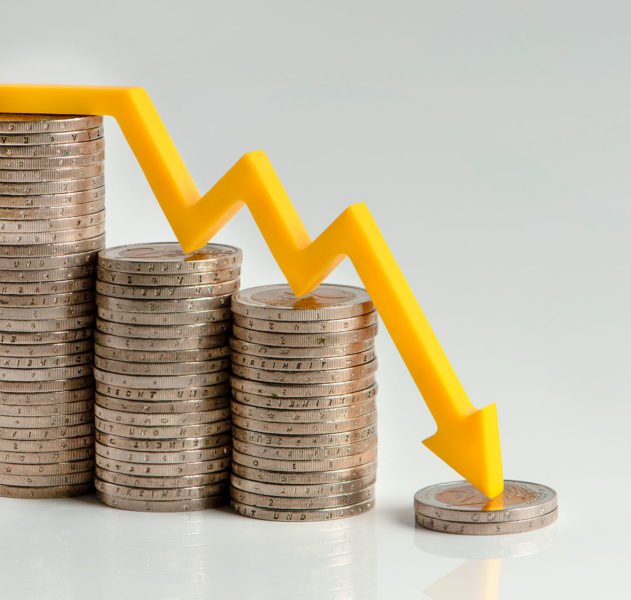
The bad news is piling up and more than a third of the world’s economies are expected to shrink by 2023. Individuals and businesses will face reduced economic activity, job losses and a general decline in incomes in the coming months.
The worst is yet to come. This is the prevailing view in global economic circles as negative news accumulates in a spiral that seems to have no end in sight. Experts agree that global economic activity is experiencing a sharper-than-expected slowdown.
According to the latest forecasts of the International Monetary Fund (IMF), global growth will slow from 6.0 % in 2021 to 3.2 % in 2022 and 2.7 % in 2023. This is the weakest advance since 2001, with the exception of the global financial crisis and the acute phase of the pandemic. More than a third of the world’s economies will contract next year.
The cost-of-living crisis, tightening financial conditions in most regions, the war in Ukraine and the aftermath of the pandemic weigh heavily on this outlook.
Bad forecasts
On this score, it is almost all bad news: the IMF expects global inflation to rise from 4.7% in 2021 to 8.8% in 2022, although it would fall to 6.5% in 2023 and 4.1% in 2024; the European Central Bank (ECB) raised interest rates aggressively again last week, bringing them to 2%; there is no end in sight in the short term to the war in Ukraine, with the nuclear threat in the background; and China persists with its policy of confinement to curb COVID-19 contagions, which continues to damage global supply chains.
As for the situation in Spain, the forecasts are even worse: the IMF estimates that growth will fall from 5.1 % in 2021 and 4.3 % in 2022 to just 1.2 % in 2023, eight tenths of a percentage point less than forecast in July. For the time being, it is already a fact that unemployment rose in Catalonia in the third quarter of the year to 9.31%.
Companies facing a poorer world
An economic crisis like the one looming affects us in many ways: reduced economic activity, job losses and a drop in income that leads to a slump in consumer spending and business investment. Indeed, the IMF warns that poverty is on the rise again and 345 million people are already food insecure.
During an economic downturn, aggregate demand declines, which translates into lower sales for most businesses. Cyclical sectors, such as manufacturing and energy, tend to experience particularly sharp declines.
Companies with high fixed costs are particularly hard hit. Many are opting to cancel investments and make redundancies to reduce costs and adjust their size to falling sales. The problem is that rising unemployment further depresses demand. In this regard, the IMF estimates that the loss of global output will reach four trillion dollars by 2026, a figure equivalent to the size of the German economy.
Credit crunch
Another effect of crises on business is the tightening of credit conditions, as lenders become more selective about taking risks because of uncertainty. As a result, we are more likely to be refused a loan and, if the financial institution approves it, we will have to pay more interest.
In addition, the latest ECB rate hikes mean that the repayments on loans previously taken out at variable interest rates will increase. And bear in mind that corporate debt relative to the size of the economy has risen dramatically since the early 1980s, driven by low interest rates. All this leads to an increase in default and bankruptcies.
SMEs hit hardest
The crisis is affecting both large and small companies, although the larger ones have more market power, a larger financial cushion and more scope for cost-cutting. Therefore, SMEs, which generate more than 60% of GDP and employment in Catalonia, tend to be the hardest hit by economic crises.
Unlike listed companies, small firms cannot raise funds by selling shares or issuing bonds, nor can they lobby the government for aid. They are therefore particularly vulnerable to the spikes in bankruptcies associated with each crisis.
Lower quality of life
The reduction in the wealth of companies and individuals translates into a reduction in state revenues, so public services also suffer. The overall result is a poorer quality of life for citizens, which can affect their health.
Not surprisingly, the difficulties in coping with rising mortgage repayments caused by rising interest rates or filling the shopping trolley in the face of rampant inflation take their toll. Just as stressing about our future in the face of economic uncertainty takes a toll on our health.
Recessions and, in particular, rising unemployment have been shown to increase rates of mental and chronic illness. A study of Pennsylvania workers in the 1970s and 1980s even shows that those who lost their jobs had higher mortality rates in later years.
If you want to discover the best option to protect your savings, enter Preciosos 11Onze. We will help you buy at the best price the safe-haven asset par excellence: physical gold.

Despite high inflation, we are still far from hyperinflation. Such a scenario would multiply the effects of the crisis and could open the door to the replacement of physical money by digital currencies controlled by central banks.
Annual inflation stood at 8.9% in September, after three consecutive months above 10 per cent, a rate not seen in almost four decades. With limited wage increases, purchasing power in the last year is estimated to have fallen by 7.5% in Spain and 6.2% in the euro area as a whole.
Although the situation in each country is nuanced, there are a number of common factors that have contributed to the rise in inflation. Energy and fuels are the main culprits. And the secondary luxury in this drama would be food and commodities, whose prices have also soared.
A recent World Economic Forum report indicates that in addition to high inflation, real wages and consumer confidence are in free fall, adding headwinds to growth and even raising the prospect of social unrest. As the agency’s survey of leading economists makes clear, “painful months lie ahead”.
The effect of rising interest rates on mortgage repayments and the fact that the global economy is still convalescing from the pandemic will also contribute, so the perfect storm is brewing.
The threat of hyperinflation
Despite the severity of the inflation rates experienced so far, the current crisis can only be considered a minor setback compared to what would happen in the event of an inflationary spiral.
In general, hyperinflation occurs when prices increase by at least 50 % per month. This usually happens when central banks print a lot of money to service their debts or to counteract the effects of a depression, as has been the case in recent years, and this extra money is not offset by corresponding economic growth. By putting much more money into circulation, the real value of the currency can plummet.
Hyperinflation can also occur when individuals lose confidence in the currency in use or when demand for goods and services far exceeds supply.
A vicious circle
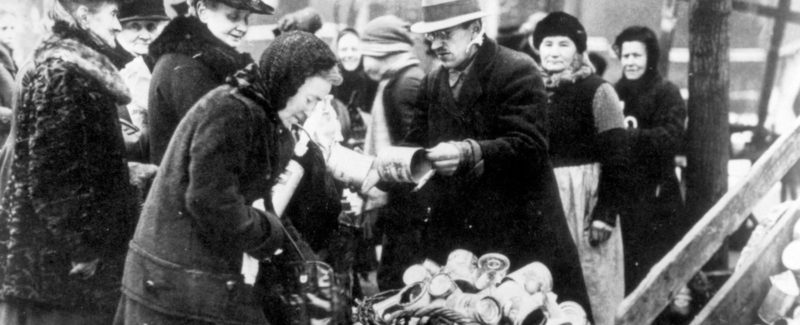
As explained in another article, perhaps the best known example of hyperinflation occurred in the 1920s. After the First World War, Germany experienced a monthly inflation rate of close to 30,000%.
In such situations, the value of savings vanishes and people tend to spend money quickly because it depreciates rapidly. The latter forces the central bank to put more banknotes into circulation, thus entering into a vicious circle that further accelerates the rise in prices.
The impact on people’s lives is devastating. Purchasing power plummets and access to basic necessities becomes increasingly difficult: prices of essential goods such as bread can rise daily. In addition, shortages can occur, as part of the population tends to hoard basic goods in fear of further price increases.
A step towards digital currencies?
Various remedies have been applied in the past to deal with hyperinflation, ranging from drastic tax reforms and public spending cuts to the introduction of new currencies.
Hence, some are already warning that the plausible hyperinflation scenario could facilitate the deployment of digital currencies promoted by various central banks. Given the crisis of confidence that fiat money would generate among the population due to its accelerated devaluation, receptiveness to a new currency could be greater.
As we explained in another article, several central banks are working on the development of digital currencies. A country such as China is well advanced in the testing process and more than 200 million people have already used the digital yuan.
In this context, the European Central Bank (ECB) is accelerating the development of its own electronic currency. The initial idea is that the digital euro should not replace physical money but complement it, although the approach could change depending on circumstances. The study phase should be completed by October 2023 and the currency could be operational by 2025.
Countries such as the United States, Sweden and Uruguay are also experimenting with centralised digital currencies. It is a trend that is gaining momentum in the face of the risk of their physical currency losing ground if hyperinflation triggers distrust of fiat money. This is why many central banks are considering issuing a more stable digital currency to rebuild lost confidence among the population.
If you want to discover the best option to protect your savings, enter Preciosos 11Onze. We will help you buy at the best price the safe-haven asset par excellence: physical gold.


Cada cop més experts vaticinen una recessió, que podria materialitzar-se en els pròxims mesos. Des d’11Onze t’oferim 11 consells per a preparar-te amb garanties davant la possibilitat d’una nova crisi.
El creixement del PIB a Catalunya es va frenar en sec en el primer trimestre de 2022, amb un avanç de tan sols un 0,1%. Estem en l’avantsala d’una recessió?
La veritat és que, amb els grans bancs centrals apujant o preparant pujades dels tipus d’interès per a frenar la inflació, el refredament de l’economia està assegurat. I no es pot descartar que apareguin símptomes de congelació econòmica. Més si tenim en compte la crisi energètica mundial i els problemes en les cadenes de subministrament. Cada cop més experts apunten a una contracció econòmica en qüestió de mesos.
Amb l’abrupta recessió pandèmica gairebé sense acabar de digerir, faries bé de preparar les teves finances per a afrontar una nova travessia pel desert. Aquí tens alguns consells per a que el possible canvi de cicle econòmic no t’enxampi a contrapeu. Si alguna cosa ens ha ensenyat la pandèmia és que tot pot canviar dràsticament d’un dia per l’altre.
Onze consells d’11Onze
- Analitza la teva situació financera. Calcula quin és el teu patrimoni, els teus ingressos mensuals i quina part de les teves despeses són fixes i variables, així com quant podries reduir el teu pressupost de despesa en cas de necessitat. Si ets empresari, preveu també què succeiria si els teus ingressos caiguessin dràsticament.
- Redueix els teus deutes. És important no encarar una crisi amb un volum de crèdit elevat perquè els nostres ingressos es poden veure minvats. A més, tingues en compte que tot apunta al fet que les quotes dels crèdits i les hipoteques amb interès variable s’encariran en els pròxims mesos. Si tens un elevat nivell d’endeutament a curt termini, millor renegociar-lo per a que no t’asfixiï. I si ets tu el creditor, intenta accelerar la devolució per a evitar la morositat.
- Planteja’t noves fonts d’ingressos. Quants més pagadors tinguis, més probable serà conservar part dels ingressos si arriba una crisi. Si treballes per compte d’altri, planteja’t la possibilitat de realitzar col·laboracions puntuals amb altres persones o empreses, o fins i tot impartir classes.
- Reconsidera les compres i les despeses prescindibles. Una mesura de pur sentit comú és no estirar més el braç que la màniga. Valora què necessites de veritat i de què pots prescindir en un context tan volàtil com l’actual. I això és especialment rellevant per a béns i serveis amb un cost elevat, com un habitatge, un cotxe o unes vacances a l’altre extrem del món.
- Augmenta la disponibilitat de diners líquids. Sempre està bé tenir un coixí financer, però és especialment recomanable si s’apropen temps de vaques flaques. Per a quants mesos donaria el teu fons d’emergència si les coses anessin maldades? Ajusta-ho a les teves circumstàncies. No és el mateix si ets empresari, autònom o treballador amb dret a atur.
- Destina part de la inversió a actius líquids. És important que una part de les nostres inversions es puguin convertir en diners fàcilment. D’aquesta manera, ens garantim efectiu disponible en cas de necessitat. Dit d’una altra manera, és un mal moment per a invertir tot els teus diners en el mercat immobiliari. Si arriba una crisi i necessites diners amb urgència, hauràs de malvendre perquè els immobles no són actius que es venguin immediatament pel seu valor de mercat.
- Diversifica la inversió. És una mesura fonamental en qualsevol cicle econòmic. Ningú pot garantir què passarà amb l’economia o amb un sector concret, per la qual cosa diversificar la inversió sempre ajuda a reduir el risc. Es tracta de no posar tots els ous a la mateixa cistella. D’altra banda, les crisis sempre ofereixen grans oportunitats per a fer negoci amb els diners que no posis al fons d’emergència.
- Pensa a llarg termini. Evita que la voràgine del mercat guiï els teus moviments d’inversió. Aprèn a distingir les fluctuacions conjunturals de les estructurals i situa el punt de mira de la teva estratègia d’inversió en el llarg termini. No has de preocupar-te si un actiu que és clarament una tendència de futur veu reduït el seu valor puntualment.
- No et deixis portar per l’emoció. Igual que has d’evitar les compres impulsives, també has d’eliminar l’emoció, quan no el pànic, de les teves decisions d’inversió. I assumeix les pèrdues. De vegades ens resistim a desfer-nos d’un actiu que està baixant perquè psicològicament no som capaços d’assumir la pèrdua. Cal prendre les decisions racionalment i, si la lògica del mercat ens diu que aquest bé continuarà caient a llarg termini, és millor perdre la meitat que perdre-ho tot.
- Preveu els diferents escenaris possibles i realitza plans de contingència. És recomanable tenir previstos plans A, B i fins a C segons la profunditat de la recessió i la severitat amb la qual ens colpegi. Així tindràs clar de quins recursos disposes per a adaptar-te a qualsevol circumstància.
- Millora la teva ocupabilitat. La formació contínua ja s’ha convertit en un requisit del mercat laboral, però resulta especialment rellevant en una crisi econòmica, ja que les empreses tendeixen a fer retallades en les seves plantilles i la competència per cada lloc s’aguditza. Pensa en la gran quantitat d’ERO i ERTO que es van realitzar durant la pandèmia.
Trobaràs tot el que necessites saber sobre les recessions en el següent curs gratuït.

Si vols descobrir la millor opció per protegir els teus estalvis, entra a Preciosos 11Onze. T’ajudarem a comprar al millor preu el valor refugi per excel·lència: l’or físic.
Si t'ha agradat aquesta notícia, et recomanem:
 Economia
Com ens afecta l’encariment del diner?
6 min readEls Estats Units acaben d’apujar els tipus d’interès i s’espera que


The financial institution’s sharp fall on the stock market has halved the value of its shares since the beginning of the year. The restructuring announced by the bank’s management has not prevented some clients from withdrawing hundreds of millions of dollars.
The spectre of Lehman Brothers rears its head in the face of doubts about the solvency of Switzerland’s second-largest bank. The financial institution’s share price has fallen by 60% and its capitalisation has fallen from 22.3 billion euros a year ago to 9.942 billion euros today. Credit Suisse’s bankruptcy could drag down other institutions, companies and investors in the sector, causing a chain reaction in the financial market.
The critical moment in which the investment bank finds itself became apparent after the price of credit default swaps, or CDS, hit record highs last week at around 293 basis points, higher than the levels seen during the 2008 crisis, and well above the 55 basis points seen at the start of the year.
Beyond the lack of investor confidence due to the current negative figures and doubts about the bank’s funding capacity, the bank has long been in the red thanks to a string of scandals and a series of fundamental management errors that neutered its ability to recover after the fall experienced by the investment banking sector in the wake of the sanitary crisis.
Selling assets and raising capital
Experts and analysts expect that as part of the restructuring plan that the bank’s management will announce on 27 October to remedy the crisis situation, asset sales and measures to increase capital will serve as a basis for stemming losses and securing the future of the flagship of the Swiss banking system.
In addition to selling its wealth management unit in Latin America, the bank is also considering the sale of its Savoy Hotel in the heart of Zurich’s financial district, worth an estimated EUR 410 million. Also, according to Bloomberg, the bank may be considering reviving the First Boston brand with the intention of diversifying the investment banking model into an advisory business.
Despite these measures, a 10% cut in the workforce, around 5,000 jobs, is seen as a fait accompli as part of the cost-cutting drive. The staff restructuring would be caused by the separation of the advisory business, the management of risk assets and the sale of the rest of the business divisions.
A possible bailout?
The bank has tried to calm investor fears by buying back some of its debt to 3 billion euros, while CEO Ulrich Körner says he wants to put an end to years of scandals and losses, and that Credit Suisse has solid capital and liquidity.
But not everyone is buying the official rhetoric, according to Bloomberg, some clients in Singapore and the Middle East have requested cash withdrawals or asset transfers worth hundreds of millions of dollars, causing a queue of unprocessed transactions that had led to some temporary delays in procedures and additional costs associated with “cash withdrawals”.
A possible Credit Suisse bankruptcy is far from being a reality, but it is to be expected that if a worst-case scenario were to occur, the Swiss government and the country’s central bank would bail out the financial institution, as the German government did with Deutsche Bank or as other European governments did with their banks. It is therefore unlikely that Credit Suisse will become the European Lehman Brothers.
If you want to discover the best option to protect your savings, enter Preciosos 11Onze. We will help you buy at the best price the safe-haven asset par excellence: physical gold.


The figures back the reputation of Catalans as entrepreneurs and place Catalonia as the main hub for start-ups in Southern Europe. 1,902 start-ups were active at the end of last year, 26% more than before the pandemic, and the Generalitat aims to have more than 4,000 by 2030.
By the end of 2021, Catalonia had 1,902 start-ups, 11% more than in 2020 and 26% more than at the start of the pandemic. These companies, with a turnover of 1.71 billion euros, employ 19,307 people, according to a study by Acció, the Catalan government’s competitiveness agency.
If we analyse the evolution of the Catalan start-up ecosystem since 2016, the first year for which data is available, the number of start-ups has grown by 75%. This progression places Catalonia, and especially Barcelona, as the main startup hub in southern Europe.
Number of start-ups in Catalonia
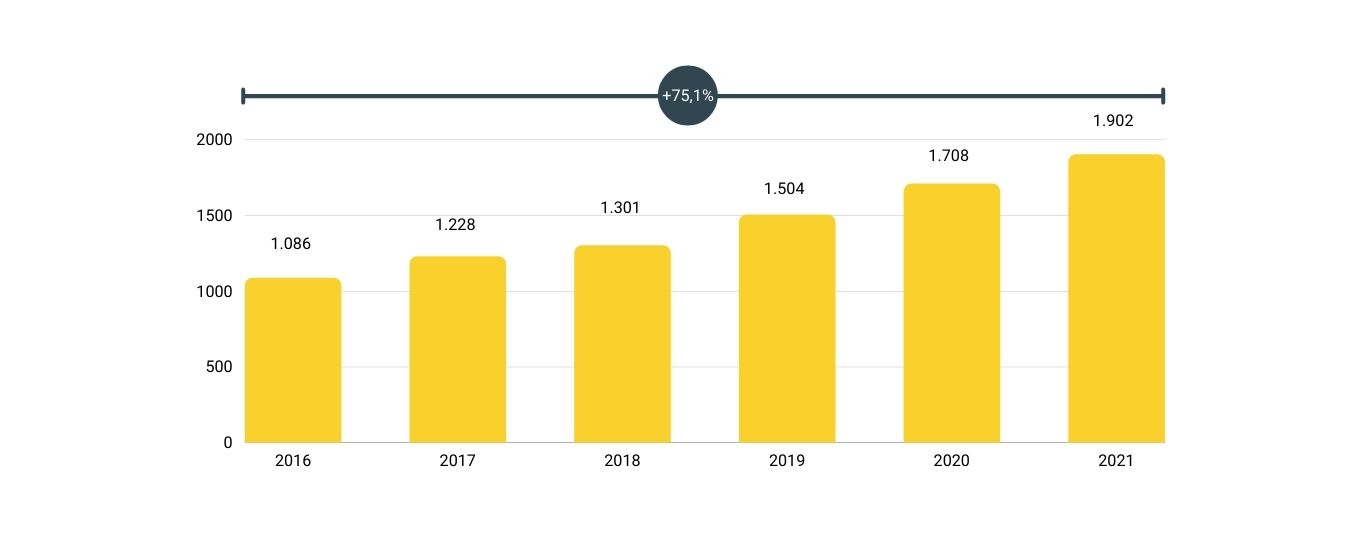
Source: Report ‘Barcelona & *Catalonia Startup Hub 2021’
Catalan start-ups attracted 1,479 million euros in investment last year, 246% more than in 2020. This turned Barcelona into the sixth city in the European Union with the greatest capacity to attract investment, according to Dealroom.com, and the fourth with the most investment rounds, behind only Paris, Berlin and Amsterdam.
Profile of Catalan start-ups
The Acció report reveals that almost half of these companies operate in the deep tech field, i.e. they are based on scientific discoveries or engineering innovations. In this regard, it highlights that 36% of them use artificial intelligence and big data as a fundamental element of their business model.
In terms of sectors of activity, the most numerous are those linked to healthcare (16%) and business services (13%). They are closely followed by ICT (7%), tourism and leisure (6%), finance (5%), food (5%) and energy (5%).
Most of these start-ups have gone international, with three out of four having customers outside the country, and the most widespread business models are e-commerce and marketplaces (20%), software as a service (17%) and subscriptions (13%).
The report also shows that Catalan start-ups have been growing in terms of staff and turnover in recent years. In fact, there are currently six unicorns in Catalonia, which are start-ups valued at more than one billion dollars. They are Adevinta, eDreams Odigeo, Letgo, TravelPerk, Wallbox and Glovo, although the German food delivery platform Delivery Hero has become the main shareholder of the latter, with more than 80% of the capital.
A privileged position
It is undeniable that today Catalonia has more start-ups than ever before, with a turnover, employment and investment attraction at record highs. The Government of Catalonia believes that this ideal position is the result of the efforts of many actors, with a prominent role from public-private collaboration.
In the opinion of Mathieu Carenzo, professor in the Department of Entrepreneurship at IESE Business School, Barcelona’s success is based above all on three elements. On the one hand, “its power to attract international talent, mainly from Europe,” which is fundamental because “entrepreneurial ecosystems tend to grow as urban hubs.” In addition, the city has “a network of universities, business schools and training institutions that provide the appropriate knowledge to generate innovation.” And finally, the existence of “success stories,” as evidenced by the six unicorns, which facilitate the self-sustainment of the system.
Ambitious objectives
The Government of Catalonia has set itself the target of exceeding 4,000 start-ups and reaching 15 unicorns by 2030. In fact, Roger Torrent, Minister of Enterprise and Employment, estimated a few weeks ago that five or six start-ups could reach “a turnover of 1 billion by 2022.” One of the priorities to achieve these objectives is to promote deep tech start-ups, such as Factorial, UserZoom and Red Points.
Acció has planned actions to facilitate the financial analysis of start-ups to help attract international investors, as well as advice into accessing funds from the European Innovation Council Accelerator. In addition, Acció’s Startup Capital line has evolved to focus on the deep tech field, with direct grants of up to 75,000 euros non-refundable to promote the initial phases of this type of company.
Three major challenges ahead
According to Mathieu Carenzo, the main challenges facing Barcelona as a hub for entrepreneurship in order to achieve its goals are related to the retention of talent, technology transfer and relations between the local and foreign entrepreneurial ecosystems.
While Barcelona has a great capacity for attraction, in Carenzo’s opinion, the capacity for retention “is not as strong because salaries are not entirely competitive in comparison with other ecosystems such as those in London, Paris or Berlin.” In addition, this specialist in entrepreneurship warns that it is necessary to “find a more effective ‘modus operandi’ of technology transfer to transform the incredible innovative, scientific and technological potential of our universities and research institutes into successful companies.” A third challenge is a “certain disconnection between the ecosystem from abroad and the local ecosystem, which need to be more deeply integrated in order to grow even more.”
If you want your business to make a giant leap, use 11Onze Business. Our business and freelancer account is now available. Find out more!



Generation Z has been particularly hard hit by the economic consequences of the pandemic, with unemployment reaching as high as 40%. Although the situation has improved compared to 2020, finding a decent job and achieving financial independence remains a near-impossible mission for a generation that aspires to make the digital leap.
The job market is a thorn in the side of Generation Z, the generation of young people born between the 20th and 21st centuries. Although there is no consensus on the exact start and end years, it is generally accepted that it includes those born between the mid-1990s and the end of the first decade of this century. They number more than 2 billion people worldwide and in a few years’ time will account for more than a quarter of the total workforce.
Preceded by the millennials and followed by the alphas, this is a generation that has already started to enter the labour market. And in many cases, they have done so at the worst possible time, when the world was suffering the economic consequences of COVID-19.
Victims of the pandemic
The global pandemic hit Generation Z particularly hard, with unemployment in Spain reaching 40% in 2020, compared to 14% for the rest of the generations. That year, in almost all OECD countries, the unemployment rate of this demographic group was double or triple the levels of other older age groups.
Generation Z is over-represented in sectors such as hospitality, tourism and leisure, which have been hard hit by pandemic-curbing measures, so job destruction was particularly hard on them.
Worse, their long periods of unemployment after leaving high school or university mean that they lose years of experience and training, which will reduce their chances of progressing further up the career ladder. One study indicates that these periods of unemployment can translate into a 2 % reduction in earnings over a working life.
Increased precariousness
Although the economic situation has improved since the hardest times of the pandemic, finding a decent job and achieving financial independence remains an almost impossible mission for members of Generation Z. In fact, in Catalonia, the rate of job insecurity is higher than in the rest of Europe. In fact, in Catalonia, the unemployment rate among 16-24 year-olds in the second quarter of this year was still above 25%, more than three times higher than that of the rest of the age groups.
There are multiple factors behind this high level of unemployment among the youngest. One of the elements influencing their precariousness is temporary employment. The report “Young people and the labour market”, published in March, points out that young people have “significantly higher levels of temporary employment so that their access to employment is mainly through temporary contracts”.
The first digital generation
Generation Z stands out for its flexibility and autonomy, as well as its mastery of digital tools. Hence their attractiveness for many companies that have yet to make the leap to digitalisation. They are also more risk-averse and financially aware than other generations, having experienced the 2007-2008 crisis as children.
However, this is a generation that is not willing to accept a job at any price, as in many cases they value other aspects above the economic aspect. Unlike their parents, who aspired to a job for life, they are looking more for personal fulfilment. That is why in many cases they resort to self-employment to make their own projects a reality.
Significantly, according to the Randstad Workmonitor 2022 report, more than half of employees (56%) aged 18-24 would leave a job that prevented them from enjoying their lives. Many members of Generation Z would rather be unemployed than unhappy in a job they don’t like, according to the report.
11Onze is the community fintech of Catalonia. Open an account by downloading the super app El Canut for Android or iOS and join the revolution!



The euro has depreciated by 15% in the last year, trading at lows not seen in two decades. This intensifies inflationary pressure and makes costs more expensive for many Catalan businesses that operate internationally. With 11Onze Business your business will have a multi-currency account that allows you to protect your money against the euro’s plunge.
The Purchasing Managers’ Index (PMI), a macroeconomic indicator to measure where the European economy is moving, indicates that concerns about the current economic situation continue to grow, and business confidence is falling to levels seen in the midst of the health crisis.
Even so, the PMI points out that the diminishing business activity makes it inevitable that the eurozone will enter a recession. An economic slowdown that seems unstoppable given the complicated geopolitical situation. This fear of economic recession, spurred by central banks raising interest rates to combat inflation, is eroding the value of the euro against more stable currencies such as the dollar.
At the same time, sabotage of the North Stream 1 and 2 pipelines has dashed any hopes of alleviating the energy crisis by renegotiating trade ties with Russia. Thus, removing the only ace up Europe’s sleeve to cope with the unstoppable rise in the price of liquefied gas imported from the United States, thereby further destabilising the European economy and the value of the euro.
Diversifying currencies in the face of the falling euro
In this context, the euro’s weakness has been reinforced by the unusually strong dollar, with the European currency trading below the dollar. Even so, the Federal Reserve may well have no choice but to continue raising interest rates to control inflation and, as a consequence, weaken other currencies.
Although the fall in the value of the euro against the dollar benefits some businesses’ exports, offering the opportunity to expand into other markets, Europe’s heavy dependence on dollar-denominated hydrocarbons has pushed up the value of energy imports, aggravating the eurozone’s trade deficit.
Depreciation
At a time of rising exchange rates, businesses with money or investments in foreign currencies can benefit. The 11Onze Business account gives you access to the Forex market, as well as the option to open multi-currency subaccounts to diversify the nominal exchange rate risk between two or more currencies.
For example, if we had exchanged 10,000 euros for dollars in January, we would have obtained 11,298 dollars. And now, these dollars have gone up in price, so if we exchanged them back now we would get €11,568. 10,000 would have become €11,568, giving an increase of 15.68%. Therefore, we would achieve double protection: against the decline of the euro against the dollar, and against the 9.1% loss in value caused by the prevailing inflation.
The 11Onze Business account allows you to operate in a simple and intuitive way with 28 currencies around the world, thus avoiding having your money tied up in euros. This makes it easy for you to send money at a very competitive exchange rate, with no hidden fees, and with real-time visibility of payments opened by the business.
If you want your business to make a giant leap, use 11Onze Business. Our business and freelancer account is now available. Find out more!
If you liked this article, we recommend you read:
 11Onze
11Onze Business is now in the testing phase
2 min readThe first available IBAN is from the UK and, for the first two


Although former US Vice President Dick Cheney claimed that no one saw the great financial crisis of 2007-2008 coming, economist Nouriel Roubini warned in 2006 that we were heading for a deep recession. Now he foresees another “long and ugly” downturn, which could turn into the worst economic catastrophe of our lifetime if we do not take the right measures.
Recovering a 2% inflation rate without a hard landing for the economy is going to be “mission impossible”, according to economist Nouriel Roubini. He warns that we are not facing “a short and shallow recession, it’s going to be severe, long and ugly”, and could mean a plunge of up to 40% in stock prices.
Roubini, who earned the nickname Dr Doom for predicting the bursting of the housing bubble and subsequent recession in the first decade of this century, has long warned of high debt ratios for individuals, companies and governments, which would make a soft landing for the economy impossible.
As interest rates rise, he says, more and more households, companies, banks and zombie countries “are going to die”. In economics, the term “zombie” has become popular to refer mainly to institutions and companies that survive artificially by injecting loans, without which they would have to declare bankruptcy.
The inevitable rise in interest rates
This economist took the 75 basis point hike agreed at the September meeting of the US Federal Reserve as a given. And he expects hikes of at least 50 basis points at the November and December meetings, which would put US interest rates at least between 4 % and 4.25 % by the end of the year. If strong inflation persists, rates could go as high as 5 %.
At such interest rates, more and more companies will be unable to finance themselves or to service loans already contracted. It will be the death knell for many companies that are currently facing significant increases in production costs, supply chain disruptions and a sharp decline in demand.
Indeed, Dr. Doom identifies in the book ‘Megathreats‘ a number of threats to business and the economy today. These include an ageing population, protectionism, migration restrictions, relocation of factories from Asia to Europe and the US, US-China rivalry, climate change and recurring pandemics.
No room for manoeuvre
In this context, Nouriel Roubini believes that many countries will be unable to implement fiscal stimulus measures to counter the recession. On the one hand, the debt overhang means that many governments are “running out of fiscal bullets”. On the other hand, there is a risk that stimulus measures could overheat aggregate demand, which would be counterproductive for controlling inflation.
In short, this professor of economics at New York University predicts that between the end of 2022 and the end of 2023 the worst of the last two major crises will converge: we will have to face stagflation like the one experienced in the 1970s and suffer the consequences of massive debt defaults, as happened in the 2007-2008 crisis.
Just as in the last crisis mortgages and banks were the hardest hit, Roubini believes that in the recession that is upon us the weakest link will be companies and shadow banking, which in many cases “are going to implode”. Faced with this possible business crisis, the economist recommends “to be light on equities and have more cash”.
If you want to discover the best option to protect your savings, enter Preciosos 11Onze. We will help you buy at the best price the safe-haven asset par excellence: physical gold.