Who pays the mortgage on a destroyed property?
The Council of Ministers has approved an additional aid package for citizens affected by the DANA. As part of the new measures, the period when mortgage payments can be frozen is extended. Even so, who is responsible for the mortgage if our home is destroyed, and are we entitled to any help if we do not have home insurance?
The Official State Gazette (BOE) published today, Tuesday, the second package of urgent measures approved by the Council of Ministers to help citizens affected by the DANA in the municipalities of the Valencian Community, Castilla-La Mancha, and Andalusia and alleviate the disastrous economic situation that many families, the self-employed, and businesses find themselves in as a result of the floods.
The new aid package includes 110 additional measures worth 3.765 billion euros, in addition to the 10.6 billion announced on 5 November, for a total of 14.365 billion. This aid is to be allocated to the first phase of immediate response and the second phase of reconstruction, as part of the Immediate Response, Reconstruction and Relaunching Plan to deal with the damage caused by the DANA.
Among the new measures, Pedro Sánchez points out that this aid can be extended to owners who did not live in their properties, but who had rented them, as well as compensation for material losses to tenants and for goods that are not basic necessities. Furthermore, ‘in order for this aid to arrive more quickly, we have decided in this Council of Ministers to make an immediate advance payment of 50% to all citizens who apply for this aid’.
Who is responsible for the mortgages of those affected?
The Ministry of Finance and the banking sector have mobilised to implement a moratorium of at least three months on mortgage payments for citizens affected by the DANA. This is similar to the measures implemented by Spanish banks after the volcanic eruption of La Palma, when 3,227 moratoriums were granted for a total of 133.8 million euros.
In this context, and according to the decree approved last week, families could take advantage of a new extension of an extra nine months, during which the capital of the loan does not have to be paid, but the interest generated will continue to be charged. With the new measures approved on Monday, affected households at risk of vulnerability can extend this period for an additional 12 months.
Even so, many of these buildings have been totally or partially destroyed. It is estimated that, in the municipalities of Valencia alone, more than 75,000 homes have been affected by the floods. In these cases, home insurance, except for specific agreed coverage, does not cover the destruction of a home due to a natural catastrophe, thus, it will be the Insurance Compensation Consortium that will be responsible for taking care of the damage.
However, only homeowners who have taken out home insurance will be covered by the Consortium. In cases where there is no insurance, the Government has the power to classify an area as catastrophic, so that it can have access to a series of aid from the public administration.
As for those affected by this hurricane, people who have been affected can apply for up to 60,480 euros for the destruction of their usual residence; 41,280 euros if the damage affects the structure; 20,640 euros if it does not affect the structure; 10,320 euros for essential household goods; and 36,896 euros for common elements of a community of owners. In addition, it is possible, at no cost to the consumer, to modify and temporarily suspend supply contracts, as well as to defer bills.
For more information on the aid available and how to apply for it, you can consult the websites of the Administration and the consumer association FACUA.
If you want to discover fair insurance for your home and for society, check 11Onze Segurs.



Christmas is around the corner and expenses are soaring. Despite the high inflation, we will travel, buy gifts, and enjoy the meals and celebrations that are part of the consumer habits of this festive season. According to an OCU survey, the average expenditure per person will be 745 euros.
This is the figure that emerges from the survey of a representative sample of the Spanish population aged between 18 and 74 carried out by the Organisation of Consumers and Users (OCU). Specifically, of the 745 euros on average that we will spend this Christmas, 396 will be spent on gifts, around 190 on meals and celebrations, 70 on lottery tickets, and the rest on parties and travel.
Although the economic outlook remains worrying, 62% of those surveyed expect to spend a similar amount of money as in other years, while 21% say they will increase spending in 2022 and 17% say they will reduce it.
Nine out of ten respondents plan to get together with family or friends, as is tradition, while half will also take part in a work Christmas party and almost 40% will go to a nightclub to round off the evening after dinner.
Spending more than we had planned
Beyond participating in typical activities such as going to see the Three Wise Men parade, shopping at the Christmas markets or enjoying the city lights, 27% are planning to take a trip to avoid the stress of the festive season or enjoy it from a different perspective.
With regard to where we will buy gifts, the survey confirms the trend towards a preference for online shopping, 36% of respondents, compared to 30% who prefer to shop in physical shops, while the rest will combine both channels in equal measure. However, more than half of those surveyed say they always spend more than they had planned, and over one third feel stressed about shopping and gift-giving.
If you want to discover the best option to protect your savings and give a present that will maintain its value overtime, enter Preciosos 11Onze. We will help you buy at the best price the safe-haven asset par excellence: physical gold.



As the last week of December approaches, the calendar seems to speed up. Between lunches, shopping and year-end closures, the same uncomfortable question reappears once again: am I still on time to reduce my 2025 tax bill?
The answer is that maybe yes. And the surprising part is that one of the most powerful tools is still the great unknown: early repayment of the mortgage. An option that only makes sense for those who still have the right to the tax deduction for the purchase of their main residence at the state level and/or can apply the transitional tax-relief scheme of Catalonia.
A deduction inherited from the past
The state deduction for the purchase of a main residence —both interest and principal repaid— has not generated new rights since 1 January 2013. Only taxpayers who bought before this date, who met the requirements set by the regulations at the time and who had already applied this deduction in previous years, have access to it. Without this last point, you cannot apply the transitional scheme.
In Catalonia the situation is similar, where the regional deduction for investment in a main residence remains, but only under the transitional scheme. Therefore, if you bought your flat or house after 31 December 2012, neither the State nor the Generalitat of Catalonia allow you to apply this deduction.
In many cases the idea has been repeated that “you can deduct up to 1,500 euros per year”, but this is a simplification. In Catalonia, the reference to 9,040 euros corresponds to the limits established for certain deductions within the transitional scheme. The exact applicable amount depends on the specific case and on whether it concerns the state portion, the regional portion, or special cases.
When early repayment makes sense… and when it is useless
The key is as simple as this: if the interest you pay each year already exceeds the deductible limit, repaying principal will not give you any additional tax benefit. Early repayment, in these cases, is invisible to the Tax Agency.
This often happens with older mortgages at 3%, because if you still owe around 120,000 euros, annual interest may range between 2,800 and 3,300 euros. If the deductible limit is lower, you have no margin left. Early repayment adds nothing.
In Catalonia, if you qualify for the transitional scheme, the regional portion percentages are 7.5% or 15% in cases of disability. But always within the maximum base allowed. In short, early repayment only makes sense if three conditions are met:
- You have not yet reached the deductible limit (interest + principal repaid).
- You qualify for the transitional scheme, both state and regional.
- Financially, immobilising capital makes sense within your economic profile.
If any of these pieces fail, the tax benefit may be minimal or non-existent.
Arithmetic so we don’t fool ourselves
If you still have margin to deduct, the strategy is clear: you need to put numbers on the table, see what you have really paid during the year and compare it with the limit allowed by the regulations. Only when you have this precise picture can you decide whether early repayment gives you a real tax return… or just the illusion of savings. Therefore, you should do the following:
- Calculate what you have already paid in interest + principal during the year.
- Check whether this amount reaches the deductible limit.
- If you have margin, decide how much you want to repay before 31 December.
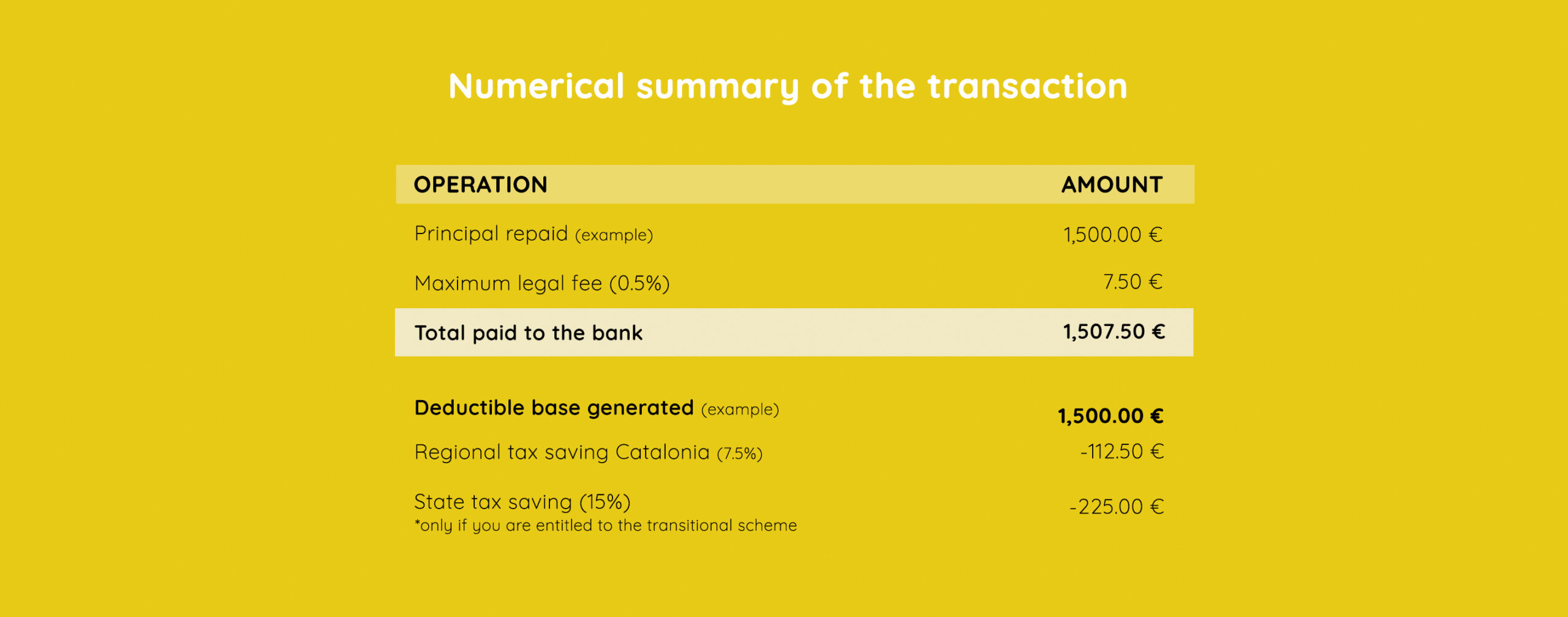
Source. Income Tax – Tax Agency
And a fundamental point: the deduction never equals the total repaid. The common mistake is to think that every euro allocated to reducing principal is directly transformed into tax savings, but it does not work that way. With the state deduction of 15%, for example, repaying 1,500 euros would only return 225 euros, a modest fraction of the real effort. And in the case of the regional deduction, where percentages are 7.5% or 15% depending on the case, the return is even smaller, reinforcing the idea that the operation is only worthwhile when you truly have margin within the deductible limit.
Catalonia: what you must check, without exception
Before making any move, make sure you clearly understand whether you really fit within the transitional scheme and what limits the regulations set for your case. Only by reviewing dates, requirements and taxable bases in detail will you avoid mistakes that can turn a good fiscal intention into a useless operation. Only then will you know whether early repayment really works in your favour. Therefore, before making any move, make sure that:
- The main residence was purchased before 1 January 2013.
- You can apply the state transitional scheme and, if applicable, the regional portion of Catalonia (7.5% or 15%).
- You do not exceed the limits established for income and taxable base (in some cases, a maximum of 30,000 euros after minimums).
- Your mortgage and its conditions comply with the required regulations.
- Repayment does not leave you without liquidity or reduce your flexibility in the face of unforeseen events.
Remember that the deduction only applies to amounts actually paid during the year —neither future commitments nor agreed-upon but unpaid repayments.
A tax decision or a life decision?
Early repayment can be appropriate if you are just short of a small amount to reach the deductible limit, and only in these cases is where the tax benefit exists and compensates. But if the mortgage interest already exceeds the limit, repayment brings no tax benefit. And it may reduce your liquidity, investment capacity and savings cushion.
The last week of the year is a good time to ground yourself in the reality of the numbers: compare interest + accumulated repayment with the real deductible limit. And only then decide whether early repayment fits your situation and Catalan regulations.
11Onze is the community fintech of Catalonia. Open an account by downloading the app El Canut for Android or iOS and join the revolution!


While the emergence of artificial intelligence may pose a threat to some employment sectors, historically, technologies that automate tasks also create new occupations and disciplines related to the programming and development of these automated systems.
The entry of AI into the workplace follows a similar pattern to previous technological revolutions. On the one hand, the advance of automation is reducing the number of people needed to perform repetitive or routine tasks. Still, on the other, it is creating new jobs that require technical skills related to these new technologies. Let’s have a look at some of the new professions and disciplines being created by this essential pillar of Industry 4.0.
Prompt engineers
The proper functioning of artificial intelligence applications, such as ChatGPT or Bard, when it comes to providing the best answers to a user’s question, depends to a large extent on the precision and context of the instructions. Prompt engineering’ is a discipline focused on training and tuning AI-based language models to ensure that they generate consistent and useful results for the user. Although you don’t have to know how to program, creativity, critical thinking and data analysis are key skills for this profession.
Programmers and Developers
These are specialists in the design, creation, development and implementation of software based on machine learning algorithms and artificial neural networks that are essential to provide the technological basis. Their main objective is to create artificial intelligence systems that can learn and improve automatically from input data.
Natural Language Processing
Experts in this field are essential for teaching chatbots and word processors to understand and generate written and spoken human language. They develop the linguistic model so that computer engineers can implement it in efficient and functional code. While this job does not require a strong technological background, a degree in linguistics, philology or translation is desirable, as well as a specialisation in natural language processing or computational linguistics.
Analytics and data science
Artificial intelligence is a very useful tool for collecting and analysing complex patterns from large databases. Professionals with expertise in analytics and data science are needed to interpret this information to extract useful information to support an organisation’s or company’s decision-making. To do this work, one must know statistics, mathematics and master data analysis tools such as Excel or SQL, along with the ability to communicate the results clearly and effectively.
Algorithm Auditing
This discipline assesses the reliability of the results of systems that use artificial intelligence, as well as their ethical and legal compliance, ensuring that the relevant standards and regulations are applied. Algorithmic audits are an internal review or supervision that is carried out in parallel to the development of the artificial intelligence system and periodically after the product has been launched on the market. People with legal backgrounds and studies in social sciences and ethics are ideal candidates for this type of work.
11Onze is the community fintech of Catalonia. Open an account by downloading the super app El Canut for Android or iOS and join the revolution!



El rescat del sistema bancari espanyol va requerir la injecció de més de cent mil milions d’euros, que no van servir per a revitalitzar l’economia. Era possible una altra fórmula? La veritat és que Islàndia va sortir enfortida de la gran crisi financera que va viure entre 2007 i 2009.
Ara fa deu anys de la decisió del Govern espanyol de prendre el control de Bankia, en aquell moment la quarta entitat financera més gran de l’Estat. Ho va fer convertint en accions un préstec de gairebé 4.500 milions d’euros. L’entitat va acabar fusionant-se al 2020 amb CaixaBank, o sent absorbida per aquesta última entitat, segons com es vulgui veure.
“Aquí no hi ha un cost per als contribuents espanyols”, deia Luis de Guindos, ministre d’Economia, durant els dies de la intervenció. Però el que en principi no anava a tenir cost per a l’Estat ha acabat amb una injecció de capital de més de 22.000 milions d’euros, tot i que potser s’acaba recuperant una part algun dia.
Bankia és una més de la llista d’entitats financeres rescatades per l’Estat espanyol arran de la crisi financera de 2008, que també va portar a la intervenció de Caja de Ahorros del Mediterráneo, Banco de Valencia, CatalunyaCaixa, NovaCaixaGalicia, Unnim, Caja de Ahorros de Castilla-La Mancha, Cajasur, Banco Mare Nostrum, Banc CEISS, Banco Gallego, Banca Cívica, Grupo Cajatres, Liberbank i Caja Rural Mota del Cuervo.
En total, el Tribunal de Comptes ha quantificat en més de 122.000 milions els recursos destinats a la reestructuració d’aquestes entitats, que han acabat absorbides pels grans bancs espanyols. El Fons de Reestructuració Ordenada Bancària (FROB) va comprometre més de 77.000 milions d’euros; el Fons de Garantia de Dipòsits, més de 35.000 milions, i el Banc d’Espanya, gairebé 10.000 milions.
Diners difícils de recuperar
El Banc Central Europeu reconeixia en un informe elaborat al 2015 que les injeccions de capital a la banca espanyola es van realitzar de manera que la devolució dels diners públics era inviable.
En realitat, es va tractar d’una espècie de regal de milers de milions al ‘lobby’ bancari. Molts títols es van adquirir per un valor superior al real i era evident que una part important dels actius traspassats a la Societat de Gestió d’Actius Procedents de la Reestructuració Bancària (Sareb) generarien pèrdues milionàries a l’Estat. Segons estimacions del Banc d’Espanya, la festa acabarà costant al contribuent un mínim de 60.600 milions d’euros.
És justificable aquest desemborsament públic? Després de l’experiència de la Gran Depressió estatunidenca pel crac de 1929, en la qual la caiguda del sector financer va tenir un efecte demolidor en la resta de l’economia, molts experts han defensat la conveniència de rescatar als grans bancs per a evitar el col·lapse econòmic.
L’argument és que per als contribuents resulta menys onerós el rescat que les conseqüències de la recessió. Tot i això, no tots els països han seguit l’ortodòxia acadèmica.
La via islandesa
L’any 2000 Islàndia era un país de 300.000 habitants amb un PIB que no arribava als 10.000 milions d’euros. Però en pocs anys el seu sector bancari es va hipertrofiar gràcies a suculents interessos que van atreure gran quantitat de dipòsits des d’altres països.
El boom de les seves entitats financeres va fer enlairar l’economia del país, que més que va doblegar el seu PIB entre 2001 i 2007. El crèdit fluïa a l’illa com si d’un mannà es tractés i la corona islandesa es va disparar en el mercat de divises.
No obstant això, la fallida de Lehman Brothers al setembre de 2008 va punxar la bombolla islandesa. En pocs dies, les tres principals entitats financeres de l’illa (Glitnir, Landsbanki i Kaupthing) van declarar suspensió de pagaments.
En lloc d’injectar milers de milions en aquests bancs privats, Islàndia els va deixar caure i va crear noves entitats per a gestionar les restes del naufragi. Després de múltiples protestes, la dimissió d’un Govern i diversos referèndums, el país va decidir salvaguardar els dipòsits dels islandesos i va rebutjar fer-se càrrec de l’enorme quantitat de dipòsits estrangers.
És cert que aquesta via no va sortir gratis als contribuents, ja que Islàndia va destinar un 20% del PIB a fer neteja del sector, segons estimacions de l’OCDE. Però l’economia es va recuperar amb energia en els anys següents. Després d’una caiguda de gairebé un 40 % entre 2007 i 2009, el PIB va tornar a remuntar i al 2017 ja superava els nivells previs a la crisi. Per contra, Espanya mai ha tornat a igualar els nivells de 2008.
11Onze és la comunitat fintech de Catalunya. Obre un compte descarregant l’app El Canut per Android o iOS. Uneix-te a la revolució!
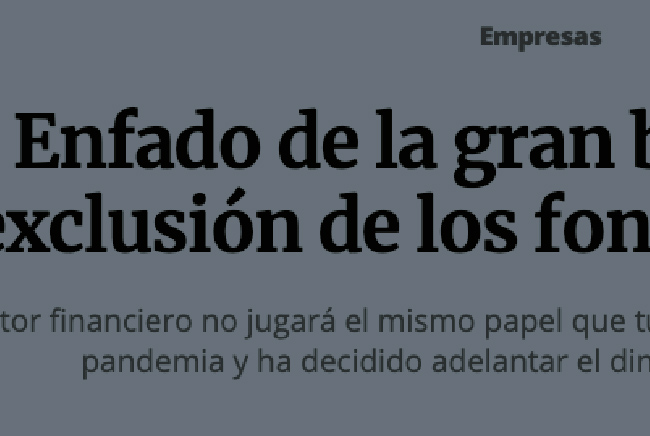

China remains an attractive market for many Western companies, but the first quarterly deficit in foreign investment in its history underscores the challenges Beijing is facing to attract foreign businesses, against a backdrop of rising geopolitical tensions with the United States, low interest rates and weakening domestic demand.
Despite the good macroeconomic data on industrial production and retail sales in China presented last month, the Chinese economy is showing signs of exhaustion that may have negative ramifications for public finances, given the growing government debt.
Beyond the real estate crisis, US economic sanctions, the drop in exports experienced every month of 2023 compared to the previous year, low-interest rates and a weakening of domestic demand, foreign companies are pulling money out of the Chinese market at a faster pace than they are investing it.
In the July-September period, according to preliminary balance of payments data, foreign companies in China recorded a direct investment deficit of almost 10.854 billion euros. This is the first time the country has recorded such deficits since records began in 1998.
Low returns on investment
Weakening domestic demand and low-interest rates have meant that many of these companies are not getting the returns they expected from their businesses and are opting to take capital out of the country for higher returns or to reduce exposure to geopolitical risk. According to Goldman Sachs analysts, “Part of the weakness in direct investment inflows into China may be due to profit repatriation by multinational companies”.
Although this is not good news for China, Beijing has downplayed the importance of foreign capital flight. Wang Wentao, China’s Minister of Commerce, stressed that China remains a magnet for global investors and pledged further measures to expand consumption, as well as to stabilise foreign trade and investment, to promote a sustained economic recovery.
Whatever measures the Chinese government may implement, and given the great commercial interests or opportunities in the Chinese market, it would be premature to draw definitive conclusions about whether this investment shortfall is a one-off event or the start of a new trend that will continue over time.
If you want to find out how to get returns on your savings with a social justice product, 11Onze recommends Litigation Funding.


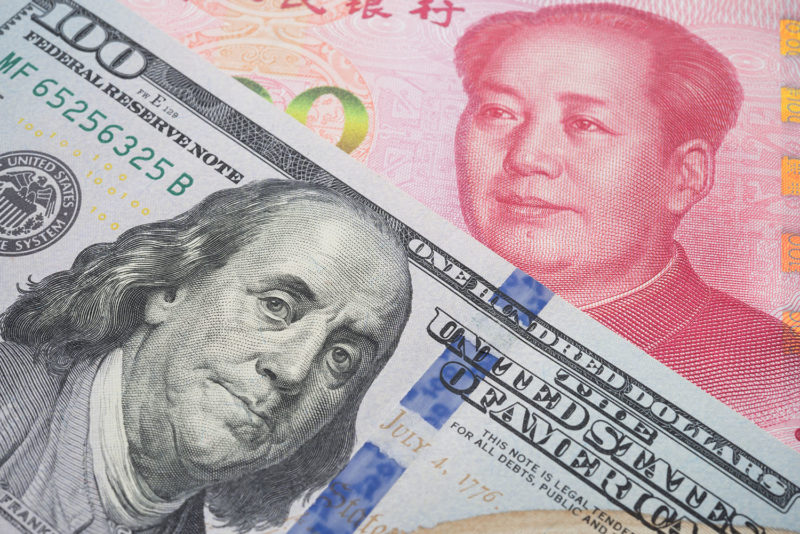
Since its launch in 2020, the introduction of the digital yuan continues to gain momentum when this October it was used, for the first time, to settle cross-border oil transactions. It is now set to make another leap forward by integrating into the commodities and services trade with Hong Kong.
Emerging economies have pioneered the adoption of central bank digital currencies (CBDCs) under the premise of expanding access to financial services and digitising their economies, while neglecting to mention that, unlike cryptocurrencies, they also increase their ability to track and control their citizens.
However, in China’s case, there is also the need to create an alternative to the global monetary system, now based on the hegemony of the dollar and dominated by Western financial institutions, to shield its economy from US sanctions, in this case, through de-dollarisation.
In this context, and as the world moves towards the seemingly unstoppable adoption of digital currencies, the Chinese digital yuan, known as e-CNY, has moved to the forefront of CBDCs. Since its launch in 2020 and after a slow start, adoption of the Chinese digital currency has accelerated rapidly, with nearly 6 million registered merchants who use the new currency in more than 26 cities serving as test beds across the country.
Former People’s Bank of China (PBOC) governor Yi Gang stated in July that total transactions had achieved a cumulative value of 1.8 trillion yuan (234 billion euros) by the end of June 2023, with 120 million digital wallets fully operational.
Used for the first time to settle an oil transaction
As announced by the Shanghai Oil and Natural Gas Exchange (SHPGX), the digital yuan was used for the first time to settle an oil transaction when state-owned Petro China International Corporation bought 1 million barrels of crude oil on 19 October.
The seller and price of the transaction were not disclosed. Still, the move comes in response to a request by the Shanghai Municipal Party Committee and Municipal Government to apply the Chinese central bank’s digital currency to international trade, according to Shanghai Stock Exchange officials. The transaction came the day after China National Offshore Oil Corp and France’s Engie closed a yuan-settled liquefied natural gas deal on the same SHPGX.
These transactions represent a major step in the use of the yuan in the international market and further boost the global trend towards de-dollarisation spurred by Russia and China. China Daily reported that in the first three quarters of 2023, the use of the yuan in cross-border settlements rose by 35% year-on-year to 1.3 trillion euros.
The news comes shortly after Hong Kong announced that it is preparing to test the integration of the Chinese digital yuan with its domestic fast payment system (FPS) while promoting its integration to settle commodity and services transactions. These developments make it clear that, despite the initial domestic focus of the Chinese CBDC project, the e-CNY is establishing itself as the most advanced centralised digital currency in international transactions.
11Onze Recommends Bitvavo, cryptocurrency trading made easy, safe and at a good value.


Record buying of gold by central banks, which are matching their gold reserves relative to GDP with other countries, revived the debate about the possibility of a reboot of the current monetary system based on a new gold standard.
Global central banks have been buying record amounts of gold since the beginning of 2022. The pace and regularity with which central banks accumulate gold is unprecedented, as they have been mostly sellers of the precious metal throughout history.
This extraordinary demand for gold by central banks, the largest in 55 years, is attributed to a desire to diversify their reserves and reduce dependence on the dollar in the face of a paradigm shift towards a multipolar world that is becoming increasingly evident.
The US banking crisis, geopolitical tensions, military conflicts and the US Federal Reserve’s stance on maintaining interest rates have been some of the main factors contributing to gold’s continued safe-haven asset status for investors and central banks this year.
But beyond the intrinsic capacity of physical gold to maintain its value in the face of economic uncertainty, some indicators suggest that this accumulation of gold by central banks is just the prelude to a restart of the international monetary system and a possible return to the gold standard.
Gold reserves to GDP
Aerdt Houben, Director of Financial Markets at the Dutch Central Bank (DNB), has recently spoken about the potential value of gold in a financial collapse scenario, stating that if a financial crisis occurs, the price of gold will skyrocket, and official gold reserves can be used to support a new gold standard.
The DNB has matched its gold reserves, relative to GDP, to other countries in the eurozone and outside Europe. The same is true of the Polish central bank, which in recent years has bought some 300 tonnes of gold to bring its gold-to-GDP ratio in line with the eurozone average.
Not all eurozone central banks are transparent about the alignment of their gold reserves with GDP, but even though there is no official agreement or mandate, and European central banks have communicated that there is no legal obligation to coordinate reserves, there seems to be an unofficial agreement to balance gold reserves among themselves.
In any case, given the evident alignment of European banks’ gold reserves over the past decades, some analysts believe that this is a plan B to stabilise their economies by moving to a gold standard in case of a collapse of the current global monetary system. Not unlike what China and Russia are speculated to have been doing in recent years with their massive purchases of gold.
The bad monetary policies that caused the housing bubble and the way fiat currencies have been managed since the 2008 crisis, depreciating the dollar and exporting US domestic problems to the rest of the world, along with economic sanctions on countries not aligned with Western geopolitical and economic interests, have undermined the credibility of the international monetary system. An alternative based on a new, multipolar, more stable and less inflationary gold standard seems closer than ever, and global central banks want to be included.
Protecting savings with physical gold has been one of 11Onze’s main contributions to its community. Faced with the still-high inflation and the growing crisis of confidence in the banking system, gold is once again strengthening its position as a safe-haven asset. Discover Gold Seed at Preciosos 11Onze.



As central banks continue to print money to keep the financial system afloat, the price of gold keeps climbing to historic highs. But is it really gold that is rising, or is it money that is losing value?
In August 1971, Richard Nixon announced that the United States was breaking the link between the dollar and gold. That seemingly technical gesture turned the global monetary system upside down. Since then, money has not been backed by any physical asset. It is fiat, meaning it depends solely on trust in the issuer. Its value no longer comes from a quantity of gold, but from the collective belief that it will continue to be used to buy goods and pay debts. But there is a problem: when trust is forced, it also inflates. And the more money that is created, the less value each unit holds.
The world’s central banks have multiplied the money supply as never before. Between 2020 and 2023 alone, the global monetary base grew by more than 120%, according to the International Monetary Fund (IMF), while the production of real wealth — global GDP — increased by only 10%.
We all pay for the difference, both in the form of inflation and in terms of lost purchasing power and rising living costs. This process, known as monetary over-issuance, creates the paradox we are living today: we have more money, yet we can buy fewer things. And, as a result, the value of all assets becomes distorted.
A mountain of debt backed by no gold
According to the Institute of International Finance (IIF), global debt now exceeds $338 trillion. In contrast, all the gold known to exist on the planet — around 273,000 tonnes, according to the World Gold Council — represents the physical foundation that has historically served to guarantee the value of money.
If we divided that total debt by the amount of gold in existence, each kilo of gold would have to “cover” more than $1.2 million in financial liabilities. In other words, if gold were to resume its role as a real measure of wealth, its price would have to be ten to eleven times higher than it is today.
This disproportion reveals decades of unchecked monetary expansion and the deep disconnect between the money created and the real value it represents. When we see the price of gold at historic highs, it is tempting to think that the metal has become more expensive. But the opposite is true: it is money that has lost value.
Gold can still buy practically the same as it did fifty years ago — a modest car, a few tonnes of wheat, or several weeks of skilled labour. Today’s money, on the other hand, has far less purchasing power. In simple terms: gold has not appreciated in value; money has been diluted.
It is no coincidence that central banks are now the world’s largest buyers of gold. The World Gold Council has recorded record purchases over the past three years, with China, Russia, Turkey, and Poland, leading the way. In 2024 alone, central banks acquired 1,037 net tonnes — the largest volume since 1950. While proclaiming monetary stability, they are accumulating gold as insurance against the very system they manage. It is a telling contradiction: they trust gold more than their own currencies.
Furthermore, monetary over-issuance is a form of invisible debt. Every time a central bank creates money to finance deficits or bailouts, the real cost falls on the public. Existing savings lose value without anyone voting on that decision. It is a silent and regressive tax — devastating for middle incomes and family savings.
The result is a vicious circle: more inflation, more debt, and more money printing to sustain it.
Towards the limits of the system
This monetary imbalance is pushing the system to a critical point. Trust — the invisible pillar of fiat money — is beginning to crumble. Each financial crisis, each bailout, each wave of money printing erodes the credibility of monetary institutions. And history shows that no system based solely on trust has ever lasted indefinitely.
Several analysts are already talking about a possible global “monetary reset”, where gold and other real assets regain their role as benchmarks of value. We may not return to the gold standard, but the need for a tangible foundation is clearer than ever. In a world where money can be created with a click, gold reminds us of an uncomfortable truth: real value cannot be printed.
Currencies may lose their meaning, markets may falter — but gold remains, immutable, as a physical measure of value and a refuge from uncertainty. Perhaps it is not merely an investment. Perhaps it is a form of economic memory: the guarantee that, whatever happens to paper money or digital figures, there will always be something real behind the concept of wealth.
If you want to discover the best option to protect your savings, enter Preciosos 11Onze. We will help you buy at the best price the safe-haven asset par excellence: physical gold.

Alguns conceptes són bàsics per a entendre per què estem a la vora d’una recessió, cap a on s’encamina el nou ordre econòmic mundial i quins seran els seus protagonistes.
El “Gran Reinici” és el nom d’una iniciativa del Fòrum Econòmic Mundial que pretenia repensar el model econòmic capitalista una vegada superats els estralls provocats per la pandèmia. La realitat és que a la crisi sanitària s’han sumat una crisi de deute i una crisi inflacionària que ens han situat a la vora de la recessió.
En el context actual, el “gran reinici del capitalisme” que reclamava aquest organisme internacional es fa més necessari que mai. Repassem alguns conceptes clau per entendre com hem arribat a una situació pròxima al col·lapse i quins factors condicionaran el futur pròxim de l’economia.
Àsia
L’eix de l’economia global s’està desplaçant d’Europa i els Estats Units cap a Àsia. Segons un estudi de la consultora McKinsey, l’any 2040 el continent asiàtic suposarà més de la meitat del producte interior brut mundial i un 40 % del consum. La pèrdua de protagonisme d’Europa és evident i l’FMI preveu que almenys la meitat dels països de l’eurozona entraran en recessió en els pròxims mesos.
Canvi climàtic
L’escalfament global ha obligat a deixar enrere la idea d’un creixement il·limitat a costa d’esgotar els recursos naturals i ha donat pas a la idea de l’economia circular, amb oportunitats en el camp de l’economia “verda”. Com ha posat de manifest la COP27, ara falta definir fins a quin punt els països industrialitzats assumiran el cost econòmic del canvi climàtic que han generat i quines mesures estan disposats a adoptar per alentir l’escalfament en un context de crisi econòmica.
Descentralització
Les noves tecnologies estan permetent l’aparició de productes i serveis que escapen al control dels Estats i les grans corporacions. Com apuntava James Sène, president d’11Onze, en una sessió de Fintech Talks, ens trobem davant una “transició del model antic, totalment dominat per uns pocs, a un nou model que arriba a més gent i està descentralitzat”. La descentralització de la creació monetària, per exemple, ha estat un dels grans pilars de les criptomonedes.
Desigualtat
Les dades de l’informe “World Inequality Report 2022” mostren que el 10 % de la població més rica del planeta ha acumulat des de mitjan anys noranta el 76 % de la riquesa generada al món. De fet, el 38 % es va concentrar a les mans de l’1 % de la població mundial. I la meitat de la població més pobra s’ha hagut de conformar amb les engrunes: el 2% de la riquesa generada durant aquestes últimes dècades. Per desgràcia, aquesta escletxa entre els superrics i el comú dels mortals no ha fet més que eixamplar-se durant la pandèmia. I els experts coincideixen que aquesta creixent desigualtat suposa un fre per al desenvolupament econòmic mundial.
Deute públic
El deute públic en el món s’ha disparat en els últims anys i limita el creixement econòmic. Tot i que el límit que estableix el Tractat de Maastricht per als Estats de la Unió Europea és del 60 % del seu PIB, el conjunt de països de la zona euro ja porta més d’un any per sobre del 100 %, segons dades d’Eurostat. La situació fora d’Europa no és millor, ja que el Fons Monetari Internacional estima que, a la fi de 2021, el deute públic global també representava el 100 % del PIB mundial. A més, els nivells de deute podrien empitjorar si la crisi s’accentua.
Estagflació
Des de març de 2021, els preus han pujat amb força i de forma gairebé ininterrompuda. La inflació a Catalunya, que va arribar a superar a l’estiu el 10 % interanual, es va situar a l’octubre prop del 7 %. La situació més enllà de les nostres fronteres no és millor, ja que la inflació d’aquest mateix mes en el conjunt de la zona euro va arribar al 10,7 %. S’espera que les successives pujades dels tipus d’interès contribueixin a controlar uns nivells d’inflació desconeguts des dels anys vuitanta del segle passat. El preu a pagar serà un major estancament de l’economia, que portarà a la recessió de les grans economies.
Impressió de moneda fiat
S’estima que el total de diners en circulació en el món, incloent-hi bitllets, monedes, xecs i pagarés, supera els 60 bilions d’euros. El problema és que una part considerable d’aquests bitllets s’han posat en circulació en els últims anys. Per exemple, només l’any 2020 l’oferta monetària dels Estats Units va augmentar un 24 %. La majoria dels bancs centrals s’han dedicat a imprimir moneda per fer front a un deute públic galopant. I aquest augment de moneda fiat ha estat el principal responsable de l’actual inflació.
Monedes digitals
Davant l’avanç de les criptodivises, que plantegen un model monetari totalment descentralitzat, els Estats treballen a contrarellotge en el desenvolupament de monedes digitals controlades pels bancs centrals (CBDC) per mantenir un sistema financer centralitzat. A la Xina, més de 260 milions de persones ja han utilitzat el iuan digital (e-CNY). A Europa, la Comissió Europea preveu que la regulació sobre l’euro digital estigui llesta a principis de 2023 i que aquesta moneda digital entri en funcionament l’any 2025. L’objectiu en un primer moment és que l’euro digital, gestionat i supervisat pel Banc Central Europeu, no substitueixi els diners en efectiu, sinó que els complementi.
Poder corporatiu
Les grans multinacionals tenen un poder creixent enfront de la minvant capacitat d’influència dels Estats. Moltes d’aquestes corporacions supervisen enormes cadenes de subministrament, venen els seus productes a tot el món i tenen uns ingressos superiors als de molts governs. De fet, si fos un país, Walmart seria el desè per nivell d’ingressos. La globalització ha capgirat les relacions de poder i en molts casos les grans corporacions es permeten eludir el pagament d’impostos amb total impunitat.
Subscripció
Com assenyalàvem en un article de La Plaça, està sorgint un nou model mutualista, més comunitari i basat en la compartició de béns i serveis, com a alternativa al model de compra i ús individual. En els models de negoci de subscripció cada client paga quotes que li permeten l’accés prolongat a un bé o servei en lloc de realitzar un gran pagament per endavant per posseir aquest bé o servei. Aquest model de negoci cada vegada és més freqüent en la indústria informàtica, de l’entreteniment o de l’automoció.
Tipus d’interès creixents
Després d’11 anys sense augments, el Banc Central Europeu va iniciar al juliol l’escalada dels tipus d’interès a Europa. De moment, ja han arribat al 2 % i la previsió és que continuïn incrementant-se en els propers mesos per refredar encara més l’economia i frenar la inflació. El BCE s’ha alineat amb la majoria de bancs centrals del món, que també estan incrementant les seves taxes d’interès per combatre l’escalada de preus. Aquesta mesura repercutirà directament en la butxaca de molts ciutadans, ja que les quotes de les hipoteques i dels préstecs amb interès variable resultaran cada vegada més elevades.
Virtualitat
No vivim en un món virtual, però sí virtualitzat, ja que “el que passa en el món digital té un impacte real en la nostra vida”, com advertia James Sène en una sessió sobre l’actual situació econòmica. En aquest sentit, el president d’11Onze vaticinava que el metavers, l’economia del qual depèn de l’autenticació de les propietats digitals, jugarà un paper clau a l’hora de digitalitzar les nostres identitats.
Si vols que el teu negoci faci un gran salt, utilitza 11Onze Business. El nostre compte d’empresa i autònoms ja està disponible. Informa-te’n!
Si t'ha agradat aquesta notícia, et recomanem: