The future of the New Silk Road
Una dècada després que la República Popular de la Xina posés en marxa la Iniciativa del Cinturó i Ruta de la Seda amb l’objectiu de desenvolupar una infraestructura global de comerç i cooperació internacional, el projecte s’enfronta a nous reptes geopolítics que marcaran el seu futur.
La Iniciativa del Cinturó i la Ruta de la Seda o Belt and Road Initiative (BRI, per les seves sigles en anglès), també coneguda com la Nova Ruta de la Seda, es va posar en marxa el 2013 pel president Xi Jinping. Es tracta d’un dels projectes d’infraestructures més ambiciosos mai concebuts, i, originalment, estava pensat per a incrementar el comerç i cooperació econòmica entre l’Àsia Oriental i Europa. Durant els últims deu anys el projecte s’ha ampliat a Àfrica, Oceania i Amèrica Llatina, incrementant exponencialment la inversió en infraestructures.
A més, en aquesta estructura logística s’hi suma la ruta de la seda marítima que inclou ports i infraestructura costanera des del litoral occidental de la Xina a Europa, l’Índia, Àfrica, el Pacífic i Llatinoamèrica. La qual cosa és d’una importància cabdal tenint en compte que la Xina té actualment 95 ports i sis d’ells figuren en el rànquing dels 10 més importants del món.
Amb l’objectiu de connectar al 65% de la població i a un terç del PIB mundial amb la Xina mitjançant la creació d’una xarxa de rutes marítimes i enllaços terrestres, ha captat l’atenció del món pel seu abast global i les seves implicacions econòmiques, polítiques i socials. El govern xinès va anunciar que la iniciativa significa “il·luminar una nova era de globalització”, i facilitarà una “època d’or del comerç que beneficiarà a tots”.
Al juliol d’aquest any, les inversions totals en el marc del projecte van superar el bilió de dòlars, fins al punt de competir directament amb el Fons Monetari Internacional (FMI). Aquests diners provenen principalment del Nou Banc de Desenvolupament, del Fons de la Ruta de la Seda i del Banc Asiàtic d’Inversió en Infraestructures (BAII).
Un imparable món multipolar
Tot i que la iniciativa ha estat elogiada per a fomentar el desenvolupament econòmic i la cooperació entre països, oferint unes condicions beneficioses per totes les parts que no es donaven amb el monopoli dels poders occidentals, també han sorgit algunes veus crítiques. Alguns països participants han expressat preocupació sobre la transparència dels projectes, dubtes per si podran fer front a la càrrega de deute o de quina serà la dependència amb la Xina en cas que no puguin tornar els préstecs.
Una gran part d’aquestes crítiques i pressió perquè certs països es neguin a col·laborar amb el gegant asiàtic venen per part dels Estats Units, que veu com s’esvaeix cada cop més la seva hegemonia com a poder econòmic i geopolític global en favor d’altres actors emergents, com Rússia i la Xina, que volen mantenir la seva sobirania lliure dels tentacles d’Occident.
L’èxit del projecte el converteix en una eina perfecta per expandir, encara més, la influència política i econòmica de la Xina, tenint accés preferent a nous mercats i recursos naturals fins ara dominats quasi exclusivament pels poders occidentals, que veuen amb desesperació com els cicles econòmics i els mercats financers se centren cada vegada menys amb ells.
En aquest context, l’última cimera dels BRICS, on s’ha anunciat que sis països més s’uniran al bloc econòmic, ha creat una gran expectació. Tanmateix, ha posat de manifest la dificultat d’unificar interessos tenint en compte les sensibilitats de tots els estats membres. L’expansió del BRI pot ser el punt d’unió que tapi les esquerdes, especialment entre els països africans que han demanat que la Xina passi de la construcció d’infraestructures a la industrialització local i d’una Índia també interessada a finançar projectes emblemàtics a països en vies de desenvolupament del sud global, com a contrapartida a Occident.
11Onze és la fintech comunitària de Catalunya. Obre un compte descarregant la super app El Canut per Android o iOS. Uneix-te a la revolució!



In an increasingly volatile and inflationary economic context, futures trading is once again gaining prominence. Although it seems like a modern and complex instrument, futures trading is a commercial mechanism with thousands of years of history. Civilisations such as the Egyptians and Romans already agreed on prices for goods before the harvest, thus protecting themselves from future fluctuations.
Today, this system remains fully in force and sophisticated, especially in organised futures markets such as the Chicago Mercantile Exchange (CME) or Euronext. In these markets, all kinds of assets can be traded: agricultural commodities (such as wheat, coffee, sugar, or cotton), precious metals (such as gold, silver, or copper), energy sources (such as oil, natural gas or electricity), international currencies (dollar, euro, yen) as well as stock indices and other derivative financial products.
The variety of tradable assets and their standardisation make these markets an essential tool for companies, institutional investors and governments seeking to hedge against price risks, diversify portfolios or secure the supply of strategic resources.
But what exactly is a forward purchase?
A forward purchase is a contract between two parties who agree, in the present, on the price of a product or asset that will be delivered or settled at a future date. Unlike an immediate purchase, physical delivery or payment is not made at the time of signing, but later, according to the agreed schedule.
These types of transactions are carried out in regulated markets, with standardised rules that guarantee legal and financial security for both parties. To protect the agreement, both parties must deposit an initial guarantee (called a “margin”) that serves as a commitment to execute the transaction.
Long positions and short positions
In financial jargon, the terms long position and short position are fundamental to understanding how futures trading works. Taking a long position means committing to buy an asset on a specific future date; conversely, having a short position means committing to sell that asset at that time. These positions do not necessarily involve physical possession of the product—in fact, the contract is often settled before the expiry date through financial compensation.
This mechanism allows both producers — who want to secure the sale price — and industrial buyers or distributors — who want to guarantee a stable purchase price — to protect themselves against market uncertainty.
The futures contract must include all the essential information to be enforceable:
- The asset or product being traded (e.g., 1,000 barrels of crude oil).
- The specific quantity.
- The agreed price (set at the time of signing).
- The expiry or execution date.
- The form of settlement (this may be by physical delivery or by price difference).
- The place and conditions of delivery, in the event of physical exchange of goods.
This system allows conditions to be set well in advance, which is particularly valuable in sectors where prices can change radically in a matter of days.
The advantages of forward purchases
- Stability in times of inflation. In times of inflation or scarcity, forward purchases are a tool for protecting against price volatility. Agricultural companies, manufacturers, distributors, and even investors can secure today the price of a product they will need tomorrow.
- More reliable planning. Being able to anticipate costs or revenues facilitates financial and logistical planning, reducing the risk of unforeseen events that can affect an entire supply chain.
- Agile access and moderate cost. The daily operation of futures markets ensures high liquidity and a certain ease of trading or unwinding positions. In addition, the initial entry cost (the margin) is usually relatively low compared to the total value of the contract, allowing large volumes to be traded with less capital.
But they also carry risks
Despite the obvious benefits, forward purchases are not a magic formula and carry significant risks that must be carefully considered before making any move:
- Market risk: If the actual price of the asset on the expiry date is lower than the agreed price, the buyer will have to pay more than the current value, incurring a loss. Conversely, if the price rises, and you are the seller, you may be forced to sell below the market price. This can directly impact the profitability of the transaction and, in serious cases, destabilise a company’s budget.
- Binding contractual commitment: Futures contracts cannot be broken without consequences. Once formalised, they are binding, and failure to comply with them can result in significant financial penalties or loss of the deposit. It is therefore essential to carefully assess your ability to comply with the agreed conditions before signing anything.
- Technical complexity: Futures markets are highly specialised environments. Understanding how settlement, leverage, collateral and daily adjustments work requires solid prior training. Trading without knowledge can easily lead to wrong or hasty decisions, especially if they are confused with short-term speculative trades.
- Volatility and leverage: In some cases, futures are used with leverage, i.e. trading with borrowed money or with a small guarantee for a large volume, which can amplify both gains and losses. A small variation in price can have a very large impact on the final result of the trade.
A simple example
Imagine a coffee roasting company that needs large quantities of beans every month. If it fears a price increase due to climatic phenomena or geopolitical instability, it can choose to buy coffee futures. It agrees on the price now, secures the stock, and avoids unpleasant surprises in three months’ time.
This same system is used worldwide with wheat, oil, sugar, gas, gold and even electricity.
A strategy, not a gamble
Forward purchases are much more than a financial tool: they are a risk management strategy with great potential to protect the economic stability of a company or sector. In skilled hands, they make it possible to anticipate adverse scenarios, protect profit margins, secure supply and reduce dependence on market fluctuations.
When prices fluctuate sharply —due to causes such as inflation, geopolitical tensions, logistical disruptions or droughts— this type of operation can mean the difference between surviving or losing control of costs. That is why many large companies use futures as a regular feature of their financial forecasting plans.
However, it should be remembered that they are not a gamble or a speculative game for those who do not master the field. They are a complex strategy that requires knowledge, rigour and discipline. And like any good strategy, they should not be applied blindly. It is necessary to understand them, assess their scope and adapt them to the real needs of each business or operation.
After all, futures markets offer no absolute guarantees, but they do offer something very valuable: the ability to anticipate, manage and mitigate risk in an increasingly unpredictable world.
If you want to discover the best option to protect your savings, enter Preciosos 11Onze. We will help you buy at the best price the safe-haven asset par excellence: physical gold.


At a time when the planet is calling for responsibility and common sense, consumption has also entered a new phase. Buying new products is no longer the only option. More and more people are choosing to extend the useful life of everything that already exists, and this has given rise to a trend that is not only here to stay, but is changing the culture of consumption: recommerce.
The concept is simple but powerful: selling and buying second-hand products through digital platforms. The goal? To reduce waste, reuse what is still useful, and avoid the overproduction that fuels the traditional consumption model. It is the practical version of the three famous Rs of the circular economy: Reduce, Reuse and Recycle.
This change in habits, which until a few years ago was considered minority or alternative, has spread strongly among consumers who want to save money and at the same time have a positive impact on the environment. To this end, a digital ecosystem of platforms has emerged that facilitate the sale and purchase of second-hand items in a fast, secure and affordable way. Here are some highlights:
- One of the major drivers of this revolution is Back Market, a platform specialising in refurbished technology. Smartphones, laptops, cameras, small appliances… everything passes through the hands of professionals who ensure it is in good working order before putting it up for sale. In addition, the platform itself acts as a guarantee, offering a rigorous and responsive after-sales service. It is a smart way to buy the latest technology at much more affordable prices without generating more electronic waste.
- For those who want to sell what they no longer use — or find bargains on all kinds of products — Wallapop remains one of the most popular options. This app has positioned itself as a kind of digital second-hand market, where proximity and direct contact between buyers and sellers facilitates logistics. From furniture to sports equipment, video games and children’s clothing, it is a window onto responsible and practical consumption.
- Another platform to consider is Letgo, which stands out for incorporating artificial intelligence technology. This functionality allows objects to be recognised from an image, automatically categorised and quickly published. The result is a very smooth and efficient user experience, especially useful for those who want to sell without complications.
- In the field of mobility, Coches.net has become a benchmark. This app not only allows you to buy and sell second-hand cars, but also new vehicles, motorhomes, and vans. The added value is the guarantee offered by many of the professional sellers on the platform, which generates trust and reduces risks in such a sensitive transaction as the purchase of a vehicle.
- Clothing, one of the major sources of mass consumption and pollution, also has its own specific platforms. Vinted is a fashion buying and selling community that works like a social network: people sell their clothes with photos or videos, and can follow each other. It is a fresh and fun way to give a second life to clothes we no longer use, while also renewing our wardrobe without falling into the spiral of consumption driven by fast fashion.
- We cannot forget Milanuncios, a classic classified ad site that has successfully adapted to the digital world. With a wide variety of offerings that go beyond objects—jobs, housing, services—it remains a very useful platform for all kinds of transactions, especially in more rural areas or for people looking for more traditional options.
- And when it comes to specific niches, an app like Bkie shows just how far personalisation can go within recommerce. Dedicated exclusively to the sale of bicycles and cycling equipment, it has created its own loyal and active community. With cycling on the rise, this app has managed to capture the needs of a demanding group of users who are looking for quality, good prices and trust between users.
This new way of consuming not only has environmental and economic benefits. It also changes the relationship we have with objects, makes us more aware of their value and educates us in a more mature culture of consumption, based less on novelty and more on responsible use.
Buying second-hand today is no longer synonymous with necessity, but with awareness. And recommerce is a powerful tool for making that change a reality. Through these apps, we can shop better, sell what we don’t use and actively contribute to a more sustainable, humane and efficient economy. So next time you think about buying something new, ask yourself first: do I really require it new? The answer may surprise you… and the planet will thank you for it.
11Onze is the community fintech of Catalonia. Open an account by downloading the app El Canut for Android or iOS and join the revolution!



In 2016, something happened that many experts considered impossible. AlphaGo, a program developed by DeepMind, defeated world champion Lee Sedol in a game of Go, a board game so complex that for decades it had been believed that no computer would ever be capable of mastering it. The surprise was not just the victory itself. Some of the moves made by the machine left even the world’s greatest players bewildered, who described them as creative and unexpected.
That day made it clear that artificial intelligence had entered a new era. Behind that demonstration was a technology that now powers ChatGPT, voice assistants, automatic translators and systems that help detect diseases: deep learning. But what exactly is it, and why is it transforming so many industries at once?
When computers only followed instructions
For much of the history of computing, computers could only do what programmers explicitly told them to do. If we wanted a system to recognise a cat in a photograph, we first had to define the characteristics it should look for: the shape of the ears, the whiskers, the snout or the tail.
This way of programming works very well when the rules are clear, but it falls short when dealing with much more complex problems, such as understanding a conversation, interpreting an X-ray or distinguishing one person from millions of faces.
The first major change came with machine learning. Instead of writing every single instruction, researchers began feeding computers thousands of examples so that they could discover patterns on their own. Even then, however, humans still decided which information was important.
What makes deep learning different?
Deep learning is an evolution of machine learning that removes much of this human intervention. Instead of telling the system what it should look for, it learns by itself which patterns are relevant.
To achieve this, it uses artificial neural networks, structures very loosely inspired by the way the human brain works. These networks are made up of multiple layers of interconnected neurons. The first layers detect very simple elements, such as lines, colours or contrasts. The following layers combine this information to identify more complex shapes, while the final layers are capable of recognising an object, understanding a sentence or predicting a response.
The word deep refers precisely to this succession of layers. The deeper the model, the more complex the patterns it is able to learn.It is this ability to learn automatically what is important that has turned deep learning into the driving force behind modern artificial intelligence.
Learning also means making mistakes
When someone learns a language or plays a musical instrument, they improve through repetition, making mistakes and correcting them. Artificial neural networks work in a similar way.
During training, the model analyses an enormous amount of data, makes a prediction and checks whether it is correct. If it is wrong, it slightly adjusts millions of tiny mathematical parameters that determine how it behaves. This process is repeated millions of times until the error becomes smaller and smaller.
That is why today’s models can recognise voices, translate languages or generate text with remarkable accuracy. Not because they “think” like we do, but because they have learned to identify extraordinarily complex statistical patterns.
The revolution is also about hardware
If this technology has existed since the 1980s, why has it only taken off now?
The answer is not only in the algorithms. It is also in the hardware.
Training a neural network requires executing trillions of mathematical operations. Traditional processors (CPUs) were not designed to handle this type of workload efficiently. GPUs, on the other hand, originally created to render video game graphics, are capable of performing millions of operations simultaneously.
When researchers discovered that these graphics cards were ideal for training neural networks, the development of deep learning accelerated exponentially. Companies such as NVIDIA, which for years had been associated almost exclusively with the gaming industry, became key players in the artificial intelligence revolution.
Without this evolution in hardware, ChatGPT or Gemini would probably still be laboratory projects.
A technology that is already part of our lives
Deep learning is far more present in our daily lives than we might imagine. It unlocks our phones through facial recognition, filters spam emails, detects fraudulent banking transactions, translates texts in real time and helps radiologists identify lesions that might otherwise go unnoticed.
It is also the foundation of the large language models that have popularised generative artificial intelligence. These systems do not search the Internet every time they generate a response. Instead, they use the patterns learned during their training to predict the most likely answer.
The same principle is also being applied to the development of new medicines, scientific research, autonomous driving and even the prediction of weather events.
The future also raises questions
Deep learning has demonstrated extraordinary potential, but it is not without limitations. These models consume vast amounts of energy, require enormous volumes of data and often operate as a “black box”: they deliver highly accurate results, yet even their creators cannot always explain exactly how they reached a particular conclusion.
There is also a strategic issue to consider. Developing the most advanced models requires infrastructures worth billions of euros, concentrating this technological capability in the hands of a very small number of companies. In a world increasingly dependent on artificial intelligence, controlling data, chips and computing power could become just as important as controlling energy or raw materials.
A revolution that is only just beginning
Deep learning is not simply a new computing technique. It is the breakthrough that has enabled machines to move beyond merely following instructions and begin learning from experience. This seemingly subtle difference is transforming entire industries and redefining the relationship between people and technology.
It is still too early to know how far this revolution will go, but one thing seems clear: understanding what deep learning is is no longer just a matter of curiosity for engineers. It is a way of understanding one of the technologies that will shape the future of the economy, science and society.
Protecting savings with physical gold has been one of 11Onze’s greatest contributions to its community, and its range of products continues to expand. In today’s environment of market volatility, persistently high inflation and growing distrust in the banking system, gold is once again strengthening its role as a safe-haven asset. Discover Or Llavor at Preciosos 11Onze.



With inflation continuing to rise, gold’s resilience throughout history as a store of safe-haven investment value cannot be underestimated. Even so, it is not the only precious metal in which we can invest our savings; silver, platinum or palladium can be good alternatives. But which metals offer the best returns?
The ability of precious metals to maintain much of their value during crisis periods, and to offer inflation protection based on their intrinsic value, makes them a must-buy if we want to diversify and make our savings more profitable. However, there are differences in the returns offered by different metals. In this analysis we do not make forecasts for the future, we simply focus on the evolution of the prices of these four assets: gold, silver, platinum, and palladium, over the last year and the last three years, so that we can easily see which have been the most profitable.
Performance over the last three years
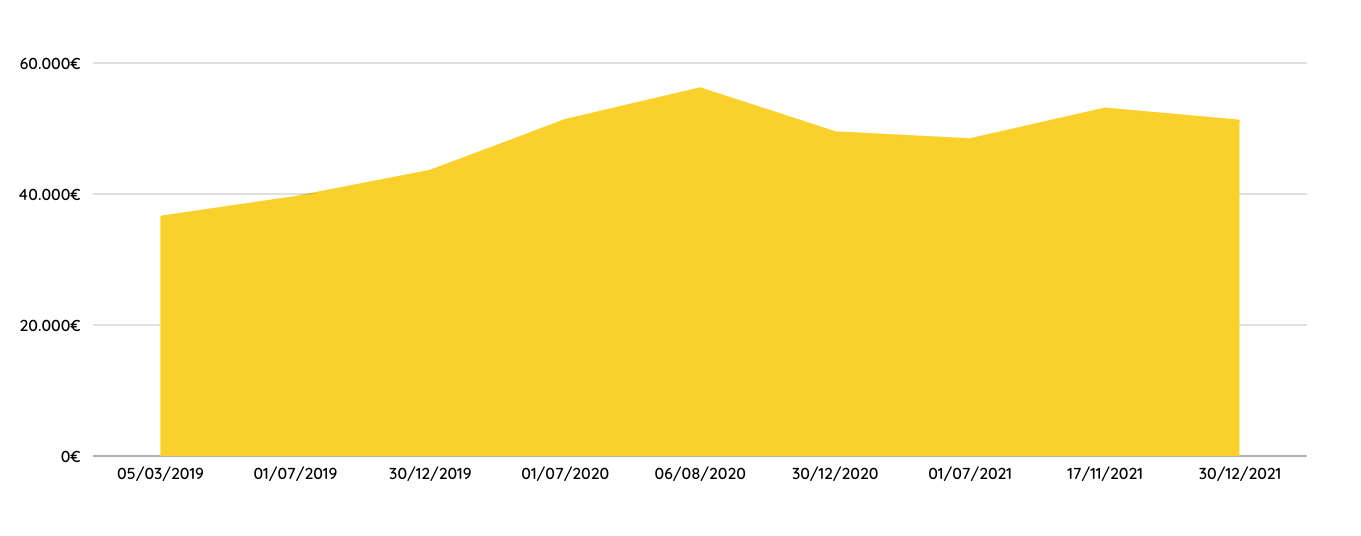
The combined historical performance of the metals over the last three years is very positive, and attributable to the global pandemic, which caused a shortage of resources in the industry, rising inflation and unstable markets.
Gold and silver have experienced growth of over 40% in the face of the economic uncertainty caused by the pandemic, and are consolidating their position as safe-havens in the event of a crisis. Even so, it should be kept in mind that investors tend to increase their exposure to gold and silver when interest rates are low and inflation high in order to protect the value of their money, and in the absence of interest payments. A situation that can be reversed if inflation turns out to be transitory and interest rates rise.
The continued demand for platinum keeps its value on an upward trend with almost 27% appreciation, but palladium is growing at a spectacular rate of 75%, as it is a scarce metal in high demand by industry. Even taking into account its progression, it is not highly recommended for long-term investment due to its price volatility, and the fact that the trend towards electrification of the automobile industry means that the demand for catalysts is likely to decrease.
If we look at the following graph of the price evolution over the last three years, we see that gold has appreciated by more than 40% and silver by almost 47%. If we take into account that inflation in Spain in 2021 rose to 6.55%, we can affirm that people who bought gold and silver more than avoided the devaluation of savings suffered by people who had euros in their current accounts.
Evolution of the last year
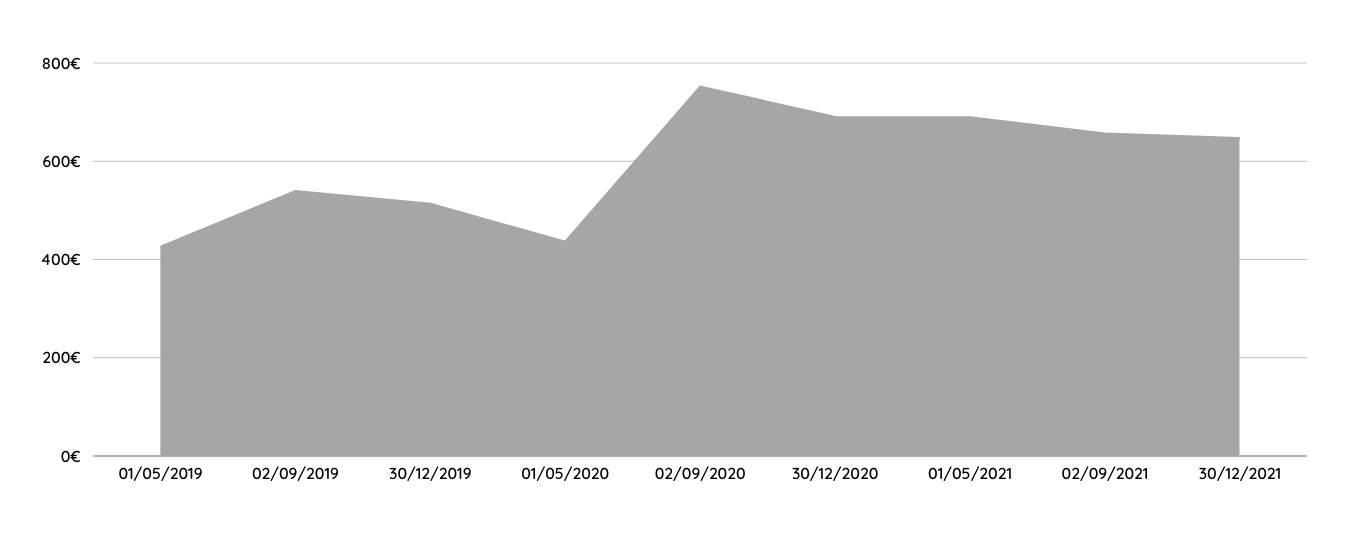
During 2021, the fluctuation of the prices of precious metals has been different. All metals, except silver, recorded a positive, albeit moderate, price increase. Gold is the most stable of the metals, with price rises and falls always tending towards stability, but during the first quarter of the year, it suffered a loss in value. A fall in price linked to the economic stimulus of 1.9 billion dollars by the Biden administration, which would be repeated every time the US government announced a new package of measures to combat the pandemic, but still ending the year in positive territory.
Despite silver‘s upward trend at the start of 2021, it recorded a significant drop in price at year-end, contrary to predictions, because of declining industrial demand. While platinum and palladium prices also initially plummeted due to weak demand for autocatalysts, thanks to falling sales, platinum stabilised and ended the year in positive, and palladium ended the year on the unstoppable growth trend seen in previous years.
Whether we decide to invest in one metal or another, we must bear in mind that historical performance is not indicative of future performance and that any purchase involves a certain risk of loss of value. A risk that we assume whether we buy precious metals or not, because the value of the money we have in the bank depends directly on the decisions of the powers that be to print more currency (devaluing the currency in circulation) or not.
If you want to discover the best option to protect your savings, enter Preciosos 11Onze. We will help you buy at the best price the safe-haven asset par excellence: physical gold.


Tourism is one of the businesses that shows one of the highest capital flow worldwide. As per the report from the United Nations World Tourism Organisation (UNWTO), in 2019, 1.4 billion of international tourists were recorded and up to between 100 and 120 million of jobs are linked to it.
It is, therefore, a sector with an undeniable weight in the world’s economy, and more particularly, with a direct affectation to practically all the inhabitants in the planet either in an active form as travellers or in a passive one as locals.
The touristic sector asks for regulation and responsibility
Given its importance, since years ago there are more and more organisations, Companies and collective bodies that ask for a sustainable tourism system that can be kept over time and nourish the population. Everything points to the fact that this industry will continue growing during the next years and, therefore, if the current model does not change, the negative impact that it generates will increase at the same rate. We are all currently familiarised with sustainability as a concept and we even have adopted certain daily routines that contribute to respect the environment. An attitude that changes more or less when we travel: we leave lights switched on, recycling, take care of public spaces, using more ecological transport ways, spend the necessary water, using less plastic … actions that we may miss when we are on holidays and which, by themselves, do not generate an impact, although they may mean a higher issue when they are multiplied by 1.4 billion people.
Within this context, and with the urgency to change the touristic model into a more responsible perspective, it pops-up the sustainable tourism concept, understood as the one which “satisfies current needs without compromising the capacity of future generations to satisfy their own needs”, as it is described in the Brundtland report. It will be about then, to minimise the negative impact that tourism is currently generating and to maximise its benefits, mainly from the three big pillars: environmental, sociocultural and economical.
To reduce the environmental impact to preserve future
Tourism very much depends on the environmental quality to survive and evolve but, paradoxically, this is one of the main activities that it harms. Infrastructures construction like airports and roads, highly polluted transport ways by land, sea and air, creation of equipment and touristic resorts like restaurants, shopping centres, golf fields or sportive areas are examples of the negative impact that it brings to any region. All of this brings also risk to the flora and fauna in the area, which in the past years has worsened the situation of hundreds of species, especially the marine ones, which have not been able to overcome the changes that human pollution has caused in their natural habitat.
In parallel, it has been thanks to tourism that some natural areas have become protected areas or they are areas with especial care being taken orientated to preserve the space looking forward to the future. This is the positive impact where sustainable tourism should be betting: to achieve the maintenance of care of spaces both natural and urban, by governments’ organisms to favour both, local citizens and future visitors.
Controlling the sociocultural impact and to bet for the diversity wealth
The willingness to often travel comes motivated by the restlessness to know other Countries, together with everything that this implies: culture, language, food and costumes. Diversity within the globalism is foreseen, and this arouses respect, tolerance and knowledge by both parts, but especially from the visitor’s point of view. For sustainable tourism it is essentially this cultural preservation but, amongst everything the respect for it. Guaranteeing a value experience therefore, must mean to guarantee sociocultural wealth.
A non-planned tourism, other than being a nuisance to local inhabitants, can bring miserable consequences on their lives and their quality of life, an issue that some areas of Catalonia have already suffered first-hand in terms of gentrification, this is a disproportionate increase of dwellings’ and plots’ prices that turn into, those being inhabitants, to look for more economically viable alternatives, giving way to those who can invest, a fact that may not have a direct relation to tourism in some cases but which, without doubt, has meant an aggravating item.
The increase in prices in touristic is one of the reasons to destabilise local people, forcing them to assume higher prices, well above the standard prices they could find in any other street of the city outside the touristic path. If we look at Barcelona, coronavirus crises forced many restaurants in touristic areas to lower their prices to match those offered in the rest of the city, showing the prices war that tourism business means. Avoiding this through regulation policies could not only protect local citizens but ensuring tourists pay for the right price of the product.
Positive economic impact: investing in people
From and economical point of view, it makes sense that as a business, tourism should bring benefits to the related area, but the challenge is making it in an equitable and sustainable way. It will bring nothing to improve the turnover if this does not bring a positive impact in the welcoming area. This is, to have a true benefit it has to mean an advantage to all implied parties and, if managed in a controlled and efficient way, tourism can have the enormous power of enriching the population through the creation and maintenance of jobs both, direct and indirect.
On the contrary some multinationals, way away from applying a sustainable tourism system, choose to do the other way around, what is known as “scape”. These are business models where profits are not left in the welcoming Country nor bring any profit to the Country, like in hotels with an all-inclusive regime, where customers do not go away from the resort and, therefore, do not generate a positive impact to the area’s economy. They do create an impact indeed but negative as far as taxes is concerned, since the required infrastructures to welcome tourism are often financed through this business. It will require though to weight the generated impact of tourism against the cost that population pays for. If there is no balance, then we are presumably facing a non-sustainable system and which will need to be revisited.
Tourism is in the end, our joint responsibility since we have all been involved for some time. There are actions that depend only on the individual responsibility and commitment to bet for a sustainable life model, also when we travel. The other side of the management, and that with a higher impact, belongs to the private and public organisations that will need to plan tourism facing next coming years with a clear motive: a bet for sustainability is a bet for the future.
Do you love to travel? With 11Onze Viatges you can book accommodation at the best price, without stifling the travel industry.



The lights go out and tens of thousands of people fix their eyes on a stage in San Jose, in the heart of Silicon Valley. When Jensen Huang appears, dressed in his inseparable black leather jacket, the audience welcomes him as if he were a rock star. This is no exaggeration. The announcements he will make over the following hours may alter the investment plans of the world’s most powerful companies, change market expectations and determine the speed at which artificial intelligence will advance.
Jensen Huang is the founder and chief executive officer of Nvidia, a company that, not so long ago, was known mainly among video game enthusiasts. Today, its annual GTC conference brings together more than 30,000 developers, researchers and executives, and has become a kind of global summit of the new digital economy. When Huang presents a processor architecture, he is not announcing a more powerful graphics card. He is showing the infrastructure on which Meta, Microsoft, Google, Amazon or OpenAI will try to build their businesses over the coming years.
This is the great paradox of artificial intelligence: the richest companies in history compete fiercely against one another, yet all of them depend, to a greater or lesser extent, on the same supplier. Nvidia has managed to place itself at the centre of a technological bottleneck that allows it to set the pace for the entire industry. Now, its best customers are trying to escape this dependence while continuing to buy billions of dollars worth of microchips from it.
Nvidia does not sell microchips: it sells time
Nvidia’s rise cannot be understood merely by looking at the performance of its processors. For years, the company sensed that graphics processing units, the well-known GPUs, could be used for far more than generating video game images. Their ability to perform thousands of calculations in parallel made them particularly useful for training neural networks and artificial intelligence models.
The company did not limit itself to manufacturing the hardware. It also created CUDA, a programming platform that allows developers to use GPUs for advanced computing tasks. Over the years, universities, laboratories and companies adopted this ecosystem until it became a de facto standard. This is why leaving Nvidia is not as simple as replacing one component with another: it involves adapting programs, libraries, teams and data centres that have been designed for years around its technology.
This combination of microchips, software, networks and complete systems has turned Nvidia into much more than a semiconductor manufacturer. When a company gains access to a new generation of accelerators before its competitors, it is not simply buying greater computing capacity. It is buying months of advantage.
In a sector where launching an artificial intelligence model six months earlier can mean attracting millions of users, this difference has extraordinary value. Nvidia, therefore, does not merely sell silicon. It sells speed, scale and time. And time is probably the most expensive commodity in Silicon Valley.
Zuckerberg’s dilemma
Mark Zuckerberg knows very well the risk of depending on third-party platforms. For years, Meta’s business has been shaped by Apple and Google’s operating systems, which control the phones used to access Facebook, Instagram or WhatsApp. When Apple changed its privacy rules, Meta saw how a decision made outside its own headquarters could profoundly affect its advertising model.
Artificial intelligence threatened to repeat the same story, but on an even larger scale.
Meta manages services used daily by billions of people. Every Instagram recommendation, every advertisement selected by Facebook and every future response generated by Meta AI require computing power. An individual query may seem insignificant, but when multiplied across a global community, the result is a colossal demand for electricity, data centres and processors.
If Meta wants to integrate intelligent assistants into WhatsApp, Instagram and Facebook, training a large model is not enough. It must then run it continuously for billions of users. This phase, known as inference, may end up accounting for an enormous share of the total cost of artificial intelligence.
This is where dependence on Nvidia becomes a strategic problem. If the supply of processors is insufficient, if deliveries are delayed or if the price of the infrastructure rises, Meta does not fully control the timetable of its own technological revolution.
Its response has been to develop the MTIA family of chips, standing for Meta Training and Inference Accelerator. This is not a new independent microchip company, but an in-house silicon programme integrated into Meta’s infrastructure strategy. The objective is to design accelerators tailored to specific tasks, such as ranking content, generating recommendations and running artificial intelligence services more efficiently. Meta plans to deploy several new generations of MTIA and has strengthened its collaboration with companies such as Broadcom and Arm to accelerate their development.
This does not mean that Zuckerberg is breaking with Nvidia. Meta insists that it will follow a portfolio strategy, combining its own chips with hardware from various suppliers. In fact, the company has also announced agreements to diversify its infrastructure with AMD. The aim is not to achieve absolute independence, but to prevent its entire future from depending on a single gateway.
Silicon valley’s war of independence
Meta is not the only company trying to reduce the toll imposed by Nvidia. Google has been using its TPUs for years to train and run models. Amazon has developed Trainium and Inferentia for its cloud customers. Microsoft is working on Maia accelerators, while Tesla has devoted resources to the Dojo platform. Apple had already demonstrated that designing its own processors could allow it to leave Intel behind and exercise greater control over the evolution of its products.
They have all reached a similar conclusion: when a technology becomes the core of the business, fully delegating control over it is dangerous.
This strategy does not necessarily involve building a direct competitor to Nvidia’s most advanced processors. GPUs are highly flexible tools, capable of handling a wide variety of models and applications. By contrast, a customised chip can be optimised to perform a few repetitive functions more cheaply and efficiently.
The comparison is similar to the difference between a Swiss Army knife and an industrial tool designed to perform the same movement repeatedly. The knife is useful in many situations; the specialised tool can be far superior when the same task must be repeated billions of times. This is why Nvidia may continue to dominate the training of the most demanding models while its customers gradually take certain workloads away from it. The risk for the company is not that Meta, Google or Amazon will stop buying its processors tomorrow, but that they will learn to reserve them only for the tasks in which they are truly indispensable.
TSMC, the factory that sustains the revolution
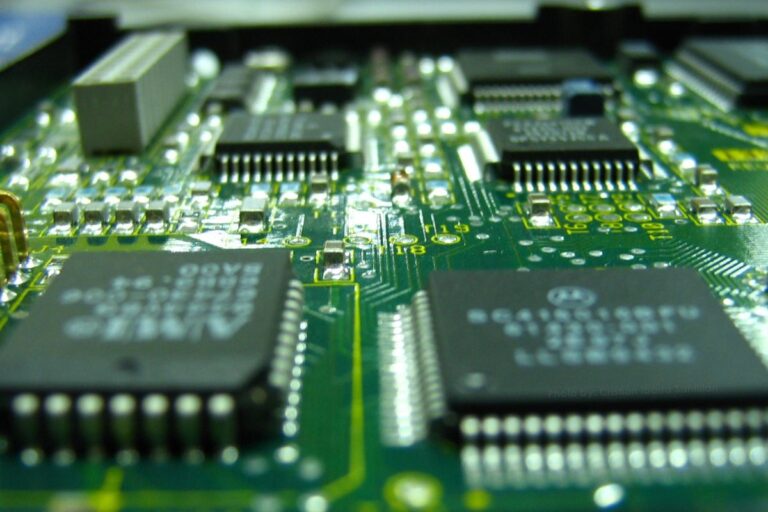
The story becomes even more complicated when we discover that Nvidia is not completely independent either. The company designs its processors, but it does not have the factories needed to produce them on a large scale. This responsibility falls mainly on TSMC, the Taiwanese giant that also manufactures microchips for Apple, AMD, Qualcomm and hundreds of other customers.
TSMC is the world’s leading specialist in contract manufacturing. Its advantage comes from decades of experience, enormous investment and an extraordinary ability to manufacture increasingly smaller structures without sacrificing performance or reliability. In 2025, advanced processes of seven nanometres or less already accounted for 74% of its wafer revenue, a figure that shows the extent to which the company has placed itself at the centre of the most sophisticated technology. That same year, it manufactured more than 12,000 different products for 534 customers.
This concentration explains why Taiwan has an importance that far exceeds its territorial size. A serious disruption to TSMC’s factories would not affect Nvidia alone. It would shake the production of phones, computers, cars, telecommunications equipment and data centres throughout the world.
People often speak of Taiwan’s “silicon shield”: the idea that TSMC’s importance offers the island a certain degree of geopolitical protection because no major power can afford to let its production disappear. But a shield can also be a vulnerability. The more the world depends on a small number of factories, the more devastating the consequences of a conflict or blockade may be.
ASML, the company that manufactures the impossible
There is yet another level of dependence. To produce the most advanced microchips, TSMC needs machines that can be supplied by only one Dutch company: ASML.
These machines use extreme ultraviolet lithography, known as EUV, to project microscopic patterns onto silicon wafers. They operate with light at a wavelength of 13.5 nanometres, close to that of X-rays, and make it possible to manufacture the circuits that power the most modern generations of processors. ASML’s new platforms are already designed to support the production of two-nanometre chips and, in some cases, even smaller ones.
The process is so complex that it seems to come straight out of science fiction. To generate the necessary light, the machine fires laser pulses at tiny droplets of tin until they are transformed into plasma. A system of extraordinarily precise mirrors then directs this light to print the shapes of the circuit.
ASML does not manufacture the digital brains of the 21st century. It manufactures the tool without which nobody could build them. This position has turned it into a central player in the technological rivalry between the United States and China, because controlling access to advanced lithography is, in part, equivalent to controlling who can manufacture the processors of the future.
The chain is thus laid bare with complete clarity: Meta needs accelerators to deploy its artificial intelligence; Nvidia designs many of the most powerful ones; TSMC manufactures them, and ASML provides the machines that make this manufacturing possible. The companies that appear to dominate the digital world are themselves dependent on a narrow, costly and geographically vulnerable industrial network.
Power no longer comes from beneath the ground
During the 20th century, the great powers competed for oil wells, mines, ports and maritime routes. The 21st century has not eliminated those struggles, but it has added a new strategic resource: computing capacity.
This power is not extracted directly from the earth. It is manufactured in cleanrooms where a microscopic particle can ruin a multimillion-dollar production run, inside machines that operate with a level of precision that is difficult to imagine and through a supply chain that crosses continents.
The battle between Meta and Nvidia is, therefore, only one part of a much deeper transformation. Zuckerberg does not intend to destroy Nvidia, but to regain enough autonomy to set his own pace. Google, Amazon, Microsoft and the other giants are pursuing the same objective.
Nvidia remains the great winner of the artificial intelligence boom. But its success also contains the seed of the main challenge it will have to face: the more power it accumulates, the more incentives it gives its customers to look for a way out. The microchip war will not merely decide who manufactures the fastest processor. It will decide who controls the cost, the speed and access to the infrastructure that is redefining the global economy. And none of the major technology companies seems willing to leave this power indefinitely in the hands of a single man wearing a black leather jacket.
11Onze is Catalonia’s fintech community. Open an account by downloading the El Canut app for Android or iOS. Join the revolution.


You get home, look up at the ceiling and see a large damp patch that wasn’t there yesterday. This scene, as common as it is unpleasant, is usually the first sign of a water leak from the flat above. In fact, according to insurance companies, water damage is one of the most common types of damage in homes, and it often originates from a fault outside the home itself.
In many cases, the problem is caused by a burst pipe, a damaged drain or a tap that has not been turned off properly. All in the neighbour’s home. And then the headache begins: finding the source, contacting the other party, assessing the damage and, above all, figuring out who should pay for what.
The first thing to do when faced with a leak is to locate the neighbour above as soon as possible and notify them of the issue. In cases like this, acting quickly can prevent further damage. If the leak is active, it is essential to immediately turn off the water supply to your home until a technician can repair the fault.
It is important to keep a record of everything: photographs, videos, conversations. Any evidence may be useful if the situation becomes complicated and a formal complaint needs to be made. It is also a good idea to check whether your home insurance includes legal defence cover, which can make the process much easier.
Am I entitled to compensation?
The answer is yes. Even if the issue comes from the flat above, you are entitled to compensation for the damage caused to your home. However, how this compensation is paid will depend, to a large extent, on whether your neighbour has insurance and on the terms of their policy.
In most cases, if your neighbour has home insurance, their company will be responsible for repairing the damage to your property. However, there are essential exceptions to bear in mind.
When insurance does not cover the damage
There are situations in which your neighbour’s insurance may refuse to accept liability. For example, if the leak was caused by a tap being left open, and you have been away from home for more than 72 hours, the company may consider this a case of negligence and reject the claim.
The same applies if there is evidence of obvious lack of maintenance in your neighbour’s home, such as a badly deteriorated installation that has never been checked. In these cases, the responsibility falls personally on the owner of the affected property.
Another common scenario is that of building works. If the leak is a direct consequence of renovation work in your neighbour’s home, the responsibility falls on the company or professional who carried out the work, and it is that person who must have civil liability insurance to cover the damage caused.
What if no one wants to pay?
Even if the person responsible for the leak does not have insurance, they are still legally obliged to cover the damage they have caused. They can do this by paying for the repair directly or by paying the bill if you have had to advance the cost.
But what if they refuse to do so? In this case, it is essential to have photographic evidence of the damage (photos, videos) and to request an expert report through your own insurance company, if you have one. This document will be key if it is necessary to take legal action.
If you have legal defence cover, you can ask the company to provide you with a solicitor to handle the formal claim. The usual procedure is to send a letter setting out the facts and requesting compensation or payment.
If there is no response or a refusal, the next step is to file a lawsuit. Legal proceedings in these cases are usually quick and straightforward, and often end with a ruling in favour of the injured party. If, however, the person responsible continues to refuse to pay, you can request enforcement of the ruling and proceed with seizure to recover the money.
A common but avoidable situation
Water damage is common, but that doesn’t mean it has to be a nightmare. Good communication with your neighbour, adequate insurance and a quick response can make the difference between an anecdote and a legal battle.
That is why it is essential to know your rights, review the terms of your policy and act decisively from the outset. When faced with a leak, there is no need to lose your cool… but there is also no need to sit idly by.
If you want to discover fair insurance for your home and for society, check 11Onze Segurs.



Plan your holiday, pack your bags, and grab a book. Summer is synonymous with disconnection, and reading is the main protagonist. We bring you a book selection for your summer travels.
Recently, a study found that reading makes us more empathetic. With the only condition that it is quality literature, the researchers found that people who read are able to recognize the emotional state of the characters and improve their imagination and mental agility.
And not only that. It is also popularly said that reading makes us attractive; in fact, it would be like brain gymnastics: it stimulates mental activity and concentration, disconnects us from problems and anxieties, and allows us to travel to new worlds. There are many benefits to reading, and they all explain the importance of encouraging it from an early age. So jot down the titles you can’t miss this summer and start training your brain!
- 21 Lessons for the 21st Century (2018) by Yuval Noah Harari. In this new instalment, the author of Sapiens (2014) and Homo Deus (2016) describes the fundamental lessons for living in this century. With his theories, he invites us to think, drawing scenarios that describe the main current challenges. He reviews social, political, and existential issues, and warns of technological dangers, from a daily point of view that defines the impact of all this on our present and future lives.
- FakeYou: Fake news y desinformación (2018) by Simona Levi. The phenomenon of fake news questions the health of the media, political parties, governments, or companies. Controlling this often means restricting citizens’ freedom of expression and information. Simona Levi questions this legislation based on violating fundamental rights, in a work that becomes a weapon to fight against manipulation, lying, and falsification.
- The Vegetarian (2017) by Han Kang. It is not about vegetarianism, but the story begins when the protagonist stops eating meat. An individual decision that becomes a social challenge, a symbol of rebellion against what is conventional. About quitting submission and facing the system. A poignant and awkward story that describes what happens when you question what is accepted, and you break the rules, and how far the human capacity goes to carry it out to the last consequences.
- The Grapes of Wrath (1939) by John Steinbeck. It narrates the collapse of the American dream following the Great Depression. A context of economic and financial crisis that leads the protagonist family to emigrate and start a vital search to ensure their jobs, their dignity, and their future. A timeless story where power, equality, and justice are confronted in the United States.
- El hambre (2014) by Martín Caparrós. Wasting food and going hungry are the main concepts that Caparrós reviews in this book that has led him to travel to countries around the world where hunger is the main problem. A book that reviews food from all points of view, from those who speculate to those who need it, to explain and denounce a global issue in which we are all involved.
- The Handmaid’s Tale (1985) by Margaret Atwood. A disturbing dystopia that has become relevant once again. In a totalitarian and theocratic society, women have been reduced to mere instruments of reproduction. Atwood warns of the real danger posed by the loss of hard-won rights. It is a difficult read, but a necessary one.
- The Order of the Day (2017) by Éric Vuillard. Winner of the Goncourt Prize, this short but incisive work narrates the inner workings of economic and political power on the eve of Nazism. With an ironic and lucid style, Vuillard portrays how great historical events are intertwined with the mediocrity of those who make decisions.
- The Invisible Women (2020) by Toni Morrison. A personal choice: any work by Toni Morrison is worthwhile, but The Invisible Women stands out for its depth and sensitivity. The story of African-American women struggling to find their voice, identity, and freedom in a world that ignores them. Poetic and moving.
Some books distract you, others move you, and some change the way you see things. Whatever your summer pace, choose one and let yourself be carried away. You may not change the world this summer, but perhaps a good book will make you see it with new eyes.
11Onze is the community fintech of Catalonia. Open an account by downloading the app El Canut for Android or iOS and join the revolution!



We are all aware of the need to reduce plastic consumption to mitigate its impact on the planet. It is therefore important that we are proactive in making small changes to our habits to eliminate or make better use of plastics.
The enormous environmental problems caused by single-use plastics are well documented. Every year we dump millions of tonnes of plastic waste into the seas and oceans, literally forming vast islands of non-biodegradable rubbish that accumulate thanks to ocean currents.
Governments, corporations, and major supermarket brands are implementing changes to reduce their consumption and mitigate the environmental impact of the plastic waste generated. Still, we can harness the power we have as consumers to spur a paradigm shift that can wait no longer.

The evolution and reduction of plastic consumption
So, here are five habits that we can include in our daily routine to easily reduce the amount of plastic we use.
Use cloth bags
Despite the fact that the ban on the giveaway of plastic bags came into force in Catalonia in March 2017 and that from 1 January 2021 there will be a ban on the giveaway of lightweight plastic bags offered to consumers, we still use bags that, although compostable, contain a large amount of plastic. Carrying cloth bags, a basket, or a shopping trolley saves us unnecessary plastic consumption.
Buy food wholesale
Buying in bulk eliminates unnecessary packaging and promotes responsible consumption because it allows us to take from the shop only what we will consume. Our bags and packaging, preferably glass, can be reused many times.
Use environmentally friendly detergents
Some of the most common ingredients in conventional detergents can be highly harmful to the environment. Fortunately, there are cleaning products made with ecological criteria, such as Natulim’s biodegradable detergent strips, which do not generate environmental waste and avoid the use of plastic in their packaging.

Eliminate single-use products
Disposable products such as plastic cutlery, plates, cups, straws, and razors may be practical, but they create large amounts of waste that could easily be avoided by replacing them with products made of glass, metal, or other materials.
Avoid or recycle coffee capsules
It goes without saying that buying ground coffee and making coffee with a traditional coffee machine is much more environmentally friendly than using coffee capsules. That said, not everyone has the time or patience to make coffee in the traditional way once they are used to single-serve pods. Fortunately, some capsule manufacturers offer recycling schemes to take advantage of this waste and give it a second life.
If you want to wash your clothes without polluting the planet, 11Onze Recommends Natulim.