Bitvavo: company profile
Registered with the Dutch Central Bank and headquartered in Amsterdam, Bitvavo is one of Europe’s leading digital asset exchanges. It launched in 2018 offering reasonable fees, security and a simple and easy to use platform that has made it an ideal choice for beginners and experienced users alike.
In the five years since its market launch, Bitvavo has been driven by its founding pillar of making cryptocurrencies accessible to everyone. It was entering a sector dominated by US-based exchanges that were pioneers in facilitating the exchange of digital assets, but which needed to be more intuitive for people inexperienced in trading cryptocurrencies and had some shortcomings in terms of the security they offered to their users.
As Mark Nuvelstijn, CEO and co-founder of Bitvavo, explains: “The high threshold for buying and selling cryptocurrencies concerned us. Of course, there were large international traders, but you could only deposit euros in some places, and you couldn’t trade in altcoins. It was also not possible to store them securely.”
Buying and selling cryptocurrencies securely
Bitvavo is regulated and registered with the Dutch Central Bank, its depositors have access to the Deposit Guarantee Fund, so up to €100,000 could be recovered in the event of the exchange’s bankruptcy. In addition, the platform uses cold wallets so that in the event of a cyberattack, Bitvavo could restore deposits. In other words, customers’ digital currencies are regularly downloaded to physical devices without an internet connection.
However, Bitvavo wanted to take it a step further and offers additional protection: “Bitvavo’s cryptocurrencies are insured up to 250 million. As for the euro funds, they are also stored in a separate secure entity. In addition, we are working on account insurance to guarantee up to 100,000 euros,” Nuvelstijn notes.
Access to a wide range of cryptocurrencies
Bitvavo allows you to store, buy, sell and withdraw more than 190 digital currencies. When trading cryptocurrencies, you will have the option to store tokens in the exchange’s own wallet, which is free to use.
The process of signing up to the platform is simple, you can do it via the 11Onze Recommends link. In addition, until 15 August, Bitvavo is rewarding €500 to Binance and OKX users who transfer their funds from these exchanges, which can be used for the purchase of digital assets. Here is a tutorial on how to do it.
11Onze Recommends Bitvavo, cryptocurrencies easily, securely and at a low cost.
During the first six months of the year, gold has outperformed most major investment asset classes, continuing the upward trend of 2023. Its price has reached record highs and has risen by 12% since the beginning of the year, cementing its reputation as a safe-haven asset in times of economic uncertainty.
Global gold demand (including OTC purchases) marked the strongest first quarter of the year since 2016, rising 3% year-on-year to 1,238 tonnes. This strong performance was driven by persistent central bank buying in the face of geopolitical and economic uncertainty, investment in the OTC market, and increased demand from Asian buyers that pushed the gold price to a record average of €1,934 per ounce.
In mid-May, it reached another all-time high of 2,259 euros per ounce, surpassing the previous record set in April, as the Federal Reserve (Fed) looked ahead to an expected rate cut, while the European Central Bank (ECB) made its cuts amid a stronger US dollar.
High global interest rates and a strong US dollar are often seen as a hostile environment for gold that has probably prevented its value from rising by even more than the 12% achieved since the beginning of the year.
In its analysis of gold’s performance in the first half of the year, the World Gold Council (WGC) believes that in the current economic context, “these factors have been offset by more dominant ones“, from continued central bank buying to strong Asian investment and resilient

11Onze offers its community a tool to combat inflation and the accompanying loss of purchasing power.
Outlook beyond the third quarter
WGC analysts believe that, as we move into the third quarter of the year and look ahead to the remainder of 2024, “gold could continue to move in a similar range to the last few months“.
Given that the price of gold has already risen by 12% and that the consensus of experts consulted by the WGC suggests a similar result for the full year, the agency reiterates that gold, seconded by contributions from other sectors, “can perform well even when, as expected, interest rates remain unchanged.”
Likewise, JPMorgan Chase & Co. expects the gold price to average €2,011 per ounce in the fourth quarter of the year, reaching a peak of €2,127 in the third quarter of 2025 due to the conflicts in the Middle East and the possible repercussions of the US presidential election.
To discover the best option to protect your savings, go to Preciosos 11Onze. We will help you buy the ultimate safe-haven asset, physical gold, at the best price.


Gold prices are poised for their biggest weekly dip since 8 December because of de-escalating geopolitical tensions and little prospect of an immediate Fed rate cut. Is this just a temporary correction after a long period of record highs?
Although it has recovered slightly this Friday for the second day in a row to 2,182 euros per ounce, gold looks set for its biggest weekly loss in value since 8 December 2023. This downward correction has been driven by lower demand for safe-haven assets as tensions in the Middle East between Iran and Israel have eased.
Historical precedent has taught us that gold price rises or falls in the face of geopolitical tensions or the outbreak of armed conflict often respond to the perceived risk of stock markets and governments.
On the other hand, investors do not expect the Fed to cut interest rates in June and July this year, which suggests that we are not facing a possible economic slowdown that historically tends to boost demand for the golden metal.
Also, a delay in the US central bank’s interest rate cuts compared to central banks of other G7 economies favours the performance of US assets with low-interest rates, such as Treasury bonds, to the detriment of assets that do not generate fixed returns, such as precious metals.
Gold Patrimony, an excellent product to protect your savings.
Bullish forecasts for 2024 remain unchanged
The price of gold has risen by 25% since the outbreak of the latest armed conflict in Palestine and by 15% so far this year. These figures have contributed to the golden metal’s meteoric rise over the last five years, which has appreciated by 80%.
The temporary fluctuations or corrections in the price of gold experienced over the last two weeks after this long period of record highs should not affect forecasts that its value will remain high throughout the year.
The increasing de-dollarisation process of countries seeking to shield their economies from Western sanctions, continued gold buying by central banks in emerging economies, volatile geopolitical tensions in the Middle East and uncertainty over a possible escalation of the war in Ukraine have solidified gold’s popularity as a safe-haven asset. In addition, gold could be boosted by the various presidential elections taking place this year, especially the US elections in November, where another victory for Donald Trump is not ruled out.
Preciosos 11Onze makes it easy to buy gold, at the best price and with total security. Give us a call and speak to one of our agents without any obligation to clarify any doubts you may have and protect yourself from economic crises with the ultimate safe-haven asset: gold. If you want your savings to keep or increase their value, Gold Patrimony.


The close relationship between organised crime and the banking sector goes back almost as far as the origins of these two concepts, yet it was in the early 20th century that the contemporary understanding of banking and the mafia was consolidated and spread throughout the world.
Throughout history, organised crime has taken advantage of the promiscuous relationship between politics, business and the financial system to weave a complex web of power and corruption not only to serve its interests but from which all these actors have benefited.
The mafia and banking share the same taste for wealth, risk and easy money, while both have close connections with corrupt governments. Their collaboration was especially evident during the expansion of organised crime families from Italy’s Sicily region into the United States in the early 20th century, and during the politics of gangsterism in Nationalist China throughout the final stages of the opium trade.
These alliances provided the mafia with access to financial resources and a semblance of legitimisation in its expansion into new markets through illicit business, while at the same time banking economic benefits from financing illegal operations, facilitating money transactions and money laundering.
The alcohol gangsters
During the thirteen years of Prohibition in the United States, organised crime and alcohol flooded the black market, leaving a trail of bullet-riddled corpses. Underground distilleries serving liquor were controlled by gangsters such as Meyer Lansky, Lucky Luciano, Dutch Schultz and Al Capone, who bribed police, politicians, and judges.
The profit margins from the illegal importation and sale of alcohol were equivalent to what the drug market was years later. Millions of cases of alcohol entered the US every week, which had to be processed and distributed throughout the country. This required the collaboration of several actors, including the banking sector.
New York was the entry point for most of the alcohol contraband coming into the country, but it was also the convergence point for financial capital and political influence in the United States. Collaboration in the laundering of money from the illegal sale of alcohol continued until the prosecution of Al Capone for tax evasion and the end of the prohibition period.
The Mafia’s accountant
The arrest of Al Capone inspired Meyer Lansky, accountant, Jewish mobster, and Lucky Luciano’s partner, not to make the same mistake and to structure elaborate international financial conglomerates in tax havens to hide the money from illicit businesses. Lansky even bought a bank in Switzerland, which he used to launder money through a network of shell companies.
At the end of World War II, Luciano controlled, with the collaboration of Cuban President Fulgencio Batista, many of Havana’s casinos. Lansky was instrumental in orchestrating the whole operation and facilitated the landing of Italian mafia money in Cuba. Even so, his casino dealings were understood to be in Las Vegas, the Bahamas, and London.
At the outbreak of the Cuban Revolution in 1959, the new government of Fidel Castro expropriated all the casinos and hotels, forcing the mobsters to flee in disarray. Lansky did not accept Fidel’s conditions for continued investment on the island and left the country for good, leaving behind much of his multi-million dollar wealth.
God’s banker
Michele Sindona, known as “The Shark”, was a leading figure in the financial world of the 20th century, but his career was surrounded by controversy, scandal, and crime and born on 8 May 1920 in Patti, in the region of Sicily. He studied law at the University of Messina and began his career as a lawyer, but soon changed course to the world of banking.
He moved to Milan, where he worked as a tax lawyer for wealthy Italians who wanted to avoid paying taxes. Furthermore, he soon gained recognition from the Italian Mafia as a financial expert and quickly rose through the ranks of international banking.
In the early 1950s, he travelled to New York and met the Gambino family, who hired him to manage their profits from heroin sales. At the same time, Sindona had acquired, through his holding company Fasco, several Italian banks, establishing close links with the Vatican and earning a reputation as a trusted financial intermediary for the Catholic Church.
Its progress continued until the beginning of its association with the Vatican Bank in 1969 when large amounts of money passed from Sindona’s banks via the Vatican to Swiss banks. These events earned him the nickname “God’s banker”.
As a Vatican banker, he played a key role in the collapse of Banco Ambrosiano – of which the Vatican Bank was the largest shareholder – in one of the most scandalous events in the financial world of the 1970s. Sindona manipulated the bank’s accounts to conceal massive losses and finance his business ventures.
In 1980, he was convicted and imprisoned in the United States on various charges related to fraud and money laundering. In September 1984 he was extradited to Italy, where he was imprisoned in Voghera. Two years later he was sentenced to life imprisonment as the instigator of the murder of Commissario Giorgio Ambrosoli and, a few days later, died of cyanide poisoning in a coffee cup, believed to be his own doing.
If you want to find out how to get returns on your savings with a social justice product, 11Onze recommends Litigation Funding.

Hong Kong is unshackling itself from China’s government restrictions on the cryptocurrency sector and encouraging the adoption of blockchain technology with the aim of becoming the global centre of the crypto industry and trading.
Hong Kong, officially the Hong Kong Special Administrative Region of the People’s Republic of China, has a free market economy heavily dependent on international trade and finance. Known for innovation and promotion of new technologies, in recent months it has introduced new regulations to promote and facilitate the adoption of cryptocurrencies.
On June 1 last, a new licensing regime for cryptocurrency exchange platforms came into force, opening up access to cryptocurrency trading for retail investors, which was previously prohibited. This allows these platforms to provide services in a regulated manner in their territory.
More than 80 companies involved in cryptocurrency exchange and blockchain ecosystem development have already made applications to Hong Kong for a presence in the territory. Many of these companies already have businesses in mainland China, but others come from Singapore, the European Union, the United States, Canada, the United Kingdom and other regions of the world.
In addition, the central banks of Hong Kong and the United Arab Emirates have announced that they will coordinate their crypto-asset regulations to facilitate the settlement of cross-border transactions, opening up the possibility of using their own digital currencies (CBDCs). This comes shortly after the administrative region’s monetary authority unveiled the launch of a digital version of the Hong Kong dollar.
Will China change its stance against crypto?
Against the backdrop of the Chinese government’s historically tough restrictions on crypto trading – to the point of declaring all cryptocurrency-related activities illegal – Hong Kong’s new regulatory policy on cryptocurrencies suggests a possible paradigm shift in China’s stance on cryptocurrencies.
Especially considering that Beijing recently published a white paper outlining the way forward for leading Web 3.0 innovation and development that could lay the groundwork for the renaissance of China’s crypto-asset industry.
Meanwhile, the US government, chastened by the collapse of FTX – the world’s third-largest crypto-trading platform at the time – excluded Binance from the banking sector after a regulator’s lawsuit, as it considers implementing more restrictive policies in the cryptocurrency sector. These developments contrast with the position of the Hong Kong government, which is pressuring big banks to accept cryptocurrency platforms as clients.
The possibility of this new regulatory approach becoming a reality prompted Brian Armstrong, chief executive of Coinbase, to warn that the application of more restrictive policies in the US crypto-trading sector benefits China: “Given these moves and China’s strategy of leveraging financial technology to protect its own national interests, it should come as no surprise that Hong Kong is positioning itself as a global cryptocurrency hub”.
11Onze Recommands Bitvavo, cryptocurrencies easily, safely and at a low price.
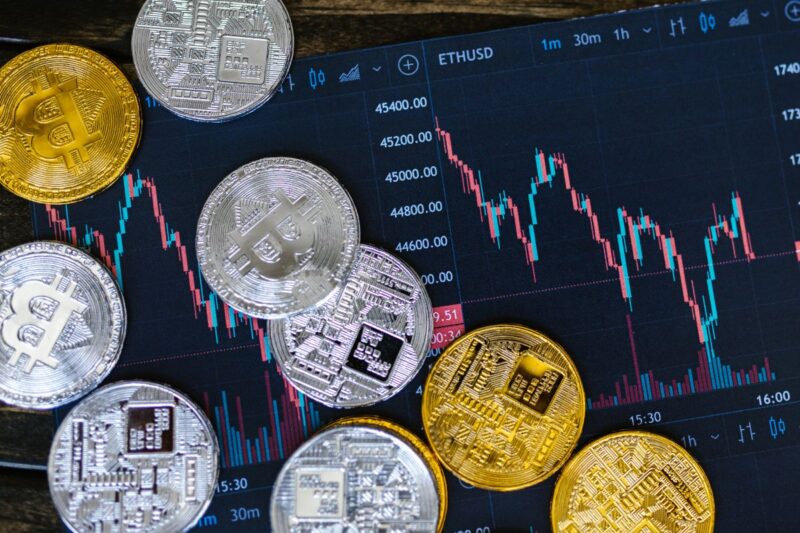
If there is one thing that characterises the cryptocurrency market, it is its high volatility. As it is a relatively small market in which a large part of the cryptocurrencies are concentrated in a few hands, speculation by large investors tends to generate large fluctuations due to their pulling power and the intangible value of cryptoassets.
The financial crisis of 2007-2008 led Satoshi Nakamoto to create a cryptocurrency that would escape the traditional financial system: bitcoin. In the first transaction, which took place at the beginning of 2009, its value was residual: only 0.00076 dollars.
Since then, the price of bitcoin has soared, albeit with enormous volatility. If we analyse its evolution over the last two years, we can see that it went from less than 10,000 euros in September 2020 to more than 50,000 half a year later, only to fall back below 30,000 four months later. And, after further rallies, which took it to a valuation in November 2021 of 58,358 euros, its historical maximum, the successive falls of the “crypto-winter” have placed it at around 20,000 today, practically a third of its higher value.
Bitcoin is no exception. Volatility is also affecting other cryptocurrencies. For example, ether lost two-thirds of its value between April and June, going from more than 3,000 euros to less than 1,000 euros, before rising back above 1,900 in mid-August and dropping below 1,400 from mid-September onwards.
Terra luna, the most notorious case, went from being worth more than 80 euros at the beginning of May to being practically worthless in little more than a week. And yet it was a ‘stablecoin’, i.e. a cryptocurrency whose value is linked to that of another currency, commodity or financial instrument, which should provide more stability.
Little tangible value
Cryptocurrencies have gained a lot of prominence in the financial world in recent years. A report by the Bank of Spain estimates that the cryptoassets market reached a capitalisation of $2.8 trillion in 2021, approximately 1 % of global financial assets.
Even so, they still lack the acceptance of traditional assets such as equities or gold. Economists such as Paul Krugman and business leaders such as Warren Buffett have even described them as a “mirage” and have even predicted their demise.
It is true that the gold or equity markets are no strangers to speculation either, but gold or listed companies have a more obvious intrinsic value. Gold has long been used as a medium of exchange and is a reasonably stable commodity in terms of price, demand and supply. Listed companies, on the other hand, have properties, customers, cash flows and income statements that give them a more tangible value.
While no one can deny that blockchain provides benefits such as security, decentralisation, cost reduction and speed, it is still tricky to specify the real value that cryptocurrencies bring to their owners. And that is fertile ground for volatility.
A poorly regulated market
Nor does the lack of a governing or controlling body, as is the case with fiat currency, shares or bonds, help stability. In this sense, progressively increasing regulation could contribute to greater adoption, although over-regulation could be counterproductive.
Hence, the European Union has published a proposal for a regulation affecting cryptoasset issuers, exchange platforms and digital currency wallets. This regulation aims to facilitate the supervision of the sector and prevent market manipulation.
The power of the whales
Without a clear real value, cryptocurrencies are highly speculative assets, so they are much more sensitive to one-off movements by large investors, which trigger chain reactions up or down.
It should be borne in mind that the cryptocurrency market is still very small compared to other assets and that a considerable part of it is in the hands of a few investors, known as “whales”. Per Wimmer, founder of Wimmer Financial LLP, has even warned that the cryptocurrency market is dominated by ten whales.
This may be an exaggeration, but the truth is that, according to the US National Bureau of Economic Research, by the end of 2020 a third of all bitcoins were in the hands of just 10,000 investors. This concentration means that their decisions can more easily destabilise the market, as their relative weight is much greater.
Speculative manoeuvres
In order to get rich, some whales start selling a large volume of cryptocurrencies at below-market prices. This triggers panic and sales by small investors skyrocket. Once the price bottoms out, the whales take the opportunity to buy back more cryptocurrencies.
Massive adoption of cryptocurrencies, which would reduce the relative weight of large investors, would therefore help to stabilise the market. This would require them to be on a par with fiat currencies so that they are perceived as a stable value and can be more easily exchanged for goods and services. Utility is a key element in establishing the value of an asset, and the potential of cryptocurrencies is still being explored.
Media noise
The subjective value of cryptocurrencies also makes them very sensitive to media noise. For example, when Tesla announced that cryptocurrencies would not be accepted as a means of payment, the value of bitcoin plummeted, while Elon Musk’s support for dogecoin on Twitter was enough to send the value of this cryptocurrency soaring.
If the news around a cryptocurrency is positive or an influencer generates positive sentiment towards it, demand and price increase. The opposite happens when the news or sentiment is negative.
It is still too early to tell whether markets will stabilise in the future and cryptocurrencies will be able to be traded like fiat currencies. What is clear is that the amount of capital invested in cryptocurrencies would have to grow a lot for volatility to be reduced.
If you want to discover the best option to protect your savings, enter Preciosos 11Onze. We will help you buy at the best price the safe-haven asset par excellence: physical gold.

Once again, this year, the ‘La Grossa de Cap d’Any’ raffle will distribute thousands of euros in prizes throughout Catalonia. Here are the prizes you can win, how to collect them, and how much tax the state keeps.
Since 2013, ‘La Grossa de Cap d’Any’ draw is held every 31 December. A draw created by Loteries de Catalunya with the aim of taking advantage of the popularity of the Extraordinary Christmas Draw held throughout Spain, to have a Catalan raffle, the first autonomous community to have a Christmas lottery, which benefits our territory.
Every year 100,000 numbers are put on sale, from 0 to 99999, with a total of 50 series, five of which are in electronic format. The price per ticket is 10 euros, and they can be bought at the usual Loteries de Catalunya points of sale or in some supermarkets. The draw is broadcast live on TV3 at around 12:55 pm.
The prizes
The ‘Grossa’ of 2023 maintains the normal distribution of 5 big prizes, with the following retributions for winners:
- The first prize of €200,000 per ticket, €20,000 per euro played.
- The second prize of €65,000 per ticket, €6,500 per euro played.
- The third prize of €30,000 per ticket, €3,000 per euro played.
- Two fourth prizes of €10,000 per ticket, €1,000 per euro played.
- Three fifth prizes of €5,000 per ticket, €500 per euro played.
Prizes expire 90 days after the date of the relevant draw and are subject to the usual lottery winnings taxation. In this case, prizes exceeding €40,000 must be taxed, after which 20% of the amount received must be paid.
You can collect prizes of up to €120 at any authorised establishment that has a terminal, although these outlets can optionally pay prizes of up to €1,999.99. You can also collect rewards of €50 or more in cash or by bank transfer at CaixaBank branches or at the Loteries de Catalunya Customer Service, Information and Prize Payment Office at Carrer Enric Granados, 33, Barcelona.
How to invest the money
Depending on the amount of the prize and our economic situation, the winnings can be used to cover the odd hole and little else. Still, if we are lucky enough to have healthy personal finances, we have different investment options.
Given the levels of inflation in recent months and the low returns banks are giving us on our deposits, it may be tempting to choose investment options that give us a higher return. Even so, it should be borne in mind that the higher the return, the more risk we have to take.
Currently, bank deposits offer little return, but Guaranteed Funds can easily and safely provide a return on the money earned. As the name implies, guaranteed funds guarantee all or part of the capital invested, as well as a fixed return over a period of time.
If you are worried about the possible recession next year, investing in precious metals may be the best option if you want to avoid the devaluation of your money. The value of precious metals is much more stable in times of crisis like the current one, and gold is considered the ultimate safe haven asset.
Investing in property is one of the most popular options, but buying a property as an investment requires a minimum knowledge of the real estate sector. On the other hand, it is important to take into account maintenance costs, especially in periods when we cannot make the investment profitable through renting.
In any case, whether you are planning to invest the money you have earned, or whether you want to spend it on something you are looking forward to, you should think carefully about what you are going to do with the money before rushing into a decision spurred on by the moment of joy you have just uncorked the Cava.
If you want to discover the best option to protect your savings, enter Preciosos 11Onze. We will help you buy at the best price the safe-haven asset par excellence: physical gold.
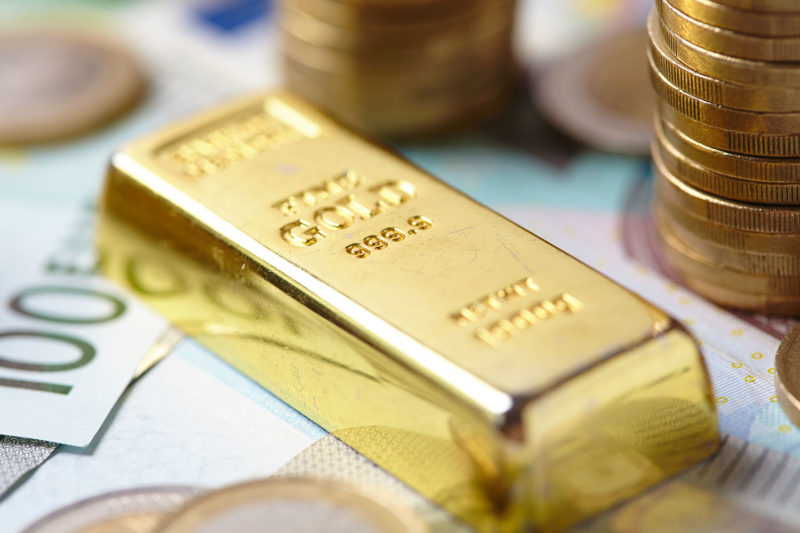
What are the advantages and disadvantages of bullion coins compared to gold bars? What is their history? What does their value depend on? Here are the answers you need.
The first official coins were minted around the 7th century BC in Lydia, in present-day Turkey. They were made of electro, an alloy of gold and silver. From then on, virtually all the great states of antiquity created gold or electro coins.
For centuries, gold and silver became the materials from which coins of the highest value were made. This was because they are solid metals, easy to handle and relatively scarce, which prevents overabundance.
Of the two, gold has always been more prized for its greater resistance to rust and corrosion. In addition, its golden colour and lustre have made it very attractive to most civilisations, which have made this precious metal a symbol of wealth and status.
A new concept of gold coinage
In the second half of the 20th century, the concept of the bullion coin appeared. This is a coin minted in precious metal, the value of which is fixed not by the face value of the coin, but by the value of the metal contained in it, to which a premium is added for the coin’s manufacturing process.
In these cases, what is important is the amount of precious metal it contains and its purity, rather than the possible numismatic value it may have because of its design. Of course, when the price of gold rises, the value of the coin also rises.
Bullion coins or gold bars?
Although the premiums or surcharges on the price of contained gold are lower for bullion and bars than for coins, many investors prefer the latter.
One reason is their collectable potential. Gold coins that are preserved in good condition become somewhat more coveted as they age, which is not the case with gold bars, which are valued purely for the amount of gold they contain.
Moreover, because their weight per unit is generally lower, they do not require the investment of a large amount of money, which makes them accessible to small investors.
Finally, the process of verifying their authenticity when selling them is simpler. Thanks to their particular design, weight and dimensions, each type of gold coin is very difficult to counterfeit.
A bit of history
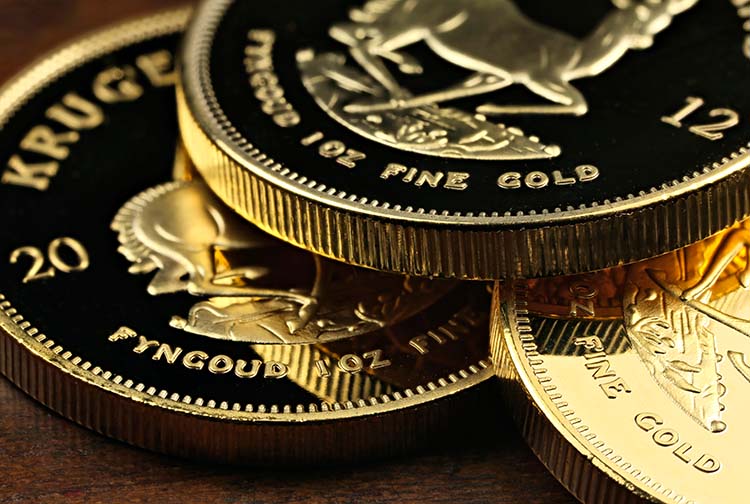
The first modern investment coins were minted in South Africa in 1967. They are the Krugerrand, which are still in production today. Investment coins became popular between the late 1970s and the 1980s, when the Maple Leaf in Canada (1979), the American Eagle in the United States (1986), the Britannia in the United Kingdom (1987) and the Philharmonic in Austria (1989) began to be minted.
Some of these coins have a face value. For example, in the case of the Britannia coin, it is £100. However, as this value is lower than the value of the gold it contains, the real value at any given moment is determined by the price of gold and its numismatic value. In this sense, as the Fábrica Nacional de Moneda y Timbre indicates, the rarity and the degree of conservation of the piece are essential.
Some pieces are often coveted for reasons that go beyond a mere investment mentality. The numismatic value of the craftsmanship, design, historical significance, commemorative value and physical condition of a piece can drive collector demand. This means that, proportionately, the price of some coins is considerably higher than that of bullion.
Up to now, with Preciosos 11Onze, it has been possible to purchase gold bullion. From now on, we also offer the option of buying Krugerrand and Britannia gold coins. Gift gold, for tomorrow’s future.


Persistent economic uncertainty and unrelenting inflation have created a scenario where getting a return on our savings is no easy task. Against this backdrop of uncertainty, precious metals are considered a low-risk investment and gold the safe-haven asset par excellence. Carol Santacruz, 11Onze agent, explains it.
The inflation protection offered by precious metals is based on their intrinsic value, which carries no credit risk and cannot be inflated. A unique feature that makes them particularly attractive for diversifying our investments in times of crisis.
Also, gold’s tendency to rise in value when there is uncertainty in the markets explains the continuous increase in its price over the last three years, and confirms it as the most popular safe-haven asset in the face of a possible new financial crisis in 2022.
In this video, agent Coral Santacruz explains the value of precious metals as an investment and what factors to take into account.

Value of precious metals as an investment.
If you want to discover the best option to protect your savings, enter Preciosos 11Onze. We will help you buy at the best price the safe-haven asset par excellence: physical gold.


Binance is under pressure amid a spate of legal issues that have severed many of its key banking relationships around the world and eroded its market share. After announcing it would leave the Dutch market, tens of thousands of users have transferred their funds to other exchanges such as Bitvavo, which protect their customers’ money with a guaranteed fund. We explain the process step by step.
The problems at Binance, one of the world’s leading crypto exchanges, continue to pile up. Several senior executives have already left the company at a time when it is facing immense regulatory pressure.
In addition to the US Securities and Exchange Commission’s (SEC) lawsuits against the platform and its CEO, accusing them of violating laws, failing to have the necessary registrations and selling unregistered securities, there have been regulatory problems in Europe.
On the one hand, financial regulators in Germany and the Netherlands denied Binance’s application for a licence to hold crypto-assets and, shortly afterwards, Binance announced that it would leave the latter market because it could not obtain registration as a virtual asset service provider.
On the other hand, Belgium ordered the company to immediately cease its operations in the country on charges of non-compliance with existing regulatory rules. At the same time, Paysafe, a British digital payments platform, announced that it was ceasing to support Binance’s euro-denominated transactions, leaving the crypto exchange unable to transact within the SEPA area.
The alternative that 11Onze Recommends
Thousands of users have already transferred their funds to other exchanges that comply with the European regulatory framework and offer more security. This is the case of Bitvavo, which 11Onze Recommends, a cryptocurrency management platform that is registered with the Dutch Central Bank, where its depositors have access to the guarantee fund and which uses cold wallets to prevent cybercrime. That is, Bitvavo customers’ digital coins are regularly downloaded onto physical devices that are disconnected from the internet.
According to Bitvavo, the inflow of capital from Binance to Bitvavo is already in the tens of millions of euros and growing every day. Bitvavo expects total deposits of digital assets to reach a value of hundreds of millions of euros. The process of transferring funds between the two crypto-asset management platforms is not complicated but requires a number of steps, which we explain below.
Transfer cryptocurrencies from Binance to Bitvavo
From the app
At Bitvavo
- Log in to our app
- Tap on the digital currency you want to deposit
- Tap on the three-dot menu, at the top right of your screen
- Tap deposit
- Select the network to see your address
Note: Deposits via the Binance Smart Chain (BSC) result in the loss of your assets (excluding BNB). - The address of your Bitvavo wallet is now displayed. You can use this address to transfer your digital currency.
At Binance
- Navigate to ‘Spot’ on your Binance account
- Select the appropriate cryptocurrency
- Select ‘Withdraw’ and then ‘Send via Crypto Network’
- Paste in the Bitvavo cryptocurrency deposit address
- Choose the suitable network (this is critical!)
- Select the desired amount and press the ‘Withdraw’ button
- Confirm the transaction by following the on-screen instructions
- Your transaction has been confirmed and sent to Bitvavo.
Source: Btivavo
From the webb
Log in to your Bitvavo account
- Navigate to the digital currency you want to deposit and click on it
- Navigate to ‘Deposit’ and click on it
- Select the network to see your address
Note: Deposits via the Binance Smart Chain (BSC) will result in the loss of your assets (excluding BNB). - The address of your Bitvavo wallet is now displayed. You can copy this address to transfer your digital currency.
At Binance
- In your Binance account, go to Spot withdrawals
- Choose the relevant cryptocurrency
- Paste the Bitvavo deposit address for this cryptocurrency
- Select the appropriate network (very important to do so!)
- Choose the desired amount and confirm the transaction
Source: Bitvavo
11Onze Recommands Bitvavo, cryptocurrencies easily, safely and at a low price.