The freedom to choose your IBAN
The 11Onze super app will allow users to open accounts in other European countries, a fast and functional operation that brings multiple benefits. Why is it important to choose which country we keep our money in?
For years, Europe has been seeking to build a common market, including euro payments. It has finally succeeded in doing so thanks to the creation of SEPA, the Single Euro Payments Area, and of the IBAN, the International Bank Account Number. These two systems make it possible for citizens to make payments, transfers and direct debits from any country in the European Union (EU), regardless of the country of origin of your current account. That’s why at 11Onze we want our community to be able to choose where they open their accounts.
Another reason why we believe it is important for our users to be able to choose the IBAN is undoubtedly related to the security of their savings. Specifically, in Spain, the Fondo de Garantía de Depósitos de Entidades de Crédito protects up to 100,000 euros per customer. But it is necessary to go further to check whether, in case of need, all customers could really recover that money.
How a country’s solvency is calculated when it comes to protecting customers’ deposits is difficult to explain. Therefore, we summarize it in one key idea: who guarantees our money is the central bank of our IBAN’s country. So, for example, if our money is in the Spanish State, the Bank of Spain must have on-hand enough cash reserves to, in case of an emergency, be able to cover all the current accounts in the country.
In this regard, the European Central Bank collects data about European central banks’ solvency, i.e. those that offer the most protection in the event of failure of private banks. If the bank where my savings are deposited goes bankrupt, it is the central bank of that country that is liable, but nowadays, many of them are not sufficiently solvent to face such a situation. For this reason, the law obliges institutions to have supplementary insurance.
The index used by the European Central Bank for this classification, is similar to the so-called cash ratio, a formula that relates liquid reserves to deposits and is expressed as a percentage. If we look at the data in the graph below, which shows the common equity tier 1 ratio of credit institutions, Spain is well below the ranking headed by countries such as the Czech Republic, Luxembourg and Bulgaria, among others.
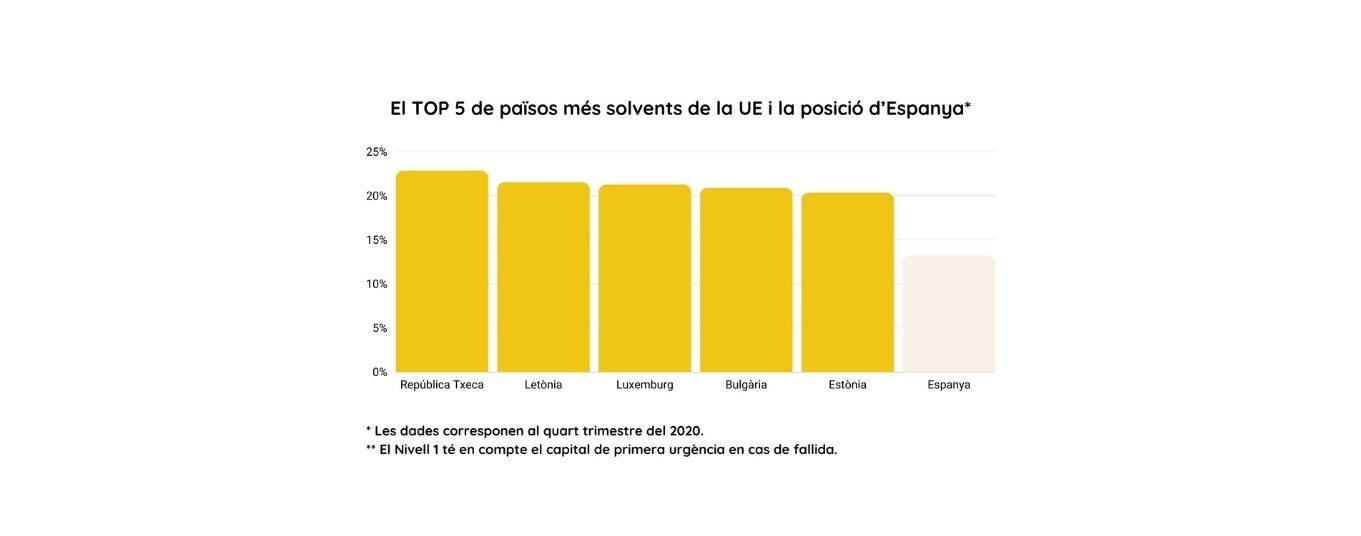
Source: European Central Bank. Stadistical Data Warehouse.
Seeking improvement in financial services
In addition to the existence of countries that are more solvent than Spain when opening a bank account, it is important to notice that, despite the fact that Spain is one of the countries that approved the PSD rules -in 2007; then signed the SEPA rules in 2012; and, in 2014, the agreements that initiated the use of the IBAN-, in practice, apart from failing to comply with the agreements it signs, its banking institutions have not improved the financial services they offer to customers either. For all these reasons, looking for alternatives is a good solution.
Moreover, since 2014, Spanish companies and institutions have practised what is known as IBAN discrimination, which consists of not accepting payments or direct debits to accounts that do not include the letters ES in their numbering, i.e. that do not correspond to a Spanish bank. By doing so, they contravene European regulations. This practice is not legal and only benefits traditional Spanish banks.
How to report IBAN discrimination?
Shortly after this discriminatory practice – especially widespread in Spain, but also in France – was detected, the first complaints were filed by customers. But, above all, it was the new emerging banking sector in Europe, led by neobanks and fintechs, born as an alternative to traditional banking, that led the action. Companies such as Revolut, N26, Finextra, Monito and Wise are examples of it.
Some of these new banks, based in several European countries and, therefore, with a foreign IBAN, provide customers with tools to report it, in the first instance to the entity at fault and, if it does not rectify it, to the Bank of Spain. Ultimately, this can be escalated to European courts. Most of these lawsuits end up in favour of the people affected. The European Commission is well aware of this, as its pronouncements and reports prove, and punitive measures are being tabled. Some MEPs have even denounced it with formal questions at the European Parliament.
Customers, new banks and European institutions are working to resolve IBAN discrimination to, once again, focus on the multiple advantages of free choice of IBAN, especially for customers. Overall, work is underway to ensure that IBAN discrimination becomes history in the near future.
Want an 11Onze account? Order batch in Get in line. With the code we’ll give you, you can open an account on October 1st.
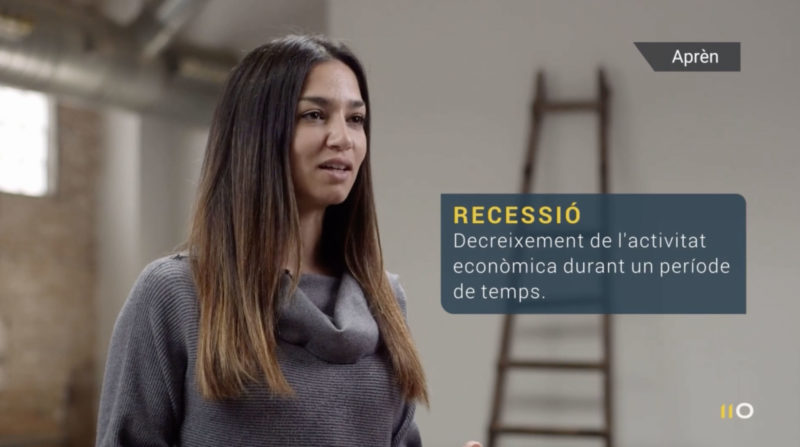

With a strong community, a shared structure and leading technology, operating worldwide with a single account can be a reality. 11Onze’s Head of Product, Jordi Sánchez, explains what has inspired us to change the world of banking.
Can you imagine that with a single gesture we could make transactions, apply for loans or move our savings around the globe? Experts of the new digital banking have been asking themselves the same question over and over again for months, and they have found the answer around a breakthrough concept: the universal bank account. They claim that if everyone had a single universal account, it would make the banking industry more efficient, and make life easier for customers.
“There are many things in 11Onze that already resemble this universal bank account ideal,” says Sánchez. Currently, Spain is a paradigmatic example of how the banking sector tends to concentrate, with a few people controlling the whole market and therefore offering products at the price they want. On the other hand, inspired by this universal bank account, new banking institutions, using blockchain technology, can share information, services and structure.
The 11Onze community is inspired by this utopia and has made of it its own work philosophy. “On the one hand, from the sector’s point of view, it helps reduces costs and makes the market more competitive. On the other hand, from the customer’s point of view, it allows everyone to have a basic account to operate more freely”, summarises our product manager. In short, 11Onze is building a banking experience that is unique in the world.

A single card for multiple transactions
So, if in the utopia of the universal bank account, a virtual number would be assigned to each client, a type of identification that would allow us to operate from anywhere on the planet, at 11Onze we also assign each person a code that will allow them, through Fem Cua, to download our top-level application, El Canut, and start operating. In addition, clients will have a single card to manage different transactions, a digital wallet that fully complies with the PSD2 (Payment Services Directive).
At the same time, 11Onze will take care of our entire community through a KYC (Know Your Customer) centre. These processes ensure that the financial institution strictly complies with a series of criteria to know, recognise and monitor all the current accounts it is responsible for. In La Plaça we have already explained how the 11Onze application will protect all customers thanks to the latest biometric recognition technology.
“Although a bank operation, such as a transfer or a loan application, does require a password to validate the operation, a uniform KYC saves the duplication of processes when the client registers or has to complete bureaucratic procedures because all financial entities will be sharing a database and will have a common procedure,” Sánchez adds.
The financial hub: a lot of offers for a fintech
Lastly, and most importantly, this new-generation system, arrived to revolutionise traditional banking, will allow customers to choose where they want to open their universal bank account via the 11Onze access code. “At 11Onze, we concentrate a lot of IBAN offerings in a single fintech. This means that you can choose where to open your accounts among several European banks. We want to be a financial hub so that customers can operate with diversity and security,” says our product manager.
Like any leading fintech, 11Onze has created a shared network with other financial institutions which improves efficiency, shares strategies, technology and services, and reduces structural costs. At the same time, it helps customers to quit using multiple unrelated accounts, which obstruct free operations in the global marketplace. We are already the first fintech community in Catalonia. Get ready, now, to be the spearhead of all fintechs in the world. The world is changing. Money, too. It evolves with 11Onze.
Want an 11Onze account? Order batch in Get in line. With the code we’ll give you, you can open an account on October 1st.



When we need to find financing, the first thing we think of is asking the bank for money. But there are other ways to get a loan. Often, due to a lack of knowledge, we do not use one of the tools that is closest to us: loans between individuals.
If the interest that the bank wants to charge you for a loan seems excessive, and you have already ruled out finance companies because, despite being faster, they are more expensive, there is another option: loans between individuals.
This form of community finance can be a good way for both the lender and the borrower to gain something. On the one hand, the lender gets a return for his money; on the other hand, the borrower gets an interest rate below the market rate.
11Onze Agent Jordi Oller tells us how to ask for a private loan.
A written contract is the key to avoid misunderstandings
The best way to avoid misunderstandings is to put the agreement in writing. In this private contract between the lender and the borrower, it is very important to put on record:
- Date and place of the signing of the contract.
- Personal details of the parties involved (lender and borrower).
- The amount being lent.
- The repayment period.
- The interest on the loan.
- The settlement of the instalments (monthly, quarterly, annual, at maturity…).
Once the contract between the lender and the borrower has been signed, the agreement must be registered and, therefore, the borrower must pay the ITP tax (Impost sobre Transmissions Patrimonials i Actes Jurídics Documentats) at the tax office of the Tax Agency of Catalonia, by filing form 600 within a maximum period of one month. If the loan is between a parent and a child or between two friends, no tax is payable, because loans between private individuals are taxable transactions, but exempt from taxation.
Although the lender does not have to pay this tax, the Personal Income Tax Act does state that, when a loan has been agreed between private individuals, the lender can be obliged to declare the interest. The legal interest rate is 3%. However, when both parties agree, it is possible that this interest rate does not apply and therefore the lender does not have to pay tax on it. In the end, everything is left within the community.
Want an 11Onze account? Order batch in Get in line. With the code we’ll give you, you can open an account on October 1st.

In August, after 52 years operating, Catalonia has abolished 556 kilometres of tolls, and the question now is: How do we pay for their maintenance? We are explaining to you how much has been collected by Catalan roads and how other European countries maintain their road networks.
From now on, the Spanish state will have to maintain most of the Catalan road network, which costs 60,000 euros per kilometre, some 33 million euros per year. How to do it has not an easy answer. Although tolls in Catalonia have produced extraordinary revenues, generating 537 million euros a year, they have benefited concessionaires and shareholders more than they had invested. On the other hand, it has financed 132 municipalities through the Property Tax (IBI). Despite this, Spain is at the bottom of European countries in terms of both investment and revenue collection.
In fact, the Spanish state does not have a clear model for maintaining its roads, most of which are free for users, a fact that has left an 8 billion euro hole in the public coffers. To reverse this deficit, the Spanish government has proposed tolls on motorways and a Pay-As-You-Go system for high-capacity roads, as part of a post-covid recovery plan with European funds.
Portugal, the mirror in which to reflect itself
Such a proposal is inspired by the Portuguese model, which has an additional charging system that includes motorways. In Portugal, as in Poland, vehicles must be registered and are charged by means of camera arches installed on the roads.
Another payment model is the one used in many Central European countries, such as Austria, Switzerland, the Czech Republic, Slovakia, Slovenia and Hungary, with the so-called vignette system, in which the driver pays a fixed price for driving on the roads. In the Austrian case, for example, it is 80 euros per year. Catalonia wanted to implement this model, but has finally agreed to share the same system as the entire Spanish road network.
France, in turn, has a mixed model similar to the one currently in place in Spain and, in a completely opposite way, Italy has almost all of its roads managed by private toll companies. On the other hand, in Germany, Belgium, the Netherlands and Denmark, the entire road network is free and financed by state budgets, with small exceptions, such as heavy goods vehicles, which must pay to circulate.
Do you want to be the first to receive the latest news about 11Onze? Click here to subscribe to our Telegram channel


On 24 August 2021, the government approved an initial pension reform that will bring some changes to retirement for all workers.
The sustainability of retirement pensions is a recurring and much-talked-about issue, and the Gobierno del Estado and its social agents have been working on reforming it for a long time, and have now approved the first package of measures.
In this initial block, the objectives are to guarantee the revaluation of pensions and the purchasing power of pensioners, as well as to lengthen the retirement age, providing incentives for workers to extend their working lives and penalising early retirement. We review the main measures that have been approved.
What are the main measures implemented?
- In order to guarantee their revaluation and the purchasing power of pensioners, pensions are linked to the CPI (Consumer Price Index) recorded in the previous year. Thus, they will be automatically increased from 1 January in line with inflation.
- Early retirements are penalised by increasing the reduction coefficients that calculate them. This reduction coefficient is increased, for example, from 16% to 21% for workers with less than 38 years and 6 months of contributions who wish to take early retirement by two years.
- Forced retirement clauses, which oblige workers to retire when they reach the legal retirement age, are eliminated and can only be maintained in agreements already signed and in activities where women represent less than 20% of the workforce.
- Incentives for workers who extend their retirement beyond the legal retirement age, consisting of a pension increase of 4% for each year of continued employment, an equivalent lump-sum payment, or a combination of the two options.
- Improving the financing system to ensure sustainability by establishing an annual transfer from the national budget to the social security system.
The second package of pending reforms
Thus, the short-term objective is to bring the retirement age in line with the real age, extending the working life of workers and, therefore, their years of contributions to the system. At the same time, the Gobierno del Estado is working on a labour reform that would provide greater stability, in which it would propose a reduction in temporary contracts, pursue subcontracting and recover collective agreements, among other measures to be applied.
Likewise, some other measures envisaged in the draft bill have been left out, such as the postponement of the retirement age to 67, the increase in the number of years of calculation that form the regulatory base of the pension, or the reform of maximum pensions. However, it is expected that the government will look into approving these measures in the future and possible new changes.
Do you want to be the first to receive the latest news about 11Onze? Click here to subscribe to our Telegram channel
If you liked this article, we recommend you read:
 Management
Finding a job after fifty
3 min readAccording to the Idescat, this June 2021 there were 445,862 unemployed people. Of these


They denounce the bad practices of the large distributors in the food sector, who adjust the prices of raw materials to such an extent that it is no longer profitable for farmers to produce.
Unió de Pagesos‘ demand is clear: fair prices for producers. A problem that in recent months has particularly affected the dairy cattle business, but which extends to many other sectors of agriculture and livestock farming. At the root of the problem lie the bad practices of the large distributors, and from here new problems arise that compound the critical situation of this sector in our country.
Agriculture contributes 2,307 million euros to Catalonia’s GDP (2020), making it the economic sector with the least impact on GDP, and a far cry from the 153,039 million euros generated by the services sector. Even so, it is still a strategic sector for society as a whole, and mainly because it provides the raw material for the main foodstuffs, it is one of the main sectors that must be maintained and developed. The question, however, is what price we are prepared to pay to maintain it, or rather, what would be a fair price to pay.
The primary sector has declined in recent years.
In recent years, the food sector has seen an irreversible change in the business model: multinational chains have filled the towns and cities of Catalonia with large supermarkets, with prices so low that hundreds of small and medium-sized businesses have been priced out of the market. A situation that has directly and significantly affected the state of health of the farming sector, which, as trade unions, employers’ associations, and town councils denounce, is experiencing a historically critical situation. In 2020, Catalonia registered a total of 454 dairy cattle farms. To give us an idea, in 2010 these figures stood at 813 farms and, even further back, in 1991 there were 4,329.
Currently, the average paid is 33.28 euro cents per litre. This is the amount that reaches the producer, a figure far from the break-even point, which is around 37.31 euro cents per litre, and in some cases even more. The minimum production costs are therefore not covered, and this puts producers in a critical economic situation, which explains the decline in the number of farms.
Catalonia’s food sovereignty at risk
Food sovereignty is understood as the right of the people and countries to create policies that allow them to produce food according to their characteristics and needs. It includes, therefore, not only the right to food but also the right to produce food and for this production to serve to maintain the community as a whole. This is stated in the Political Declaration of the NGO/OSCO Forum for Food Sovereignty.
Catalonia’s food sovereignty could be affected if the economic situation of livestock farmers does not improve. If they cannot compete with the prices of the distributors, and as the Unió de Pagesos warns, they cannot make a living, many of them will end their activity, which in recent years has declined progressively but substantially. The impact on society will be felt in almost all areas.
An issue where every action counts
A loss of activity in the primary sector would lead to a much higher demand for imports, which could affect both the quality and price of commodities. On the other hand, a lack of production would lead consumers to renounce zero-kilometre and local products, which, with a decrease in supply, could also lead to higher prices.
If the situation is to be brought under control, and before it reaches a point of no return, the main problem to be tackled is to pay producers a fair price. The support of the administration will therefore be key in this process, and the management of the distributors will be critical in determining the future of the primary sector. Beyond that, the end consumer also has the power to contribute to change, in his or her case, by making choices. The challenge will be that, aware of the situation, this choice is made according to sustainable criteria and that it guarantees a fair price for the whole production chain.
Do you want to be the first to receive the latest news about 11Onze? Click here to subscribe to our Telegram channel

With the arrival of September, many families have to make great efforts to be able to afford the high costs of back-to-school expenses. We analyse the cost of it, making a comparison between community school “pública“, semi-private “concertada” and public “privada” schools.
According to a study by the Organización de Consumidores (OCU), carried out in September 2020 among 1,495 consumers with school-age children, the approximate cost of back-to-school for each pupil is 1,937 euros per year. But how much does it cost by type of school?
The OCU survey compares the cost of a community school, which has an average annual cost of 1,071 euros per pupil, with a cost of 2,633 euros per year if we are talking about a semi-private school and a cost of 6,123 euros per year if we are talking about a public school. If we compare it according to stages of study, the average annual expenditure in Pre-school is 1,837 euros, followed by 2,079 euros in Primary Education, 1,920 euros in Secondary Education and 2,061 euros on average for College.
What expenses should be taken into account?
When it comes to buying smocks, tracksuits and uniforms, the survey states that the average expenditure per pupil is around 170 euros, in this case, with no difference between community, semi-private and public schools. For school materials, spending rises to an average of 115 euros. And with regard to textbooks, there is a big difference in prices depending on the school stage and whether it is a community, semi-private or public school.
Spending on textbooks ranges from 125 euros in the infant stage to an average of 230 euros for college, although it can be much higher depending on the type of school. We must not forget that within the fixed costs we also have to add excursions, insurance, annual fees such as those of parents’ associations, or the purchase of computer equipment that some schools ask students to buy.
Catalonia, the most expensive autonomous community
As monthly expenses, it is necessary to take into account the monthly fees of each centre, in the event that the pupil attends a semi-private or community centre, where the amount can range from 167 euros in semi-private centres, to more than 600 euros in public schools. To this expense extracurricular activities must be added, whether they are sports activities, language or music classes, where the average cost per pupil is around 68 euros depending on the activity. And not forgetting the cost of transport if necessary, adding the cost of the canteen for all those pupils who eat at the school. The OCU study reveals an even more significant economic fact for us: Catalonia is one of the areas of Spain with the highest back-to-school cost, with an average of 2,385 euros per pupil per year.
Each household prepares for the back-to-school period within its financial means, and the cost will be higher if there is more than one child. But it is important to bear in mind that, if you need financial support, you can apply for aid at the school itself, at the town hall, at the Regional Council, in the aid and subsidies section of the website of the Ministerio de Educación y Formación Profesional or on the website of the Departament d’Educació de la Generalitat de Catalunya. With the numbers done for the return to school, it only remains for us to wish you all a good start to the school year in 2021.
Do you want to be the first to receive the latest news about 11Onze? Click here to subscribe to our Telegram channel



The sea has suffered greatly in recent decades, and humans have accelerated this deterioration. According to the UN, the fashion industry is the second most polluting in the world, with more carbon emissions than all international flights and shipping combined. Alongside lands in the fashion industry to change the rules.
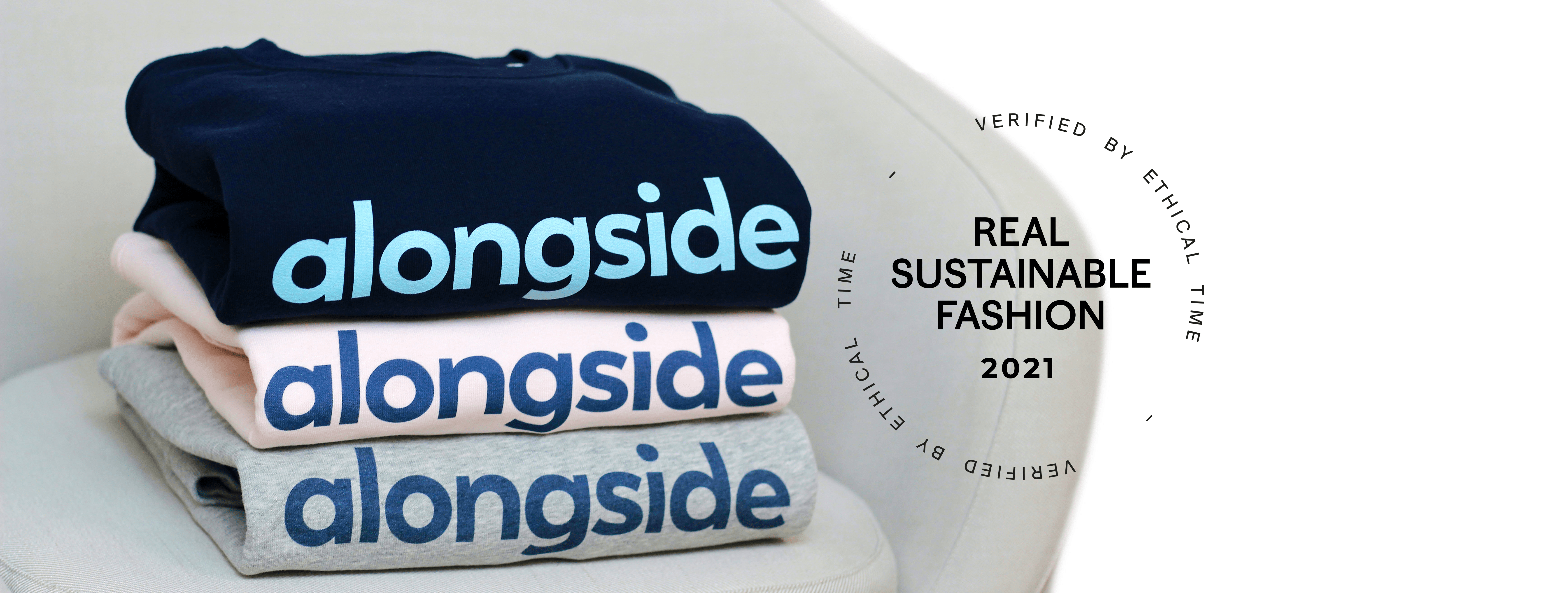
Alongside was born in Barcelona in 2020, at the hands of Guillem Alcalá, an entrepreneur, lover of the sea, with the aim of protecting and conserving the oceans.
Guillem has always had a great bond with the sea, which over the years has become even stronger. Holidays were always at sea, where he could dive, snorkel, surf, sail… do any activity in salt water. Destinations that were full of colours and marine life, but that over time were becoming grey corners, soulless and lifeless. We talked to him about the company he has created and his great commitment to the environment.
Brazil, the trip that changed everything
In February 2019, a trip to Brazil made a big impact on Guillem and left him in a state of shock. I had never seen so much plastic flooding the beaches on a route away from the big cities. Every day he slept in a different fishing village, and in the early hours he embarked with a fisherman to discover the best corners of the coast, to see where the marine life was. Thanks to this, he found that at all points along the coast in the more than 300 km he travelled, marine life had been disappearing, and the coral population had been halved in the last five or ten years.
Guillem did not understand how sea reefs, whose fishing was the main source of income for the population, could be dead. If those people only lived on the four coconuts they had, a couple of cassava crops, and the fishing of the day, why did they care so little for their resources? On the last day, in the taxi on the way to the airport, he was contemplating the Río Pinheiros in the centre of São Paulo: the river was coming down so full of plastic containers that he could barely see the water. And all that flowed directly into the sea.
Change your life to save the ocean
This impact led to the beginning of his research on the disappearance of marine reefs and the contamination of plastics when he returned from the voyage. He worked as a consultant, but as a lover of the sea, he felt obliged to do something to protect, conserve, and change this degrading situation. He could not stand idly by and let the seas die.
So in May 2019 he decided to quit his job, not knowing very well what the plan was, but knowing the goal: work to change this situation. Therefore, he decided to create a sustainable clothing brand where he could bring together a community of sea lovers and thus, together, manage to generate a positive impact and, at the same time, create awareness among other citizens. The marine problem has more and more visibility in the media and there are many organizations focused on eradicating this problem, but in early 2019, in Spain, little was heard about all this, and there was some ignorance about it.
This is how Alongside is born, and it does so by being part of the change in the textile industry through the production of ethical, sustainable, and lasting clothing;to reduce the impact of the carbon footprint on the environment. With a casual line of ecological and vegan t-shirts and sweatshirts, it aims to be a reference for all those lovers of the sea who want to do their bit and wear the brand values.
Sustainability, ethics, and the environment
- Organic cotton: Alongside’s clothes are made 100% with organic cotton, a natural fibre that requires less water than conventional cotton, without chemicals, and that favours crop rotation to maintain healthier and more fertile and moist soils. The waste generated in obtaining organic cotton is destined for the animal feed industry, thus reducing the footprint on the planet.

- Sustainable process: this cotton has the GOTS (Global Organics Textile Standards) certificate, the strictest in the field of organic fibre textiles, which ensures the traceability of the whole production chain from the cotton fields: the harvesting, the manufacture of the fibres, the assembly of the pieces, the final product before printing, and even the export of the finished parts.

- Recycled materials: for sweatshirts, they use 100% polyester (15% polyester, 85% organic cotton). Polyester is obtained from bottles and other recycled plastics, without generating waste and giving a second life to existing ones. That’s why they have the Global Recycled Standard label, which certifies that the materials used are recycled.

- 100% vegan: they also have the PETA certification, as they do not perform or commission any animal testing on ingredients, formulations, or finished products, and it is also a commitment to never do so. In fact, the clothes are made of 100% vegan materials. Nothing comes from animals.

- Guarantee work quality: they also have the Fair Wear Foundation certificate, a non-profit organization that works with brands, factories, unions, NGOs, and governments to ensure and improve the working conditions of workers.

More than a sustainable clothing brand
Alongside’s commitment to the environment is evident when you enter its website, where you are given the possibility to adopt a coral without even buying any product, since buying what is not needed is not sustainable. He tells us that they opted for coral crops because they are the heart of the sea, one of the most complex and rich ecosystems on the planet, and 25% of marine species live on them.
What would happen if 25% of all marine species disappeared? It would generate such an imbalance that it would end up with the remaining 75%. The bet is strong, as Alongside’s mission is very clear: to save the seas and oceans. That is why they have been the first brand in Spain in which, for the purchase of a product, a coral is planted.
Indonesia, epicentre of marine biodiversity
Guillem tells us that “in order for this to have the greatest possible impact, we chose Indonesia, in the Pacific, as it is in the well-known Coral Triangle, and brings together the world’s largest marine biodiversity. After weeks of research, we were able to contact a biologist with over twenty years of experience with corals and techniques for reproducing them. The confidence he conveyed to us by teaching his crops and the areas where he had been working during the past months made us start planting corals that same week, on March 7, 2020.”
With the adoption of coral, you get a certificate of adoption with the coordinates where the coral has been planted, and your name or that of the person you want to surprise with an original and supportive gift.
Maritime preservation from Catalonia to the world
In addition to combating the disappearance of coral reefs due to climate change and pollution of marine waters with coral plantations, they regularly organize beach cleanings open to everyone. The aim is to eliminate plastics and waste accumulated on the Catalan coasts, and create awareness to prevent new waste from ending up in the sea, as this is the cause of death of millions of marine species.
If we buy a sweatshirt, we will contribute a coral plant. If we buy a t-shirt, cap, or bag, we are supporting the initiative to clean up beaches and the seabed. And finally, if we decide to buy a piece of jewellery, we will collaborate with the RESCAP program, a pioneering program in recovery and conservation of the Gorgonians in Cap de Creus, to strengthen our commitment and love for the marine corners of our homeland.
Innovative initiatives like this exemplify that the future has only one path, and that is sustainability and awareness when it comes to consuming.
If there is one thing the Covid-19 pandemic has done, it is to make us rethink the society we live in, our healthcare system and, above all, our economy. A phenomenon that has left many of our businesses in a precarious situation in which mere survival is considered a success.
The European Council has designed a recovery plan for Europe. According to ACCIÓ (L’agència de la competitivitat per l’empresa de la Generalitat de Catalunya), this aid, approved on 21 July 2020, will give a boost to EU economies after the debacle caused by the pandemic. From this money comes the economic package known as Next Generation EU, with a total of 750,000 million euros. These funds are being distributed to EU member states to help their economic recovery, and will be used to finance all kinds of projects.
From these funds, 140 billion euros will be allocated to Spain, some in direct aid and the rest indirectly, in credits.
How this aid will be distributed to businesses:
According to Royal Decree-Law 5/2021, of 12 March, on extraordinary measures to support business solvency in response to the Covid-19 pandemic, the first aid package will be distributed as follows:
- Line of direct aid to the self-employed and businesses. Managed by the Autonomous Communities and with a budget of 7,000 million euros, they will be used to cover the cost of payments to suppliers and other creditors, and also for expenditure on energy services and supplies.
- Restructuring of financial debt. It gives the government more flexibility in giving loans with public guarantees, thus allowing the incorporation of ICO lines. Three billion euros in direct and extraordinary aid to reduce the burden of loans with public guarantees.
- A recapitalisation fund for companies. Designed for medium-sized companies that were viable before the pandemic, but that have solvency difficulties and cannot access the fund managed by the Sociedad Estatal de Participaciones Industriales (SEPI).
- Extended period before the automatic triggering of insolvency proceedings. It aims to provide a greater margin to re-establish their financial equilibrium before entering insolvency proceedings. Likewise, the period in which tax debts can be paid without interest for late payment is extended to four months. A set of economic aid measures which, despite being subject to certain requirements, are a breath of fresh air that is more than necessary in the difficult times we find ourselves in.
On the other hand, and as we have seen in previous crises, this aid is rarely free, and sooner or later it has to be paid back whether we like it or not, generally through financial austerity measures.

Xavi Viñolas explains it to us

The events sector has been one of the hardest hit by the pandemic, with many events that had been in the pipeline for months being cancelled, and the same has happened with weddings.
Many couples have had to put the long-awaited “I do!” This has led to the cancellation of suppliers and ancillaries (farmhouses, caterers, photographers, videomakers), dresses, and a long etcetera.
Couples who have not been able to wait until 2022, which is when a new normality is expected to begin, have had to reinvent themselves and have zoom weddings or micro-weddings with 15 people.
We interviewed Cristina González, Head of communication in Spain at Bodas.net, a leading website in the bridal sector, with its international office in Sant Cugat del Vallès.

How have you lived the pandemic debacle at bodas.net?
In 2020 there were approximately 80% fewer celebrations than in 2019, according to a survey conducted by Bodas.net to more than 1,390 companies in the sector at the end of 2020 and 2,500 couples. However, of all weddings, only between 5% and 9% of weddings were cancelled, all others were postponed to a new date. Furthermore, 8 out of 10 couples who decided to postpone set a date for 2021.
What was the feedback you received from your suppliers regarding wedding cancellations?
More than cancelled weddings, we are talking about postponed weddings, as only between 5% and 9% were cancelled, all the rest were rescheduled.
Like all sectors, the bridal sector has experienced some difficult times throughout 2020 and early 2021. During all this time, there have been no specific and stable periods or clear protocols to allow weddings to take place. For this reason, Bodas.net joined with associations from all over Spain, businesses and affected couples to make a joint and public petition to the Spanish Government last March.
In Spain, approximately 165,000 couples get married every year and a direct business of 3,500 million euros is generated.
The wedding business includes multiple activities and does not belong to a single sector; it is included in other sectors such as leisure or catering. Even so, just registered on the Bodas.net website there are already more than 48,000 companies that work for weddings, so there are many companies, professionals and families directly affected, in addition to the nearly 200,000 couples who expect to get married in the coming months.
This is why we believe that it was of the utmost importance and urgency for the government to establish specific periods and measures so that the sector could continue to work, as has happened in other sectors.
Are your suppliers adapting to the current situation, and do you know if they have changed their rates?
The rates, as in any sector, are one of the things that can change year after year, regardless of the current situation.
Many couples are setting their new wedding date for 2022, partly so that the situation is more controlled, do you think they will be able to be cheaper than before?
A large proportion of the couples who are setting their wedding date for 2022 are couples who got engaged in 2020 or early 2021. In the last survey we conducted at the end of April, only 14% of couples said they had a wedding date for 2022.
In terms of budget, in a survey conducted by Bodas.net in February on Spanish couples who got married in 2020 or with an initial date in 2020 and postponed to 2021, more than half (55%) said that the current economic situation generated by the Covid-19 had not changed their initial budget. We remind you that the average cost of a wedding in Spain is €20,500, according to the Libro Imprescindible de las Bodas, written by Bodas.net in collaboration with Carles Torrecilla (professor at ESADE) and Google.
Do you want to be the first to receive the latest news about 11Onze? Click here to subscribe to our Telegram channel

Will smaller, intimate weddings continue to boom?
The number of guests has had to be adjusted to the capacity limitations of each place and time. Even so, as far as the banquet is concerned, and taking into account that they are usually large and with outdoor facilities, as well as having qualified staff to ensure everyone’s health and safety, the adjustment of guests has not been so extensive. Of 1700 couples planning to marry between May 2021 and April 2022, 74% expect to have more than 76 guests at their wedding, with 50% believing they will have more than 100. The average number of guests at a wedding in Spain is 130, according to El Libro Imprescindible de las Bodas.
Despite capacity restrictions, couples still prefer weddings with many guests. Only 15% will be micro-weddings.
There is talk that there is a shift towards choosing other days of the week to make costs more economical, are you noticing this new trend?
The favourite day to get married is still Saturday, although the trend is for more and more weddings to take place during the week (Monday to Thursday), according to a study by The Knot Worldwidet. This is something that was already beginning to be seen in recent years, but which the current situation has precipitated by the readjustment of postponed marriages. This is undoubtedly a trend that will allow for more choice in the calendar.
This readjustment of dates has also meant that couples who have become engaged in recent months will have to set a wedding date for 2022, as the agenda will be very tight. As a consequence, if in previous years Spanish couples needed an average of 12 months to organise their wedding, now this preparation time is extended to 18-24 months. This extension in the organisational timing will allow couples to take much more care and spend more time on the details they want for their day.
Tell us a little more. As wedding experts, what do you see weddings looking like in 2022?
Fortunately, with the end of the state of alarm, the advance of vaccination and the predisposition of professionals and couples to adapt the links to the circumstances, the prospects are good for the coming months. According to the latest survey carried out by Bodas.net at the end of April among couples who have a wedding date for 2021, 8 out of 10 say that they will get married on the date set. Moreover, of these, 70% say they are sure or very sure that the wedding can take place on that day.
Everything suggests that weddings, although adapted to the circumstances, are back to stay.
Nothing is going to stop the desire to get married, despite the fact that there are going to be changes, both in terms of capacity, guests and the way of relating, everything points to 2022 being a very tight year in terms of dates and we are finally going to be able to make up for lost time. Here’s to the bride and groom!
Follow all the news of 11Onze on our official channel