Follow live the 'Que no faltin!'
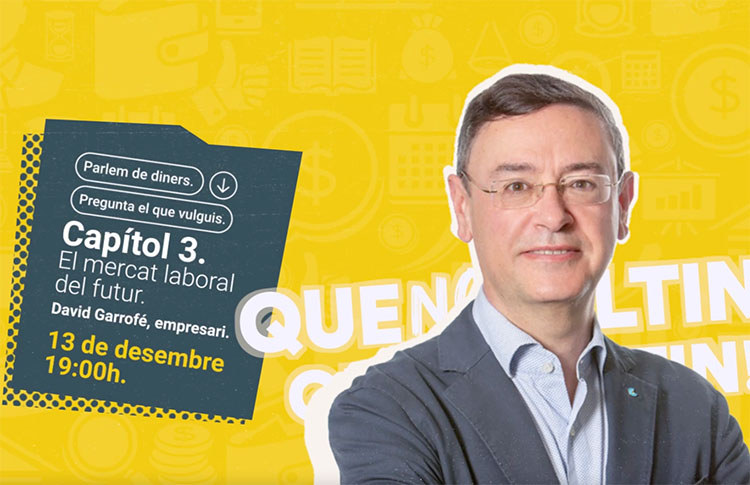
The labor market of the future is the topic of this third episode of 11Onze’s financial education video podcast. From 7pm you can follow your conversation live with David Garrofé on this page.
As usual, the ‘Que no faltin!’ will be available exclusively live on La Plaça, in the player in this article. Users can leave questions in the comments of this news item for David Garrofé to answer them live.
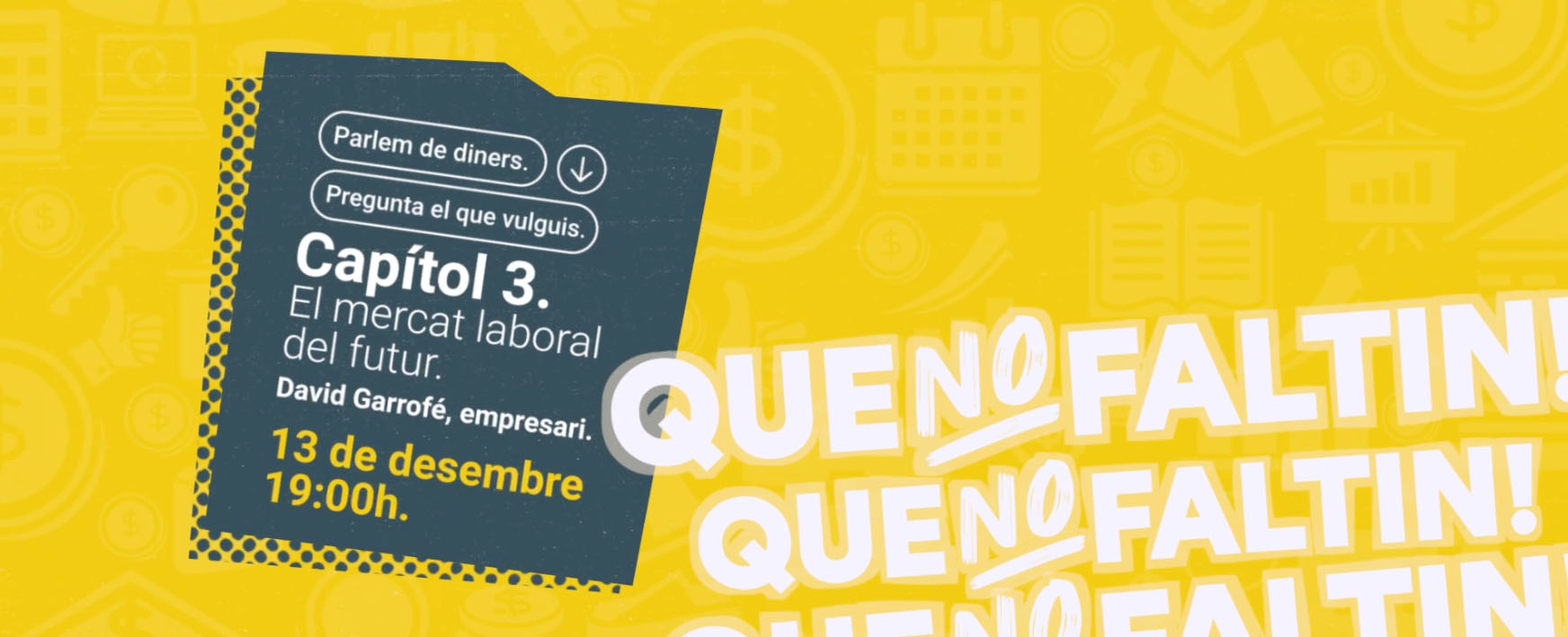

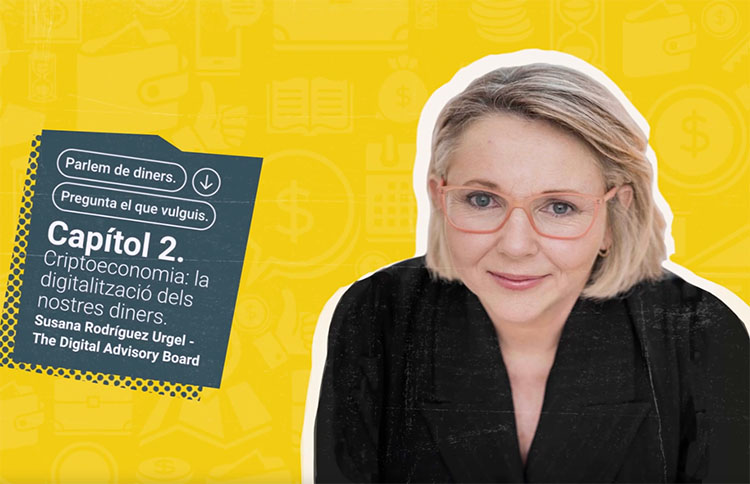
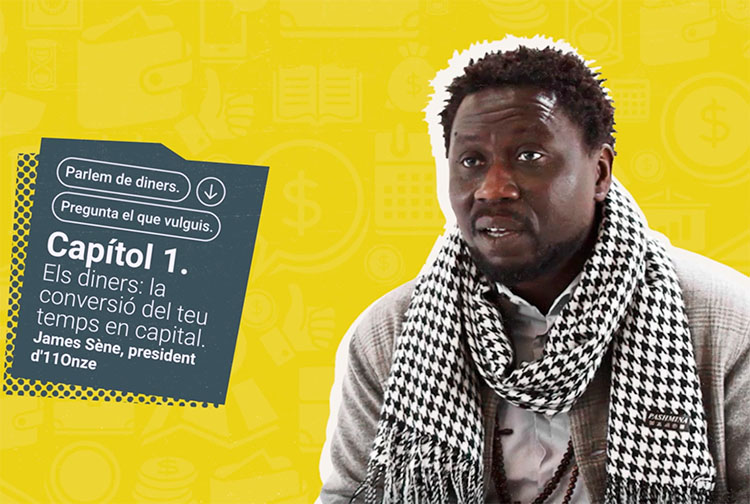
On Tuesday 13 December at 7 p.m. ‘Que no faltin!’ features entrepreneur David Garrofé. If you want to participate, reserve your place by writing to [email protected]
With a low birth rate, there will be a shortage of labour. With digitalisation, some jobs will disappear and others will be created. With high international mobility, our most talented young people will be tempted to move to other places that offer better conditions. Is Catalonia ready for the labour market of the future? What do our employers need? What jobs will be most in demand?
We talk about this next Tuesday in our financial education video podcast, ‘Que no faltin! We will be joined by businessman David Garrofé, who for more than 30 years was secretary general of Cecot. It will be a good opportunity for the 11Onze audience to ask any questions they may have on this subject. If you want to ask for a place to participate, you can email [email protected].


Central banks’ digital currencies and our ‘virtual’ identity in the metaverse will play a pivotal role in the proposal to rebuild the global economic model that was put forward from the Davos economic forum. What consequences will this paradigm shift have for our lives? In a new Fintech Talks, James Sène, chairman and founder of 11Onze, explains the changes to come and gives us food for thought on how to deal with them.
Two lions crown the pillars at the foot of the stone-railed staircase leading to the main entrance of Villa Urània. The house is a tower surrounded by a garden in the Sarrià-Sant Gervasi district, which was bequeathed to Barcelona City Council by will by the astronomer Josep Comas y Solà. A neoclassical style space that has been reinvented combining tradition with modernity, and reconverted into a Japanese coffee shop, the Oyatsu Lab, is the ideal setting for a Fintech Talks that analyses what the restart of the current economic model will be like.
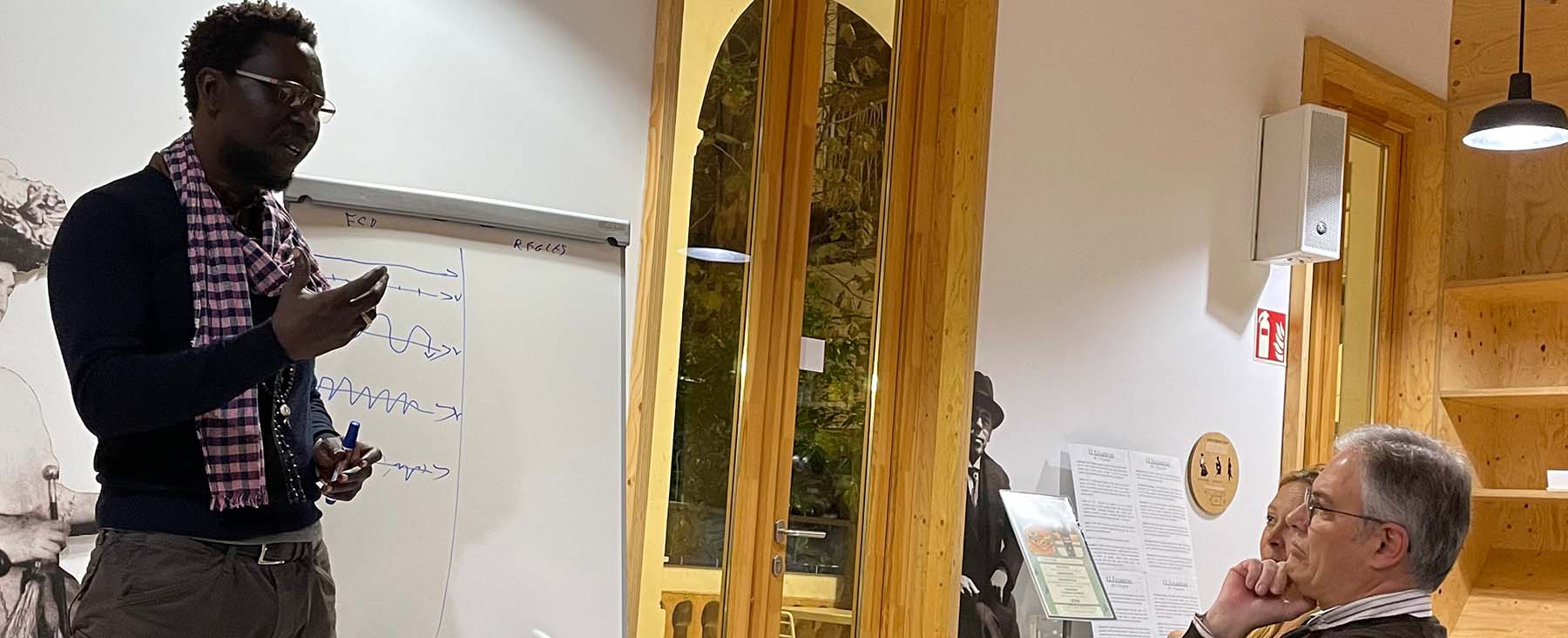
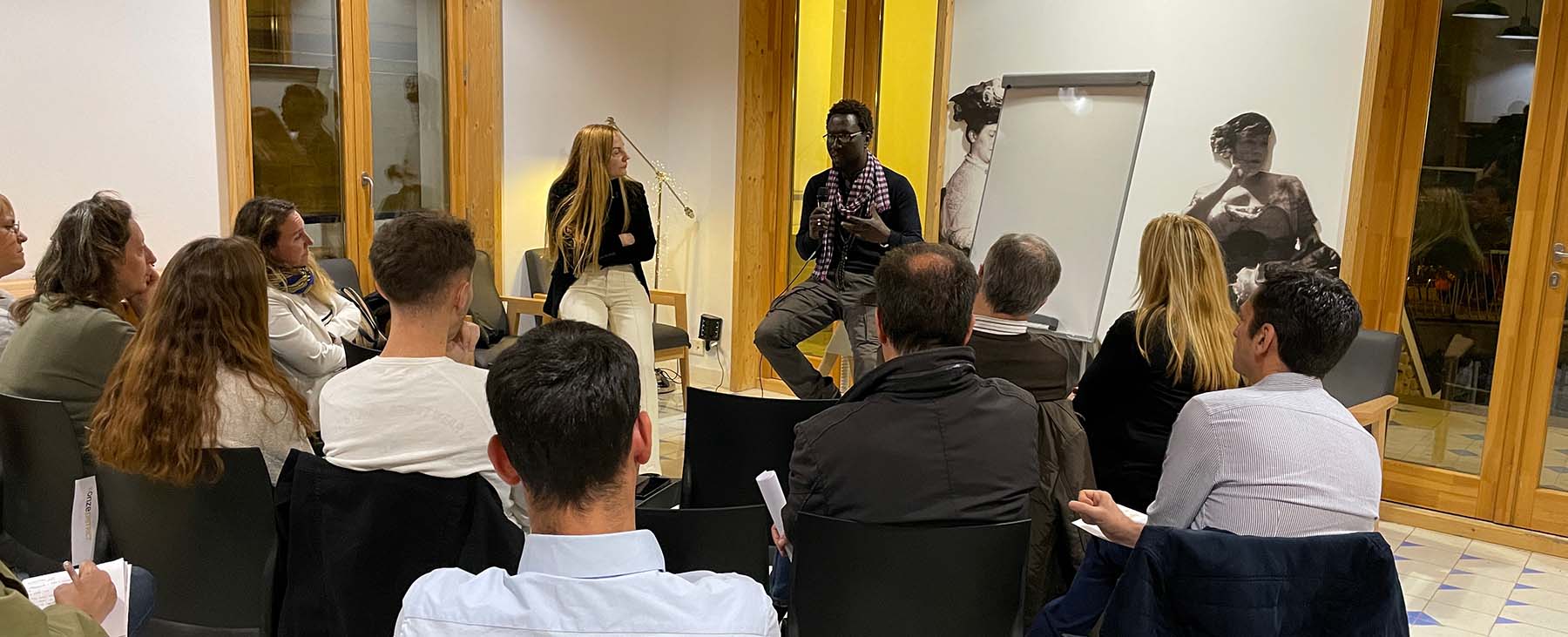
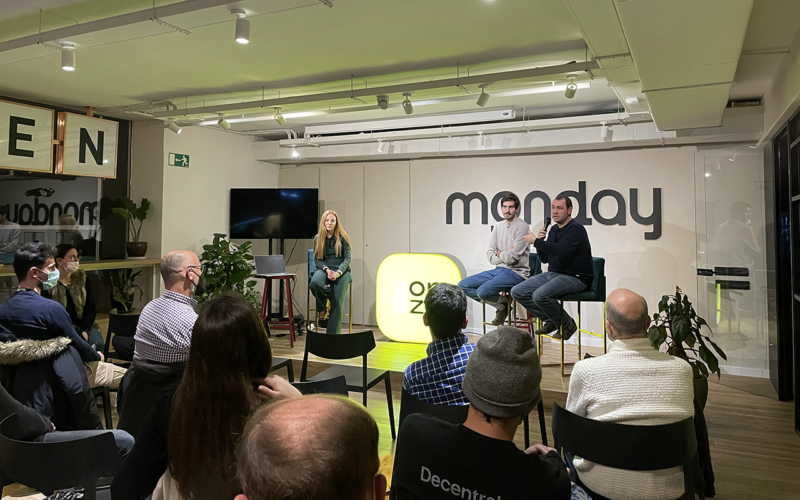
It was well into the evening when the audience began to fill the café. Unlike other events previously organised by 11Onze, this talk is thought of to be more relaxed, in small groups, to allow the conversation to flow between the audience and the speaker. Gemma Vallet, director of 11Onze District, is in charge of asking preliminary questions and moderating the debate.
Faced with the imminent economic recession, the first question is obvious: how did we get to this point? To begin with, Sène points out that 11Onze has been explaining and warning for a couple of years that the sovereign debt crisis of the states will lead us to a global crisis with major socio-economic consequences, “when private banks create money out of nothing, constantly, inflation is inevitable”.
Unlimited growth on a resource-constrained planet
The interaction with the audience does not take long to get started, and the conversation drifts towards neoclassical economic theory, which is necessary to understand the current economic model. The management of scarcity as a fundamental concept of the capitalist system has set a path focused on unlimited growth, which is totally unsustainable precisely because of the limited resources of our planet.
A new, community-based, mutualistic model, based on social networks, where most things are shared, is being imposed as a counterpart to the status quo that existed until a few years ago. We are facing a “transition from the old model, totally dominated by a few, to a new model that reaches more people and is decentralised,” says Sène.
He concludes that this change of model is inevitable, but that, at the same time, the actors who now dominate and direct the economy will do their best to perpetuate a system where people’s access to goods is restricted, thus ensuring the relevance of scarcity in the economic model.
A virtual and virtualised world
These are issues that are difficult to explain and hard to assimilate, but the president of 11Onze does not shrug his shoulders and proposes two ‘tips’ to understand what is happening: how the ecosystem works and the rules of the game. But first, he points out that we have to understand that we do not live in a virtual world, but in a virtualised world, i.e. “what happens in the digital world has a real impact on our lives, we are living in a totally virtualised world”.
The creation of central bank-controlled digital currencies (CBDCs) will be the basis on which the centralised financial system will survive, while the metaverse will play a key role in digitising our identities. Public interpellations point out that we may be too late to avoid a fait accompli, while Sène argues that financial information and education are essential resources for people to defend their freedoms.
The debate is wide open and goes on well past dinner time, the conversation was not only flowing, but transformed into a whole series of ideas that increase the collective intelligence of our community, and above all, encourages the learning that is so necessary for our financial sovereignty. Soon, we will publish this Fintech Talks on 11Onze TV from La Plaça.
11Onze is the community fintech of Catalonia. Open an account by downloading the super app El Canut for Android or iOS and join the revolution!
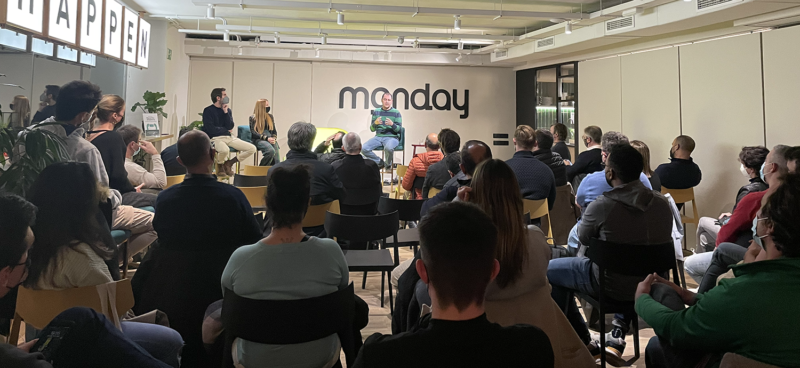
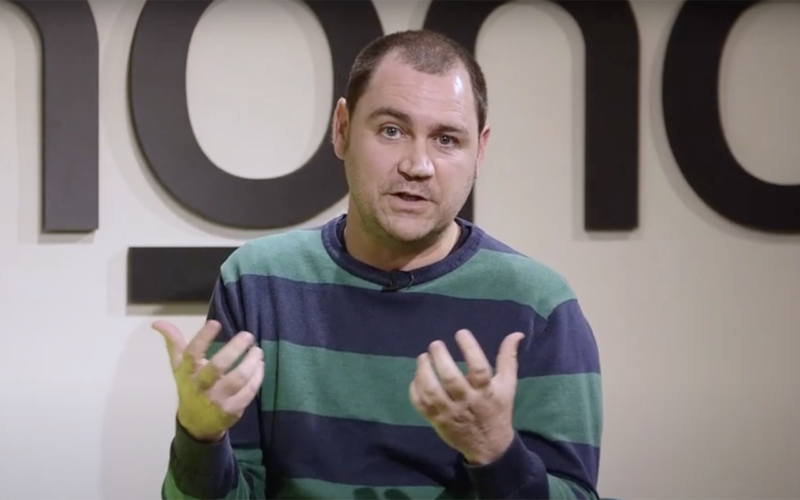
Twinapp is a social network that facilitates interactions between people interested in practising sport through hiking routes across our territory, without neglecting the commitment to environmental conservation. We talked about the project with Teresa Ferrés, a founding partner.
Making society aware of environmental problems and getting people involved in conserving the natural environment can be challenging. Teresa Ferrés founded the Twinapp project with this in mind. Why not combine sport with environmental awareness?
The application allows you to contact people keen on nature walks, organising and promoting outings around our territory. It is a tool that generates community through groups of people interested in running or walking in the mountains. As Ferrés explains, “sometimes it’s hard to find someone to go out with to do sport and this way you are in a community that everyone can join”.
Episode 23 | Twinapp: Sport and community
Encouraging ‘plogging’
‘Plogging’, a fusion of the terms ‘plocka upp’, Swedish for picking up, and jogging, originated in Sweden. It is a sporting practice that combines the activity of jogging with the collection of rubbish that we find along the way. The application schedules regular outings related to this practice, including “promoting a campaign called ‘Mou-te pel mar’, which in 2019 organised four outings along the Costa Brava,” says Ferrés.
Bearing in mind that 70% of the waste that is dumped on the coast ends up at the bottom of the sea, the success of these outings, which combine sport with waste collection, is a perfect example of how the entrepreneurial and community spirit represented by Twinapp takes advantage of the possibilities for cooperation offered by social networks and new technologies.
If you want to discover how to drink the best water, save money and help the planet, go to 11Onze Essentials.
If you liked this article, we recommend you read:
 Sustainability
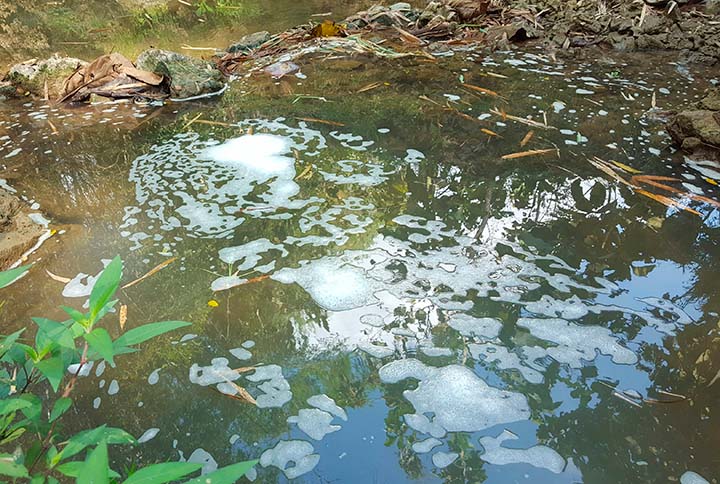
The environmental impact of detergents
3 min readThe detergents we use to do everyday tasks, such as washing


In the first episode, we talk to James Sène about money as the conversion of our time into capital. Do you have questions? Write them in the comments of this article.
We premiere our financial education video podcast at 19:00 on 8 November, which you can follow live here!
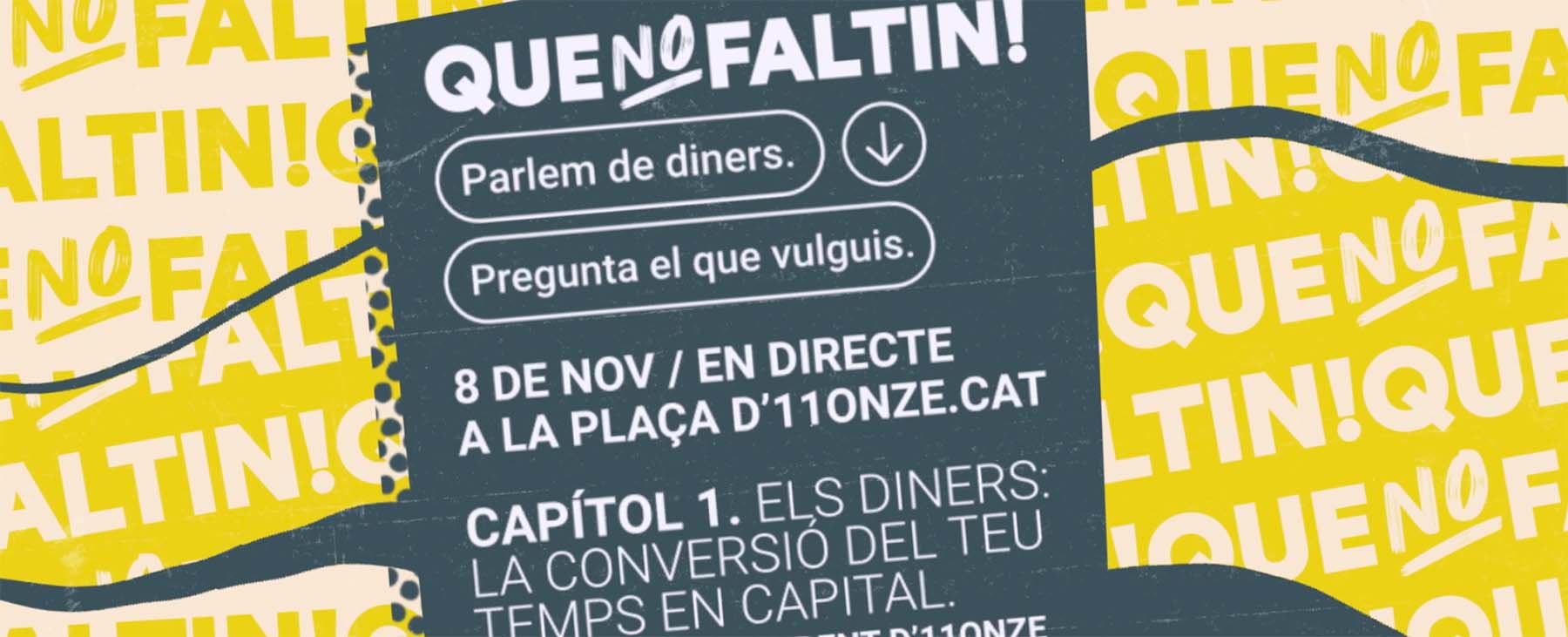

On 8 November, we premiere ‘Que no faltin!’, the financial education video podcast where the public can talk to experts. We talk about money, ask anything you want!
Financial education has been at the heart of 11Onze since its inception. It is the only way for citizens, ordinary people, to take control of their money. If you don’t understand how the economic system you live in works, there is a good chance you’re not going to do too well. How many people have signed loans or mortgages without understanding what they were doing? How many people don’t know the basic mechanisms that would make their lives so much better?
“People are focused on making money. If they spent a little bit of their time thinking about how to manage it, they’d be surprised how much they can save,” explained 11Onze CEO James Sène in the micro-spending podcast. But we have not been financially educated, which as citizens makes us dependent. Dependent on someone telling us what to do with our money.
Since it has been repeatedly proven that delegating our financial decisions to someone else is not a good idea, it is increasingly important to roll up our sleeves and become financially educated. At 11Onze, we try to give as many tools as possible to our community. That’s why we are launching a live and open video podcast: ‘Que no faltin!
Premiere of ‘Que no faltin!’
Do you want to participate?
Que no faltin!’ will be mono-thematic programmes. In each episode, an expert will present a topic for 15 minutes and will spend 30 minutes answering questions from the audience. Because yes, there can be an audience. If you want to participate, you can write an email to [email protected].
There will be a maximum capacity of eleven people and, to participate, you must be registered in La Plaça. Over the next few episodes, we will be talking to leading personalities about cryptocurrencies, public debt, hyperinflation, the security of money and other key issues in the current economic landscape.
The first episode features 11Onze President James Sène. He will talk about money as the conversion of your time into capital and will be broadcast live at La Plaça de 11Onze on 8 November at 7 pm.
We’ll talk about money, ask anything you want!
11Onze is the community fintech of Catalonia. Open an account by downloading the super app El Canut for Android or iOS and join the revolution!
Generation Z has been particularly hard hit by the economic consequences of the pandemic, with unemployment reaching as high as 40%. Although the situation has improved compared to 2020, finding a decent job and achieving financial independence remains a near-impossible mission for a generation that aspires to make the digital leap.
The job market is a thorn in the side of Generation Z, the generation of young people born between the 20th and 21st centuries. Although there is no consensus on the exact start and end years, it is generally accepted that it includes those born between the mid-1990s and the end of the first decade of this century. They number more than 2 billion people worldwide and in a few years’ time will account for more than a quarter of the total workforce.
Preceded by the millennials and followed by the alphas, this is a generation that has already started to enter the labour market. And in many cases, they have done so at the worst possible time, when the world was suffering the economic consequences of COVID-19.
Victims of the pandemic
The global pandemic hit Generation Z particularly hard, with unemployment in Spain reaching 40% in 2020, compared to 14% for the rest of the generations. That year, in almost all OECD countries, the unemployment rate of this demographic group was double or triple the levels of other older age groups.
Generation Z is over-represented in sectors such as hospitality, tourism and leisure, which have been hard hit by pandemic-curbing measures, so job destruction was particularly hard on them.
Worse, their long periods of unemployment after leaving high school or university mean that they lose years of experience and training, which will reduce their chances of progressing further up the career ladder. One study indicates that these periods of unemployment can translate into a 2 % reduction in earnings over a working life.
Increased precariousness
Although the economic situation has improved since the hardest times of the pandemic, finding a decent job and achieving financial independence remains an almost impossible mission for members of Generation Z. In fact, in Catalonia, the rate of job insecurity is higher than in the rest of Europe. In fact, in Catalonia, the unemployment rate among 16-24 year-olds in the second quarter of this year was still above 25%, more than three times higher than that of the rest of the age groups.
There are multiple factors behind this high level of unemployment among the youngest. One of the elements influencing their precariousness is temporary employment. The report “Young people and the labour market”, published in March, points out that young people have “significantly higher levels of temporary employment so that their access to employment is mainly through temporary contracts”.
The first digital generation
Generation Z stands out for its flexibility and autonomy, as well as its mastery of digital tools. Hence their attractiveness for many companies that have yet to make the leap to digitalisation. They are also more risk-averse and financially aware than other generations, having experienced the 2007-2008 crisis as children.
However, this is a generation that is not willing to accept a job at any price, as in many cases they value other aspects above the economic aspect. Unlike their parents, who aspired to a job for life, they are looking more for personal fulfilment. That is why in many cases they resort to self-employment to make their own projects a reality.
Significantly, according to the Randstad Workmonitor 2022 report, more than half of employees (56%) aged 18-24 would leave a job that prevented them from enjoying their lives. Many members of Generation Z would rather be unemployed than unhappy in a job they don’t like, according to the report.
11Onze is the community fintech of Catalonia. Open an account by downloading the super app El Canut for Android or iOS and join the revolution!


We are already in the middle of summer and we will start to see and experience traffic jams on Fridays and Sundays, as is customary in our country. Everyone thinks they know the best time to get around, but there are often miles of queues. 11Onze analyses it.
The summer of 2020 was fully marked by the restrictions imposed due to COVID-19. Maybe that’s why this 2021 we are looking forward to leaving. The possibility of taking a plane for a trip, whether domestic or abroad, is already a reality, but even so, the aeronautical experience will still not be the same as before the pandemic.
For this reason, many road trips are expected, like many summers, and consequently long queues. We already had an apéritif for Easter and for the Sant Joan long weekend.
Mobility forecasts
If we pay attention to the information provided by the Catalan Traffic Service, when high mobility is foreseen, as in the case of departure or return operations, special traffic, management, and traffic regulation measures are put in place: additional lanes and lanes in the opposite direction to the usual; inversion of priorities in roundabouts; cancellation of slow or incorporation lanes; or change in the normal operation of the HOV BUS lane.
Still, there are many times that this attempt to improve traffic flow doesn’t seem to be effective, so how do we manage avoiding getting stuck in a huge queue of cars?
The best time slot to travel by car
Is there a better time to drive without traffic jams, or is it a fallacy? The truth is that it is really difficult to get it right, because we always believe that the decision made is the right one so as not to get stuck again, but we end up queuing at the toll, to get on the highway, or to get out of it.
The RACC and the Catalan Traffic Service have sections on their websites in which they give mobility advice. One of the most important, that many of us do not follow, is to consult the traffic condition before leaving. But it is also interesting to note the time slots in which a greater influx of vehicles is expected on the road, which vary according to the departure operation we face, although the variation is negligible.
Thus, the usual forecast is as follows:
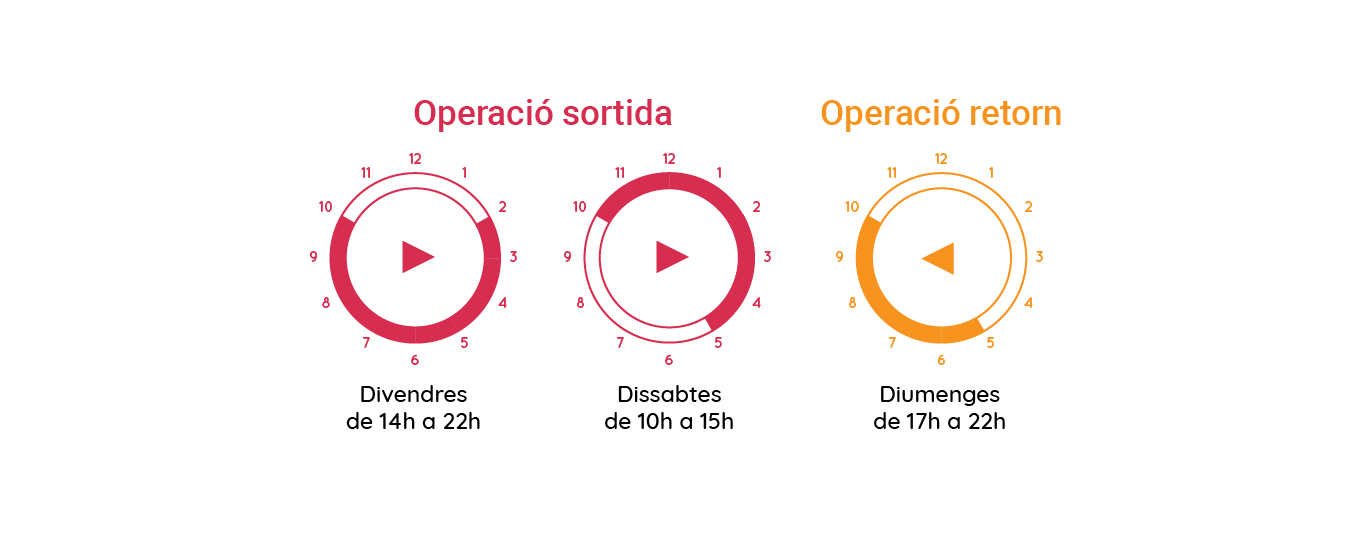
The worst slots for operation departure.
Obviously, the departure is not always on Friday, nor the return on Sunday, as it often coincides with the beginning and end of the summer fortnights. But in any case, it is interesting to consider these hours as a guide.
We can even find a forecast calendar for special traffic operations, which, at the close of this article, is marked every weekend in July 2021, in which a high intensity of traffic is expected.
Avoiding queues or getting out of them
As we have seen, avoiding queues is difficult, but not entirely impossible. Getting out of a traffic jam is a different thing, as we insist on staying on it because it is the fastest route (if we are in it, it is not very fast at that time), or because it is the route we always take.
Following the mobility tips, if we have planned the route correctly, we should have planned an alternative route in case we encounter problems, so that the moment we find a detour or an exit from the congested road, we can take it and access the route that will take us to our destination, possibly more quickly and comfortably.
Of course, first check the state of the traffic, in case you end up in the same situation.
11Onze is the community fintech of Catalonia. Open an account by downloading the super app El Canut for Android or iOS and join the revolution!


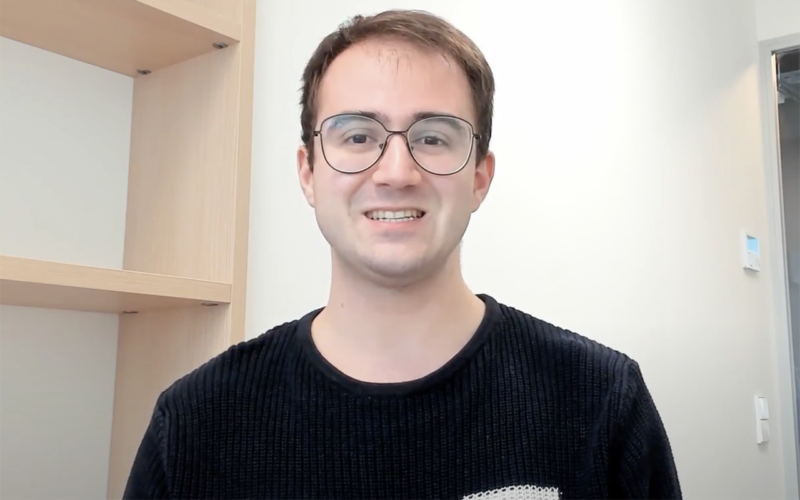
Foodcoop has become the first cooperative and participatory supermarket in Barcelona. We spoke to one of the project’s partners, Mohammed Lo Youssofi, to find out how we can fill our shopping baskets in a conscious and responsible way.
Self-managed consumption has created a new range of opportunities to bring us ever closer to a sustainable and conscious form of consumption. In Catalonia, there are several experiences of self-managed consumption in cities such as Manresa, Mataró and Olot, and Foodcoop brought this model to the city of Barcelona, thus becoming a pioneering venture that already has more than 500 members.
The supermarket works under a cooperative structure. The assembly is the main sovereign body, from which the members take strategic decisions. In addition, several working circles have also been created to align the tasks they have to carry out in different areas: finance, purchasing, work and operations, communication, etc. A transversal model where everyone can have their say and, at the same time, participate in the daily tasks that make up the supermarket.
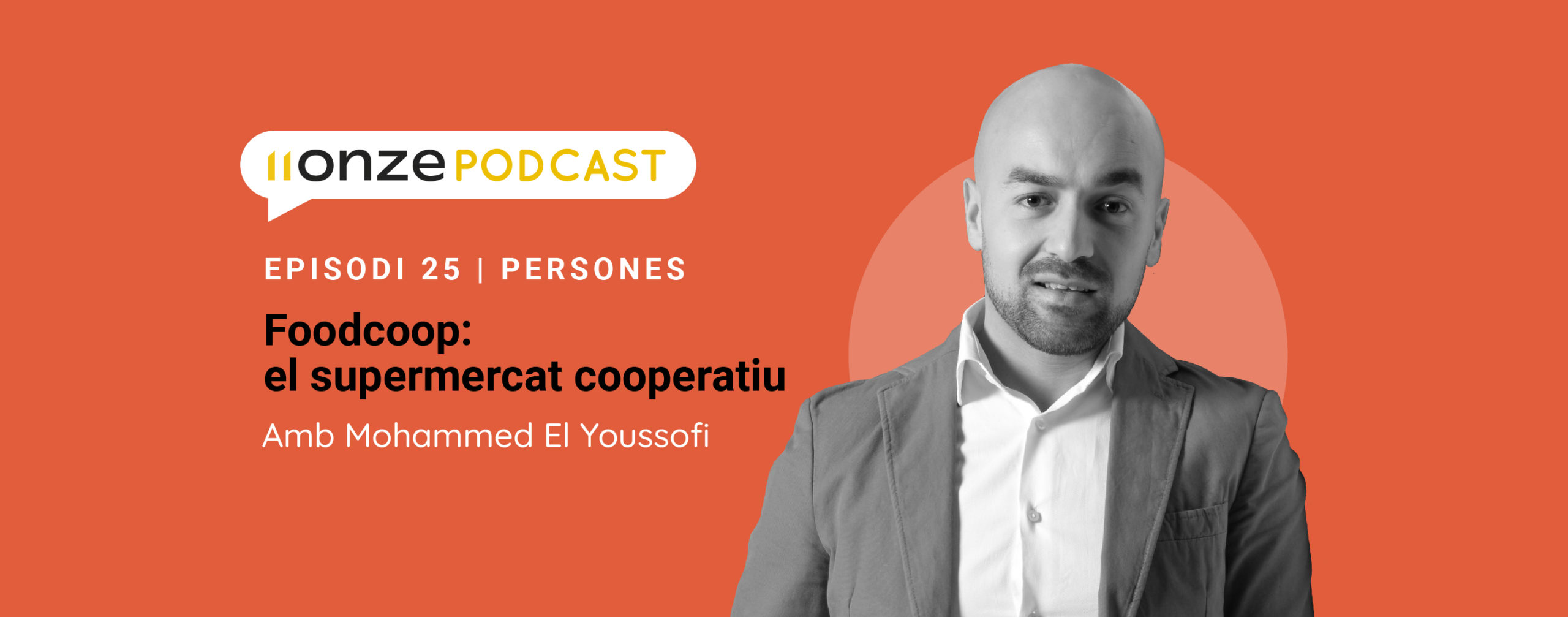
Episode 25 | People: Foodcoop
Filling the basket conscientiously
Foodcoop offers a wide range of products that make it possible to fill the shopping basket according to the criteria and principles that drive the project. As Mohammed Lo Youssofi explains, among these criteria, some stand out, such as, for example, “opting for products of proximity, organic, fair trade products, intercultural and inclusion issues, seasonal products or products that raise the value of sustainability or zero waste”.
The methodology used by projects such as Foodcoop ensures that an everyday activity such as shopping at the supermarket has a positive impact on a social scale. In fact, the territorial roots are an essential factor for the project and thanks to which consumption can become “a transforming element that generates internal dynamics in the territory”. You can listen to the entire conversation to find out, from the inside, how this project works and how it can benefit us as consumers.
11Onze is the community fintech of Catalonia. Open an account by downloading the super app El Canut for Android or iOS and join the revolution!


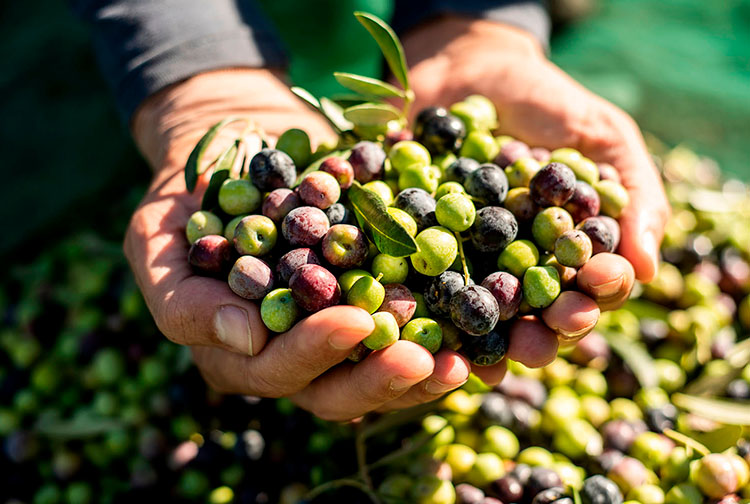
We are living through another Christmas marked by the pandemic and, despite the exhaustion, we can already say that we have become experts at celebrating the festive season in full compliance with all the restrictions. Here are six tips to ensure that family gatherings are safe and a success!
Following the Generalitat’s instructions, which have been tightened up due to the arrival of the new Covid variant, the omicron, in Catalonia, we cannot let our guard down during the festive season. But this does not mean that we have to give up family gatherings. Here are six tips to make your social gatherings safe without losing the Christmas spirit.
First of all, choose how you would prefer to spend the holidays: would you like to have a get-together with the family, would you prefer to take advantage of the restrictions to avoid social contact and stay on the sofa watching TV series? Whatever kind of Christmas you want to experience, use your imagination. If there is one thing we have in our favour, it is that technology makes it easier for us to live with social distance.
- Find a way to meet others, even if not physically. The point is to spend time together and enjoy each other’s company. Although social distance does not allow us to be together in person, we can find alternatives to keep the party going. Getting together via video call is a cheap, quick and easy way to bring the whole family together, regardless of where they are. For grandpa and grandma, we can help them set up the computer or mobile phone so that they can enjoy the family get-together more than anyone else. It’s never too late to learn!
- Ventilate the space periodically. In case of meetings at home, which should not exceed ten people and, if possible, of our bubble group, it is recommended to ventilate before, during and after family or social gatherings. Ten minutes is enough, as long as we try to let fresh air in from opposite sides of the house. It is a task that, beyond social gatherings, we need to incorporate into our routine. It doesn’t waste a lot of time and ensures that we don’t let our guard down.
- Let your imagination run wild. If we let our imagination run wild, the possibilities are as many as we can think of: we can make biscuits and send them to relatives far away or recover postcards and send them to all those people we can’t be near. If we are more artistic, we can record a home concert for the rest of the family to enjoy. And, if we have relatives far away, we can easily have the gifts delivered to their homes. In fact, nowadays we can even make a tupper of San Esteve cannelloni and send an express delivery to the grandchildren. Do not put limits to your imagination, illusion does not understand social distance.
- Don’t forget your values. There are a few weeks of unbridled consumerism coming up, both in food and gifts, but neither at Christmas nor during the sales can we lose sight of our values. Christmas shopping is important enough to leave a social and environmental footprint with our decisions. When we go shopping, let’s preferably opt for local products and products bought in local shops. Let us also avoid non-reusable plastic plates and cutlery, and replace them with recyclable materials. Even gift wrapping can be sustainable.
- Gifts with a conscience. Let’s leave behind gifts of dubious usefulness that are given as a compromise, to make a gesture to someone, and let’s opt for gifts with a conscience. Before buying anything, let’s ask ourselves: will it be useful? Will they use it? And if we don’t find any gift that convinces us, let’s think about basic things, such as a food basket, a plant, a good wine or giving experiences as gifts, such as guided tours, concerts, exhibitions, workshops and even gift cards. Let’s make every purchase meaningful, both at the time of making it and at the time of giving it as a gift. We don’t buy things to throw away!
- Enjoy the company like never before. In this day and age, getting together for family meals is a gift in itself. More than ever, let’s stop and enjoy the present with the company of those around us. We can choose more or less sustainable gifts, we can travel to the other side of the world or stay at home watching a series. But, in the end, it will be this magical moment that allows us to sit around a table (or a screen) that shows that we live and enjoy together. What better celebration, right?
11Onze is becoming a phenomenon as the first Fintech community in Catalonia. Now, it releases the first version of El Canut, the super app of 11Onze, for Android and Apple. El Canut, the first universal account can be opened in Catalan territory.
If you liked this article, we recommend you read:
 Culture
Returning home for Christmas in the covid era
4 min readWe’ve said it so often that it seems like a cliché. The truth is...