Sustainable economy, what is it?
The sustainable economy seeks to increase social welfare while promoting sustainable consumption through a financial system based on green businesses. Either through the transformation of existing ones or by creating new businesses. It aims to reduce poverty and ensure quality development for present and future generations, without compromising the health of the planet, i.e. without consuming more than nature generates.
The development of a sustainable economy in any territory involves policies aimed at promoting the use of sustainable energy sources, fostering competitiveness in sustainable activities and investing in innovation and education. According to the 2011 Sustainable Economy Law, we understand sustainable economy as “a pattern of growth that reconciles economic, social and environmental development in a productive and competitive economy, that favours quality jobs, equal opportunities and social cohesion, and that guarantees respect for the environment and the rational use of natural resources in a way that allows needs to be met”.

Why is a sustainable economy necessary?
The advocates of a sustainable economy base their arguments on the environmental forecasts for the coming decades, which, according to experts, are not very positive. In this sense, the data on the ecological footprint for the future are not very flattering. Those who promote sustainable economy advocate the use of renewable energies such as wind, solar, hydraulic and geothermal energy, to extend the life of the products we consume, second-hand purchases, rental of single-use objects, etc. Preserving the planet’s resources, consuming only seasonal foods, recycling, avoiding plastics, pollution, etc. In this way, the survival of future generations can be guaranteed and, in addition, as it is a model of sustainable development, it is also a model of sustainable development.
But we also have detractors, who are those who feel comfortable or are accustomed to a capitalist economic system, which is the one that currently governs the West, who consider a sustainable economy unrealistic. They believe that it is a production model that is doomed to failure from the outset, due to the inability to supply all the needs of today’s world population.
Characteristics of a sustainable economy
The development of a sustainable economy in any territory involves the development of policies aimed at promoting the use of sustainable energy sources, fostering the competitiveness of green businesses and investing in innovation and development.
Thus, this socioeconomic system is governed by the following fundamental axes:
- Environmental protection: preserving the planet’s biodiversity, minimizing the impact of pollution and fighting against climate change.
- Use of renewable energies: promote the use of alternative sources of energy that do not pollute and minimize the impact on the environment.
- Commitment to efficiency: make the most of the resources we have and take care of scarce resources, such as water, which allows us to achieve another pillar of economic sustainability, which is efficiency.
- Promoting recycling: establishing a circular economy model in which the waste generated is used to create new products, thus reducing the ecological toll of the current production system.
- Limiting consumption: limiting the use of renewable resources so that they are not used at a higher rate than they are generated. Furthermore, non-renewable resources must be progressively replaced by renewable resources.
- Improve the social standard of living: promote, through education and innovation, equality among people in all territories.
Among the measures that can be implemented by public bodies, we can find the premiums and subsidies to new sustainable economic sectors such as clean energy, or the support to ecological business models. In addition, we must promote the recycling of all kinds of waste, the application of energy efficiency and conservation techniques in all areas of the economy and the promotion of the circular economy as well as new models of more sustainable cities.
The current society is unsustainable, as it consumes resources at a higher rate than nature generates, therefore the relationship between economy and sustainability is very close, if the energy needed for a society comes from resources that are not sustainable, they will become more and more expensive because of their scarcity and that can lead to geopolitical and economic imbalances in the medium and long term.
In Catalonia, and specifically in Manresa, the Ecoviure fair is held every year to show the novelties of a sustainable economy.
This fair was born in 1997 with the intention of serving as a meeting point for people and professionals who, from different fields, work for the environmental, social and economic sustainability of the planet. The fair lasts three days and brings together traders, sustainability technicians, entrepreneurs, and government representatives interested in learning about new developments in the green economy.
They can find stands of food products, renewable energies, household products, water treatment or textile products.
There is also an edition for children and families, with the aim of spreading the values of ecology and sustainability, with activities to experiment, play and learn. There are also several workshops and proposals for the youngest children. They need to become aware that we need to move towards a more supportive, fair and respectful society towards the environment.
If you want to wash your clothes without polluting the planet, 11Onze Recommends Natulim.



When we talk about fairness in business, our legalistic alter ego soon comes out, and we say to ourselves, quite convinced that we comply with each and every law. We believe that by complying with the laws, no further moral assessment is needed whether the laws are right or should be updated. The implementation of justice cannot be left to ethicists or lawyers. We cannot simplify the assessment of what is just by making it concrete that it is legal. Practising ethics requires educating practical judgement.
Relatively recently, a leading jurist commented that if we had to wait to change legality with the permission of those who gain from current laws, slavery would still exist. And nothing could be truer. In fact, in business, laws are an absolute minimum, but justice, and above all, the fact of producing fair results in the distribution of resources, responsibilities, rewards and recognition, seems to go beyond these legal minimums. The task of managing companies includes assessing whether the business systems that allocate tangible or intangible resources are appropriate. This assessment takes it away from compliance with legality, and even more so from neutrality. A decision must be made that goes beyond purely technical considerations, making it necessary to assess the consequences of the decision, and whether these consequences are good for everyone.
The law is not enough, we must go one step further
Using a supposedly neutral technique (or positive law) leads us to overlook the fact that it is not neutral. We pretend that we are using economic science that is supposedly free from any moral evaluations. And we feed it into the technical content of many management programmes. This then ends up being implemented in the company. We think that the (technical) law is enough, and we go further, we delegate the moral aspects to ethical experts. And we justify this with a separation thesis that considers that facts can be observed without assessing them. Any value judgement is dismissed as unscientific, and this is done with arguments along the lines of “we are talking about factual things, we are talking about science, about objective things”. This neutrality with which they want to evaluate decisions is impossible. The separation thesis should be discarded as false rather than useless. The implementation of moral evaluations becomes necessary, and the criteria of justice are a necessary aspect to discriminate criteria to be used in decisions.
Economic laws do not stand alone, like the law of gravity, but are phenomena that act on people, who are willing, motivated and learn for better or worse. Using economic laws that pretend that people are neither motivated, nor willing nor learning, perpetuates the status quo, or makes it worse. Deciding which criteria should prevail when making a decision, discerning between options and being able to foresee the consequences that decisions have on others. The function of business for some economists is only to create profits, the more, the better. But there is no deterministic law that can force this function. In fact, looking at reality, making companies only have the social function of making profits has not taken us very far, and it therefore seems fair to propose others. Making their function one of generating justice and making justice an intermediary for the common good is absolutely necessary. Businesses must find their usefulness and their social function. If they end up focusing on the common good, promoting justice among all stakeholders, they will find many more followers than they do now, and they will perform a better function.
Companies of people for people
Another important factor to take into account, which often goes unnoticed, is that the company is like a community of people that participates in a wider community, where people can develop in it and find meaning, this allows it to bring a wider and more authentic legitimization to business activity and helps to understand the very existence of companies, their meaning. Seeing them as a tool for three to get rich makes little sense, which right now is starting to look very ridiculous to many people. And how can you distinguish companies that contribute to the common good from those that don’t? One simple way is to look at their mission, and above all at implementation: the facts. Actions speak louder than words.
To see if companies say they solve and solve real needs with their products and services (they contribute to a social common good), and to see how they do it, i.e. how they use resources and how they treat people (internal common good), becomes absolutely essential if we want to have a business fabric that also helps to change consciences. The contribution to the common good is what makes companies meaningful and allows them to realize their full potential.
11Onze is the community fintech of Catalonia. Open an account by downloading the app El Canut for Android or iOS and join the revolution!


Quantitative easing is a form of monetary policy in which a central bank buys a predetermined amount of government debt or other financial assets to stimulate a country’s economic activity. But how does it work? What negative effects can it have on the economy?
Quantitative easing (QE) is a monetary policy used by central banks on an exceptional basis to increase the money supply and stimulate economic activity when other measures, such as lowering interest rates, are no longer effective.
We have examples of this monetary policy in the billions of dollars in government bonds and other assets by the US Federal Reserve bought after the 2008 financial crisis, as well as in the monetary policies implemented by the European Central Bank (ECB) from 2015, against a backdrop of stagnant growth and low inflation.
These economic stimulus programmes, based on buying public debt, mainly government bonds by a central bank, create new bank reserves, providing more liquidity to commercial banks and encouraging lending and investment.
However, there have also been programmes to buy other assets such as corporate bonds, asset-backed securities and covered bonds. Generally speaking, commercial banks or other institutional investors sell the bonds to the central bank.
What negative effects can it have?
With more money in circulation and a growing demand for financial assets, long-term interest rates tend to fall. This makes it more affordable for businesses and consumers to obtain credit, stimulating investment and consumption. At least this is the theory, in practice, it depends on whether banks see opportunities for high returns on loans.
Thus, not only can it fail to stimulate demand if banks remain unwilling to lend to businesses and households, but such programmes can encourage speculative bubbles and higher inflation. In other words, injecting too much money into the economy can cause prices to rise rapidly, creating inflationary pressures. Therefore, the larger the volume of purchases, the more limited their positive effect on the economy.
On the other hand, such stimulus can mainly benefit large investors and financial markets, as asset prices, such as stocks or bonds, tend to rise. According to a Bank of England report, its quantitative easing policies have mainly benefited the richest 5 per cent of households, worsening income inequality and social tensions.
If you want to find out how to get returns on your savings with a social justice product, 11Onze recommends Litigation Funding.

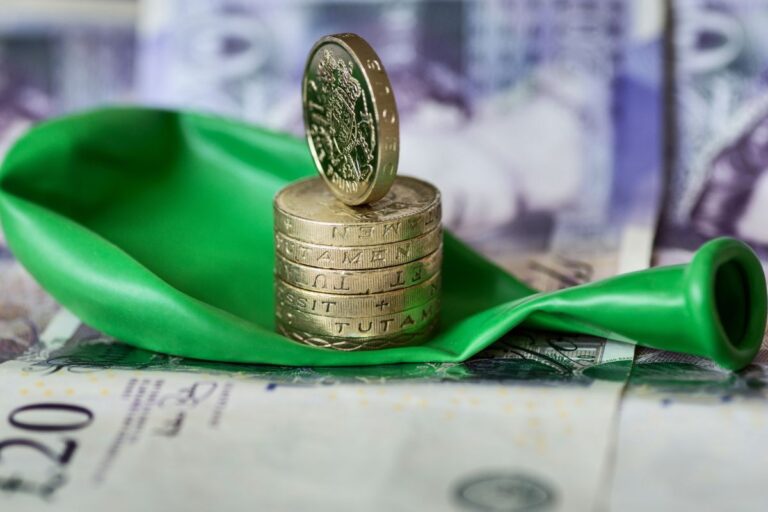
In Spanish, we talk about ‘la cuesta de enero’, the January slope, a well-known expression typical of the month of January, although lately it seems to have an inflationary tendency that extends it to the rest of the year. But where does this idea come from?
The lack of financial resources associated with the first month of the year is caused by a series of variables that make this month particularly problematic, not only in terms of personal finances but also in terms of the emotional state of many people.
The concept of ‘la cuesta de enero’ began to appear in the Spanish media in the 19th century, connected to the theatrical world. After overspending during the Christmas holidays, the theatres noticed a sharp drop in the number of spectators. This is how the concept began to become popular, which is reinforced by the increase in the price of services that takes place at the beginning of each year. The prices regulated by the administrations are updated on the 1st of January, and this has a direct impact on the (already depleted) pockets of citizens.
It is then that many people remember the expenses incurred during the Christmas holidays. In addition, to combat the drop in consumption, retailers apply sales. And this ambivalence arises: the consumer has less money but wants to continue spending because of the tempting discounts.
Internationally, there is talk of the ‘Blue Monday‘, a concept originating from a Sky Travel advertising campaign, which refers to the third Monday in January as the saddest day of the year. It has no scientific basis, however, it exemplifies the emotional downturn that accompanies this time of year. The return to the routine after the holiday period marks the end of the cycle of a year in which we may not have achieved the goals we had set for ourselves, with the subsequent disappointment. A state of mind and emotions now also touched by the uncertainty and anguish caused by the pandemic.
A 20th-century economic phenomenon
The economic and social phenomenon of spending what one cannot afford did not originate with consumerism, but it is true that this tendency to consume products in much larger quantities than necessary was amplified with the emergence of contemporary marketing, creating new needs and a desire to spend money by the population in order to feed the unlimited economic growth of capitalism.
It is from this microeconomic scenario of the last century that the concept of the ‘la cuesta de enero’ became popular. Spurred on by an alliance of financial, business, and advertising interests working together to perpetuate consumption based on continuous growth. Advertising convinces us of the need to buy countless products we don’t need, while banks give us every facility to spend money we don’t have.
To a large extent, the antidote to the ‘la cuesta de enero’ is as simple as ensuring that the population has a good financial education. Obviously, there are unavoidable expenses such as water, electricity, and mortgages, but the use of credit and knowledge of other financial tools available to a family economy are essential not only to prevent economic hardship throughout the year but also to maintain certain emotional health.
And that is why at 11Onze we give so much importance to financial education in our community, and we make learning tools available to everyone to empower people to manage their assets in the best possible way.
11Onze is becoming a phenomenon as the first Fintech community in Catalonia. Now, it releases the first version of El Canut, the super app of 11Onze, for Android and Apple. El Canut, the first universal account can be opened in Catalan territory.



The Treasury is preparing a new Royal Decree that will oblige banks to inform the Ministry of all payments, however small, received by businesses and the self-employed. The current threshold of 3,000 euros per year above which banks must report to the Treasury will be eliminated.
The draft Royal Decree, which was submitted for public information last week until 26 December to establish a minimum tax rate of 15% for companies and their subsidiaries abroad that earn more than 750 million euros a year, also includes a greater requirement for banks to report all payments received by businesses and the self-employed, even if they do not exceed the current limit of 3,000 euros per year.
According to the text of the draft presented by the Ministry of Finance: ‘To add certain additional information to be provided and to modify the frequency of presentation of the information, which will become monthly, with the net annual threshold of 3,000 euros no longer applicable’.
This new regulation would not only apply to large banks but also to other electronic money payment institutions, as well as to any foreign financial company operating in Spain. In addition, as a novelty, card payments and those made by Bizum or any other method will have to be reported, clearly differentiating between revenues according to the payment method.
In this way, the Ministry aims to align tax regulations with those on the prevention of money laundering to avoid tax fraud: “Obtaining monthly information on card payments will improve the control of possible concealment of business or professional activities, given that the financial flows generated with these payments will be better known by the VAT declaration deadlines”, the entity points out in the explanatory report on the new regulation.
Other new features of the Royal Decree
For their part, issuers of ‘all types of cards’ will have to declare annually the transactions carried out with this means of payment, provided that the total amount exceeds 25,000 euros per year, with a breakdown of charges, credits and cash withdrawals. This also includes foreign institutions, provided that they have customers residing in Spain.
In addition, the period in which these institutions must send information on current accounts to the Tax Agency has also been modified, changing from annual to monthly. Similarly, the balance at the end of the year and the average balance in the last quarter must be included.
On the other hand, the Tax Agency will make it easier for parents to benefit from the deduction of up to 1,000 euros for childcare expenses. By allowing the Tax Office to automatically include this deduction for childcare expenses in the annual tax return, thus avoiding the need to enter this data manually.
If you want to find out how to get returns on your savings with a social justice product, 11Onze recommends Litigation Funding.


With more than 4,000 entities, community banking remains central to financing the productive US economy and continues to be an example of good practices. Its roots in the local communities where it operates continue to give it a fundamental competitive advantage over large banks.
It is estimated that in the United States, community banks are responsible for 60% of small business lending, over 80% of agricultural lending and 43% of Internet lending.
These banks tend to operate in a small geographic area and, unlike the large financial institutions, remain focused on the core functions of banking: deposit-taking and the provision of mortgages, loans and lines of credit to businesses.
Being smaller, community banks cannot offer the product range or branch networks of large banks. On the other hand, because of their deep knowledge of the local community, they are able to lend to businesses and individuals who sometimes do not meet the impersonal rating criteria of the big banks. In addition, community banks also tend to offer better interest rates on deposits than the big banks, as a study by DepositAccounts shows.
Close and agile banking
It is clear that the close relationship of community bank employees with customers is a competitive advantage for community banks. Jamie Dimon, CEO of JPMorgan Chase, himself acknowledged the advantage of the proximity of these small banks to the communities they serve, since “their senior corporate officers live in the same neighbourhoods as their customers”. As a result, according to the head of the largest bank in the United States, “they are able to forge deep and lasting relationships” and bring “a deep understanding of the local economy and culture”, which allows them to “offer specialised, high-level banking services”.
Another advantage of community banking is agility. According to the Independent Community Bankers of America, community banks tend to make lending decisions faster than large regional or national banks. This is not surprising considering that decisions are made locally in the case of the former, while larger institutions often have to convene approval committees whose members are far away and completely unfamiliar with the applicants.
These factors result in higher customer satisfaction for community banking. According to a survey, 76 % of small businesses that received a loan from these institutions were satisfied with their overall experience, while this percentage drops to 62 % for large banks.
Deeply rooted in the territory
The fact that community banks are rooted in their environment means that they reinvest a large part of their profits in the community, contributing to the growth of small businesses and the creation of local jobs. Deep down, they realise that they only thrive when their customers and communities thrive.
Unlike large financial institutions, the managers of community banks do not have to be guided by the interests of large shareholders thousands of miles away. And this makes a fundamental difference. As the US Federal Deposit Insurance Corporation (FDIC) points out, it allows community banks to “weigh the interests of shareholders, customers, employees and the local community differently than would a larger institution with closer ties to the capital markets”.
A forced decline?
Regulatory changes favourable to large banks and mergers have significantly reduced the number of community banks in recent decades. In 2021, there were 4,490 community banks insured by the FDIC, down from 7,442 in 2008 and 14,323 at the end of 1988.
Despite this decline, US community banking remains an example of good practice in the financing of the productive economy. As Ben Bernanke, then chairman of the US Federal Reserve, acknowledged a few years ago, “community banks play a critical role in sustaining the vitality and growth of their local economies”.
It should not be forgotten that the proven ability of community banks to raise short-term deposits to finance longer-term investments is essential in any economy. And, as an article by the Fundación de las Cajas de Ahorros (Funcas) points out, community banks can continue to be “disruptors of larger banks, either as allies of fintech companies or through their own innovations”.
If you want your business to make a giant leap, use 11Onze Business. Our business and freelancer account is now available. Find out more!


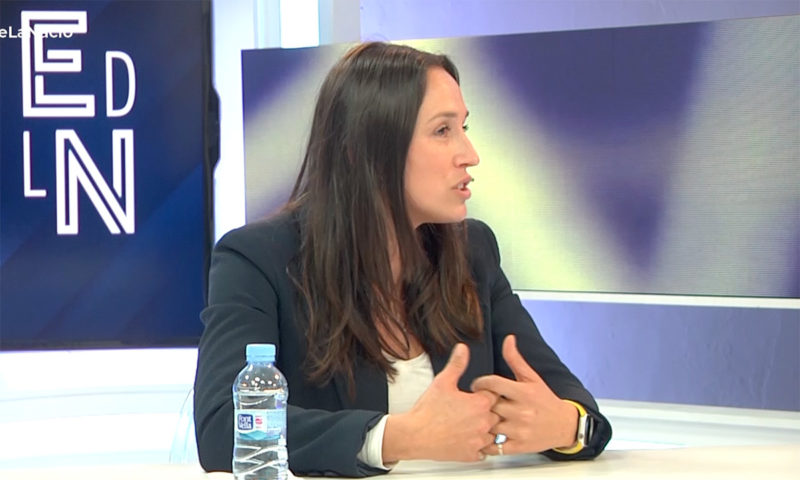
The Spanish economy continues to perform better than expected. Amid European stagnation, the IMF raises Spanish growth to 2.9 per cent by 2024, yet this economic bonanza does not translate into a significant improvement in citizens’ purchasing power. What explains this discrepancy?
For years, the Spanish economy has been experiencing remarkable growth that, at least on paper, appears to be a success. It has become the engine powering growth in the eurozone, outperforming its European neighbours, especially Germany, which represents the weak point of a resilient global economy.
The latest report from the International Monetary Fund (IMF) upgrades the Bank of Spain’s projections and raises Spain’s growth by half a percentage point to 2.9% in 2024, the largest growth improvement among advanced economies. This puts the Spanish economy well ahead of the growth forecast for Germany, France, Italy, and the eurozone as a whole, and even ahead of the United States and the United Kingdom.
Growth driven by tourism, consumption, and investment
Spain’s exceptional performance is due to a combination of several factors. It is largely explained by the dynamism of household consumption, spurred on by the moderation of inflation and the interest rate cuts by the European Central Bank (ECB).
On the other hand, the continued recovery in employment, a booming tourism and services sector and a favourable investment context supported by European funds are the ingredients that are boosting an economy that had lagged after the last crises.
Although the good performance of these sectors has allowed GDP to remain buoyant, this has not been reflected in a significant improvement in household incomes. Moreover, the IMF points out that Spain’s inflation rate will average 2.8% this year, a rise in prices that is ‘more intense’ than expected in the eurozone, where there will be a rise of 2.4%.
Job insecurity and stunted growth in GDP per capita
Spanish GDP per capita continues to fall behind that of its EU partners. According to the latest Eurostat data, it has gone from 25,420 euros in 2019 to 25,620 euros this year, a growth of only 0.1%. Although per capita purchasing power in Spain has risen by 7% this year, to 16,449 euros, the difference on the European average is one percentage point less than the previous year, when it was 6%, as reflected in the GfK Purchasing Power 2023 report. In addition, Spain is among the countries that lose the most purchasing power concerning food prices.
As the newspaper El Economista points out, ‘the data that dismantles the economic miracle is GDP per capita, a somewhat more refined indicator that has barely grown in Spain in the last four years… and even in the last 15’. Speaking to the News, Judith Arnal, senior researcher at the Elcano Royal Institute and independent advisor to the Bank of Spain, explains that ‘Spain’s GDP has relied on population growth, public consumption and exports of services’ while in other countries ‘it focuses on investment and exports of goods.’
The other major obstacle preventing growth from translating into increased purchasing power is the chronic problem of low job quality in Spain. Although the unemployment rate has fallen, wages remain low compared to other European countries. Moreover, the high temporality in the Spanish labour market – 61.7% of young people in Spain have a temporary contract – prevents workers from enjoying economic stability that would guarantee consistent household incomes.
If you want to discover the best option to protect your savings, enter Preciosos 11Onze. We will help you buy at the best price the safe-haven asset par excellence: physical gold.

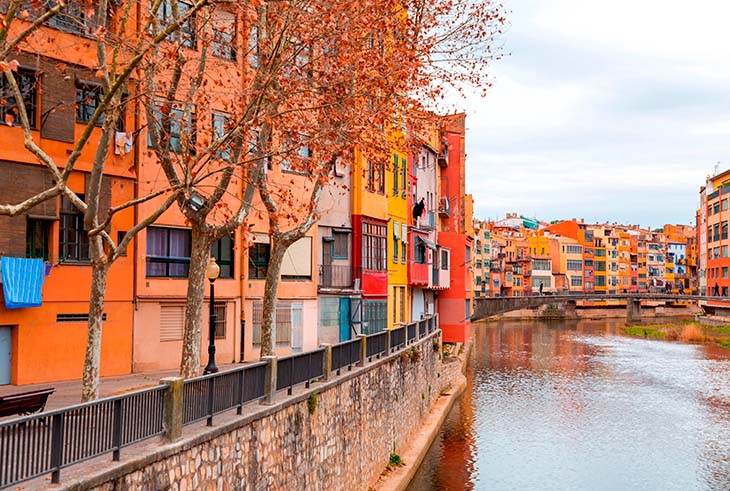

Empires rise and fall in predictable ways, following established patterns that have been repeated throughout history. These economic and geopolitical indicators, which we can also identify today, are the prelude to a paradigm shift.
Ray Dalio is a renowned American investor and founder of Bridgewater Associates who has dedicated his career to analysing economic trends and cycles throughout history. He is also a prolific author of best-selling books on economics where he explains the ideas and reasoning that have marked his successful professional career and have made him an influential voice in the world of finance. Through his reflections, he reminds us that no system is immutable and that economic, social and political changes can transform the established world order.
According to his theory, empires emerge when a country becomes an economic and military superpower, achieving global hegemony and establishing its currency as the international benchmark. However, as this hegemony faces internal and external challenges, the empire begins to decline in a process he describes as a natural cycle of growth and decline.
The intent of his studies is to analyse the longest possible historical period to find patterns of economic and social change that can help us understand why empires fail. So that politicians, businessmen and the rest of the population have at their disposal valuable clues to prepare for a paradigm shift that is inevitable, since, according to Dalio, “history repeats itself in an archetypal Great Cycle” that sooner or later will be consummated.
When the public debt burden becomes unsustainable
Dalio identifies several causes that contribute to the decline of empires. One is the rise of economic and social inequality. As inequality grows, social cohesion is undermined, generating internal tensions that weaken the empire. Moreover, excessive public and private debt, as well as inappropriate monetary policies, can lead to financial crises and general economic decline.
Similarly, the renowned investor notes that historically, the major powers have had a reserve currency, but as their economies lost global weight – often due to a lack of confidence in their economic and monetary policies – this reserve currency also lost its pre-eminence.
Applying this to the current context, he points out that the main reason why the dollar is in danger is because of the large fiscal deficit in the United States. This has led to massive indebtedness, which is sustainable as long as the world continues to have confidence in the ability of the US to pay its obligations. Still, if this confidence wanes, investors and countries that now buy their debt may look for other alternatives to diversify their currency reserves.
The Bridgewater founder argues that this could already be happening because the US is in the late stages of a debt crisis and believes the government will find it difficult to find enough buyers for newly issued bonds: “We are at the beginning of a very classic late big-cycle debt crisis when you’re producing too much debt and you also have a shortage of buyers”.
China challenges Washington’s hegemony
In this context of distrust in the US government’s ability to control its spending, the new emerging powers are trying to reduce their dependence on the dollar through a process of de-dollarisation that decouples their economies from the US-dominated international monetary system and by diversifying their reserves into safe-haven securities such as gold.
The BRICS group is working on its own currency. China is the big driver of a currency that, unlike the dollar or the euro, could be supported by gold and other commodities. A scenario that follows the pattern of imperial decline that Dalio has observed throughout history and warns: “All this that has started as a trade and economic war could lead to armed conflict”.
This scenario cannot be ruled out given the numerous examples where belligerent US rhetoric has been followed by economic sanctions and military action against any other global actor that threatens its hegemony. The US administration’s escalation of tensions with China seems to follow the same pattern that has culminated in a de facto armed conflict between the US and Russia on the European continent. As Dalio states, “Dominant powers do not fall without a fight”.
If you want to discover the best option to protect your savings, enter Preciosos 11Onze. We will help you buy at the best price the safe-haven asset par excellence: physical gold.
If you liked this article, we recommend:
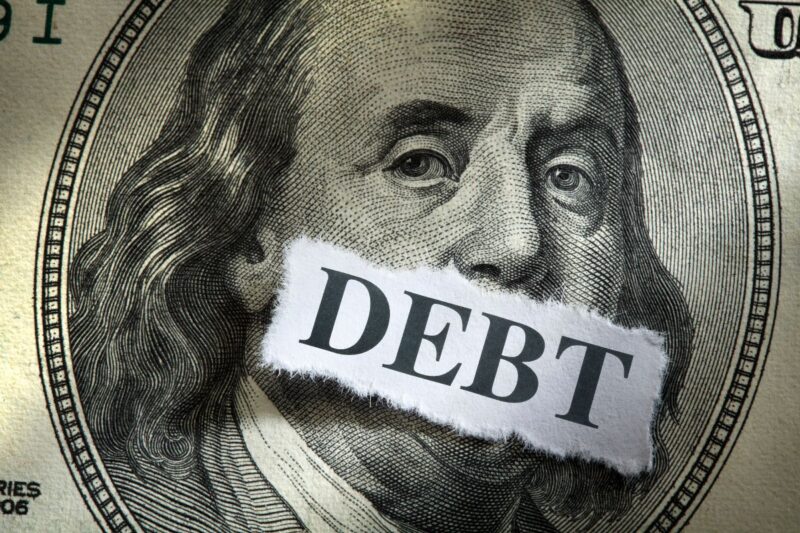

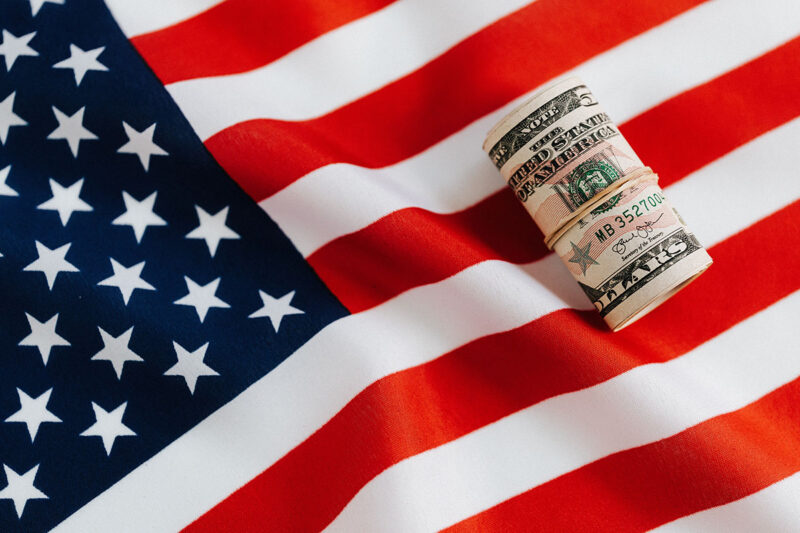
Driven by the start of interest rate cuts by the Federal Reserve and instability in the Middle East, gold prices remain near the all-time high reached last week, which marked a 29% increase since the beginning of the year.
Geopolitical tensions and changes in monetary policy maintain gold’s appeal as a hedge against uncertainty. The price of the golden metal had reached a new all-time high of €2,430 per ounce on Thursday last week, marking a 29 per cent rise since the beginning of the year, the highest increase in the past 14 years.
After experiencing spot volatility in recent days, Tuesday’s Iranian retaliation and Israel’s invasion of Lebanon are raising fears that this armed conflict will escalate into a wider regional war and keep gold prices higher.
Retail consumers in key markets respond to rising prices by selling their gold holdings to capitalise on the gains. ‘Physical demand is slowing as investors are hesitant to buy at record prices, but momentum trading continues to drive futures demand,’ says commodity strategist at derivatives platform Saxo Bank, Ole Hansen.
Fed cools expectations of big cuts
Federal Reserve Chairman Jerome Powell’s recent remarks at the National Association for Business Economics conference dampened hopes for aggressive future rate cuts, reducing analysts’ forecasts for a 50 basis point cut from more than 60% last week to just 37% on Wednesday.
Powell noted that further moves are likely to be limited to quarter percentage point reductions and added that ‘this decision reflects our growing confidence that, with an appropriate recalibration of our monetary policy, the strength of the labour market can be maintained at one around moderate economic growth and inflation moving sustainably down toward our objective’.
On the other hand, China’s economy remains sluggish, which has prompted its central bank, the People’s Bank of China (PBoC), to take additional measures to stimulate the economy, spurring flows into its booming stock market.
The current rise in gold prices against declining physical demand reflects significant global economic changes and geopolitical tensions. As markets digest these complex factors, investors will closely monitor developments in the Middle East and the release of upcoming economic data.
To discover the best option to protect your savings, go to Preciosos 11Onze. We will help you buy the ultimate safe-haven asset, physical gold, at the best price.



Some analysts believe that the first interest rate cut by the Federal Reserve signals that the US economy is already in recession or approaching one. Friday’s employment report will be another indicator of how far the economy has weakened.
The fear of recession in the United States continues to generate anxiety in the markets. While some experts claim that a recessionary phase is already underway, others see indicators suggesting that it could still be avoided in the face of a complex macroeconomic situation that generates uncertainty among analysts and investors alike.
Although the US Federal Reserve declared last week that it had begun cutting rates to recalibrate monetary policy and maintain labour market strength, economists such as Mark Spitznagel, chief investment officer and founder of Universa, see these cuts as the start of aggressive interest rate cuts that signal an impending recession.
‘The clock is ticking, and we are in black swan territory,’ he told Reuters last week. Adding that the recent ‘disinvestment’ of a closely watched part of the US Treasury yield curve, a key bond market indicator of a coming recession, signals the imminence of a sharp slowdown.
A downward cycle that feeds itself
Weakening labour market conditions are particularly worrying when they signal a decline in employment flows, i.e. the movement of people in and out of jobs. This is the view of Anna Wong, chief economist at Bloomberg Economics, who forecasts a 70% chance that the US economy is already in recession or approaching one.
While a rise in unemployment is not necessarily alarming if people out of work quickly find another job, Wong notes that hiring has slowed. Both job vacancies and hiring intentions are declining, which could lead to longer periods of unemployment, a pattern that has often been observed in previous recessions.
Guy Miller, head of macroeconomics at Zurich, points out that the strong performance of the US equity market this year has increased the net worth of many investors, boosting consumer confidence, so he considers rate cuts in this environment ‘unusual’. He adds that inflation could be more persistent in the coming year than the market is currently pricing in, as service sector price increases remain high.
Other analysts assume that the labour market is normalising rather than faltering. As the labour market continues to evolve, economists and investors will be watching the data to be released this Friday for any further signs of weakness.
If you want to discover the best option to protect your savings, enter Preciosos 11Onze. We will help you buy at the best price the safe-haven asset par excellence: physical gold.