Beijing's growing influence in Africa
China’s spectacular economic growth has been reflected in the Asian giant’s rising influence on the African continent. With investments that span across the continent and have global geopolitical implications, China is expanding its worldwide reach and tapping into Africa’s vast market and resources.
As the world’s second-largest economy, China is expanding its global reach and tapping into Africa’s vast market and resources. In the process, the Asian giant has become Africa’s largest trading partner, investing heavily in infrastructure, resources, and businesses across the continent.
For their part, African governments see an opportunity in this increased Chinese presence in their territory, diversifying their global strategic alliances through a new model of economic development that is more benevolent than the neoliberal alternative of the Western colonial powers.
On the other hand, Europe and the US understandably see this as a threat to their hegemonic position in dictating what economic policies are best for the continent or themselves and accusing China of imperialism.
Loans and infrastructure in exchange for natural resources
Several factors have contributed to this paradigm shift. One of the key ones is the search for natural resources to fuel China’s rapidly growing economy. Africa is rich in minerals and hydrocarbons that are critical to China’s economic growth.
With these investments, Beijing secures access to the raw materials necessary for its economy to continue to grow, while at the same time increasing exports of its products, services, and infrastructure development contracts in the 53 African countries with which it maintains diplomatic and trade relations.
At the same time, the desire to position itself to take advantage of the large consumer market on the African continent can’t be ignored. With a population of more than 1.4 billion people, expected to double by 2050, Africa is one of the regions with the highest GDP growth and is expected to maintain a stable and steady growth tendency between 2023 and 2027.
Unlike the privatisation and market deregulation policies promoted by the World Bank and the IMF, which are designed to benefit Western corporations at the expense of the misery of the local population, who will end up paying back the loans, China provides a type of financing that does not interfere in economic policies and is perceived as a less unequal treatment between two state actors.
That said, it remains to be seen whether, in the face of increasing debt overhangs and potential defaults, China will continue to forgive African countries’ debts in exchange for influence and new contracts, or will opt for the Western model of tying them into a spiral of unpayable debt in order to decimate what little sovereignty they have left.
11Onze is the community fintech of Catalonia. Open an account by downloading the app El Canut for Android or iOS and join the revolution!

There is a comfortable way to explain the present: to say that “everything is going up” and to point to an external culprit. China, war, the pandemic, or the markets. It is a simple, reassuring explanation, but an insufficient one. Because when the world seems expensive, it is often not that it is expensive, but that it is poorly understood.
What we are experiencing is not a structural inflation of the planet, but a fragmentation of the system that the West itself designed some thirty years ago. And as with all structures that break, the noise does not come from the final blow, but from the cracks that have accumulated.
After the Cold War, the West believed it had won something more than a conflict: it thought it had gained time. With the collapse of the USSR, the world seemed governable under a single logic, based on open markets, global production and cheap consumption. Politics stepped aside, allowing the economy to take center stage. In some way, that vision would eventually impose itself as common sense.
From that point on, the decisions were clear. Industry was offshored in order to reduce costs and increase margins. China entered this system not as a rival, but as a functional piece of a new large-scale productive model. In a short time it became the factory of the world, providing labor without comparable rights, cheap energy and strong state support.
Today, this narrative is often presented as a strategic mistake. But it was not. It was a mutual agreement. On one side, the West obtained low prices and controlled inflation; on the other, China gained access to growth, technology, and markets. No one deceived anyone. Everyone knew what they were buying and what they were selling.
Private profits, socialized risks
The problem did not arise with globalization, but with its moral management. Western companies achieved extraordinary margins, but did not reinvest them in their own industrial fabric or in long-term productive capacity. States, for their part, took advantage of cheap consumption to sustain an artificial political stability, financed by cheap debt. And the middle classes, without yet realizing it, began to pay a deferred bill: less industry, less job security, less bargaining power.
The effects were gradual but persistent. Stagnant wages, silent precarization, rising costs of living. Products were cheaper, but citizens were more fragile. Globalization reduced prices, yes; but it also eroded the consumer’s ability to sustain them in the long term. Here lies the central paradox of our time: never before had we bought so much with such a deep sense of economic insecurity.
The dollar and debt trap
This is where the system acquires a depth that often goes unnoticed. This entire mechanism —offshored production, sustained consumption, restrained wages— rested on an invisible but decisive pillar: trust. The dollar as the hegemonic currency and U.S. debt as an infinite safe asset allowed the world to function with a logic that was apparently paradoxical but stable. The United States could borrow without limit, the rest of the world could accumulate reserves, and the circuit closed with a shared faith in the center of the system.
But trust is neither eternal nor neutral. It creates monetary dependence, exposes geopolitical vulnerabilities and, over time, awakens the temptation to seek alternatives. When a global economy revolves too much around a single axis, any shock becomes systemic. And when the center begins to seem less reliable —due to excessive debt, political use of the currency or internal instability— the periphery stops wanting to orbit by inertia. Not out of hostility, but out of prudence.
It is at this point that real fragmentation begins. Not with Trump’s tariffs, which are merely its visible manifestation, but with the silent crack in trust. When the system ceases to be perceived as fair and predictable, attempts to create parallel routes, regional agreements and alternative currencies multiply. Globalization does not collapse all at once; it splits. And when this happens, the world does not immediately become more expensive, but it does become much more fragile.
When China stops being the workshop
The shift in the center of gravity is not only monetary, but also productive and political. The turning point comes when China decides to stop being merely a subordinate production space and aspires to become a strategic actor. It no longer only manufactures for others, but plans for the long term, subsidizes key sectors, exports surpluses and defines its own priorities. In a world where trust in the center is beginning to crack, this evolution is not an anomaly, but a logical consequence. Whoever depends too much on a system eventually tries to govern part of it.
Europe, meanwhile, looks in the mirror and discovers its own structural nakedness. Expensive energy, the absence of a common industrial policy and an increasingly defensive response based on tariffs. But tariffs are not strength; they are the symptom. They indicate that the problem is not so much one of competition as of foundations, because when you cannot compete, you protect yourself. And when you protect yourself too late, you do not solve the problem; you merely postpone its diagnosis.
The world of blocs
The shift toward a fragmented world does not imply the disappearance of trade, but the end of a fiction: that of neutral trade, disconnected from politics and power. What emerges is a system of regional blocs, where economic decisions are once again conditioned by strategic interests. There is less globalization and more alignment; less efficiency and more politics. Flows are no longer free, they are negotiated. And this generates frictions, costs and tensions, but it also opens windows of opportunity for those actors who understand well where they are and with whom they want to align.
This new scenario is not necessarily more expensive by definition. It is, above all, a less fluid world, more aware of its limits and much more fragmented. Complexity replaces simplicity, and blind dependence gives way to a more closely monitored interdependence. Prices do not always rise; what changes is the ease with which everything used to circulate. And when that ease disappears, the system forces us to think, to prioritize and to make decisions that had been postponed for decades.
Faced with this panorama, fragmentation does not demand panic, but judgment. Understanding the context is already a form of financial defense. Fragmenting means diversifying, protecting savings and not trusting everything to a single system or a single promise. This is not about selling fear, but knowledge. Because history remembers it with relentless consistency: systems do not collapse when the world changes, but when people insist on interpreting it with old maps. And today, more than ever, the problem is not that the world is expensive; it is that it is no longer simple.
If you want to discover the best option to protect your savings, enter Preciosos 11Onze. We will help you buy at the best price the safe-haven asset par excellence: physical gold.

Water covers 70% of the planet’s surface, and the volume of business that this can generate makes the marine ecosystem a strategic sector for developing a sustainable economy.
The blue economy describes all those economic activities linked to the sea and marine ecosystems. It includes port and logistics activities, fishing, shipbuilding, energy production, sports, science, and technology activities. The main premise is sustainability, as the future of both this economic sector and the planet in general will depend on it.
2050 goal: 35% of energy will be produced in the sea
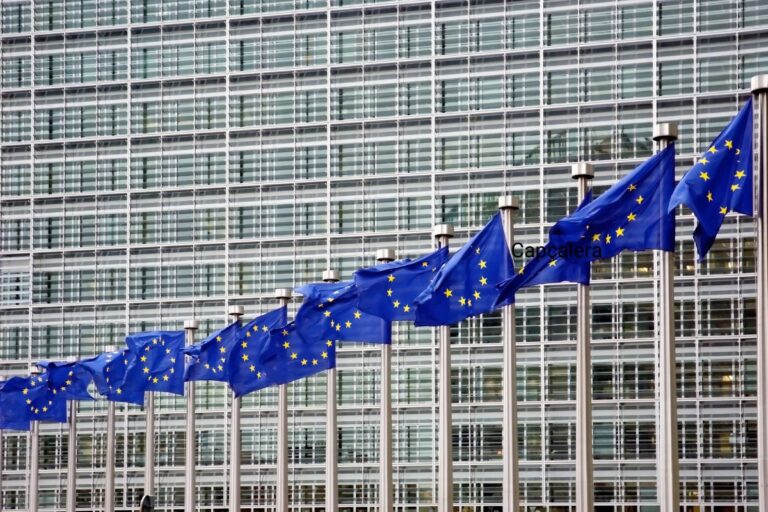
The European Commission points to the blue economy as a key player in the European Green Deal, which promotes the sustainable development of all member countries. The ocean acts as a climate regulator, is indispensable in the production of oxygen, and provides energy, food, and other resources without which we could not live.
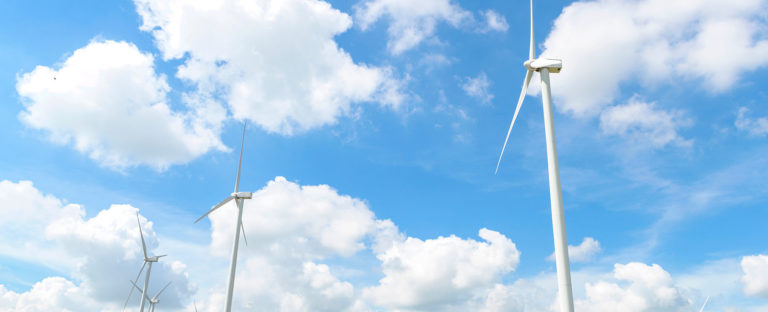
It is, therefore, a strategic sector in the fight against climate change which, today, focuses on two major goals: developing renewable energy on the high seas in order to achieve 35% of energy production by 2050 and, on the other hand, making ports and transport more sustainable, seeking to limit carbon emissions and reduce the ecological footprint of ports.
Catalonia has a project that could achieve the energy goal, the so-called Tramuntana Park. With the intention of becoming a benchmark against climate change, the Empordà presents this proposal to create a marine and floating wind farm in the Gulf of Roses. The project would start operating in 2026 and could supply 45% of energy in the province of Girona, in addition to creating 5,000 jobs and contributing to the preservation and regeneration of marine ecosystems.
What is the European Green Deal? The European Research Council explains it in this video.
Blue Catalonia, leader in Europe
The plan to promote the blue economy in Catalonia began in 2018. Since then, the sector has generated more than 200,000 jobs and 35.5 billion euros. A figure that places Catalonia at the forefront of European countries where the maritime economy has greater internal weight. It is followed by Portugal, Estonia, Greece, Malta, and Cyprus.
Its weight is undeniable, and Catalan business involvement corroborates this. For example, the Port of Barcelona has launched a project to turn into a blue economy hub acting as a strategic point for companies related to the sector directly or indirectly.
Also, this year, the Blue Economy Business Cluster was created in the lands of the Ebro. It is an initiative open to all companies in the area that want to join forces for the environmental preservation of the Delta and its economic activity, mostly maritime.
A sustainable economic development involves making efficient use of the available resources, and in this sense Catalonia must make conscious use of everything the sea has to offer. The goal will be economic and social progress, but with the same degree of importance as environmental preservation, because as the European Commission warns, “there can be no green without blue.”

Agent Sara Casals tells us about the effects of the carbon footprint on the seabed.


Every January, Davos becomes the nerve centre of global power. Presidents, bankers, major business leaders and international organisations deliver speeches on cooperation, sustainability and shared prosperity. But while the cameras focus on the main stages, there are glaring silences that go unnoticed. And it is precisely these silences that should concern citizens, savers, and anyone trying to protect their economic future the most.
The World Economic Forum was born in the 1970s with an apparently noble purpose: to facilitate public-private dialogue in an increasingly interconnected world. For decades, Davos was the showcase of triumphant globalisation. Growth, free trade and monetary stability were the keywords.
Today, the context is radically different. What was once a space of optimism has become a defensive space, where elites try to preserve a system that is showing cracks. Not because Davos has lost influence, but because the world it helped to build is entering a phase of structural friction.
And here appears the first major absence from the official narrative: the crisis of legitimacy. Davos does not pass laws, does not vote on budgets, does not account to citizens. But it sets the agenda. And it does so from a perspective that prioritises the stability of the system over the well-being of people.
Inflation and debt: the elephant in the room
One of the most frequently mentioned issues in the corridors —but rarely addressed in depth on stage— is the level of global debt. Governments, companies, and households are carrying historically high levels of debt. The institutional response of recent years has been clear: more liquidity, more stimulus, more money created out of thin air.
In Davos, there is talk of “monetary normalisation”, but almost no one explains the real cost of this process. Inflation is not a one-off accident: it is the direct consequence of years of expansionary monetary policies. And this inflation acts as a silent tax that erodes savings.
The silence is revealing. Because acknowledging it publicly would mean recognising that the purchasing power of the middle classes will remain under pressure for years —not as a temporary anomaly, but as a structural consequence of the model. It would mean admitting that saving in fiat money is intrinsically vulnerable, exposed to constant erosion that does not stem from poor individual decisions, but from deliberate monetary policies. And above all, it would require stating an uncomfortable truth out loud: that the current system needs inflation to sustain levels of debt that would otherwise be unpayable. Saying it would be admitting that stability is built by sacrificing value… and that this value almost always comes from the same pocket.
Davos speaks of “stability”, but avoids saying that this stability is often built at the expense of the saver.
Economic geopolitics: the end of the free market as we knew it
Another major hidden issue is selective deglobalisation. Officially, no one wants to talk about protectionism. But in practice, major powers use tariffs, sanctions, technological controls and aggressive industrial policies.
The free market is only free while it suits. When strategic interests come into play, the discourse changes. Davos knows this, but frames it with euphemisms: “resilience”, “secure supply chains”, “strategic autonomy”.
Translated into real life, this means less global trade, more economic blocs and, inevitably, more uncertainty. A scenario with immediate and very concrete consequences: more volatile markets, where sharp movements are no longer exceptional; increasingly politicised investments, subject to strategic interests and government decisions; and risks that are no longer merely economic, but clearly geopolitical, with conflicts, sanctions, and alliances shaping asset values. The free market, as we understood it, is no longer the playing field.
Yet this paradigm shift is rarely explained clearly. Perhaps because acknowledging it would mean admitting that the global model is changing… and not necessarily for the better.
Artificial intelligence: promise of productivity, social risk
If there is one omnipresent concept in Davos, it is artificial intelligence. The speeches are almost messianic: more productivity, more growth, more efficiency. But the debate about who wins and who loses is diluted.
Economic history teaches us this: every technological revolution creates wealth, but also displacement. The difference this time is the speed. And social structures are not adapting at the same pace.
What is not being said clearly is that this technological transformation will not be painless: many jobs will be replaced before real and stable alternatives emerge, creating periods of precariousness that are not always explained. At the same time, capital concentration may increase even further, strengthening the power of some actors who control technology, data, and infrastructure. And without solid and effective redistributive policies, the outcome is predictable: a wider, deeper and harder-to-reverse social gap.
Davos talks about “upskilling”, but avoids talking about the loss of workers’ bargaining power and the real impact on wages and job stability.
Green transition: discursive consensus, blurred bill
Climate is another apparent consensus. Everyone agrees that an energy transition is necessary. But the key question —who pays for it— remains unanswered.
The reality is that much of the cost of the transition falls on the same groups as always. On consumers, through taxes, tariffs and everyday price increases presented as inevitable. On medium-sized companies, with less financial and technological capacity to adapt to top-down imposed timelines. And on already heavily indebted states, which finance the transformation with more deficit, pushing the cost into the future while fiscal room for manoeuvre shrinks year after year.
Meanwhile, major financial players continue to play on both sides. In Davos, the discourse is green, responsible, and committed; away from the spotlight, however, many investments continue to follow strictly profit-driven criteria, with short horizons and little willingness to absorb real losses. The reassuring narrative thus conceals an uncomfortable truth: the transition will be economically painful if it is not carried out with judgement, fairness, and realism. Denying this only postpones social and economic conflicts that will eventually emerge with greater force.
All this may seem distant, abstract. But it is not. Davos does not speak directly to you, but its dynamics affect you every day: when inflation erodes savings, when volatility shakes markets, when debt conditions public policy, and when technology reshapes work. In this context, the key question is not what Davos says, but how you protect yourself. And this is where the official narrative fails: it asks for trust in the system, but offers few real guarantees. The system needs citizens to trust… even when its foundations are fragile.
The core idea Davos avoids
Perhaps what is not being said in Davos is precisely the most important thing: that the protection of wealth and the future will not come from above. It will not come from summits, solemn declarations or institutional promises. It will come from knowledge, personal judgement and informed decisions. Understanding how the system really works is not pessimism —it is responsibility. And in a world of structural uncertainty, the best tool is not blind faith, but economic awareness.
Davos will continue to exist. It will continue to set trends and generate headlines. But the ultimate responsibility is not its own. It is ours. At 11Onze, we are clear: talking about economics is talking about personal sovereignty. About how we protect savings, how we understand risks and how we stop being mere spectators to become informed actors. Because the future is not decided only in Davos… it is also decided at home.
If you want to discover the best option to protect your savings, enter Preciosos 11Onze. We will help you buy at the best price the safe-haven asset par excellence: physical gold.

It is difficult for us to talk about death, but it is even more difficult to talk about the cost of dying. We want to break the taboo and take a look at the procedure and costs of funeral services, historically criticised for their high prices and lack of transparency.
The Covid-19 pandemic has left us with very unpleasant figures, headed by the 23,000 deaths that have been recorded in Catalonia since the beginning of the pandemic. Added to this number is the desperation of many families when it comes to paying for the funeral to have a dignified farewell for their loved ones, either due to a lack of financial resources, the high costs of the funeral home, or, in some cases, because they cannot afford or do not have burial insurance.
Barcelona creates a protocol of good practice
The first obstacle encountered by many families begins at the medical centre itself: due to lack of information, in many cases, they are unaware of the procedure for contracting funeral services at the hospital for the death of a family member. In response to this need, Barcelona City Council has created a protocol of good practices on funeral services, to which ten of the city’s hospitals have already signed up.
The aim of this protocol is to provide families with information on the steps to follow and to promote freedom of choice as to which funeral company they want to use. For this reason, the medical centres, together with the cemeteries of the city of Barcelona, provide a leaflet with information on prices, rights, funeral homes operators, the procedure to follow in case of having insurance, free services, and subsidised services. The protocol also details how all this information must be provided by medical personnel in a designated area, in order to maintain privacy.
Price of burials limited by the coronavirus
The impact of the pandemic and the situation of helplessness in which many families have found themselves has led the Generalitat to establish that “under no circumstances, the prices of funeral services maybe be higher than those in force prior to 14 March 2020”. This malpractice had already been denounced by some funeral homes customers, who warned of prices that were too high for those who died of coronavirus.
Currently, due to the lack of transparency and information from funeral homes and the aggravation of the coronavirus, it is difficult to establish an average burial price in Catalonia. But to give us an idea, in Barcelona, the limit for funeral services during the pandemic was 1,948.10 euros.
The recurrent lack of transparency
In 2020, the Organització de Consumidors i Usuaris (OCU) carried out a study analysing the websites of 50 funeral homes in different cities in Spain, and concluded that the lack of transparency is constant and recurrent in this sector. Only five funeral homes out of the 50 that were analysed reported and detailed their prices; others showed the price of certain services or simply the total cost, and the remaining 37 did not report prices at all.
In addition to this lack of transparency, there is a lack of freedom to choose funeral homes, especially for people with burial insurance, who can only choose from the options indicated by the insurer. In Spain, practically half of the deceased population in 2020 had insurance (46.6%) and, therefore, their choice was limited. The association of small funeral homes Esfune alerted the National Commission for Markets and Competition this year to this lack of freedom of choice, which according to its study affects 70% of families, with or without insurance.
Nothing spares us from death. That is why it is so important that the funeral sector offers facilities and guarantees to families and is committed to transparency. Because the duty of funeral homes is to provide a good death.
Do you want to be the first to receive the latest news about 11Onze? Click here to subscribe to our Telegram channel


The year 2026 has begun with a United States that has abandoned the courteous language of the liberal order. The world no longer revolves around shared values, but around scarce resources. And when those resources become vital, diplomacy gives way to pressure. What we are witnessing is not a sum of conflicts, but a shift in paradigm.
For decades, Washington presented itself as the guarantor of an international order based on rules, open markets, and multilateral institutions. The narrative was clear: free trade, democracy, stability. But this model had an implicit condition: that the United States controlled the key levers of the system —energy, finance, trade routes, and currency.
Today, that control is no longer unquestioned. China challenges industrial hegemony, Russia questions the European security architecture, and more and more countries are seeking alternatives to the dollar. In this context, U.S. foreign policy has changed its tone: fewer sermons, more muscle.
This is not an improvised drift, but a defensive response. A geopolitics of systemic survival in a world where power can no longer be taken for granted.
When sanctions replace invasion
The case of Venezuela illustrates better than any other how the exercise of global power has evolved. The official narrative continues to speak of democracy and human rights, but in practice it points in another direction. Energy control is no longer exercised with marines, but with sanctions.
Venezuela holds the largest oil reserves on the planet. For years, the financial and commercial blockade imposed by the United States has strangled its productive capacity without the need for a single boot on the ground. In this way, the economy has done the work that the military once did.
When the global energy market tightened —due to the war in Ukraine, inflation, and supply insecurity— Washington adjusted the mechanism. It partially relaxed sanctions, not out of political conviction, but out of strategic interest. The blockade does not disappear, but it is rationed.
The special licenses granted to companies such as the U.S.-based Chevron do not signify a normalization of political relations, but rather a surgical management of scarcity. Washington now decides who can extract, in what quantity, at what pace, and under what conditions. Punishment is transformed into permission, and sanctions become the new tool of governance.
This model has an obvious advantage for the hegemony, as there is no longer a need to occupy territory or overthrow regimes, a practice widespread during the twentieth century. Now it is enough to control the financial and energy tap. But in the long run, the cost will become too high, because the systematic use of sanctions will erode international trust and accelerate the search for alternatives. As a result, payments outside the dominant system, bilateral agreements, and gradual exits from the dollar circuit have already begun to appear.
Thus, the world faces a very clear paradox: the more sanctions are used as a geopolitical weapon, the less neutral the currency that enables them will appear.
When the Arctic is no longer peripheral
If Venezuela represents the energy-rich south, Greenland symbolizes the strategic north. For decades, the island was perceived as a remote, almost anecdotal space, but today it has become a central piece on the global chessboard.
The melting of the Arctic —as a consequence of climate change— opens new maritime routes, shortens commercial distances, and exposes resources previously inaccessible, such as rare earths, uranium, and minerals critical for the energy transition. At the same time, Greenland hosts key military infrastructures for the U.S. early warning system and space defense.
Washington’s pressure on Nuuk and Copenhagen is neither a whim nor a diplomatic outburst, but a clear message: the Arctic cannot remain outside its sphere of control. Neither through Chinese influence nor through full autonomy that escapes the Atlantic orbit.
Here, geopolitics takes on a more classical form: military presence, selective investment, diplomatic pressure. But the underlying objective is the same as in Venezuela: securing resources and corridors before rivals do.
What connects Caracas and Nuuk?
This shift in U.S. foreign policy does not respond to a single factor or to a temporary situation. It is the result of a combination of structural pressures that affect the very core of its power. If Venezuela and Greenland appear as distant and unrelated scenarios, it is because they conceal the same pattern.
Behind Washington’s new assertiveness converge three key vectors that explain why the language has changed and why economic and strategic coercion has replaced consensus as the primary tool.
- Reindustrialization. The United States has understood that relying on fragile global supply chains is a strategic risk. Cheap energy and critical minerals are essential to recover productive capacity.
- The geopolitics of the dollar. The U.S. currency remains hegemonic, but it is no longer uncontested. Every sanction, every exclusion from the financial system, feeds the idea that alternatives must be sought. This is not a sudden de-dollarization, but a constant erosion.
- The credibility of power. When a power perceives its leadership to be challenged, it tends to act more forcefully. Not necessarily by force, but to avoid appearing weak. Firmness becomes an end in itself.
The result is a more direct, less rhetorical, and far more pragmatic foreign policy. A policy that no longer promises a better world, but seeks to avoid a worse one… for its own interests.
The risk of a world under permission
This shift in global policy has profound consequences. It normalizes the idea that security justifies indefinite sanctions, accelerated extractives, and the militarization of trade routes. The global economy ceases to function as a space of shared rules and becomes a system of licenses and exceptions, where power decides who may produce, trade, or prosper… and who may not.
For Europe —and for the conscious saver— the message is unequivocal. The risk is no longer merely financial, or even economic: it is systemic. Understanding geopolitics ceases to be an intellectual exercise and becomes a patrimonial necessity. In a fragmented world, ignoring the global context is no longer neutral; it is a form of exposure.
From Venezuela to Greenland, the United States is not improvising. It is adapting to a more competitive and less docile world, where power is concentrated and margins are tightening. And in this scenario, saving ceases to be a passive gesture and becomes a strategic decision: preserving value, reducing dependencies, and gaining autonomy. When geopolitics tightens, ignorance becomes costly. That is why, at 11Onze, we choose to look beyond the headline, understand the underlying movements, and make informed decisions that protect savings and assets in uncertain times.
If you want to discover the best option to protect your savings, enter Preciosos 11Onze. We will help you buy at the best price the safe-haven asset par excellence: physical gold.


The Catalan economy is made up of a veritable “great spider’s web,” as Roger Vinton calls it in the title of his book. Faced with this idea, and with the suspicion that the knots and actors in this web are poorly explained, a good number of books have appeared on a recurring basis that attempt to untangle it. We review them in La Plaça.
The reflections that follow, whether in the form of memoirs, such as those by Josep Pla and Cristian Segura, or in the form of journalistic essays, such as those by Roger Vinton, Gemma Garcia Fàbregas, Jordi Amat, Pere Cullell and Andreu Farràs, describe how the productive and financial economy works in the hands of elites who prefer to remain in the shadows.
- Homenots (1958-1962) by Josep Pla. ‘Homenots’ is a series of 60 profiles by Josep Pla on figures of his time. They were published between 1958 and 1962 by Editorial Selecta and between 1969 and 1974 by Editorial Destino in four volumes. In the preface to one of the volumes, Pla stated that, for him, “a ‘homenot’ is a singular, unusual type, a person who has been significant, in any activity, in a remarkable way”. Among these profiles are those of Prat de la Riba, Jaume Bofill, Joan Miquel Avellí and Ramon Godó, among many others, who make up the economic and political substratum of the country.
- L’oasi català (2001) by Pere Cullell and Andreu Farràs. The Catalan oasis refers to the close relations that developed between the Catalan bourgeoisie and the centralism of the Madrid court in the 19th century. The term seems to have been coined by the journalist Manuel Brunet. And it seems that, today, there would be some 400 people who would represent this Catalan elite spread across cultural and economic centres. With this expression, the journalists Pere Cullell and Andreu Farràs titled their essay, in which they explain the family, educational and summering relationships of a good part of these leading figures of Catalan society, who embrace the entire Catalan political spectrum.
- Els senyors del boom (2014) by Gemma Garcia Fàbregas. The journalist touches in depth a very sensitive story, that of the real estate gold rush experienced in the Catalan Countries and its social, political and economic impacts, with first-hand information and a highly documented analysis that opens a new perspective on the reasons for a catastrophe foretold as was the real estate bubble.
- La gran teranyina (2017) by Roger Vinton. ‘La gran teranyina’ reveals the opaque structure from which certain agents exercise the power through which they control events and situations that affect our society on a daily basis. This book allows us, in Vinton’s own words, to “open our eyes and become aware of the immense power of the individual”. A profound investigation that changes the perception of Catalonia and that some have considered a true reference manual or compass in the jungle of power.
- El fill del xofer (2020) by Jordi Amat. Following the dark figure of Alfons Quintà -journalist, lawyer, merchant navy officer and judge, who on 19 December 2016 murdered his wife and then committed suicide with a hunting rifle-, Jordi Amat reflects on power. Behind a dazzling journalistic career, which spans from the direction of TV3 to the talk shows of Intereconomía, a dark trajectory is hidden, full of blackmail, sexual persecutions, abuses of authority and various tricks, which shows how the sewers of power work in Catalonia.
- Gent d’ordre (2021) by Cristian Segura. Halfway between an essay, a memoir and a journalistic chronicle, Cristian Segura writes an exhaustive portrait of Barcelona’s elites. A society in transformation due to globalisation, the consolidation of the welfare state and also the hegemony of Catalan nationalism. Elites do not disappear, they are transformed. And Barcelona is the paradigm of this.
11Onze is the fintech community of Catalonia. Open an account by downloading the app El Canut on Android and Apple and join the revolution!



For decades, the dollar has been far more than a currency. It has been an architecture of power. A silent tool that has allowed the United States to finance chronic deficits, project global influence, and condition the foreign policy of half the world. But this system—the petrodollar—no longer rests exclusively on trust.
Today, increasingly, the dollar is also sustained by coercion. And when a currency ceases to dominate because it is useful and begins to do so because it instills fear, its fragility becomes structural.
To understand the present, one must return to the past. In 1971, President Richard Nixon unilaterally ended the gold standard. The dollar ceased to be convertible into precious metal and became a fiat currency. On the surface, a technical decision. In reality, a monetary earthquake with global consequences.
The American response was as simple as it was brilliant: tying the dollar to oil. Through agreements with OPEC, and especially with Saudi Arabia, global crude oil began to be traded almost exclusively in dollars. Any country that wanted energy first had to pass through the U.S. financial system. And any surplus dollars ended up being recycled into U.S. public debt.
Thus, the petrodollar was born: a system that allows the United States to import real goods in exchange for money created out of thin air, sustaining a growth model that no other economy could replicate without collapsing.
The exorbitant privilege
For decades, this system worked because it was, quite simply, efficient. The dollar was liquid, stable, and widely accepted. It became the natural center of international trade and the primary store of value for governments, companies, and central banks. This hegemony did not need to be imposed by force: it was grounded in trust. This is what economists call soft power—a subtle but extraordinarily effective form of domination.
This privilege has allowed the United States to live for years beyond its means without paying an immediate price. Structural trade deficits, rising debt, and sustained monetary expansion have not triggered a confidence crisis like the one any other economy would face. Washington has been able to do this because the world has continued to demand dollars, driven by energy trade and the central role of its financial system. But every privilege generates abuses. And every abuse, reactions.
From soft power to hard power
Over the last two decades, the dollar has ceased to be merely an economic tool and has become an instrument of geopolitical pressure. Financial sanctions, the freezing of sovereign reserves, asset blockades, and the expulsion of countries from the international payments system have made it clear that the dollar system is not neutral.
When some states have attempted to explore alternative ways to trade their energy resources outside the dollar, the cost has not always been economic. Often it has been political, diplomatic, or strategic. This is not about asserting a simple causality, but about identifying a pattern: leaving the petrodollar system has costs. And those costs are not always paid in the markets.
When countries accumulate dollars because they are useful, the system is solid. When they do so because they fear the consequences of not doing it, the system becomes fragile. This is where de-dollarization is born—not as an ideological rebellion, but as a defensive strategy.
Monetary alternatives: cracking the monopoly
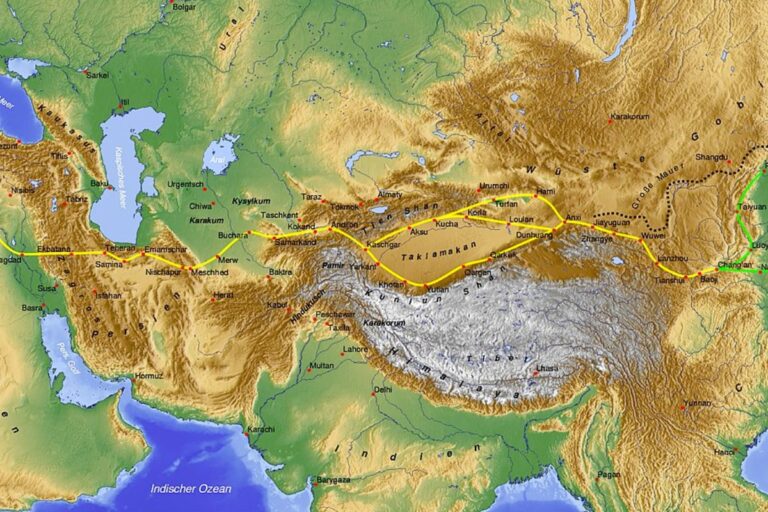
In this context, China emerges not as an immediate substitute for the United States, but as an architect of alternatives. Beijing does not seek to overthrow the existing order, but to crack it from within. Bilateral trade in yuan, the CIPS payment system—an alternative to the SWIFT payment system—the Asian Infrastructure Investment Bank, and the New Silk Road offer countries an option that until recently was unthinkable: to trade, invest, and finance themselves without necessarily having to go through the dollar.
This alternative is partial and imperfect, but sufficient to alter global incentives. When mid-level oil exporters—from Africa, Central Asia, or Latin America—identify paths toward monetary diversification, the strategic calculation changes. Diversifying is not rebelling: it is protecting oneself. Each energy contract outside the dollar is not a rupture, but it is a precedent. And precedents, when they accumulate, transform entire systems.
Europe and Mercosur: the third monetary axis
For a long time, Europe has been portrayed as a passive actor, subordinated to the American orbit. This reading, however, is beginning to fall short. The agreement between the European Union and Mercosur marks a geostrategic turning point that goes beyond trade.
Mercosur is not just a trade agreement: it is a monetary lever. For the first time in decades, the EU consolidates a space of massive exchange of raw materials, energy, and industrial goods where transactions can be conducted in both dollars and euros. It is not a frontal challenge to the petrodollar, but it is a significant crack in its monopoly.
This places Europe in a new role: ambiguous but active. Without breaking with Washington or fully aligning with Beijing, the EU introduces a third axis—that of silent monetary competition. Allowing part of the Global South’s strategic trade to be denominated in euros is not a technical decision, but a profoundly political one. Europe does not become an alternative hegemonic power, but it ceases to be merely a spectator. In a multipolar world, offering options is already an exercise of power.
Are we facing the end of the petrodollar?
Speaking of the dismantling of the petrodollar is not speaking of an imminent collapse. The dollar will remain central for years. No other currency can replace it today in liquidity, market depth, and accumulated trust. But one thing is centrality, and another, very different one, is uncontestability. And it is the latter that is beginning to crack.
The petrodollar system will not fall overnight. Monetary empires never do. It will erode slowly, agreement by agreement, exception by exception, contract by contract. When the “exceptional case” repeats itself often enough, it ceases to be exceptional.
The uncomfortable question is inevitable: what happens when a currency is maintained not by its economic strength, but by the fear generated by leaving it? Monetary history is clear: when trust turns into coercion, the system enters a defensive phase. And sooner or later, someone dares to say enough. Not out of ideology, but out of necessity.
For savers, for companies, and for small economies, this change of era is not a geopolitical abstraction. It has direct consequences for inflation, interest rates, financial stability, and the preservation of wealth. In this scenario, depending on a single currency, a single system, or a single center of power ceases to be a guarantee and becomes a risk.
Understanding how the petrodollar system works is no longer an academic exercise. It is a tool for economic survival. At 11Onze we have long warned that financial sovereignty begins with knowledge. And in a world that changes the rules of the game, those who do not understand them pay the price.
If you want to discover the best option to protect your savings, enter Preciosos 11Onze. We will help you buy at the best price the safe-haven asset par excellence: physical gold.


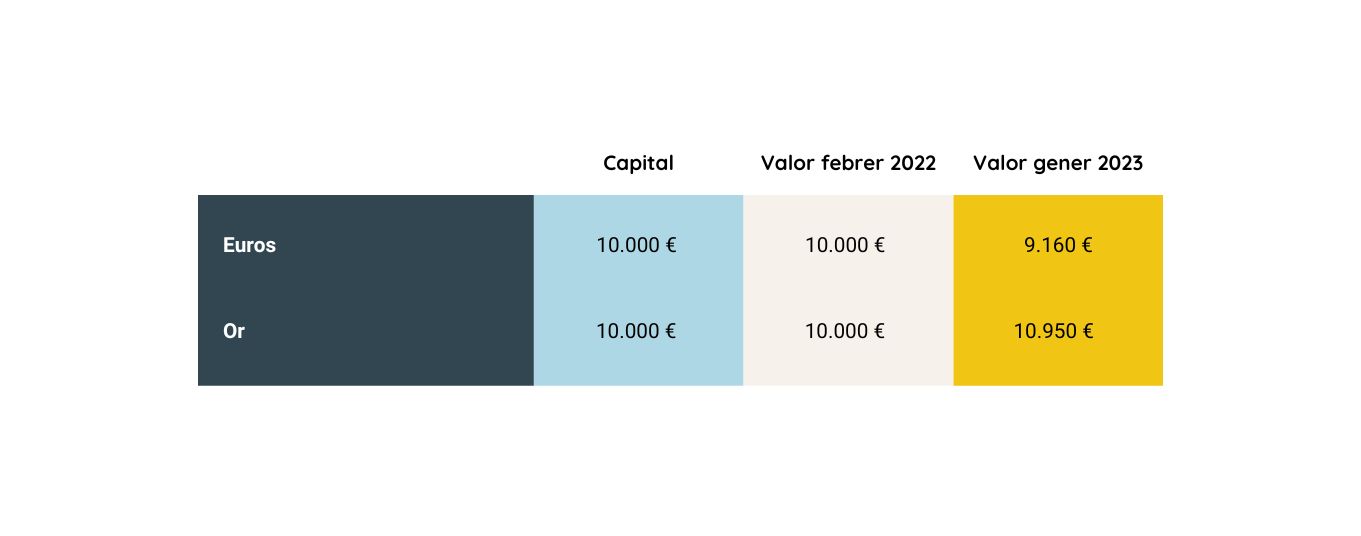
Year-on-year inflation in Spain in 2022 was 8.4%. Preciosos 11Onze gold has appreciated by 9.5%. In February 2022 we launched Preciosos 11Onze, offering members of our community to buy gold to protect themselves against inflation. Almost a year later, the gold price confirms the forecast.
It is no secret that an analysis of the historical evolution of the value of gold shows that, despite some occasional downward fluctuations, it is a real safe-haven asset that protects our savings, especially in times of economic crisis. This was obvious during the three-year period of the sanitary crisis, when gold prices increased by 40%.
After the return to ‘normality’, 2022 was seen as the year to consolidate the economic recovery. Even so, geopolitical uncertainty and the energy crisis, together with high inflation and currency tension due to the loss of value of the euro against the dollar, caused many families to lose much of their purchasing power.
A safe haven in the face of uncertainty
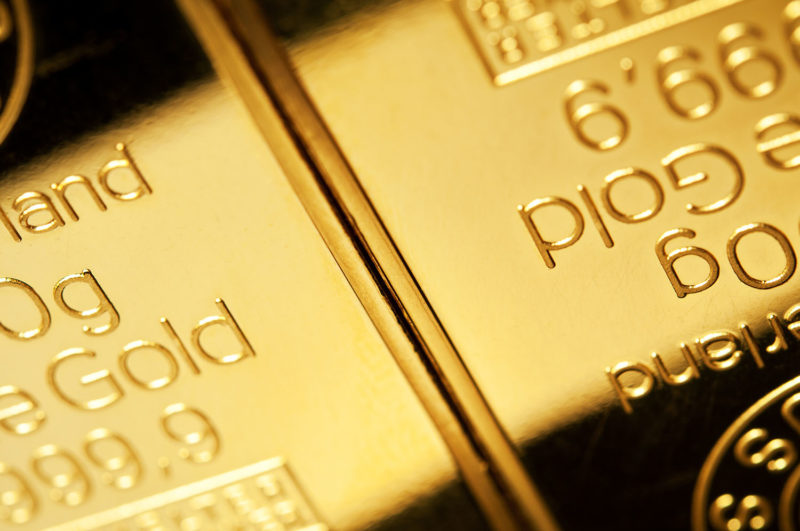
In this context, buying gold was not an investment or an instrument of speculation, but one of the few options people had to safeguard their money. That is why we launched Preciosos 11Onze, as a tool for our community to protect their savings in an extremely turbulent context.
The strength of the dollar and uncertainty about the possible rise in interest rates contributed to the fluctuation in the price of gold during 2021, but by early 2022 a new upward trend was confirmed. So, since then, has it maintained its reputation as a safe-haven asset? Without a shadow of a doubt, yes. When we launched Preciosos 11Onze, an ounce of gold was trading at €1.599, and today it is priced at €1.749, a rise in value of almost 9.5%.
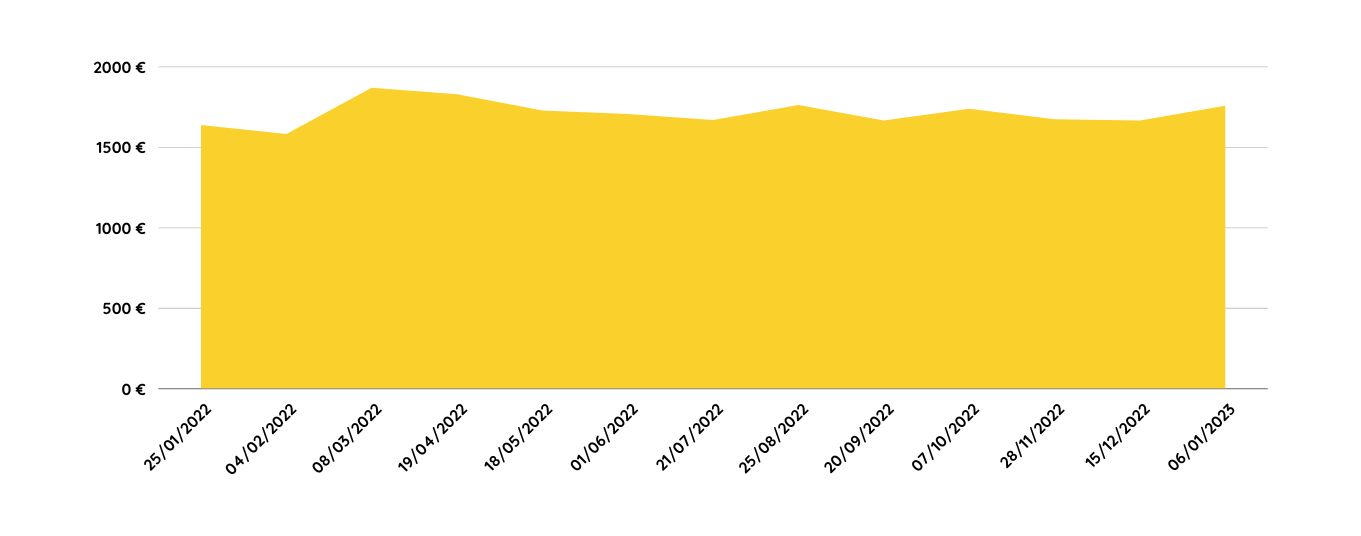
This means that in the face of the depreciation of the euro due to inflation and competition from the dollar, having your money in gold would not only have prevented the loss of its value, but would have increased it considerably. Of course, it should be borne in mind that historical returns are not indicative of future returns and that any purchase of precious metals carries some risk, but as we have seen, leaving your money in the bank can be much worse.
If you want to discover the best option to protect your savings, enter Preciosos 11Onze. We will help you buy at the best price the safe-haven asset par excellence: physical gold.
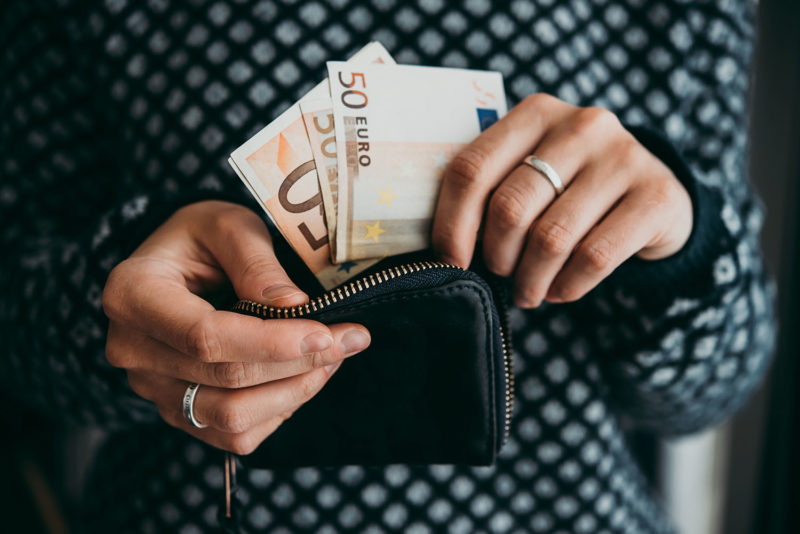

Households reduce savings accumulated during the pandemic to sustain spending in the face of sharp price rises. The fall in the savings rate is reflected in the decline in household financial wealth.
While rising prices have been strangling families for months, the rise in central bank interest rates to try to curb inflation is pushing up mortgage prices, adding up to a perfect storm, forcing households to use the savings accumulated during the sanitary crisis to maintain the same level of consumption at much higher prices.
Data collected by the Bank of Spain and the National Statistics Institute (INE) suggest that households saved some 269 billion euros during the peak phases of the pandemic. Even so, the gradual reopening of the economy and the rising cost of living has caused a large part of these accumulated savings to evaporate.
The INE report shows that in the third quarter of 2022, the household savings rate stood at 5.7% of disposable income, the lowest figure in four years. It should be borne in mind that this rate is calculated by eliminating seasonal and calendar effects, due to the fact that savings tend to fall in the first and third quarters and rise in the other two. If we disregard these seasonal adjustments, the data show a negative savings rate of -3.2% compared with 6.4% in the same quarter of the previous year.
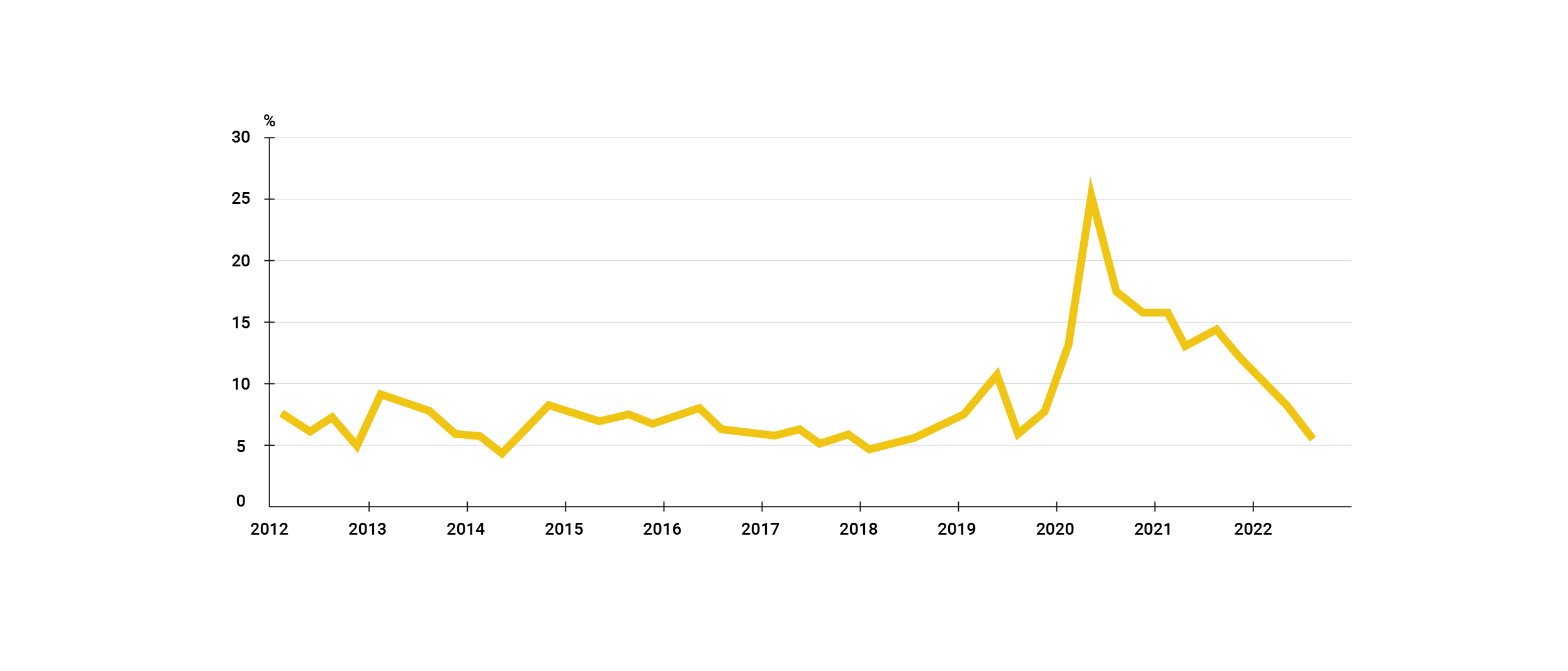
SAVINGS RATE OF FAMILIES ON GROSS DISPOSABLE INCOME
Based on INE data
Less saving and less investment
Although the Bank of Spain has improved its GDP growth forecast by three-tenths of a percentage point to 1.6%, the forecast for private consumption falls by seven-tenths of a percentage point from 1.9% to 1.2%. On the one hand, the rise in the cost of living has ‘artificially’ increased consumption figures, but, on the other hand, the rise in interest rates and the reduction in the accumulated savings pool mean that the increase in household spending is expected to be weak. A slowdown in consumption could directly affect economic activity as it is a fundamental component of GDP.
Another consequence of the increase in spending and the reduction in savings capacity caused by inflation is reflected in a decrease in the household investment rate. The stock of household financial assets, whether in equity and investment fund (IF) holdings or a reduction in bank deposits, has been reduced by 53,431 million euros, or -2%, a fall not seen since the early 2020s.
In this context, the latest macroeconomic projections of the European Central Bank (ECB) indicate that although real household consumption is expected to recover gradually as the fall in real household income due to inflation and energy supply problems subside, the household saving rate will continue to fall this year to a level close to that recorded before the pandemic.
If you want to discover the best option to protect your savings, enter Preciosos 11Onze. We will help you buy at the best price the safe-haven asset par excellence: physical gold.