European failure in financial literacy
Only one in three adult European citizens has a minimum level of financial literacy, according to a new report by the Organisation for Economic Co-operation and Development (OECD). This means that most people need to gain the necessary knowledge to manage their money effectively.
Financial literacy is a necessary skill that is essential for everyday citizens. It is difficult to make the right decisions when managing a household, planning savings, applying for credit or taking out a mortgage if we do not have a minimum level of financial literacy.
In this context, and amid the debate on the poor academic results of Catalan students in the fourth year of ESO in the PISA tests, the Organisation for Economic Cooperation and Development (OECD) presented a devastating report on financial education in Europe. According to this study, only 34% of European adults have a minimum level of financial literacy. Therefore, a large proportion of citizens do not have the necessary skills to manage their finances effectively.
Only Irish and German citizens achieve the minimum financial literacy threshold of 70 out of 100. This is a worrying result given the pressures on household budgets in the current economic climate, which increases the risk of indebtedness and other economic downturns.
Financial literacy at an all-time low
While 84% of adults in the 39 countries participating in the survey understand the definition of inflation, only 63% know how to apply the concept of the time value of money to their savings. Specifically, how inflation impacts the time value of money by reducing the purchasing power of money over time.
Furthermore, although the results show that around 77% of adults understand the relationship between risk and reward, only 42% of respondents across all countries can correctly answer a question about compound interest (interest that is added to the initial principal and on which new interest is generated). Even among adults with savings products in these countries, only 46% understand the concept of compound interest.
The OECD also warns that the spread of digital financial services, which accelerated during the pandemic, makes it more necessary than ever to equip people with the right knowledge and skills to use these products and services safely. Moreover, the introduction of digital currencies and other crypto-assets into the economic ecosystem, which is leading to an increased incidence and complexity of financial fraud and scams, also highlights the need to strengthen the financial literacy of adults to prevent cybercrime.
11Onze’s financial education plan
Empowering citizens through financial education has been at the heart of 11Onze since its inception. Expanding our community’s knowledge of economics and finance, making all the necessary tools available to them, is one of the founding pillars of the first community fintech in Catalonia.
Since the launch of 11Onze Escola, a project that offers training sessions on the world of fintech so that schools, companies and professional associations throughout the country can teach their students the basics of economics and financial matters, we have a unique platform that complements the school curriculum by educating young people in monetary matters and provides them with tools for the creation of wealth.
With the same purpose of training our community, we promote the lessons in the Learning section, which offers content such as the series El Diner, the Formacions 11Onze made by the employees themselves or our short Courses. In addition, in the Descobreix section of 11Onze TV you will also find pieces by our agents on topics of interest for our day-to-day work. Because from the very beginning it was clear to us that without a good financial education, we will hardly be a free society that can decide its future.
11Onze is the community fintech of Catalonia. Open an account by downloading the super app El Canut for Android or iOS and join the revolution!


Is there something magical about Halloween? Do we celebrate La Castanyada like those who celebrate Halloween in Anglo-Saxon countries? Do we worship death or life? Celebrating autumn with ‘panellets’, chestnuts and sweet potatoes may have more to do with our agricultural past than we think.
The genetic and cultural process that humans underwent five million years ago enabled us to transform objects into utensils, a fact that allowed us to adapt more effectively to different climates. Mobility was key to our survival. But about 10,000 years ago, this nomadism was altered by an even more revolutionary discovery: agriculture.
The ability to produce one’s own food meant that we settled in areas suitable for cultivation and, at the same time, allowed us to keep wild herds in stables to ensure protein for the whole year. These primitive sedentary societies were conditioned forever by an agricultural and livestock calendar. It was then that the first evidence of the worship of gods, goddesses and ancestors appeared.
And what does all this have to do with Halloween? Well, anthropology has studied in depth how there is a pattern, a belief, that is common in the origin of the festivity in an infinite number of cultures all over the world. Their starting point is always the same: the celebration of the birth of a period of darkness that extends into a period of light. This is how we find festivities such as the Roman Pomona, the Celtic Samhain or the Basque Udazkena.
Likewise, Samhain or Udazkena marked the beginning of the agricultural calendar when fields and lands became barren — similar to when talking about the deceased — until the arrival of spring, when life flourished again. Thus, the start of a new cycle of life. These pagan beliefs practised by the inhabitants of the ‘pagus’ — the peasants — remained deeply rooted for millennia until the irruption of Christianity in the 1st century.
The Catholic world appropriates pagan traditions
The beginning of the end of paganism came with Pope Boniface IV, who in 610 consecrated the Roman Pantheon of Agrippa, which until then had been dedicated to the pagan cult of Jupiter. Taking advantage of this fact, he instituted a feast commemorating all the unknown and anonymous saints of Christianity, which was celebrated on 13 May.
But it was not until the middle of the 9th century, following the Carolingian Renaissance, that
what we know as All Saints’ Day was definitively established throughout the medieval West. The papal encyclical of Gregory IV in 840 promulgated the definitive Christianisation of all the territories of the empire and forced the substitution of pagan festivals, such as Samhain or those of Pomona, for All Saints’ Day, changing the date of celebration to 1 November. For centuries, the Catholic world continued its policy of supplanting pagan ancestral traditions with church events, while in the Anglo-Saxon world, where Protestantism was pre-eminent, this pressure was relaxed.
Today, we observe that while All Saints’ Day is more of a dark, sad, secluded day, Halloween — All Hallow’s Eve — is festive, sweet, funny and, yes, greatly amplified by the American propaganda machine. As for the rest of the world, such as the Philippines or Mexico, and especially in the wake of Pixar’s film ‘Coco’, the holiday is even more festive: not only the graves of the deceased are visited, but a family picnics are held around them, where masks and coloured ribbons are used, while special dishes are cooked.
In Catalonia, joy and severity
As for our culture, according to the folklorist and ethnologist Joan Amades in his well-known ‘Costumari català’ (Salvat Editors, 1982), All Saints’ Day has two very different faces: the joyful and festive one in the morning and the rigorous and severe one in the afternoon. This is because, as Amades recalls, there is a belief that, just after midday on 1 November, people who died not long ago return to live with their families for a few hours.
There was even a tradition, in Barcelona, of placing the dishes on the table for the deceased, as if they were another guest. Likewise, it was very common, on 1 November, to call the deceased into coming home, but also to help them find their way to eternity. For this reason, it was customary to hang lanterns on the façades of the houses, and on the tombs.
In ‘Costumari català’, Amades also recalls a custom typical of rural villages, where it was popular to go to cemeteries to offer of bread to the deceased. This tradition evolved into the popular ‘panellets’, which bakers turned into a business.
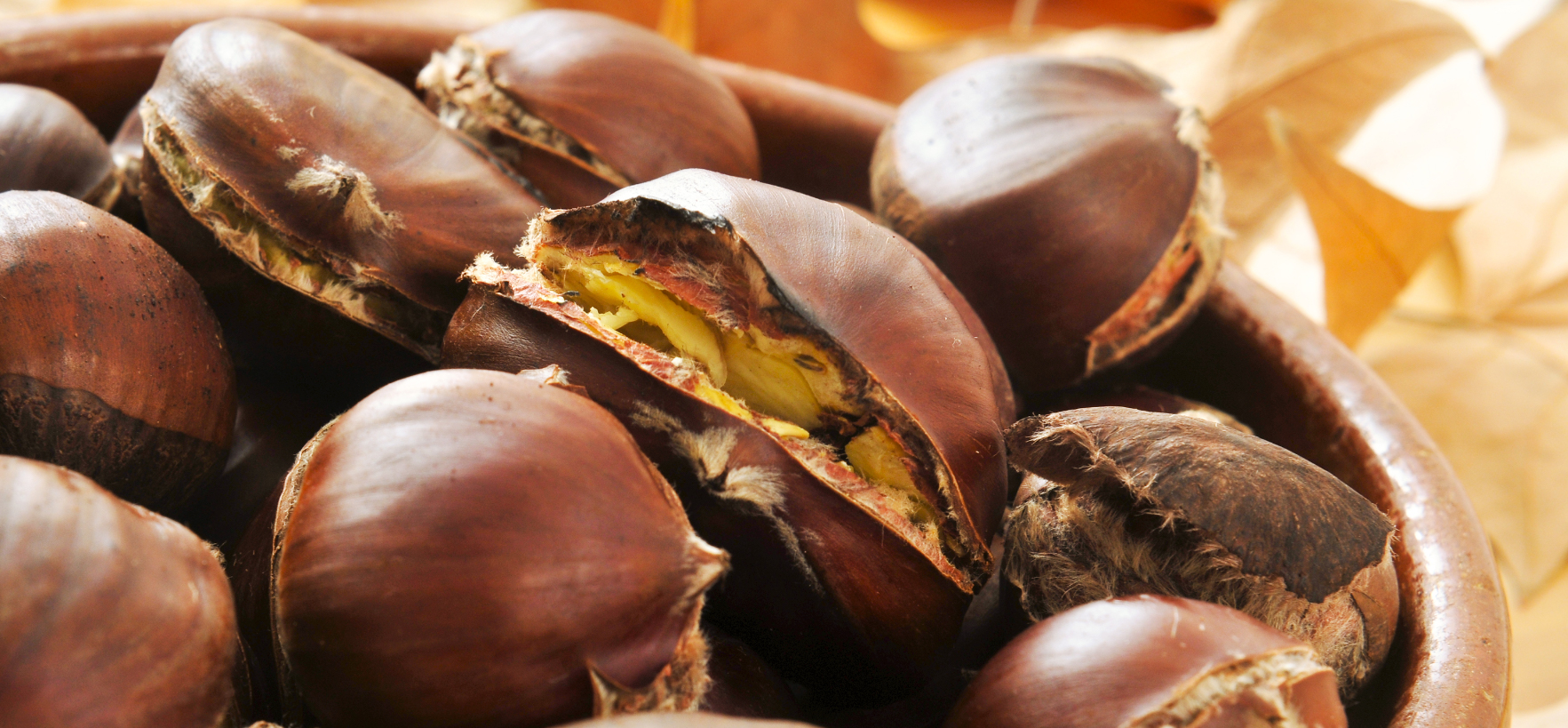
Continuing with gastronomy, chestnuts, sweet potatoes and ‘panellets’ have been and still are the traditional Christmas specials of this time of year. As an anecdote, it is said that in some areas of Catalonia superstition states that if you eat chestnuts, your hair will fall out and, for this reason, women did not want to eat them. This is the reason why chestnuts were replaced by pine nuts. Perhaps this is why many ‘panellets’ are wrapped in pine seeds.
In short, All Saints’ Day, today, as in the past, always responds to the same spirit: to keep the memory of our ancestors alive and to venerate the cycle of life that is so well expressed in the peasant world.
11Onze is the community fintech of Catalonia. Open an account by downloading the super app El Canut for Android or iOS and join the revolution!
If you would like to learn more about this topic, we recommend:
 Culture
The origin of the festival of Sant Joan
5 min readOn June 23, we celebrate the festival of Sant Joan. A feast...


Va ser a finals del segle XI quan el feudalisme finalment s’imposaria. Els senyors feudals, nobles o membres de l’Església, obligarien els camperols a entregar un excedent sobre la seva feina, castrant les seves llibertats i forçant l’endeutament d’una gran part de la població. Oriol Garcia Farré, agent d’11Onze i historiador, ens ho explica.
Es tractava d’un sistema polític, econòmic, jurídic i social establert durant l’Edat Mitjana per tot el continent Europeu. Els regnes es dividien en petits territoris que tenien certa independència, els quals eren administrats pels nous senyors feudals, laics i eclesiàstics, que proporcionaven ‘protecció’ als camperols adscrits a la terra, a canvi de tributs i treball.
Almenys aquesta era la retòrica oficial, com explica Garcia, “la majoria de la documentació existent sobre el procés de feudalització només explica el que als senyors o als eclesiàstics els interessà documentar”, i continua, “tingueu present que en aquesta documentació quedaran al marge amplis sectors de la societat, com per exemple els pagesos”.
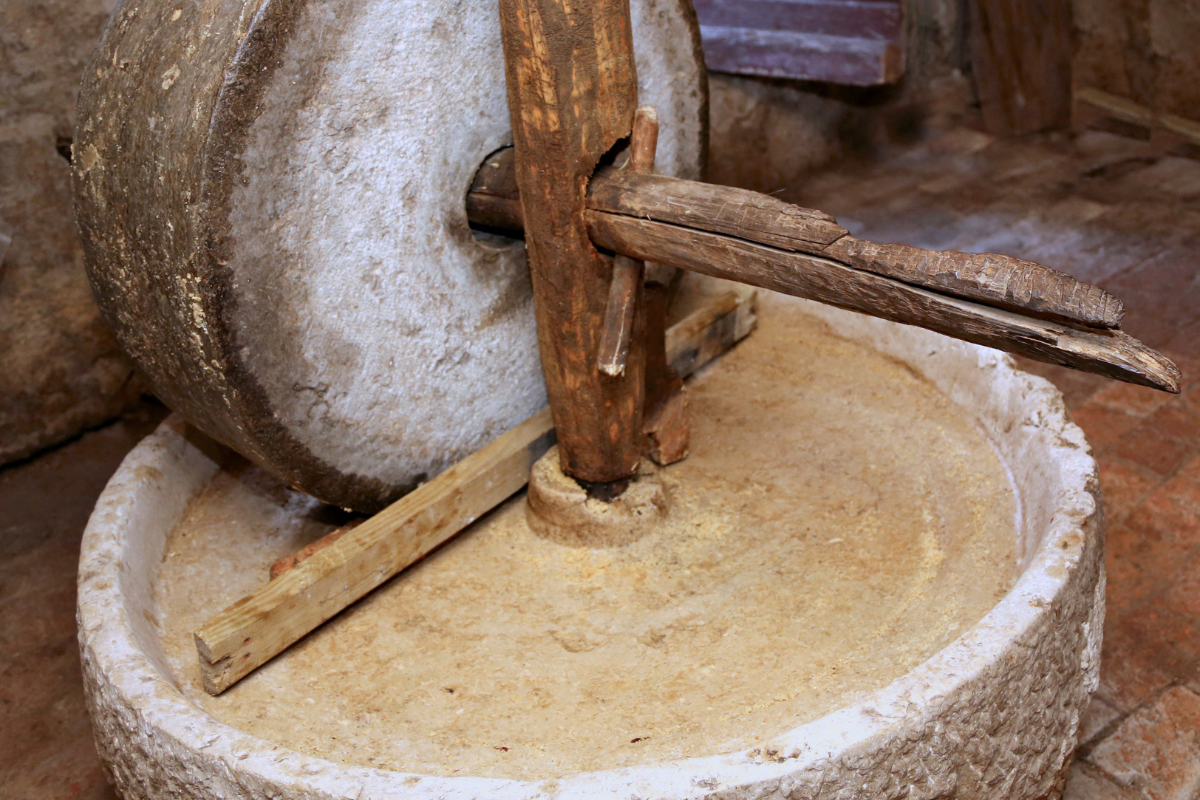
Molienda, moliendinare!
Obligatorietat de generar un excedent
Amb la imposició del feudalisme, la producció agrícola i ramadera va convertir-se en el pilar de l’economia. L’explotació sistemàtica dels pagesos a través del cobrament de tributs, sense els quals “no hauria estat mai possible la construcció de castells, torres, monestirs o les portalades romàniques”, apunta Garcia, donarà pas a la necessitat de “demandar i lligar noves terres de conreu”.
Així doncs, es va produir una intensificació de l’agricultura esperonada per la coerció dels senyors feudals exercida sobre les comunitats de pagesos lliures, “que durant tot aquest procés de feudalització van estar empeses a abandonar la seva economia de subsistència, amb l’única finalitat de generar un excedent”, afirma Garcia.
11Onze és la fintech comunitària de Catalunya. Obre un compte descarregant l’app El Canut per Android o iOS. Uneix-te a la revolució!
And the next day, nothing was ever the same again. The Catalan state disappeared ‘ipso facto’ with the abolition of the Generalitat, the municipal dismemberment and the annulment of the Catalan constitutions following the loss of the War of Succession (1701 -1714). After this, the only administration that remained active in Catalonia was the army of occupation, which, by maintaining some 25,000 permanent soldiers within the Principality, consolidated the Bourbon objective by means of harsh repression that would last until the mid-18th century. But not everyone faired badly…
As a result of the victory, the elite of the Bourbon army was permanently installed in Catalonia: the Royal Castilian Guards and the Royal Walloon Guards, reinforced by other special military occupation contingents. The total number of troops deployed throughout Catalonia was 47% of the total for the rest of the Iberian Peninsula. And if we add those deployed in the rest of the territories of the Catalan Countries – Valencia, Majorca and Aragon – the figure rises to 65%. A full-blown invasion.
The drafting of the Nueva Planta Decree would turn Catalonia into just another province of a new centralised monarchy that would rule over the entire Iberian Peninsula without legal differences. Thus, the dream of a Hispanic monarchy based on the existence of different kingdoms and cultural realities on the peninsula would crumble, but it would not disappear. From then on, there would only be a single Cortes, those of Castile, which would represent the whole of the peninsular territories, but would focus on a new political construction structured around identifying Castile with the new state.
Eighteenth-century Catalonia would be a territory governed solely by the military. The supreme head of the administration of Catalonia would be the Captain General. Territorial administration – the ‘corregimientos’ – would be in the hands of the ‘corregidores’, who would always be military men. Public order – in the first instance – would always be in the hands of the army and the famous “Veciana Squads”. This institution was founded in 1719 by Pere Anton Veciana Rabassa, a deserter from the Austracist cause who in early 1713 decided to place himself at the service of the Bourbon king and create a paramilitary and police organisation that would work at the service of the Captain General -Francisco Pío de Saboya y Moura-, with the mission of continuing to repress internal Bourbon resistance.
Veciana would set up a system of criminal files – known as ‘summary files’ – which would enable the corps to systematise police information. He also created a network of informers throughout the territory and organised the first agents to infiltrate the resistance. In 1735, Veciana had to resign his post for reasons of age, and it was then that the Captain General transferred the responsibilities of the corps to his son, Pere Màrtir Veciana. From then on, the command of the corps would be inherited by the Veciana family for five generations, until 1836.

“Pere Anton Veciana y Rabassa, a deserter from the Austracist cause who at the beginning of 1713 decided to place himself at the service of the Bourbon king and create a paramilitary and police organisation that would work at the service of the Captain General -Francisco Pío de Saboya y Moura-“.
Repression and state terrorism
For eleven years, Catalonia was subjected to harsh military repression, which lasted until 1725, when, through the Treaty of Vienna between the representatives of Philip V of Castile and Charles VI of Austria, the two sides mutually recognised each other’s succession rights and put an end to the dynastic dispute.
And what happened to the supporters who fought in favour of the Archduke of Austria’s choice? During the war, as the Bourbon armies occupied the Principality, a kind of ‘military terrorism’ was applied, which consisted of persecuting the local population, regardless of the degree of connection they had had with the Austracist cause, with the aim of undermining morale. After the fall of Barcelona, the main military commanders who had not been able to flee to Austria – such as Antoni de Villarroel – were indiscriminately persecuted and sent to prisons scattered around the Iberian Peninsula. Most of them ended up dying without ever regaining their freedom, while others were sent to the galleys.
The long post-war period allowed the repression to continue against all the armed elements that were still fighting against the new legal system, such as the notorious ‘carrasclets’. But all those families whose members were in exile in Austria were also persecuted and forbidden from maintaining any correspondence. The losers of the war were to have their property seized and all their rights revoked. They would even be banned from taking part in all public tenders or applying for state aid.
The establishment of permanent contingents in Catalonia would lead to a significant increase in military demand due to the need to supply royal troops. According to the General Manuals of the Quartermaster’s Office of Catalonia – an institution created to manage the post-war period – between 1714 and 1735 a total of 271 ‘asientos’ or contracts directly related to the supply of materials to the army and navy are recorded: gunpowder, weapons, artillery trains, uniforms, food, ironwork for horses.
The ‘asientos’ were also used for the construction or supply of barracks, such as the Ciutadella, and to produce everything necessary for subsequent Bourbon military campaigns, such as those in Italy. And this supply would come about thanks to the existence of a considerable productive, commercial and financial structure that had remained unchanged despite the war, and which would be capable of solvently producing the ‘seats’ that the monarchy would need over the following decades.
“The losers of the war will have their property seized and all their rights annulled. They will even be banned from taking part in all public tenders or applying for state aid”.
Catalan collaborationism
So, the question to ask ourselves is clear: how was it possible to maintain a Catalan productive structure in the context of the war at the beginning of the 18th century? How was it possible to supply the Bourbon army during the invasion of Catalonia and the siege of Barcelona in a territory that was completely unknown to them? Well, with the help of local characters who supplied, lent or helped the Bourbon army of occupation with food, money and logistics throughout that turbulent period. They were a group of merchants who changed sides – just like Pere Anton de Veciana – in search of a more favourable personal situation and taking advantage of the circumstances to improve their social and economic position.
Names such as the Milans of Arenys, the Mates and Lapeira of Mataró or the Massiques of Vilassar and many others would be great family names that would establish their prestige throughout the 18th century for having obtained important privileges as thanks for the services rendered during the occupation of the Principality. Many of these “illustrious” figures would be placed in key institutions for the deployment and execution of the Nueva Planta Decree, because otherwise it would not have been possible.
The new regime would pass “a disinfectant cotton wool over Catalonia”, in order to subsequently build a new network of local loyalties that would consolidate it within the territory. This reason why they were placed at the head of key institutions, such as the General Treasury (Catalonia’s taxation), the General Intendancy (Catalonia’s supply and logistics), the Confiscations of Catalonia (seizure of property) and the Bureau de Change (communal bank), a minority but large sector of the Principality’s population who, for various reasons, sided with the Bourbon proposal. In this way, the monarchy combined the principle of authority, as represented by the laws deployed in the Nueva Planta Decree, with a large institutional bureaucracy and flexibility with certain local social sectors, mainly the master craftsmen and merchants, who had sufficient economic resources to boost the economy.
The self-interested attachment of these sectors of Catalan society to the new Bourbon State gave them access to new sources of income derived directly from the new policies of Bourbon absolutism. Loyalty would give them access to large public contracts, which would lead to widespread corruption at all levels of public administration.
Until the end of the 1740s, Catalonia underwent a painful period of adaptation to its new status as a defeated nation, always suspected of disaffection. From then on, economic policy decisions were no longer taken in Barcelona, but at the Bourbon Court, following criteria based on the dreams of grandeur of the new reigning monarchy, regardless of the needs of its subjects.
BASIC BIBLIOGRAPHY
Benet Oliva i Ricós: ‘Els proveïdors catalans de l’exèrcit borbònic durant el setge de Barcelona de 1713/1714’, Universitat de Barcelona, Barcelona, 2014.
David Ferré Gispets: Els efectes del “Contractor State” borbònic a la Catalunya d’inicis del segle XVIII, Universitat Autònoma de Barcelona, Bellaterra, 2019.
Josep Maria Delgado Ribas: ‘Barcelona i el model econòmic de l’absolutisme borbònic: un tret per la culata’, Barcelona Quaderns d’Història, 23 (2016), pàg. 225-242.
Josep Juan Vidal: ‘Les conseqüències de la guerra de Successió: nous imposts a la Corona d’Aragó, una penalització o un futur impuls per al creixement econòmic?’, Universitat de les Illes Balears, Palma de Mallorca, 2013.
Find out about the families that were enriched by the defeat of 1714 on 11Onze TV.
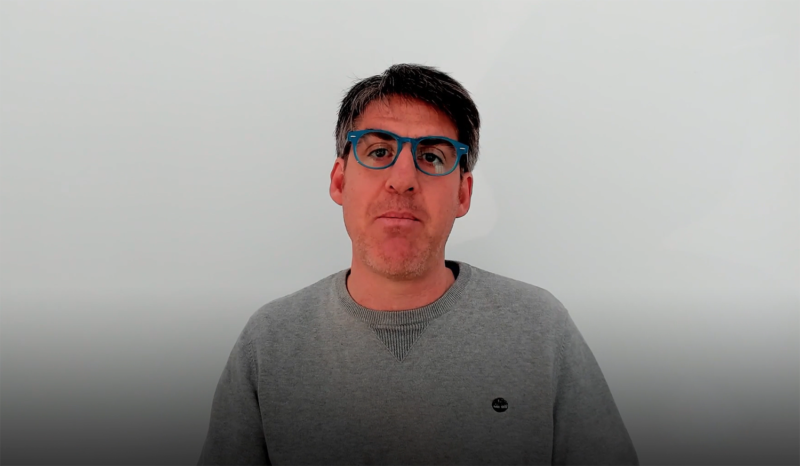

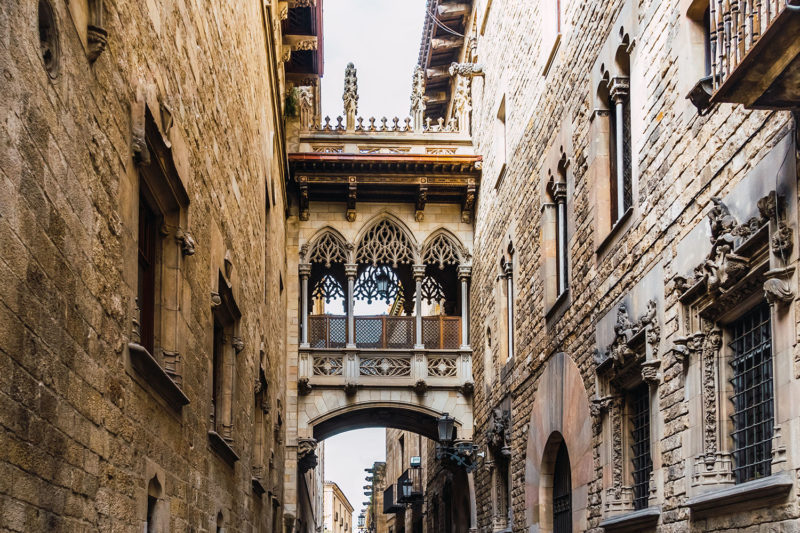
Aida Roca, filòloga i creadora de contingut digital, és la responsable de La Filòloga de Guàrdia, un canal per a difondre continguts en català i sobre el català. Més de 30.000 seguidors segueixen els seus trucs, amens i fàcilment aplicables, per aprendre a parlar un català genuí en qualsevol context i a qualsevol edat.
Tot just havia acabat la quarantena quan l’Aida Roca es va llençar a crear un canal de YouTube que va batejar com a La Filòloga de Guàrdia. Explica que va començar a crear el tipus de contingut que ella trobava a faltar a les xarxes: contingut d’entreteniment, en català i amb la llengua catalana com a temàtica. Així naixia La Filòloga de Guàrdia, el canal de YouTube, amb presència també en altres xarxes socials com Instagram, Twitter o TikTok, que ja acumulen més de 30.000 seguidors.
El català pateix, des de fa dècades, una influència de la llengua castellana que es fa palesa en gairebé tots els àmbits: en els mitjans de comunicació, en la producció audiovisual, en l’oci i fins i tot a l’hora del pati, on els nens i nenes sovint aposten pel castellà, en lloc del català, per a relacionar-se amb altres infants. L’Aida, des del seu canal, i tal com ens explica en aquest nou episodi de Persones, defensa que el català és prou ric per a parlar-lo en qualsevol àmbit, només ens falta utilitzar-lo.

Episodi 26 | Persones: La Filòloga de Guàrdia
A la (falsa) recerca del català correcte
Roca remarca que no podem parlar de català correcte o incorrecte, perquè aquesta diferenciació rau en el context en el qual ens trobem. Així doncs, una expressió com “natros”, que es fa servir en moltes comarques de Catalunya, seria correcta en un context col·loquial, però deixaria de ser-ho si la fem servir per a un discurs institucional, per exemple. En aquest cas, com en tants d’altres, ens hem de referir a aquest tipus de paraules o expressions com a català genuí, autèntic, i segons el context serà correcte o no.
Però, més enllà del dialecte que parlem o el context on ens trobem, la jove Aida Roca planteja que la principal preocupació és si realment es fa servir el català entre els joves com a principal llengua, i ens apropa la clau per a capgirar aquesta situació. Roca també ens comparteix el seu punt de vista sobre la polèmica aplicació del 25% d’hores en castellà a les aules i l’estat de salut de la nostra llengua. Escolta la conversa sencera per apropar-te, una mica més, al català genuí.
11Onze és la comunitat fintech de Catalunya. Obre un compte descarregant la super app El Canut per Android o iOS. Uneix-te a la revolució!

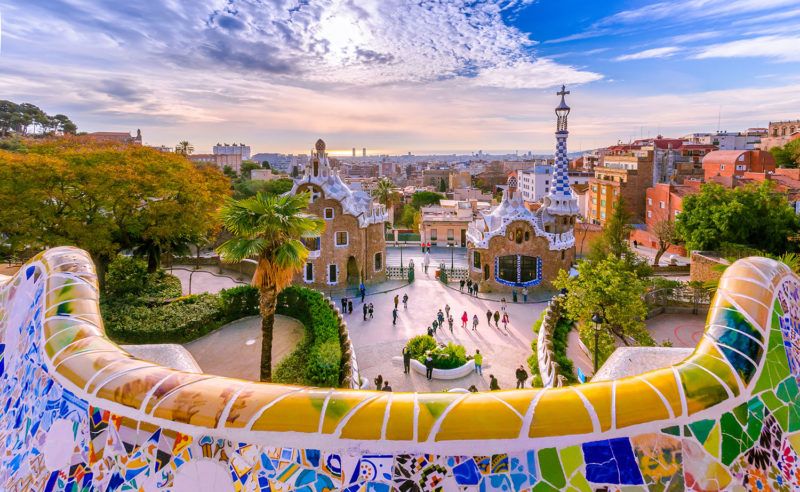

On one side of the coin, there are owners who want to get a return on their property when they are not using it. On the other, tourist rentals are perceived as a factor in speculation, favouring low-cost tourism and putting pressure on the traditional rental market.
In an attempt to regulate a practice that has continued to grow, local, regional, and national governments have introduced a series of stricter regulations. The aim is to ensure fair competition, prevent the touristification of entire neighbourhoods and preserve access to permanent housing for the local population. In Barcelona, for example, the future elimination of all tourist licences by 2029 has already been announced.
One of the key players in this scenario is Airbnb, which began as a collaborative platform to make use of empty flats and now operates in 191 countries. But… Is it legal today to advertise our flat as tourist accommodation? The answer is yes, but with many more requirements than a few years ago.
What are the requirements that must be met?
In Catalonia, tourist rentals are legal, provided that the regulations are complied with. Decree 75/2020 of the Government of Catalonia defines a rental as the transfer of an entire dwelling (not individual rooms) for a maximum period of 31 days, with immediate availability and in exchange for financial compensation.
However, since July 2025, new requirements have been added:
- Mandatory registration in the Catalan Tourism Register (RTC) and obtaining a registration number (NIRTC).
- You must also be registered in the State Register (NRA) through the Single Digital Window.
- The property must be adapted for mobility, in optimal hygienic conditions, and adapted to the number of places stated on the certificate of occupancy.
- It is mandatory to offer one private room per user and common rooms cannot be converted into bedrooms.
- It is necessary to provide a 24-hour emergency telephone number and to notify the Directorate-General of Police of the stay.
- It is recommended to follow good safety practices, cleaning protocols and emergency information procedures.
Are permits required?
To start a tourist rental business, you need to obtain several permits, and the regulations are becoming increasingly stringent. The first step is to consult both the municipal ordinance and the statutes of the residents’ association. Since April 2025, the association can prohibit or limit this activity, and it is essential to have the prior authorisation of 3/5 of the owners, both in terms of number and share of participation.
If municipal regulations allow it and the community does not object, the owner must formally notify the local council of the start of the activity, register with the Catalan Tourism Registry (RTC) and obtain a registration number (NIRTC).
Any activity that does not follow this procedure will be considered illegal and may result in penalties ranging from €3,000 to €600,000, depending on the severity of the offence.
Do I have to inform the tax authorities?
With regard to taxation, the Directorate-General for Taxation establishes different criteria depending on the services offered. If the accommodation includes services typical of the hotel industry—regular cleaning, reception, customer service or catering—the activity will be subject to VAT. However, if only the use of the property is transferred, without additional services, it is not necessary to apply VAT, but it is necessary to pay Property Transfer Tax (TPO), according to the regulations of each autonomous community.
Tourist rentals are still legal in Catalonia, but they are highly regulated. If you intend to offer your flat to tourists, you must scrupulously comply with municipal, national and state regulations, apply for the relevant permits, register the activity and pay the correct taxes.
Now more than ever, it is necessary to be well-informed and advised so as not to commit infringements that can be very costly.
11Onze is the community fintech of Catalonia. Open an account by downloading the app El Canut for Android or iOS and join the revolution!


Economic inequality manifests itself in various ways, and one of the most notable is the disparity in the costs of living between different social strata. One of the approaches that sheds light on this disparity is the Vimes Index, created by activist Jack Monroe based on the Vimes Boots Theory.
Sometimes writers and thinkers are the ones who provide a more lucid look at society. This is the case of the British writer Sir Terry Pratchet, who in one of his novels develops a conceptual tool to understand why it is more expensive to be poor. In the novels of the Discworld series, Inspector Samuel Vimes develops the Vimes Boot Theory. In summary, he comes to say that if a person has a low salary he will buy cheap boots, instead of expensive ones. But the poor quality of cheap boots will force you to buy boots more often, so in the medium term you will have spent more money on boots than someone who has enough money to buy good boots that won’t break.
This example, applied to all types of products, produces the paradox that, due to having little liquidity, one is forced to spend more and therefore remain poor. The idea behind the Vimes Index is simple but powerful: it suggests that being poor not only means having less money, but also comes with a series of additional costs and barriers that perpetuate the cycle of poverty. This concept has been widely adopted by economists and activists as a way to understand and address economic inequality from a more holistic perspective.
Why is it more expensive to be poor?
In addition to the example proposed by Vimes’ Theory (extrapolated to clothing, vehicles, computers or any other product) there are other variables that make the lives of people with few resources more expensive. For example, having low salaries or little assets, it is very common for these people to lack access to good loans and financial services. In this way, many ends up turning to high-interest lenders or falling for revolving cards. All of this can spiral into debt and increase costs in the long run.
Health and wellness costs also end up being higher, because people with low incomes do not usually have access to preventive medicine. They often do not have adequate nutrition either, because they cannot consume foods of the highest quality. All together results in a higher incidence of chronic diseases and injuries, which in turn generates additional costs in the form of medical treatments and loss of work productivity.
Jack Monroe, everyday inequality
This is the vision of economic activist Jack Monroe, who asked the Pratchett family for permission to create the Vimes Index. What Monroe points out is that it makes no sense for inflation to be calculated taking into account all types of products, because people with low incomes do not consume expensive products. And these expensive products are the ones that frequently have the smallest increases and attenuate the inflationary average. If rice has risen by 300% and champagne by 2%, truffles by 1% and caviar another 1%, statistics will say that prices have risen by 76%, but in reality the poor man’s effort has been triplicate.
The proposal of the Vimes Index is to calculate inflation only with essential products.
Activist Jack Monroe explains the Vimes Index at the 2022 Edinburgh Book Fair.
A representative shopping basket
The Vimes Index offers a valuable lens into understanding why being poor is more costly in modern society. By recognizing the multiple factors that contribute to this dynamic, from limited access to affordable products to the additional costs associated with poverty, we can move toward more effective solutions that address economic inequality comprehensively.
The perspective of activists like Jack Monroe reminds us that economic struggles play out in people’s everyday lives and that solutions must be both structural and practical. By including a variety of products and services in the representative shopping basket, we can obtain a more accurate picture of the challenges faced by low-income people and work toward a future where everyone has access to a dignified and prosperous life.
11Onze is the community fintech of Catalonia. Open an account by downloading the app El Canut for Android or iOS and join the revolution!



Investment coins, also known as bullion coins, are minted in precious metals, usually gold and silver. There are several gold investment coins available on the market, but the Britannia and Krugerrand are among the most popular and coveted in the world. We explain their history and what makes them special.
Krugerrand

The Krugerrand was first minted on the 3rd of July 1967 to market the vast amount of gold produced in South Africa around the world. The Krugerrand was a pioneer in establishing the new concept of the one-ounce bullion coin measure, a standard that is now recognised worldwide. It was also the first legal tender gold coin issued after World War II, in large part laying the foundation for the creation of gold coins later issued by other countries.
The obverse of the coin features the bust of Paul Kruger, President of the Republic of South Africa from 9 May 1883 to 31 May 1902. His surname, Kruger, and the rand, the South African unit of currency, are combined to give the coin its name. A gazelle, the national animal of South Africa, is engraved on the reverse, beneath which is the legend: “one ounce of fine gold”, in English and Afrikaans, a Dutch-derived language spoken mainly in South Africa.
Although Krugerrand coins are 22-carat gold, i.e. 91.67% pure, unlike most one-ounce coins issued by other countries, which are usually 99.99% pure gold, 24 carats, the Krugerrand compensates for this lower grade with more weight (1.09 ounces).
It is an extremely popular coin that attracts many gold investors. Because of this, the Krugerrand usually commands a lower premium over the price of gold than other 1-ounce coins or, indeed, any gold product of similar size.
Britannia
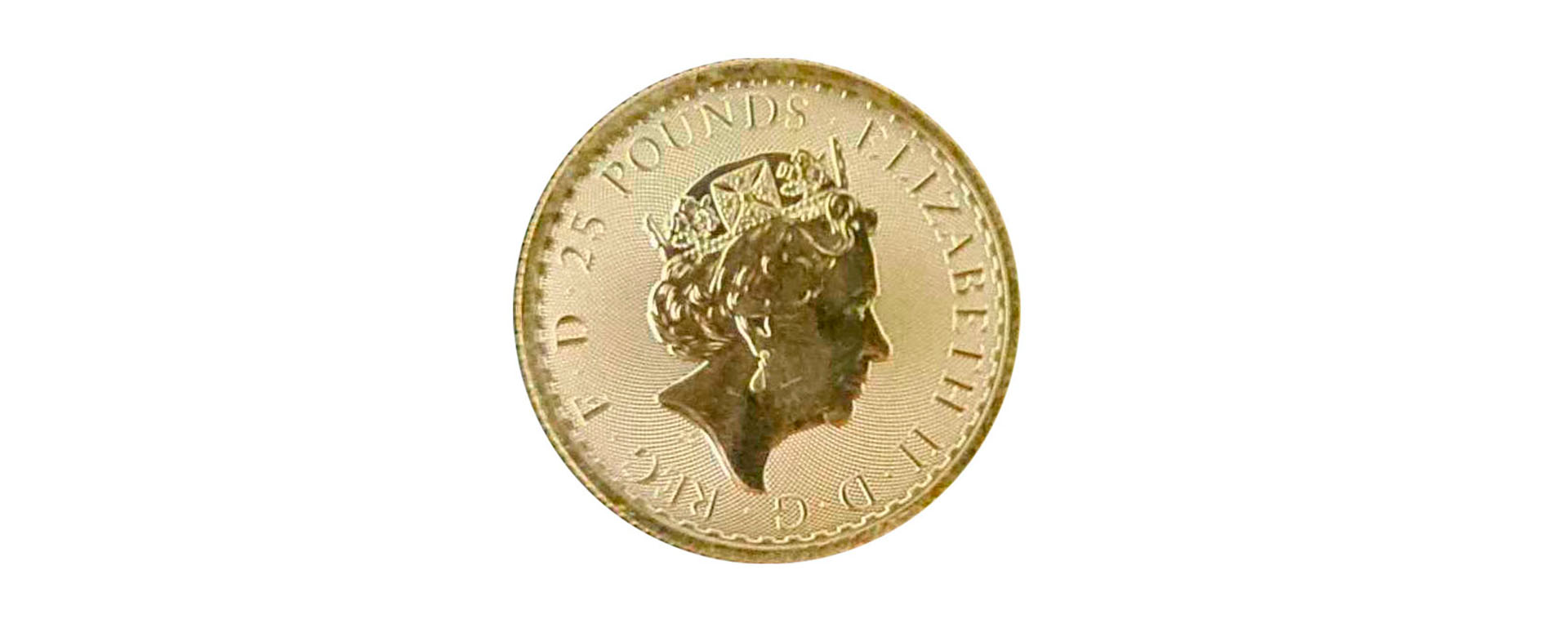
The gold Britannia was born in Europe in 1987 and was the first gold investment coin to be minted in all four weights (1, ½, ¼, and 1/10 of an ounce of gold). It gets its name from Latin, when in the 2nd century a female figure, wielding a spear in one hand and a shield in the other, appeared on coins minted in southern Britain during the occupation of the Roman Empire.
This design remained the same until 2000, with the obverse of the coin showing the image of Queen Elizabeth II and the face value in sterling, a design common to all Commonwealth gold coins. Subsequently, The British Royal Mint introduced a new design of the female figure for the odd years, keeping the previous one for even years. Further variations with the image accompanied by a lion, or the seated Britannia, were minted in later issues.
The marketing of this 24-carat gold coin is as popular in the UK as it is in the rest of the world. Most issues of Britannia coins are readily available, but buying a Britannia from a specific year can be quite expensive due to scarcity. Therefore, buying a current issue in the hope of seeing the value increase beyond the possible upward fluctuation of gold is a factor that cannot be ruled out.
Up to now, with Preciosos 11Onze, it has been possible to purchase gold bullion. From now on, we also offer the option of buying Krugerrand and Britannia gold coins. Gift gold, for tomorrow’s future.


The two Voyager probes launched into space by NASA in 1977 were designed to explore the outer planets of our solar system. They were accompanied by a gramophone record made of copper and covered in gold, containing a message to show the existence of life on Earth to possible intelligent extraterrestrial beings.
In the vastness of the cosmos, two tiny time capsules traverse interstellar space with a message intended to make our existence known to any intelligent extraterrestrial life forms they may encounter along the way. A message in a cosmic bottle containing a small sample of what humanity and planet Earth are all about also symbolises our eagerness and ability to discover new frontiers.
Carl Sagan, the well-known American astrophysicist, astronomer and science communicator, led the team that created the “Golden Record” in 1972. The Voyager Programme’s Golden Record was to be an upgrade of the plates previously mounted on the Pioneer probes, with much more information about life on Earth and the essence of humanity.
The discs are thirty centimetres in diameter, made of gold-plated copper. These metals were chosen for their chemical stability and thermal properties, as they had to be strong enough to withstand the forces of the launch and subsequent thermal changes in space. A tiny amount of uranium-235 was also added to serve as a clock so that a future extraterrestrial discoverer could deduce its age.
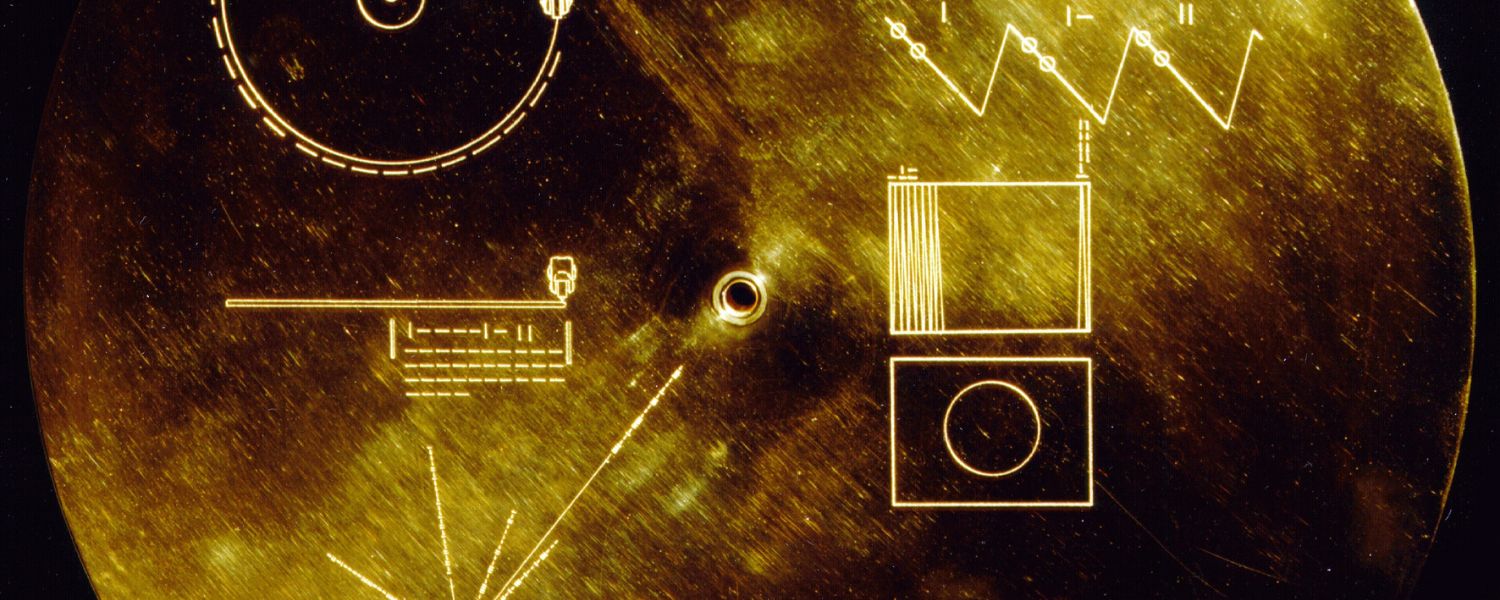
Source: Wikimedia Commons
The contents of the Golden Records
The beating of a heart, birdsongs, Bach’s Brandenburg concerto, a Balinese dancer, a human embryo… The golden records include a compendium of sounds, images, and information that provide an overview of the Earth and its inhabitants. The contents of the records range from greetings in various languages to recordings of popular music, sounds of nature, photographs of people and landscapes, and even instructions on how to play them.
Each record includes 90 minutes of music with pieces from different cultural traditions, from classical music to popular music from various countries. The intention was to capture cultural diversity and human artistic expression and show it to the rest of the universe. This idea was imprinted on the records: “To the creators of music – all worlds, all times”.
Selected nature sounds were also recorded to show some examples of what life is like on Earth, conveying the richness and complexity of our natural environment. As well as 115 photographs in analogue format, ranging from stunning landscapes to depictions of human anatomy and scientific diagrams. In addition, greetings in 55 different languages (no, there are no greetings in Catalan) were included to show the linguistic diversity of our planet.
The Voyager space probes are the most distant man-made objects from Earth and the first to reach interstellar space. Thanks to NASA’s latest efforts, they will have a lifespan until around 2026 and then continue their journey in silence. The likelihood that they will ever be found by intelligent extraterrestrial life is minuscule, but the message contained in the golden records will live on forever and ever in outer space.
If you want to discover the best option to protect your savings, enter Preciosos 11Onze. We will help you buy at the best price the safe-haven asset par excellence: physical gold.



The Catalan language is full of sayings through which popular wisdom used to advise on economics, that is, the community used to help its members. Let’s analyse some of them and their origin.
Paroemiology is the science that studies the origin and meaning of proverbs, and is as old as language itself. We find samples in the translations of the proverbs of the Bible, and in Jewish and Arabic books of sentences translated into Catalan. We can find them in the work of the philosopher Ramon Llull or the writer Francesc Eiximenis, in the book Tirant lo Blanc, and so on. Since the end of the 16th century, the saying takes precedence over proverbs. Here are just a few examples of how paroemiology has been present since time immemorial: from Guillem de Cervera’s Proverbis (1180), Llibre de Doctrina del Rei Jaume d’Aragó (1290), and so on, to books such as Baldiri Reixach’s or Carles Amat’s, used for teaching. One of our country’s paroemiologists is Victor Pàmies i Riudor; through his work we can know the origin, history, etymology…
As an example, let’s analyse a few sayings related to money and investment. Popular wisdom always gives us good advice.
- L’aigua va allà on n’hi ha més.
It refers to money: the more you invest, the more profit you get. (In fact, water tends to accumulate forming rivers, in the sea …) It means: money goes where money is. - Sabater amic o parent, calça car i dolent.
It warns that whoever gives money to win a friendship or find love, comes out unscathed because everyone takes advantage of kindness. - Per casar filles donzelles no venguis moltons ni ovelles.
It means that the family patrimony should never be undone. (Long ago, to marry a daughter, you had to endow her with some goods: money, jewellery, furniture, tableware and bedding, animals, land …) - Béns de campana, Déu els dona i el diable els escampa.
It tells us that those gains that come easily and effortlessly are the easiest to lose. - Diners de tot fan veritat i del jutge advocat.
It tells us that, with money, we can change reality according to our interests. - Si a qui deus no pots pagar, humilment li has de parlar.
This saying tells us to be humble with our creditors when we cannot pay them what we owe them, in order to avoid retaliation. - Germans, els pans; parents, els qüens; i coneguts, els papers de menuts (qüens = diners). Even food is shared between siblings; you can trust a relative or ask them for money; but none of this is possible with an acquaintance.
- Educació i diner fan al fill cavaller.
Education makes a person perfect and money proclaims it. - Al marit, barca; la muller, arca (arca = cofre = caixa dels diners).
Husbands used to do physical work whereas wives used to manage family money. It means that everyone has to do the tasks for which they are best prepared. - Sastres, música i sabaters, moltes postures i pocs diners
They move their hands and body a lot in exchange for little benefit. - Si la butxaca no sona, els músics no poden tocar.
With a precarious economy, great things cannot be done. - Pagant, sant Pere canta / En pagar, sant Pere canta / Pagant, mossèn Pere canta.
Money gets the most unthinkable things. - Si vols enganyar al marxant, posa-li la “ganància” per davant.
Cash in front of your eyes usually makes you decide right away to whom you sell. - Qui pren, son cor ven.
Whoever accepts someone’s money, gifts, or favours, is left in material or moral debt. - A on vas, diners? Allí a on n’hi ha més.
It means owning money is the principle to having more.
Sayings in Catalonia
Sayings can be categorised according to their topic. According to Joan Fontana, José Enrique Gargallo, Víctor Pàmies, and Xus Ugarte in their work Els refranys més usuals de la Llengua Catalana, there are 15 major topics:
- Meteorological sayings.
- Calendar sayings.
- Sayings about jobs and profits (money, works, jobs …).
- Sayings about religion and beliefs.
- Sayings about home and family.
- Sayings about men and women. The human body and the ages of life.
- Sayings about flora, fauna, and nature.
- Sayings about people’s qualities and feelings.
- Sayings about health and illness.
- Sayings about food and drink.
- Geographical sayings.
- Sayings about parties and leisure.
- Sayings about tips.
- Sayings about morality.
- Miscellaneous sayings.
Sayings have two meanings: the literal meaning and a figurative meaning, which is exemplified by the literal meaning. To use proverbs in our usual speech, you must know that they are bits of prefabricated speech. Aside from being known by most members of the speaker community, they can be used to refer to ideas that contain some kind of shortcut in order to avoid explaining them.
Do you want to be the first to receive the latest news about 11Onze? Click here to subscribe to our Telegram channel