Anger against AI
The technological revolution that no longer worries only factory workers, but also knowledge professionals. For decades, technology seemed to have an implicit pact with society. Machines would replace the most repetitive, physically demanding and dangerous jobs, while knowledge, creativity and the ability to reason would remain the exclusive domain of human beings. Studying, specializing and accumulating experience appeared to be the best insurance against economic change.
But that pact is beginning to crack. The rise of generative artificial intelligence is changing society’s perception of technology and, for the first time in many years, the debate is no longer focused solely on the opportunities it offers, but also on the risks it entails. More and more people are questioning a tool that, until recently, was presented as an almost inevitable synonym for progress.
This is no coincidence. According to a recent survey reported by the specialist outlet Futurism, public support for artificial intelligence is beginning to erode, mainly due to growing concerns about the destruction of skilled jobs, the spread of misinformation and the concentration of power in the hands of a handful of major technology companies. Fear itself is nothing new. What is new is who is feeling it.
When education is no longer a guarantee
The first major industrial revolutions transformed manual labour above all else. Mechanical looms replaced craftsmen, assembly lines reduced the need for skilled labour and robotics reshaped factories. Every innovation encountered resistance, but it also reinforced an idea that seemed beyond dispute: knowledge was far more difficult to automate than physical strength.
Artificial intelligence is now challenging that assumption. Large language models are already drafting contracts, writing software, producing financial reports, translating texts, creating illustrations, generating preliminary diagnoses and producing content that, until very recently, required years of education and professional experience. For the first time since the Industrial Revolution, technology is no longer competing only with human muscle. It is competing with the human mind as well.
Those potentially affected are no longer limited to factory workers or warehouse employees. Lawyers, journalists, architects, consultants, financial analysts, software developers, teachers, graphic designers and translators are now also part of the equation. This is precisely what explains much of the recent shift in attitudes toward AI. Professional classes that for years viewed digitalisation as an opportunity are beginning to realise that they, too, may find themselves in direct competition with algorithms.
A fear with more than two centuries of history
This concern may appear entirely new, but economic history tells us otherwise.
Between 1811 and 1816, at the height of the Industrial Revolution, thousands of English textile craftsmen began destroying the mechanical looms spreading through the factories. That movement would become known as Luddism, inspired by the figure—probably legendary—of Ned Ludd.
For a long time, the Luddites have been portrayed as enemies of progress, incapable of understanding the benefits of mechanisation. Yet this interpretation is deeply unfair. Workers did not smash machines because they rejected technology itself, but because they believed the new production model condemned them to unemployment, devalued their skills and concentrated profits in the hands of factory owners. Their protest was not against machines. It was against the way progress was being organised.
From the loom to the algorithm
The differences between that world and ours are enormous, but so are the similarities.
The Luddites could physically see the machines replacing them. The loom occupied a specific place inside the factory and symbolised the transformation of their way of life. Artificial intelligence, by contrast, is invisible. It operates from data centres located thousands of miles away and can simultaneously reshape the work of a lawyer in Barcelona, a journalist in London or an architect in New York.
The profile of those affected has also changed. Two centuries ago, mechanisation primarily threatened manual skills. Today, it is intellectual work that finds itself competing with technology. That is why some economists and historians now speak of neo-Luddism—not to describe a war against AI, but to explain the re-emergence of the same underlying concern: the fear that a technological revolution may fundamentally alter the rules of the labour market.
This new form of Luddism does not express itself through the destruction of machines. Instead, it takes the form of calls for regulation, strikes by artists and creators, copyright lawsuits, debates over data ownership and growing concern about the future of many highly skilled professions.
Who will reap the benefits of progress?
Economic history shows that major technological revolutions tend to generate greater wealth, higher productivity and new opportunities for growth. It happened with the steam engine, electricity, computerisation and the Internet. Everything suggests that artificial intelligence will follow the same path. However, history also teaches us that the benefits of progress are never distributed automatically.
This is probably the point that most clearly connects nineteenth-century Luddism with today’s debate over artificial intelligence. English craftsmen did not oppose machines because they were against innovation. What they challenged was an economic model in which the gains produced by mechanisation were concentrated in the hands of factory owners, while workers alone bore the costs of the transformation.
Two centuries later, the question remains strikingly relevant. Artificial intelligence promises unprecedented gains in productivity, but it also raises fundamental questions about how this new wealth will be distributed. If an increasing share of intellectual work can be automated, who will capture the value once created by millions of professionals? The companies developing the largest AI models? The organisations that integrate them into their operations? Or will this new wave of productivity ultimately translate into greater prosperity for society as a whole?
This is far from a minor issue. Much of the unease surrounding artificial intelligence today does not stem from the technology itself, but from the perception that its benefits may once again become concentrated in the hands of a very small number of players, while the costs—professional retraining, downward pressure on wages and the disappearance of certain occupations—are borne by a much broader segment of society.
Perhaps, rather than witnessing a purely technological revolution, we are facing an old economic debate resurfacing with new tools. It is precisely this historical continuity that explains why, more than two centuries after Ned Ludd, the same question resonates once again: who will control the benefits of progress, and who will bear its costs?
The lesson of luddism
For almost two centuries, many highly skilled professionals believed that major technological revolutions mainly affected other people: weavers, miners and factory workers. Artificial intelligence is now shattering that perception. For the first time since the Industrial Revolution, a significant part of the educated middle class is discovering that formal education is no longer an absolute safeguard against automation.
Perhaps this is the true novelty of our time. It is not that technology replaces people—that has happened repeatedly throughout history—but that it is now challenging professions that until recently seemed to belong exclusively to human talent.
For that reason, the debate over artificial intelligence should not be reduced to deciding whether we are for or against the technology itself. History shows that trying to stop progress is a losing battle. The real question is different: how can we ensure that the enormous productivity gains promised by this new technological revolution translate into greater shared prosperity, rather than an even greater concentration of wealth and power?
It is exactly the same question the Luddites were asking more than two hundred years ago. And judging by the debate surrounding artificial intelligence today, it may never have been more relevant.
Protecting savings with physical gold has been one of 11Onze’s main contributions to its community and, now, the range of products is being expanded. That is why, in the face of volatility, still-high inflation and the growing crisis of confidence in the banking system, gold is once again strengthening as a safe-haven asset. Discover Gold Seed at Preciosos 11Onze.

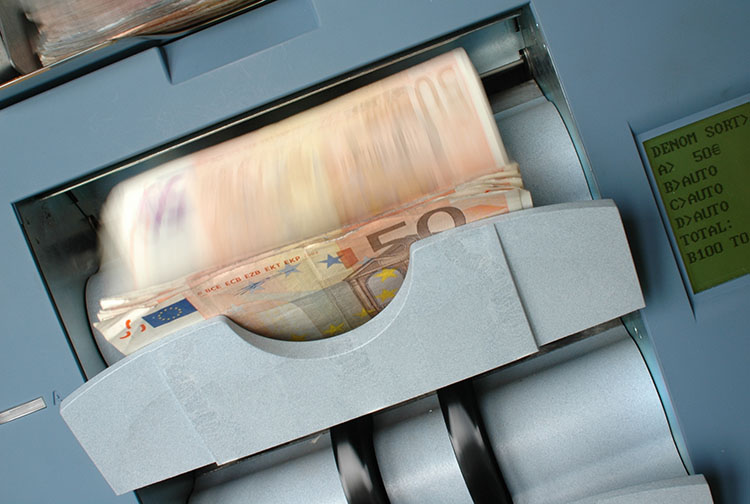

Quan parlem d’or, parlem de valor. Però no tot l’or és igual: el que realment en determina el preu i l’ús és el grau de puresa. I aquí és on entren en joc dues maneres de mesurar-lo: els quirats (k) i les mil·lèsimes (‰).
Tot i que a les botigues de joieria sentim parlar d’or de 18 o 24 quirats, en el món de la inversió i la compravenda internacional, el sistema més habitual és el de les mil·lèsimes, una mesura molt més precisa.
Què vol dir la puresa de l’or?
La puresa de l’or indica la proporció d’or pur present en una peça respecte al total del seu pes. L’or pur —és a dir, sense barreja amb altres metalls— és químicament conegut com a Au i pertany a la família dels metalls nobles. Això vol dir que no s’oxida ni es degrada amb el temps, no reacciona fàcilment amb altres elements i té una resistència excepcional als àcids.
Aquestes propietats fan de l’or un metall especialment valuós, escàs i durador, però també massa tou per a alguns usos pràctics, com ara la fabricació de joies o monedes de circulació. Per això sovint es combina amb altres metalls com el coure, la plata o el pal·ladi, per augmentar-ne la resistència o alterar-ne el color.
Quirats: la mesura tradicional en joieria
El sistema dels quirats divideix la puresa en 24 parts. Així:
- 24 quirats (24 k): or pur (100%)
- 22 quirats (22 k): 91,6% d’or + 8,4% d’altres metalls
- 18 quirats (18 k): 75% d’or + 25% d’altres metalls
- 14 quirats (14 k): 58,5% d’or
- 9 quirats (9 k): 37,5% d’or
L’or de 18 quirats és el més habitual en joieria a Europa, ja que ofereix un bon equilibri entre qualitat, durabilitat i cost. En canvi, en països com l’Índia o els Emirats Àrabs Units, l’or de 22 quirats és més comú, especialment per peces tradicionals.
Mil·lèsimes: la mesura estàndard en la inversió en or
En l’àmbit de la inversió i la indústria, s’utilitza un sistema decimal molt més precís: les mil·lèsimes, que expressen la quantitat d’or pur per cada 1.000 parts.
- 999,9‰ (o “quatre noves”): or d’altíssima puresa, usat en lingots i monedes d’inversió. És el més proper a l’or pur real.
- 995‰: estàndard mínim per considerar un lingot com a “d’inversió” segons les directrius internacionals.
- 916‰: equival aproximadament a l’or de 22 quirats.
- 750‰: equival a 18 quirats.
- 585‰: equival a 14 quirats.
El 999,9‰ ja es considera or pur en els mercats internacionals. És el que trobem en lingots, monedes bullion i altres productes d’inversió reconeguts.
Com es presenta l’or d’inversió?
L’or d’inversió es comercialitza principalment en lingots i monedes. Els lingots poden pesar des d’1 gram fins a 1 kg o més, tot i que els formats més habituals en l’àmbit minorista són de 2,5 g, 5 g, 10 g, 20 g, 50 g i 100 g.
Les monedes bullion són emeses per bancs centrals o cases de la moneda oficials, i combinen valor de mercat amb una certa col·leccionabilitat. Exemples coneguts:
- Krugerrand (Sud-àfrica): 1 unça (31,1 g) d’or de 22 què
- Maple Leaf (Canadà): or pur 999,9‰
- Philharmoniker (Àustria): 999,9‰
- American Eagle (EUA): 22 què amb pes total d’una unça
- Britannia (Regne Unit): 999,9‰ des de 2013
Totes aquestes monedes han de dur gravades el pes i la puresa exactes, fet que garanteix la seva acceptació al mercat global.
I com s’aconsegueix l’or pur?
L’or no es troba a la natura en estat pur, sinó en forma de granets, vetes o barreges amb altres materials. Per convertir-lo en or d’inversió o d’alta qualitat, cal passar-lo per processos de refinament que poden incloure fosa a altes temperatures, processos químics amb àcids i posterior purificació.
Aquest or pur és el que es fa servir per fabricar lingots i monedes d’alt valor. Però en joieria, com ja hem dit, la puresa sovint es redueix expressament per motius tècnics o estètics.
Per què és important conèixer la puresa de l’or?
Saber si estem davant d’un or de 18 k, 22 k o 999,9‰ no és només una qüestió tècnica, sinó una garantia de valor, transparència i seguretat. Tant si el comprem com a inversió, com si es tracta d’una joia o herència familiar, identificar correctament la puresa ens ajuda a prendre decisions informades.
A més, en un món on l’or torna a guanyar protagonisme com a refugi davant la incertesa econòmica, conèixer el seu valor real és més rellevant que mai.
Si vols descobrir la millor opció per protegir els teus estalvis, entra a Preciosos 11Onze. T’ajudarem a comprar al millor preu el valor refugi per excel·lència: l’or físic.

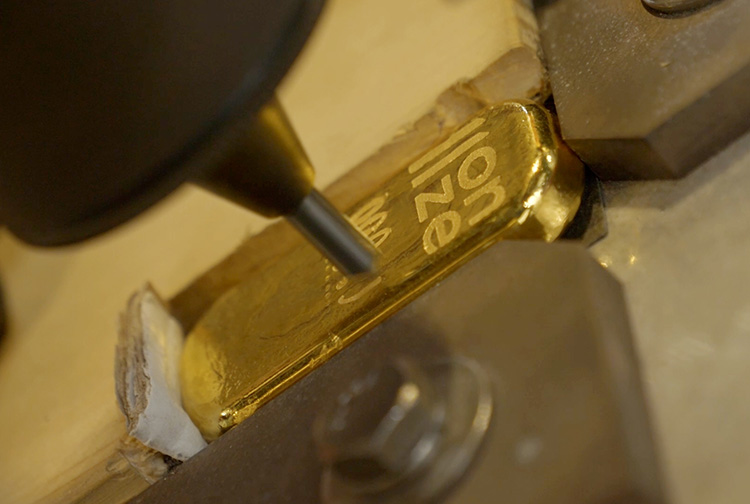

While interest rates remain high, central banks are accumulating gold at the fastest pace seen in decades. What are they seeing that the rest of us still do not?
For years, the relationship between interest rates and gold seemed to be one of the few unquestionable certainties of the financial markets. When central banks raised the price of money, assets that offered returns tended to become more attractive, while gold, which pays neither interest nor dividends, tended to lose prominence. It was one of the basic rules repeated by economists, wealth managers and investment textbooks.
However, something has changed. Since the pandemic, the U.S. Federal Reserve and the European Central Bank have led the most aggressive cycle of interest rate hikes seen in the last four decades. The cost of credit has soared, mortgages have become more expensive and money is no longer cheap. According to traditional theory, this scenario should have reduced interest in gold. Yet reality has been exactly the opposite.
The precious metal has not only resisted
It has continued climbing to reach new all-time highs. The contradiction is so evident that more and more analysts are asking the same question: if high interest rates are supposed to hurt gold, why does it keep rising? And above all, why are central banks themselves buying gold at the fastest pace seen in decades? Perhaps the right question is no longer what is happening to gold. Perhaps the question is what is happening to the global monetary system.
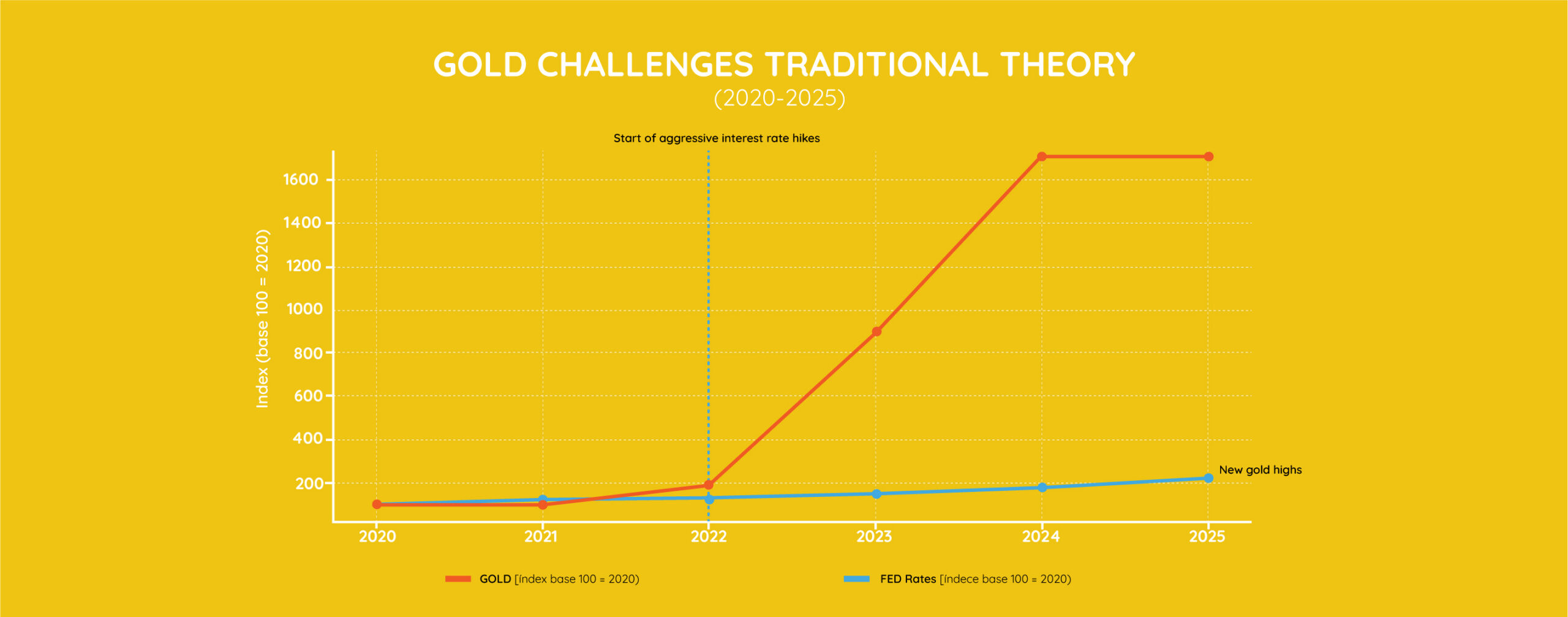
Sources. World Gold Council / Federal Reserve (FRED)
This divergence reflects a reality that goes far beyond interest rates. Investors do not only observe the yield on bonds or deposits. They also watch inflation, government debt levels, the health of the financial system and geopolitical stability. And it is precisely here that we find the reasons behind gold’s current strength.
Although inflation has moderated from the peaks reached in 2022, prices have accumulated several years of increases and have significantly eroded households’ purchasing power. Many savers have discovered that keeping money in a current account does not guarantee preserving its real value. In this context, gold regains one of the roles it has played for millennia: acting as a store of value when confidence in currency weakens.
But probably the most important factor is another one. The world has become accustomed to living in debt. According to the International Monetary Fund, global public debt remains at historically high levels after the pandemic. The United States has accumulated more than 36 trillion dollars in debt, while a large part of the developed world depends increasingly on the constant refinancing of its obligations. This reality raises an uncomfortable question. Is it possible to maintain high interest rates for many years in economies that have built their growth on debt?
More and more investors suspect that the answer is no
If central banks are eventually forced to cut interest rates in order to facilitate government financing, fiat currencies could once again lose value. And it is precisely in this type of scenario that gold tends to regain prominence.
Yet the most revealing data is probably not found in the financial markets or in economists’ reports. It is found in the decisions made by central banks themselves.
According to the World Gold Council, net gold purchases by central banks exceeded 1,000 tonnes in both 2022 and 2023, ranking among the highest levels recorded since modern statistics began. The most recent figures indicate that this trend remains well above the historical average.
This is an extraordinary figure
Central banks are the guardians of the monetary system. They manage strategic reserves and operate with time horizons measured in decades. When they steadily increase their gold reserves, they are sending a message that deserves to be heard.
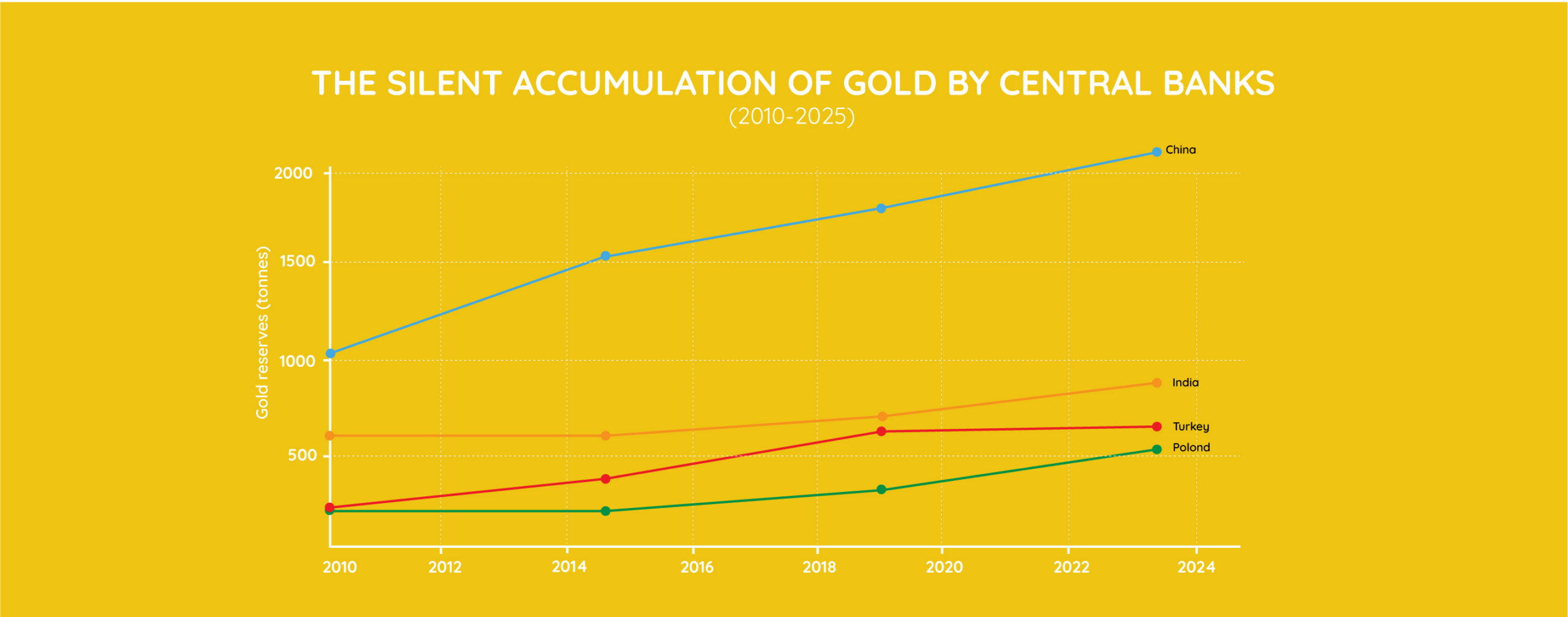
Source. World Gold Council
Among the most significant cases is China, which has gone from holding just over 1,000 tonnes to more than 2,290 tonnes today. India has gradually strengthened its reserves to exceed 880 tonnes, while Poland has carried out one of the most spectacular expansions, multiplying its holdings several times over to surpass 480 tonnes. Turkey, despite fluctuations in recent years, also maintains one of the largest reserves in the emerging world.
These purchases coincide with another trend of major significance: the gradual de-dollarisation of part of the global economy. Several emerging economies are seeking to reduce their dependence on the U.S. dollar both in international trade and in their official reserves. In this context, gold re-emerges as a neutral asset, independent of any government and recognised globally.
It is no coincidence that China is both one of the largest buyers of gold and one of the countries most actively promoting alternatives to the dollar-dominated monetary system.
Perhaps what we are witnessing is not simply an increase in the price of gold. Perhaps we are witnessing a gradual transformation in the way states understand financial security.
This is why gold remains relevant. Not because it is a speculative bet or because it guarantees future returns, but because for centuries it has acted as a form of wealth protection against inflation, monetary instability, financial crises and geopolitical uncertainty.
For more than five thousand years, empires, kingdoms, republics and central banks have changed their currencies. Gold, by contrast, is still here. Perhaps that is why, whenever uncertainty about the economic future increases, investors return to the same place.
Understanding why this happens is not merely a matter of investment. It is a way of understanding how the monetary system works and how it shapes our savings, our wealth and our future.
That is why more and more savers are once again considering gold not as a speculative investment, but as a tool for diversification and long-term wealth preservation. If central banks continue strengthening their reserves and gold maintains its historical role as a safe haven in times of uncertainty, understanding what place it can occupy within a savings strategy is becoming an increasingly relevant question.
Protecting savings with physical gold has been one of 11Onze’s main contributions to its community and, now, the range of products is expanding. Therefore, in the face of volatility, persistently high inflation and the growing crisis of confidence in the banking system, gold is once again strengthening its position as a safe-haven asset. Discover Gold Seed at 11Onze Precious Metals.



Beyond the convenience of having home insurance to deal with unforeseen events, there are circumstances in which homeowners or tenants may be legally obliged to take out this type of insurance.
Seven out of ten people in Catalonia already have home insurance. In many cases, having such insurance is simply a matter of choice to save headaches in the event of a claim. However, in other situations, homeowners or tenants are legally obliged to take out such insurance.
As 11Onze agent Amadeu Vilaginés points out, a homeowner may be obliged to take out home insurance when applying for a mortgage, but he clarifies that the bank can only oblige us to take out basic cover and that we are free to do so with the insurer of our choice, as stipulated by European regulations. In the case of tenants, they are only obliged to take out this type of insurance when this is indicated in the signed rental contract.

Is it compulsory to have home insurance?
If you want to discover fair insurance for your home and for society, check 11Onze Segurs.



They tried, but they could not whitewash history. The memory of the past has to endure in order to learn from mistakes and not fall into the same traps. The victors were determined to alter historical reality and keep the ‘I’ above the ‘you’. But, winds from the north helped to change the situation and, with will, perseverance, and the courage of many women, they managed to put things in their place. We continue with the historical exercise is giving us on the approach to the History of Contemporary Women.
The establishment of ultra-conservatism within Spanish society – after the Civil War – was only a momentary effervescence lacking in real solutions. The international legitimisation obtained by the regime, which materialised at the end of the 1940s and had unsettled the opposition, did not bring any substantial improvement in terms of economic stability, nor in terms of the structural improvements Spain needed. On the other hand, repression did make it possible to achieve strict control over demands in all areas.
But twenty-five years after the end of the Civil War, Francoism was given a second chance to transform itself. The power offered by the massive influx of foreign capital – under the supervision of the International Monetary Fund – allowed the regime to move from autarky to unprecedented economic growth. It was through the implementation of the famous stabilisation plans initiated in the late 1950s that Spain entered the 20th century.
And to commemorate that event – the end of the war – Francoism launched an extensive propaganda campaign with the sarcastic slogan: “XXV Years of Peace”. The event served to exalt and legitimise the regime internationally as the guarantor of peace, order, progress, and stability. Blinded by “desarrollismo”, the Francoist dictatorship took advantage of the event to spread its extraordinary political oxymoron: organic democracy – now evolved into a parliamentary monarchy – which would allow it to survive for a few more decades. Many more!
Even so, it was still only a facelift on the outside, given that social and political improvements were still to come on the inside. Then, unknowingly – or not – the “economic miracle” favoured the emergence of the consumer society that would contribute to greater mobility of the population, which would give them access to a different type of information. All of this would lead to a progressive loss of influence of the Church – especially in the domestic sphere – and the emergence of new social and sexual habits.
The progressive European model led the regime to evolve
Fashions and customs from Europe brought about a significant change in the mentality of the 1960s generation. In spite of everything, openness – following European canons – forced the regime to accept the return of women to the world of work, which, together with the arrival of foreign tourists and the resurgence of feminism, caused the Francoist model of women – submissive, domestic and Catholic – to gradually crumble.
Nevertheless, Francoism fought this foreign social interference to the very end. From the airwaves, the regime supported the radio programme ‘Consultorio de Elena Francis’, which became an authentic sociological phenomenon for decades. Therefore, the dictatorship – through the ‘Women’s Section’ – used this medium to continue transmitting its ultra-conservative ideology and morals toward women.
The ‘Consultorio de Elena Francis’ recommended that women should be in self-denial, resignation, look the other way, turn a blind eye, be patient, wait for things to change or sacrifice themselves for their children and family. In reality, the background to women’s daily lives was different: single housewives, relegated to the home and housework, sexuality linked to motherhood, homosexuality ignored or rejected, an indissoluble marriage and guilt always attributable to women. Outrageous!
The official discourse pivoted towards “desarrollismo”, the welfare and progress of Spain, and the regime tirelessly sought to leave behind all echoes that would lead to the recovery of the memory of the Civil War. For this reason – and intentionally – the voices of thousands of people who had to cross the border in January 1939 were gradually silenced for decades. Thousands of exiles had been officially rejected by the Dictatorship and forced to become stateless.
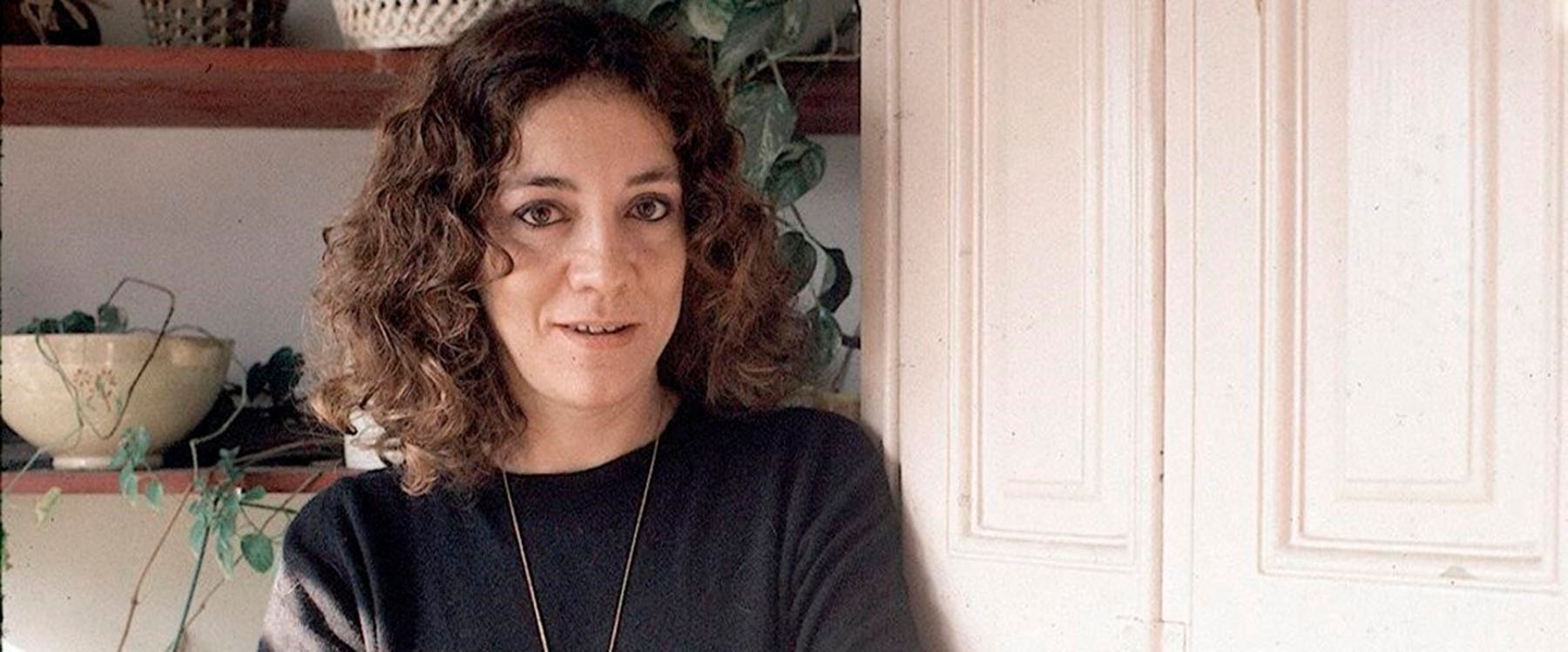
Source: Montserrat Roig in 1987. Santiago Bartolomé.
“Spaniards, Franco is dead”.
After the death of the dictator, many disturbing questions arose within Spanish society. One of the first was: What had become of the exiles? Montserrat Roig y Fransitorra (1946-1991) answered it.
Montserrat Roig’s work ‘Els catalans als camps nazis‘ (1977) showed a reality hidden by Franco’s regime and unknown to many of the generations born after the 1940s. She gave a face and a voice to the entire generation that had to go into exile because they were at odds with the war’s victors. Roig managed to undo the fear that prevented many of the protagonists of exile and the Holocaust from speaking out. She recovered from anonymity such powerful women with such an intense life as, for example, Neus Català, who gave an account of her life as a resistance fighter in France and her stay in the Nazi concentration camp of Ravensbrück.
The echo of this document of testimony about the life of exiles in Nazi concentration camps was so immense that it brought Roig great notoriety in the society of the late 1970s. A few years later, she would expand the story of the deportees in the third part of his novel ‘L’hora violeta’ (1980). Before working on the forgotten exile, the author – winner of the Sant Jordi Prize for her novel ‘El temps de les cireres’ (1976) – had sought a meaning to life – from Natàlia’s feminine point of view – in late-Francoist Barcelona. For all these reasons, Montserrat Roig would become one of the most widely read and admired writers in contemporary Catalan literature. In fact, her aura still lives on!
From this point onwards, however, Montserrat Roig’s narrative would gradually change, as she experienced a profound disenchantment with the new political reality that was being constructed. On the one hand, her view of the incipient democratic state – what has been defined as the ‘Model Transition’ – led her to have serious problems with censorship and prohibitions with the public body that had contracted her to carry out a series of television interviews. The scandal was so huge that it even reached the Spanish Congress and Senate. On the other hand, the imposition of the Pujolist vision of what Catalonia should be like – which she did not share – led her to focus more on literature, on researching her unique and non-transferable voice. Shortly before her death – of breast cancer, by the way – she published a compilation of articles with the suggestive title ‘Digues que m’estimes encara que sigui mentida’ (Say You Love Me Even If I Lie), in which she reflected on her personal universe – as a woman and a storyteller – and analysed the cultural society in which she lived.
In the essay ‘Digues que m’estimes encara que sigui mentida’, Montserrat Roig talks about literature as an alibi to fix the time that flees inclement. She talks to us about the manipulations of memory and the media. She teaches us to see Barcelona through a window through which the gaze of a woman author looks out in a world dominated by the canons of male creation. And, above all, she confesses a series of reflections that sound terribly close to us, because they explain things to us about the personal geographies and collective homelands that we share.
11Onze is the community fintech of Catalonia. Open an account by downloading the super app El Canut for Android or iOS and join the revolution!

The sun set. A long, cold and decadent night spread across Spain for almost forty years. Finally, the guns had imposed “me over you”. But the conviction and tenacity of many women made it possible to change the situation as the century progressed. We continue with the historical exercise proposed by Oriol Garcia Farré, 11Onze agent and historian, on the history of contemporary women with the contribution of Maria Aurèlia Capmany.
The drama increased when some 500,000 people crossed the border into France between the end of 1938 and January 1939, fleeing the horror. In fact, it had been suspected for months that this would happen. The victory of fascism in Spain became a reality in April 1939, when the hopes and illusions of a social majority that had worked to create a fairer and more egalitarian society were finally dashed. From then on, peace would be imposed under the constant threat of imprisonment for dissidents against the new order.
The regime imposed by force of arms was based on national trade unionism, but after the Second World War it was forced to move towards a different conception of power in order to ensure its survival. The world that emerged after 1945 would no longer be the same as at the end of the Spanish Civil War, since historical reality would be constructed on the basis of the confrontation between the capitalist and communist countries.
It was then that Francoism decidedly opted for National Catholicism as a social articulation. Catholic rhetoric would be more acceptable to the Western allies, the winners of the world war. And the most visible manifestation of this conception of power would be the return of hegemony to the Church, which would control all aspects of public and private life in society. The state would put the clergy on the payroll and provide the Church with a broad tax exemption and, most importantly, it would once again be given absolute freedom in the management of education.
Involution of the role of women
Franco’s dictatorship would destroy all the achievements of the Republic. The Church would legitimise the redefinition of the role of women in society. Thus, Franco’s regime would put the brakes on all the female achievements of the previous period by arguing an anti-feminist discourse, in which women would be perceived as inferior to men, both spiritually and intellectually.
Under this pretext, the new regime would relegate women to household chores, as mothers and wives. Many women were repressed by the regime, especially in the period 1939-1945. Feeding, helping or curing Republican combatants was considered a crime for which many women were imprisoned, sent to concentration camps or even shot. Others, conditioned by fear, silenced their participation in the battlefields, making it a purely private memory.
Even so, the regime legitimised two youth organisations, the Women’s Section and the Youth Front, which were set up to indoctrinate all young people in the principles of the ‘movement’. In this way, the aim was to build a new society that was obligatorily articulated by the new values that underpinned Francoism.

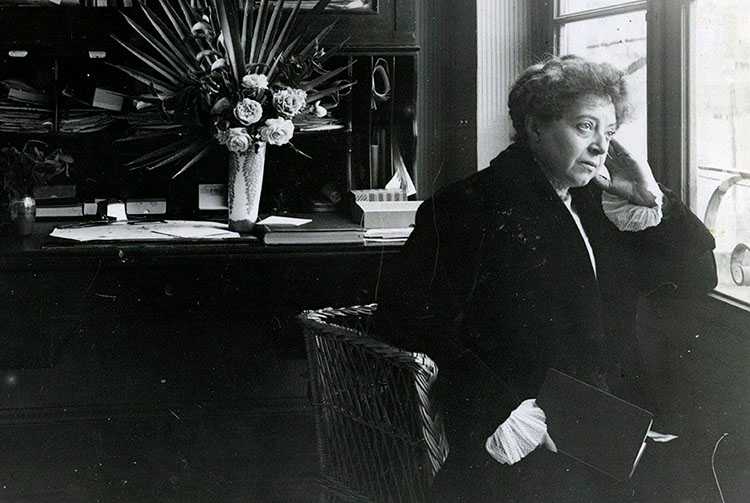
Source: Maria Aurèlia Capmany, 1974. Pilar Aymerich, Meteora.
Women in Catalonia
It was in this context that Maria Aurèlia Capmany i Farnés (1918-1991) published her famous essay ‘Women in Catalonia’ (1966), one of the key works for the recovery of feminist demands in Catalonia. She was the daughter of the folklorist Aureli Capmany and Maria Farnés, and granddaughter of the journalist and Catalanist politician Sebastià Farnés. From an early age, Maria Aurèlia Capmany showed an innate ability for writing and literary activities in general. The impact of her essay allowed her to give up teaching to devote herself entirely to literary activities and theatre.
The main thesis put forward by Maria Aurèlia Capmany in ‘Women in Catalonia’ hinges on the idea that no progress can be made on the problem of gender if the social and political problems of Catalonia are not solved first. And this is written by someone who was a woman, a Catalan and a socialist. In other words, the devil for the Regime!
A palpable problem
For Capmany, the gender problem exists and is palpable within society. Her essay reveals two major problems: on the one hand, the definition of women as otherness and dependence; and, on the other, social inequalities and women’s access to the public world. In this sense, the conclusion reached by Maria Aurèlia Capmany is very clear: women have the same social status as men, but only in appearance, because the reality is that they are all aware of their lack of integration, their state of evolution and the instability of their insertion in the society in which they live.
A working woman can easily discover the objective conditions of her marginalisation, since she works the same as a man, studies the same subjects, obtains the same qualifications as a man. Still, with these qualifications, she will do a second-rate job. Therefore, if a woman wants to dedicate herself to something beyond the walls of her home, she will have to do it discreetly and without giving it any importance.
As a result, Capmany would once again put forward the thesis of the 1930s, which fiercely defends the “me just like you”. Even so, throughout her long career, first as a writer and then as a politician, she worked tirelessly for the equality and integration of women in society. Through her prolific work, she fought against the stale ultra-conservatism of the Franco regime, coming to the conclusion that the key word for women’s liberation is emancipation. As her song ‘Teatro de cabaret’ says, she was an emancipated woman who had to think and decide, solemn and sensible, and she did it from freedom and dialogue.
11Onze is the community fintech of Catalonia. Open an account by downloading the super app El Canut for Android or iOS and join the revolution!

There are now more mobile devices in the world than people. Mobile phones have changed the way we live, work, communicate and even our quality of life, wellbeing and health.
An app is a standalone piece of software that is made to perform a specific task and is optimised for use on smartphones, tablets or smartwatches based on the features available. Health apps are known as mobile Health (mHealth), and according to the World Health Organization (WHO) it is a “delivery of health information and services using mobile technologies”.
What is a health application?
It falls within the field of eHealth, understood as the use of communication and information technologies applied to health services (computers, mobile phones, GPS, connected medical instrument monitors, medical robots, etc.). These are computer programmes that are used on mobile platforms and are often connected to medical devices that tell us how to improve our health or prevent risks. There are also diagnostic applications for treating patients or communicating with our healthcare system.
The European Commission states that medical and public health practice is compatible with mobile phones, patient monitoring devices, personal digital assistants and other wireless devices. It also includes in this category applications related to health information to the population, medication reminders sent by SMS, telemedicine, training and guidance systems and even lifestyle and wellness applications created with the aim of maintaining or improving the population’s healthy habits through the practice of sport and wellness.
How are they monitored and what quality criteria is used?
In Catalonia, a method for evaluating mobile health applications using objective variables, called iSYScore, has been used for some time now.
The criteria used by iSYScore to select the most suitable mobile health apps is based on the opinions of users, developers and health professionals, and is based on three key factors: popularity, trust and usefulness.
What are the problems with these applications?
Basically, the lack of loyalty. There are few apps that have achieved long-term stability. A study confirms that 70% of chronically ill people who have used them stop using them after six months. And 80% of apps are abandoned after only two weeks. To improve these figures, personalisation based on different profiles would be advisable. Each person is unique, and these apps act in a generic way.
Another problem to be faced is that of data ownership and data protection, as well as the loss of credibility the product may have if it doesn’t work for the first users who try it.
Tips for choosing a reliable application
- Be informed: Search and compare applications on search engines such as Google.
- Reviews: Search forums for user opinions.
- List of options: Choose between 4 or 5 applications.
- Reliability: Make sure they are based on scientific evidence, and a good place to do this is to look for references in PubMed (National Center for Biotechnology Information).
- Test: It would be advisable to test (try out) the application with a friend. If, for example, you suffer from insomnia, it is important that your friend does not suffer from insomnia so that you can share how it went.
- Who is behind it? To be a quality (reliable) application, it is important that technicians, health professionals (who will be different depending on the purpose of the product) and experts in legislation and data management have been involved in the process.
- Obsolescence: Clinical studies require time and in the world of new technologies time passes very quickly and therefore needs to be taken into account.
Following these simple steps will ensure that the applications you use are quite reliable.
11Onze is the community fintech of Catalonia. Open an account by downloading the super app El Canut for Android or iOS and join the revolution!



Scientific research has shown for the first time that microplastics are already flowing through our bloodstream, the river of life in our bodies. The next step will be to see to what extent they are deposited in organs such as the brain and what their effect is.
Microplastics have been found in remote places such as the Himalayas and the Vatnajokull glacier, Europe’s largest ice cap. Even traces of plastic had been found in the human placenta. However, there was still no scientific evidence that microplastics were running through our veins. Until now.
A study led by Heather Leslie and Marja Lamoree of the Vrije Universiteit Amsterdam has found for the first time that tiny bits of plastic from our environment can be absorbed into the human bloodstream. The results of her research were published at the end of March in the scientific journal ‘Environment International’.
Three out of four
The research team tested the blood of 22 people for the presence of five different polymers, which are the building blocks of plastic. The result indicates that three-quarters of the subjects tested had nanoplastics or microplastics, i.e. plastic particles smaller than five millimetres, in their bloodstream. Only one out of four participants were free of detectable amounts of plastic.
Polyethylene terephthalate (PET), polyethylene and polymerized styrene were the most abundant in the blood samples, followed by polymethyl methacrylate. For polypropylene, concentrations were too low for accurate measurement.
PET is widely used in beverage and food packaging, as well as in the textile industry; polyethylene is used, among many other things, in supermarket bags; polymerized styrene is present in lightweight packaging; and polymethyl methacrylate is mostly used in medicine.
From blood to organs?
Lead researcher Heather Leslie said this study shows that “our bloodstream, our river of life, has plastic in it”. The next step would be to find out to what extent these particles pass from the bloodstream into organs such as the brain. This will allow us to better determine to what extent exposure to plastic particles poses a threat to public health.
This research has been funded by the NGO Common Seas and the ZonMw Microplastics and Health programme, which aims to determine the effects of plastic particles on our health. It is one of a number of European initiatives to establish the extent to which exposure to microplastics is harmful to human health. In this context, a group of Italian scientists published research earlier this year that also found the presence of microplastics in the human placenta.
If you want to discover how to drink the best water, save money and help the planet, go to 11Onze Essentials.


When a ProPublica investigation revealed tax data from some of the richest men in the United States in 2021, millions of people asked themselves the same question. How was it possible that fortunes such as those of Jeff Bezos, Elon Musk and Warren Buffett had grown by tens of billions of dollars while their tax bills appeared to be far lower than the pace of their wealth accumulation?
The controversy was immediate. Some interpreted it as proof that the tax system favours the wealthy. Others argued that it simply exposed a reality that most people are unaware of: great fortunes do not operate in the same way as household finances.
The answer to this apparent contradiction can be summed up in a well-known Wall Street expression: Buy, Borrow, Die. Three words that describe one of the most effective wealth-preservation strategies ever devised.
This is neither an illegal mechanism nor a hidden loophole. It is a direct consequence of how assets, credit and taxation work in modern economies.
Fortunes do not live on money, but on assets
When we think about a billionaire, we often imagine vast amounts of cash sitting in bank accounts. The reality, however, is very different. Most great fortunes are not made up of cash, but of assets.
Jeff Bezos built his fortune through the value of Amazon shares. Elon Musk concentrates much of his wealth in his stakes in Tesla and SpaceX. Warren Buffett accumulated his fortune through Berkshire Hathaway. In all of these cases, wealth is not primarily liquid cash, but assets that increase in value over time.
This distinction is crucial because assets are treated differently from salaries for tax purposes. When someone receives a salary, they generate income that is taxed almost immediately. By contrast, when a stock, a company or a property appreciates in value, that increase does not usually generate taxes until a sale takes place.
This is where the logic of Buy, Borrow, Die begins to make sense. Great fortunes do not need to constantly sell their assets in order to feel wealthy. Precisely because these assets continue to increase in value, selling them is often the least attractive option.
Why selling is the last resort
Imagine a founder who owns shares worth one billion euros. If those shares have multiplied in value over many years, selling even a portion of them would trigger taxes on the accumulated gains.
For most people, this is perfectly normal. But for a large fortune, selling comes with a double cost. On the one hand, it generates a significant tax bill. On the other, it reduces the very assets that continue to produce wealth.
For this reason, many wealthy individuals try to avoid selling whenever possible. Their objective is not only to preserve the wealth they have already accumulated, but also to continue benefiting from the future appreciation of their assets.
The question is inevitable: if they do not sell, how do they obtain the money they need to invest, buy property or maintain an extraordinarily high standard of living?
The answer lies in the second word of the formula.
When debt becomes a tool
For many families, going into debt is a necessity. Loans are taken out because there are not enough resources available to purchase a home, a vehicle or cover a major expense. For large fortunes, however, debt can become a strategic tool.
Banks are willing to lend enormous amounts of money to people who control assets worth hundreds or even thousands of millions of euros. Company shares, investment portfolios and other assets can be used as collateral for these loans. This makes it possible to obtain liquidity without selling anything.
The billionaire remains the owner of their shares, continues to benefit from their appreciation and, at the same time, has access to the money needed to finance new investments or personal expenses.
The key difference is that a loan is not considered income. It is debt. And that distinction is crucial from a tax perspective. As long as the value of the assets continues to grow at a rate that exceeds the cost of the interest, the strategy works. It is a logic that may seem counterintuitive to many people, but it explains why debt does not carry the same meaning for an ordinary household as it does for a great fortune.
The third piece: inheritance
The least understood part of the strategy comes at the end of the process.
In the United States there is a tax mechanism known as step-up in basis. Without going into excessive technical detail, this system allows inherited assets to update their tax value at the time they are transferred to heirs.
In practice, this means that a significant portion of the capital gains accumulated during the owner’s lifetime may not be taxed in the same way they would have been if the assets had been sold while the owner was alive.
This is where the Buy, Borrow, Die model reveals its full power. First, assets are accumulated. Then, they are used as collateral to obtain liquidity. Finally, those assets are transferred to the next generation under tax conditions that can be far more favourable than a traditional sale.
It is no coincidence that this strategy is often associated with large family fortunes, technology company founders, Wall Street investors and wealth-management structures specifically designed to preserve assets over decades.
A debate that divides economists and politicians
As might be expected, Buy, Borrow, Die generates intense debate.
Its supporters argue that unrealised gains should not be taxed and that these practices are a logical consequence of the way financial markets operate. They also point out that asset-backed lending is a perfectly legal tool used by companies and investors around the world.
Critics, on the other hand, argue that this model allows large fortunes to pay proportionally less tax than many people who depend exclusively on income from their work. From their perspective, the system encourages wealth concentration and makes it easier for large fortunes to pass from one generation to the next with a relatively low tax burden.
Beyond ideology, the debate highlights an uncomfortable reality: money does not behave in the same way when it comes from labour as when it comes from wealth.
What it teaches us about money
The most interesting thing about Buy, Borrow, Die is not that it exists. The most interesting thing is that most people have never heard of it. For decades, financial education has focused primarily on concepts such as saving, loans and household budgeting. All of these are important, but they explain only part of the system.
To understand how great fortunes are built and preserved, it is also necessary to understand the role of assets, capital gains, asset-backed lending and wealth transfer. It is in this territory that some of the greatest differences emerge between those who simply work for money and those who manage to make money work for them. The great lesson of Buy, Borrow, Die is not that there is a magical formula for becoming rich. The real lesson is that the rules governing money are far more complex than most people realise.
Financial knowledge is freedom
Buy, Borrow, Die is not a strategy that most people can apply in the same way as a billionaire. Yet understanding it is important because it reveals how the financial system truly works when wealth is built around assets rather than wages.
The most important lesson of this strategy is not that there is a way to pay less tax or preserve vast fortunes. The real lesson is that the rules governing money are often far more complex than we have been led to believe. While part of society learns how to use these rules to its advantage, most people are not even aware that they exist.
In this way, financial education should form part of every citizen’s general culture. Not to turn ourselves into billionaires or to replicate the strategies of large fortunes, but because understanding concepts such as debt, assets, taxation, inflation or money creation helps us better interpret the economic world around us and make more informed decisions about our future. Because, ultimately, economic freedom does not begin with wealth; rather, it begins with knowledge. And only when we understand the rules of the game can we aspire to make truly free decisions.
11Onze is Catalonia’s fintech community. Open an account by downloading the El Canut app for Android or iOS. Join the revolution.

Accelerating digitalisation has been one of the most important challenges for SMEs during the pandemic. The data say that 70% of companies in Spain have been digitalised during the pandemic, according to the consulting firm IPG. This means that 7 out of 10 have opened an online store.
While many SMEs have been thinking about digitalisation for years and it was one of the outstanding issues, the pandemic has accelerated and made many companies go online in record time and, probably thanks to this, they have not had to close. A company with less than 250 employees whose turnover does not exceed 5 million Euro is considered an SME.
The cost of digitalisation
When an SME searches the internet for a way to go digital, it will probably come up with many offers and very cheap prices from companies that are dedicated to this task. It can even buy a domain, which will cost less, as you can have one for €10 a year. It can also find many pages that provide with templates and, if it is accompanied by images, it can make a website on its own.
But, as the saying goes, you can’t teach an old dog new tricks.
There are many elements to consider when creating an e-commerce. It depends on the business you have, whether you have an extensive catalogue, whether you work internationally, or if you constantly have new products. The best thing to do when digitalising your business is to hire an agency to help you get this big project up and running. There are many things to keep in mind, and having a good e-commerce that works perfectly and that does not have errors will be the key to success.
Things to keep in mind
Before launching an online store, keep in mind:
- Make an analysis of the competition: surf the internet (visit websites and social networks).
- Make an analysis of the own company: identify your own e-commerce. Decide if it can be done by the company’s staff or if external help is needed, for example, an agency specialising in web pages.
- Take into account the stipulated time required to make a web page, as there may always be some surprise. Therefore, the launch date of the business must not be shared with the networks until it is 100% sure.
- Once the website is up and running, it needs to be constantly updated.
- You must be very fast: when a user asks about a product or service, you must answer as soon as possible because, otherwise, there is a risk that they may end up buying it elsewhere.
The pandemic has changed consumer habits, and it has also made it clear that if you want to keep the business going, you need to have an online site for potential customers to find and see what is offered.
We are in the age of omnichannelity, and you need to have the ability to satisfy both a customer who buys in the physical store and a customer who buys online, through a phone call, through an email, or even through the social media of the business.
The past
Years ago, it was unthinkable that a company could earn customers with a website. Until then, the usual technique for getting buyers was having a sales team that, along with a marketing strategy, did what is called “cold calling”, that is, selling the product or service from scratch. This commercial task, on many occasions, could last for weeks or months.
The present
Today, when you open a business, even if services are offered, you need to have a website where potential customers can see what is being offered, what has been done, the team that makes up the company, and an essential thing, its business philosophy (mission and vision). With just this information, the potential customer can get an idea of who they are.
Apparently, it may seem much easier to reach the customer through a website than doing it with a sales team, but it’s not quite that good. It’s not all about having a website. Social media is another tool that must be kept in mind in today’s society, which is permanently connected.
During the pandemic, companies have had to digitalise their businesses. This has been the only way to earn income. The data tells us that 7 out of 10 companies that did not have an e-commerce before the confinement had to go digital if they didn’t want to close the business. The food, fashion, electronics, beauty, and household products sectors are the ones that have benefited the most from having taken this step.
Do you want to be the first to receive the latest news about 11Onze? Click here to subscribe to our Telegram channel