In the midst of a digital and globalized era, Catalan Christmas traditions continue to be a point of identity and cultural cohesion. They are not “old” folklore, but living memory that explains who we are. They remind us that modernity does not cancel the root, but needs it to give meaning to the present. And it is precisely this combination of continuity and transformation that keeps traditions in a state of surprising vitality.
Twenty-first century Catalonia lives alongside screens, algorithms, artificial intelligence and a globalized consumption that blurs languages, rhythms, and ways of living. But every December there reappears, like a reflection of long historical duration, an ancient country that remembers where it comes from.
For centuries, Catalan communities have used winter festivities to organize time and reinforce social bonds in the most fragile season of the year. And today, despite technological acceleration, among tiós that spark laughter, living nativity scenes that occupy streets and farmhouses, Pastorets that fill theaters and winter fairs that light up towns, popular culture shows that it is not a vestige but an active memory that has known how to adapt in order to continue explaining us.
Why do traditions hold on?
Historically, Christmas was not only a religious celebration but a ritual of cohesion at the agricultural crossroads of winter. Between the solstice and the liturgical calendar, communities ensured a shared space where solidarity could be reinforced and, if necessary, resources redistributed to guarantee everyone’s survival. The tree, the Tió or the nativity figures originate from that same impulse: giving symbolic form to the idea of community.
In times of uncertainty, which are not so different from those of the past, these traditions offer permanence, a fixed point in a changing world. And they function as an identity pedagogy which explains where we come from without imposing a discourse, simply repeating gestures that contain centuries of accumulated memory. Every generation adds nuances, but the deeper meaning persists, with the aim of recognizing ourselves in that which has made us a people.
The symbolic narrative of a people
If there are three elements that explain the uniqueness of the Catalan Christmas, and the way our culture turns myth into collective pedagogy, they are the Three Wise Men, the Caganer and the Tió. Three figures that, far from being simple folkloric curiosities, summarize three ways of understanding our relationship with the world:
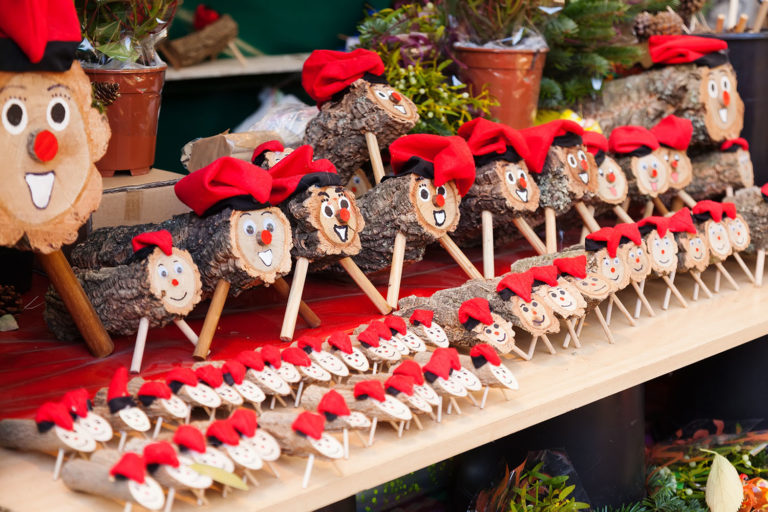
- The Tió is much more than a children’s game: it is an ancient agricultural ritual adapted to modernity. Feeding it weeks before Christmas is not a whim, but a powerful metaphor: what we care for grows; what we share returns. In an accelerated world, this humanized log reminds us that abundance is not immediate, but the result of constancy and care. The act of “pooping” gifts, an exquisitely Catalan symbolic inversion, transforms hope into a communal act. It blends humour, magic, and pedagogy of waiting: an essential learning for children and a crucial reminder for adults.
- Few symbols explain the Catalan soul as well as the Caganer. This figure, which shocks visitors but which we understand as a natural and necessary gesture, is the synthesis of a popular outlook that has always resisted solemn authority. Placing the Caganer in the nativity scene humanizes the biblical narrative, but also reminds us that all life, and all society, is based on humble, material and often invisible processes. It is a democratic counterpoint: where there is power, we place a laugh. Where there is myth, we place a touch of irony. It is the Catalan way of balancing the sacred and the profane, ensuring that neither fully dominates the collective narrative.
- The Three Wise Men are the most universal part of our Christmas tradition, but Catalonia has made its own interpretation. The parades that fill streets and neighbourhoods are a communal choreography where authorities, organizations, and neighbours participate in a shared ritual. Beyond the gifts, the Wise Men represent the idea of wisdom and generosity that comes from outside, as a reminder that cultures are built through constant dialogue with the outside world. The East we imagine is not geographical but symbolic: a place from where knowledge, mystery, and hope arrive.
Taken together, they all explain a single principle in which Catalan culture does not understand Christmas as a consumer product, but as a constellation of narratives, some magical, some irreverent, that connect generations and reinforce the sense of community. In a globalized world, this combination of return, humour, and wisdom continues to be one of the most refined forms of cultural self-defense.
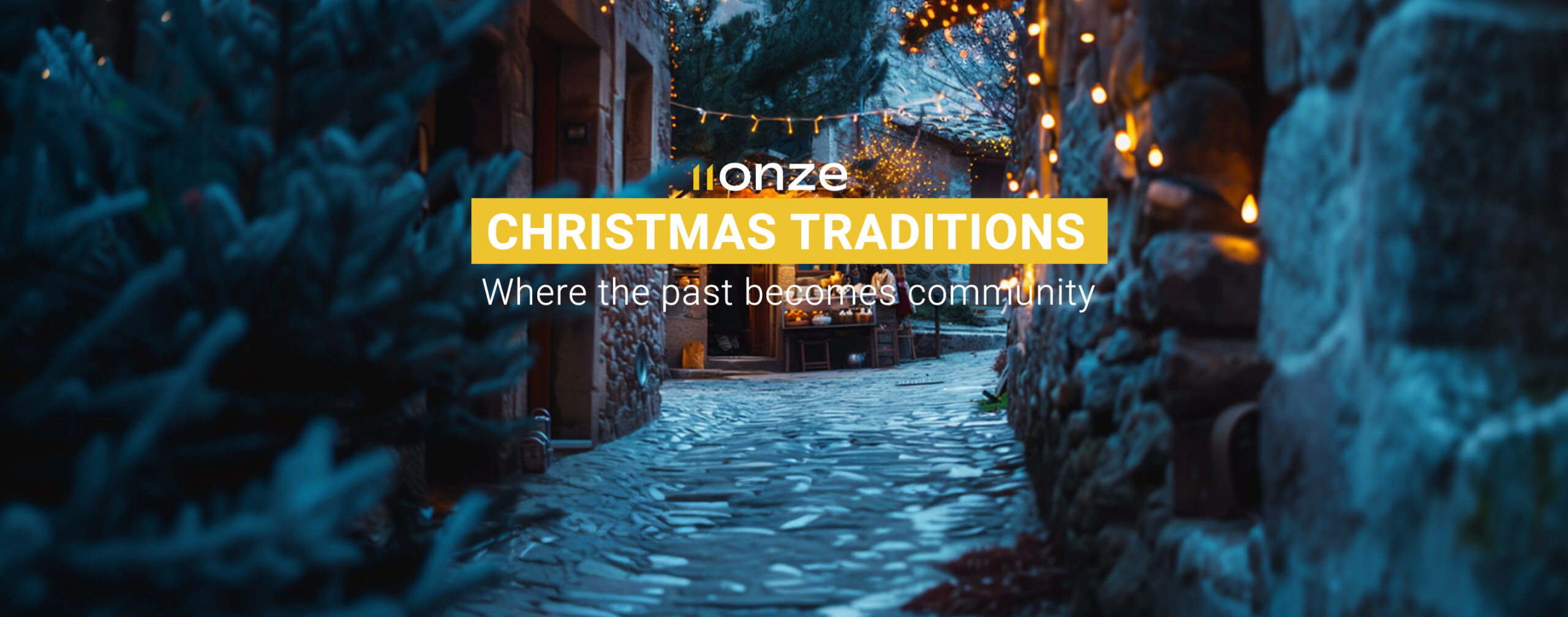

Open-air settings that recover collective memory and keep the tradition alive.

Popular theater combining humor, legend, and the Christmas spirit.

Stalls full of craftsmanship and warmth that ignite the festive spirit of the streets.

Meeting points where local commerce and culture coexist in full winter effervescence.
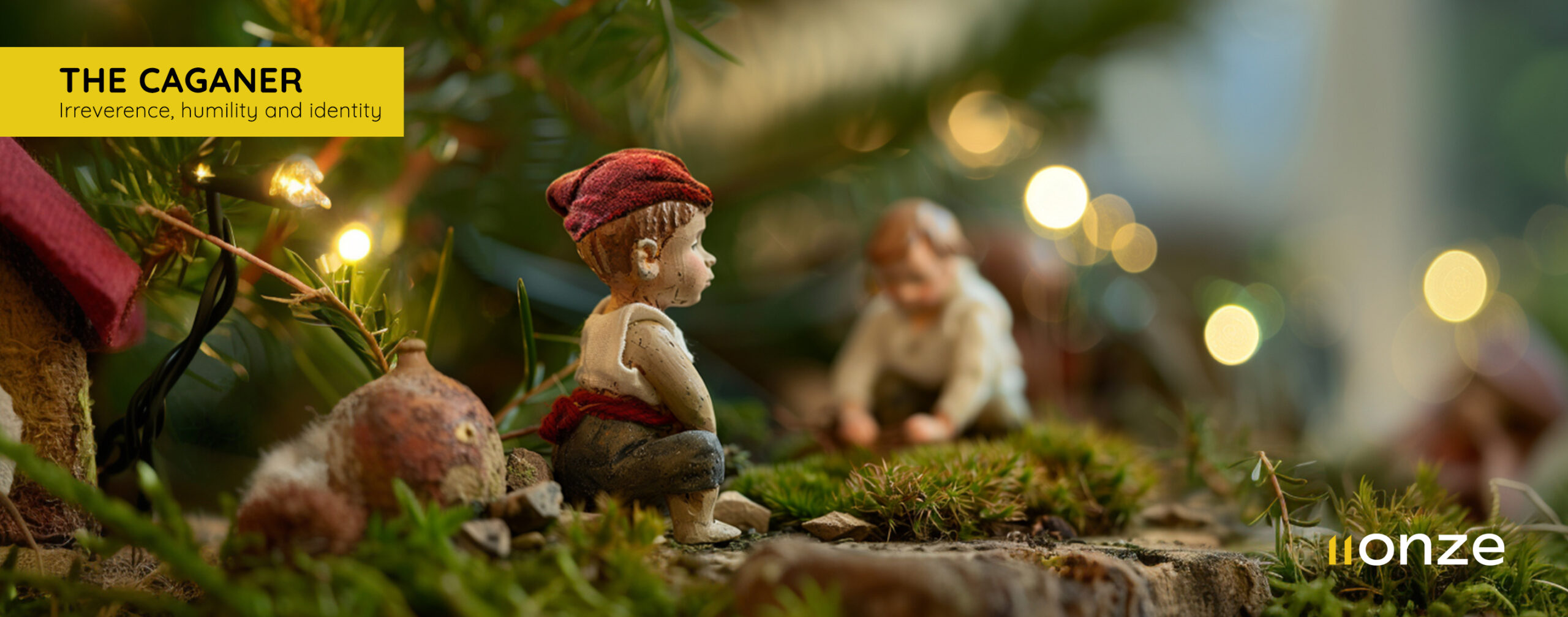
The most irreverent figure symbolizing humility, fertility and distinctly Catalan irony.
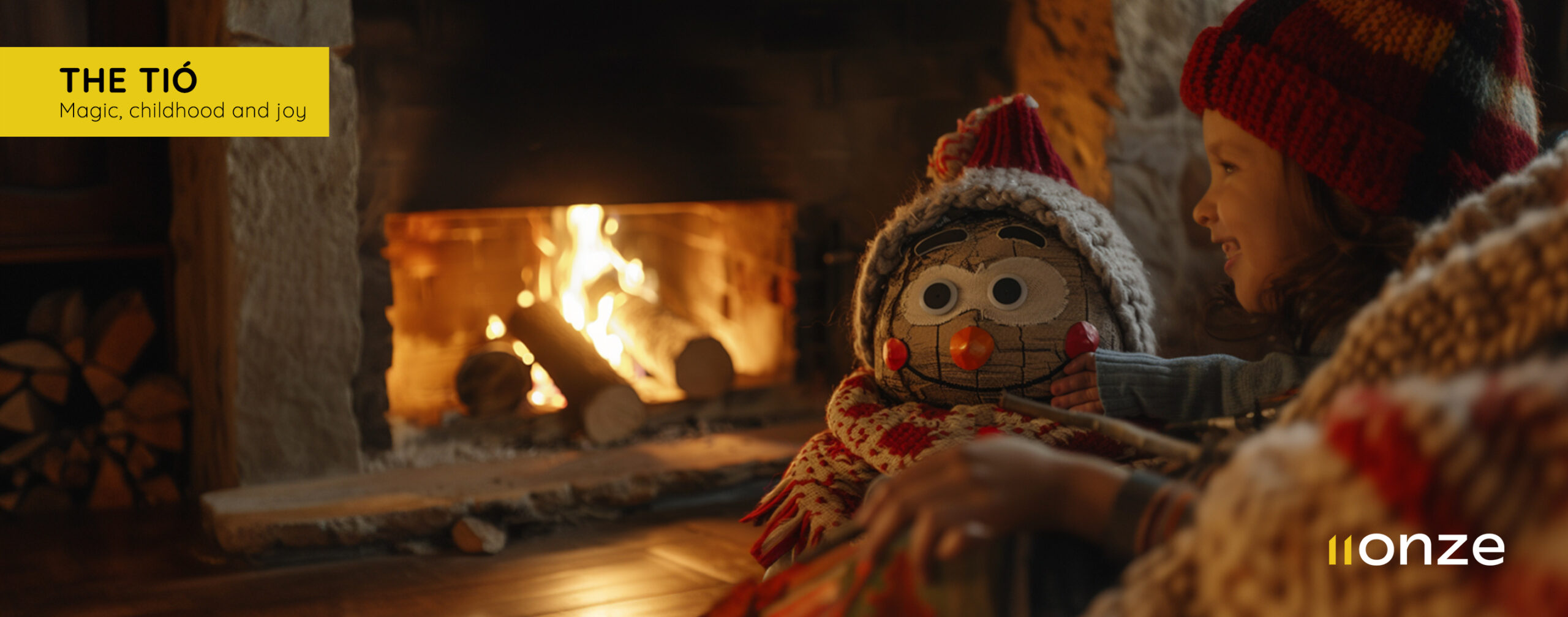
The magic log that turns children’s waiting into a celebration of shared joy.

Sages from the East who transform an old myth into a gesture of shared hope.
Living nativity scenes: a heritage that does not fade
The first Catalan living nativity scenes appeared in the mid-twentieth century, but they draw from a much older tradition stemming from medieval sacred performances and the guild-based theatrical culture. When a town decides to stage a living nativity scene, it does not only recreate a biblical episode but connects with a model of community self-organization that comes from far back.
They are a singular ethnographic phenomenon because they involve an entire town. Living nativity scenes activate a community ecosystem where elders, adults, and children contribute skill, logistics, and vitality. It is not an external spectacle, but the memory of a people set in motion.
These events generate local economy, since visitors reactivate lodging, dining and craftwork, giving oxygen to traditional trades that are often marginal. The living nativity scene becomes a winter engine that demonstrates that culture is also economy.
And finally, they return a kind of territorial self-esteem. Turning squares, forests, and alleyways into Bethlehem is a way to reclaim one’s own landscape and history. The town looks at itself with new eyes, and the territory shifts from backdrop to shared heritage. Therefore, its growing success is revealing, because in a world saturated with screens, people seek experience, materiality, human contact. The living nativity scene offers precisely that: a shared truth.
The Pastorets: a theater that survives everything
The Catalan “Pastorets”, direct heirs of medieval Mystery plays and systematized in the nineteenth century, constitute an exceptional case study in the history of popular theater. Combining religion, satire and social criticism, they have withstood dictatorships, censorship, and profound cultural transformations without losing vitality. Their strength lies in a singular alliance of parody, pedagogy, and rootedness.
On one hand, their structural parody, with devils amplifying the vices of power and shepherds who portray human naivety with tenderness and humour, acts as a permanent critical mirror. It is this capacity to make visible the absurdity of the world that keeps the play alive, renewed and always current.
On the other hand, the pedagogical value taken on by amateur theater organizations, especially since the associative drive of the early twentieth century, has turned the “Pastorets” into an authentic school of citizenship through shared discipline, teamwork, generational responsibility and intergenerational learning. In this sense, popular theater has functioned as a moral training space as powerful as any classroom.
And finally, the play takes root because each community has made its own version, adapting language, humour, and scenes to its local reality. It is not a tradition frozen in a manual, but a living practice that the people rethink, reinvent and update. That is why the “Pastorets” are, even today, the quarry of Catalan theater which has become a space where actors are trained, communities are built and the relationship between popular culture and stage creation remains alive. God and the Devil share the stage, but the lesson is always human, because when a tradition passes through the hands of the people, it is not preserved, it evolves.
Fairs, markets, and gastronomy: winter as a moral economy
Winter fairs, direct heirs of preindustrial economy, were born as meeting points where cultivation contracts were renewed, tools were sold, and commercial networks were maintained that ensured local survival.
This legacy persists in events such as the Medieval Fair of Vic, the Espinelves fir tree market or the numerous craft fairs in the country, which today recover three essential functions: they sustain a proximity economy that enables producers and artisans to keep their activity alive; they preserve traditional trades, carpenters, basket makers, ceramists, cheesemakers, which often find in these spaces their only real showcase; and they reinforce a gastronomic identity that turns escudella, galets, cannelloni or turrons into material narratives of our history, made of ingenuity and scarcity.
More than a market, these Catalan fairs act as an authentic moral economy in the strictest sense of the thesis formulated by historian E. P. Thompson in “The Moral Economy of the English Crowd in the Eighteenth Century”, where he explains how economy is a system of exchange in which value is measured not only in money, but in trust, continuity and mutual recognition.
Therefore, what is sold and bought responds to a community code that protects trades, guarantees the dignity of the producer and keeps social balance alive. In this sense, the fair recovers an ancient yet essential principle: that economy is sustainable when it serves the people, not when it uproots them.
Memory as a tool for the future
In this sense, Catalan traditions that endure are not a refuge from the past but a bridge linking generations in a time when everything tends to be forgotten quickly. A people that does not recognize itself in its symbolic practices loses the thread that has sustained it. Instead, a people that revises and maintains them gains coherence and future. Catalan Christmas, with its mixture of antiquity and reinvention, reminds us that the true strength of a culture is not resisting but knowing how to transform itself without losing its soul.
This is because, ultimately, traditions are not footprints of what we once were, but compasses of what we can still become. Modernity moves fast, but it only takes root when it finds a story that welcomes it. That is why the future of a country is not measured by what it innovates, but by what it is capable of preserving with meaning. Because a people that loses its traditions loses its memory; and a people without memory simply ceases to exist.
11Onze is the community fintech of Catalonia. Open an account by downloading the app El Canut for Android or iOS and join the revolution!

 Equip Editorial