Territori 17: the black swan theory
The recent events that have shaken the banking sector may have a far-reaching impact on the economy and our lives. Can these crises be foreseen and avoided? In this episode of La Plaça, Xavi Viñolas, editor of 11Onze, analyses retrospective economic predictability through the black swan theory.
Is the current economic model reliable? One might think that we go from crisis to crisis in a cyclical concatenation of inevitable catastrophic events in the financial markets. But are these economic cataclysms unpredictable, and can the economic analysis be improved to predict the future?
In economics, the black swan theory is a metaphor that refers to highly improbable events that occur by surprise and have a large negative impact on economies. They are characterised by retrospective predictability, i.e. some factors explain why they occurred and how they could have been avoided.

On the theory of black swans
Anticipating black swans
Any type of investment is exposed to possible black swans that negatively affect market performance. It is therefore essential to have a diversified and structured portfolio with different types of assets that can act as counterweights in case of a sudden change in the economic outlook triggered by such an event.
That said, and given that black swans are increasingly common, Viñolas suggests that “perhaps it is the economic model itself that should be questioned“, and continues, “banks have become accustomed to privatising profits and socialising losses. Taking the risk element out of risky investments”, therefore, they have little incentive to prevent these events from occurring, since others end up paying the consequences, i.e. us, the taxpayers.
If you want to discover the best option to protect your savings, enter Preciosos 11Onze. We will help you buy at the best price the safe-haven asset par excellence: physical gold.



The European rhetoric has been clear for two years: it is necessary to economically block Russia. That is why trade ties with the country led by Putin were broken. But the reality is that the countries of the European Union skip their own sanctions and sell to Russia through countries like Kyrgyzstan, Georgia or Kazakhstan, making the Russian economy the fastest growing in the G7.
On the second anniversary of Russia’s invasion of Ukraine, it is impossible to predict how much longer this war will last or who will win it. What can already be said is that European pressure measures have not been of much use, if the objective was to suffocate Russia economically. A few weeks ago the International Monetary Fund had to revise its forecasts for the Russian economy. They had estimated that Russian GDP would stagnate in 2023 at 1.1% growth and finally stood at 2.6%, becoming the fastest growing G7 economy. Not only that, the Russian government estimates that in 2024 its growth will accelerate to 3.5%.
How is it possible, if the EU has approved more than a dozen economic and trade sanctions to strangle the economy of its Russian neighbours? Because the reality is that the European positioning is more rhetorical than real. Blocking Russia seriously would imply much more serious damage to the economy of some European countries that are not there to shoot rockets, never better said. European hypocrisy has been highlighted for months by Robin Brooks, former IMF economist. A sufficiently clear example: exports of cars, engines, or vehicle parts from Germany to Kyrgyzstan have increased by 5,500%.
German exports of motor vehicles and parts (blue) to Kyrgyzstan are up 5500% since Russia invaded Ukraine. You don't have to be a rocket scientist to know that all this stuff is heading to Russia. It's not like Kyrgyzstan is suddenly in a massive boom. Germany has to stop this… pic.twitter.com/aVZs7Ji3mO
— Robin Brooks (@robin_j_brooks) November 26, 2023
Could this country neighbouring Russia and with only 6.6 million inhabitants have a sudden interest in German engines? Sure. Definitely. But it is still surprising that this furore for German industry also extends to Armenia, Azerbaijan, Georgia, Turkey, and Kazakhstan. Is it a problem only in Germany? It seems not, because exports from the entire European Union just to Armenia have grown by 430%. We are facing a very clear act of fooling by the European Union: I announce that I am sanctioning Russia, and I am not selling anything directly to it, but I am selling it through other countries.
While Russia has increased commercial ties with China and India, the main recipients of Russian oil. In fact, in this sense the European blockade is once again ridiculous, because Russia’s production of barrels of oil remains stable at 9.5 million barrels per day. Exactly what they made before the sanctions, they have only changed clients.
The Russians see how their economy has been mobilized towards the war effort, increasing spending on weapons production to reach 40% of GDP. It is an effort that also pushes economic growth in the short term, but evidently does not have the same return as the productive economy. However, Russia seems capable of sustaining the attack for as long as it deems necessary.
For its part, the European Union has already been warning its member countries to prepare to mobilize their economies towards a war economy. Recently, Ursula Von der Leyen has announced her willingness to continue presiding over the European Commission and, in an interview on Euronews, she explained that one of her main objectives is to continue increasing defence spending. Now some 350,000 million euros annually are estimated. To measure the volume, it is necessary to understand that it is a figure equivalent to the entire budget of the Spanish government.
The seized money
One of the first major international sanctions was the order to block $300 billion from Russia in accounts outside the country. Now, as the US government finds it increasingly difficult to continue funding the defence of Ukraine, voices are beginning to appear calling for the money seized from the Russians to be used in the war against Russia. This would prevent, they argue, Western economies from continuing to go into debt to finance the conflict. They would take the money for future reparations from Russia in Ukraine, but this manoeuvre creates many problems.
The main one is trust, because central banks should normally stay out of these types of confrontations between countries. Violating the deposit safety rule was already astonishing, using these funds could generate a greater crisis of confidence in the banking system. Because? Because in Western banks there are billions from countries in the Arabian Peninsula, Central Asia and Africa. If these clients felt threatened and withdrew their money, the international banking system would be seriously compromised, as was already seen with the case from Credit Suisse.
The forecasts, therefore, are very uncertain. The only thing that seems clear is that Putin remains determined and that the European Union will continue to cheat itself. Meanwhile, Russians and Ukrainians continue to die every day in the senseless war. Given the need to renew troops, the Ukrainian government is considering mobilizing 500,000 civilians. Therefore, the tragedy will continue while businesses adjust.



Just like a shopping centre, a marketplace describes the platform, in this case a digital one, where companies and consumers exchange products and money. An old concept that is taking on new life thanks to new technologies.
Virtually all consumers have become familiar with online shopping, especially in the wake of the pandemic. And most do so through marketplace platforms where the range of products on offer is wider, and they can therefore filter by price, the best value for money, or even be guided by user reviews.
The marketplace concept goes beyond shopping centres: brands are multiplying, price competition is fiercer and the days of poor quality products are numbered, as consumers are the main voice of the platform.
What does the marketplace offer?
The growth and consolidation of these platforms has reached its peak during the pandemic. Users especially value the possibility of shopping from home, being able to do so at any time, without having to travel and avoiding crowds, a key point at the present time.
But more than just as a consequence of the pandemic, why has the marketplace purchasing system increased so significantly? What advantages does it bring for the customer and for companies? Do we know the risks?
The rise of the marketplace in figures
The agency “Elogia”, a specialist in digital commerce, concluded in its annual study that the marketplace was the most used means of purchase in 2020, and the trend continues to rise:
- 72% of internet users between the ages of 16 and 70 shop online, especially in the 35-44 age bracket.
- 70% of online shoppers use marketplaces to find information and compare products.
- 8 out of 10 users end up buying on the platform.
- They shop an average of 3.5 times a month.
- Spending is €68 on average, although during the pandemic it increased by 51%.
- Computers (83%) and mobile phones (55%) are the main purchasing devices.
- Mobile devices, household appliances and technology are the top-selling products.
Despite the fact that some of these platforms are criticised for ethical issues or working conditions, their turnover continues to grow, pending the figures that reflect this year’s shopping trend.
11Onze is the community fintech of Catalonia. Open an account by downloading the super app El Canut for Android or iOS and join the revolution!
If you liked this article, we recommend you read:



EU countries are stepping up negotiations to reform the fiscal rules of the Stability and Growth Pact before the end of the year, suspended for three years to allow member states to increase public spending in the wake of the health crisis.
The Stability and Growth Pact (SGP) was born in the late 1990s to avoid excessive budget deficits in the eurozone after the single currency came into force. In other words, the aim was to prevent eurozone members from overspending beyond their possibilities and thus maintain the stability of the Economic and Monetary Union.
These fiscal rules stipulate that countries adopting the euro must keep their budget deficits below 3% of gross domestic product (GDP) and their public debt below 60% of GDP, nonetheless, it applies to all EU member states. In the event of non-compliance by a member state, it was envisaged that a penalty of 0.5% of gross domestic product would be imposed. In practice, however, favouritism towards Germany and France applies, two countries that rule the EU.
Some rules were changed to deal with the financial collapse in 2007 and the ensuing sovereign debt crisis, which led to painful austerity measures to curb excessive spending in some countries. This made compliance with the balanced budget directive more flexible, allowing member states to increase their deficits, as long as the limit of 3 per cent of gross domestic product was not exceeded.
In 2020, the European Commission suspended debt and deficit rules so that member states could cope with the economic shock of the Covid-19 pandemic. Subsequently, Brussels extended the suspension of the Stability Pact for three years because of the war in Ukraine and runaway inflation.
A sustainable debt reduction
Last April, The European Commission proposed an overhaul of the old fiscal rules to make them more future-proof, highlighting an annual adjustment of 0.5 % for countries with excessively large deficits.
Since then, the 27 EU member states have intensified negotiations to agree on a new pact before the end of the year. The new regulatory framework will officially be applied in 2025, but the European Commission asked states to design their budgets for next year with the new rules in mind.
The European Commission has been assessing the fiscal plans submitted by the member states. In the case of Spain, Brussels endorses the Spanish government’s budget plan, acknowledging that it complies with the recommendation to limit the increase in net public spending to a maximum of 2.6%. Even so, it considers that Spain still has a “very difficult” budgetary situation and that it will therefore be necessary for it to “establish a credible medium-term fiscal strategy”.
Spain, like other countries such as France and Italy, advocates a more flexible fiscal pact, with the rules adapted to the circumstances of each economy. On the other hand, Germany accepts some flexibility, in exchange for a minimum annual adjustment. Be that as it may, the gradual reintroduction of greater budgetary discipline is assured.
If you want to discover the best option to protect your savings, go to Preciosos 11Onze. We will help you buy at the best price the ultimate safe-haven asset: physical gold.

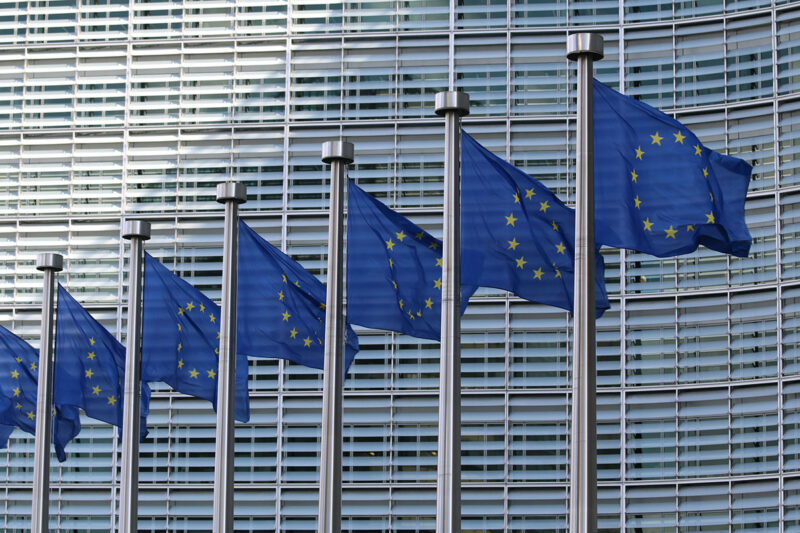

Driven by central bank buying and geopolitical tensions, gold reached a new high of $2,135.4 per ounce in 2023. With an annual return of 15% and an average price of 8% above the previous year, also a record.
Data from the annual report of the World Gold Council (WGC) show that gold had a fantastic year in 2023. Especially in December when, thanks to the fall in value of the US dollar and the possible interest rate cut by the Federal Reserve, it reached a new record high of 2,135.4 dollars per ounce on 4 December.
It has also maintained an average price of 8% higher than during 2022, achieving an annual return of 15%, well above other low-risk savings or investment options such as time deposits or Treasury bills. More importantly, more than offsetting Spain’s 3.1% headline and 3.7% core inflation in 2023.
Although central bank purchases of gold continued the 2022 trend at “a breakneck pace”, demand from this sector stood at 1,037.4 tonnes of net purchases in 2023, some 45 tonnes (4%) less than the record year of 2022, the WGC notes in its report.
Still, it should be noted that more than half of the central banks’ purchases were attributed to unknown buyers. Unlike many central banks that report their gold purchases to the IMF every quarter, central banks in China, Russia and other countries buy and store gold without declaring it as reserves, thus concealing the true volume of purchases.
On the other hand, Chinese households and investors have been buying gold to protect their savings when faced with the housing market crisis and the chaos in the local stock market sector, which has helped sustain record prices for this safe-haven asset. Ergo, it is not surprising that, according to the WGC report, China has emerged on the global stage as a key country in the rise of gold investment and jewellery flows in 2023.
Geopolitical conflicts and trade tensions to sustain demand
WGC analysts see total gold investment (including OTC) likely to increase during 2024, following the trend and market behaviour seen in 2023. Central banks are expected to continue buying gold “at an impressive pace”, probably above the pre-2022 annual average of around 500 tonnes.
This forecast is in line with a Reuters survey of 30 analysts and market participants, according to which the price of gold will rise during 2024 from this year’s average. Specifically, they forecast an average of $1,986.5 per ounce in 2024, up from this year’s average of $1,925. This is based on the assumption that global central banks will begin to loosen monetary policy and the fact that tensions in the Middle East will continue to drive gold as a haven for investors.
In conclusion, it seems that generally speaking, the investment trend towards gold at the expense of fiat money will continue. Runaway public debt, especially in the Western world, and rising global geopolitical tensions, suggest that gold will continue to be the ultimate safe-haven asset when facing economic uncertainty.
Preciosos 11Onze makes it easy to buy gold, at the best price and with total security. Protect yourself from economic crises with the ultimate safe-haven asset: gold. If you want your savings to keep or increase their value, Gold Patrimony.



Although cost increases persist on routes from northern Europe to Asia, they are starting to fall in the opposite direction. Even so, the skyrocketing shipping costs in recent months threaten runaway inflation.
The armed response to the ongoing genocide in Gaza launched last November by Ansar Al-lah, the Islamist resistance group better known as the Houthis and operating in Yemen, sent shipping costs soaring.
During the first three weeks of the attacks on Red Sea ships bound for the Suez Canal, the Shanghai Containerized Freight Index (SCFI), which tracks shipping rates for goods imported from China, increased by more than 160%. The price increases had been gaining momentum, especially after the US and UK retaliation against the Houthi forces.
On the one hand, ships have to cover longer routes avoiding the Red Sea and the Suez Canal, but shipping companies have also taken advantage of the situation to update prices upwards. In any case, new ships are increasing supply and reducing costs, so freight rates for routes between Asian countries and Europe have started to fall.
According to the Freightos Global Container Freight Index, the cost of a 60 cubic metre container to transport goods from China and East Asia to Northern Europe has gone from 5,492 dollars on 19 January to 5,455 dollars on 26 January, a drop of 0.7%. The price decline is most evident in the Asia to Mediterranean trades, where freight rates have fallen by 4.8 per cent from $6,772 to $6,448 on the same dates. However, increases of 8 per cent on routes from northern Europe to Asia and 5.5 per cent from the Mediterranean to the Asian continent persist.
Inflation control in the balance
The coordinator of the Asia-Pacific working group of the Exporters’ Club, Ramón Gascón, warns EFE that “prices have not yet been passed on to the consumer, but this will eventually happen if the situation drags on”. Logistics disruption threatens to destabilise assembly lines in industries that are particularly sensitive to transport delays, such as the automotive sector, and raise prices for consumers.
Likewise, the experts consulted by EFE warn that the delay in the arrival of key products for the food sector, such as palm oil, maize and rice, could contribute to price rises at a time when Europe and much of the world have been implementing measures to try to contain inflation for months.
Given that, according to a recent IMF report, import prices account for 40% of the overall changes in inflation that have affected European consumers over the last two years, it cannot be ruled out that this latest cost increase will be passed on to the final consumer.
If you want to discover the best option to protect your savings, come to Preciosos 11Onze. We will help you buy at the best price the ultimate safe-haven asset: physical gold.

The US government has been seizing and selling bitcoin for the past 10 years, accumulating BTC worth $8 billion and generating more than $640 million from selling it. Where did all these bitcoin come from?
The US government has announced plans to sell nearly $118 million in bitcoin seized from Ryan Farace, a US Secret Service special agent convicted in 2015 of laundering drug money using bitcoin on Silk Road, the popular dark web marketplace.
The US government is one of the largest Bitcoin holders in the world, with a current balance of more than 200,000 BTC, worth approximately 8 billion dollars. Since the judicial process was launched, less than 5% of this haul has been offered for sale. These reserves represent approximately 1% of all BTC currently in circulation, making the US government one of the largest cryptocurrency investors in the world.
They were confiscated mainly from cybercriminals operating on the Silk Road, as the possibility to do transactions in total anonymity and the decentralisation of this cryptocurrency made it a very attractive option for criminals involved in activities such as money laundering, drug trafficking or ransomware attacks.
The US government holds this BTC mainly offline, in encrypted and password-protected storage devices controlled by the Department of Justice, the Internal Revenue Service or other government agencies.
It could get much better returns
The sales of these bitcoin reserves are done through public auctions, which allow the government to dispose of its bitcoin holdings gradually and without distorting the price of the cryptocurrency on the markets.
Although these auctions have generated more than $640 million, the government seems uninterested in maximising the proceeds. Some analysts believe it has missed out on billions of dollars by not selling later and acting as a novice in cryptocurrency trading.
But in any case, it is generating significant revenue from these transactions. You can do the same with Bitvavo, the exchange platform that 11Onze Recommends, which allows you to trade with more than 200 digital currencies. The recent entry into play of Bitcoin ETFs and the halving that will take place in May this year could push the value of this cryptocurrency up considerably by the end of 2024.

11Onze Recommends Bitvavo, cryptocurrency trading made easy, safe and at a good value.
If you liked this article, we recommend:
 Technology
Bitcoin Halving: What is it and what does it do?
3 min readIn the world of Bitcoin, halving is an automated event...

The wave of mass lay-offs by tech companies that took place during 2023 does not stop. Since the beginning of the year, the giants of the sector have already announced new cuts of thousands of employees to improve the efficiency of their productivity.
After announcing two rounds of lay-offs totalling 21,000 workers, Mark Zuckerberg explained that 2023 would be “the year of efficiency” for Meta. Other Big Tech executives followed suit in a year that saw more than 260,000 lay-offs in the tech sector.
The exponential growth in tech workforces experienced during the pandemic, thanks to increased sales and demand for services, were numbered. The return to normality caused mass recruitments to turn into mass lay-offs. Geopolitical conflicts and runaway inflation only accelerated cuts in the sector.
Alphabet, Google’s parent company that laid off 12,000 employees in 2023, has already confirmed lay-offs in multiple parts of its ecosystem, including several hundred workers in its advertising sales team and more than 1,000 employees in other units. Amazon has also announced a new round of lay-offs that will affect hundreds of workers in its Amazon MGM Studios and Prime Video divisions. Meta, Twitch, YouTube and others have been added to the increasing stream of dismissals.
European tech giants are not far behind. German enterprise software developer SAP will carry out a restructuring that will affect around 8,000 employees globally, 7.4% of the workforce, by 2024.
Restructuring, efficiency and AI
Many of the recent lay-offs are because large tech companies are still trying to correct over-hiring during the pandemic. Still, the impact of the booming introduction of artificial intelligence (AI) technologies in the sector cannot be ignored.
While the rise of artificial intelligence has created new occupations and disciplines related to the programming and development of these automated systems, more and more companies, such as Dropbox and Meta, are citing AI as a reason for redundancy as they refocus their resources to improve the efficiency of their operations.
Whatever the reasons for the massive lay-offs, we should not be surprised by the trend when companies like X, formerly Twitter, continue to run smoothly after cutting up to 80% of their workforce and streamlining their operations, focusing on their core competencies and applying the premise of getting more work done and wasting less time in meetings.
11Onze is the community fintech of Catalonia. Open an account by downloading the app El Canut for Android or iOS and join the revolution!



China’s economy grew by 5.2% in 2023, meeting the government’s official target and remaining one of the most resilient in the world. Even so, the real estate crisis remains a problem that may undermine economic growth at a time when China cannot afford it, given its growing debt burden.
China’s growing debt burden is grabbing the headlines. This is understandable, given that according to Central Bank and Statistics Bureau data compiled by Bloomberg, total debt as a percentage of gross domestic product rose to a new record high of 286.1% in the fourth quarter.
However, the rise in Chinese debt is nothing more than the consequence, in large part, of accumulated losses associated with the misallocation of investment over the past decade. Especially in a saturated real estate sector, which has left thousands of empty homes without owners in a cluster of ghost towns, half-abandoned construction sites or where homes bought off-plan have yet to be started, triggering the collapse of large property developers.
The Chinese government has instructed heavily indebted provincial governments to delay or halt some infrastructure projects financed by state-owned banks. Beijing is trying to balance initiatives to stimulate the economy while struggling to contain the risk that easy access to state credit will encourage speculation and non-productive investment.
Chronology of a real estate bubble
On 9 November 2008, the Chinese government unveiled an economic stimulus package worth RMB 4 trillion (539 billion euros). These incentives aimed to invest in infrastructure and low-cost housing by expanding credit availability.
As property market revenues dominate provincial government revenues, provincial governments continued to promote activities in the property market to increase their revenues for other public investments. Let us remember that China’s real estate sector accounts for one-third of the country’s economy and about 70% of citizens’ wealth.
Instead of imposing property taxes, municipalities sold large tracts of land to developers and used the proceeds for basic social services such as road improvements and pension payments. On the other hand, property developers used the proceeds from off-plan sales of new homes (70-80% of sales) to finance new projects.
However, this system, sustained by speculation and easy credit, collapsed with the collapse of real estate giants such as Evergrande and Country Garden, while local governments have been forced to ask for bailouts and try to sell assets that have lost much of their liquidity.
Government support with a rescue plan
After the sector imploded due to market saturation, speculation and a slowdown in economic growth, the Chinese government made multiple attempts to limit the credit that fuelled the bubble. In mid-2020, the state administration announced a package of measures under the slogan “houses are for living, not for speculation”, including strict rules on access to credit in the real estate sector.
China’s top leadership says it is necessary to coordinate and address risks in the real estate sector by limiting access to credit for public-private partnership housing projects and also by placing limits on infrastructure investment but exempting credit for affordable housing construction.
On the other hand, tax incentives have been increased as of August 2023, extending the personal income tax credit for households renovating their flats until the end of 2025. The government also urged banks to facilitate mortgages for new buyers and renegotiate interest rates for customers with mortgages. In this regard, Beijing reduced the minimum down payment requirement nationwide to 20% for first-time buyers and 30% for subsequent purchases.
After a dismal start to the year, with home sales plunging again last week, the Chinese government is weighing a stock market rescue package, mobilising 255 billion euros to stabilise the sector. Economic analysts expect the Chinese central bank to cut the one-year prime lending rate by 10 basis points in the first quarter to stimulate the market.
Time will tell how effective these measures will be, but it is clear that Beijing wants to prick its property bubble to end speculation. With a relatively strong fiscal position and a central bank with room to adopt a more expansionary monetary policy, the Chinese government should be able to facilitate solutions to the sector’s debt problems, yet falling into the trap of using debt as an economic driver is no longer unique to the Western world.
If you want to find out how to get returns on your savings with a social justice product, 11Onze recommends Litigation Funding.


Around 500 companies work in the field of cybersecurity in Catalonia. This is a growing industry due to the increase in digital threats. In just one year the number of cyber-attacks in Catalonia has increased by more than 30% and in the world this type of incident has grown by 50%.
On 8 and 9 November 2014, Catalonia suffered one of the ten most intense cyber attacks in the world that year. The aim was to overthrow the 9N consultation. It did not succeed. Cybersecurity measures allowed the official website of the consultation, Participa2014.cat, to resist. On the other hand, several websites and services of the Generalitat, such as the electronic prescription or the registry of medical records, were down. According to what an international journalistic investigation revealed a few weeks ago, the person in charge of orchestrating the computer attack was an Israeli businessman, who has not revealed who paid for it.
It is estimated that the Generalitat suffered almost 150 million cyber-attacks that year. Despite the magnitude of the figure, it is nothing compared to the volume of cyberattacks that occur today. In 2022, 1.7 billion were detected, according to the Catalan Government. This represents an increase of 75% over the previous year and is more than ten times the number of incidents in 2014.
Catalonia, well positioned
Fortunately, the cybersecurity sector is in good health in our country. According to a report by Acció and the Catalan Cybersecurity Agency, there are 495 companies involved, with a turnover of more than 1,000 million euros and nearly 10,000 workers. The rate of growth in number of companies, turnover and workplaces compared to 2021 was in double digits.
Significantly, Catalonia was the third region in Western Europe in terms of attracting foreign investment in the field of cybersecurity, with 163 million euros, behind only Ireland and the Brussels region.
Although 85% of the companies are SMEs, more than half (54%) have a turnover of more than one million euros and 29% are exporters. The sector is highly concentrated geographically, with eight out of ten companies located in the Barcelona Metropolitan Area.
An expanding global market
Undoubtedly, the growing digital threats to which institutions, companies and individuals are exposed are spurring the expansion of the cybersecurity sector. The strong digital presence of companies, both externally and internally in the management of data and processes, makes them particularly vulnerable to cyber-attacks, which can have a considerable negative impact on the bottom line.
It is estimated that 71% of cyber-attacks worldwide in 2022 were financially motivated and cost around €7 billion. The value of the stolen cryptoassets alone exceeds €3 billion. It is therefore not surprising that between 2022 and 2027, global cybersecurity turnover is expected to grow by 13.6% per year, to almost €300 billion.
When it comes to protecting ourselves, it is important to bear in mind that e-mail has established itself as the main vector for malware distribution and is used to initiate 84% of cyber-attacks. Moreover, 74% of cybersecurity incidents affecting Catalonia last year involved the use of social engineering techniques.
If you want your business to make a giant leap, use 11Onze Business. Our business and freelancer account is now available. Find out more!