How Spanish banks make so much money
Spain’s main banks have obtained a record annual profit of 26,000 million euros, almost 25% more than the previous year, despite the new extraordinary tax on banking. Rising interest rates and low remuneration of customer’s deposits have been key to the record results.
The six largest banks in Spain – Banco Santander, BBVA, CaixaBank, Bankinter, Banco Sabadell and Unicaja Banco – will publish their 2023 results later this week. According to analysts’ estimates, their profits will reach a new record of almost 26,000 million euros, 24.38% more than the previous year, including the extraordinary tax, which has cost them more than 1,100 million.
The Bankinter Group announced on Thursday 25 January that it had achieved a record profit in its history of 845 million euros, which is 51% more than in 2022 when it earned 560 million euros. The bank expects to post a new record profit in 2024.
BBVA will release its results tomorrow, Tuesday 30 January and, according to analysts consulted by the EFE agency, it is expected to achieve profits of 7,835 million euros, 22.04% more than in 2022. The bank’s chairman, Carlos Torres, expects to distribute a dividend charged to 2023 “clearly higher” than the previous year.
On Wednesday, January 31, Santander will publish its results and is expected to announce a historic profit of EUR 10,750 million, up 11.9% from EUR 9,605 million in 2022, exceeding EUR 10,000 million for the first time. These profit figures are mainly due to increased net interest income and the bank’s geographical diversification.
Next, it will be the turn of Sabadell, CaixaBank and Unicaja Banco, which on 1, 2 and 6 February will reveal their accounts respectively. The Alicante-based bank will announce earnings of 1,310 million, 52% more than in 2022, thanks to the rise in interest rates and the good performance of its British subsidiary, TSB. On the other hand, CaixaBank is expected to have obtained 4,862 million in profits, 54% more than the year and surpassing other banking entities. Finally, also according to EFECOM, Unicaja Banco will announce profits of 314.5 million, 21% more than last year.
High-interest rates, not reflected in the remuneration of deposits
In an economic context in which high inflation continued to erode savings, customers of the big banks were receiving little improvement in the remuneration of their deposits, even though the ECB continued to raise interest rates.
According to data published by the European Central Bank (ECB), of the 19 eurozone countries, banks in Spain and Cyprus were the only ones to start the year by reducing the remuneration they pay on deposits to their customers. While in the eurozone as a whole banks raised rates on new deposits to an average of 1.65%, Spanish banks went from a remuneration of 0.64% in December 2022 to 0.59% in January 2023.
Towards the second half of the year, but above all in the last quarter, some banks showed some timid reactions and with specific campaigns to slightly improve the returns on deposits and avoid the flight of customers. Even so, they have maintained profits from commissions while increasing their income and margins thanks to interest rate rises that have made mortgages and loans more expensive.
On the other hand, in the face of these record profits, the unions CCOO, UGT and FINE are up in arms and have already announced mobilisations to demand wage increases, after negotiations for the new banking agreement stalled last month. The fact is, a decade after the bank bailout in Spain, not only have hopes of recovering the billions that were injected into the banks vanished, but Spanish banking has become the most profitable and penny-pinching in Europe.
If you want to discover the best option to protect your savings, enter Preciosos 11Onze. We will help you buy the safe-haven asset par excellence at the best price: physical gold.



Amid a full reconfiguration of world trade and with increasingly defined geopolitical blocs, economies that do not adapt run the risk of being trapped on a board in which they no longer play. The new globalization —fragmented, competitive, and marked by financial insecurity— forces territories such as Catalonia to rethink their role in the world. The context is uncertain, but also full of opportunities: the challenge is to know whether the country will be able to turn them into real strength.
The “new globalization” is the break with the hyperconnected and cheap world that dominated between the 1990s and the 2008 crisis. That period was based on offshored production, minimal costs, and supply chains that crossed half the planet without friction. All of that is over. Successive crises —financial, health, energy, and geopolitical— have shown the fragility of a model that depended too much on a single industrial center and on trade routes that are no longer safe or stable.
This new phase is marked by the formation of geopolitical blocs —US&EU on one side, China-BRICS on the other— that turn trade into an extension of foreign policy. The consequence is a return to reindustrialization and strategic sovereignties: selective tariffs, technological controls, export restrictions, and a global race to secure critical raw materials. Globalization continues, but it is no longer neutral or homogeneous: it is more expensive, more fragmented, and more conditioned by security.
At the same time, financial volatility is intensifying. Both Economist Impact and Cesce warn of an increase in global country risk, driven by geopolitical tensions, high indebtedness, and greater regulatory uncertainty. For this reason, the new globalization is not only a trade change: it is a new economic order in which the rules are stricter and in which the capacity to adapt will determine who prospers and who falls behind.
Catalonia in the middle of the global quake
The new globalization places Catalonia in a delicate position: both privileged and fragile. It is one of Europe’s most open economies: goods exports already represent close to 36% of GDP and approach 100 billion euros annually. This means that every global shock is immediately transmitted here, but also that any reconfiguration of value chains —nearshoring, reshoring, diversification of suppliers— can work in the country’s favour if it knows how to offer itself as a reliable productive hub.
The Catalan productive fabric, however, is exposed to the sectors where the global shock is most intense: chemicals (30% of exports), automotive, agri-food, or industrial machinery. These are activities dependent on competitive energy, advanced technology, and demanding regulations. The ICT and high-technology sector is growing, but it does so on a battlefield marked by chip wars, export controls, and extreme global competition.
The recent export cycle shows this quake: 2023 was a record year, but in 2024 the external engine has weakened due to weak European demand and the decline of automotive and capital goods. Catalonia continues to export a lot, but in a much more uncertain environment and with less tailwind.
In parallel, Catalonia has a notable innovative base, especially in high and medium-high
technology sectors, but it lacks “scale” and infrastructure to compete at the highest level. The historic deficit in logistics —Mediterranean corridor, port, rail network, airport— penalizes its competitiveness. In short: the country has talent and potential, but it drags bottlenecks that make it more vulnerable than it would like.
Risks, opportunities, and obstacles
The new globalization hardens the environment with tariffs and protectionism that affect exporting sectors, while tensions in technology, raw materials, and energy complicate supply. High interest rates make financing more expensive, and currency volatility adds uncertainty. Added to this is a structural risk: the concentration of sales in a few markets —France, Germany, and Italy— makes Catalonia especially dependent on European economic health.
But the same scenario opens opportunities that the country cannot waste. Nearshoring puts Europe in a race to produce closer to home, and Catalonia can position itself as an industrial and technological node. Green reindustrialization (batteries, hydrogen, circularity) and digitalization fit with the territory’s capabilities, which has a vibrant technological ecosystem and qualified talent. In addition, the global willingness to reduce dependencies on Asia can translate into new foreign investment if Catalonia offers security, agility, and strategic clarity.
Internal obstacles, however, continue to weigh, with insufficient infrastructure, a financing system that limits industrial policy, a less competitive tax burden, and an administrative fragmentation that makes strategic projects more expensive and slower. Overcoming this requires a clear strategy: diversify markets, commit to value-added sectors, strengthen industry and exporting SMEs, promote energy, logistics, financial, and technological sovereignties, and improve economic intelligence to anticipate risks.
Looking ahead
The world will not return to the pre-Covid model. Catalan companies are resilient and competitive, but the globalization that is coming requires anticipation, strategic vision, and decision-making capacity. If Catalonia wants to be a protagonist on this new global board, it is not enough to navigate risk: it must learn to turn it into an advantage. Only then will it be able to play —and win— in the economy of the twenty-first century.
If you want to discover the best option to protect your savings, enter Preciosos 11Onze. We will help you buy at the best price the safe-haven asset par excellence: physical gold.


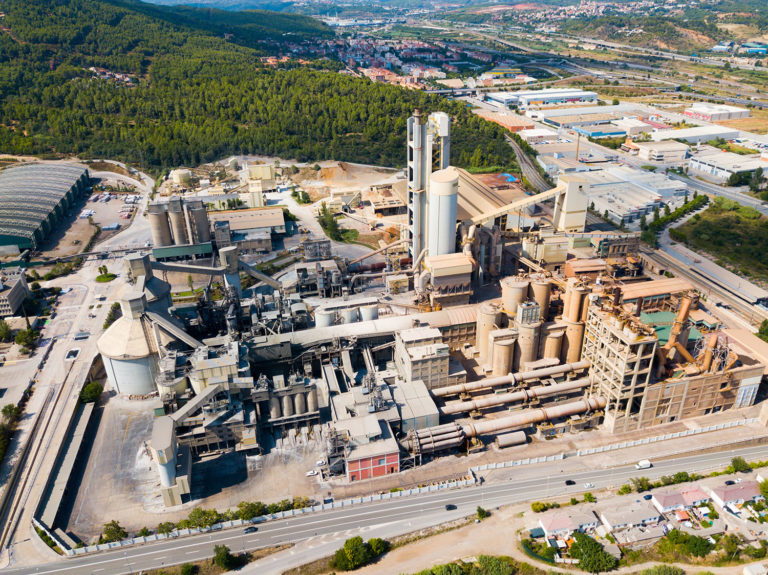
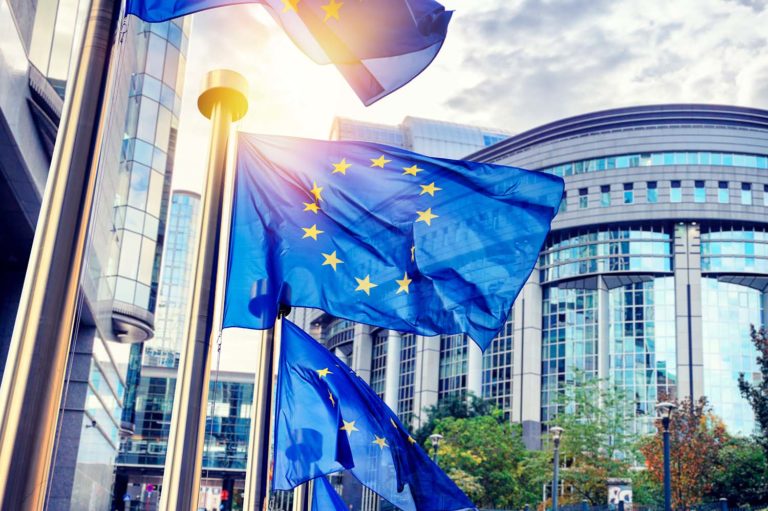
Brussels wants to secure the EU’s sovereignty by improving the autonomy, competitiveness and resilience of its industrial sector to reduce its dependence on other global players.
The EU’s industrial sector still accounts for more than 20 per cent of its economy, generates some 35 million jobs and is equivalent to 80 per cent of exported goods. Yet, it is in danger of lagging behind the world’s two major powers, China and the United States, which are promoting massive reindustrialisation processes.
The disruption of the raw materials and semiconductor supply value chains caused by the pandemic and the sanctions on Russia highlighted the need to reflect on how to promote reindustrialisation policies that guarantee the strategic autonomy of the 27 member states.
It was evident that the structural base in key sectors, such as dual-use high technology, energy supply, raw materials, rare earth and the defence industry, had to be strengthened while favouring the energy transition towards a new economic model less dependent on hydrocarbons.
Financing technological sovereignty and energy transition
In this context, the EU’s Next Generation funds were launched, a programme agreed as an economic response to the COVID-19 pandemic and endowed with 800 billion euros to finance the digital and ecological transitions.
However, much of the allocation of this funding has been hampered by bureaucracy. By December 2023, only around 30% of available grants and loans had been disbursed, according to EU figures. This disastrous management of the programme’s aid is making it difficult to transform the economic model that was intended to be changed.
Also in December, EU ministers agreed to increase the production of green technologies through the Zero Emissions Industry Regulation. The aim is to cover 40% of the EU’s needs in strategic technology products, such as solar photovoltaic panels or wind turbines, to be able to compete with China.
Likewise, the “Chips for Europe” initiative was launched to boost the continent’s technological sovereignty, ensuring that Europe meets its digital decade target of doubling its share of the global semiconductor market to 20%. A project that has been reinforced by state initiatives such as Spain’s PERTE or Germany’s subsidies of more than 22 billion euros to semiconductor manufacturers to set up production plants in its territory.
Sovereignty means acting as a sovereign entity
One point that European institutions cannot ignore is that ensuring industrial sovereignty must not only be based on the use of subsidies but also a change of mindset in the geopolitical sphere. Europe needs to impose its own foreign policy rather than acting as an entity subservient to US economic interests.
The economic sanctions imposed by the US on Russia, Iran and China in recent decades, but especially on Russia in the wake of the war in Ukraine, call into question the ‘cui bono’ behind the economic interests of the actors involved in these conflicts. These economic sanctions have greatly benefited the US and have had devastating consequences for the economies of EU member states.
The growing tensions between the United States and China are the prelude to a repetition of the geopolitical tug-of-war seen with Russia, which has led to war in Europe and has greatly damaged the European industrial sector. The European Union economic bloc has enough bargaining power to look after the interests of its industrial sector vis-à-vis the major global players, but this means facing up to an inescapable fact: the European Union will either act as a sovereign entity or it will cease to be.
11Onze is the community fintech of Catalonia. Open an account by downloading the app El Canut for Android or iOS and join the revolution!

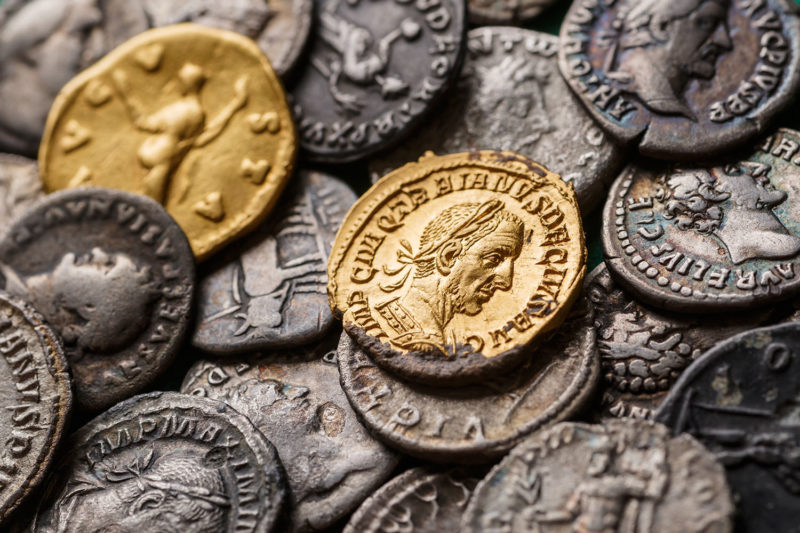
Countries outside the Western sphere are buying up large amounts of gold and establishing alternative monetary systems to the hegemony of the dollar. But is it possible to return to the gold standard? Xavi Viñolas, editor of 11Onze, briefly explains it.
The consequences of the sovereign debt bubble of the states and of runaway inflation that continues to rise could be disastrous for the global economy. States are printing huge amounts of money because of the crisis caused by the Covid-19 pandemic, and thus accumulating a public debt that can hardly be repaid without more taxes and cuts at the taxpayer’s expense.
This is a scenario that could lead us to consider the plausibility of returning to the gold standard, i.e. a monetary system in which the value of currencies is sustained by their convertibility to gold, and where states are limited in their ability to print money that cannot be substantiated with their gold reserves. A system that would also control much of the speculation found in the current monetary system, is often key to the creation of financial bubbles.
But is it really feasible to return to the gold standard? Have any countries tried it? And what alternatives to the established monetary system are emerging? To find out more, watch the video below.

Are we going back to the gold standard?
If you want to discover the best option to protect your savings, enter Preciosos 11Onze. We will help you buy at the best price the safe-haven asset par excellence: physical gold.

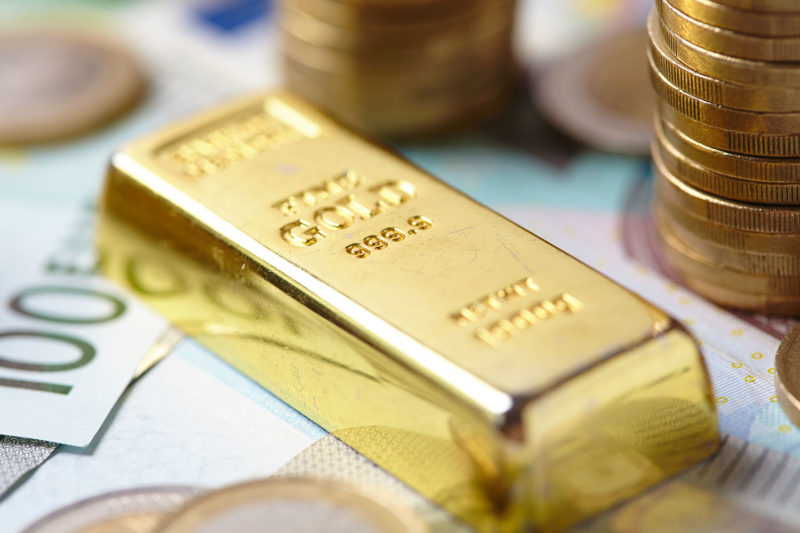
The upcoming BRICS summit in South Africa on 22 August could shake up the global financial structure with the unveiling of a roadmap for the creation of a new global currency backed by physical gold.
The Russian news agency RT reported that the Russian embassy in Kenya announced the initiative: “The BRICS plan to introduce a new gold-backed trading currency at the summit in August. The gold standard will greatly benefit the strengthening of the single currency”. He added that “41 countries have asked to join the BRICS”.
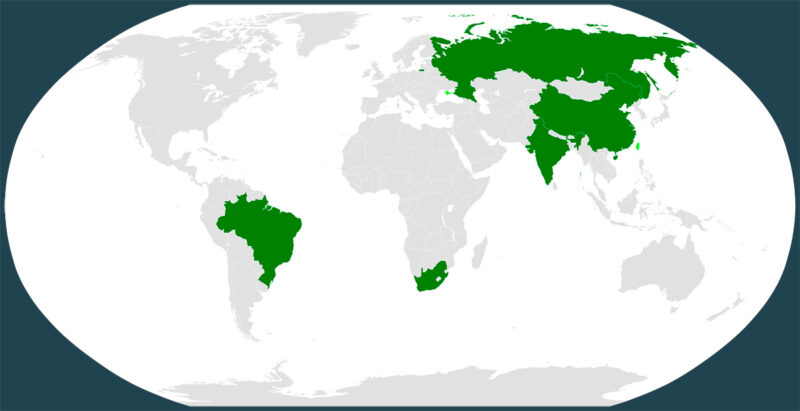
It is no secret that the five emerging states that make up the BRICS group (Brazil, Russia, India, China and South Africa) are working on the introduction of their own currency. Russia and China, the main drivers behind this idea, signed agreements decades ago to initiate de-dollarisation programmes to protect and shield their economies from US government and International Monetary Fund (IMF) sanctions.
It would be a digital currency based on the Chinese yuan, encrypted to enforce payments due between participating parties, but unlike cryptocurrencies, it would not be decentralised. Still, if the decision to adopt a new global currency linked to commodities, namely gold, is eventually confirmed, it could redefine the global financial structure and pose a significant threat to the dollar as the world’s reserve currency.
A feasible proposal in the long term?
South Africa’s Minister of International Relations and Cooperation, Naledi Pandor, stated that the BRICS want to “ensure that we do not fall victim to sanctions that have spillover effects on countries that are not involved in the issues that have given rise to these unilateral sanctions”, and that discussion of the feasibility of a common currency is on the horizon.
On the other hand, Leslie Maasdorp, vice president of the BRICS New Development Bank, warned that: “It will take a long time for currency movements to develop, so any discussion of alternative currencies is in fact a much more medium to long-term aspiration“, adding that although proposals are being considered, “right now there is no suggestion of creating a BRICS currency and the Chinese yuan is a long way from becoming a reserve currency”.
In this context, India has distanced itself from its partners in the group, announcing that it might not participate in the launch of a single currency. Subrahmanyam Jaishankar, foreign minister, told a press conference on Monday, 3 July 2023, that India has no plans to create a BRICS currency. Instead, India is focused on strengthening its national currency, the rupee, and strengthening the rupee will be the government’s top priority.
The geopolitical rivalry between China and India was foreshadowing potential tensions, especially when we consider that India sees China, led by Xi Jinping, as trying to become a global economic and military superpower and that the BRICS could be the springboard to achieve this goal.
One thing is clear, the summit to be held from 22-24 August in Cape Town will be noticed and will be watched with interest and concern by hegemonic Western actors opposed to the rebalancing and sharing of global power.
If you want to discover the best option to protect your savings, enter Preciosos 11Onze. We will help you buy at the best price the safe-haven asset par excellence: physical gold.


Banks that facilitate business in the defence and border control sector have increased their investments in the military-industrial complex.
This is the conclusion of a report published in March by the Delàs Centre for Peace Studies as a result of the Banca Armada campaign, which aims to inform and raise awareness in society so that it forces financial institutions to cut all ties with the defence and security industries.
It is an initiative financed by Barcelona City Council within the framework of the project “From armed banking to ethical banking, disarmament starts here”, which, in addition to the Delàs Centre, has involved the participation of several organisations working in the field of demilitarisation, ethical financing and the culture of peace, such as the Fundación de Finanzas Éticas, Coop57, and the Alternativa Antimilitarista Moc.
Specifically, the report looks at the actors facilitating the militarisation of countries around the Mediterranean and border control, which campaigners describe as ‘border warfare’. At the same time, it criticises the European Union for making its borders increasingly impenetrable to the flood of migrants, victimising them and violating their rights.
All the big banks are involved
In the international ranking of armed banking, practically no one is spared, including large institutional investors, financial institutions and insurance companies, most of them based in the United States. As for the European Union, entities such as Deutsche Bank, BNP Paribas Crédit Agricole and Barclays Bank stand out.
In this list we also find Banco Santander and BBVA with 4,985 and 4,752 million dollars, respectively, followed by the Sociedad Estatal de Participaciones Industriales (SEPI), a public entity, with 4,129 million, the only entities from the Spanish state that are in this world ranking.
With regard to the Valencian Community, banking entities such as the Bankia-CaixaBank group and Banco Sabadell stand out, with 182 and 95 million respectively. Specifically, between credits and loans, CaixaBank has invested up to 110 million euros in Boeing and Banco Sabadell 66 million in Airbus. Despite the fact that these aerospace companies only have a part of their turnover in the defence sector, especially Airbus with 82% dedicated to commercial aviation and 18% to the defence industry, the report also includes its subsidiaries and shareholdings in entities that do have a direct relationship with the arms industry.
Perhaps the most surprising aspect of this report is the presence of credit cooperatives such as Caixa d’Enginyers and Caja Rural, since they have investments in companies that contribute to border control through the manufacture of radars or technological consultancy for the Schengen border area. Faced with a totally globalised industrial sector, which monopolises all kinds of companies not only in the aerospace sector but also in other technological fields, it seems practically mission impossible to dissociate banking from the defence industry, two highly politicised sectors.
11Onze is the community fintech of Catalonia. Open an account by downloading the app El Canut for Android or iOS and join the revolution!


Most of us have assumed that our retirement pension will mean a significant reduction in our purchasing power, although there are still a few who are taking action. We offer you five financial tips to enjoy a decent retirement, which in no case involves taking out a pension plan.
The future of pensions is in the balance. The ageing of the population and longer life expectancy are undermining the precarious balance between income from contributions and pension payments. It is estimated that Social Security closed 2022 with a deficit of almost 5 billion euros. And the hole is getting bigger every day.
The outlook is so bleak that economist Javier Díaz-Giménez warned in October that to balance the system it would be necessary to halve pensions, double contributions and delay retirement to 74.
Lack of preparation
Despite the uncertainty about the future of pensions, a recent survey by the Organisation of Consumers and Users shows that seven out of ten people are not preparing for their retirement. And most of them assume that their income will decrease after retirement.
Two out of five do not do so because of material incapacity: either they do not have enough income to save (20%) or they have other expenses to prioritise (20%). Thirty-five per cent do not prepare for what could almost be considered “irresponsibility”, as they believe their pension will be sufficient, they consider themselves too young, or they are not concerned at all. And 19% claim ignorance, as they do not know how to prepare financially.
Tips for preserving purchasing power
With members of the latter group in mind, here are a few tips on how to improve our retirement:
- The earlier, the better. Those who think they are too young to worry about their retirement are wrong. Compound interest means that starting to save earlier makes a big difference to the amount available for retirement. If we invest the same amount each year and earn a return of 5%, starting at age 20 will allow us to retire with almost twice as much capital as if we start at age 30. Keep in mind that each year’s returns are added to the following year’s capital, so starting earlier multiplies the final results.
- Save as much as you can. The ideal amount depends on your means and your goals. As the OCU survey shows, there is a significant percentage of people who can hardly devote anything to their retirement. If this is not your case, a good starting point would be to invest between 10 and 15% of your income. If you can increase your contribution every year, so much the better.
- No pension funds or almost any investment funds. One study warns that the average yield of pension funds in the Spanish market between 2006 and 2021 (1.83%) was even lower than that of government bonds in the same period (4%). And something similar happened with investment funds, as their average return was 1.91%. The research shows that only 64 of the 562 mutual funds analysed outperformed government bonds.
- Diversify. When it comes to investing, it is always said that it is not good to put all your eggs in one basket. To balance return and risk, you should have a diversified portfolio, which can include stocks, bonds, real estate, gold and even crypto-assets. The idea is not to expose yourself to a single asset class that could collapse and volatilise your savings. And the percentages of each asset will depend on our age and the risk we are willing to take.
- The attractiveness of index funds. Within this diversified portfolio, index funds of the major international stock exchanges should play a special role. This option is simpler, safer and cheaper than playing the stock market, as index funds buy all the shares or bonds in a category or market so that our losses or gains are adjusted to their overall performance. It is worth thinking big because the average return of the IBEX-35 between 2006 and 2021 was 1.35% and that of the S&P500 was 10.7%.
According to the OCU survey, today only one in ten retirees has sources of income other than the public pension, mainly real estate rentals and pension plans. It is therefore not surprising that a good percentage of pensioners regret not having saved more for the future. Their regrets should serve as a warning.
If you want to discover the best option to protect your savings, enter Preciosos 11Onze. We will help you buy at the best price the safe-haven asset par excellence: physical gold.
If you liked this article, we recommend you read:



Over the next three decades, public debt in the United States and other major economies will soar. The need to print money to pay for it and a very limited improvement in productive capacity will make it difficult to keep inflation under control.
The US deficit in 2022 was much smaller than in 2020 and 2021 because of higher revenues and the reduction in the massive stimulus to counter the effects of the pandemic.
However, this figure is misleading. The US Congressional Budget Office forecasts that the annual federal deficit over the period 2022-2052 will average 7.3% of GDP, more than double the average of the past half-century, and will trend upwards year by year, reaching 11.1% of GDP in 2052.
This means that the US federal debt will rise from less than 40% of GDP in 2000 to more than 185% in 2052. The country’s debt-to-output ratio is expected to start skyrocketing in 2024 and surpass its all-time high in 2031, when it will reach 107%.
This huge increase in indebtedness is largely due to rising interest costs, which will more than quadruple over the period and reach 7.2% of GDP in 2052, according to estimates. As for the primary deficit, which excludes net interest outlays, it will almost double over the next 30 years, reaching almost 4 per cent in 2052.
Unintended consequences
This scenario could slow economic growth in the world’s leading power, increase the risk of a fiscal crisis and limit political room for manoeuvre in the face of future crises.
It also makes it difficult to contain inflation if we take into account that it will be increasingly difficult to increase productive capacity: low birth rates will make it increasingly difficult to replace retiring baby boomers, which could reduce the available labour force, while productivity growth tends to slow down.
If central banks in the United States and other economic powers are forced to multiply money printing to deal with public debt and the supply of goods and services on the market does not grow at the same rate, this imbalance will stimulate inflation. As the money in circulation increases more than the goods and services available, prices tend to rise.
Who is the one to bell the cat?
The only feasible measure to limit the debt ratio would be to restrict public spending, but it is difficult for any politician, regardless of political persuasion, to dare to propose such an unpopular measure. As a result, public spending and the resulting deficits, both in Europe and the United States, are likely to continue to rise unchecked for decades to come.
Instead of tackling the problem, politicians prefer to sweep it under the carpet. The next generation will find it.
If you want to discover the best option to protect your savings, enter Preciosos 11Onze. We will help you buy at the best price the safe-haven asset par excellence: physical gold.


The automation of work is creating an occupational metamorphosis, in which tasks usually done by humans are transferred to a set of technologies. Economics is not spared, and artificial intelligence is also gaining ground. But are economic forecasting algorithms a real alternative to economists?
As a result of the digitisation process of the last decades, huge amounts of data are being generated that are transforming the methods by which we analyse statistical models. Storing, registering, and analysing this constant flow of information has become an essential task for many sectors of the economy.
A technological revolution has opened up new possibilities in economic and financial forecasting capabilities. The analysis of these large databases, known as ‘big data’, would not be possible without artificial intelligence (AI). A rather broad term that encompasses a whole range of ideas.
Even so, there are two concepts in this field: machine learning (ML) and deep learning (DL), mathematical algorithms that allow computers to identify patterns in data and make predictions by imitating humans. Two computational advances that form the basis of economic forecasting with artificial intelligence.
An algorithmic crystal ball
Experts often compare algorithmic forecasting to “a crystal ball”. Indeed, this metaphor is the title of an internal study published by the International Monetary Fund (IMF), in which the authors of the research, Jin-Kyu Jung, Manasa Patnam and Anna Ter-Martirosyan, try to establish whether macroeconomic forecasting algorithms can improve on the results predicted by IMF economists themselves.
The study applies three different machine learning algorithms to a common economic forecasting problem, and the results are surprising. In all three cases, the algorithmic prediction far surpassed the benchmark performance of IMF economists.
In their observations, the authors warn that there are still factors that require further research. They also state that, for these predictions to be truly effective, real-time observations would have to be included. They explain that there is some freedom in the introduction of the parameters used by the algorithms, and that this may be key to determining their effectiveness.
Even so, in their conclusion they agree on the fact that the potential of machine learning in terms of statistical analysis of economic data is evident; and that, although these predictions made by algorithms cannot fully replace the work of economists, they represent a valuable additional reference when making decisions on economic forecasting.
11Onze is the community fintech of Catalonia. Open an account by downloading the super app El Canut for Android or iOS and join the revolution!


Els Balcans Occidentals, una regió situada al sud-est d’Europa, s’ha convertit en un objectiu estratègic per a la Xina en termes d’inversions i influència. El gegant asiàtic ha aprofitat el buit deixat per la Unió Europea després d’anys d’infructuoses negociacions sobre el lent procés d’adhesió amb els països de la península.
Durant les dues últimes dècades, la Xina ha tret partit de l’espectacular creixement de la seva economia incrementant la seva influència arreu del món a través del comerç i inversions. Beijing, amb el seu enfocament en vincular altres països a la Iniciativa del Cinturó i Ruta de la Seda, inverteix el seu capital ajudant a aixecar les economies regionals de parts del món oblidades per Occident a canvi de recursos naturals i accés als seus mercats.
Aquesta expansió de llaços comercials s’ha concentrat principalment en el continent africà, impulsant un nou model de desenvolupament econòmic més benevolent que l’alternativa neoliberal dels poders colonials occidentals. Tanmateix, l’ascendent abast global del gegant asiàtic també és palpable al continent europeu, especialment dins del grup de països dels Balcans Occidentals que no formen part de la UE: Albània, Bòsnia i Hercegovina, Kosovo, Macedònia del Nord, Montenegro i Sèrbia.
La península dels Balcans Occidentals és una regió rica en recursos naturals i un element cabdal per al desenvolupament del projecte xinès amb la finalitat de facilitar les seves exportacions a Europa. Això no obstant, una gran part d’aquests països tenen unes infraestructures poc desenvolupades i malmeses després d’anys de conflictes militars, inestabilitat política i manca d’inversió. Concretament, les guerres iugoslaves durant la dècada dels 90 i posteriors crisis polítiques van ser la principal causa de la fragmentació del mercat balcànic i de la destrucció i subseqüent abandó de la seva infraestructura.
És per això que hi ha un gran potencial de desenvolupament econòmic en l’antany espai d’influència soviètica, que la Xina ha suplantat mentre la UE es mirava el melic. Aquesta presència cada vegada més evident del gegant asiàtic ha generat algunes reaccions divergents entre els països de la regió, i preocupa especialment als Estats Units i la Unió Europea, que veuen minvat el seu poder de persuasió a l’hora de dictar les aliances geoestratègiques i comercials d’aquests estats.
Un Pla Marshall a l’estil xinès
A partir de la crisi econòmica global del 2008, que també s’abatia sobre els Balcans, la Xina va veure la regió com un lloc ideal per a oferir les seves inversions, préstecs i exportació de productes. Una dècada després, 136 projectes activats per un valor de 32.000 milions d’euros en els sectors energètics, metal·lúrgics, de la mineria, dels transports i infraestructures s’han fet realitat.
Des dels 61 plans d’inversió aprovats per infraestructures crítiques i construcció de fàbriques a Sèrbia fins als 30 projectes actius en el sector de l’energia a Bòsnia i Hercegovina, els estats més pobres del continent europeu rebien amb les mans obertes al país asiàtic. A la vegada que la Xina els feia donacions de material sanitari i vacunes durant la pandèmia mentre es queixaven de la falta de solidaritat de la Unió Europea que els donava l’esquena.
És veritat que atès que molts d’aquests projectes s’implementen en països amb una situació macroeconòmica precària, un limitat accés a finançament i una situació política relativament inestable, no tenen gaires opcions de trobar altres fonts d’inversió. Encara que aquesta situació pot canviar en un futur, el soci asiàtic ha establert les bases d’una cooperació que difícilment s’esvairan quan millori l’estabilitat econòmica-política d’aquests estats.
El cost ocult de les inversions
Els beneficis d’aquesta expansió dels llaços comercials entre els dos continents són evidents. Les inversions xineses han ajudat a millorar la infraestructura i han creat llocs de treball als Balcans, contribuint al desenvolupament econòmic i a la reducció de la pobresa. A més, s’han establert acords de cooperació en àmbits com la cultura, l’educació i la sanitat, fomentant una major interdependència i reforçant les relacions econòmiques i diplomàtiques entre les dues parts.
No obstant això, també hi ha una contrapartida menys positiva que de vegades acompanya a les inversions xineses. Alguns d’aquests projectes han estat subjectes de denúncies i protestes per l’explotació laboral i danys mediambientals facilitats per una legislació laxa i una corrupció governamental endèmica. Un bon exemple d’aquestes males pràctiques va tenir lloc durant la construcció de la planta de pneumàtics de Linglong a Zrenjanin (Sèrbia) amb migrants portats de Vietnam que, segons va denunciar l’Associació Ciutadana Zrenjanin Acció, treballaven i convivien en condicions infrahumanes.
De la mateixa manera, una de les principals crítiques és la manca de transparència dels projectes d’inversió i de les possibles conseqüències de no poder fer front als préstecs multimilionaris que sovint els fan viables. El temps dirà si la Xina seguirà el mateix camí que els poders occidentals amb el Fons Monetari Internacional, generant deutes insostenibles per als països receptors de les seves ‘ajudes’ que comporten una pèrdua de sobirania i la venda dels seus béns i recursos a preus de saldo.
Deixats de la mà de la Unió Europea
Lluny queda la cimera UE-Balcans occidentals Salònica del 21 de juny de 2003, on es promovia el missatge que els Balcans podrien ser membres de la Unió Europea en 10 o 15 anys. Es volia vendre la idea d’una integració europea que més tard va passar a segon pla a causa de la crisi financera del final de la dècada, després per culpa del Brexit i més tard pels resultats electorals als Estats Units i el conflicte a Ucraïna.
Si bé és cert que la UE ha seguit creixent en diversos processos d’adhesió de nous estats membres de l’Europa Central i Occidental, els països dels Balcans Occidentals segueixen a la cua, estancats en negociacions que semblen no avançar 20 anys després de les promeses. Això ha fet perdre credibilitat a la Unió Europea i ha provocat que grans sectors de la població d’aquesta regió, anteriorment molt proeuropeus, avui se sentin traïts per la UE.
Les darreres cimeres europees de caràcter majoritàriament simbòlic i la posada en marxa d’una tímida alternativa europea a la nova Ruta de la Seda, per a ajudar als països en vies de desenvolupament a canvi d’una intensificació dels llaços comercials amb la UE i un refredament de les seves relacions econòmiques amb la Xina i Rússia, és poc probable que canviïn la percepció que tenen els Balcans Occidentals d’una Unió Europea que ja fa anys que ni hi és ni se l’espera.
Si vols descobrir la millor opció per protegir els teus estalvis, entra a Preciosos 11Onze. T’ajudarem a comprar al millor preu el valor refugi per excel·lència: l’or físic.