The emergence of extractive capitalism
The adoption of a new economic logic at the beginning of the 19th century allowed the English and Dutch to acquire a dominant position over the rest of the European economies, and by extension, over the rest of the world’s economies. This prompted the old European monarchies – Castile, Portugal, France, Austria, Prussia and Russia – to seek ways of embracing this modern socio-economic vision in order to eradicate their endemic poverty, but unlike the former, it forced them to undergo tumultuous processes of adaptability to the new economic system.
Oriol Garcia Farré, historian and 11Onze agent
At the beginning of the 17th century, the first colonial empires with deeply Catholic roots – such as Castile and Portugal – were structurally bleeding to death as a result of decades of fierce fighting against the Protestant and Turkish world, which was causing them significant losses of economic resources and a growing territorial delegitimisation. The repression exercised by the Catholic Castilian fundamentalists – led by their king – against the Dutch Calvinist world, far from definitively subjugating those territories, had the opposite effect, as it brought to the surface a survival instinct that has been widely studied by the Social Sciences.
At the root of the conflict was the Dutch refusal to contribute financially to the Hispanic imperial cause, which sought to universalise Catholic culture. For more than eighty years, imperial encounters sought to break the Dutch protective ring that had been built up to counter the pressure exerted by the famous Flanders “tercios”. This line of defence consisted of forty-three towns and fifty-five fortifications. Forced to live within this territorial microcosm, Dutch survival – as people – required rationalisation and systematisation of public and private initiatives.
First and foremost, Amsterdam was to become the epicentre of power for the seventeen United Provinces. From there, they would promote the creation of a free and open market that would be able to satisfy the needs – in that context of permanent war – of all the cities of the Dutch territory. Thus, it would encourage the diversification of agriculture as a basis for future specialisation and division of labour, foster technological innovation to improve agricultural production, promote fairs and markets to encourage the exchange of goods and services, expand internal trade networks and seek external trade routes through the development of a powerful shipbuilding industry, and guarantee the right to private ownership of the means of production. But above all, the government of the federation of the United Provinces would enforce all commercial contracts and ensure full freedom of movement of both people and goods through the creation of a Dutch standing army.
Therefore, this whole level of organisation resulting from the conjunction of the public and private spheres would be designed to meet the needs of the population in the face of Catholic pressure, which would lead to a significant increase in public spending. To reduce it, a financing mechanism would be developed consisting of issuing long-term public debt securities, which would be traded on the recently created Amsterdam stock exchange.

Forced to live within that territorial microcosm, Dutch survival – as people – demanded rationalisation and systematisation of public and private initiatives.
And Descartes came to the rescue!
A transcendental event was the contribution of the philosopher René Descartes to the mentality of Northern European society. Through his treatise “Man” he will argue that humans are divided into two distinct components: an immaterial mind and a material body, the latter understood as a perfect machine. In this way, he will succeed in separating the mind from the body and establish a hierarchical relationship between the two. Therefore, as the seigniorial classes dominate nature and seek to control it for productive purposes, the mind will have to dominate the body for the same purpose.
This view will be exploited by Calvinists to model the “good Christian” as one who controls his body, his passions and his desires and thus ends up self-imposing a regular and productive order. Therefore, any inclination towards joy, play, spontaneity or the pleasures of bodily experience will be considered potentially immoral.
All these ideas will be fused into a new explicit value system: idleness is a sin and productivity is a virtue. Within Calvinist theology, profit will become a symbol of moral success. It will be the test of salvation. To maximise profit, people will be encouraged to organise their lives around productivity and those who fall behind – during the race for productivity or fall into poverty – will be branded with the stigma of sin. This new ethic of discipline and self-mastery will become central to the culture of capitalism.
The creation of new monopolies
Until then, commercial expeditions had operated on the basis of small fleets created and controlled expressly by the monarchies. Most of the time, the company was set up for a single commercial voyage and, on its return, the small fleet was liquidated so as not to bear the costs of maintenance. Investment in such ventures was therefore extremely costly and high risk, not only because of the usual dangers of piracy, disease and shipwrecks but also because of the conditions of the spice market, where inelastic demand – insensitive to price changes – and relatively elastic supply – price changes increasing supply – could cause prices to fall at just the wrong time and ruin the venture’s prospects of profitability.
Thus, if the commercial expedition was successful, it has been calculated that the return was close to 400% of the initial investment, allowing the Crown to boost its economy. On the other hand, if it was a failure, it was the Crown itself who assumed the losses and, consequently, it was the population who ended up paying the debt through higher taxes and lower salaries, since the Monarchy managed the violence.
But in the early 17th century, through the formalisation of stable agreements – known as cartels – the respective governments of England and Holland obtained charters granted to private initiatives in the spice sector to trade with the East Indies. With the creation of the British East India Company and the Dutch East India Company, entrepreneurial mechanisms were put in place to control supply and minimise risk in the global spice trade.
The novelty arose in the founding process of both companies when they came up against the problem of financing. Given the size and high costs involved, the founders of the companies were unable to finance the entire cost of the project, which made it necessary to obtain financing by selling part of their securities to merchants and small savers, to whom they granted them a share of the companies’ future profits in exchange.
The stock exchange becomes the key to the new system
Thus, both the British East India Company and the Dutch East India Company would be the first shareholder-owned companies to be listed on the London and Amsterdam stock exchanges respectively. From then on, any English company seeking finance would be able to trade in its own securities. In less than a hundred years, more than a hundred English companies will be trading their own securities on the London Stock Exchange. For their part, any resident within the United Provinces would have the possibility to register in writing – in any of the 17 Dutch Chambers – the amount of money they wanted to invest on the stock exchange. At the beginning of the 19th century, both companies will distribute annual dividends of 40% to all shareholders and will be the first companies to publish their profits annually.
Supported by the methodical rationality of the Protestant world, both the English and the Dutch managed to give commercial continuity to those companies, which eventually became true multinationals for almost three hundred years, thanks to the use of the stock exchange as a mechanism to finance future commercial expansions. Therefore, the new economic system will be more dynamically and efficiently self-regulating, unlike the old centralised system, which still remains today. Within a few years, the new financial mechanisms and continuous private initiatives will break up the old commercial monopolies controlled by the first colonial empires, which had been self-legitimised by the right of conquest through the Treaties of Tordesillas, Zaragoza and Cateau-Cambrésis.
The two companies will be structured as a modern vertically integrated global supply chain corporation divided by a conglomerate of companies that will allow them to diversify into multiple commercial and industrial activities, such as international trade, shipbuilding and the production and marketing of spices. The companies would become so large in the early 19th century that they would gain quasi-governmental powers over their colonies, such as the ability to wage war, imprison and execute convicts, negotiate treaties, issue currency, have their own flag and conquer new territories. The most extreme case was the British East India Company, which ruled India until its dissolution in the late 19th century when it passed directly into the hands of the British Crown.
Therefore, we would never be able to understand the English industrial revolution of the late 18th century if we untied it from the financial revolution that began in the early 17th century. As England was able to obtain more raw materials and more markets, it would be forced to mechanise all its production processes in order to satisfy the growing world demand. By the middle of the 19th century, it would control 30% of world markets, although this would change at the end of the century when new competitors appeared.
We would never be able to understand the English industrial revolution at the end of the 18th century if we untied it from the financial revolution that began at the beginning of the 17th century.
A system to satisfy social welfare
Unlike mercantilism, capitalism will decide not to consume all its goods, since it will organise itself rationally and methodically for the sole purpose of producing, accumulating and investing its goods in order to produce more and more. In this sense, capital investment decisions will be determined by profit expectations, whereby the profitability of invested capital will play a fundamental role in any economic activity.
The enlightened scholars defended capitalism as the only economic system capable of generating sufficient wealth to satisfy social welfare, which could only be maintained on the condition that it generated continuous economic growth in the production of goods and services. Thus, meeting this crucial social need will only be possible if there is a progressive specialisation in work or if new skills are acquired by individuals, companies, territories or countries. But it will also be necessary to maintain unchanged and without interference, the existence of free competition – based on the law of supply and demand – which will require a willingness to do so without coercion or fraud on the part of the participants in commercial transactions.
This innovative economic system will imply a new way of doing things based on the existence of three key axioms: the accumulation of capital as a source of economic development, strong privatisation of the means of production and the obligation to make constant profits. Therefore, the theoreticians of capitalism will be aware that the maintenance of the new economic system will force the systematic search for new markets and the creation of new and increasingly aggressive consumer dependencies between individuals, companies, territories or countries all over the world.
The maintenance of the new economic system will force the systematic search for new markets and the creation of new and increasingly aggressive consumer dependencies between individuals, companies, territories or countries all over the world.
The perversity of the system
Within the system itself lies a hidden self-destruction trigger that is activated when goods start rising in price, driven by the idea that their value can never fall. There are few areas of human activity where historical memory counts for as little as in the field of finance.
Financial crises and bubbles have been repeating themselves – in a more or less cyclical fashion – since 6 February 1637, when investment in tulip bulbs in Holland inflated prices to the point where a bulb could be worth as much as a house, or when in 1720 the English state fraudulently altered the real value of the South Sea Company’s shares in order to place debt, which would end up triggering a crisis of biblical proportions in its economy.
It may be tulips, shares in public companies, the debt of a growing country, investments in railways, dot-com stocks or complex financial assets, but in the end, there will always be a trigger: a war, a bankruptcy, a rumour or simply someone smarter who will cause a few to go ahead and sell the securities, and behind them the rest will try and fail to do so. This is what we now call “financial bubble bursts”. In credit contracts, the flow of money comes to a standstill, and what was once worth a lot is now worth nothing. The crisis begins. Bigger and bigger, more expansive and much more contagious.
11Onze is the community fintech of Catalonia. Open an account by downloading the super app El Canut for Android or iOS and join the revolution!

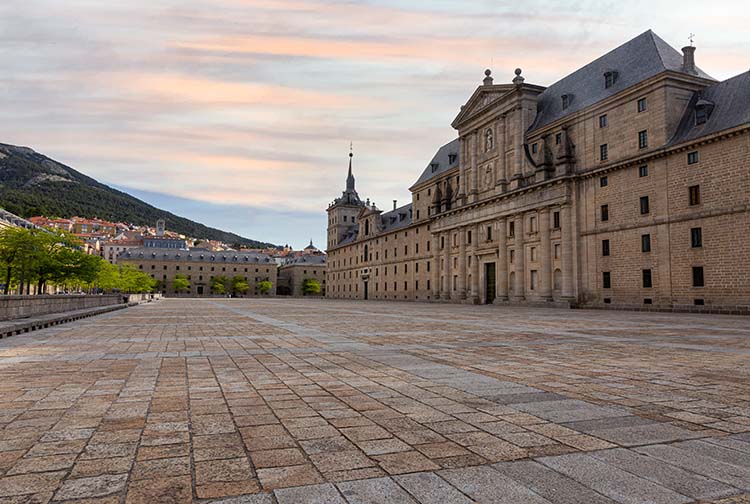

The political map of Europe at the end of the 15th century was shaped after the many conflictive social, political and economic events of the previous century and with a population reduced to less than 50% due to the Black Death. The new political landscape that emerged from this process showed a great variety of institutional forms of power. Alongside the two legacies of the Christian Lower Empire – the Holy Roman Empire and the Papacy – the feudal monarchies that emerged from this structural impasse greatly strengthened, which legitimised them to govern differently and led them to construct a new concept of the State.
In order to sustain this new conception of the State, the European monarchies sought the basic mechanisms that would enable them to consolidate new state structures with a markedly centralising and unipersonal character. For this reason, they first fought energetically against all those powerful families – the Armagnacs, Lancastrians, Braganzas, Mèdicis and Palomas – who had the capacity to dispute their decisions. The fight would not always be through the use of violence, but plots were created to delegitimise them or a tight matrimonial policy of territorial anthropophagy would be applied to them in order to extend state property permanently, without the need for bloodshed.
The new political conception would lead to a clear cornering of the most representative organs of the citizenry – such as the Cortes, the Estados Generales or the Dietas – which would be replaced by a powerful and much more specialised council of the king. In this way, the State would multiply its presence in the territory through the creation of a powerful administrative network linked to the different activities of the new management system. Soon, the civil service would appear, with a life tenure at the end of the century, which would allow a segment of the population to become rich beyond limits simply by working in proximity to power.
Up to this point, the monarchies had been financed by their own resources through ordinary rents linked to manorial rights or the profits produced by their possessions, whether from the exploitation of forests, the stamping of coins or the slave trade. But this was no longer enough.
“The new political conception would lead to a clear cornering of the most representative organs of the citizenry – such as the Cortes, the Estados Generales or the Dietas – which would be replaced by a powerful and much more specialised council of the king.”
An economic paradigm shift
The European monarchies would assuage their ambition by imposing a three-pronged strategy: firstly, they made the supplies of the feudal system regular and plentiful, which lead to the appearance of an infinite number of extraordinary financing funds for people and goods, such as taxes on trade, the famous tax on salt, or taxes on houses, fires, and so on; Secondly, they created the need for consumption, such as new eating habits or the introduction of fashion in the need to dress; and thirdly, they freed themselves from the usual need to ask for the consent of their subjects, who – were still represented in institutional bodies – coming up against the argument that “in peacetime, this request was completely unnecessary”. But the key and fundamental element that would allow all this new machinery to work perfectly would be the creation of a standing army, aimed at domestic control – between threats and persuasion – and projecting the monarch’s power outwards.
Gold would continue to be the main problem for the European economy, since it would still be absolutely necessary for trade. Since ancient times, the East-West relationship had gone through an infinite number of ups and downs, but its balance of trade had always been in deficit – with respect to gold – as the Asian continent was poor in deposits of precious metal. The only gold that reached Europe with any regularity – since the 10th century – was Sudanese gold, but this would never satisfy the needs of the feudal economy.
“The key and fundamental element that would allow all this new machinery to work perfectly would be the creation of a standing army, aimed at domestic control – between threats and persuasion – and projecting the monarch’s power outwards.”
The study and appreciation of the Greco-Latin classics
The atmosphere of strong economic dynamism pervaded the whole of this period, forcing the European monarchies to seek new fields of action and new sources of profit to maintain the new and very costly state structures. Europe was too small a space to satisfy the ‘grandeur’ of the nascent modern states, but above all, it showed a shortage of raw materials. It was then that the real desire to get closer to the sources of African gold or oriental spices would appear.
The worldview of medieval society was conditioned by religion, imaginary legends and geographical ignorance, but this changed radically from the Quattrocento onwards with the recovery of Greek manuscripts ignored by the Church – which controlled culture – as they were considered pagan texts. With the introduction of the basic rules of correct Latin translation – promoted by Petrarch and Boccaccio – these manuscripts were correctly transcribed and took on a new meaning. The rereading of numerous classical texts – such as Euclid, Pythagoras, Ptolemy, Eratosthenes and many others – made it possible to construct new critical thinking that would lead humanist scholars to want to verify how much wisdom the ancient texts contained about the world.
This humanism would favour a definitive break with medieval tradition and would exalt the qualities proper to human nature. It would allow the discovery of the human self and give a rational meaning to its existence. This anthropocentrism would free the human being from metaphysical wonder and place him before the gates of empirical curiosity. The dissemination of this innovative thinking was made possible by the invention of the movable type printing press. But this mental change would also enable a small group of people – settled in both Sagres and Nuremberg – to begin to experiment and apply modern scientific methods based on mathematics and astronomy, which would alter the universal worldview.
“The worldview of medieval society was conditioned by religion, imaginary legends and geographical ignorance, but this changed radically from the Quattrocento onwards with the recovery of Greek manuscripts ignored by the Church – which controlled culture – as they were considered pagan texts.”
Colonial conquest and exploitation
Ambitious businessmen set out in search of maritime routes that would lead them to new territories where they could find abundant products to satisfy the growing demand of European markets. And in this context, the State would favour this expansive economy by participating – indirectly – in the commercial adventures of these daring entrepreneurs, who would boast a great deal of audacity but little Atlantic experience.
Chance and the trade winds led the first navigators to the most populated area of the American continent. The territory of the “New World” – both north and south combined – is 42.5 million km². Before the arrival of Europeans, an estimated 100 million people lived on the entire continent, as opposed to the 1 billion who live there today. Of these, some 80 million people lived in the strip between Mexico and Peru. On the other hand, in the gradual southward descent of the African continent, Europeans discovered that the Muslim world had penetrated much further than they thought. Beyond the equator, they entered a totally unknown world and discovered black Africa. With an area of 32 million km², current estimates speak of some 60 million people who could be living on the entire African continent by the end of the 15th century.
From the very beginning of the westward voyages, the first navigators were certain and aware that where they had arrived was not the East Indies, but a completely different territory. And in embellishing this fact, the state deployed all its modern legal and administrative machinery to possess it legitimately. Without entrusting themselves to anyone and by the right of conquest, the European monarchies began to claim ownership of those territories while ignoring the indigenous population. At this point, religion played a key role in justifying the destruction, annihilation and extermination of the ancestral cultures that lived harmoniously. A similar path would be followed on the African continent, although this process would begin some one hundred years later.
As the newcomers – already in the name of the Crown – moved into these new territories, they would discover that precious metals were not the only source of wealth. In less than fifty years, European markets would be supplied, in quantities unthinkable until then, with countless tropical products such as pepper, sugar, cotton and tobacco. The Atlantic coast would see the growth of a major port network stretching from Cádiz to Antwerp and would form the backbone of a new economic area. And then, the Crown would define itself as an Empire, always, with a shining sun!
11Onze is the community fintech of Catalonia. Open an account by downloading the super app El Canut for Android or iOS and join the revolution!
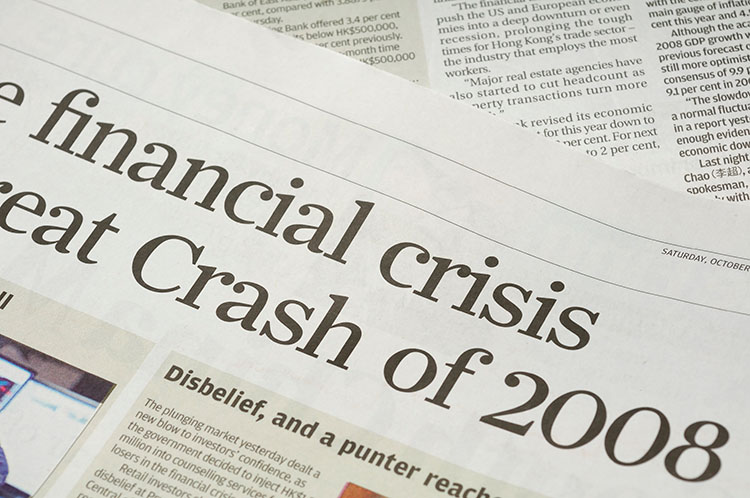

For the first time, we are entering a rocky path where many plans are mixed up. Historical objectivity – based on documentary rigour – has been abducted by a clearly intentional narrative that has sought to justify anything that would serve to construct universality. Doubting the official narrative surrounding the “Discovery of America” – where the Hispanic matrix is based – has forced countless historians to work outside the academy, with no other resource than their wit and intelligence.
The raw material on which history is based is documentary sources. Chronicles, cartularies, wills, contracts, dispositions, novels, chants, archaeological remains or ‘Lebenswelt’, are a specific type of documentary that each historian uses to understand and explain the past, which – filtered through his or her mental framework – will end up shaping a specific perception of that reality.
It is for this reason that, during the creation of knowledge, one will engage in passionate, constructive and sterile debates. Discrediting one’s adversary with personal attacks is a symptom of dialectical incapacity. Therefore, anything outside empirical rigour evokes us into the world of fiction or coffee shop talk. But what happens when a documentary source is shown to have been altered, tampered with or burned?
The capitulations of Santa Fe
Established in the camp of Santa Fe of Granada, the recent victors of the war of Granada, better-known as Catholic Monarchs – a title granted by Pope Alexander VI in 1496 – signed capitulations or agreements with Christopher Columbus on 30 April 1492 to carry out a major ultra-oceanic venture.
The agreements signed – known as the Capitulations of Santa Fe – would set the legal framework that would underpin the entire discovery of America, but they would also be the origin of future disputes between the Crown and the Columbus family. They will also clarify the granting of the titles of admiral, viceroy and governor-general of all the territories discovered and all the benefits derived from this enterprise.
The capitulations will acquire capital legal importance for Columbus and his descendants, and for this reason, he will never part with them during his lifetime. There is no record of the existence of this original until 1526 when it appears for the last time among the documents kept in the Columbus Archive in the Carthusian monastery of Santa María de las Cuevas (Seville). Unfortunately, this original has never reached us.
At the same time that the original of the capitulations was released to Columbus, a copy of the original was entered in the corresponding Book-Register of legal dispositions of the Royal Catalan-Aragonese Chancery in Barcelona. This entry is recorded in book 3,569, folios 135 and 136, in the ‘Diversorum sigilli secreti’ section, dated the same day of its issue, i.e. 17 April 1492. But just as the Catalan register is patented, no similar record has been found to date in any Castilian register. And it is well known that the systematic investigations carried out for centuries in the main Castilian archives -Simancas, Indias or Duque de Veragua- have so far been unsuccessful.
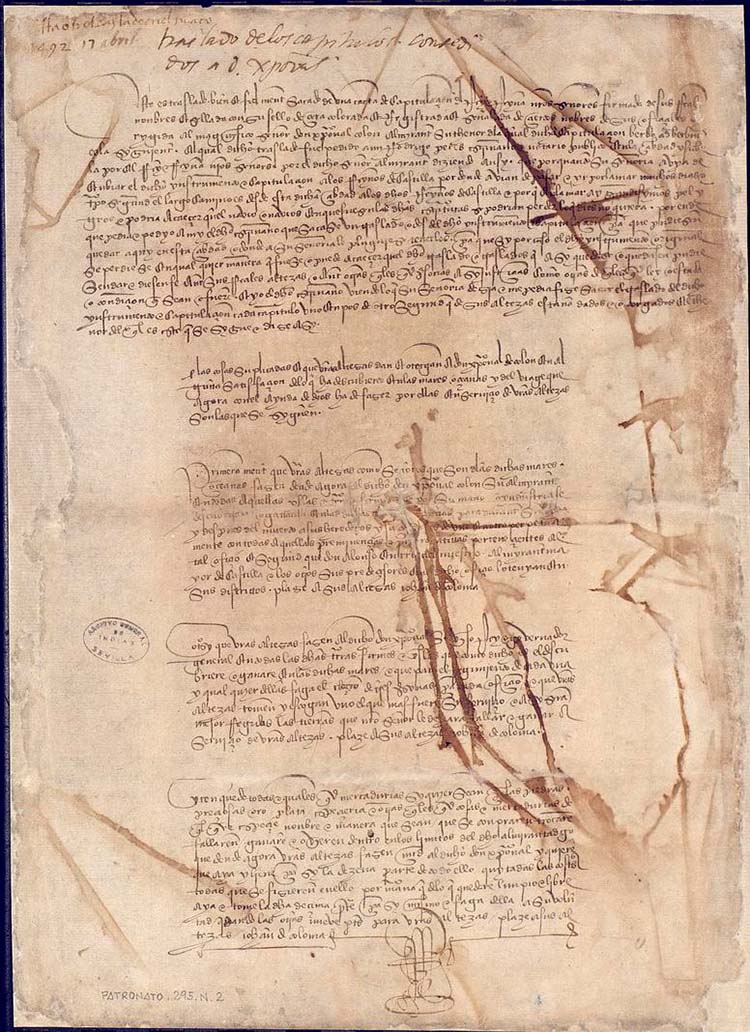
Original document of The capitulations of Santa Fe (ACA)
The legal construction of the maritime enterprise
Legislative power in the Crown of Aragon did not belong exclusively to the monarch but had to be developed together with the three estates: nobility, clergy and cities and towns. If the initiative came from the monarch, the constitution was born, while if it came from the estates of the courts, the court chapter was born.
From 1363, there is evidence of this legal practice when it came to the pairing of armies by the king with the deputies of the different estates of the Catalan-Aragonese Crown. It is for this reason that King Ferdinand signed the capitulations with Columbus, which is why one of the agreements states “perquè sia feta Armada en la Senyora del Senyor Rey, de Galées”. Therefore, neither in the legal sources of contemporary Castilian law nor in those of Indian law itself, will we find norms through which the legal concepts that appear in detail in the capitulations can be established.
The capitulations were negotiated and prepared in Barcelona by a committee formed by Joan de Coloma – representative of the Catalan Chancellery and the king’s personal secretary – and Joan Peres – Columbus’ representative – who was a prominent doctor of medicine and renowned cosmographer and owner of the castle of Sant Miquel, on the outskirts of Pals d’Empordà. And it was from the old port of this Empordà town, which no longer exists, that the ultra-oceanic expedition set sail.
When the two parties reached the agreement – on 17 April 1492 – the capitulations were immediately sent to the camp at Santa Fe de Granada – where the Catholic monarchs were staying – for official ratification (on 30 April 1492) and were subsequently handed over to Christopher Columbus. Finally, at the beginning of 1493, the Cortes Generales held in Barcelona ratified the agreement. All this justifies why these ‘Capitulations’ were kept only in the Archive of the Crown of Aragon: because that is where the documents of the magistracy concerned were recorded and archived.
“Neither in the legal sources of contemporary Castilian law nor in those of Indian law itself, will we find norms by means of which the legal concepts that appear in detail in the capitulations can be established”.
The financing of the maritime enterprise
All the surviving texts show very clearly that the money for the ultra-oceanic venture was advanced – to a large extent – by a Valencian settled in Barcelona, Lluís de Santàngel, who was the scribe of rations for the Catalan Chancellery, which often performed fiscal functions. The company was also financed by other illustrious figures such as Gabriel Sanxis – general treasurer of the Crown of Aragon -, Joan Cabrero – King Ferdinand’s waiter – and Alfons de la Cavalleria, royal adviser. It so happens that all these illustrious figures had had commercial links with the Columbus family in Barcelona for decades.
All the documents referring to the royal payments for the ultra-oceanic enterprise, count the figures in ducats, which was the Catalan currency. However, this currency was not used in Castile until 1497, when, after strong opposition from the Castilian municipalities for considering it a foreign currency, it was imposed by the monarchs.
It should be borne in mind that the structures of the two states, Aragon and Castile, always remained separate, despite the creation of bodies common to both crowns, such as the Inquisition. Therefore, each crown had its treasury, with its treasurer, its scribes and its royal archives. Consequently, if we apply the scientific method to find out who paid for the enterprise of discovery, we only have to go through the account books of both treasuries. Unfortunately, it is impossible to review the account book of the Catalan treasury, as it has disappeared. On the other hand, other contemporary Catalan sources say that thousands of ducats were being allocated to pay for ships and crews throughout that period.
But what happens when we look at the account book of the Castilian general treasury? By the way, it is public and in a modern edition! Well, there is no record of any money being spent on any maritime expedition during the nineties of the 15th century. There is no document that speaks of money referring to ships, pilots, crews or expeditions of any kind.
“Unfortunately, it is impossible to review the account book of the Catalan treasury, as it has disappeared. On the other hand, other contemporary Catalan sources speak of thousands of ducats being allocated to pay for ships and crews throughout that period.”
The triumph of the maritime enterprise
Christopher Columbus was received with full honours by the Catholic monarchs at the Royal Palace in Barcelona on 3 April 1493, after completing the first transoceanic voyage. Contemporary chronicles explain that the audience was very well received, and attracted many curious onlookers from all over the world.
Columbus had succeeded in finding the lost continent spoken of in countless ancient texts: the lands on the other side of the Atlantic “which since the sinking of Atlantis had been cut off”. And as proof of this discovery – of this “New World” – he presented the indigenous people, animals, metals and plants that they had brought back to the kings and to the highest authorities of the kingdom. Reliable proof that they came from lands hitherto unknown.
In fact, in the Capitulations of Santa Fe, it is written that the company undertook to discover territories “which are in the direction of the Indies”. Since at that time there was no geographical reference to illustrate an expedition that aimed to go to the other side of the Atlantic, the geographical reference of the Indies and China of the Great Khan was used. Both cases are extensively described in Marco Polo’s Travels at the end of the 13th century.
As the official documents of the first Columbus voyages state, the toponyms used to designate the “new places” were: Florida, l’illa Montserrat, the region of Valençuela, l’illa Margalida and la Jamaïca. It was after the expulsion of Columbus from all his American possessions and the change in the Crown’s policy in the mid-16th century that Castilian place names began to appear.
Disputes following the discovery of the maritime enterprise
When Columbus returned from his first voyage, the kings confirmed all the powers stipulated in the Capitulations de Santa Fe. But on returning from the second expedition, the monarchy realised that the lands discovered were not four lost islands, but were actually the mainland. This perception caused the monarchy to reconsider the powers granted to Columbus.
The legal problem the monarchy encountered was serious: they were aware that they had accepted and signed capitulations, which allowed the birth of a new dynasty installed in a New World and where Columbus would become viceroy for life, as well as being a hereditary title!
Aware of this problem and in the absence of the person concerned – since he was on an expedition – King Ferdinand changed the rules of the game. The viceregal reform of 1493 led to a limitation of the viceroy’s power, which would be subjugated to the power of the king and the possibility of removing him from office whenever treason against the Crown was proven. In 1500, Francisco de Bobadilla accused Columbus of betraying the Crown.
All documentation on the trial against Columbus has disappeared. From indirect sources, it is known that the Crown seized all the documentation that Columbus had to provide in his own defence. And it is also known that the reports on which the accusations were based were drawn up by Pere Bertran Margarit and Bernat Boïl.
And after all this setup, Columbus was released but deprived of all the titles signed in the capitulations. In other words, he became an inoffensive character for the powers that be. From the 16th century onwards, a long period of litigation began – first against Columbus and then against his descendants – to restore the agreements. For more than eighty years, the Columbus family would sue the monarchy, but it would prove to be a fruitless affair.
BASIC BIBLIOGRAPHY
David Bassa i Jordi Bilbeny: Totes les preguntes sobre Cristòfor Colom. Col·lecció Descoberta, Llibres de l’Índex, 2015.
Jordi Vila: Les Capitulacions colombines de 1492: un document català. 1r Simposi sobre la Descoberta Catalana d’Amèrica, Arenys de Munt, 2001.
Jordi Bilbeny: Cristòfor Colom, príncep de Catalunya, Proa, Col. Perfils, Barcelona, 2006.
Jordi Bilbeny: Inquisició i Decadència: Orígens del genocidi lingüístic i cultural a la Catalunya del segle XVI, Librooks, Barcelona, 2018.
11Onze is the community fintech of Catalonia. Open an account by downloading the super app El Canut for Android or iOS and join the revolution!

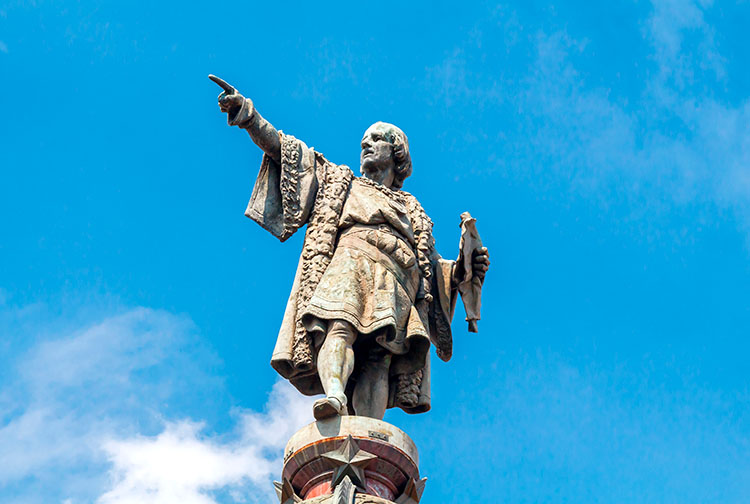
Until the mid-20th century, the official version of the transoceanic expedition that led to the discovery of the “New World” was somewhere between myth and romantic argument. But nothing of what had been recounted until then has turned out to be entirely true, not even the places of departure and return. For decades, a small group of historians – rejected by the academy and ignored by the media – have persisted in their work of dismantling a web of falsehoods surrounding the true facts.
If we shy away from fantasy and focus on making a true analysis of historical reality, which is based on the objective and scientific study of documentary sources – be they direct or indirect, primary or secondary – we will quickly realise that the usurpation of the historical identity of the transoceanic expedition carried out against the Catalan admiral Christopher Columbus is a fact.
Without any economic or institutional baggage to condition their research, a small group of historians have been able to find the true version of the discovery of America and the real identity of its protagonists that was silenced by Castilian censorship. Comparative studies of popular manuals, general histories and planispheres, whether in Castilian, Portuguese or French editions, have revealed how the Crown of Castile – through pervasive censorship supported by specific laws – came to control most of the narrative about the American expedition. Fortunately, curiosity has unmasked the manipulation and revealed the crudeness with which the Crown of Castile worked to manipulate the facts in order to confuse public opinion about the true authorship of the discovery.
Therefore, we should not be surprised that the Castilian epic appears at the beginning of the 16th century, just when Columbus was stripped of all the titles signed in the “Capitulaciones de Santa Fe” which, let us remember, was the legal framework that supported the whole discovery of America. With that trial, the Crown succeeded in making the Columbus family a harmless family in the eyes of the authorities. Indeed, a long period of litigation began thereafter – first against Christopher Columbus and then against his descendants – to nullify the agreements. For more than eighty years, the Columbus family would sue the monarchy, but it would prove to be a fruitless affair.
Manipulated documentation
The task set in motion – first by the Crown of Castile and later by Spain – has promoted over the centuries a series of official and singular versions, with an infinite amount of mixed-up data, unlikely places, real characters mixed with fictitious ones, changes of identity or disparity in the natural origins of the main characters. This has made it possible to configure a novelistic story, mutable to the tastes of the audience and handy for covering the needs of Spanish politics at any given moment. Therefore, it should come as no surprise that the epic has been based on a premeditated false narrative. But this confusion has begun to dissipate with the emergence of prominent scholars from outside Spanish circles, who have managed to reverse the tendency to repeat the official narrative as a set mantra.
An example of this changing trend has been the research of the American historian Alícia Gould, which has made it possible to trace all the surnames of the expedition members that appear in the supposed official records of Columbus’ different voyages, and has led to the following conclusion: nothing is true, everything is smoke and mirrors! Her research has gone far beyond the texts that list the names of the crew members. The investigation found that most of the crew members’ surnames do not have any documentary continuation that certifies that the sailor or individual – who appears in the lists – had a real and effective existence. But it is also very surprising that in these notorious lists, no Catalan surname appears among the crew. So, if we think that all these surnames have been manipulated, and we look for their equivalents in Catalan – Garay for Garau or Fernández for Ferrandis or Cases for Casaus – it turns out that they all fit in with very well-documented surnames, not only as real Catalan characters in flesh and blood but also as sailors, cosmographers or military men.
In conclusion, the Columbus chronicles that have come down to us denote a clear manipulation, given that they are full of anachronisms and significant temporal inconsistencies, something that seems inexplicable when the main source was supposedly a bibliophile, cultured and with a great memory, like Columbus’ son. Textual examination has shown that all these supposed originals have been retouched. For this reason, to trust the sources without applying any kind of documentary criticism, or suspecting the political intentions of the book’s arrangers, leads us, rather than to value rigour and historiographical academicism, to rely on faith.
The task set in motion – first by the Crown of Castile and later by Spain – has made it possible to configure a novelistic story, mutable to the tastes of the audience and handy for covering the needs of Spanish politics at any given moment.
The departure point of the expedition
Today we know from outstanding research work done by historians – both the pioneering Núria Coll and Eva Sans – that the town of Pals d’Empordà had an important natural port. We know this because these studies have made it possible to document countless witnesses that speak of commercial transactions that were carried out and, therefore, we know it had become an important commercial port since the beginning of the 13th century. In addition, toponymy and landscape archaeology have made it possible to identify both the remains of buildings and geographical features documented on ancient maps. All this, combined with palaeo-hydrographic studies of the area around Pals, confirm what the documents testify to.
Bearing in mind that the surface of the planet is exposed to constant change that causes regular movements, and we understand that the seas move away from the beaches or the other way around, we will understand that the surroundings of Pals at the end of the 15th century have nothing to do with the landscape of Pals that we see today. Obviously.
Therefore, what is most surprising about the official version – as far as the departure point of Columbus’ transoceanic expedition is concerned – is the name: Palos de Moguer. This is undoubtedly the same case as Sant Esteve de les Roures, two places that do not exist, nor have they ever existed. Certainly, in the province of Huelva, there are two villages, separated by 16 km, which correspond to the place names Palos de la Frontera and Moguer. Both are located more than 40 km from the Atlantic coast. And as if this were not enough, it is even more surprising when we find out that neither of the two places has ever been surrounded by walls or had a 21.28 metre-high Catalan Gothic bell tower.
Let us keep in mind that in the 15th century, Catalonia had become an important European nautical power. In fact, it is where the most outstanding pilot schools, cosmography centres, navigation instrumentation workshops and a host of specialists in the production of nautical charts were to be found. Moreover, since the mid-13th century, the Principality had pursued a very active insular policy that consolidated more than a hundred consulates of the sea scattered throughout the Mediterranean.
By contrast, at the same time, in Castile, there were no nautical schools, no pilot schools, no cosmography centres, nor any kind of nautical infrastructure capable of carrying out a transoceanic expedition such as the one undertaken by the Catalan admiral Christopher Columbus. Many historians point out the profound contradiction of the American expedition in itself, given that it was undertaken in a context where Castile was still waging war within its own territory against the Arab world, and had no developed commercial infrastructure or even a sufficiently powerful naval fleet to carry it out. In the context of a deep economic crisis – which would end with the revolt of the Castilian Communities – it is questionable that Castile had sufficient military and, above all, nautical capacity to launch a transatlantic expedition. Significantly, the first Castilian consulate – that of Seville – was created in 1543.
But the definitive proof of the point of departure of Columbus’ expedition is provided by Antonio de Herrera on the title page of his work “Historia General de los Hechos de los Castellanos en las Islas y Tierra Firme del Mar Oceano”, where in both editions of 1601 and 1726 there is an engraving that theoretically aims to illustrate “the town of Palos” in Andalusia when in reality it is meticulously representing the silhouette of the town of Pals d’Empordà. You only have to look at the engraving to quickly recognise its characteristic bell tower. Even so, the three caravels are depicted, which curiously carry the Catalan flag, something that is repeated successively in the engravings that illustrate the interior of the work. And as if all this were not enough, the quotation that accompanies the engraving reads: “The Admiral left Palos, villa of the Count of Miranda, to discover”. For, as Spanish historiography has pointed out, the Andalusian Palos belonged to the Count of Niebla. On the other hand, the Lord of Miranda was the Count of Empúries. Let’s continue!
Palos de Moguer is undoubtedly the same case as Sant Esteve de les Roures, two places that do not exist, nor have they ever existed!
The point of return and reception of the expedition
Today we know for certain that the Catalan admiral Christopher Columbus was received with full honours by the Catholic monarchs at the Royal Palace in Barcelona on 3 April 1493, after completing the first transoceanic voyage. And this event – accepted by all historiography – was totally silenced by the official version until not so long ago.
For centuries, both Portugal and Andalusia held this narrative, until the emergence of the study by the historian Antoni Rumeu de Armas, who, in his extensive work “Colón en Barcelona” – published in the midst of Franco’s dictatorship (1944) – had the courage to document the arrival of the Discoverer of America in the Catalan capital. Rumeu de Armas’s study was a key work for the future of Columbus studies, and contributed with an innovative investigation – in terms of the detail and precision of the research – in testifying how the city of Barcelona played a fundamental role in the discovery of the “New World”. Since then, documents of all kinds have continued to appear that prove that the discoverer was received in Barcelona.
Rumeu de Armas was able to demonstrate that the official version was built on a falsehood when it spoke of Palos de Moguer as the place of departure and return of the expedition. The analysis of the documentation – especially the ship’s log – made it possible to prove that the Pals de Empordà-Barcelona pair were the expedition’s true departure, return and reception points. It is also clear from the ship’s logbook that the expedition was planned as a reconnaissance voyage. Therefore, of a short duration and with a more or less fixed return.
On this first voyage, Columbus had managed to find the lost continent spoken of in countless ancient texts: the lands on the other side of the Atlantic “which had been cut off since the sinking of Atlantis”. And as proof of this discovery, of this “New World”, he presented to the royals and high authorities of the kingdom, the natives, animals, precious metals and plants that they had brought back. Reliable proof that they had come from lands hitherto unknown.
Even so, the Catholic Monarchs – from the summer of 1492 – stayed between Barcelona, Girona and Figueres, as the Principality was involved in a territorial conflict with the French, who had invaded Cerdanya and Roussillon in order to exchange them for the kingdom of Naples. King Ferdinand the Catholic – who was looking after the interests of his states – began to organise the military defence of the territory. It was for this reason that both monarchs, being in Catalonia and knowing that the expedition was only a reconnaissance expedition and, therefore, of short duration, waited for Columbus to return to Barcelona. It was there that a Portuguese delegation arrived to negotiate the distribution of the newly discovered lands, a process that would end with the Treaty of Tordesillas. And it was also there that the papal donation documentation arrived – from Pope Borja, “il papa catalano” – which would be made public by Bishop Pedro Garcia of Barcelona. Moreover, contemporary chronicles explain that the audience in Barcelona had a great echo and that the reception was a really popular and spontaneous celebration, with all the people of Barcelona celebrating in the street, a fact that is not recorded in any of the Castilian chronicles.
As Father Casaus’ chronicle explains, the gold that arrived from Columbus’ second voyage was confiscated in its entirety by the kingdom’s officials and customs officers, which made it possible to pay for the campaign to recover the Cerdanya and Roussillon, and to finance the construction of the fortress of Salses. But the most worrying event occurred during the course of the third voyage, when Francisco de Bobadilla – with broad powers to judge the admiral – confiscated all his merchandise, arguing that not all the promised wealth had been sent to the Crown. Thus began a veritable campaign of public discredit that would end with Columbus’ arrest.
All documentation on the trial against Columbus has disappeared. From indirect sources, it is known that the Crown seized all the documentation that Columbus had to provide in his own defence. It is also known that the reports on which the accusations were based were drawn up by Pere Bertran Margarit and Bernat Boïl, representatives of the Crown. Therefore, we should not be surprised at the somewhat farcical trial – something to which the Crown of Castile has become accustomed – in which Christopher Columbus and later his family became involved. In an act of extraordinary audacity, the Crown overstepped its bounds when, by means of falsehoods, it dispossessed the most famous navigator of the time of all his deservedly acquired titles.
At this point, the history of the discovery of America is an immoral issue for the Catalans. Since the 15th century, Catalanophobia has marked relations between Castile and Catalonia. We cannot continue to accept the Genoese origin of the Discoverer, we cannot continue to believe that the configuration of the crew of the three caravels was Castilian and – above all – we cannot continue to legitimise Castile as the promoter of the transoceanic expedition that led to the discovery of the “New World”, according to the official version, with the invaluable help of Queen Isabella of Castile who – with the pawning of her personal jewels – helped to defray all the expenses of the voyage. The whole thing makes no sense at all!
BASIC BIBLIOGRAPHY
- Antonio Rumeu de Armas: En Colom a Barcelona, Editorial Llibres de l’Índex, 2012.
- Eva Sans i Narcís Subirana: El Port de Pals. ANNALS de l’Institut d’Estudis Gironins, Volum LIV, Girona, 2013.
- David Bassa i Jordi Bilbeny: Totes les preguntes sobre Cristòfor Colom. Col·lecció Descoberta, Editorial Llibres de l’Índex, 2015.
- Jordi Vila: Les Capitulacions colombines de 1492: un document català. 1r Simposi sobre la Descoberta Catalana d’Amèrica, Arenys de Munt, 2001.
- Jordi Bilbeny: Cristòfor Colom, príncep de Catalunya, Proa, Col. Perfils, Barcelona, 2006.
- Jordi Bilbeny: Inquisició i Decadència: Orígens del genocidi lingüístic i cultural a la Catalunya del segle XVI, Librooks, Barcelona, 2018.
11Onze is the community fintech of Catalonia. Open an account by downloading the super app El Canut for Android or iOS and join the revolution!
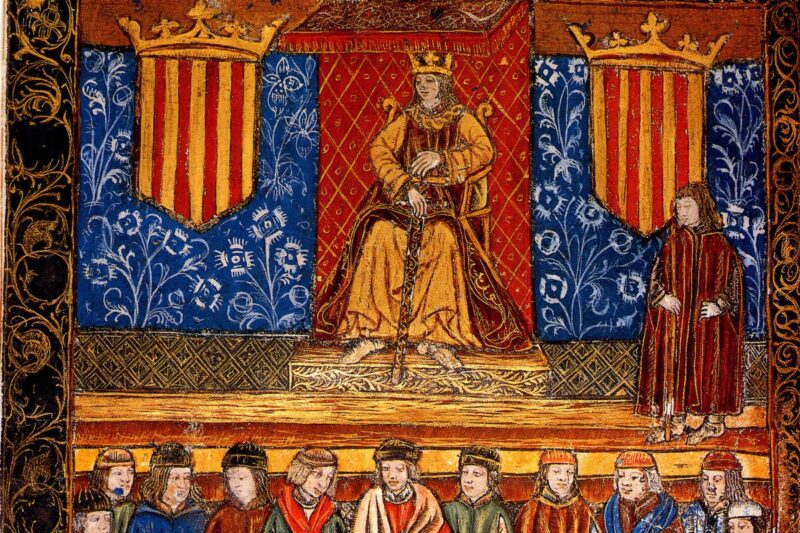
The conflict in Ukraine is the latest example of the growing importance of economic sanctions as instruments of coercion in international geopolitical relations. We analyse how SWIFT, a communication protocol between banks, has become a strategic weapon of the West.
The origin of telecommunications between global banking networks dates back to the mid-19th century, when the newly developed electric telegraph enabled more agile communications between stock markets. The telegraph established a continuous, near real-time trading system that reduced the differences between the prices of securities in markets separated by large geographical distances.
In 1872, Western Union used its existing telegraph network to launch the first widely used wire transfer service. A sender paid money to a telegraph office, and the operator transmitted a message to allow the transfer of money to another office, which was verified by passwords and code books so that the funds were released to a recipient.
In the early 20th century, the telegraph was slowly replaced by teletype or telex machines, a system developed by Germany that took advantage of telegraph lines and allowed users to write a message somewhere and have it printed on the other side of the world. Although telex provided the banking sector with a basic platform for business, and an operational medium through which they could begin to expand, the need to ensure that messages were secure and accurate added much complexity to the system, which soon found itself unable to cope with the pressures of an increasingly globalised financial world.
As the increase in transactions made it clear that the limits of this communication system were a constraint on the expansion of the banking business, banks, especially European banks, decided to explore other options. A decision spurred by a subsidiary of the American bank, the First National City Bank (FNCB), which wanted to force other banks to use its proprietary telex system. This ultimatum horrified the European banks, which saw a change from a system based on cooperation between rivals to a monopoly at the hands of the American partner.
The banks of 15 countries created a private company, SWIFT, which stands for Society for Worldwide Interbank Telecommunication, based in Brussels and run as a global cooperative enterprise. SWIFT simplified procedures and minimised errors by using a standardised messaging format that was adopted globally.
Communication networks and state coercion
The tug-of-war between the new and old continents over control of a global interbank communications system highlighted a phenomenon that had already been seen with the emergence of the telegraph during colonial times. While these communication systems were not created with geopolitics in mind, it was inevitable that the big players in the global economy would use them as tools to control, spy on, and punish other states competing for the same interests.
A fact that is not without irony in the case of SWIFT, created by Europe to maintain its sovereignty vis-à-vis the United States, but which has ultimately been unable to resist obeying Washington’s orders, even when they run counter to European interests, as happened when President Donald Trump unilaterally abandoned the Iran nuclear deal.
Political scientists Henry Farrell and Abraham Newman define this as “weaponised interdependence“. As for SWIFT, they explain: “In this world, the networks that enable global interdependence no longer serve as neutral means of transmitting information or money. Instead, they are becoming the power projection tools of large states“.
The use of sanctions by the US government, against enemies and allies, purely for economic and geopolitical interests, did not begin with the administration of President Donald Trump, but it is true that Trump made an unprecedented expansion of punitive economic measures to promote his administration’s agenda. An abuse of a position of privilege that initially yields good results, but is counterproductive in the long run when other states question alliances with the United States, and seek alternatives to monetary tools linked to the hegemonic power of this country.
Alternative systems and cryptocurrencies
The latest economic sanctions against Russia, and the exclusion of some of its banks from the SWIFT system, follow the same trend of recent years, and only consolidate the efforts of China, Russia, and even the European Union, to seek alternative systems that can shield their economies. A new blow to the system that could trigger a chain reaction of change.
In 2017, Russia launched the Financial Messaging System of the Bank of Russia (SPFS), equivalent to SWIFT, and in 2015, China launched a similar system called The Cross-Border Interbank Payment System (CIPS). Two alternative systems that are still far from being able to fully replace SWIFT, but which at least help to reduce the effectiveness of the possible sanctions imposed on banks in these two countries to exclude them from the interbank communication protocol established by Western banks.
On the other hand, the blockchain-based cryptocurrency revolution is another tool that countries such as North Korea and Iran have already used to circumvent economic sanctions, and the exclusion of their banks from the SWIFT ecosystem. The digital rouble is just one of several digital tools through which the Russian government can boost bilateral trade with allied countries, as China has already done with the digital yuan.
Nevertheless, the use of economic sanctions will undoubtedly have a significant impact on Russia’s economy, and to a lesser extent on that of the European Union. Even so, it is also clear that the abuse of this tool of persuasion or punishment is reducing its effectiveness and promoting the creation of alternative systems, which are ultimately inevitable in a multipolar global geopolitical scenario, which is no longer content to be subject to the impositions and interests of a single country.
11Onze is the community fintech of Catalonia. Open an account by downloading the app El Canut for Android or iOS and join the revolution!



L’economia ha estat una de les grans protagonistes de la relació entre Catalunya i Espanya. Tot realitzant un exercici de síntesi, recollim nou d’aquests moments claus de la nostra història. Potser no són els més coneguts, però, sens dubte, sí que són els que han marcat un abans i un després. Un rere l’altre, ofereixen una cronologia dels encontres i desencontres.
“Mentre Espanya no comprengui el fet català,
Espanya estarà sotmesa a tots els infortunis.”
Américo Castro, 1924
1479. La construcció d’un Estat dinàstic
Després de la Guerra Civil castellana, els dos regnes més extensos de la península Ibèrica (Castella i la Confederació Catalana) van crear plegats una nova entitat política coneguda amb el nom de Monarquia Hispànica. Aquest Estat dinàstic es va configurar a partir de la unió de només dos elements clau: l’exèrcit i la política exterior. Per a la resta d’elements que configuren un Estat modern, com ara fronteres, monedes, lleis i institucions, van romandre totalment separats. Així, pel que fa a la configuració i repartiment del poder, cal tenir present que, mentre Castella s’articulava segons l’autoritat de la reina (Isabel), sempre per sobre de la noblesa i l’església, en canvi, la Confederació Catalana es va organitzar al voltant de la Constitució de l’Observança, que obligava el rei (Ferran) a governar i pactar d’acord amb les lleis del Principat. Vet aquí una primera diferència en el sistema d’organització polític i econòmic entre Espanya i Catalunya.
1556. La deriva de la història
A la mort de la reina castellana (Isabel), l’Estat dinàstic peninsular va estar a punt de desfer-se. Després de vicissituds familiars, el tron l’acabarà ocupant el net, per incapacitat de la filla (Joana) i per la mort del gendre (Felip). D’aquesta manera, la unió dinàstica entre els dos regnes va quedar confirmada definitivament en les persones de Carles (futur emperador) i els seus successors. Durant anys, l’emperador Carles va buscar consolidar la idea d’una monarquia universal que fos políglota i oberta per a tot el territori de l’imperi dels Habsburg. La política de l’emperador va anar encaminada a canviar el rumb de la història europea. De res li va servir creure que era possible la convivència entre els drets de les ciutats i els de les regions amb l’estructura imperial, atès que la idea de l’Estat Nació s’estava imposant, empesa en gran part per la Reforma. Tampoc no va aconseguir mai crear les complicitats necessàries entre castellans i catalans per forjar un país comú.
1585. La perversitat del sistema
La tardor de 1585, el rei Felip II de Castella va presidir la celebració de les Corts Generals de la Confederació Catalana a Montsó. Seguint la tradició instaurada pel seu pare (Carles), Felip II reconeixia així la dualitat de poder en el territori peninsular que conformaven les corones de Castella i Catalunya. El sistema parlamentari sempre comporta tensions —perquè el debat ho té—, però semblava que s’arribaria a un acord. El problema va sorgir quan els oficials reials van intentar boicotejar descaradament les resolucions de les Corts. I encara és més pervers quan la Monarquia —de manera unilateral— decideix manipular i tornar a redactar els acords presos per les Corts Catalanes per afavorir els seus interessos. Entre les alteracions més destacades i que van afectar de ple tota la Confederació Catalana, hi havia aquelles relatives al control del comerç, a l’augment de la despesa de la Reial Audiència en territori de la confederació i que van diluir el control que la Diputació del General (la Generalitat) pogués tenir sobre el Sant Ofici (la Inquisició), el braç repressor de la monarquia.
1626. Cap a una unitat centralitzada única
El març del 1626, Barcelona rep el rei de Castella, Felip IV, que havia arribat a la ciutat per jurar les Constitucions catalanes. El motiu no fou altre que poder desencallar l’ambiciós pla del ministre del rei, el comte duc d’Olivares. El projecte, conegut com la “Unión de Armas”, pretenia que cada regne que formava part de Castella —o sigui, principalment la Confederació Catalana— aportés un nombre determinat de diners i soldats. Però el que no van calibrar bé les oligarquies castellanes va ser que si Felip IV jurava les Constitucions catalanes, certament se li atorgava automàticament el títol de comte de Barcelona, cosa que l’obligava a fiscalitzar els seus recursos. Per tant, els catalans estaven més interessats que s’aprovessin les seves propostes de noves Constitucions catalanes i que s’atenguessin els greuges, que no pas a participar en guerres absurdes. Curiosament, dues dècades més tard, el territori nord-català serà extirpat del cos principal de manera deshonesta. I no serà fins quaranta anys més tard que Castella notificarà oficialment a la Generalitat la pèrdua del territori nord-català.

La cultura mercantil catalana del segle XVIII
1760. Les regles del joc canvien
Des de feia unes dècades, una nova família d’origen francès ostentava el tron de Castella, els Borbons. Enrere havia quedat la disputa oberta sobre aquell ascens, fins al punt que s’havia hagut de dirimir en el camp de batalla. Passades quatre dècades del Decret de Nova Planta, el rei Carles III va convocar les Corts generals a Madrid. En aquell nou paradigma polític sorgit del camp de batalla, els representants dels antics territoris de la Confederació Catalana —format per Catalunya, Aragó, València i Mallorca— van presentar plegats un memorial que contenia una crítica frontal al sistema borbònic vigent. Simplificant molt, el document conegut com el “Memorial de Greuges” defensava que el nou Estat havia de vetllar per la pluralitat territorial i havia d’allunyar-se d’estructures centralistes i unificadores.
1810. La construcció d’una nova realitat política
En un context de guerra europea, arribaren fins a Cadis més de 240 diputats d’arreu del territori convençuts que anaven a fer història, atès que s’anava a redactar una moderna Constitució. El rei Carles IV d’Espanya havia estat deposat per absolutista, després de l’ocupació francesa del territori peninsular. A les Corts de Cadis es va establir que el poder residia en el conjunt dels ciutadans, representats a les Corts. Però Cadis també va suposar —per primera vegada— l’oportunitat real per la qual els polítics catalans van ser cridats a participar activament en el nou sistema polític espanyol que s’estava creant. En aquell revolucionari context, la delegació catalana va defensar obertament la proposta de modernitzar Espanya d’acord amb el projecte austriacista liquidat feia menys d’un segle. Per tant, calia fonamentar el desenvolupament econòmic i social d’acord amb la industrialització dels territoris. Però pel Tractat de Valençay es va restituir en el tron a Ferran VII com a monarca absolut, i va frustrar totes aquelles idees modernes sorgides de les Corts de Cadis i de la seva revolucionària Constitució, que havia sacsejat Espanya.
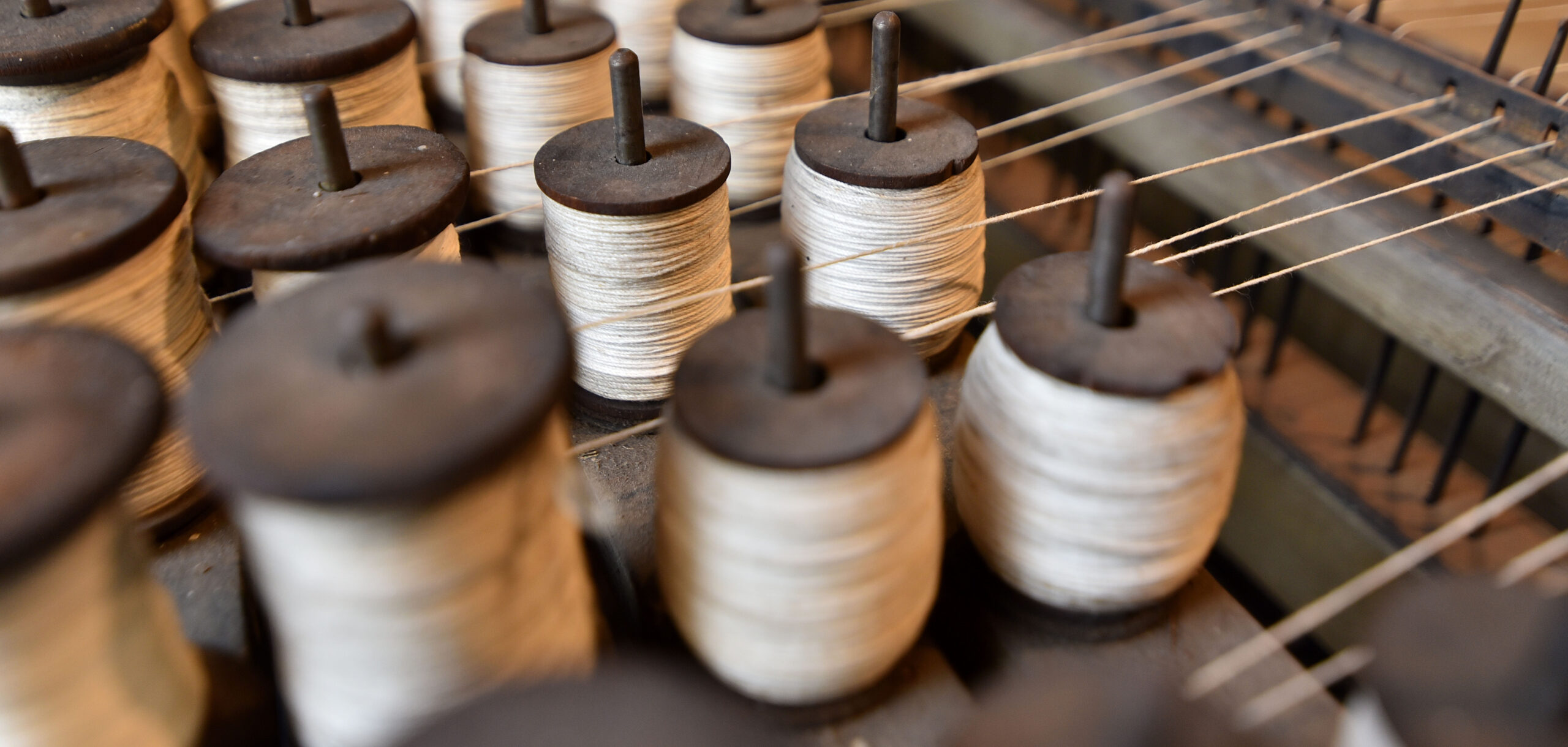
L’emprenedoria com a motor de canvi
1870. La història sempre ofereix una segona oportunitat
Aquell estiu del 1870 a París, Maria Isabel Lluïsa de Borbó i Borbó-Dues Sicílies, reina d’Espanya, abdicà. Aquesta renúncia del poder —igual que l’emperador Carles— era la conseqüència d’un intens debat polític sobre com s’havia d’articular la modernitat d’Espanya. La disputa entre carlins i liberals s’havia dirimit en els camps de batalla durant les darreres tres dècades. Però durant les dècades següents l’atzucac continuaria. Espanya havia entrat en un laberint del qual trigarà cent anys a sortir. La modernitat va comportar una profunda transformació estructural, inclòs el repartiment del poder. La historiografia ha abordat aquest període des de la perspectiva de la primera crisi del capitalisme espanyol. Però, en realitat, a l’origen del problema econòmic de tot plegat hi ha la corrupció.
Polítics, militars i nobles van especular tant en les companyies ferroviàries com en la construcció, fins al punt que a finals de la dècada hi va haver un crac borsari de dimensions bíbliques. La Guerra Civil dels Estats Units va provocar un augment dels preus de la matèria primera —el cotó—, motor de la indústria tèxtil catalana, que —per manca de previsió de l’Estat— va provocar la ruïna de molts empresaris d’aquest sector. I un període perllongat de males collites va provocar un augment estrepitós del preu dels aliments bàsics, que va afectar negativament les classes més populars. En aquest context tan difícil i atès que l’Estat estava tan endeutat, es van aportar dues solucions: per una banda, augmentar la pressió fiscal sobre les classes populars i, per l’altra, embolicar-se en una aventura colonial com va ser la Guerra de les Illes Xinxa, davant les costes del Perú.
1931. La muntanya és un bon lloc per pensar
Aquella primavera del 1931, Espanya va optar per gestionar el poder seguint una fórmula fracassada en el passat. La corrupció havia esgotat el sistema de la Restauració borbònica i, per tant, calia buscar una nova relació amb el poder. La pregunta que es plantejava llavors —i encara avui— era si Espanya podia ser una federació de nacions. Calia provar-ho! En aquest context, s’instal·laren al Santuari de Núria els diputats del recentment creat Govern de la Generalitat de Catalunya, encarregats de redactar una proposta de relació entre Catalunya i Espanya. Tothom tenia la certesa d’estar davant d’un moment històric.
El resultat fou un text constitucional que responia a la voluntat de Catalunya i al seu legítim dret d’exercir l’autodeterminació. S’estava proposant una situació d’igualtat jurídica i política respecte als altres pobles de l’Estat. Es plantejava ampliar la mirada. Davant del text, l’Estat es va posar nerviós. Un any més tard, les Corts espanyoles van aprovar un Estatut que ja no tenia res a veure amb el que havia refrendat mesos enrere el poble de Catalunya. Es rebutjava la fórmula federal, es reduïen competències de la Generalitat i s’instaurava la cooficialitat del català i el castellà en un model bilingüe. Catalunya quedava reduïda a una “regió autònoma dins l’Estat espanyol”. Va ser aleshores quan a la llunyania començaren a sentir-se remors de sabres que obligaven Espanya a tornar al camp de batalla.
2004. Cap a un nou paradigma històric
Amb la ressaca dels esdeveniments de la darrera dècada del segle passat, tothom va creure que Espanya havia optat per reconèixer la seva diversitat. La llengua catalana era —fins i tot— parlada en els cercles més íntims de l’oligarquia castellana. En un clima de puixança econòmica, estabilitat social i de reconeixement mutu, Catalunya va creure que podia tornar a plantejar la seva relació amb Espanya. Era possible? L’escrupolositat de l’escomesa —igual que en el passat—, en l’elaboració d’un nou marc constitucional com fou el nou Estatut de Catalunya, va suposar un important esforç per trobar un punt d’encontre on hi fossin representades tots els espectres socials. La continuació és sabuda per tothom. L’1 d’octubre de 2017 és la constatació de la impossibilitat del diàleg i la necessitat de tornar a l’inici de tot: a molt abans de la Guerra Civil castellana de 1479.
11Onze és la fintech comunitària de Catalunya. Obre un compte descarregant l’app El Canut per Android o iOS. Uneix-te a la revolució!


Choose your words wisely, because they will be decisive in your mood, in your relationships, and even in your happiness. We all carry fears, insecurities, and negativity within us, and language has the power to transform this in our favour.
Language is one more community element, and perhaps the most powerful. It is from speeches that we vote for one political party or another, or that a football team enters the field more or less motivated. From birth, we learn through language, whether spoken, written, or through symbols. And it is these words, to which the community gives meaning, that describe the world around us, and ourselves.
Building a community through language
“Speaking is half his who speaks, and half his who hears.” This is how the philosopher Michel de Montaigne described it. The language we share makes us part of a community, either generically or personalized through slang or words that are only used in our area.
The richer the vocabulary, the easier it will be for society to describe the environment and everything that happens in it. In Galician, for example, there are more than 70 words to describe rain. Thanks to this, this community will have more knowledge in this field for the simple fact that their language has the ability to describe it. A word at a time, we build the environment and our present, but we also build ourselves.
The power of positive language
As the Mexican philosopher Octavio Paz said, we are made of words, and they are our only reality. Therefore, the way we speak will describe this reality, and we can do so in a positive or negative way.
Luis Castellanos is one of the world’s leading figures in positive language. The writer and philosopher has found, after years of research, that positive language directly influences our happiness. The words we choose to describe how we feel, how we see ourselves, or the ones we use to socialize condition our lives.
He argues that all words, positive or negative, have an emotional charge. To get an idea, he theorizes that if we use a negative word when socializing, we must provide five positive words to counteract them and deserve the relationship again. This is the impact of negativity on words.
Building happiness a word at a time
Actions as simple as changing the words we use in our day-to-day life can have a huge impact on our mood and behaviour. Here are some examples:
- Difficult / challenging: changing “it’s hard” to “it’s a challenge” is enough to transform the information we give to the brain. Instead of closing our doors to the positive result, we emphasize that we will work to achieve it.
- I have to do / want to do: it will help us avoid the negative feeling of obligation.
- I’d like to do it, but…: our attention will be focused on everything that comes after the “but”. Let’s change it to an “although”, for example: “I would like to set up my business even though I’m a bit afraid”. This fear is not an impediment, but another challenge.
- Little by little / step by step: for many, “little by little” does not have a negative connotation, but it is true that it expresses slowness and poverty. Changing it to “step by step” involves movement and achieving goals, even if they are small.
- Removing NO from our vocabulary: when say “yes”, we open a whole world of possibilities that “no” closes. Eliminating “no” will also eliminate many frustrations.
- Adjectives: when describing the environment or people, always prioritize positive feedback. Seeing the world with optimism is the best serotonin discharge for your body.
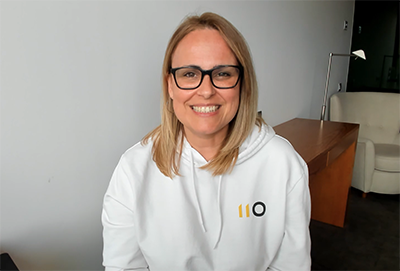
11Onze Agent Càrol Rafales tells us how to make a good oral presentation
While at first it is a frustrating exercise, as it does not come naturally to us, this practice of transforming language into a more conscious and positive narrative can change our lives. This is the great power of language. And you, do you dare to try it?
Do you want to be the first to receive the latest news about 11Onze? Click here to subscribe to our Telegram channel
If you liked this article, we recommend you read:
 Management
Business management: how can a manager evolve?
5 min readFrom the outside, the manager of a company may appear to be


La confiança és l’ingredient fonamental de l’economia moderna. Sense ella, els mercats tendeixen a desplomar-se com un castell de naips. Des d’11Onze, repassem 11 moments de la història en què la histèria s’ha apoderat dels inversors i l’economia ha pagat les conseqüències.
Ja en l’Edat Antiga es poden trobar els primers capítols de pànic financer. Tot i això, ha estat amb el desenvolupament del capitalisme i els sistemes financers moderns quan s’han multiplicat els episodis d’histèria col·lectiva, ja que la confiança ha guanyat pes com la pedra angular de tot l’entramat econòmic.
La realitat de l’economia productiva no canvia radicalment d’un dia per a un altre. No es poden construir ni destruir moltes fàbriques en un breu espai de temps, però un succés puntual pot alterar completament la percepció dels inversors i desencadenar una crisi de grans proporcions.
Mentre tothom vol comprar, els preus no deixen de pujar i l’economia sembla gaudir d’una salut de ferro, però quan, per alguna raó, s’imposa la febre venedora, l’efecte bola de neu pot arrasar qualsevol estructura econòmica. Aquí tens alguns dels moments més paradigmàtics de pànic financer dels últims segles.
Febre de les tulipes
Les tulipes es van fer molt populars als Països Baixos entre finals del segle XVI i principis del XVII. Com són flors de temporada, es va crear un mercat de futurs i l’especulació va fer que els preus es disparessin entre 1636 i 1637, en la considerada com a primera bombolla econòmica de la història capitalista. Al final la bombolla va esclatar, va provocar la ruïna de molts inversors i gairebé va provocar el col·lapse de l’economia holandesa. En el segle següent el fenomen de les bombolles es va reproduir al Regne Unit amb la Companyia de les Mars del Sud i a França amb la Companyia del Mississipí.
Crisi de crèdit de 1772
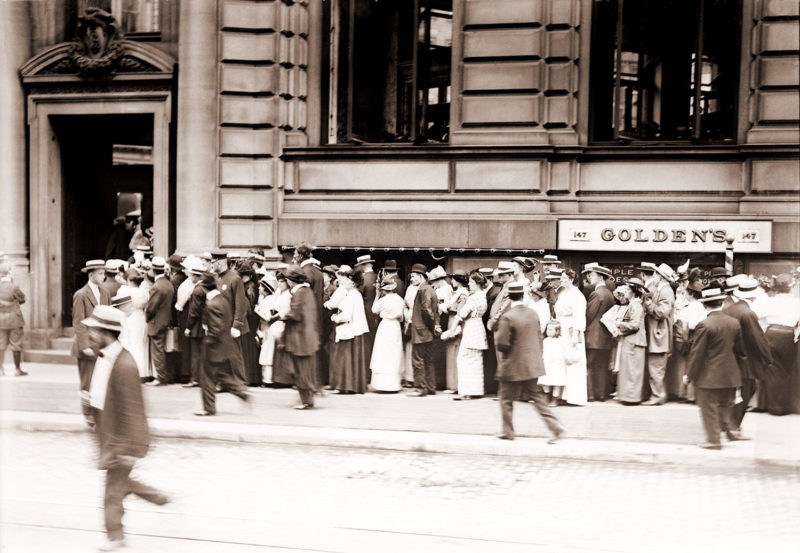
L’optimisme per la marxa de l’Imperi Britànic va provocar una ràpida expansió del crèdit al Regne Unit. L’eufòria va arribar a un abrupte final el 8 de juny de 1772, quan un banc es va enfonsar a causa de les pèrdues en les seves inversions i un dels seus socis va fugir a França. La notícia es va difondre ràpidament i va desencadenar el pànic bancari a Anglaterra, amb llargues cues als bancs per exigir la retirada dels seus diners. La crisi es va estendre ràpidament a altres parts d’Europa i les colònies britàniques d’Amèrica. Les posteriors dificultats per les quals va travessar la Companyia de les Índies Orientals a causa de l’escassetat d’efectiu va portar al govern britànic a aprovar l’any següent una llei que li concedia el monopoli de la venda de te a Amèrica del Nord. Les protestes acabarien per provocar la independència dels Estats Units.
Pànic de 1873
Va ser el causant de la primera “Gran Depressió”, una denominació que després es va associar a la crisi dels anys trenta del segle XX als Estats Units. A Europa, al col·lapse de la Borsa de Viena li van seguir les fallides de diversos bancs a Àustria i Alemanya. Als Estats Units, l’enfonsament de diverses entitats bancàries va provocar que la Borsa de Nova York interrompés les seves operacions per primera vegada en la seva història. Diversos països a un costat i un altre de l’Atlàntic van patir un prolongat estancament econòmic. La desmonetizació de la plata a Alemanya i als Estats Units, l’augment de les inversions especulatives, la inflació i la Guerra Franco-Prussiana van ser algunes de les causes del desastre.
Recessió de 1914
A mesura que la Primera Guerra Mundial semblava cada vegada més inevitable, l’afany venedor en els mercats globals va anar augmentant. Al final, es va desencadenar el pànic entre els inversors, que tractaven de desfer-se d’accions i bons per acumular or. El mercat borsari dels Estats Units i la Borsa de Londres van haver de tancar el 31 de juliol i no van reobrir fins a diversos mesos després. La crisi es va contagiar a desenes de països i la majoria de borses del món també van haver de tancar en els següents dies i setmanes.
Crac de 1929
Els bojos anys vint van portar al crac de Wall Street l’any 1929 i la Gran Depressió que va venir a continuació. La bonança econòmica havia estimulat l’especulació en la borsa, moltes vegades gràcies a préstecs que es concedien alegrement. Només en les primeres setmanes d’octubre d’aquest any les cotitzacions borsàries van arribar a pujar un 300%. Però el 24 d’octubre, en el que es coneix com el Dijous Negre, la Borsa de Nova York va patir la pitjor devallada de la seva història. Milers d’inversors ho van perdre tot de la nit al dia i el pànic es va generalitzar. Al final, la crisi va travessar fronteres i va provocar una depressió econòmica mundial. Només als Estats Units uns 15 milions de persones es van quedar sense feina en els anys següents.
Crisi del petroli de 1973
L’enviament d’armes a Israel durant la Quarta Guerra Àrab-Israeliana va provocar l’embargament de petroli als Estats Units i els seus aliats per part de l’Organització de Països Exportadors de Petroli (OPEP), integrada majoritàriament per països àrabs. Això va donar lloc a un període d’estagflació en les economies occidentals, caracteritzat per una elevada inflació a causa del repunt dels preus del petroli i l’estancament econòmic. Al Regne Unit es va arribar a racionar el subministrament elèctric.
Dilluns Negre de 1987
Després de cinc anys de febre alcista en les Borses, el 19 d’octubre de 1987 els mercats de valors de tot el món es van enfonsar en un breu espai de temps. La devallada es va iniciar a Hong Kong i la histèria financera es va propagar cap a l’oest a mesura que les Borses europees i nord-americanes anaven obrint. L’índex Dow Jones va perdre més d’un 22% en aquesta jornada. Les turbulències dels següents dies van fer que els descensos en molts mercats borsaris superessin el 20% i a Nova Zelanda es va arribar al 60%.
Crisi asiàtica de 1997
La crisi es va iniciar a Tailàndia i es va estendre ràpidament a altres països com Indonèsia, Malàisia, Singapur, Hong Kong i Corea del Sud. Els fluxos de capital especulatiu davant l’elevat creixement dels anomenats “tigres asiàtics” havia generat un excés de deute en les economies d’aquests països. El fet que el govern tailandès es veiés obligat a abandonar el tipus de canvi fix enfront del dòlar nord-americà al juliol de 1997 va desencadenar una onada de pànic en els mercats financers asiàtics i el retorn de milers de milions de dòlars d’inversió estrangera. El Fons Monetari Internacional va haver de sortir al rescat de les economies més afectades per evitar impagaments.
Bombolla de les ‘puntcom’
Algú es recorda de Terra? Va sortir a Borsa el 17 de novembre de 1999 i el primer dia es va revaloritzar un 184%. Després de revaloritzar-se més d’un 1.000% en un trimestre a principis de l’any 2000, el valor de les accions es va desplomar en la Setmana Santa d’aquell any. Tres anys després, Telefónica va acabar recomprant les accions a menys de la meitat del preu al qual van sortir inicialment. Va ser una de les nombroses empreses ‘puntcom’ que, amb l’eclosió d’Internet a finals dels noranta, van veure com se sobredimensionava el seu valor. Es calcula que només en l’Estat espanyol entre 1999 i 2000 es van llançar més de mil empreses el model de negoci de les quals girava entorn d’Internet. Després de l’esclat de la bombolla l’any 2000, molt poques ‘puntcom’ van acabar sobrevivint.
Crisi financera de 2008-2009
El 15 de setembre de 2008 Lehman Brothers, el quart banc d’inversió més gran del món, es va declarar en fallida. Va ser la constatació d’una situació insostenible que va fer que els mercats immobiliari i financer es desplomessin, també al nostre país. Fins llavors, els bancs d’Estats Units havien estat concedint préstecs a clients de dubtosa solvència i els havien reempaquetat com a productes financers “segurs” que es venien a institucions financeres de tot el món. Mentrestant, aquí vivíem la nostra particular bombolla immobiliària, que semblava no tenir sostre. La festa va acabar amb la crisi financera més greu des de la Gran Depressió i una factura milionària per als contribuents, que van haver de salvar al sector bancari.
Pandèmia de COVID-19
L’aparició de la COVID-19 va inocular la por en els mercats de tot el món en els primers mesos de 2020. El que inicialment semblava ser un problema estrictament xinès, es va convertir en poques setmanes en un malson global, que incloïa dues crisis interdependents: una sanitària i una altra econòmica. En menys d’un any van morir milions de persones i el PIB mundial va caure gairebé un 6%, segons les dades del Banc Mundial.
Tots aquests exemples ens mostren com l’eufòria o el pànic poden condicionar la visió de la realitat econòmica. La història està plena de bombolles i cants de sirena que s’han d’evitar.
Si vols descobrir la millor opció per protegir els teus estalvis, entra a Preciosos 11Onze. T’ajudarem a comprar al millor preu el valor refugi per excel·lència: l’or físic.



At this time, more than ever, we must support local products in order to continue the work carried out by 8,000 winegrowers and 800 wineries in Catalonia. Wineries that, with the confinement and closure of restaurants and bars, are finding it difficult to reach their estimated sales and meet their structural costs
The culture, tradition and landscape of wine are part of the history of Catalonia. Our country has 12 Denominations of Origin (DO) that guarantee the quality of our wines: Alella, Catalonia, Cava, Conca de Barberà, Costers del Segre, Empordà, Montsant, Penedès, Pla del Bages, Priorat, Tarragona and Terra Alta. In each of these areas, the geography, climate and grape varieties mean that the wines produced in Catalonia are diverse but have a common denominator: quality products thanks to the dedication and desire to excel of the producers and winemakers.
- Catalonia, the cradle of viticulture
CEVIPE (Centro Vinícola del Penedès) is a second-degree cooperative company that brings together 16 wine cooperatives from the Alt and Baix Penedès, Garraf, Tarragonès, Alt Camp and Conca de Barberà regions. Its mission is to offer technical and human resources to improve the economic income of the winegrowers and, therefore, they focus their objectives on a process of continuous improvement, from the quality of vine cultivation to the production and marketing of wines and cavas. The commitment to the territory is an exclusive asset, protecting its products under the quality label of the different Designations of Origin of Catalonia and the Cava Designation of Origin.
The entity was founded in 1985, when the five cooperatives of Baix Penedès Albinyana, Bellvei, Lorenzo, Calafell and Vendrell founded the second-tier cooperative in order to facilitate the processes of innovation and modernisation, while reducing costs and achieving a concentration in the volume of supply in the cava market. The good performance and increased demand for these wines led to the process of integrating more cooperatives into the group.
Thanks to the union of these cooperatives, it was possible to invest in refrigeration equipment to ferment the must at a controlled temperature, a system that was beginning to spread to other parts of Europe and which was still residual in Catalonia. The traditional winemaking system was left behind and a new era began in terms of wine quality. The market demanded fruity wines with a pleasant taste, and this could only be achieved by fermenting the musts at low temperatures to prevent the aromas from vaporising. The demand for these wines was already much higher and was still growing.
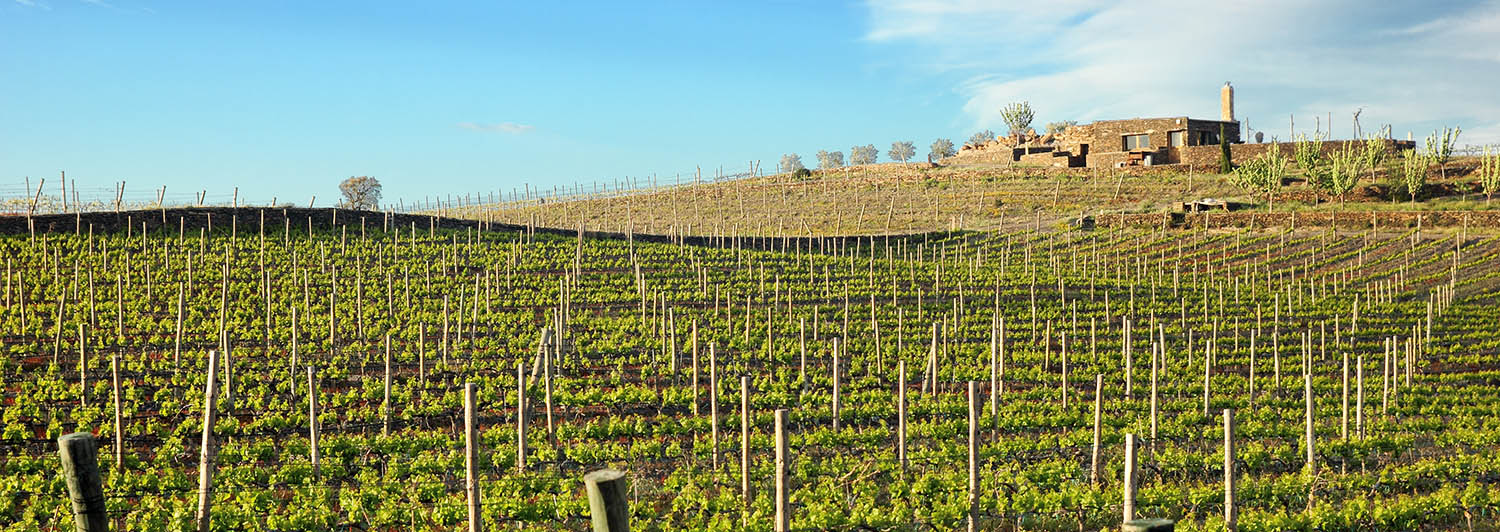
- From Catalonia to Europe: Catalan wines lead the way
This economic incentive, together with the vision for the future of CEVIPE’s leaders, facilitated the implementation of a modern, quality production system that favoured the conquest of markets and, as a result, an increase in customers. This led to the process of integrating more cooperatives into the group and meant an important economic effort in the cooperative sector in this region, which found it essential to modernise its wineries in order to obtain the base wine demanded by the sector’s marketing companies.
At the end of the 1980s and beginning of the 1990s, CEVIPE began to open up to Europe to make its wines known, mainly in Germany, France and Luxembourg. Currently, the export volume is around 20%. The opening up in Europe professionalised and broadened the cooperative’s focus, which plays a key role in balancing supply and demand for the benefit of maintaining the area’s wine-growing operations. CEVIPE has more than 2,200 wine-growing members, who cultivate more than 6,200 hectares with an average production of 55 million kilos each year and an average annual turnover of 30 million euros. They are present in 5 different Denominations of Origin in addition to their 3 agro-shops located in the town of El Vendrell and in L’Arboç. They have a website where you can buy from anywhere with an internet connection and even order home delivery.
- A Sant Jordi marked by wine
There are 62 wine cooperatives in Catalonia, which produce 50% of Catalan wine and account for more than half of all winegrowers. The Federation of Agricultural Cooperatives of Catalonia (FCAC) held a competition on Sant Jordi’s Day last year, in the middle of the pandemic, asking participants “With which cooperative book and wine will you celebrate Saint George’s Day?” An initiative widely celebrated at home under the hastag #santjordiacasa which promoted, in a fun way, a new way of celebrating the festival through wine. The winner was Jaume Rojales, with a Facebook post recommending the wine “Lágrimas de Otoño” from the cooperative San José Wines de Bot. The book “La Catedral del Mar” was chosen through a random online draw among all participants.
The result: users recommended more than 50 cooperative wines, and FCAC’s Twitter and Facebook profiles received numerous posts from consumers recommending books along with these 50 wines from all over the country. The cooperatives that were most represented were Bodegas Domenys, Celler Batea, Bodega Cooperativa de Gandesa, Empordàlia and San José Wines. Wines from Bodega Cooperativa de Garriguella, Vinícola del Priorat, Cooperativa de Bràfim, Covides, Bodega Cooperativa de Espolla, Cooperativa Falset Marçà, Vinícola de Sarral, Cooperativa Agrícola de Corbera de Ebro, Cooperativa de Salomón and Cooperativa de Ulldemolins, among others, were also recommended.
On the eve of a new Saint George’s Day and with the hope of being able to celebrate it in the street as was traditional, the wine sector opens up a new possibility to people, showing that, although we have to stay home, if we do it in the company of a good local wine, the celebration will be double. So, whether the streets are filled with roses and books or not, which cooperative wine will you be celebrating Sant Jordi with this year?
We have all been victims and even contributed to it without realising it. Disinformation, understood as manipulated information that is disseminated with the intention to deceive, is a phenomenon as old as communication. Fighting fake news is within the reach of each of us.
“Disinformation has a part of falsehood and a part of hate speech. To combat it, we need to work on respect for the opinions of others, empathy, ethics and conversation.” Nereida Carrillo, journalist and promoter of Learn to Check, warns of the main reason for disinformation: deception. Interests, power and information are mixed in a social and technological context that makes any content of this type go viral and circulate around the world in a matter of seconds. The veracity of information transcends the roles of journalists and is left in the hands of the user.
Disinformation has increased significantly in recent years due to new technologies, which allow information to circulate more quickly and globally. But it is not only social networks that are loudspeakers of disinformation: so are the mainstream media, even if they often find it hard to admit it. Because the phenomenon of disinformation is as old as communication and the will of hegemonic power to impose its narrative. Moreover, any information, Carrillo explains, is always based on the prism provided by the author: “Objective information does not exist, there is always an account of the facts and we explain what is happening in the world through our cultural, gender or age filters,” she reasons.
Convincing with arguments
The Col·legi de Periodistes de Catalunya describes in the first article of the Code of Ethics that it is necessary to report carefully and accurately. Leaving the search for truth to philosophy, both in journalism and in the content created and disseminated by networks, what is sought is honesty and veracity. Information must be plural, it must not be misleading, it must be oriented towards informing and sources must be checked to avoid manipulation.
At the very least, this is what we should be looking for when verifying information. One of the ambitious objectives of Learn to Check is that anyone should be able to contrast the information that reaches them. That is why there is only one way: training in tools and a critical spirit. Thanks to the knowledge that its platform shares openly, anyone can verify, without depending on mediators. This is a way of empowering citizens and achieving, together, to stop disinformation in what is called distributed verification.
The PhD in communication also warns that in the networks we have become accustomed to defending our position from the extremes: “The algorithms of social networks polarise, they place us all at opposite poles and it seems that nuances do not exist, that there can be no exchange or conversations.”

Veracity: you set the filter
In closed environments such as WhatsApp or Telegram, it is very difficult to trace where the information comes from, and this often leads us to confuse trusted sources with reliable sources, explains Carrillo. Reliable sources are those that have been verified and, therefore, are based on veracity, while the former are based on trust in the person who sent them to us. This is the main problem of older people, who let themselves be carried away by trust and verify the information according to who is sending the message and even according to which media is reporting the news.
To combat disinformation, especially in the age of social networks, Carrillo argues that we must return to conversation and learn to disseminate information and, above all, our ideas, in a reasoned way and with arguments. “Lying is a very easy and unethical way of convincing,” she remarks, adding that listening to people who do not think like us, although it may not change your mind, will allow you to understand the other person. More empathy and more veracity to face the era of global communication.
11Onze is the community fintech of Catalonia. Open an account by downloading the super app El Canut for Android or iOS and join the revolution!