A new phase in the tech Cold War
While the United States and the European Union have already channelled nearly 75 billion euros into the production of next-generation semiconductors, Washington is intensifying sanctions against China to avoid losing a strategic battle for technological supremacy that will have global implications.
In recent years, the technology war between the United States and China has intensified in producing integrated circuits essential to several applications, from smartphones to automobiles, and military equipment to scientific research.
For decades, the US has dominated the microchip production industry, with companies such as Intel, Qualcomm, and Nvidia giving it a strategic advantage in an increasingly digitised world. Although they currently have only a 10% share of global semiconductor production, they dominate the value chain by 40%. In addition, they have absolute control over the large microchip producers in Taiwan, South Korea and Japan, as well as over ASML, the leading Dutch company in the development and manufacture of photolithography machines used to produce these integrated circuits.
The entry of new players such as China is seen as a threat to US technological hegemony. In this context, for years Washington has been approving a series of sanctions to castrate the Asian giant’s technological development and competition on national security justifications while forcing its client states to apply the same restrictions.
More sanctions and more subsidies
As Bloomberg reported on Sunday, the United States and the European Union have already channelled nearly 75 billion euros into the production of next-generation semiconductors, intensifying a global stand-off with China over chip supremacy. Last month alone, US administration officials announced 5.65 billion in grants to Micron Technology Inc., the largest US maker of computer memory chips.
This is the first phase of an investment of some 351 billion euros earmarked by governments in the US sphere of influence to boost the development and production of the most advanced microprocessors.
At the same time, Washington has revoked licences that still allowed companies such as Intel and Qualcomm to sell some chips for laptops and mobile phones to Huawei, the already-sanctioned Chinese telecommunications equipment manufacturer.
For its part, Beijing has recently announced subsidies for companies that purchase domestically produced artificial intelligence (AI) chips. Under this initiative, the city aims to be 100 per cent self-sufficient in smart computing infrastructure hardware and software by 2027.
“There’s no question that we’ve passed the Rubicon in terms of technological competition with China, particularly in semiconductors,” said Jimmy Goodrich, a senior China official and strategic technology advisor to Rand Corp. “Both sides have basically made this one of their top national strategic objectives.”
The negative impact of sanctions
Sanctions and export controls have not only hurt China, limiting its access to the latest generation of semiconductors, but also on Western companies that have lost a large share of the market and revenues.
On the other hand, this has accelerated technological development and competition from Chinese companies in a sector also considered strategic for their government, which is intensifying its domestic investments in more advanced chips, while reducing the market shares of US companies.
Similarly, Taiwanese chipmakers, which currently own almost half of the world’s chip production capacity, are likely to see their global market share decline as a result of China’s investment drive. As technology and national security become increasingly intertwined, Western sanctions against semiconductors are unlikely to temper the Asian giant’s ambitions.
11Onze is the community fintech of Catalonia. Open an account by downloading the app El Canut for Android or iOS and join the revolution!



If you already trade cryptocurrencies through the Bitvavo platform that 11Onze Recommends, we give you 6 tips to increase the security of your account. Take advantage of Bitvavo’s tips and promotions and learn how the world of cryptocurrencies works.
During this month of July Bitvavo is offering two promotions for those users who sign up to the platform. But not only this, it also gives us ideas to improve the security of our account. To explain:
- Enabling two-factor authentication. The first step in securing your Bitvavo account is to enable two-factor authentication (2FA). This adds an extra layer of security in a very simple way: by requiring a unique code generated by an authentication application. This makes unauthorised access much more difficult, so it’s a great barrier against hackers.
Another thing: if you use an authentication application, one of those that recognise you on all devices, do not synchronise Bitvavo codes with your personal account. Keep them only on your device. - Use a strong password. How can you create a strong password? Well, it’s not complicated: avoid using common words, phrases or personal information that can be easily guessed. A combination of upper and lower case letters, numbers and special characters is always recommended. But do yourself a favour and write it down somewhere so you don’t forget it!
- Keep your account information private. It’s a no-brainer, but it’s worth remembering: never share your Bitvavo account details with anyone. This includes your password, security question and API keys. Also, beware of phishing scams and fake emails that may try to steal your personal information. Remember, neither Bitvavo nor 11Onze will ever ask for your account information via email or a phone call.
- Secure your email. Your email is linked to Bitvavo, so it would be a good idea to enhance your security as well. That’s why you can activate two-factor authentication and regularly check for account leaks. There are tools to check for this, such as haveibeenpwned.com. Another option is to create an email address just for your Bitvavo transactions.
- Use the anti-phishing code. If you activate the anti-phishing code, it will be included in all automatically generated emails sent by Bitvavo. With this code, you can check if the email really comes from Bitvavo. You can change your anti-phishing code by following the instructions here. Or by watching the video linked below.
- Try to stay informed. Regularly check your accounts, the official blogs and La Plaça. This will help you stay informed about any security issues or updates to the platform.
- EXTRA: Blocking fund withdrawals. Bitvavo also allows you to totally block withdrawals. This way, you can only trade in cryptocurrencies, but you can never withdraw money in euros. This prevents the possibility that someone can impersonate the user and download the money. The Dutch platform explains in this article how to block deposit withdrawals and how to re-enable them when necessary.
How to use the anti-phishing code.
11Onze Recommands Bitvavo, cryptocurrencies easily, safely and at a low price.



Machine learning is a branch of artificial intelligence on which applications such as ChatGPT are based. Ariadna Font, a leading international authority in machine learning and ethics, talks to us about the possible applications of these new technologies and the ethical challenges they pose.
The emergence of artificial intelligence through applications such as ChatGPT, developed by OpenAI, is changing our lives and revolutionising many jobs. The evolution of machine learning aims to develop algorithms and systems that can learn and make predictions from data or from interaction with users. “It allows computer systems to automatically improve their performance in a specific task through experience,” says Font.
This technology is being used in various fields such as health, security, commerce, robotics, and industry to automate processes, perform financial operations, detect fraud and diagnose diseases. However, their use also raises a number of ethical challenges that need to be considered.

La Plaça – Territori 17: machine learning and ethics
Unintended consequences
If algorithms are trained on data reflecting societal biases and inequalities, the results can be unfair to specific individuals or groups and lead to discrimination. This is of particular concern in contexts such as recruitment, law enforcement and lending, where prejudice can have a significant impact. As Font explains, “machine learning models can make important decisions that affect our lives, so it is very important to consider what effects these decisions have on us”.
On the other hand, machine learning can put people’s privacy and security at risk. For example, the data used to train the algorithms may contain personal and sensitive medical information, and if not properly protected, it can be stolen or misused.
To address these ethical challenges, it is significant for designers and developers of this technology to adopt an ethical perspective and think about the implications for individuals and society at large. Adopting privacy protection practices, considering fairness and equality in data selection or ensuring transparency will be essential to ensure that the ethical and human side is not lost with the implementation of artificial intelligence.
11Onze is the community fintech of Catalonia. Open an account by downloading the app El Canut for Android or iOS and join the revolution!



The idea that new technologies will free us from the most arduous tasks and allow us to devote more time to family, leisure and personal development is not new. From agricultural mechanisation to the industrial revolution, every major transformation has been accompanied by the promise of a better life.
The advent of artificial intelligence (AI) has revived this old dream: could it be the beginning of a new era of shared prosperity? Or, on the contrary, are we facing a new phase of precariousness and concentration of power?
History shows us a paradox of progress. Technology has always increased productivity, but this has not automatically translated into greater well-being. The clearest example is the working day: it took decades of trade union struggle for the eight-hour day to be recognised, even though machines already made it possible to work much more efficiently.
Today, the same tension is repeating itself. A study by the AMB estimates that the minimum wage necessary to live with dignity is €1,516.73 per month, an amount well above the current minimum wage. Productivity has grown, but wages and living conditions have not always kept pace.
AI is everywhere
AI is already present in all sectors: it optimises industrial processes, replaces administrative tasks and even makes decisions in the financial world. According to the OECD, more than a quarter of jobs in Europe could be affected by automation. This could mean less workload for people, but also the massive loss of repetitive jobs and the creation of a gap between those who control technology and those who suffer its effects. Opportunities exist — efficiency, error reduction, time savings — but so do risks: inequality, unemployment and concentration of power.
The debate is not only economic, but also political. Digital technologies, such as central bank digital currencies (CBDCs), show how innovation can be two-sided: on the one hand, they promise greater efficiency and security in transactions; on the other, they can limit privacy and increase government control over citizens. AI, like CBDCs, is not neutral: its impact will depend on who designs it and for what purposes. In a context marked by crony capitalism, the danger is that the benefits of technology will serve above all to enrich a minority to the detriment of the population as a whole.
Alternatives that balance the scales
However, there are alternatives that point towards a more balanced future. Several countries have experimented with a four-day working week, with positive results in terms of productivity and well-being. In Iceland, for example, a study involving more than 1% of the population showed improvements in health and work-life balance.
The idea of a universal basic income has also been put forward as a mechanism to guarantee security in a world with fewer stable jobs. These measures, combined with automation, could make the dream of a society that works less and lives better a reality. In fact, OECD reports show that countries with fewer working hours tend to have higher happiness indices and higher levels of life satisfaction.
What to do with AI?
Ultimately, the answer to the initial question will not be defined by AI itself, but by the collective decisions we make. If the profits derived from automation are redistributed in the form of decent wages, reduced working hours and improved public services, AI could become a tool for liberation. But if, as has already happened with other advances, the benefits remain concentrated in a few large corporations and extractive dynamics are maintained, the promise of a better life could become a dystopia of greater inequality and control.
The real question, then, is not what AI will do to us, but what we will decide to do with AI. The future is not written: it depends on whether society is capable of transforming technological progress into social progress. At La Plaça de 11Onze, we will continue to follow this debate closely to understand how technology affects our lives and finances, and to prepare for a future that, if we build it collectively, could be much better.
11Onze is the community fintech of Catalonia. Open an account by downloading the app El Canut for Android or iOS and join the revolution!
If you liked this article, we recommend:
 Technology
Els algoritmes ara tamAlgorithms now also play at being economistsbé fan d’economistes
4 min readThe automation of work is creating an occupational...


The 153 companies dedicated to immersive technologies in Catalonia have a turnover of 136.6 million euros and employ 900 people. In Europe, the sector is expected to reach an annual growth of 36% and a market value of 66,000 million euros by 2026.
Metaverse, holograms, virtual reality, mixed reality and augmented reality are some of the immersive technologies. The digital transformation has merged the physical and virtual worlds, transforming concepts that not long ago were considered science fiction into a palpable reality that is already part of many people’s daily lives.
All these technologies are experiencing exponential growth and promise to change how we perceive the world and interact with information. Sectors such as education, entertainment, medicine, design, industry and tourism will be transformed with new opportunities for creation and innovation.
This is an industry that globally has an annual growth of 38% thanks to increased investment in immersive technologies, the adoption of these technologies in the health sector, in education and the emergence of the metaverse and web 3.0. Catalonia is already part of this technological ecosystem, and a study by ACCIÓ details, for the first time, the situation of the Catalan immersive technologies sector.
Startups and companies less than 10 years old
According to the report prepared by the Agency for Business Competitiveness, the 153 Catalan companies specialising in immersive technologies have an aggregate turnover of 136.6 million euros, employing nearly 900 people. The study confirms that this is a growing sector since 58.2% of the total number of companies are less than 10 years old and a third (32.7%) are start-ups. In addition, 19% are exporters.
Specifically, 66% of the companies are dedicated to virtual reality, while 48.4% specialise in augmented reality, followed by 16.3% that focus on the metaverse. By sector, 39.2% of these companies work in the field of entertainment, 17% in industry 4.0, 11.8% in training and 10.5% in health.
In this context, the study points out that the Catalan territory is endowed with an ecosystem of support that complements the business fabric of immersive technologies: technology centres and research institutes, universities and training centres, associations and equipment, clusters, public administration, as well as world-renowned trade fairs and conferences such as the MWC, the ISE, the IoT Solutions World Congress or the Advanced Factories.
ACCIÓ also highlights that at the European level, annual growth of 36% is forecast and that the sector will reach 66 billion euros in 2026. Likewise, on a global scale, the study anticipates immersive technologies will consolidate their annual growth of 38% and have an aggregate market value of 605 billion euros in 2028.
11Onze is the community fintech of Catalonia. Open an account by downloading the super app El Canut for Android or iOS and join the revolution!
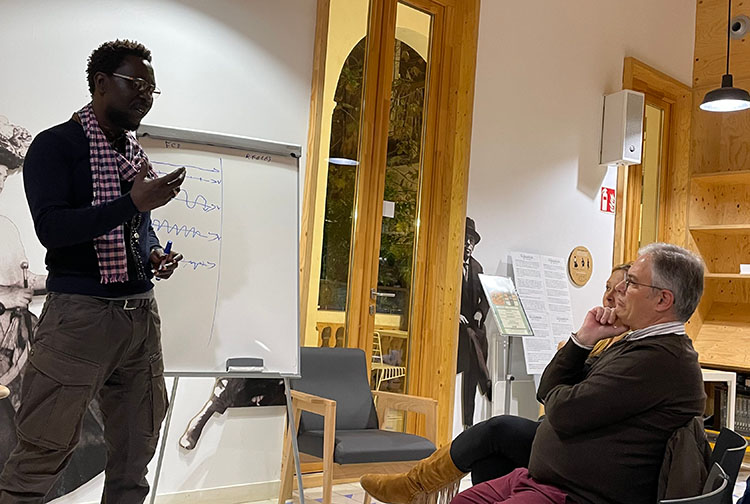

Les criptomonedes han revolucionat el sistema financer mundial, però com tota nova tecnologia genera moltes preguntes. Hem preparat un petit glossari dels termes bàsics que hauries d’entendre per a iniciar-te en el món de les criptodivises.
Les criptomonedes, també conegudes com a criptodivises o monedes digitals, són una divisa alternativa que es pot definir com un actiu digital que fa servir un xifratge criptogràfic per garantir la seva titularitat, assegurar la integritat de les transaccions, i controlar la creació d’unitats addicionals. Dit això, hi ha uns conceptes clau que cal tenir clars a l’hora d’entendre el funcionament de les criptomonedes.
Blockchain
El ‘blockchain’, o cadena de blocs en català, és una tecnologia que permet fer transaccions entre dues o més persones sense la necessitat d’intermediaris. Ve a ser el llibre de comptabilitat on es guarden totes les operacions distribuïdes en ordinadors, que poden estar en qualsevol part del món, interconnectats a través d’una xarxa Peer-To Peer (P2P), d’igual a igual, i sense la necessitat d’un servidor central. Es tracta d’una tecnologia que facilita la descentralització d’aplicacions financeres i qualsevol altre registre digital. A més, es considera molt segura perquè només es pot modificar el registre de tot el que ha passat a la xarxa si totes les parts hi estan d’acord.
Mineria
Mentre que en el sistema monetari tradicional, els Governs imprimeixen diners en funció de les seves necessitats, la creació monetària en l’ecosistema de les criptomonedes més populars, com per exemple el Bitcoin, està limitada. A més, les criptomonedes no s’emeten i queden disponibles per a tothom, es posen en circulació en blocs encriptats que han de ser desxifrats. D’aquí ve el concepte de la mineria de les criptomonedes, un procés computacional mitjançant el qual un conjunt d’ordinadors, els miners connectats a la xarxa, reben un nou algoritme per a resoldre un problema matemàtic, que, un cop solucionat, es recompensa amb una comissió per l’emissió d’una nova unitat de la criptomoneda, que s’afegeix a la cadena de blocs.
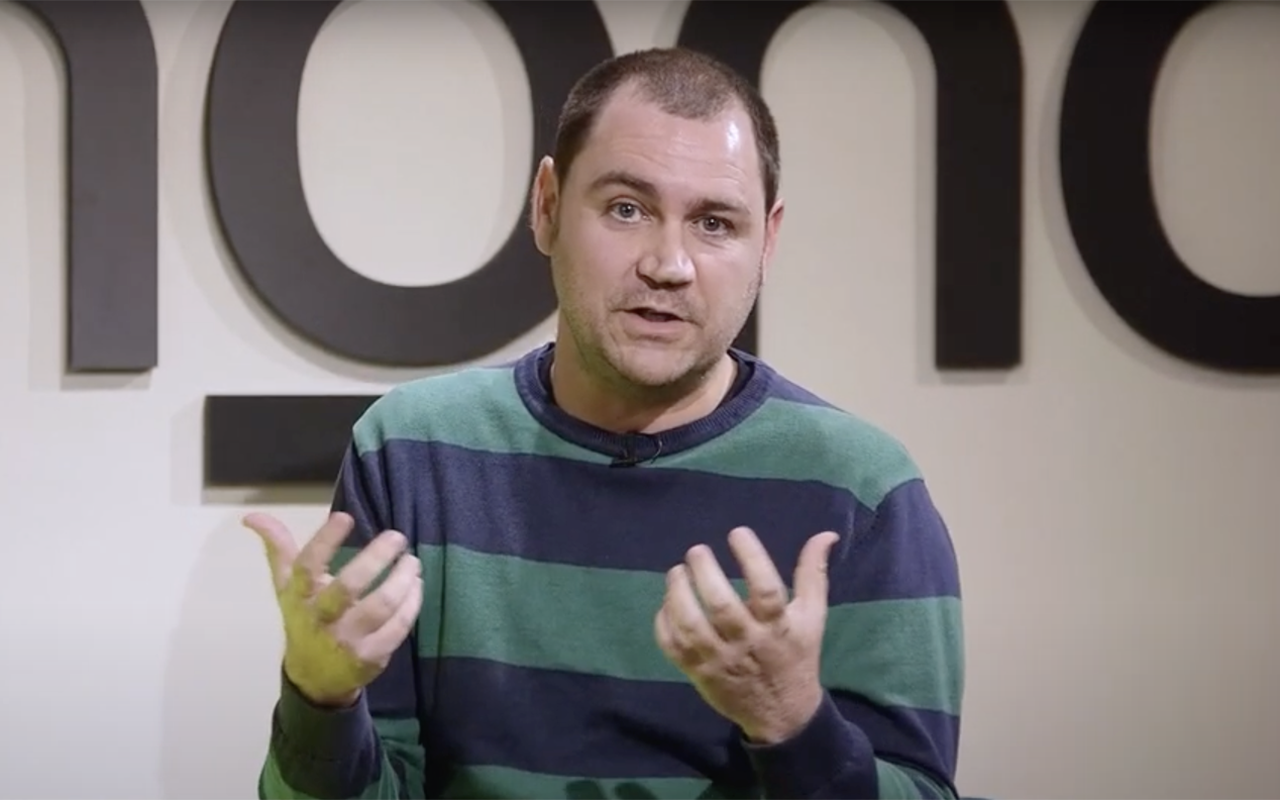
Moneders
Els moneders de criptomonedes o ‘wallets’ són moneders virtuals que ens permeten gestionar les nostres criptomonedes. La principal diferència amb altres moneders virtuals que podem trobar a molts bancs resideix en la seguretat que ofereix el seu programari, permetent un control absolut de les claus públiques i privades per signar transaccions i operacions executades amb criptomonedes a través de la xarxa blockchain. L’ús d’aquests moneders és indispensable a l’hora d’administrar monedes digitals basades en la criptografia, i que no existeixen en el món físic.
Staking i Hodling
El concepte de ‘staking’ consisteix en adquirir criptomonedes i mantenir-les bloquejades en un moneder amb la finalitat de donar suport a la seguretat i funcionament de la cadena de blocs. A canvi rebrem un guany, o recompensa, en forma de criptomonedes addicionals. El ‘hodl’ és un procés similar, però en aquest cas els actius no estan bloquejats i els pots utilitzar lliurement. Es tracta d’una opció que fan servir inversors que volen mantenir els seus actius durant un llarg període de temps amb l’esperança que es revalorin.
Tokens
Tot i que els conceptes de token i criptomoneda es poden considerar com a sinònims, la distinció està en el fet que les criptomonedes tenen una cadena de blocs pròpia, mentre que els tokens s’emeten en una altra cadena de blocs, com per exemple Ethereum. Un token és una unitat de valor emesa per una persona o per una empresa privada amb la qual pots representar diferents objectes dins d’una cadena de blocs. És un valor transferible dins de la xarxa de blockchain, però que no té un valor real fora d’ella, semblant al que ens passaria si tinguéssim fitxes d’un casino o punts d’una aerolínia. Per tant, un token pot tenir diferents finalitats: des de donar accés a més funcionalitats en un joc en línia, a poder ser intercanviat per objectes reals, col·leccionisme, participar en un esdeveniment …
11Onze és la fintech comunitària de Catalunya. Obre un compte descarregant la super app El Canut per Android o iOS. Uneix-te a la revolució!
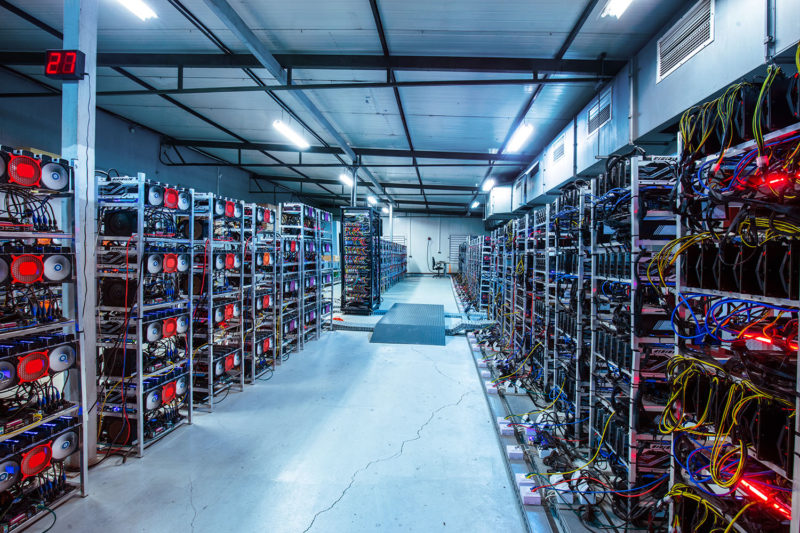


L’acceleració de la digitalització, precipitada per la pandèmia, no ha fet més que confirmar la inevitabilitat de la transformació digital de la nostra societat. Una revolució tecnològica que ha canviat la nostra manera de treballar, comprar, estudiar i comunicar-nos, però que posa en qüestió aspectes vinculats amb les relacions personals.
En un món interconnectat on Internet, les xarxes socials i les eines telemàtiques han canviat radicalment la manera de comunicar-nos, ens hem acostumat a parlar davant d’una pantalla, a resoldre els assumptes més trivials del nostre dia a dia asseguts al sofà, a fer les compres des del llit i a treballar en pijama.
La comunicació electrònica ha augmentat la capacitat d’interacció entre les persones, i ens permet aconseguir una productivitat i eficiència sense precedents, tant en l’àmbit corporatiu com individual. L’auge del teletreball ha significat un canvi en positiu per molta gent, especialment pels que han experimentat una millora en la conciliació de la vida personal i laboral. Tanmateix, pels nadius digitals que s’han convertit en nòmades digitals que han fet del món la seva oficina.
La normalització de la convivència entre persones i intel·ligència artificial ens ha permès agilitzar les interaccions amb l’administració, establiments de comerç digital i entitats financeres. Ja no és necessari fer cua a una oficina física d’un banc, d’una asseguradora, o a la del SOC, podem fer pràcticament totes les gestions des del mòbil. Així mateix, han sorgit moltes noves feines basades en les tecnologies digitals, impensables només fa uns anys.
La importància de la interacció física
Tot i l’innegable progrés que ha suposat la transformació digital de la nostra societat, la realitat d’aquesta revolució no és tan idíl·lica com alguns volen dibuixar. L’absència física, intrínseca del món digital, presenta reptes pel que fa a l’empatia entre persones acostumades a l’anonimat dels espais virtuals, les interaccions personals entre treballadors, o la bretxa digital entre la gent més vulnerable i la resta de la societat.
La transformació digital ha propiciat que les fronteres entre el món físic i el digital siguin cada vegada més borroses. I, si ja tenim dificultats en adaptar-nos a aquest canvi de paradigma, pensem que el boom del metavers, l’Internet de les Coses, els NFT i la intel·ligència artificial encara ens acostaran més a una realitat virtual semi immersiva, que deixarà ‘fora de joc’ a una part significant de la població.
En aquest context, es fa evident la necessitat d’abordar de manera integral els canvis socio-tecnològics que estan definint i assentant les bases de la societat del futur. No només per assegurar-nos que la tecnologia segueixi sent una força positiva de progrés, sinó també, per evitar que part de la societat es quedi enrere, o que la immersió en el món digital castri l’essència del que ens defineix com a persones.
11Onze és la fintech comunitària de Catalunya. Obre un compte descarregant la super app El Canut per Android o iOS. Uneix-te a la revolució!



The fusion of new technologies and modern capitalism is quickly transforming our society. Technocapitalism is characterised by the hegemony of large technological corporations, where the digitalisation of information and communication establishes the basis for creating wealth and power.
The technological revolution we have experienced over the last few decades has evolved modern capitalism, generating new ways of creating wealth in the digital era. Technology giants such as Alphabet, Amazon, Apple and Meta have reshaped the socio-economic model, but this paradigm shift spurred by technocapitalism has also had some negative impacts on society.
Data protection and loss of privacy
One of the pillars of technocapitalism is the massive accumulation and processing of personal data. We share a lot of personal, public and private information, sometimes consciously, sometimes unconsciously. Tech companies use big data about users’ searches, conversations and preferences to predict and influence their behaviour. This has led to the monetisation of our privacy, which is sold to the highest bidder for commercial purposes.
Some big digital platforms justify the legitimacy of this business model by arguing that the commercialisation of user information covers the costs of their services. However, this loss of privacy not only means that we are the product, i.e. that our personal information becomes a lucrative asset for these companies, but also that it can be used to manipulate us.
These algorithms designed to keep us hooked on social media are not only destroying community bonds and our capacity for physical interaction, but they are also shaping our political, social and economic preferences – often without us being aware of it – leading to misinformation and social polarization. The Cambridge Analytica scandal is just one of many examples of how these corporations can misuse our personal information.
Monopolisation, dehumanisation and job insecurity
The success of big tech has resulted in the creation of monopolies and oligopolies that completely dominate the global market. These companies have inordinate power, not only economically, but also in terms of political and social control. This can lead to enormous inequalities, both between companies and between individuals.
The hegemonic control of the market by some of these corporations eliminates competition, castrates innovation and concentrates wealth in a few hands. Their power to influence public and international policy facilitates the promiscuous relationship between politics and business, where private interests and political power mix, undermining state sovereignty and democracy.
While digitalisation and robotisation have created new economic sectors, they have also led to the casualisation of some jobs. In the technocapitalist world, many employees are subject to unstable working conditions, temporary contracts or abusive practices, especially in sectors such as customer service, e-commerce logistics and service platforms like Uber or Deliveroo.
Similarly, the replacement of human workers by robots or algorithms is becoming a tangible threat. Physical and intellectual labour is being replaced by software with the promise of greater efficiency, but this has led to the destruction of traditional jobs and a growing polarization between skilled and unskilled workers. Other jobs requiring creativity, until recently considered safe from digital bots, are being threatened by the evolution of artificial intelligence models.
On the other hand, the inevitability of the digital transformation of our society has not been evenly distributed. Technocapitalism has accentuated the digital divide and the social inequalities of those with limited internet access or little knowledge of new technologies who are educationally, economically and socially disadvantaged.
11Onze is the community fintech of Catalonia. Open an account by downloading the super app El Canut for Android or iOS and join the revolution!


The Quantum Financial System (QFS) will introduce a new decentralised system of cross-border interbank payments based on a digital currency underpinned by physical assets such as gold.
While the world of financial services is constantly evolving, the Quantum Financial System (QFS) has the potential to revolutionise a banking sector that is often constrained by legacy systems that are overstretched by the need to adapt to the possibilities offered by new technologies.
Before delving into the role of gold within the QFS, it is important to understand that it is a new technological development that would use quantum computing and cryptography through a blockchain platform which would allow for secure and fast transactions without the need for intermediaries such as banks and financial institutions.
One of the main advantages of QFS is its ability to prevent fraud and money laundering, which are significant concerns in today’s financial system. This would be achieved through the use of advanced encryption and authentication technologies that would ensure the immutability of data, preventing manipulation and guaranteeing the integrity of transactions.
In addition, a quantum financial system would be particularly useful in applications where algorithms are fed by real-time data streams, facilitating the transfer of information and enabling near-instantaneous financial transactions, which customers could see immediately updated on their digital platforms.
The role of gold in the QFS
One of the ways in which the QFS could revolutionise the financial sector is through the creation of a digital currency backed by physical assets. This would not be a cryptocurrency but a digital currency that could be backed by physical gold, which would guarantee its value and stability. Thus, only gold-backed coins with a digital gold certificate would be able to participate in the transactions of a QFS.
The printing and pouring of large amounts of money into the economy through increasingly unsustainable fiscal deficits are damaging the credibility of the global fiat currency system and deteriorating government finances. It is therefore not surprising that economic uncertainty and loss of confidence in fiat currencies incentivise a return to fiat currencies backed by safe-haven assets such as precious metals.
In this context, gold is likely to play an increasingly important role in supporting currencies and transactions, a monetary system in which the value of currencies is underpinned by their convertibility into gold. The example of the QFS is not unique; Zimbabwe is about to introduce a gold-backed legal tender digital currency in order to help stabilise the economy in the face of the rapidly depreciating Zimbabwean dollar. A trend that some analysts see as an unmistakable sign of a paradigm shift in the international monetary system.
If you want to discover the best option to protect your savings, enter Preciosos 11Onze. We will help you buy at the best price the safe-haven asset par excellence: physical gold.


The quantum financial system (QFS) is a new technological development that promises to revolutionise how we interact with money, streamlining and democratising wealth generation while ensuring privacy and data integrity.
In technical terms, quantum computing is fundamentally different from traditional computing. While current computing uses bits, quantum computing uses qubits. Bits can only work with binary results, i.e. from two possibilities, 1 or 0, whereas the electrons in the qubit can calculate all possible combinations at the same time, known as quantum superposition.
This different approach allows very complex calculations to be performed in minutes or hours, which would require months or years with today’s computers. Quantum computing, therefore, has the potential to solve problems of exponentially growing complexity that classical computers would be unable to tackle.
At a time when immense amounts of data are generated and have to be processed at high speed, quantum computing makes it possible to create new algorithms capable of analysing a multitude of data or encrypting and decrypting highly complex information faster. It is accordingly emerging as one of the key technologies in the profound transformation that the economy and society are undergoing through Industry 4.0.
A quantum financial system?
A quantum financial system (QFS) is a hypothetical financial system that would use quantum computing technology and quantum cryptography through a blockchain to manage financial transactions and data. Quantum banking could bring several advantages over traditional financial systems, such as increased security, faster transaction processing times and more sophisticated risk management capabilities. A new technological concept that would revolutionise the way we interact with money, offering a myriad of new financial possibilities for businesses and individuals.
One of the main advantages of QFS is that the data is immutable and cannot be manipulated by any malicious actor. This is because a QFS would issue a digital number for each currency (dollar, euro, etc.) in each bank account and the physical (GPS) position of each of these currencies will be monitored in real-time. That is, you will know exactly where it is, when it has been transferred, the account number and the details of anyone who has had access to the account.
Furthermore, a new global network for the transfer of funds that would protect all parties involved within the banking system would have the potential to replace the current US-controlled SWIFT system, democratising a global transaction system that is currently totally politicised.
Cryptocurrencies and quantum currencies
At first glance, it might seem that a quantum currency system would be very similar to a cryptocurrency system: decentralised, encrypted, blockchain, faster, and more efficient… In practice, however, they are two concepts with fundamental differences. It is not a cryptocurrency, but a digital currency backed by physical assets.
The two differ in the fact that quantum variations exist in physical form, which makes them more analogous to fiat currency than to their cryptographic cousins. Also, only gold-backed currencies with a digital gold certificate would be able to participate in the transactions of a QFS. This would assign a serial number to the gold certificate as a reference to a gold piece held in reserve to support the currency, assets that would determine the amount of currency accessible in each country.
Ultimately, a quantum financial system could be part of the solution to the problems currently facing the traditional financial system, addressing the lack of transparency, data insecurity, corruption and the intrinsic volatility of the lack of trust in the current monetary system.
11Onze is the community fintech of Catalonia. Open an account by downloading the super app El Canut for Android or iOS and join the revolution!