Less product for the same price
Although reducing the weight of packaged products to mask a price increase is not new, persistent inflation has led many brands to use this practice to subtly make their products more expensive. In this episode of La Plaça, Gemma Vallet, director of 11Onze District, and Carolina Rafales, Product Manager, talk about the current economic situation and explain what downsizing is.
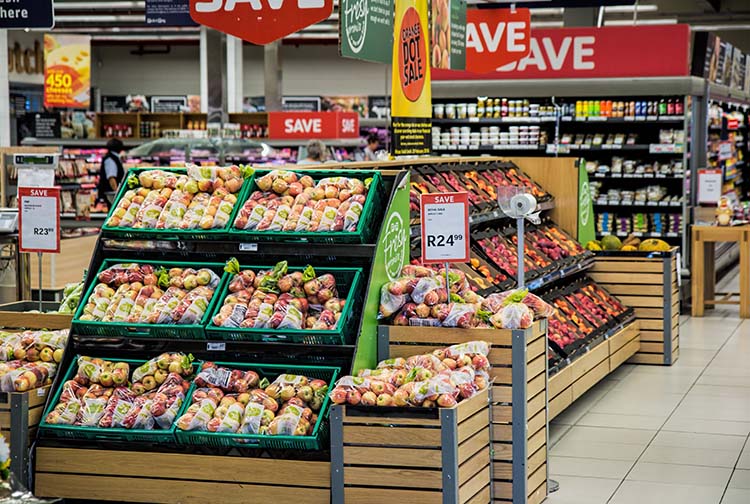
When applied to products sold in supermarkets, the term downsizing refers to offering less quantity of product for the same price, subtly reducing the amount of product to mislead consumers. This practice is also known as shrinkflation, a term credited to the British economist Pippa Malmgren.
As Gemma Vallet explains, In a situation where the CPI or inflation is getting out of hand, brands ‘use strategies to make you pay more for products’. Although, in this case, this is not an illegal marketing practice, consumer organisations warn that it is questionable and unethical because it is done with the intention of raising prices without the consumer realising it.

A drop in inflation that is not noticeable in food prices
Luis Planas, the Spanish Minister of Agriculture, Fisheries and Food, says he is “absolutely convinced” that food prices will go down, but asks consumers for “patience”, as the reduction in inflation will still take time to be reflected in the prices of supermarket products.
Given the rising cost of the shopping basket, the measures to limit the impact of inflation on consumers’ pockets have proved to be totally insufficient. The VAT reduction on foodstuffs seems to have served more to increase the commercial margins of distribution chains than to alleviate the precariousness of many families. “The situation is worrying, but despite the measures that have been taken, the market is the market, and it is difficult to foresee its impact in the short term”, stresses Carolina Rafales.
11Onze is the community fintech of Catalonia. Open an account by downloading the app El Canut for Android or iOS and join the revolution!


History shows that stock markets usually go down in the short term when central banks decide to raise interest rates. There are several reasons for this phenomenon.
In March, the US Federal Reserve (Fed) raised the money rate by a quarter point, bringing it to between 0.25 % and 0.50 %. Although the move came as no surprise given the need to control high inflation, it was a turnaround in the Fed’s policy, which had kept the price of money at almost zero since the start of the pandemic.
This increase will not be the only one in 2022. The Fed itself estimated in March that rates would end the year at 1.9%, compared to an initial forecast of 0.9%. However, this new forecast is likely to fall short. The president of the Federal Reserve Bank of St Louis, James Bullard, has publicly advocated a year-end interest rate of 3.5 %. And the markets of futures already anticipate it to be between 2.5 % and 2.75 %.
The European Central Bank has been so far reluctant to raise interest rates, but this is already an option if inflation continues to run rampant.
It is clear that central banks on both sides of the Atlantic Ocean have already started to withdraw the huge monetary stimuli deployed to alleviate the effects of Covid-19 on the economy. What could be the consequences of raising the official price of money?
A fragile equilibrium
The economy is a game of trade-offs between different variables. Cheap money stimulates economic transactions, but it also leads to higher inflation, which can end up compromising economic growth. High interest rates cool the economy and curb inflation, but can also strangle growth.
When economic bubbles occur or inflation spikes, central banks are forced to raise interest rates to stabilise the system. The difficulty is to do so without stifling the economy. While in recent years central banks have financed governments at rock-bottom prices and the private sector has had cheap money to invest, inflation is forcing a change in monetary policy. Mortgages will become more expensive, as will all other loans taken out by companies and individuals.
Unfortunately, History teaches us that the consequences of a restrictive monetary policy cascade. More expensive credit translates into lower investment, which slows the economy and can raise the spectre of unemployment.
Why does the stock market suffer?
In general, the higher cost of money is bad news for corporate profitability for several reasons.
- Consumer access to credit is more expensive, so demand tends to fall, which hurts companies’ bottom lines.
- Money also becomes more expensive for companies, which lowers the profitability of their investments on credit, limiting their profits.
- In the case of a high level of indebtedness, the increase in interest rates can even put companies in serious financial difficulties, as they have to face higher interest rates than expected.
- In addition, higher interest rates are passed on to bank deposits and the bond market. And higher yields on these products attract some of the volatile stock market investment, which can drive down share prices.
A bad deal in the short term
The fact is that on four of the last seven occasions that the Fed raised interest rates (1994, 1999, 2004 and 2015), the return on the S&P 500 index, which includes 500 large US-listed companies, was negative within three months of the move. It only recovered in the longer term.
Moreover, rising rates tend to hurt less stable stocks in particular. Sectors such as commodities or established companies, which usually offer dividends, tend to fare better in the face of this measure.
If you want to discover the best option to protect your savings, enter Preciosos 11Onze. We will help you buy at the best price the safe-haven asset par excellence: physical gold.



In a study by the OCU, Carrefour and Alcampo stand out as the supermarket chains that have increased the most, by 45% and 43% respectively. The consumer organisation demands that the VAT reduction be maintained beyond June and that it also be applied to meat and fish.
It is no secret that filling the shopping basket has a higher cost than a few years ago, even so, a report by the Organisation of Consumers and Users (OCU) which has analysed more than a hundred consumer products in seven large chains, and which includes more than 55,000 prices, it warns that the prices of food and drug store products in supermarkets have risen by an average of 38% in three years.
The study includes the online supermarket prices of Alcampo, Carrefour, Condis, Día, El Corte Inglés, Eroski and Mercadona in ten different cities throughout Spain. The chains that have risen their prices the most are Carrefour and Alcampo, with 45% and 43% respectively. They are followed by Mercadona, right in the middle, with 38%, and El Corte Inglés (Supercor, Hipercor and Opencor) with 37%.
Eroski is below the average, with 34%, and among the chains with the lowest price increases are Condis, with 33%, and Día, with 32%. The only large chains not taken into account in the study are Lidl and Aldi, as they do not have an online shop.
Mild olive oil (225%), white sugar (91%), orange juice (81%), eggs (67%) and rice (66%) are the foods that have risen most in price. The most moderate rises, although they are above 20%, were recorded for fruit and vegetables and drugstore products.
More subsidies in front of persisting inflation
The Consumers and Users Organisation recognises that there are factors that justify this increase to some extent, such as the rise in the cost of fertilisers or fuel. Still, it warns that prices at points of sale can be up to six times higher than the prices received by farmers and stockbreeders.
Faced with this scenario, the consumer organisation demands that the VAT reduction be extended beyond June and that it also be applied to meat and fish, given that 50% of families have difficulties in acquiring them.
On the other hand, it calls for a substantial increase in the 200 euro cheque for families with an income of less than 27,000 euros, as well as an increase in the number of beneficiaries, raising the income limit. It also points out that compliance with the Law on the Food Chain should be monitored more closely and that distributors should try to contain their margins so as not to feed the inflationary spiral.
If you want to discover the best option to protect your savings, enter Preciosos 11Onze. We will help you buy at the best price the safe-haven asset par excellence: physical gold.


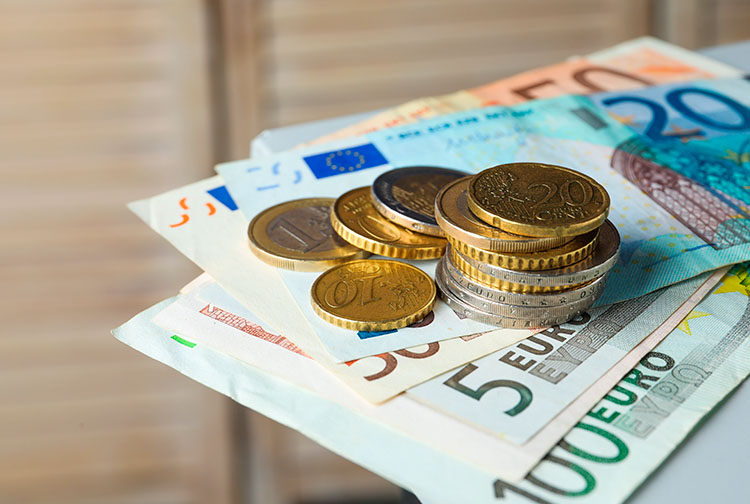
On 21 February the Fábrica Nacional de Moneda y Timbre (FNMT) received authorisation from the Council of Ministers to formalise the purchase of 40 million euros in gold. The intention is to mint investment coins and offer them as safe-haven assets against inflationary pressure and market volatility.
It is no secret that in front of an economic crisis, gold is a highly appreciated asset for investors. World gold demand rose 18% in 2022 to 4,741 tonnes, the highest in over a decade. Gold purchases by governments and central banks soared to a record 1,136 tonnes not seen in 55 years.
Given the current context of inflation, market volatility, bank failures, the low return that banks are offering on deposits, and the rising interest rates of the European Central Bank (ECB), it is not surprising that not only central banks but also more and more investors are diversifying their portfolios into tangible, low-risk securities such as gold.
Investment coins, also known as bullion coins, minted in precious metals, generally gold and silver, play a key role in this savings diversification. The numismatic value of a coin’s craftsmanship, design, historical significance, commemorative value and physical condition can drive demand from collectors and investors.
A new gold rush
The FNMT did not want to be left behind and in 2021 decided to start minting Spanish bullion coins, bringing to the market a whole series of special editions of gold coins, following in the tradition of other world mints such as the Royal Mint, South African Mint or the Münze Österreich.
The escalating demand for gold has also been reflected in the forecast quantities of gold coins to be minted by the FNMT. Whereas for the first two issues, the agreements concluded with the gold suppliers did not exceed 10 million euros, this time the Council of Ministers has authorised the purchase of 40 million euros worth of gold for the production of investment and collector coins.
This exponential increase in the procurement value responds to the volume of sales made previously and to the evolution of the gold market over the last two years, together with the current and short-term economic context. This fact seems to confirm that physical gold as a safe-haven asset par excellence, whether in bullion or coin format, has not only not gone out of fashion, but is more relevant than ever when it comes to protecting our savings.

Gold Seed, a good option to grow savings.
Protecting savings with physical gold has been one of 11Onze’s main contributions to its community, and now the range of products is expanding. This is why, in the face of volatility, still high inflation and the growing crisis of confidence in the banking system, gold is once again strengthening its position as a safe-haven asset. Discover Gold Seed at Preciosos 11Onze.



Els ‘forwards’ i els ‘swaps’ de divises generen futures obligacions de pagament que no apareixen en els balanços ni en les estadístiques oficials de deute. Segons el Banc de Pagaments Internacionals, aquest deute ocult ascendeix a 39 bilions de dòlars en el cas dels bancs i a 26 bilions en el de les entitats no bancàries amb seu fora dels Estats Units.
Els ‘forwards’ de divises són contractes vinculants que fixen el tipus de canvi per a la compra o venda d’una divisa en una data futura, mentre que els ‘swaps’ de divises són acords entre dues parts per intercanviar pagaments d’interessos de préstecs en dues divises diferents.
Els primers serveixen de cobertura davant la volatilitat del mercat canviari. Els segons solen utilitzar-se per aconseguir finançament en moneda estrangera amb un tipus d’interès més favorable que els dels crèdits que es poden obtenir en un mercat estranger. Però ni els uns ni els altres es reflecteixen en els balanços de les empreses ni en les estadístiques oficials de deute.
Creixement exponencial
El problema és que, com adverteix el Banc de Pagaments Internacionals (BIS per les seves sigles en anglès), a mitjan 2022 els bancs de fora dels Estats Units amb accés directe al crèdit de la Reserva Federal devien uns “39 bilions de dòlars” si sumem els seus ‘forwards’ i ‘swaps’ de divises. És més del doble del deute en dòlars que consta en els seus balanços i més de deu vegades el seu capital.
En el cas de les entitats no bancàries amb seu fora dels Estats Units, l’import ascendeix a “26 bilions de dòlars”, el doble del deute en dòlars que consta en els seus balanços i 9 bilions més del que devien l’any 2016.
El volum total d’aquest deute gairebé s’ha doblat respecte a l’any 2008. Els inversors han aprofitat la relaxació monetària i uns tipus d’interès ultrabaixos per a augmentar el seu palanquejament a la recerca de majors rendiments.
Fora del balanç
Aquest mercat de divises porta implícit un enorme endeutament en dòlars que queda ocult, ja que, a diferència d’altres derivats com els acords de recompra o ‘repos’, les obligacions de pagament dels ‘forwards’ i ‘swaps’ de divises es registren fora del balanç.
Les obligacions de pagament d’aquests derivats ascendeixen a quantitats astronòmiques. Considerant totes les divises, els imports pendents a la fi de juny de 2022 van assolir els 97 bilions de dòlars, 30 bilions més que l’any 2016 i pràcticament el mateix que el PIB mundial.
Només l’abril de 2022 el volum d’operacions amb aquesta mena de derivats es va acostar als 5 bilions de dòlars diaris, segons el BIS, dos terços de la facturació diària mundial de divises.
Protagonisme aclaparador del dòlar
Com a moneda vehicular, el dòlar es troba a un costat del 88% de les posicions vives, segons dades del BIS. I és que fins i tot un banc que vulgui fer un ‘swap’ entre dues divises diferents del dòlar, recorreria a aquesta moneda com a pas intermedi.
Com destaca el BIS, “gran part d’aquest deute és a molt curt termini”, per la qual cosa “les necessitats de refinançament resultants provoquen restriccions de finançament en dòlars”. De fet, gairebé quatre cinquenes parts dels imports pendents a la fi de juny de 2022 vencien en menys d’un any.
La falta d’informació directa sobre aquests derivats dificulta a les autoritats monetàries preveure la magnitud i la geografia de les necessitats de refinançament en dòlars. Com a conseqüència, resulta més complicat restablir el flux fluid de dòlars a curt termini en el sistema financer quan és necessari, especialment en temps de crisi i quan el dòlar ha experimentat una important revaloració.
Risc sistèmic?
Com adverteix el BIS, el palanquejament ocult i el desajustament de venciments en les carteres dels fons de pensions i les companyies d’assegurances “podrien plantejar un repte polític” per garantir el flux fluid de dòlars en la pròxima gran crisi. Cal no oblidar que la demanda de dòlars augmenta en moments d’incertesa en els mercats.
A més, donada l’enorme escala d’aquest deute, un volum rellevant d’impagaments podria tenir greus efectes sistèmics.
Si vols descobrir la millor opció per protegir els teus estalvis, entra a Preciosos 11Onze. T’ajudarem a comprar al millor preu el valor refugi per excel·lència: l’or físic.


Catalonia attracted €4,643.9 million in foreign investment during 2023, the highest figure since 2016. The foreign capital influx rebounded in the last quarter of the year and soared to 2,486.9 million, almost half of the amount accumulated in the whole year.
Foreign capital investment in Catalonia reached 4,643.9 million euros in 2023, according to data published on Wednesday by the Ministry of Economy, Trade, and Enterprise. This figure is almost 18% higher than the previous year, when inbound foreign capital was 3,936 million euros. These figures represent the highest volume of investment in the historical series and the highest since 2016.
It is worth highlighting the influx of capital in the last quarter of the year when it shot up to 2,486.9 million, almost half of the total for the whole year. In Spain as a whole, Catalonia was the second community that accumulated the most foreign investment, only behind Madrid, 15,323.2 million.
Even so, it should be borne in mind that the Spanish ministry’s statistics count foreign investments in the territories where companies have their headquarters, regardless of where they subsequently materialise. This is known as the Madrid capital effect on the rest of the territories and, in the Catalan case, it also responds to the propaganda campaign of the State government to sell the idea that companies were fleeing Catalonia as a result of the referendum of 1 October 2017.
By sectors, in Catalonia over the last year, investments in metallurgy (414 million), metal products (391 million), programming and consultancy (256 million), real estate activities (255 million) and financial services (123 million), among others, have stood out. In terms of countries, Germany (847 million), Cyprus (91 million), Brazil (91 million) and Belgium (66 million) stood out.
A decline in investment in Madrid and Spain as a whole
Despite the bias in the data collected, the investment of foreign capital in Madrid fell by 12.7% year-on-year. Similarly, in Spain as a whole, foreign investment fell by 18.5% over the past year, to 28,214.9 million euros. This is a far cry from the figures recorded in 2022 when investment in gross terms reached 34,178 million euros.
This total is also nowhere near the 55,568 million achieved in 2018, the best year to date for attracting foreign capital. The moderation of economic growth, political instability, the rise in financial costs and mismanagement in the execution of European funds are some causes behind the drop in investment in the State as a whole.
The extraction of crude oil and natural gas (3.4 billion euros) is the sector that attracted the most foreign investment in Spain, followed by wholesale trade (3.015 billion), telecommunications (2.472 billion) and electricity and gas supply (2.080 billion).
In terms of the countries of origin of these investments, Luxembourg is the leader with 10,575 million euros. A country that is often the base of operations for many international investors thanks to its low taxation. It is followed by the United Kingdom (3.27 billion), Germany (2.943 billion), the Netherlands (2.287 billion) and France (1.929 billion).
Record foreign investment attracted by the Generalitat
The publication of the ministry’s data comes just days after the Generalitat announced a record 880 million euros in foreign investment attracted through ACCIÓ, its agency for business competitiveness.
Although this figure did not include the total published this week by the Spanish government department, it is equivalent to an increase of 42% over the previous year and is the highest in the historical series, which began in 1985.
This has resulted in the creation of 4,533 jobs, 31% more than in 2022, and the materialisation of 112 investment projects by foreign companies, 19% more than the previous year, according to the balance sheet of Catalonia Trade & Investment, the ACCIÓ Foreign Investment and Companies unit.
The Catalan Minister for Enterprise and Employment, Roger Torrent, stressed that “these are extraordinary, record figures, which show how competitive Catalonia is in the business world, that international investors have confidence in our country and that we have all the ingredients to make investments with guarantees and growth potential”.
11Onze is the community fintech of Catalonia. Open an account by downloading the app El Canut for Android or iOS and join the revolution!



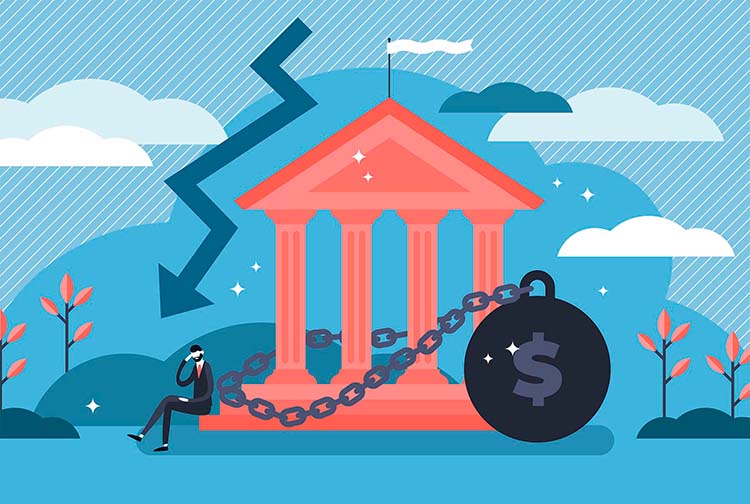
Global debt reached a new record high in 2023, standing at 289.6 trillion euros. This upward trend has accelerated at an alarming rate over the last decade, calling into question its sustainability and representing a ticking time bomb for the world economy.
Global household, corporate, bank, and government debt totalled 289.6 trillion euros at the end of 2023, up from 275.4 trillion euros in 2022. A new record according to calculations by the International Institute of Finance (IIF). The total volume of sovereign debt and corporate bonds is almost 92 trillion euros, a figure similar to global GDP, while household debt has risen to 53.4 trillion euros.
This will lead to growing funding pressures, especially in emerging economies, where the amount of corporate bonds maturing in the next three years represented 51% (EUR 4 trillion) of the total in 2023.
This global fiscal deficit has been spurred by the growth of debt in major economies, especially that of the United States, which according to the IMF reached 123.3% of GDP in 2023 and will rise to 126.9% later this year. In turn, the debt of the Chinese economy grew to 83% of GDP in 2023, is expected to reach 87% in 2024 and to exceed 100% in 2027.
The IMF forecasts that global public debt will rise by one percentage point of GDP each year over the medium term, and warns that at the projected rate “global debt will reach 100% of GDP by the end of the decade”. Revenue and expenditure gaps in national budgets are expected to add €4.9 trillion annually between 2024 and 2027.
The debt burden
Uncontrolled public debt is a burden on the economy, slowing productivity, raising taxes and making it harder for the private sector to finance itself. Each year that this accumulated debt increases, the burdens become heavier and economic risk grows.
The long-term trend is one of inexorably rising debt, driven by the chronically high deficits of developed market governments. The burden of debt repayment imposes a heavy toll on future generations, diverting funds from spending on infrastructure, education and social services.
Politicians would have people believe that slowing economic growth, falling real wages and persistent inflation are external factors that have nothing to do with the actions of their governments. They rarely explain that these same governments are directly responsible for the fiscal policy, geopolitical conflicts and excessive money printing that lie behind deficit spending and the loss of peoples’ purchasing power.
As long as it is sustainable, debt is a necessary instrument for growth, yet the increase experienced in recent years is far from sustainable. This is forcing each nation to devote a greater proportion of its income to cover these debt obligations. A fact that, in practice, can end up having devastating consequences for a large part of the population.
If you want to discover the best option to protect your savings, enter Preciosos 11Onze. We will help you buy at the best price the safe-haven asset par excellence: physical gold.
Yes, Spain achieved record revenues in 2022 thanks to a higher tax burden, which is especially suffered by the middle classes. Moreover, the geographical distribution is unequal, as Catalans pay up to 12.5% more income tax than the people of Madrid.
With 255,463 million euros, Spain set a new collection record in 2022, according to data from the Tax Agency. This figure represents an increase of 14% over the previous year, which held the previous all-time high. Of the three main taxes – personal income tax, VAT and corporate income tax – only the latter, which is levied on companies’ business, is still far from the statistical ceiling despite the large increase in corporate profits last year.
These data provide arguments to justify two of the results of a study carried out a few months ago by the Centro de Investigaciones Sociológicas (CIS). The first is that two out of every five participants consider that too many taxes are paid in Spain. The second indicates that 80% of those surveyed regret that taxes are not collected fairly and that those who have the most do not pay.
Higher tax bill due to inflation
The truth is that inflation is increasing taxpayers’ tax bills in two ways. The first is through VAT: if the tax base of a product is higher because of inflation, the amount we pay in VAT also increases. And this is a direct tax, which has no understanding of social classes or purchasing power.
The second is through personal income tax: as salaries are updated to meet the rising cost of living, wage earners can jump up a bracket and be taxed at a higher rate of personal income tax. It should be borne in mind that this tax is based on progressive brackets – the more you earn, the higher the percentage you pay on your income – and the Spanish government has not modified these brackets to bring them into line with the rise in the CPI. Therefore, although the increase in salary is only nominal, as it does not increase our purchasing power due to inflation, we may end up paying a higher percentage of personal income tax.
In practice, workers are paying more taxes every day and are losing real purchasing power. This is a disguised tax increase, which does not require a rise in tax rates and which explains part of the increase in the Spanish State’s revenue. In fact, it is estimated that each taxpayer in Spain paid an additional 199 euros last year linked to the increase in inflation, while in Catalonia this figure rises to 224 euros.
An unjustified increase
Unfortunately, the majority of citizens believe that this increase in the tax bill is not justified: 62% of those surveyed by the CIS think that they receive less from the Administration than they pay in taxes and contributions.
That is why many experts are calling for the personal income tax brackets to be adapted to the increase in the CPI, as well as for the personal and family minimums, reductions and deductions to be adjusted.
This means that this year’s income tax return should raise the current income thresholds by 5.7%, the equivalent of inflation in 2022. This is the only way to maintain the level of the effective tax burden.
The price of debt
A report by the Instituto de Informes Económicos indicates that the tax burden in Spain exceeded 42% in 2022. This percentage is a historical maximum and places it slightly above the 41.7% average in the European Union in 2021, the last year for which data are available.
Tax liabilities in Spain have risen to the highest levels since the financial crisis, according to Eurostat data. The tax burden bottomed out in 2009, at 29.7%. Since then, the percentage has continued to increase at a much higher rate than in other neighbouring countries.
One of the main reasons for this is that Spain’s public debt closed in 2008 at 39.7% of GDP and reached over 120% in 2020. This has led successive governments to increase taxes to meet payments and adjust their financial commitments to the demands of Brussels.
Moreover, experts consider that there is an imbalance in the progressivity of taxes paid in Spain. As a result, there is an excessive concentration of taxes on middle-income earners, who bear the brunt of the tax burden.
Unequal taxation
Income taxation also differs from one autonomous community to another. The Madrid region has the lowest maximum marginal tax rate and Valencia has the highest. At present, Catalonia is above average and would be in the top 10 European countries with the highest marginal rate of personal income tax.
In fact, Catalans pay up to 12.5% more income tax than the people of Madrid. And low-income taxpayers in Catalonia are the ones who pay the highest tax rate in Spain.
We Catalans also fare badly in wealth and inheritance taxes, as these taxes are heavily subsidised in autonomous communities such as Madrid and Andalusia.
Criticism from employers
Once the Generalitat’s budget for 2023 had been approved, the employers’ association Foment criticised the fact that no taxes had been reduced and, on the other hand, the tax burden on wealth taxes had risen by 2%. Its president, Josep Sánchez Llibre, lamented in February that the tax paid on the purchase of a second-hand flat in Catalonia is 66% higher than that paid in Madrid and that there are 15 taxes of its own plus one in development, while in Madrid there are none.
In contrast to those who criticise the Generalitat’s eagerness to collect taxes, some justify these taxes because of Catalonia’s underfunding. Beyond controversy, the Department of Economy has clarified that in 2021 these taxes raised only 295 million euros, which represents little more than 1% of the Generalitat’s revenue.
11Onze is the community fintech of Catalonia. Open an account by downloading the app El Canut for Android or iOS and join the revolution!


Regulators want to sell us the image that digital currencies linked to central banks will empower citizens, but at 11Onze we have long warned that the reality seems to be moving in the opposite direction. A Washington DC-based think tank has just published a report warning that CBDCs pose a threat to our fundamental freedoms.
Projects to introduce central bank-issued digital currencies (CBDCs) are spreading across the global banking sector. Unlike cryptocurrencies such as Bitcoin, CBDCs are not decentralised but are controlled by the central bank of the issuing country. These digital currencies will be subject to the same regulations as traditional currencies and are intended to consolidate government control over payment systems, now threatened by the rise of cryptocurrencies.
Proponents of CBDCs argue that they would improve the efficiency and security of financial transactions, reducing transaction costs for businesses and consumers compared to fiat money. On the other hand, they argue that they could help reduce the shadow economy, since they would be less anonymous than cryptocurrencies and, unlike cash, are fully controllable by the state. Moreover, they say, they would foster greater financial inclusion, allowing easier and safer access to banking products.
In this context, a recently published report by the Cato Institute, a Washington DC-based think tank, analyses the risks of central bank-issued digital currencies and concludes that “CBDCs threaten fundamental freedoms”, as “many of the potential benefits touted by their advocates do not stand up to scrutiny” and that the US Congress should oppose any government plan to issue a CBDC.

IT WAS COMING - Crisis and CBDCs
Destabilising the free market, more control and less privacy
According to the Cato Institute study, the main arguments against the development of a CBDC issued by the US government include fears about its ability to track and control the citizenry, cybersecurity and the potential destabilisation of the free market. Specifically, the government would have unprecedented control over the economy and our money.
The Washington DC-based think tank’s expert analysts point out that supporters of CBDCs who argue that they would improve financial inclusion ignore the innovations that are already taking place in the private sector, as well as what Americans who are not part of the current banking ecosystem really want. A segment of the population that in surveys says is not interested in having a bank account because it doesn’t have enough money, because it wants to protect its privacy, or because it distrusts banks in general. Concerns for which a CBDC would not represent a solution, but rather the opposite.
Moreover, while they recognise that faster settlement of the payment system in the US is a laudable cause, a CBDC would not bring a unique or even additional benefit compared to existing developments in the private sector. Still, it would pose a substantial threat to the privacy and financial freedom of citizens, which has already been eroded for decades.
The institute wants to make clear that “laws designed to fight terrorism, prevent money laundering and collect taxes provide the government with the ability to conduct unchecked surveillance of financial information”, but the introduction of a CBDC could mean the end of what little protection citizens still have left, “as it would give the federal government complete visibility into all financial transactions by establishing a direct link between the government and the financial activity of every citizen”.
11Onze is the community fintech of Catalonia. Open an account by downloading the super app El Canut for Android or iOS and join the revolution!


Increasing inflation over the last two years has changed the habits of many citizens who are working more, cutting back on savings and taking out more loans to cushion the impact of rising prices. Even so, household consumption is recovering to pre-pandemic levels, according to the Bank of Spain.
In its projections published on Tuesday, the Bank of Spain forecasts that the Spanish economy will grow by 1.9% in 2024, one-tenth of a percentage point below the government’s estimate, and cuts average inflation by six-tenths of a percentage point to 2.7%. On the other hand, it improves its outlook for job creation and a reduction in the unemployment rate, calculating that the latter will fall from 12.1% in 2023 to 11.6% in 2024.
This GDP growth will be driven by four factors: population growth, the gradual revival of the global economy, the deployment of European funds and a lower negative impact of monetary policy. All this is for the future because, in another report, the same Bank of Spain analyses what strategies households are using to adapt their consumption, savings and labour supply decisions to cope with the inflation of the last two years.
More work, less saving and more credit
Spanish citizens are working more, either with a second job or working overtime. They are borrowing more than those in other eurozone countries to adjust to rising prices, especially cash-strapped households.
Specifically, the proportion of people who have resorted to credit in Spain is 2.3 percentage points above the average for the European Economic and Monetary Union (EMU), up to a total of 11% of households, in line with the evolution of consumer credit recently observed in the country.
The study also points out that the percentage of citizens who have to work more to counteract the inflationary scenario represents 16% of Spanish households, 1.2 points above the Eurozone average. Eurostat data show that the proportion of people moonlighting in Spain increased by 6.8% between September 2022 and September 2023, compared with an increase of 1% in the EU.
Recovery in household consumption
Paradoxically, even though 32% of Spanish households claim to have reduced their spending and 9% say they have cut back on the purchase of durable goods, such as cars or household appliances, household consumption has remained on the path of recovery in recent quarters and has reached, by the end of 2023, pre-pandemic records.
In this context, the increase in private consumption will continue to be a fundamental element for the Spanish economy during 2024. Especially when we consider that public consumption, which underpinned the economy’s growth during 2023, representing 20% of potential GDP, according to the Bank of Spain, is not sustainable in the long term if the deficit is to be reduced.
If you want to discover the best option to protect your savings, enter Preciosos 11Onze. We will help you buy at the best price the safe-haven asset par excellence: physical gold.