Two women ignored by history books
Throughout our education we have learnt great people that have marked history by their findings or research. The vast majority of them are the names of men who have achieved success. What the books do not tell you is that many of these men have worked together with women, without whom their achievements would not have been possible.
In all sectors of work we find women who have been made invisible simply because they are women. In many cases, their work has even been attributed to the figure of a man who has received all the recognition, and the world of economics is no exception. We want to shine a light on these women who have been left in the shadows and vindicate their contribution to history.
Beatrice Webb, revolutionary ideas
From an early age, Beatrice had many intellectual interests and was very interested in socialist ideas as a result of the revolutionary ideas that were current at the time. She was born in 1858 in Gloucester, England, a time when the working class of the Industrial Revolution suffered indiscriminate exploitation by the bosses and families lived in misery. Driven by this context and her delicate health, Beatrice undertook a practically self-taught education with a strong focus on philosophy, science and literature.
In 1890 she met the socialist intellectual Sidney Webb, who later became her husband. Together they began to work on new theories by holding meetings with other socialist sympathisers where they would argue for hours on different subjects. In 1897 they published what was to be the most important work of their lives and a key instrument for understanding the non-Marxist socialist revolution in England, “Industrial Democracy”.
They are credited with the idea of a state guaranteeing a decent life for its citizens, a term she herself called the house-keeping state. Although they formed a perfect tandem and worked together on different publications, only the name of her husband, Sydney Webb, went down in history as one of the most important social reformers in England.
Anna Schwartz, essential to monetarist theory
If we mention the name Friedman, it is likely that we have heard of him or even recognise him as the father of monetarist theory. And he certainly contributed to the creation of his reputation, but he was helped by Anna Schwartz, a researcher who remained in the shadow of Friedman’s prestige.
Born in New York in 1915, she spent much of her life working at the National Bureau of Economic Research in her native city. In 1963, however, her career took a leap forward with the publication of “A Monetary History of the United States, 1867 to 1960’, a work that came to light thanks to the joint research of Schwartz and Milton Friedman. The work marked the history of the US economy and is still today a benchmark for good economic management and how to avoid fluctuations at the national level.
Friedman was named as the founding father of monetarist theory, relegating Schwartz to second place. In 1976 she received the Nobel Prize in Economics for her work with Schwartz, but she received no mention in the committee or in the public sphere. Years later, British critics highlighted Schwartz’s research, claiming its importance in the development of the theory, but she did not receive recognition.
They are just two examples of women who have contributed to history but who, because they are women, have been relegated to the background, to the shadows. Now, with more resources than before and a more critical eye, we can dust off those figures who, despite having made their contribution, have been excluded from the history books.
11Onze is becoming a phenomenon as the first Fintech community in Catalonia. Now, it releases the first version of El Canut, the super app of 11Onze, for Android and Apple. El Canut, the first universal account can be opened in Catalan territory.



Catalonia is a country with a strong advertising tradition. Barcelona has been the birthplace of internationally renowned advertising agencies, which have been recognised for their creativity. Catalan advertising began more than 150 years ago. At 11Onze we take a look back at the best moments in our history.
The first advertising company in Spain was founded in Catalonia by Rafael Roldós (1846-1918). His family was linked to the world of printing and he began his professional career as an advertising broker for the ‘Diari de Barcelona’ and soon founded Roldós y Compañía in 1872. The exhibition ‘Publicitat a Catalunya 1857-1957. Roldós i els pioners’, which was shown at the Palau Robert, brings together all this legacy.
Today, Roldós S.A. is one of the oldest advertising companies in the world and for more than 100 years it was the example to be followed by the rest of the Catalan advertising agencies. The experience of Roldós was joined by other advertising agencies, such as those of Pere Prat Gaballí, Rafael Bori, Joan Aubeyzon, José Gardó and Malcolm Thomson, who helped to consolidate a profession that mediates between advertisers and the media. At first, of course, advertisements had almost no illustrations and the texts were straightforward. “Hair wash”, “Bargain, really”, “Public notice”, “Great range” were the common slogans to catch the readers’ attention.
The rise of poster art
However, illustrations were gradually gaining ground. Catalonia was also the first place in Spain where the modern poster appeared. Industrialisation and the bourgeoisie were the main driving forces behind Modernisme, a highly charged and precious style, which also incorporated advertising, always in the latest fashion. Especially as a result of the Universal Exhibition of 1888, poster design spread throughout the country, where competitions were even organised. The book that best captures this history is undoubtedly the work directed by Carolina Serra, ‘Història de la publicitat de Catalunya’ (History of Advertising in Catalonia), which highlights the importance of this sector.
Thus, the first modernist poster is by Alexandre de Riquer for a photography brand in 1895. Others by Llorenç Brunet, Modest de Casademunt, Ramon Casas, Joan Llaverías and Francisco de Cidón will soon follow. Possibly the most recognised poster of the period is ‘4 gats. Pere Romeu’ by Casas, in which we see Romeu at the bar of the famous Barcelona restaurant Els Quatre Gats looking directly at the reader. But there are others, such as those for Anís del Mono or Codorniu.
War and repression: the emergence of new formats
With the spread of radio at the end of the 1920s, new advertising formats appeared that changed the whole face of advertising. Advertising was incorporated into the world of education and professionals began to organise themselves into associations. Poster design, moreover, took on a rationalist aesthetic and, especially during the Civil War, political messages and proclamations triumphed. The work of the Propaganda Commissariat of the Republican Generalitat to fight fascism, headed by Jaume Miravitlles, was particularly noteworthy at this time. From this period are the well-known poster-photographs by Pere Català i Pic and the transmedia campaign “El més petit de tots”.
After the Civil War, international isolation and repression led to the complete disappearance of Catalan in advertising. And it was not until the early 1950s that Catalan society once again showed an interest in consumerism. Advertisements such as Potax and Cerebrino Mandri date from this period. But 1956 was the year that marked a before and after, because it was when Televisión Española began its first broadcasts and new advertising agencies appeared that changed advertising formats forever.
The Olympic Games and the rise of the audiovisual industry
It was during the 1960s, 1970s and 1980s that advertising production, art and film were perfected. New ideas were explored, created, innovated and, finally, sold. It must be understood that, at that time, advertising teams had not studied any university degree: they built the profession as they practised it. This is how multidisciplinary teams were formed, with filmmakers, graphic designers, photographers, art directors, producers and commercials.
From the simple messages of the 1960s, such as “OMO lava más blanco”, to filming would take only a few decades. With the advertising boom in the United States and the United Kingdom, the psychedelic photographs and montages of Leopoldo Pomés triumphed. Possibly the most famous was for Terry cognac with the slogan “Terry me va”. Other notable names include Jaime de la Peña and Pepe Fons of Group Films. Peña won the Golden Lion at the Cannes International Advertising Film Festival for the 1979 advert “I Feel Lois”. The Moro brothers, who spread the use of the jingle, also made a name for themselves at that time. Theirs are the “Está como nunca” from Fundador (1960) or the Gallina Blanca advert from the same year, where a hen does a striptease for the camera.
But it was from the 1980s onwards that everything took on a new dimension, culminating in a new image for Catalonia and Barcelona with the 1992 Olympic Games and the production of the Olympic film by the production companies Ovideo, Group Films and Lolafilms. At that time, the underground art of fanzines and cultural magazines had a major influence through illustrators such as Mariscal and Nazario. Group Films was joined by other agencies such as MMLB, RCP and Bassat & Asociados, and Barcelona became the advertising factory for Spain. Nenuco, Cruz Roja, Byly, Trex… By the 1990s, special effects and digital animation were incorporated, and continue to this day.
Advertising is part of our collective memory. That’s why we still remember the song of the language campaign “Parla sense vergonya”, the song “Envàs, on vas?” or the sense of peace of the Audi advert with the slogan “¿Te gusta conducir?”. We have even organised neighbourhood raids to get this year’s La Mercè poster or that of illustrator Paula Bonet. And every summer we eagerly await Estrella Damm’s “Mediterràniament” advert; and every Christmas, the La Grossa and Campofrío ads. Advertising, whether we like it or not, explains us and makes us.
11Onze is the community fintech of Catalonia. Open an account by downloading the super app El Canut for Android or iOS and join the revolution!


The French Revolution, as well as bringing the concepts of liberty, equality and fraternity, also brought the beginning of the homogenisation of metric systems of weights and measures on a global scale. Until then, each territory had its own systems and each, in its own way, had tried to unify them. In 11Onze we take a look at this evolution.
In 1791, France was the first state to adopt the decimal metric system based on the metre and the gram. From then on, the use of the gram and the metre spread throughout the world. But its acceptance as a standard metric system was not approved until 1960, when the International System of Units (SI) was internationally recognised.
It should be borne in mind that the need to measure things has been a human constant since time immemorial. For as long as mankind has had to trade goods, it has used measurement systems, which have been recorded for more than 5,000 years. Over the years, people have used measurements adapted to their circumstances. For this reason, different unique systems of weights and measures have been proposed.
The Metre Convention
Agreeing on a system of measurements has been hard work. Its acceptance by some territories is not yet 150 years old. On 20 May 1875, the Metre Convention was held in Paris, where 17 countries signed an international treaty that aimed to create a world authority in the field of metrology, the science that studies systems of weights and measures.
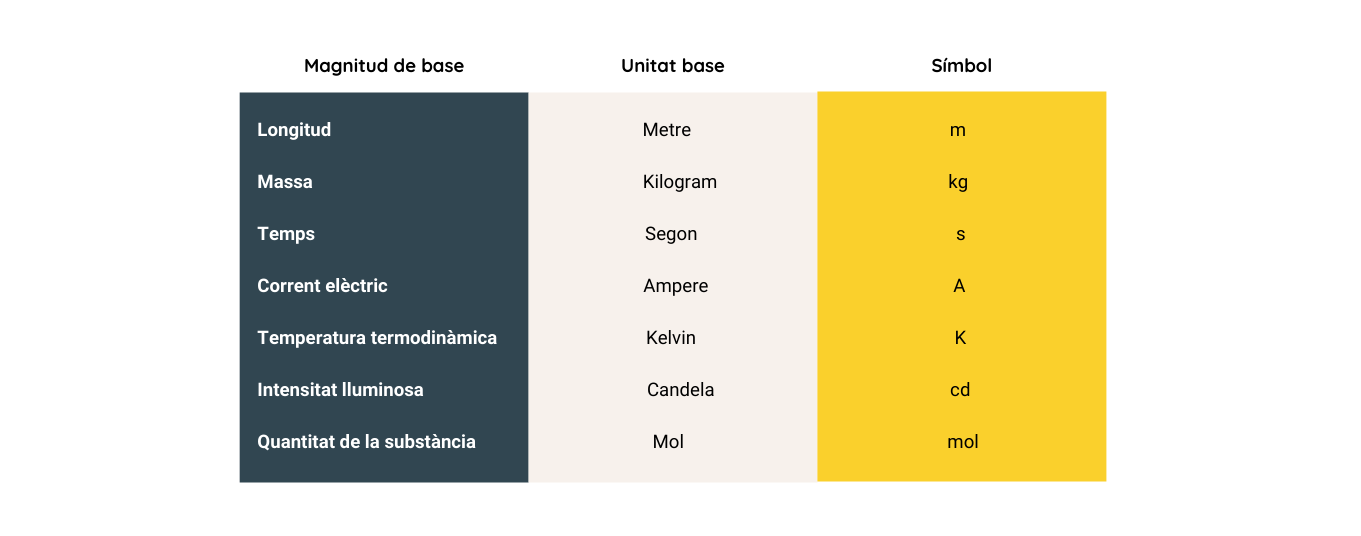
This treaty created three bodies that are still in force today: the General Conference of Weights and Measures (CGPM), the International Committee of Weights and Measures (ICWM) and the International Bureau of Weights and Measures (BIPM). The mission of these bodies was and is to determine a standardised measurement system. At the 11th General Conference on Weights and Measures in 1960, the well-known SI was adopted, which determined six base units. At the 14th General Conference, the seventh base quantity, the mole, was adopted.
The BIPM, in its 2018 revision of the SI, modified the definitions of four of the basic units: the kilogram, the ampere, the kelvin and the mole. The new definitions are based on the fixed numerical value of Planck’s constant (h), the elementary charge (e), Boltzmann’s constant (k) and Avogadro’s constant (NA), respectively. This fact indicates that the values are constantly being revised and that this system is redefined and refined in order to facilitate industrial production, scientific research and commercial exchange.
The metre, Barcelona and the Balearic Islands
Of all the measurements, the metre is one of the two units that was standardised from the very beginning. And Barcelona, as so often in history, played a key role. In 1799, when it was first defined, the metre was equivalent to one ten-millionth of a quadrant of the Earth’s meridian. This measurement was determined after the fraction of the Paris meridian was measured between Dunkirk and Barcelona in 1718. Later, between 1792 and 1798, geodetic triangulations were extended to the Balearic Islands. Francesc Aragó from Roussillon played an important role in the work of the second part of the survey.
Thus, in 1889 the definition of the metre was the length of the international platinum-iridium prototype, which was replaced in 1960 by the definition based on the wavelength of the radiation corresponding to a particular transition in krypton 86. This change was adopted to improve the precision with which the metre could be defined, which was achieved by using an interferometer with a travelling microscope to measure the optical path difference as the fringes were counted. But in 1983 the definition was changed again, and since then the metre has been defined as the distance that light travels in a vacuum in a given time interval.
Different systems lead to miscalculations
There are many reasons for the complexity of defining individual measurements, but the main one is undoubtedly miscalculation. History is full of misunderstandings, disputes and disasters due to the lack of a standardised system of weights and measures. Contemporary history does not escape from this, despite the fact that almost all countries have accepted the SI —except for the United States, Liberia and Burma — and has episodes that continue to vindicate the need to use a single system, especially in a world as globalised as the one we live in.
One of the most notorious cases is that of the Mars Orbiter, the first meteorological satellite that NASA sent to Mars, but which was never able to complete its work because in 1999, on reaching Mars orbit, it was lost. The exact causes are not known. However, it is known that there was a miscalculation. NASA used the imperial or Anglo-Saxon system, which uses measurements such as inches, miles and gallons, while one of the contractors used the decimal metric system, which uses measurements such as metres, kilograms and litres. One of the investigations carried out to clarify the case determined that the cause of the loss of the satellite was an error in “the conversion of units”.
Traditional Catalan magnitudes
Beyond Barcelona’s prominence in the definition of the metre, the history of metrication in Catalonia is extensive and full of nuances. The territories had created their own measurement systems, based on the legacy left to us by the Roman Empire. In fact, until not too many years ago, people still used ounces, pounds, ‘carga’, ‘petricó and ‘jornal’, among others, in their commercial jargon.
In Catalonia, the desire to unify the metrology system dates back to the 13th century. The first firm agreement, however, was reached at the Cortes de Monzón held in 1585, where the unification of the systems based on the units of measurement used in the city of Barcelona was proposed.
Unification was not easy: establishing the methodology alone took two years. The reduction of weights and measures began in the Vegueria de Barcelona in 1587 and was completed in the Vegueria de Tortosa in 1594. This laborious work has been largely preserved thanks to the minutes collected in five volumes that are kept in the Archive of the Crown of Aragon. Scholars of Catalan metrology have their point of reference there. And you, do you still use any old measurements?

The most common measures and weights in the Catalan tradition:
‘Ounce’. The Catalan weight is equal to one twelfth of a pound. Weight used in jewellery, equal to four quarters or one eighth of a mark, which is equivalent to 33.54 grams. Weight equivalent to nine drachmas. In the Modern Age, a coin of eight ‘escuts’ of gold issued on the peninsula and in the American territories that weighed one ounce, equivalent to 27 grams.
Pound. The pound was the currency of account along with wages and money in the traditional monetary system of Catalonia since Charlemagne. The Catalan unit of weight, divided into 12 ounces, was equivalent to 400 grams in the Principality, 407 grams in the Islands and 355 grams in the Valencian Country. In addition to the common pound, there were different types of special pounds, among which the following stand out: the pound of fresh fish, which was equivalent to 30 ounces; the pound of meat, which was equivalent to 36 ounces or three thirds, and the fat pound, which was equivalent to 18 ounces. It is also the unit of measurement of weight used in Anglo-Saxon countries, the value of which varies according to the system of units used. The pound as a measure of capacity for liquids was used, among other things, to measure wine and oil.
‘Petricó’. Measure of capacity for liquids, which is equivalent to a quarter of a jug.
‘Carga’. Weight equivalent to three quintals or 312 pounds. A measure of capacity of variable value according to the object measured and according to the region. The ‘carga’ of wine is equivalent to 128 ‘porrons’, i.e. 121.60 litres. The quantity of grapes put inside the carriers, which is generally equivalent to 12 ‘arroves’.
‘Cana’. Measurement typical of Catalonia, the Balearic Islands and Northern Catalonia, which is equivalent to eight palms, or six feet, or two steps, and, in Barcelona, is equal to 1.555 metres.
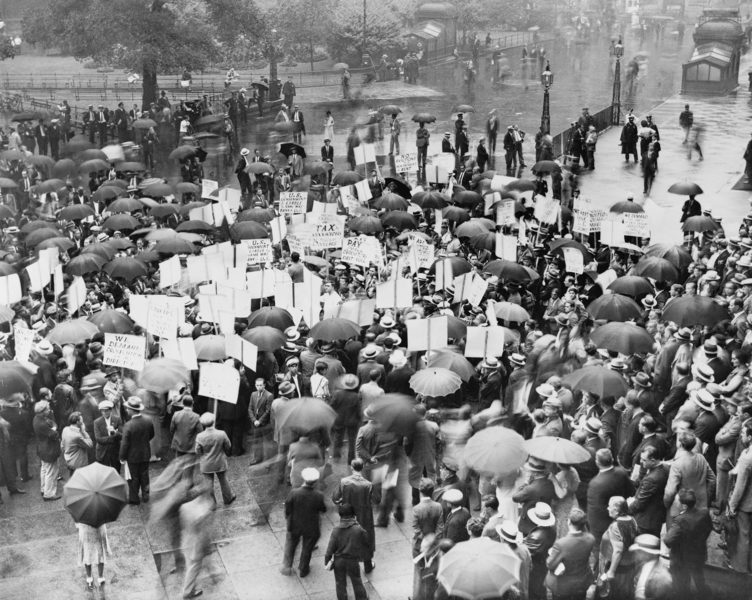
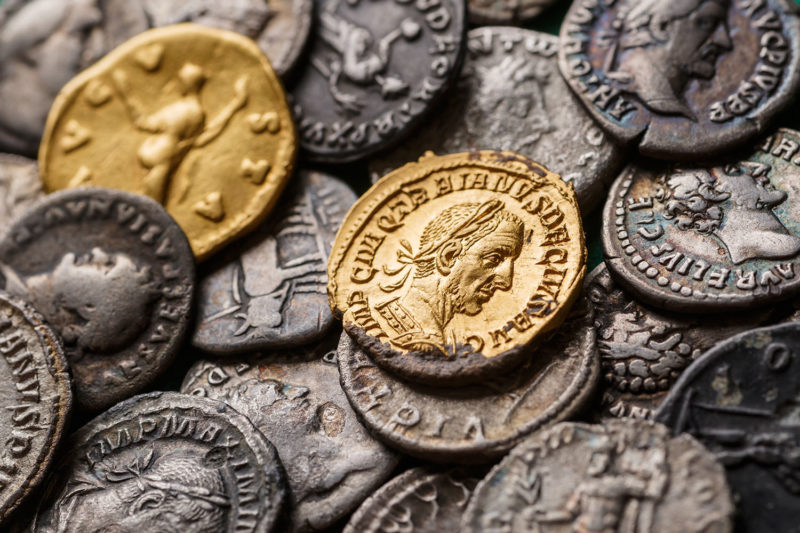

A 11Onze ens hem engrescat i hem recopilat alguns dels llibres que s’han escrit en català sobre l’avarícia. Com s’ha construït aquesta mala fama que diu que els catalans tenim un desig excessiu d’adquirir riqueses per guardar-les?
A través de tots aquests personatges avars, patètics, miserables i egòlatres, els escriptors catalans han retratat, no només la gasiveria de la burgesia catalana i la mesquinesa del ‘lumpen’ que malda per sobreviure, sinó la societat del seu temps en conjunt, tan patològicament malalta com tots aquells que l’habiten.
- L’escanyapobres (1884) de Narcís Oller (1846-1930) ha deixat a la literatura catalana algunes obres mestres, com ara aquesta, sovint lectura obligatòria de batxillerat la qual abandona el romanticisme i se submergeix de ple en el realisme i el naturalisme. La novel·la narra les desventures de l’Oleguer, l’avar que viu a la masia de la Coma i que, per culpa del seu caràcter esquerp, es baralla amb tots els pagesos de la contrada. Oleguer sempre mostra dues cares: de cara enfora, l’home treballador que manté la masia; però, de cara endins, l’home obsessionat amb els diners que humilia els seus subalterns. De l’autor és obligatori esmentar La febre d’or (1890-1892), perquè és la gran novel·la de la Barcelona del segle XIX, on la burgesia creix sense aturador gràcies a una especulació malsana. L’obra és un retrat d’un moment crucial de la història de Catalunya.
- Terra Baixa (1897) d’Àngel Guimerà (1845 -1924). A Catalunya, sobretot durant les primeres dècades del segle XX, hem estat molt dels drames rurals i l’obra teatral d’en Guimerà és possiblement qui millor ho exemplifica. Aquesta obra mostra de forma descarnada el conflicte entre unes imaginàries terra alta i terra baixa. A partir d’una història d’amor possessiva, el drama tracta sobre les misèries de la vida al camp, les penúries de les llars catalanes de l’època i l’estructura jeràrquica de les societats rurals.
- Drames rurals (1904) de Víctor Català (1869-1966), pseudònim de Caterina Albert, també narra els drames rurals de la Catalunya de principis de segle XX. El Club Editor recopila en tres volums els contes d’aquesta gran autora catalana, que representa amb una sensibilitat sense precedents la cara més fosca de la vida rural, i que sovint s’acarnissa amb les dones.
- La Xava (1910) de Juli Vallmitjana (1873-1937), rescatat de l’oblit no fa massa, l’autor va saber retratar els ambients més pobres de la Barcelona de principis del segle XX, com també ho va fer a l’obra De la ciutat vella (1907) les quals parlen del carrer als barris de sota de Montjuïc. Narra la lluita descarnada per sobreviure i com els senyorets de Barcelona, avars i narcisistes, feien servir la pobresa més negra per construir la seva bohèmia d’or. Les seves obres, plenes d’històries petites, narren també els grans esdeveniments col·lectius de l’època, i el combat de les classes proletàries i la burgesia.
- L’auca del senyor Esteve (1907) de Santiago Rusiñol (1861-1931), també de principis del segle XX, narra la confrontació i la reconciliació entre el senyor Esteve, un comerciant arquetípic de la petita burgesia, i el seu fill, un artista modernista que no vol heretar el negoci familiar. L’obra va resseguint la vida del protagonista, un home prudent i pràctic, que ja de petit vol dedicar-se exclusivament a la seva botiga de vetes i fils, La Puntual, i que es casa amb Tomaseta, una dona del mateix tarannà. De fons, s’hi endevina Barcelona com una ciutat en procés de modernització.
- Vida Privada (1932) de Josep Maria de Sagarra (1894-1961). Després d’anys de prosperitat de la burgesia catalana a costa de l’explotació dels més pobres, qui narra com ningú la seva decadència és aquest autor. Ho fa a través de la història familiar dels Lloberola, que veu com s’esvaeix tot el seu patrimoni en mans dels més joves de la casa. Sagarra retrata amb ironia el procés de degradació social i moral de la família i fa un retrat de l’alta i la baixa societat, a través de les reunions en salons, sales de juntes i bordells. De Sagarra també cal esmentar altres obres seves, com La rambla de les floristes (1935), El cafè de la Marina (1933) o L’hostal de la Glòria (1931), perquè fan un retrat calidoscòpic dels avars i els miserables que poblen la història de Catalunya del segle XX.
- El carrer de les Camèlies (1966) de Mercè Rodoreda (1908-1983) és qui retrata els anys de la Guerra Civil i la postguerra a la perfecció. La novel·la ressegueix la vida de Cecília, una supervivent, que comença la seva vida miserable a La Rambla. Després, viu engabiada en un pis de l’Eixample i acaba venent-se en unes barraques del Carmel. Rodoreda retrata una societat consumida per l’avarícia dels anys anteriors, un viatge cap a la foscor. Aquesta tristor grisa serà una constant en les obres de Rodoreda, com ara a Aloma (1936) o a la famosa La plaça del diamant (1962). També retrà comptes amb el passat a la novel·la Mirall trencat (1974), un retrat de la decadència burgesa a l’estil de Sagarra.
- Feliçment soc una dona (1969) de Maria Aurèlia de Capmany (1918-1991). Com ho fa Rodoreda a El carrer de les Camèlies, Capmany retrata la societat del seu temps a través del personatge de la Carola, que ha viscut intensament i ha estat víctima dels clarobscurs d’una ciutat avara que creix de manera desordenada. La protagonista enceta, al principi, un viatge a la recerca de la felicitat, però agafa el camí equivocat que li farà perdre tota la innocència. Capmany també retrata aquesta ciutat vençuda pels anys avars a Betúlia (1974).
- Benzina (1983) de Quim Monzó. L’efervescència avariciosa dels feliços anys vuitanta del segle XX la retrata Monzó a través de la història de l’Heribert. El personatge, que ha triomfat al món de l’art després d’una conquesta àrdua, viu una vida condescendent i avorrida fins que s’adona que els seus amors l’enganyen amb homes extravagants.
- El cau del conill (2011) de Cristian Segura. Ja al segle XXI, Segura retrata la plàcida existència de l’empresari Amadeu Conill: les partides de tenis al migdia, les demostracions de popularitat a la tribuna del Barça, els vermuts al Turó Park o les tardes de compres a l’Illa Diagonal. L’autor relata les tribulacions d’un prohom de la burgesia barcelonina en caiguda lliure i el relleu generacional d’una classe social en una decadència feliçment aconseguida en ple món globalitzat.
- Tsunami (2020) d’Albert Pijuan. Finalment, hi trobem els tres cosins de Pijuan, fills dels tres germans fundadors d’un grup turístic amb hotels arreu del món. Als divuit anys, gaudeixen com mai i com ningú durant la inauguració del nou hotel a Sri Lanka: festes, alcohol, submarinisme, paisatges exòtics, luxe asiàtic… Però les coses canviaran dràsticament quan una alerta de tsunami s’escampa per tots els racons de l’oceà Índic.
11Onze és la comunitat fintech de Catalunya. Obre un compte descarregant l’app El Canut per Android o iOS. Uneix-te a la revolució!


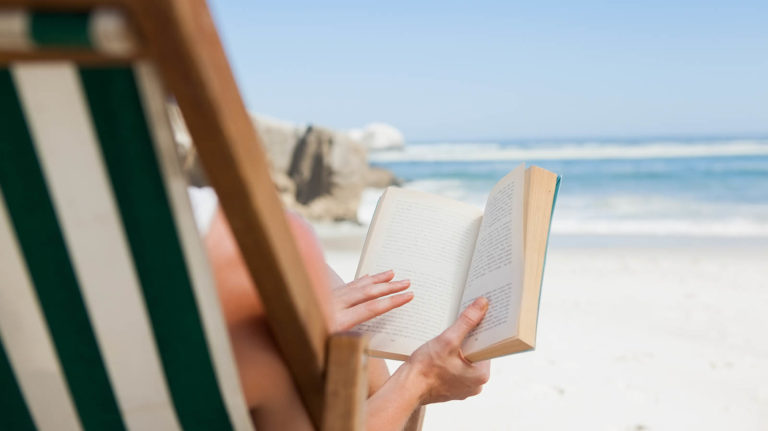
Si hi ha un moment clau en la història d’Espanya, aquest és l’arribada a Amèrica i el posterior saqueig. Aquella riquesa va ser la llavor del que s’anomenaria Imperi Espanyol i que, tal com explica l’historiador d’11Onze Oriol Garcia Farré, no va ser res més que la presa de pèl a uns catalans.
Toni Mata, director de continguts i mitjans d’11Onze
El 12 d’octubre és la data preferida del nacionalisme espanyol. La celebren a mà alçada els feixistes a Montjuïc i rememora, amb nostàlgia, aquell Dia de la Raça de l’època franquista que, al seu torn, s’emmirallava en “el Imperio Español donde nunca se ponía el sol”. Quin mal de panxa els agafaria si sabessin que el ‘descobriment’ va ser cosa dels catalans. La cursiva de ‘descobriment’ es deu, efectivament, a què a les terres americanes ja hi vivia gent i que tant xinesos com vikings ja hi havien arribat. Però els espanyols van ser els que es van decidir a espoliar riqueses i esclavitzar indígenes. Per tant, en aquest sentit sí, la primícia és 100% europea. Des d’aleshores, aquests fets duen el malnom de “colonització”.
Colom era català? Va home, va
Però anem al que ens ocupa: si dieu en veu alta “Colom era català”, us caurà al damunt una allau de desqualificacions que us titllaran de fanàtic, il·luminat, supremacista o ves a saber què. I, per tal d’evitar el soroll, qualsevol català dirà “deixem-ho estar”. Ara bé, els historiadors tenen l’obligació d’analitzar els fets i això és el que hem demanat a l’historiador Oriol Garcia Farré. Mirant-ho amb una mica de detall, tal com podeu llegir en aquest article, costa de sostenir el relat espanyol.
Per què? Vegem-ho. El 1492 Espanya no existia. Era la unió de dues corones: la Corona de Castella i la Corona catalanoaragonesa. El tan estimat (a Espanya) Ferran el Catòlic, era el rei català, però això no vol dir que fos gaire estimat a Catalunya. Era de la família Trastàmara, que havia accedit al tron després de l’extinció del llinatge dels comtes de Barcelona amb la mort de Martí l’Humà, i que en aquella època tenia força contestació social a Catalunya. De fet, el pare de Ferran, Joan II d’Aragó, va protagonitzar la Guerra Civil catalana contra les institucions catalanes per obtenir el control polític. També es va enfrontar amb els pagesos, en les famoses guerres remences que encara recordem amb el crit de “Via fora!”.
Des d’aleshores no eren la dinastia més estimada de la història de Catalunya. És més, el 7 de desembre de 1492, al Palau Reial de Barcelona un remença del Maresme va intentar assassinar Ferran el Catòlic. El magnicidi va estar a punt de culminar-se, i, si hi voleu aprofundir, ho podeu fer amb aquest capítol d’El Lloc dels Fets que vaig escriure fa uns anys per TV3.
Per tant, el casament de Ferran el Catòlic amb Isabel de Castella era pels Trastàmara, allò que ara diuen els ‘influencers’, escriptors o cantants catalans que treballen en castellà: buscaven més públic. L’ampliació de la corona cap a Castella era la millor opció per mantenir-se en el poder, per als Trastàmara. I un bon dia, un senyor anomenat Cristòfor Colom els proposa una idea boja: anar a descobrir les terres de l’altre cantó de l’oceà Atlàntic. Com sabem que aquesta era una empresa catalana? Fent servir les dades i la lògica.
D’una banda, la Corona catalanoaragonesa era una potència naval, mentre que a Castella no devien saber ni si la mar era salada. Penseu que estem al segle XV i que les distàncies no eren les mateixes. Catalunya, en canvi, havia dominat el Mediterrani i havia impulsat el Llibre del Consolat de Mar, que regulava el dret marítim internacional des del segle XIV.
Però si anem als fets, la cosa és encara pitjor. En la comptabilitat de la corona castellana de l’època no hi consta cap inversió per l’expedició de Colom. Recordem que es tracta de dues corones i només consten pagaments en ducats, que és la moneda que s’utilitzava a la Corona catalanoaragonesa. Què ens diu això? Ras i curt que l’expedició la van pagar els catalans. I si la van pagar és perquè tenien experiència en el comerç marítim i confiaven que aquell tal Colom duria riqueses. Per cert, Colón costa força de trobar com a cognom espanyol. Sembla, més aviat, una apropiació castellana. De fet, el mateix que va passar amb tot el que va comportar el ‘descobriment’ d’Amèrica.
Quan a Castella es van adonar que el negoci era massa lucratiu per deixar-lo en mans catalanes, van canviar els acords amb Colom, el van acusar de traïció (sedició no era un terme utilitzat a l’època!) i la família va caure en desgràcia. Vaja, que tot plegat havia de servir a la glòria d’Espanya. Això explica també la destrucció de documentació de tots aquells fets. Resulta evident que es va voler esborrar la petjada catalana de la més gran fita espanyola de tota la història.
Colom potser va ser, doncs, el primer català entabanat pel projecte espanyol. S’encetava així la tradició catalana de contribuir al projecte espanyol, quedar-ne apartat de les bones notícies i maleir-se per haver-hi contribuït. Una tradició que ha seguit vigent fins als nostres dies amb una bonhomia aclaparadora.
No m’ho acabo de creure
És normal no creure’s aquesta història perquè estem tan avesats a la història oficial (adoctrinats, se’n diu), que l’impuls és pensar que tot plegat és una invenció. Però cal fer revisar els fets de manera crítica i tan freda com sigui possible. Quin port tenia Palos de la Frontera al segle XIV? I quin port tenia Pals a la mateixa època? És important informar-se, veure els estudis de restes arqueològiques i lligar caps. I els famosos germans Pinçon? Valencians que tenien els seus negocis a terres gironines, molt a prop de Pals. En propers articles, l’Oriol Garcia aprofundirà sobre aquestes proves esborrades per la historiografia espanyola. La veritat, però, sembla òbvia. La presa de pèl potser va començar el 1492.
11Onze és la fintech comunitària de Catalunya. Obre un compte descarregant la super app El Canut per Android o iOS. Uneix-te a la revolució!
Accused of having eaten an apple. Stigmatised for men’s sin. Controlled by confessors. Purified through redemptive fire. Attacked by misogyny. The history of women paints a bleak picture, given that they have had to abide by a reality imposed by the male gender. We begin a journey through history with the first of six articles, on the struggle of contemporary women to achieve full equality.
At the beginning of the 20th century, Catalonia made the definitive leap toward modernity. The generation of 1900 worked hard to modernise Catalan society to the point of transforming all areas of daily life. Everything from culture to politics was redefined and, even today, those profound changes are still very much alive in our collective memory.
Modernity longed to change the previous patterns through culture, science and education, and it was in this last area that it came up against the Church, which for centuries had held a monopoly on education. The debate then focused on whether, in order to be modern, it was absolutely necessary to move towards a fully secular society, or whether there was another option.
Conservative Catalan society at the time expected the wife of one of the most important figures on the political scene at the time – the lawyer and founding member of the Regionalist League, Narcís Verdaguer i Callís – to remain on the fringes of all the social and cultural effervescence of the country.
The social model of the time understood that women – with sufficient economic resources – had to limit their activity to being a housewife and social activities, including charitable work in the parish. Therefore, the whiter her skin was, the more important her social status was.
The reality was different when Francesca Bonnemaison y Farriols (1872-1949) – of deep religious convictions, passed down through her mother’s line – embarked on a revolutionary project that would change everything. Without realising it, she would shake the most conservative foundations of the Catalan society.
Democratising access to education
Gathered around the parish church of Santa Anna in Barcelona, the so-called ‘cooperating ladies’ met in a vicarage, on a Friday in May 1909. Long gone were the heated discussions as to which was the most suitable option for setting up the new organisation within the parish: either to create a social work for wealthy young women or to found a literary circle exclusively for women from high society. But neither of these things happened.
With the support of Father Gatell, the option suggested by Mrs. Bonnemaison prevailed. On that Friday 28 May 1909, the first public library for women in Barcelona was set up. Yes, for all the women of the city and open to both well-to-do and working women.
In this way, the renaissance ideology defended by Francesca Bonnemaison was put into practice, which believed it was essential to bring culture closer to women, social regeneration, and the economic development of the country. A year later, the Institut de Cultura de la Dona was founded, thus laying the foundations for training women from all social strata to move towards their personal liberation, the recognition of some of their basic rights, and equal employment opportunities.
The ideology of the new institution – so revolutionary in its time – was based on three essential pillars: The first was based on the promotion of reading and the sensible practice of Christian doctrine. The second understood that the intellectual learning acquired by women – through education – was necessary to help men and not to compete with them. And the third hinged on the understanding that women had to be good domestic managers who could collaborate in the economic support of the family and in the transmission of knowledge to their children.
The setting up of the Institut de Cultura and the Biblioteca Popular de la Dona was an unprecedented success, as can be seen from the registers of women readers who met every Sunday after mass and the sharp increase in demand for teachers. They soon had to leave the parish to move first to Elisabets’ street and then to what is now Sant Pere Més Baix street in Barcelona. It is documented that until July 1936, the library had a collection of more than 23,000 volumes and the Institute taught some 6,200 pupils.
Forced exile and change of political paradigm
Francesca Bonnemaison believed that history offered her a second chance to amplify her women ideals, and began to campaign after the proclamation of the Second Republic. On the advice of Francesc Cambó, she set up the women’s section of the conservative Regionalist League. From then on, she worked tirelessly to spread her model of womanhood, based on religion, knowledge, and family.
But everything changed in July 1936. After the failed coup d’état and the subsequent outbreak of the Civil War, everything became polarised. Members of the Regionalist League – let’s remember, a conservative Catalanist party – would become collaborators of fascism through internal espionage and press offices abroad – such as the one in Paris – which would devote themselves to producing content to explain Franco’s new narrative to the world.
The “proletarianisation” carried out by the anarchist insurrection at the beginning of the conflict at the Institut de la Cultura and Biblioteca Popular de la Dona made Bonnemaison realise that her life was in danger. That insecurity took her to Paris, where she became the personal secretary of Francesc Cambó, whose godmother she was. Abroad, she worked tirelessly to spread the ideals of the insurrectionists, as she was confident that they would once again guarantee order and social stability, with which her ideal of a woman fitted in perfectly.
When she returned to Barcelona in 1941, she realised that the Franco dictatorship had organised society around the family and along Catholic lines, but that most women had been forced to give up their jobs to devote themselves exclusively to domestic and family tasks. In this way, women were considered inferior to men and had no autonomy whatsoever.
Discovering that the victors practised this ideological sectarianism, together with an unprecedented aggressiveness towards anything Catalan, plunged her into a deep depression from which she never recovered. Even more so when the Institut de la Cultura and the Biblioteca Popular de la Dona were controlled by the Falange and the latter devoted itself to completely distorting the founding spirit of that Friday in 1909.
Although it is true that Francesca Bonnemaison’s ideal of woman was of conservative and paternalistic inspiration, we must never forget that she gave wings to thousands of Barcelona women with the creation of her institutions, long before the mythical ‘Fawcett Library’ in London or the ‘Biblioteque Marguerite Durand’ in Paris. Francesca Bonnemaison was a pioneer in her time, creating the necessary elements to empower women, an essential step towards social equality.
11Onze is the community fintech of Catalonia. Open an account by downloading the super app El Canut for Android or iOS and join the revolution!


The Recaredo winery, Corpinnat, is located in the old centre of Sant Sadurní d’Anoia. It is the only winery that continues to carry out the entire winemaking process in the centre of the village, and has been doing so since the beginning of the 20th century. Everything that is produced at Recaredo is made from conscience.
Ton Mata, the third generation of the Recaredo winery, decided to join the family business 25 years ago. After studying aeronautical engineering, when he returned home, he had a long conversation with his father and decided to study agricultural engineering and join the family business. He has been technical director, general manager and is now managing director. Together with two other cousins, he manages the company under the direction of a person outside the family.
Doing what you like
The history of the winery is curious, given that all the Corpinnat that comes out of the company is the fruit of its own harvests. “We come from a family that had no vineyards,” explains Ton Mata, “My grandfather, when he started, didn’t have a single vineyard, and now we own 80 hectares, from which we produce 100% Recaredo Corpinnat.” To produce still wine, they need to buy grapes.
Ton Mata’s grandfather was the son of a family of pottery craftsmen who made the typical pieces for construction. “My great-grandmother sent my grandfather to work in some cellars when he was very young. And this is where it all began,” he explains. There, the grandfather learned the craft of secondary fermentation, everything that goes on inside the bottle (ageing, pupitre, secondary fermentation, disgorging) and he became “an expert in the art of manual disgorging.” “Then he set up his own winery and, little by little, he transformed the family’s roof into a cellar,” he adds. In fact, the winery still conserves part of the old roof.
“My grandfather,” explains Ton Mata, “realised that if he wanted to make a good wine, he needed a good vineyard. And that’s how we started the vertical integration, but instead of doing it from the vineyard forward, we do it backwards.” The third generation is reaping the fruits of the work done by the grandfather. Ton Mata says that this inheritance allows them to follow “a dream path”: “Doing what we really like and want to do. We try to be free, not to have any ties, that is to say, that it is not the market that shows us the way. Fortunately, so far, we have found the complicity of people who have liked what we do.”
The ‘terroir’ that shelters the vines
Ton Mata explains that the winery has undergone a transformation from traditional farming to organic farming and then to biodynamic farming. “This process has made us stronger in our convictions, which are: to make only brut nature sparkling wines, to make wines that are really capable of representing a landscape, a territory, with all the consequences and not just blah, blah, blah; to age much longer…”
Recaredo has a production of 280,000 bottles. It exports 15 percent outside Spain, another 15 percent within Spain, and its main market is Catalonia, with 70 percent. Ton Mata considers that they are a small winery. Although he looks at the sector with concern, he celebrates the birth of new companies that bring their products to the market from the vineyard. He believes that the Penedès wine sector must be fragmented if the prestige of the area is to be maintained. “It is interesting that there are small companies, each with its own style and personality. It’s good for maintaining balance,” he argues.
However, he is concerned about the territory, the landscape, and the environment. “It is so threatening that it makes me suffer. Corpinnat is going against the tide. It is very difficult to make wines that represent a landscape if you don’t have a quality landscape. The threats of infrastructures such as the MAT, industrial estates such as Can Vies and, above all, the waste we leave on the land such as herbicides or insecticides… It is clear that it does not help to maintain a quality landscape. This type of agriculture has no future and is not sustainable. It prevents us from making wines that represent a landscape because what it does is to destroy this landscape and the wines end up showing this destroyed landscape,” he regrets.
For Ton Mata, practising biodynamic agriculture means that their wines reflect the soil where they have been grown, the ‘terroir’. “We offer a sparkling wine that represents transparency: of a harvest, a vintage, a ‘terroir’, people and a team. A brut nature is the one that gives the greatest transparency, and with this obsession to represent the ‘terroir’ you realise that the buried landscape is very damaged,” he explains.
Preserve the landscape
For Mata, practising biodynamic agriculture means working to preserve the landscape, working with nature and not against nature. “We introduced the more rational part of biodynamics in 2006. We have been opening up to biodynamics, not only to the rational and biological part, but also to the more philosophical and more conscious part, to be more attentive to what you do and why you do it. This is a challenge, because when you have a job done, it doesn’t just have to be a mechanical execution, it has to involve an awareness of how it is being done and why it is being done,” he explains. For Mata, working from the point of view of awareness has a consequence on the result of the wine.
Recaredo forms part of the Corpinnat group (a collective brand of the European Union) along with ten other wineries. Its commitment to the territory is reflected in the principles of this brand.
11Onze is the community fintech of Catalonia. Open an account by downloading the super app El Canut for Android or iOS and join the revolution!


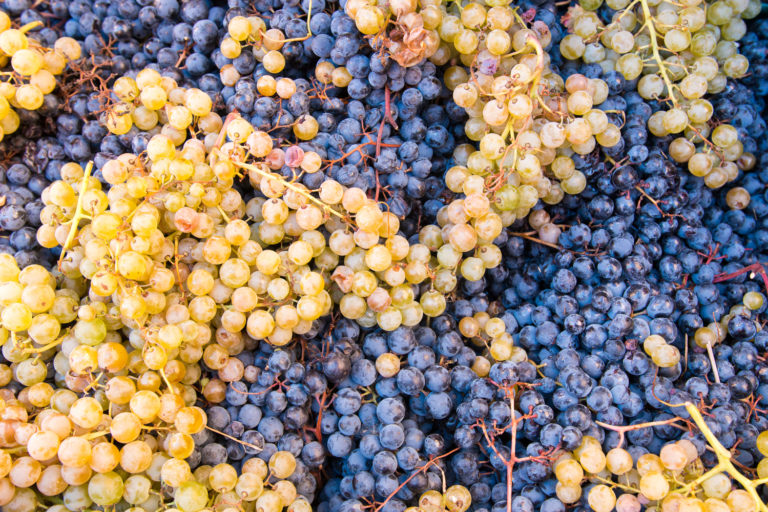
The confinement in the wake of the pandemic popularised remote working. A trend that has blurred the boundary between the office and our personal lives. Workation is a new form of telecommuting that merges work and holidays.
For anyone who has the option to work remotely, the benefits of taking a workation, the sum of ‘work’ and ‘vacation’, are hard to pass up. Until 2019, the image of working from a laptop with a panoramic view in the background was almost exclusively associated with a digital nomad lifestyle, but, thanks to the sanitary crisis, telecommuting became exponentially more popular.
This new form of remote work is not designed for you to work while on holiday, but to work as if you were on holiday. Setting up our office in a place we would normally only visit when we are on holiday can have many benefits beyond the view.
Workation
You’ll still have all the essentials you were used to in office life and many luxuries you didn’t have
From sturdy workstations built for hours of tapping away on your laptop, access to conference rooms made available when needed, all the way to a strong Wi-Fi connection that won’t quit, many hotels offer a large variety of beautifully designed spaces that you can move through depending on your mood and preferences.
In many ways, hotels served as the original version of coworking spaces, it was common to see people in suits with laptops flipped open while enjoying a meal in the restaurant. Today, you’re more likely to find someone wearing shorts and flip-flops.
You’ll increase your productivity
As digital nomads are 13% more productive than their in-office counterparts, it turns out employers also see the benefit in their employees working from abroad. Being able to work in a space tailored to individual needs and preferences, as well as having uninterrupted blocks of time during the day, all means that people are not only more productive and comfortable at work, but they’re also much more willing to occasionally put in extra hours in order to get things done.
Your mental health will thank you
Feeling the winter blues coming on? Getting overwhelmed by work, or finding it tough to keep up with office politics? Maybe you could use a change from the home-to-office routine you’ve become so used to; something to remind you that life is for living, and not just working and commuting.
You’ll relax, without having to take time off work
Many hotels have amenities that, let’s face it—most of us simply just don’t have at work or home. Ditch the communal shower, pool table, and stiff massage chairs in favour of the hotel pool, steam room, and sauna—where you can unwind after a day of hard work, without even going outside. The more you use those precious after-work hours to unwind and recharge, the more you go into your working hours feeling fulfilled, refreshed, and focused.
You’ll discover new places
Exchange predictable commutes for lengthy walks in an unfamiliar city; explore different districts and restaurant recommendations; try your hand at leisure photography; or broaden your horizons by meeting locals and doing a deep dive into your local culture. Become friends with the barista at that coffee shop you frequent daily, or do some research on where to go and what to see from your new location.
Do you love to travel? With 11Onze Viatges you can book accommodation at the best price, without stifling the travel industry.



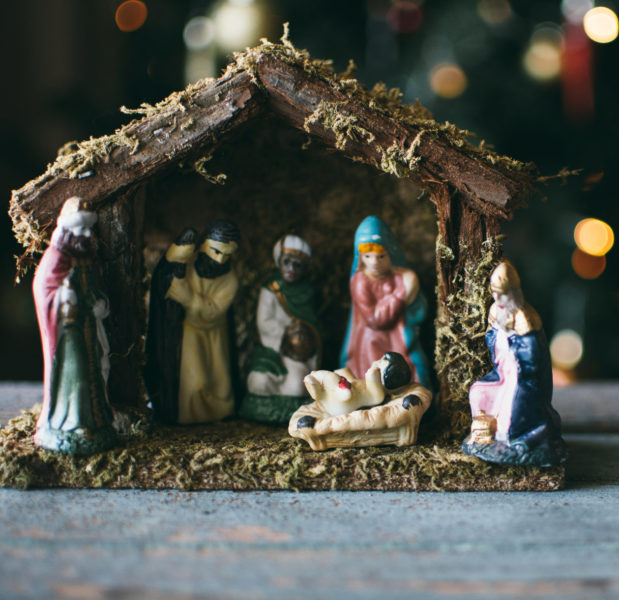
The Epiphany is the best known celebration of the Christmas cycle. And, instead, only the Gospel of St. Matthew gives specific news of the Three Wise Men, but in a rather enigmatic way. It does not even specify the names, the number or the exact origin. So, what is the true story of the biblical Magi?
Let’s start by taking a good look at how St. Matthew introduces the Magi in his Gospel. First, he assures us that Jesus was born in Bethlehem of Judea, in the time of King Herod, and then he relates the appearance of the Magi as follows: “Shortly afterward there came to Jerusalem wise men from the East who asked ‘Where is the King of the Jews, who has just been born? We have seen his star there in the East and have come to prostrate ourselves before him’.”
In fact, St. Matthew tells us in the Gospel that “the news greatly troubled King Herod, and with him all Jerusalem.” So Herod let the Magi go, but asked them to inform him of the exact place where the child was born before returning to their villages, so that he too could go and worship him. But it seems that the magi did not keep the word given to Herod…
The Gospel says that the wise men continue on their way, always following the star, until it stops just at the point where Jesus is. Then, St. Matthew narrates: “And when they entered the house, they saw the child with Mary, […] they fell down before him and opened the chests they were carrying to offer him gifts of gold, frankincense and myrrh. And as a dream warned them that they were not to see Herod again, they returned to their own country by another way.” After this, they are never spoken of again.
The mess that surrounds the story
If we carefully analyze the Gospel narrative of St. Matthew, we quickly realize that at no time are we told that there were three characters, but, instead, we are told that “some magi” left three gifts (gold, frankincense and myrrh). Nor is the exact point of the meeting specified. And most surprising of all: at no time is the kingly status of these characters specified.
If we look for more canonical information —the official one— about these characters, nowhere do we find more information. Even so, if we go to the other Gospel that narrates the birth and infancy of Jesus, that of St. Luke, nowhere are the Magi mentioned, nor the slaughter of the innocents, nor the flight into Egypt. On the other hand, St. Luke does provide details about the annunciation, the transfer of Joseph and pregnant Mary to Bethlehem to be registered in the census ordered by the Roman Emperor Augustus, the adoration of the shepherds and the birth of Jesus in a stable.
Therefore, the New Testament offers very different versions of Christmas that, with the maturation of the passing of the centuries, with intentional contributions and biased interpretations, have ended up shaping the fantastic and braided story that we know. We must not lose sight of the fact that along the way new characters were added, such as the ox and the mule, which Pope Benedict XVI has publicly rejected, or the fourth wise man and other inventions.

“If the original Greek word was translated from an Old Persian word, ‘maguusha’, then the meaning would be: priest.”
Does Magi mean magicians?
Then, The question that the initial story suggests to us is: why does Matthew make these curious characters appear? The important fact to keep in mind is that the original Gospel of St. Matthew was written in Greek, a manuscript of which has not reached us until our days. We only have the version translated into Latin by St. Jerom, but already in the fourth century.
If we continue analyzing the text, the key to everything lies in the word “magi”. Is this the word used in the original text written in Greek? And then another rather disturbing question arises: what did it mean to be a “magi” in the context in which the gospel is written?
Historical etymology offers us two possibilities. If the original word written was Greek “μάγο”, it would be used with a pejorative connotation. An expression aimed at defining sorcerers, dream interpreters, enchanters, practitioners of dark rites and, even, charlatans. It seems that this is not the case! On the other hand, if the original Greek word was translated from an Old Persian word, “maguusha”, then the meaning would be: priest. Surely, the most likely!
Therefore, if we follow this etymological path, we find in the Babylonian past a religious caste of Persian priests known as “magi” with a recognized prestige in astrological knowledge and followers of the Zoroastrian religion. To understand the historical etymology even better, we must keep in mind that the Jewish presence in Persia was very notable from the time of Nebuchadnezzar (6th century B.C.), when the Babylonian ruler conquered Judah and enslaved the Jews.
These Hebrew communities, who awaited the Messiah, would surely have influenced the Persian astrological tradition. In the 6th century A.D., these magi —now named and numbered— were depicted in the Persian style —mainly in their clothing— in the well-known mosaic of St. Apollinaris the New in the basilica of Ravenna (Italy).
“The textual analysis places us in front of a purely propagandistic story: to demonstrate that Christianity was broad, integrating cultures and universal.”
The legend consolidates with the biblical canon
Whether the visit of the Magi happened or not, we arrive at the Council of Nicaea in 325, when the official discourse of the Church was institutionalized and it was agreed that only four official gospels —Matthew, Luke, John and Mark— would mark the discourse of dogma. The rest of the texts, more than 70, will be considered apocryphal, that is to say, unreliable, since they are based on suppositions that cannot be contrasted.
It is curious because all these texts were written at the same time as the four canonical gospels. What is evident is that, with the passing of the centuries, theology, liturgy and Christian tradition were forged, complemented by other writings that filled the gaps left by the official texts. It was in this process that the story of the Persian magi took shape.
If we avoid the fantastic and we are absolutely rational, the textual analysis places us before a purely propagandistic story. The incipient and modern Christian discourse that emerged from Nicaea had the need to demonstrate that its radius of action was broad, integrating cultures and endowed with a universal dimension. The story of the Magi fulfilled this message and —no less important— allowed linking the prophecies of the Old Testament with the New Testament, since it demonstrated that the sacred scriptures were not mistaken in the fact that “all kings coming from everywhere will prostrate themselves before him.”
Nor is it by chance that the number of the magi was set at three: because it is the number of the divinity par excellence, of the Holy Trinity; because it is the reflection of the three ages of the human being, youth, maturity and old age; because they are the three continents known at that time, Europe, Asia and Africa; and because they are the three dimensions of time, past, present and future.
The pieces that build history
It was from then on that a special iconography began to be created, with diverse meanings. Soon the authentic reality of the characters from the East ceased to be relevant and the ritual symbolism of the Middle Ages became important. The Carolingian world turned them into kings. The story goes that Frederick I Barbarossa, during the Third Crusade, found the bodies of the three kings in Constantinople and brought them to Germany. Today, Cologne Cathedral preserves the relics of the Magi. The mendicant orders of the 13th century contributed to the tradition of making the nativity scene, and the epiphany has a prominent place. The Renaissance brought blackness to King Balthasar.
The long night of time fixed and generated new details about the Magi, which impregnated the European cultural tradition forever and ever. The story of the Three Wise Men is a story built in pieces, which has changed generation after generation and has reached our days as a commercial spectacle. And, like all good stories, it is made over a slow fire.
11Onze is the community fintech of Catalonia. Open an account by downloading the app El Canut for Android or iOS and join the revolution!
The date of 1714 lingers vividly in our memory. Little or much, everyone would know how to explain what it meant to Catalonia. Even so, this dark period in history began to change with the Royal Decree on free trade with America. This regulatory text would be the crack that would lead to industrialisation in our country. We find out about it from agent Oriol Garcia Farré.
After the war of 1714, Catalonia had been banned from direct trade with the American colonies, which meant a brutal impoverishment. From the 1750s onwards, this began to change. The system of privileges of Bourbon trade policy was failing, and the powers that were being forced to introduce new agents to guarantee the viability of trade with America.
Thus, in 1756 the Crown once again allowed ships to leave Catalan ports for the new continent, and in 1778 Carlos III signed the Royal Decree on free trade, putting an end to the monopoly of Cadiz and Seville and once again favouring trade from Catalonia. This marked the beginning of a significant export of agricultural products, such as wine, eau-de-vie, nuts and paper, which allowed Catalonia’s balance of trade to increase spectacularly. This was the true genesis of Catalonia’s industrialisation.
The Catalan mercantile culture of the 18th century
Merchants and Indianos, a chronicle of entrepreneurship
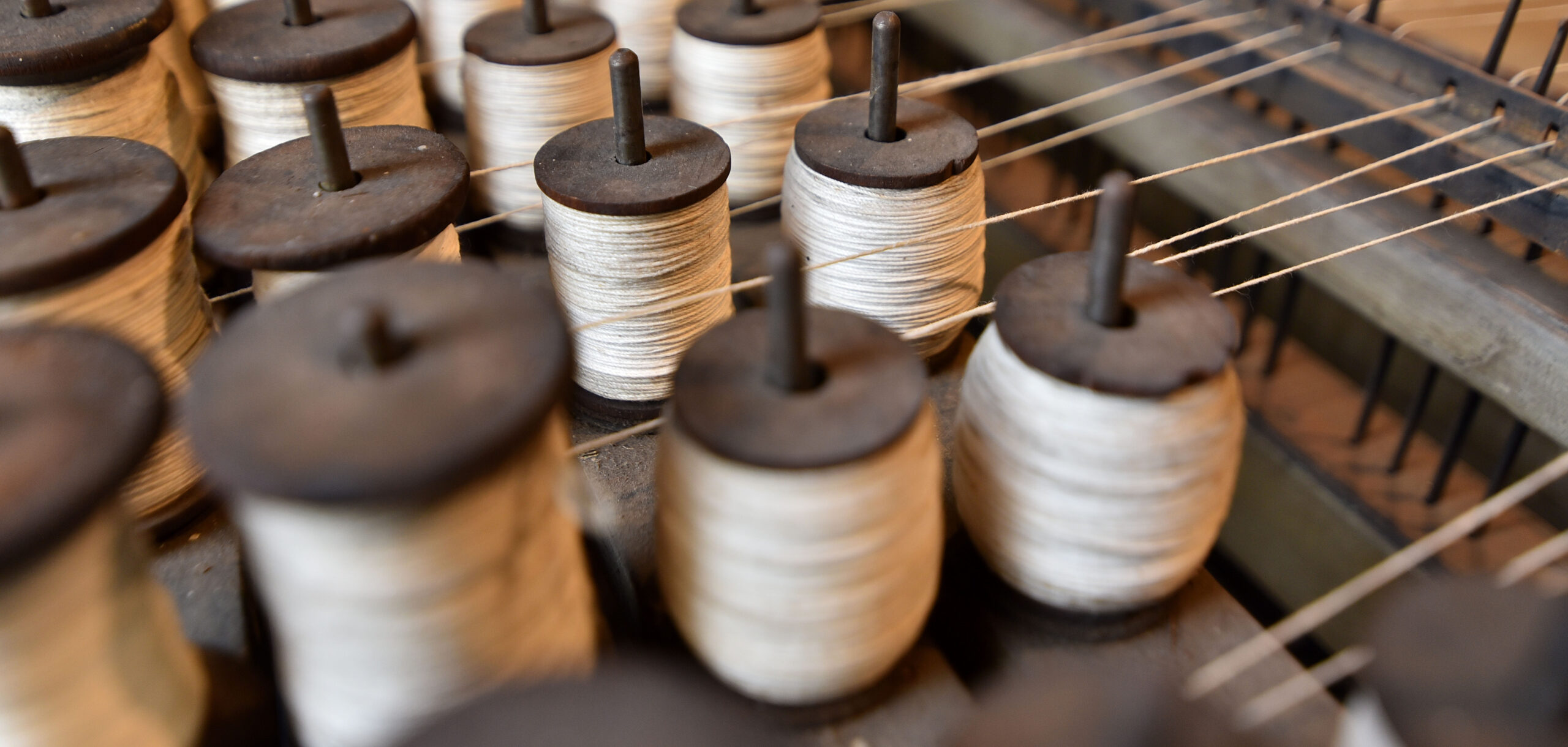
Merchants were the necessary driving force behind the modernisation of the country. The trading companies of the 18th century were the model to be followed for more than a century in organising exports and imports. The cotton trade with the colonies was extremely important for Catalonia to begin a process of mechanisation, which led to the beginning of the industrial revolution.
A few years later, a generation of entrepreneurs would shake up and transform the economic and social structures of Catalonia. The first to do so were Josep Bonaplata, Joan Vilaregut and Joan Rull, all three linked to textile manufacturing. In 1832 they created the first steam-powered textile industry in Spain, the Bonaplata Factory.
The idea was a turning point, the definitive step towards modernity. The technological innovation brought about by mechanisation enabled them to become leaders in their sector and to boost the entire textile industry in Catalonia. The restlessness, transformation and improvement that characterised that era are still in the DNA of Catalan commerce.
Entrepreneurship as an engine of change
Steam, the key to the country’s industrialisation
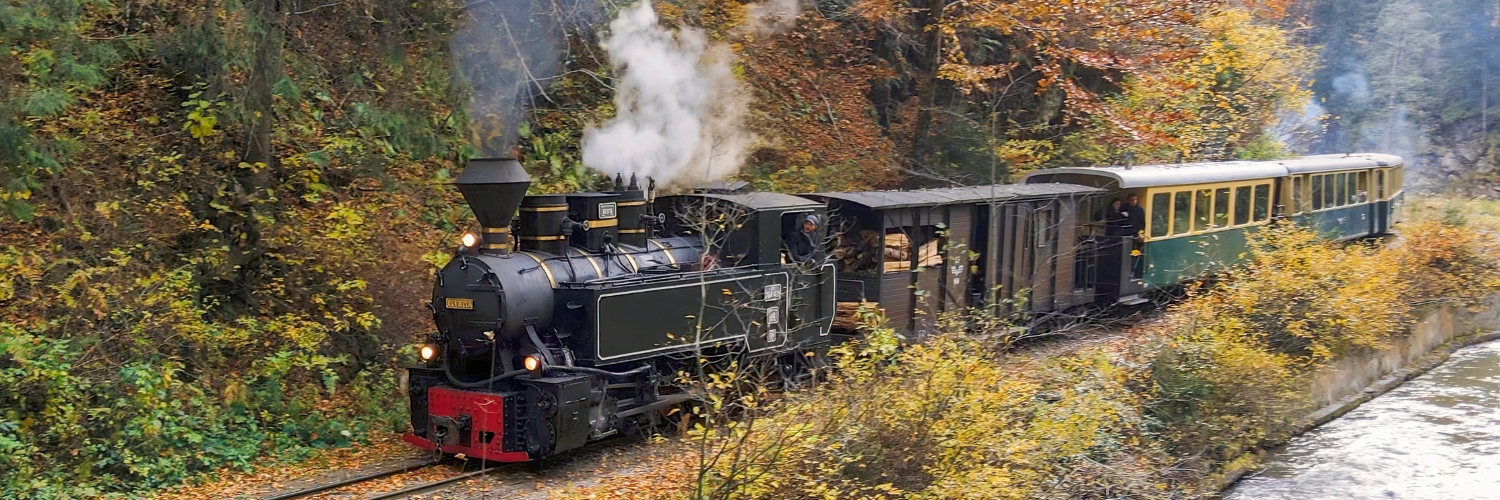
The economy created by the use of steam made it necessary to move at greater speed. Technological innovation and entrepreneurial spirit had to be accompanied by a new transport system. It was the railway that brought the country’s main textile production centres to the port of Barcelona, thus providing the backbone of the whole territory.
When money travelled by train