The European Union can't eat tanks
European farmers are up in arms. Rising costs, the removal of subsidies, new environmental measures and cuts to finance the war in Ukraine are strangling a sector that is essential to the continent’s food sovereignty and has become the scapegoat of the Eurocrats.
After seeing the images of half of Germany blocked by the avalanche of tractors heading towards the Brandenburg Gate, one might think that you reap what you sow. Europe’s political class has long been fomenting discord against the agricultural sector, and it was only a matter of time before one day or another it paid the consequences.
These protests are the latest in a series of farmers’ demonstrations across Europe. Previously, similar demonstrations have been seen in the Netherlands, Belgium, France, Spain and other European states, where farmers have also taken to the streets to express their dissatisfaction with the effects of planned environmental reforms and high production costs.
The casus belli of the German rural revolt
Although grouping all the demonstrations under a common denominator is tempting, they have mainly been triggered by specific national situations. The German agricultural sector is opposed to proposed cuts in fuel subsidies used in agriculture. An austerity policy that the German government argues became necessary after a Constitutional Court verdict prohibited the coalition government from transferring 60 billion euros in appropriations to mitigate the effects of the pandemic on the fight against climate change.
The cuts were intended to eliminate the existing tax benefits for diesel and the road tax exemption for agricultural and forestry vehicles. This would have allowed the federal government to save almost 1 billion euros in additional revenue from the official amount it has to save in the 2024 fiscal year – still pending parliamentary approval – of around 17 billion euros out of a budget of 450 billion euros.
This is against the backdrop of the war in Ukraine and sanctions on Russia. The war, instigated and perpetuated by the US and its client states in Europe, has been devastating for the German economy and industrial sector. Yet Berlin has pledged more than 17.1 billion euros in military aid to Ukraine from 24 January 2022, the same amount it would have to save through cuts during 2024.
But of course, these billions of euros in military “aid” are recycled into the German military-industrial complex which, like the one of the United States, is making a killing from this war, courtesy of the taxpayers and farmers who suffer the cuts because there is no money and the Ukrainians who serve as cannon fodder for the corporate interests behind these conflicts. As President Biden keeps repeating to keep the funds flowing, the money going to “Ukraine” is a good investment.
Climate targets vs. food sovereignty
Despite the loss of more than 5 million farms since 2005, a decline of 37%, Europe is generally self-sufficient in most foodstuffs. However, support for farmers provided by the Common Agricultural Policy is essential in ensuring the continuity of farms and crops in the EU. Especially since the increased costs caused by the sanitary crisis, the logistical funnel and the war in Ukraine.
Eurocrats in Brussels are nervous about the agricultural revolt on the continent. The EU has set a global goal of zero emissions by 2050, and EU officials are concerned that the outpouring of protests could set back the ambitious climate targets set by the European Commission.
According to Greenpeace, the current system, which pushes farmers to run large, intensively industrialised farms is broken and protesting for business as usual will not help. In any case, the situation of political neglect in which the rural world finds itself is unsustainable. The transition to a more sustainable model has to guarantee much more than the mere survival of the sector.
11Onze is the community fintech of Catalonia. Open an account by downloading the super app El Canut for Android or iOS and join the revolution!

Grifols shares have come to lose more than half their value since the vulture fund Gotham City Research published a report on 9 January questioning the Catalan pharmaceutical company’s accounting practices. Are we facing a case of market manipulation?
On 26 January, the multinational pharmaceutical company Grifols filed a lawsuit in the Southern District Court of New York, in the United States, against the entire Gotham City Research network for “publishing and distributing” a report “containing falsehoods about the accounting, communications, finances and integrity” of the pharmaceutical group.
In a statement to the Spanish Securities and Exchange Commission (CNMV), Grifols explained that its complaint alleges that Gotham City Research, in addition to publishing and distributing the report containing falsehoods about the company’s accounting practices, obtained “a substantial short position against Grifols”.
In the report published by Gotham on 9 January, the hedge fund accuses Grifols of falsifying its accounts and criticises the relationships that exist between management directors, family members and the various companies involved: “We are particularly concerned that these management executives and the parties involved are listed at different times as shareholders, directors, creditors, debtors or advisors of Grifols, all at the same time”.
Specifically, the US fund argues that the Catalan multinational “manipulates debt and EBITDA to artificially reduce debt by six times, when, in reality, it is between ten and thirteen times EBITDA”, which is why it argues that its shares are worthless. In addition, he also questions the debt of Scranton Enterprises – one of the companies through which the Grifols family controls the pharmaceutical company – pointing out that it has a leverage of 27 times its EBITDA.
What is Gotham City Research, and how does it operate?
Gotham City Research is a consulting and research firm founded by Dan Yu, a Wall Street analyst who also acts as a hedge fund. Ten years ago it became famous for causing the collapse of Gowex, a Spanish company specialising in the creation of free Wi-Fi networks.
These hedge funds, also known as vulture funds, have a business model, a priori lawful from a legal point of view, based on making profits from the stock market collapse of the companies they are targeting. In other words, they take bearish positions using short selling or derivatives to profit when shares or the market falls.
Their modus operandi involves choosing a company they consider to be overvalued and potentially vulnerable. They then borrow shares in this company – which they have to pay back within an agreed period – and sell them on the market. When these shares lose value on the stock market, they buy them back and then return them to the entity that lent them to them, keeping the difference.
Therefore, the more the share price has fallen, the more profit these funds make. The possible conflict of interest or market manipulation can occur because some of these funds, as in the case of Gotham City Research, are the ones who directly cause the collapse of the company in which they have taken a short position. They do so by publishing reports in which they question the financial state of these companies.
Grifols shares plunge and lose half their value
Since Gotham published its first report, it has not ceased its attacks on the pharmaceutical multinational, to the point that Grifols’ share price could not get back on its feet and has lost more than 50% of its market capitalisation, to the tune of more than 4.5 billion euros.
When it rains, it pours, so early last week, the credit rating agency Moody’s put Grifols’ debt rating under review, with the risk of a possible downgrade justified by the company’s lower cash generation and the delay in publishing its audited accounts.
This scenario did not change until last Friday, when its shares soared by up to 20% after the pharmaceutical company published its audited accounts, greenlighted “without exceptions” by KPMG, as reported by the company to the CNMV.
There is no denying that Grifols has debt problems, which have led it to make a series of changes at the core of its internal power that have resulted in a whole series of executives leaving the company over the last two years. The pharmaceutical company has senior managers dedicated to managing this debt. But beyond these well-known problems, it remains to be seen whether the information published by Gotham is true or false.
Investigation of possible criminal conduct
The CNMV is analysing whether Gotham complied with the requirements of the regulations on the dissemination of misleading information, at the same time as it is studying the information published by Grifols. Rodrigo Buenaventura, chairman of the supervisory body, said on Tuesday that they had requested further clarifications and additional information from the Catalan company, needing more time to conclude their investigation. “We just received them a few days ago and still need a few more weeks”.
If the allegations in Gotham’s report are ultimately confirmed, Grifols’ conduct could amount to a corporate crime of false accounting and misrepresentation to investors. On the other hand, if the information in the report is false, the hedge fund could be charged with market manipulation.
It would not be the first or the last time that a company has falsified its accounts, and it is certainly true that consultancy and analysis firms play an important role in complementing financial and market supervisory bodies. However, when these analyses come from hedge funds specialised in short-selling, there is a risk that the cure will be worse than the disease.
11Onze Recommends Bitvavo, cryptocurrency trading made easy, safe and at a good value.


Europe is requiring major banks to submit plans to manage the risks of artificial intelligence. A new reality that reinforces the need for AI that is transparent, responsible, and customer-focused.
The European Central Bank (ECB) has asked the leading banks in the euro area to submit, before 31 October 2026, an action plan to identify, manage, and mitigate the risks arising from the use of artificial intelligence. This decision confirms a shift in paradigm: AI is no longer seen merely as a tool for improving efficiency, but as a technology that must meet the same standards of transparency, governance, and control as any other critical infrastructure within the financial system.
The supervisory authority believes that artificial intelligence is already part of the day-to-day operations of financial institutions and that its development must be accompanied by mechanisms that ensure customer security, human oversight, and the traceability of decisions.
Trust: the true value of AI
This new regulatory approach highlights that the debate is no longer about whether banks will use artificial intelligence, but about how they will use it.
For Isaac Sene, Chief AI Officer of SENSO, this is the key issue.
“Artificial intelligence is only valuable if it generates trust. Technology should help people make better decisions, not replace their judgement.”
According to Sene, AI applied to finance must be capable of explaining its recommendations, operating transparently, and always keeping the user at the centre.
“For years, we have talked about the potential of AI. Now the time has come to talk about responsibility. People need to understand why they receive a recommendation and always remain in control of their decisions.”
SENSO: AI designed to protect and optimise wealth
With this vision, 11Onze has partnered with SENSO, an artificial intelligence platform created to help clients better understand their wealth, identify optimisation opportunities, and make more informed financial decisions.
Far from replacing human advice, SENSO uses artificial intelligence to analyse each client’s financial position, identify opportunities for improvement, and provide personalised recommendations tailored to their objectives.
“The future of finance will not depend on who has the most powerful AI, but on who is able to use it most responsibly. Trust will be the defining factor in the years ahead,” concludes Isaac Sene.
What is SENSO?
Senso is an artificial intelligence platform developed to help clients manage their wealth more efficiently.
Its main features include:
- A comprehensive view of the client’s wealth.
- Intelligent analysis of the client’s financial situation.
- Personalised recommendations based on each user’s objectives.
- Identification of wealth optimisation opportunities.
- Monitoring of the tax implications of users’ transactions in accordance with Spanish tax regulations.
- Decision-support tools that always keep control in the client’s hands.
SENSO was created with a clear purpose: to put artificial intelligence at the service of people, enabling them to better understand their finances and manage their wealth with greater confidence.
The stock market performance of large US technology companies has been stellar in recent years. These stocks, driven by the new AI paradigm, have posted record profits, yet their end markets are consolidating, calling into question the sustainability of their long-term growth profile.
In the stock market world, Alphabet, Amazon, Apple, Meta, Microsoft, Nvidia and Tesla are known as the “Magnificent Seven” of technology. These companies account for more than 25% of the S&P 500 and more than half of the Nasdaq 100. In addition, five of the seven are part of the exclusive “billion dollar club”, companies with a market capitalisation above $1 trillion, with Nvidia being the most recent entry.
- Alphabet: Google’s parent company’s profits increased by 23% in 2023, with a capitalisation of $1.6 trillion and a cumulative increase of 141% over the past five years.
- Amazon: The e-commerce platform founded in 1994 by Jeff Bezos has a market capitalisation of almost $1.8 trillion and its shares have appreciated by more than 2000% in the last ten years, 200% per year on average.
- Apple: Last year, Apple surpassed $3 trillion in market capitalisation for only the second time in its history and has seen a 250% increase in its stock market performance over the past five years.
- Meta: The company that owns Facebook, Instagram and WhatsApp started 2024 by setting a record, increasing its value by $204.5 billion in one day. It closed 2023 with revenues of $134.902 billion and currently has a capitalisation of $1.3 trillion.
- Microsoft: Last Wednesday, the capitalisation of the corporation founded by Bill Gates and Paul Allen reached the $3 trillion mark for the first time. Microsoft shares have appreciated by 66% in the last twelve months.
- Nvidia: As the leading supplier of chips specifically designed to train and run AI applications, this company’s stock market performance has been spectacular. Nvidia shares are up 243% in the last 12 months and 60% since the beginning of the year.
- Tesla: Elon Musk’s company revolutionised the electric vehicle industry and has significant competitive advantages thanks to its manufacturing processes and software development using artificial intelligence. Although it has started 2024 by losing about a quarter of its market capitalisation, it has seen an 829% increase in market performance over the past five years.
These tech giants not only stand out in terms of market capitalisation, but are leaders in new technologies such as artificial intelligence, cloud computing, and next-generation software development. A common differentiator among these companies is their ability to collect vast amounts of customer data and harness the power of AI.
Will the returns continue to be magnificent?
When analysing the future of the magnificent seven it should be noted that while there are certain similarities in the services provided between Alphabet, Amazon and Microsoft – whether we are talking about AI chatbots, software-to-cloud services or advertising – there are also huge differences between them. These differences are even more evident if we refer to Meta, focused on social networks, Tesla, in electric vehicles, or Apple, regarding smartphones.
It is therefore a heterogeneous group that is united by the common denominator of a solid business approach and growing areas. That said, some market analysts believe that the spectacular stock market performances of the Magnificent Seven are numbered. In a note entitled “R.I.P. the era of the Magnificent Seven”, Mike O’Rourke, senior market strategist at Jones Trading, argues that the group’s dominance of the stock market is coming to an end.
Whether we look at the stagnating demand for smartphones and slowing sales of electric cars, or the diversification of AI technologies, their markets are maturing and consolidating. Add in the problems of the Chinese economy, economic sanctions due to geopolitical interests and increased competition, and O’Rourke notes that the Magnificent Seven will continue to be very influential in the market, but that “they will start to cancel each other out in terms of performance, rather than all moving in the same direction”.
11Onze Recommends Bitvavo, cryptocurrency trading made easy, safe and at a good value.

Spain is not the country that collects the most taxes, yet millions of taxpayers perceive its tax authority as one of the toughest in Europe. Why? The answer depends not only on taxes, but also on wages, self-employed workers, bureaucracy and the level of trust citizens place in the public administration.
When taxes are discussed, the debate is often oversimplified. Some argue that Spain is a tax hell, while others point out that France, Denmark or Belgium collect even more through taxes and social security contributions. Both statements are true. Yet both are incomplete. A tax authority cannot be judged solely by the amount it collects, but also by the effort it demands from taxpayers and the way it treats them.
Spain collects less than many of its neighbours
If we look only at the tax burden—that is, the total of taxes and social security contributions as a percentage of GDP—Spain does not rank among Europe’s highest-tax countries. According to Eurostat, France, Denmark, Belgium, Austria and Finland all have a higher tax burden than Spain. Spain generally stands several percentage points below the countries that top this ranking.
These figures should settle the debate. But they do not. Despite having a lower tax burden than many other European economies, the widespread perception is that Spain’s Tax Agency is particularly tough. If objective data do not explain this feeling, then the answer must lie elsewhere.
The problem is not how much we pay, but the effort it requires
Comparing taxes without comparing wages is one of the most common mistakes in the fiscal debate. Paying a given percentage in taxes does not have the same impact when the average salary exceeds €55,000 a year as it does when it barely reaches €30,000.
This is what economists refer to as the tax effort. It measures not only the tax burden itself, but also the economic sacrifice it represents for the taxpayer. And this is precisely where Spain begins to differ from much of Northern Europe.
OECD data show that average Spanish wages remain well below those of Germany, the Netherlands, Denmark or France. This means that a similar tax burden can be far more difficult for a Spanish household to bear than for a German or Danish one.
In other words, the issue is not simply how much taxpayers pay. It is also how much they have left once they have paid.
The tax wedge: the great invisible tax
There is one figure that often goes unnoticed, yet explains better than any other the difference between the real cost of employing a worker and the salary that ultimately reaches that worker’s bank account. The OECD calls it the tax wedge.
The tax wedge is the difference between the total labour cost paid by the employer and the employee’s net salary after taxes and social security contributions have been deducted. The larger this gap, the higher the tax burden on labour.
Spain does not top the European ranking, but neither does it occupy the lower positions. What is particularly significant is that this burden falls on wages that remain lower than those of many Central and Northern European economies. This reinforces the perception that a substantial share of the value created through work is absorbed by the tax system before workers even receive their income.
This phenomenon also affects business competitiveness. A Spanish company may bear a labour cost that is considerably higher than the salary ultimately received by the employee, making both new hiring and wage increases more difficult.
The spanish self-employed worker: the best example for understanding the difference
If there is one group that perfectly illustrates the perception of the tax system’s toughness, it is the self-employed. Spain has reformed its Special Regime for Self-Employed Workers (RETA) in recent years to align social security contributions more closely with actual earnings. Even so, the system continues to require many professionals to pay a monthly contribution regardless of how their business performs.
This detail is important. A professional may go through several months with very little turnover and still be required to pay mandatory social security contributions. The issue is not only the amount itself, but also the rigidity of the system. When this model is compared with those of other European countries, significant differences emerge.
In France, the micro-entrepreneur regime calculates social security contributions on actual turnover. If business activity declines, contributions fall accordingly. If there is no income, the financial burden decreases proportionally. Portugal follows a similar philosophy. Contributions for self-employed workers are calculated on the basis of declared income and are updated periodically according to actual business activity. In the Netherlands, many self-employed professionals enjoy greater freedom to decide which insurance cover they wish to purchase, while in Germany not all social insurance schemes are compulsory for the self-employed. Spain, by contrast, still conveys a sense of lower flexibility. For many self-employed workers, the tax calendar does not adapt to the business; rather, the business has to adapt to the tax calendar.
Bureaucracy: the tax no one counts
When people talk about taxation, they almost always think about money. Yet there is another cost that often goes unnoticed: time. Quarterly tax returns, reporting forms, withholding tax filings, regulatory changes, appeals, electronic notifications and tax inspections are all part of the daily routine of thousands of self-employed professionals and small businesses.
This administrative burden is also a form of taxation. It is not paid in money, but in working hours, accounting fees and resources that could otherwise be devoted to generating economic activity.
It is no coincidence that many small businesses end up outsourcing almost all of their tax management. The system has become so complex that complying correctly with the Tax Agency has turned into a specialisation in its own right.
Not all tax authorities treat taxpayers the same way
There is a significant difference in the way European countries understand the relationship between the tax administration and the taxpayer.
In the Nordic countries, digitalisation is not only intended to improve tax fraud control, but also to reduce citizens’ administrative burdens. Denmark, Finland and Sweden have been offering pre-filled tax returns for years, along with highly simplified procedures and a high level of interoperability between public administrations.
Spain has also made considerable progress in digitalisation, particularly through tools such as Renta WEB and the Spanish Tax Agency’s Electronic Office. Nevertheless, many self-employed professionals and small businesses still face a significant administrative burden resulting from recurring tax filings, regulatory changes and reporting obligations that often require professional advice. The difference does not always lie in the taxes themselves. Sometimes it lies in how easy—or difficult—it is for taxpayers to comply with them.
Trust is also part of the tax system
Economists often focus on the tax burden, but there is another indicator that is just as important: institutional trust.
For years, the OECD has studied the relationship between citizens’ trust in public institutions and their voluntary compliance with tax obligations. Its conclusion is clear: taxpayers are more willing to accept a high tax burden when they believe that public resources are managed efficiently, transparently and consistently.
This is one of the major differences between the Nordic and Mediterranean countries. Denmark, Sweden and Finland consistently enjoy very high levels of public trust in their institutions, while Spain generally records significantly lower levels in a range of international indicators.
When citizens believe that public services work well, that regulations are stable and that everyone contributes fairly, paying taxes becomes much easier to accept as part of the social contract. When that trust weakens, any tax increase is more likely to be perceived as an imposition.
The shadow economy also explains many differences
There is one factor that rarely appears in discussions about taxation, yet it profoundly shapes every tax system: the shadow economy.
Countries with higher levels of tax compliance can sustain substantial tax revenues with similar tax rates because they have a broader tax base and lower levels of tax evasion. By contrast, when a significant share of economic activity remains outside the formal system, the tax burden falls more heavily on those who do comply with their obligations.
This vicious circle fuels a sense of unfairness. Honest taxpayers may feel that they bear a disproportionate share of the burden, while tax authorities strengthen enforcement measures to combat fraud, further increasing the perception of surveillance and administrative complexity.
The toughest tax authority is not always the one that collects the most
At this point, the answer is less intuitive than it might seem.
No, Spain is not the European country with the highest tax burden. Nor does it apply the highest tax rates across most major taxes. France, Belgium and Denmark continue to rank higher in many tax revenue indicators. But those figures do not tell the whole story.
A tax authority is not perceived as tough simply because it collects a great deal of revenue. Available income, social security contributions, the flexibility of the system for self-employed workers, administrative complexity, legal certainty and the level of trust citizens place in public institutions all play a role. Together, these factors shape the taxpayer’s everyday experience.
More than a debate about taxes
Perhaps the real debate is not about determining which country collects the most taxes, but rather which tax system achieves the best balance between revenue collection, competitiveness and public trust.
A modern tax authority should not be judged solely by the amount of revenue it raises. It should also be assessed by its ability to encourage voluntary compliance, reduce bureaucracy, provide regulatory stability and adapt to the economic reality faced by taxpayers.
Spain has taken important steps towards modernising its tax administration. Even so, it continues to carry a reputation for being particularly demanding—a perception that cannot be explained solely by the taxes people pay, but also by the way those taxes are administered. And that distinction is fundamental.
Because, ultimately, a good tax authority is not simply the one that collects the most. It is the one that ensures citizens understand why they pay, trust the system and feel that the effort required of them is proportionate to the benefits they receive.
Protecting savings with physical gold has been one of 11Onze’s greatest contributions to its community, and its range of products continues to expand. In today’s environment of market volatility, persistently high inflation and growing distrust in the banking system, gold is once again strengthening its role as a safe-haven asset. Discover Or Llavor at Preciosos 11Onze.



La teoria evolutiva és molt més complexa que una reducció a simples competències individuals. El cas és que, a partir de la teoria de l’evolució de les espècies de Charles Darwin, hom va arribar a la conclusió que les jerarquies socials existents dins les societats contemporànies eren el resultat d’una “selecció natural” o de la “supervivència del més apte”. Tanmateix, la tria selectiva i aplicació de conceptes biològics en un marc social i antropològic poden ser molt lesives per la humanitat.
A finals del segle XIX, el naturalista i filòsof anglès Herbert Spencer va impulsar l’aplicació dels conceptes biològics de la “selecció natural” i de la “supervivència del més fort” al camp de les Ciències Socials. D’aquesta manera, Spencer va inventar el concepte de “darwinisme social”, el qual suposava una aplicació tergiversada i intencionada de la teoria evolutiva de Darwin.
El concepte va fer molt de furor dins dels cercles acadèmics, com per exemple a l’escola econòmica neoclàssica o marginalista, representada pels economistes Jevons, Menger, Walras, Pareto o Marshall. Aquest corrent de pensament econòmic es va centrar principalment a explicar els comportaments individuals i l’intercanvi de béns i serveis, abandonant els grans temes clàssics referents a la generació de riquesa i la seva distribució, les quals havien ocupat les anàlisis econòmiques des de mitjans del XVII.
Tanmateix, no és cap casualitat que aquest concepte tingués gran acceptació —sobretot entre l’alta societat europea— donat que va aparèixer just en el moment en què les antigues monarquies europees es transformaven en els moderns Estats actuals, adoptaven el capitalisme com l’únic sistema socioeconòmic i abandonaven el mercantilisme per sempre més.
D’aquesta manera, els Estats occidentals —incloent-hi els emergents Estats Units— van començar a donar gran importància a la competència entre individus —entengui’s aquí també entre empreses, territoris o països— dins del sempre defensat lliure mercat i a justificar el perquè existeixen actors forts que veuen augmentar la seva riquesa i el seu poder, en contraposició dels agents considerats dèbils que veuen disminuir la seva riquesa i el seu poder, si és que alguna vegada en van tenir!
Per tant, el “darwinisme social” només significaria l’expressió ideal de les relacions materials dominants. Des d’aleshores, el concepte ha esdevingut molt popular entre les societats occidentals, el qual ha estat àmpliament divulgat en els cercles acadèmics i socials, atès que ha proporcionat a les societats occidentals una justificació pseudocientífica de les seves posicions privilegiades arreu del món. A més, ha permès continuar justificant racionalment el seu passat colonitzador d’Amèrica, Àfrica i Àsia. I fins i tot, els ha permès justificar la misogínia.

Els Estats occidentals —incloent-hi els emergents Estats Units— justifiquen el perquè existeixen actors forts que veuen augmentar la seva riquesa i el seu poder, en contraposició dels considerats agents dèbils que veuen disminuir la seva riquesa i el seu poder.
Naturalment, existeixen altres opcions!
Als antípodes de Spencer trobem al geògraf i zoòleg rus Piotr Kropotkin qui, a finals del XIX, aportarà una mirada totalment oposada al “darwinisme social”. Per a Kropotkin, la cooperació és el factor clau en l’evolució humana, mentre que la competència esdevé una qüestió paral·lela.
A través del seu llibre “El suport mutu: un factor en l’evolució”, Kropotkin desgrana com la cooperació i l’ajuda recíproca són pràctiques comunes i essencials dins la natura. Si els humans renunciem a la solidaritat i la substituïm per la cobdícia, serà quan apareixerà l’estratificació social, es justificarà l’absolutisme i s’acabarà endolcint el feixisme. Aquest darrer estadi no el va poder observar en Piotr Kropotkin, però, en canvi, sí que ho va poder descriure magníficament en George Orwell en la seva coneguda faula de “La revolta dels animals”.
D’aquesta manera, només una moral basada en la llibertat, la solidaritat i la justícia podrà superar els nostres instints destructius, els quals també formen part de la naturalesa humana. Per tant, serà de vital importància que la ciència esdevingui el fonament de l’ètica, obligant-la a defugir de qualsevol principi sacralitzador del poder. I també serà important l’estudi constant de les estructures socials, les quals ens permetran produir el coneixement necessari per cobrir les necessitats humanes, base per al desenvolupament d’una societat lliure.
Aquells que pensin que “la llibertat és fer tot allò que un vol”, són ximples! Hegel afirmava que “la llibertat és consciència de la necessitat” i Montesquieu, molt bellament deia que “la llibertat és poder fer allò que hem de fer”. Després hi ha els farsants que diuen que “la llibertat és no tenir límits”. I on troba això? Potser en la geometria on només hi ha el punt i la recta o les corbes regulars. No, la vida és pura exigència amb límits. Una llibertat que no sigui amb responsabilitat és un frau —afirma el filòsof espanyol Antonio Escohotado a la seva obra “Los enemigos del comercio. Una historia moral de la propiedad”.
Per tant, el suport mutu és el terme que descriu la cooperació, la reciprocitat i el treball en equip, el qual comporta o implica un benefici mutu per a les persones que cooperen o que hi estan involucrades. Existeixen infinitat d’exemples de mutualisme dins del regne animal i vegetal, com per exemple el treball col·laboratiu que fan les formigues a l’hora de recollir els aliments per l’hivern; o l’estratègia tan eficaç de les plantes, que aprofiten la interacció amb els insectes i ocells per pol·linitzar. Més de cent setanta mil espècies acaben contribuint al 35 % de la producció global de cultius alimentaris.
Certament, la natura està plena d’exemples i en Kropotkin aporta infinitat d’arguments per a demostrar que els humans som interdependents. De fet, aquesta és la clau del nostre èxit com a espècie dins l’evolució humana, fins al punt que les primeres societats humanes van practicar aquesta estratègia quan va esdevenir una qüestió de supervivència.
La idea de l’individu socialment independent és un mite que ha estat àmpliament promogut pels Estats occidentals —sobretot al món anglosaxó— i per les grans corporacions multinacionals, les quals han projectat infinitat de models triomfants d’homes i de dones fets a si mateixos. La clara visualització dels seus triomfs ha permès al sistema modelar-nos a partir del concepte de Spencer. D’alguna manera, s’ha aconseguit convertir-nos en consumidors atomitzats i fàcilment controlables, atès que d’ençà que som petits se’ns educa per esdevenir persones individuals, autosuficients, independents, possessores de propietats o portadores de smartphones que, malgrat que ens faciliten la connexió entre nosaltres, paradoxalment ens aboquen a l’aïllament. Sense saber-ho, duem incrustat el darwinisme social dins dels nostres cervells.
La idea de l’individu socialment independent és un mite el qual ha estat àmpliament promogut pels Estats occidentals —sobretot al món anglosaxó— i per les grans corporacions multinacionals, les quals han projectat infinitat de models triomfants d’homes i de dones fets a si mateixos.
Noves maneres per velles estratègies
Cèlebre és la frase de Voltaire quan diu que “la civilització no suprimeix la barbàrie, sinó que la perfecciona.” Encara que sembli estranya, la frase continua essent actual. L’esclavitud ha existit sempre i sempre existirà, només que el món contemporani ha suavitzat els mètodes. Quins són els dos aspectes que un ésser humà defensaria amb la seva vida? Els seus fills i un lloc on romandre.
I actualment, quins són els dos mecanismes que ens subjuguen al sistema? Doncs, formar una família i adquirir un habitatge. L’habilitat del sistema rau en el fet que ha estat capaç de crear negocis rendibles al voltant d’aquests dos principis. És per això que s’ha fomentat el desig de la propietat privada i la formació de la família ideal com a entitat de consum, al mateix temps que s’han anat congelant els salaris, s’han apujat els preus dels habitatges i han anat augmentant els costos de la vida per criar els nostres fills. D’aquesta manera, s’ha aconseguit una població de dependents i convençuts per gran part de les seves vides. Aquests són algú que s’endeutarà i se sotmetrà davant d’un treball precari o d’una llei injusta a fi de mantenir aquests estàndards que imposa el sistema. És per això que està a les nostres mans dir prou!
El mutualisme a Catalunya
A Catalunya, existeixen infinitat d’exemples de mutualisme, els quals tenen el seu origen en els gremis i les confraries de l’edat mitjana. Des de finals del segle XIX, les mútues, les cooperatives o les associacions han esdevingut un dels trets distintius de la societat catalana. Només cal veure la recaptació de La Marató de TV3 any rere any! La riquesa del seu teixit associatiu mostra una gran diversitat d’entitats que vertebren el nostre país, que van des d’associacions de lleure i esport, de mútues o asseguradores de salut, de previsió social, a cooperatives agràries, passant per associacions culturals o veïnals fins a arribar a les organitzacions polítiques, les caixes d’estalvi o la banca comunitària.
La banca comunitària se sustenta sobre el principi del mutualisme, el qual es basa en les tendències associatives dels éssers humans per a aconseguir satisfer les seves necessitats a través de la cooperació voluntària i pacífica, l’ajuda mútua i la solidaritat en un model on els productors intercanvien lliurement productes i serveis.
Des del primer moment vam explicar que 11Onze és una fincom. Una plataforma fintech on la comunitat pot educar-se financerament, consumir continguts i accedir a un ventall de productes financers en continu creixement: des del compte d’El Canut pots fer la teva gestió bancària, comprar d’or, criptos i aviat tenir accés a préstecs.
Vols saber quin és el gran secret dels catalans?

El gran secret dels catalans



The world is changing, and so is the way we pay. While in the past it was common to carry cash or go to the cashpoint, for young people these payment systems have become obsolete. 11Onze agent Mònica Cornudella explains how young people pay for their purchases.
The indispensable tool for all these payments, it is clear, is the mobile phone, and there are at least three methods that are quite common. All are characterised by being quicker, faster and commission-free, but they have the disadvantage of limiting the amount that can be paid, which ranges from 500 to 1,000 euros per transaction. Let’s see what they are!
- Mobile payments linked to a current account or card. In this case, young people only have to link their debit or credit card details to the bank’s application on their mobile phone or take a photograph of the card so that the system can scan the numbers and detect it. At 11Onze you can now order your virtual card through El Canut.
- Payment with a ‘contactless’ card. In this particular method, all you have to do is activate the corresponding application and bring your mobile phone close to a dataphone capable of reading the phone’s NFC chip. This system allows young people to make purchases using radio frequency identification technologies, which are embedded in smart cards in mobile phones or other devices. Moreover, if the purchase does not exceed 20 euros, it is not even necessary to enter the PIN.
- Transfer by mobile phone. Finally, we must talk about what is the most popular way of paying among young people. Surely you have heard of Bizum or PayPal. These are platforms or applications that allow small transfers to be made between individuals using the same mobile phones. Simple and uncomplicated. And you, how do you pay for your purchases?
How do young people pay?



Only 15.8% of the young population is emancipated, the worst figure in decades. Youth unemployment and housing prices are the two main reasons for this. Now, the government is trying to find a solution through a new housing law. But will it be enough? We talk to the experts.
In Spain, almost half of young people aged between 16 and 29 who live in independent housing do so in shared rented accommodation. If they want to live on their own, the price to be paid represents 91.6% of their salary and, if they want to take out a mortgage, they need to set aside at least 55.1% of their salary. Although buying a home may seem more affordable on the surface, the reality is that the mortgage market is closed to young people. They neither have sufficient savings to cover the initial outlay, nor do they have job stability. This is what the Spanish Youth Council states in its annual study for 2020.
Housing continues to be the big headache for young people who want to become independent. That is why, in an attempt to tackle this scenario, the government of Pedro Sánchez has announced a new Housing Law, which should limit rental prices and favour young people’s access to decent housing. In 11Onze we have analysed the proposed regulation with the Tenants’ Union and the president of the Consell Nacional de Joventut de Catalunya (CNJC), Guillermo Chirino.
When the law falls short
In an emergency situation like the current one, in which the rate of youth emancipation has reached historic lows, Chirino considers that ‘political action cannot wait’. However, he warns that, if the law takes 12 or 18 months to be passed, as is usual, this gives landlords room to raise rental prices and, therefore, the effectiveness of the measure falls short. The president of the CNJC also warns that the government has already pointed out that the law’s aid would be limited to those young people who work. ‘This alone rules out more than 50% of young people,’ laments Chirino. Moreover, the politicians declared that the aid would reach some 50,000 young people, that is, only 1% of young people in the State.
‘Obviously, this law will not solve anything or facilitate the emancipation of young people’, criticise sources from the Union of Villages, who add that they are not in favour of financing the payment of housing for young people with aid. ‘It allows the landlord to think that, if young people can pay more, then it is not necessary to lower the price, but they can even raise it’, they argue.
The inspiration of the Catalan model
As far as rent regulation is concerned, the proposal is inspired by the Catalan law, the only legislative proposal in force in Spain. This is explained by the Tenants’ Union, who, together with the Tenants’ Union, have worked intensively on the Catalan law and have fought to bring it to the national level. However, the Tenants’ Union warns that the differences between the Spanish government’s proposal and the Catalan one are substantial and put at risk the effectiveness of the measure in the whole of Spain.
To begin with, the Catalan law establishes a rental price index, which assures tenants that, if they sign or renew a contract, the price remains the same as in the previous contract. Moreover, if the price is above this reference index, it must be lowered. The index is calculated on the basis of the average of rental prices for dwellings with similar characteristics and within a specific area. In contrast, in the Spanish government’s proposal, only legal landlords, i.e. companies with more than ten properties, would be obliged to reduce the rental price.
‘In cities like Barcelona, the concentration of ownership is very high, but only 30% of rental housing is legally owned. Most are owned by individuals who, despite owning more than ten homes, would not be obliged to reduce the rent’, warns thethe Tenants’ Union. In the rest of the Catalan municipalities, where the concentration of property ownership is lower, this measure is, in their opinion, ‘totally decaffeinated’.
On the other hand, it seems that the application of the reduction will be discretionary, leaving it up to each autonomous region and even each municipality to decide. On the contrary, Chirino argues that, if it is a public measure, ‘it should be binding for all, as otherwise it can generate inequality and territorial inequity’.
A dignified life for young people
Beyond the regulations on the price of rent, the new law should make a series of aids available to young people. But the difficulties of emancipation do not seem to have a definitive solution. To begin with, although housing should not account for more than 30% of a person’s salary to ensure a decent life, the reality is that prices are skyrocketing and salaries are too low.
Thus, if the average salary of young people in employment in Spain is 969 euros, the amount that should be spent on housing should not exceed 290 euros per month. However, the average rental price is 880 euros per month and, in certain areas of the state, such as Barcelona and its metropolitan area, the figure exceeds 1,000 euros. So, how can we help young people to emancipate themselves?
The Tenants’ Union s believes that, in order to facilitate emancipation, it is necessary to get to the root of the problem: ‘We must ensure that all rental housing lowers its price and facilitates access to vulnerable groups. In Catalonia, many housing collectives are calling for a public rental housing stock at affordable prices. It is not a question of building more, but of recovering housing and ensuring that large owners allocate part of it to social renting’, they argue.
The CNJC has also set up tenant self-defence workshops to detect the difficulties faced by young people and try to find answers. ‘In Catalonia, we already have a law regulating rental prices that has been incredibly effective. It has reduced rental prices in those areas where it has been applied and has also improved confidence in renting’, they argue. Now, they believe, what is needed is to improve this Catalan regulation and extend it to the whole territory. ‘We still have a long way to go,’ they say.
11Onze is the community fintech of Catalonia. Open an account by downloading the app El Canut for Android or iOS and join the revolution!
If you would like to learn more about this topic, we recommend:
 Economy
What to accept and not accept when renting a house
6 min readIn the real estate market, and specifically in the rental...


The economic gears are grinding ever tighter. Rising energy prices are pushing up production costs, while runaway inflation is holding back consumption and rising interest rates are making credit more expensive for businesses and families.
August was the month with the most expensive electricity in history in Catalonia, as the average price on the wholesale market was 307.80 euros/MWh, according to data from the Iberian Electricity Market Operator (OMIE). And this happens despite the application of the “Iberian exception” since June in Spain and Portugal, which has decoupled gas from the wholesale electricity market to reduce its price. In short, electricity has become 190% more expensive than one year ago and the price has risen by 585% compared to two years ago.
The prices of all fuels have soared because of the war in Ukraine and countries such as Germany and the Netherlands have already had to resort to coal to partly compensate for the problems with gas and oil supplies.
Rising energy prices are causing companies’ production costs to rise exponentially across Europe. The Industrial Price Index (IPRI), which measures the evolution of the prices of products manufactured in Spain and sold on the domestic market in the first stage of their commercialisation, indicates that in July 2022 they were 40% more expensive than the previous year. Of this increase, more than half is directly due to the rise of energy prices. In Germany, data for August reflect a 45% increase in industrial prices compared to the same month in 2021.
In this situation, companies are faced with the dilemma of either passing on the cost increase to the end consumer, thus running the risk of losing sales, or reducing their margins, thus also losing out. In short, there is no good decision, the optimal decision is the least bad one.
Double-digit inflation
A second problem gripping the economy is runaway inflation. In Catalonia, the year-on-year variation stood at 10.2 % in August, reaching a double-digit increase for the second consecutive month.
In addition to energy, food prices have also soared, mainly due to fuel and fertiliser costs, which could increase by up to 70 % this year. Globally, agricultural commodity prices are expected to rise by 18% by 2022. And the increases are particularly affecting staples such as tomatoes, meat, oil and milk.
Sustained food shortages and high prices could lead to malnutrition problems for millions of people and popular revolts. Indeed, riots have already occurred in Sri Lanka and Peru, and countries such as Turkey and Egypt could follow in their footsteps.
However, not all the responsibility for the rise in inflation lies with food and energy, which are the products with the most volatile values: core inflation, which does not take these product categories into account, is already close to 6 % in Catalonia.
Of course, in addition to devaluing our savings, the increase in inflation means a loss of purchasing power for citizens, which hampers consumption and further strangles the market for companies. Thus, a second burden falls on the economy.
Rising interest rates
Faced with escalating inflation, most central banks have been forced to raise interest rates to cool the economy, pushed by the aggressive monetary policy of the United States, which has just raised them by 0.75 % for the third time this year. And that has traditionally led to more difficulties in Europe and financial crises in emerging markets and developing economies.
So far, the European Central Bank has raised interest rates by 1.25 % in just over two months and is expected to raise them further at its next meetings. This rise in interest rates is further stifling the economy, as it makes both the credit needed by companies to invest and innovate and consumer credit, which is essential to stimulate certain markets, more expensive.
In short, with the rise in interest rates, a third burden is falling on the gears of the economy. It is therefore not surprising that in August some 20,000 SMEs disappeared in Spain and that up to 90,000 are in technical bankruptcy, as indicated by the latest barometer of the General Council of Associations of Administrative Managers of Spain. And the forecasts for the coming months are not optimistic, as some 700,000 have liquidity problems.
If you want to discover the best option to protect your savings, enter Preciosos 11Onze. We will help you buy at the best price the safe-haven asset par excellence: physical gold.


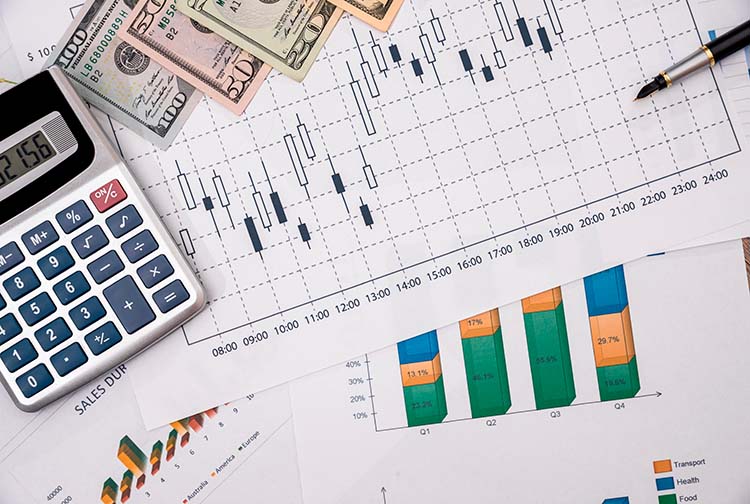
High inflation has forced the European Central Bank to raise interest rates higher than expected. And more rate hikes are expected in the coming months. The question is how much they will increase and to what extent they will affect the Eurozone’s economic performance.
The new interest rates approved last week by the European Central Bank come into force today. Although the increase was expected to be 0.25%, the institution chaired by Christine Lagarde surprised the markets with a rise of 0.50%. This is the first increase in 11 years and the largest since 2000.
The ECB Governing Council’s decision affects the three key interest rates, bringing the rate on the main refinancing operations to 0.50 %, the marginal lending facility to 0.75 % and the deposit facility to 0.00 %.
With this decision, the ECB joins the majority of central banks in the world, which in recent months have already taken the step of increasing their interest rates to combat rising prices. The dismal inflation data, which in June reached 8.6% in the eurozone, have pushed the ECB to make a larger increase than expected. Also the sharp rise in interest rates in countries such as the US, which has raised rates three times since May, and the weakness of the euro have influenced the decision.
How will interest rates evolve?
Everything indicates that interest rates will continue to rise in the coming months, although the percentage will be decided “meeting by meeting”, according to the European banking regulator. The aim is to return to rates of “2% inflation in the medium term”.
Analysts speculate that the interest rate range could be between 1% and 3% next year. As a reference, the governor of the Bank of France, François Villeroy de Galhau, recently estimated that it could be between 1% and 2%.
In any case, the ECB seems determined to prioritise the containment of inflation, even if the rise in interest rates ends up generating a recession in some eurozone countries. In fact, there are already those who consider that provoking a recession is the only realistic formula for bringing inflation back to reasonable levels.
It should be borne in mind that higher interest rates will make borrowing more expensive for both individuals (including mortgages) and companies. It should therefore reduce private consumption and corporate investments, which will cool the economy.
For the time being, all indications are that the next rate hike will take place in September, when the ECB Governing Council meets again. Beyond that date, Lagarde only indicated that, “if we see inflation stabilising at 2% over the medium term, a progressive further normalisation of interest rates towards a neutral rate will be appropriate”.
Risk premiums under scrutiny
The first to suffer from higher interest rates are the risk premia on the debt of the most vulnerable eurozone countries: Greece, Italy, Spain and Portugal. Faced with the possibility of an economic recession triggered by the rise in interest rates, investors are increasingly reluctant to buy the debt of the countries with the weakest economies.
For this reason, the ECB has accompanied the announcement of the rate hike with that of the creation of the TTIP [Instrument for the Protection of the Transmission of Monetary Policy], a mechanism to prevent the risk premiums of peripheral countries from soaring and the financial fragmentation of the euro zone from occurring. We cannot forget the unstable situation in Italy, for example, with the resignation a few days ago of Mario Draghi as prime minister and the call for elections.
The ECB states that this TPI “will be an addition to the Governing Council’s toolkit, and can be activated to counter unwarranted, disorderly market dynamics that pose a serious threat to the transmission of monetary policy across the euro area. It adds that the magnitude of TPI purchases will depend “on the severity of the risks facing policy transmission”. In any case, the ECB intends this tool to be a last resort, as the first line of defence will be the “flexible” reinvestment of the sovereign bonds it now holds in its portfolio.
Moreover, this intervention will not be without conditions, as the “rescued” countries will have to comply with the commitments and reforms set by the Recovery Fund and the various EU recommendations.
If you want to discover the best option to protect your savings, enter Preciosos 11Onze. We will help you buy at the best price the safe-haven asset par excellence: physical gold.