Who will buy US debt?
The US House of Representatives approved the deal to raise the debt ceiling by a large majority on Wednesday. A day later, the text also passed the Senate vote. But how will this public deficit be financed?
Winston Churchill is credited with saying: “Americans can always be trusted to do the right thing, once all other possibilities have been exhausted”. The pantomime accompanying the cyclical political tug-of-war of the US debt ceiling debate seems to confirm the words of the indomitable British ‘Bulldog’.
As expected, after tense negotiations, legislators from both parties have approved, at the last minute, the agreement to raise the debt ceiling, avoiding the devastating impact that a default would have on the economy. The deal proposed by Kevin McCarthy and Joe Biden – put to a vote in the House of Representatives on Wednesday – passed with 314 votes in favour (165 Democrats and 149 Republicans) and 117 votes against.
The agreement had until 5 June, when the country is expected to exceed the current debt ceiling, to be ratified with a second vote in the Senate. A mere formality that was consummated the day after, also with a large majority (63 – 36). The bipartisan agreement will suspend the spending limit set by Congress until 1 January 2025, shortly after the presidential elections scheduled for November 2024.
The GOP proposals have forced a reduction in the government deficit by about $1.5 trillion over the next decade by agreeing to essentially freeze funding that does not affect the defence department. This falls short of the 7 per cent increase demanded by Democrats, but, in return, the $369 billion in incentives requested by President Joe Biden for clean energy stay in place.
Major national and foreign creditors
The US government issues Treasury Bonds as its primary method of debt financing. These bonds are debt securities issued by the government under a promise to pay a fixed amount of interest over a fixed period of time. They are considered a safe investment due to the fact that the US government has maintained an impeccable record of debt repayment. Treasury bonds are sold through auctions and are available to both domestic and foreign investors.
Much of the current $31.4 trillion debt is held by the public ($24.6 trillion) in the form of financial securities issued by the Treasury Department. In other words, it is financed by private US investors through mutual funds, pension funds, insurers and banks. As well as through the Federal Reserve and the country’s central bank, or government agencies such as Social Security.
The remainder, some $7 trillion, is split 50/50 between central banks and foreign private investors. Specifically, Japan (1.087 trillion), China (869 billion) and the UK (655 billion) are the largest foreign holders of US debt. Foreign demand for Treasuries fell by 6% over the course of 2022 because of the strong dollar and rising interest rates but has been recovering during the first quarter of this year.
An unsustainable amount of debt?
Despite the current astronomical debt, the Congressional Budget Office (CBO) forecasts that US public spending will increase by $6 trillion to $10 trillion over the next ten years. This would double the fiscal deficit from $1.3 trillion to $2.7 trillion over the same period, reaching a debt figure of about $46 trillion in 2033. This amount of debt will not be easily absorbable given that net interest costs will triple to $1.2 trillion per year.
This increase in debt financing costs could leave out important public investments that drive economic growth, further diminishing the country’s ability to pay its debt. It also leads to higher inflation and an erosion of confidence in the US dollar, a key element in guaranteeing the US giant’s ability to borrow without consequences.
Against this backdrop of distrust in the US government’s ability to control its spending, it is not surprising that central bank gold purchases reached record highs over the past year and show no sign of slowing down in 2023. Other countries are not only buying record amounts of gold as the main safe-haven asset but, despite a slight recovery in recent months, overall they are still reducing their dollar reserves. These actions make it clear that addressing the national debt problem is an essential part of securing the economic future of the United States, but also of the established international monetary system.
If you want to discover the best option to protect your savings, enter Preciosos 11Onze. We will help you buy at the best price the safe-haven asset par excellence: physical gold.

Once again, the usual political tug-of-war in the US Congress triggered by the cyclical need to raise the debt ceiling is accompanied by media hysteria about a possible default. But is there a real possibility that the country could default, and what would be the consequences for the global economy?
Unlike other countries, where government spending is capped, in the United States, Congress sets a ceiling on the amount of federal debt – currently set at $31.381 trillion – that the government can acquire to finance its spending and obligations. The debt ceiling does not limit the government’s ability to incur spending but rather restricts the issuance of Treasury bonds, i.e. new debt that it uses to meet its financial obligations. The theory is that by limiting the amount of debt that can be accumulated, spending will be restricted.
The debt ceiling was first established in 1917 to finance the United States’ entry into the First World War. Since then, it has been raised 102 times by the legislature. This limit has become especially relevant recently because of the country’s chronically high budget deficit. Policies focused on military spending and social programmes, lower tax revenues due to tax cuts, and the impact of the pandemic are some of the factors that have contributed to the public deficit.
In practice, however, limiting the debt ceiling has proved wholly insufficient in controlling the debt. The government continues to spend money at a deficit and the debt continues to grow, and worse, it is used as an excuse to fuel political blackmail between the two dominant parties, who often jeopardise the economic health of the country for their own self-interests. As European Central Bank president Christine Lagarde recently declared, “I understand politics, but there comes a time when the higher interests of the nation have to prevail”.
The importance of the debt ceiling was highlighted in 2011 when Congress came close to failing to raise the limit, which would have led to a US government default. Former President Barack Obama was forced to cut spending on social programmes to reach a political deal to raise the debt ceiling and avoid default. A political tug-of-war that led to the only credit rating downgrade in the country’s history.
Implementation of extraordinary measures
On 19 January, President Joe Biden’s administration reached the debt ceiling of $31.381 trillion, so the country cannot issue any more bonds to finance itself. This means that if an agreement is not reached with the opposition this summer, the country will enter technical bankruptcy. Although the first meeting to advance negotiations between House Speaker Kevin McCarthy and the speaker took place on 1 February, the White House and Republican leaders in Washington are far from reaching a deal to avert disaster.
The Treasury Department can use a range of accounting manoeuvres to pay the government’s bills, but these extraordinary measures are temporary and can only prevent a default until 5 June. Once these measures and the available cash are exhausted, the repercussions could be devastating for the country’s economy.
In this context, Treasury Secretary Janet Yellen announced to members of Congress that she planned to redeem existing investments and suspend new investments from the Civil Service Retirement and Disability Fund and the Postal Fund. As well as suspending reinvestment in government securities bonds from the federal workers’ retirement and savings plan.
Consequences of a default
Despite the low probability of a default – approximately 2%, according to modelling by research provider MSCI shared exclusively with CNN – if no agreement is finally reached, the country would be left without sufficient liquidity to meet all its payments. Firstly, it would enter into what is known as a technical default, which is a prolonged period of default on some or all of the country’s financial liabilities. This would double the unemployment rate and possibly trigger an economic recession, increasing inflationary pressure. In addition, the US credit rating would be downgraded, just as in 2011.
Even more serious would be a real default, in which the government would run out of money to pay its obligations, causing an economic catastrophe. The consequences are virtually unpredictable, as there is no contemporary precedent, but some economists predict that unemployment would soar to over 12% and the economy would shrink by more than 10%, triggering a deep recession that would trigger inflation.
In addition, Social Security payments and federal pensions could cease, accompanied by massive lay-offs of public administration employees, affecting the security forces, the transport department and the airport administration, which would stop their activity unless the government implemented emergency measures.
Given the globalisation of the monetary system and the fact that about 75% of US government debt is held by domestic and foreign investors – including governments of other countries that account for about a third of this public debt – such a default would likely cause not only the American but the world economy to plummet.
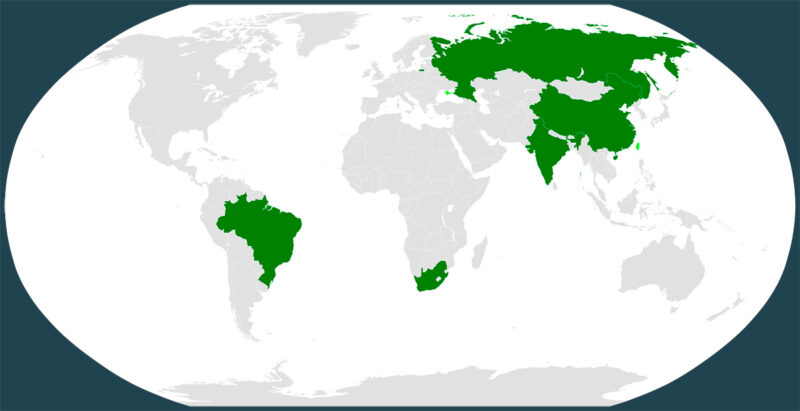
On the other hand, many countries with economic ties to the United States depend on the stability of the US economy and, in return, on the dollar. A suspension of payments would raise borrowing costs for the US government and businesses, but also for other countries, slowing down investment, neutering global economic growth and pushing up the price of gold as a safe-haven asset in the face of collapsing economies. Moreover, this crisis would further accelerate a decoupling from the established, US-dominated monetary system, by the large emerging economies that have been working for years to lay the groundwork of a multipolar world with an alternative monetary system.
If you want to discover the best option to protect your savings, enter Preciosos 11Onze. We will help you buy at the best price the safe-haven asset par excellence: physical gold.



The enormous size of the Chinese market has facilitated the take-off of the Chinese banking sector. Two of its banks have been at the top of the ranking of the world’s most valuable banking brands for years and are leaders in revenue and net income. The United States and, above all, Europe have lagged behind.
For yet another year, four Chinese banks have once again topped the ranking of the world’s most valuable banking brands, according to the “Banking 500 2023” report. This study, carried out by the consultancy Brand Finance, measures the value of the brand and not that of the business itself.
These are the Industrial and Commercial Bank of China (ICBC), China Construction Bank, Agricultural Bank of China and Bank of China. They are followed by the US brands Bank of America, Wells Fargo, J.P. Morgan, Chase and City. China Merchants Bank completes the top 10.
The dominance of Chinese and US brands has been undeniable in recent years. Europe, which a decade ago had HSBC, Santander and BNP Paribas in the top 10, has now been without representatives in this select group for five years.
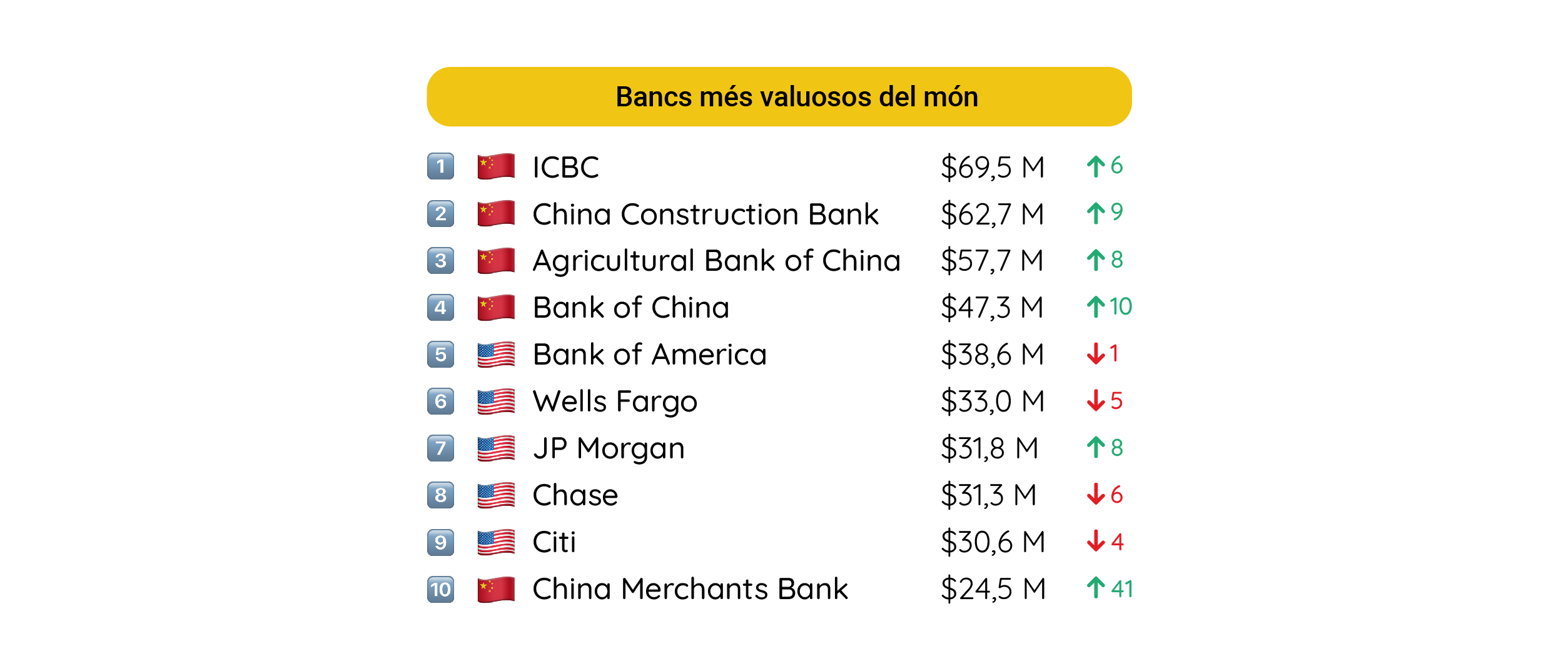
Source: “Banking 500 2023”.
The data in the last column show the evolution in the ranking compared to 2013.
The Chinese ‘sorpasso’
Although the four main Chinese banking brands have seen their value fall slightly over the last year, the fact is that the advance of the Asian giant’s banks has been spectacular over the last decade. In 2013, four US brands (Wells Fargo, Chase, Bank of America and Citi) and one British brand (HSBC) topped Brand Finance’s list, while the top Chinese bank (ICBC) did not appear until seventh place.
Since then, ICBC’s brand value has grown from less than $20 billion to almost $70 billion. Today, the financial institution founded in 1984 has several subsidiaries around the world and serves more than 500 million individuals and several million businesses.
Interestingly, the Brand Finance report noted that Silicon Valley Bank was the fastest-growing banking brand in the world, with its value increasing by 148% over the previous year. The bank, which specialises in providing banking services to venture capital firms to support the startup ecosystem, was considered to be worth $2.8 billion before its collapse.
Rise of the neobanks
In addition to the general recovery of the banking sector after the COVID-19 crisis, the report highlights the growth of neobanks or digital banks, whose representatives on the Brand Finance list have risen from a valuation of $795 million to almost $1.612 billion. This type of financial institution has achieved success in recent years, thanks in large part to the integration of technology and sustainability in a sector as immobile as banking.
The study notes that digital banking brands such as Tymebank and Discovery Bank in South Africa, Nubank in Brazil and Maya Bank in the Philippines are revolutionising the sector. It also highlights the emergence on the list of Revolut, whose brand value has increased by 57% and now stands at 194 million dollars. The neobank’s growth strategy has resulted in 25 million customers internationally.
The restrictions and confinements of recent years have pushed both old and new financial institutions to create banking services based on easy-to-use mobile applications, which has improved customer satisfaction and customer acquisition.
Different criteria, different rankings
Beyond brand value, the ranking of the world’s largest banks varies according to the parameters we take into account.
Whether we look at revenue or net income, ICBC and China Construction Bank hold the top two positions. The former has a turnover of $143 billion and a profit of $55 billion, while the latter has a turnover of $126 billion and a profit of $48 billion. However, based on these criteria, the following places on the list would be occupied by four US institutions: the merged J.P. Morgan Chase, Bank of America, Wells Fargo and Citigroup.
US banks are even more important if we look at their market capitalisation figures. Two of them, J.P. Morgan Chase, with 376 billion dollars, and Bank of America, with 225 billion, lead the ranking. They are followed by the four big Chinese banks, with a stock market value ranging from 154 billion for the Agricultural Bank of China to 224 billion for ICBC.
11Onze is the community fintech of Catalonia. Open an account by downloading the super app El Canut for Android or iOS and join the revolution!



Sometimes it is not easy to find the terms “ethics” and “business” together. It is popularly believed that the essence of one eliminates the other and in this we justify the lack of a network of companies that are truly committed to guaranteeing conditions, but society has changed and needs the working environment to change as well. A paradigm shift where company dynamics put in place fairer structures for all, for example, could be one of the ways to change the working environment.
When we talk about ethics in business, we basically concentrate on the ethical “choice” between possible options for a concrete and defined problem. We like to think that when faced with a problem, there are several options, and we can rank them from very unethical to very unethical. Therefore, it all boils down to using ethical criteria, ranking the options, and choosing the most ethical of the possible options. Thinking that this is possible and trying to deal with business ethics in this way gives us peace of mind, but it is a false security. It implicitly leads to the conclusion that all problems have ethical and unethical solutions, and that the simple fact of choosing the right decision criteria will lead us unequivocally to choose options from the group of ethical solutions.
Ethics as an isolated subject
The worst thing comes when we want to do business’ ethics training thinking this way, then the mess can be monumental, as well as the frustration afterwards. And if we look at most business training, ethics is a simple “little pill” that is given outside the core subjects, as if the manager can separate the decisions that need “ethics” from those that do not. In highly technical decisions, this may be possible, but in most decisions the ethical part is inseparable from the unethical part.
But in management training there is a tendency towards a curious specialisation. Ethics courses are held separately and many managers believe that they will receive the basic prescriptions that will enable them to make ethical choices from a range of possible options. The very fact of taking a business ethics course leads to the simple thought that there is an ethical painting page that automatically transforms solutions into ethical solutions. The manager may think that in this specialised training he or she will learn to paint any decision in a rosy colour. In reality it is the way one approaches the problem and the justification behind it, if the options are exhaustive, that the real ethics lie.
Working on empathy also with employees
Thus, ethics is not only to be found in any given choice between several options, but also in the very definition of the existing business problem. And also in which options we consider as a possible solution to the specific problem. For example, let us imagine that we have considered that we have two options: to dismiss or not to dismiss an employee. What we should do is to take a step back and look at what we want to dismiss. We define the problem and we see we have a member of staff who is always late. But we have to go one step further and find out why he is late, and somehow do something to compensate for his lateness. Also the implications of the fact that he is late: does it hurt anyone, does it affect the smooth running of the company? And once the problem has been defined, we should look at the possible options to solve it (not simply to fire or not to fire). It does not seem that dismissal is the only option. A change of working hours, a reprimand, a warning that being late affects productivity, and a long list of other options could also be considered.
It seems quite clear that the ethical component of managerial action is crucial to the whole process: how we define the problem, what possible solutions we propose, and how we choose the most appropriate one. Ethics cannot be reductionist and go straight to the choice. But it must also be transversal and permeate all business management disciplines. Reducing ethics to a mere ethical choice strips the manager’s task bare. It makes the manager less complete and his or her task is not shown in all its importance. It dwarfs him or her and also dwarfs the result of good management: the common good in capital letters.
If you want your business to make a giant leap, use 11Onze Business. Our business and freelancer account is now available. Find out more!



The European Central Bank has already started to reduce its public debt portfolio. Without massive purchases by the ECB, interest rates paid by European countries on public debt are bound to soar. To balance their books, states will be forced to cut spending.
As announced in December, this March the ECB began to reduce its portfolio of public debt acquired under the APP programme. This programme was launched in 2014 to mitigate the financing costs of eurozone states and has led it to hold more than two trillion euros in sovereign debt.
The European banking regulator’s massive purchase of government debt over the past few years has meant that interest rates on such debt have been remarkably subdued due to strong demand. This has allowed European governments to finance increased spending to stimulate the economy at a reduced cost.
These purchases will now decline “at a measured and predictable pace”, according to the ECB. This reduction is estimated to be 15 billion euros per month on average until the end of the second quarter of 2023 and the pace of reduction thereafter is yet to be determined.
Change in monetary policy
This is a further step by the European banking regulator in its strategy of tightening monetary policy. The ECB had already stopped net asset purchases in July 2022, although until now it continued to reinvest in full the principal payments corresponding to the securities acquired under the APP programme that were maturing.
In the case of the Spanish government, this measure could mean that the European Central Bank will stop buying more than 14 billion euros in government bonds this year. The figures being considered for 2024 and 2025 range between 17 and 28 billion euros per year.
This measure will push up the cost of financing for states and, as this serves as a benchmark for the private sector, this will also be the case for individuals and companies. For the time being, in the two auctions of Spanish ten-year debt held in March, the interest rate exceeded 3%, something that had not happened in two consecutive auctions since 2017.
Billions in interest
The Spanish government’s budget for 2022 expected the interest cost of public debt to be €30.175 billion, while the forecast for 2023 is already €31.275 billion, which is 3.6% more.
In fact, this is more than the amount allocated to basic public services, to which 27.753 billion euros will be spent this year. And the gap will continue to widen with the increase in financing costs. Some experts warn that, if central bank rate hikes persist, up to 33.675 billion could end up being paid in interest this year, 2.4 billion more than budgeted.
Private investors will have to take over from the ECB as major buyers of European public debt in the short and medium term. And they will only be seduced by public debt if the interest offered is succulent. According to Goldman Sachs, this could mean an increase of 15 basis points in German bond yields by the end of this year and between 30 and 35 basis points for peripheral countries.
A necessary and painful decision?
Among other reasons, the European banking regulator has justified the decision to reduce its holdings of government bonds by the need to “regain valuable policy space in an environment in which the current large volume of excess liquidity is not needed for steering short-term market interest rates”.
The ECB needs this room for manoeuvre to cope with possible turbulence in the financial system. Moreover, its massive purchases of government bonds have artificially doped eurozone economies in recent years, something that cannot be sustained indefinitely.
However, it is unlikely that this excess liquidity can be dispensed with in order to control the interest rates paid on government debt. This decision will be painful for many European countries, especially those in the periphery. In a context of rising central bank interest rates, which increase the profitability of many financial products, it is unclear how far government bond yields will have to rise to attract private investors.
If you want to discover the best option to protect your savings, enter Preciosos 11Onze. We will help you buy at the best price the safe-haven asset par excellence: physical gold.
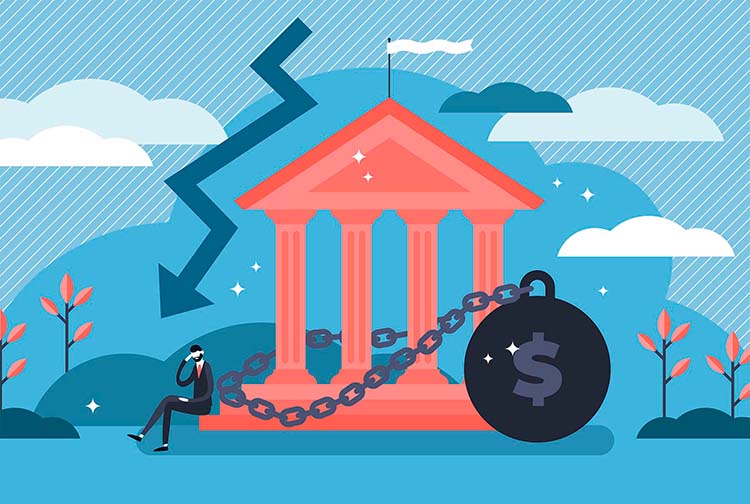
Swift, the leading interbank messaging protocol for cross-border payments, has successfully completed the first phase of pilot testing for interoperability with CBDC. The successful outcome of the tests paves the way for the development of a beta version of the system.
Globally, most central banks and commercial banks in more than 100 countries are exploring the use of digital currencies issued by central banks. In order to maximise the benefits, CBDCs need to be able to interact within the international payment system, with each other and with existing fiat currencies.
In this context, in October 2022, Swift stated that it had developed a protocol for CBDC to move through systems based on blockchain technology and interact with fiat currencies. A technological breakthrough that would facilitate and streamline international transactions and cross-border payments, beyond traditional systems.
The recent press release announcing the successful testing of interoperability between the global interbank messaging cooperative and digital currencies is an important step towards achieving the goal of digital assets interacting with their traditional counterparts seamlessly, through a payment solution that delivers value to customers and financial institutions.
Accelerating large-scale implementation
The first phase of pilot testing lasted 12 weeks and involved 18 central and commercial banks, including the central banks of France, Germany and Singapore, as well as BNP Paribas, HSBC and UBS, among others.
Tom Zschac, Chief Innovation Officer at Swift, noted that “almost 5,000 transactions were successfully simulated between two different blockchain networks and with existing fiat currency-based payment systems“, and that “many of the participating banks have made clear their desire for continued cooperation on interoperability”.
In collaboration with another group including Cite, Clearstream, Northern Trust and SETL, it was also demonstrated how this same infrastructure can be used to interconnect multiple tokenisation platforms with different types of cash payments, simulating transfers in the secondary bond market.
The next step will be to develop a beta version for the second phase of testing to demonstrate new use cases and other practical applications and functionalities, such as securities settlement or trade finance, across different platforms of the more than 11,500 financial institutions that are part of the Swift ecosystem.
11Onze is the community fintech of Catalonia. Open an account by downloading the super app El Canut for Android or iOS and join the revolution!
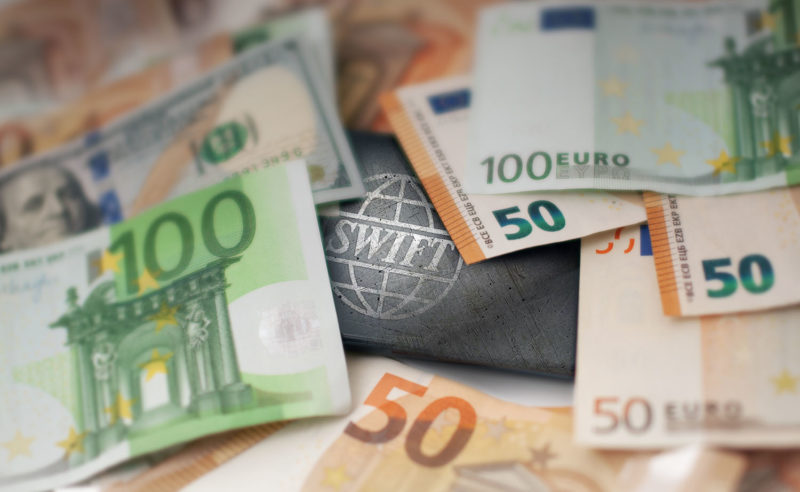
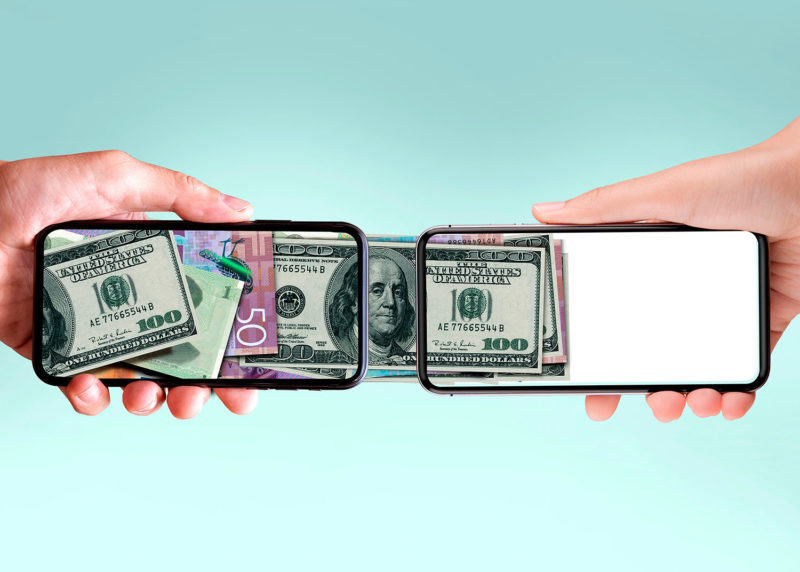
The sharp rise in the price and profitability of cryptocurrencies, led by Bitcoin, has caused a real gold rush. But in this case, the gold is digital currency.
Unlike the traditional monetary system, where Governments print money based on their needs, if we focus on Bitcoin, monetary creation is limited. Bitcoins are put into circulation every ten minutes and, approximately every four years, the software halves the blocks of currency issued, in a process known as halving. It is expected that by 2140 the total of 21 million Bitcoin will have been put into circulation.
How do Bitcoin mines work?
Bitcoins are not issued or are available to anyone who wants or gets to pick them up first. No, they are put into circulation in encrypted blocks that need to be decrypted. And this is where the concept of cryptocurrency mining comes in: with each issue, every ten minutes, miners connected to the network receive a new algorithm to solve a mathematical problem that, once solved, gives them the reward of new Bitcoins or commissions for the transaction; the miners validate the block and add it to the blockchain string.
Increasing competition to do this work has led to the creation of Bitcoin Farms around the world, where cryptocurrencies are said to be cultivated. These farms respond to the need to build real supercomputers by networking computers, so that they are able to decipher increasingly complicated algorithms as quickly as possible, to do so before the countless competitors.
These structures generate such a high consumption of electricity that they are most often installed in countries where this energy is more economical and the climate is colder, which allows avoiding overheating of computers and equipment. However, they have also led to the intensive demand for essential computer components to create these networks, such as graphics cards, to the point that some online retail chains have removed them from their open catalogue to avoid running out of them.

11Onze Training Courses - Cryptocurrency: Introduction
A problem of electricity consumption in Catalonia
In our country, the implementation of Bitcoin Farms is not illegal, but it mainly clashes with the high cost of energy that consumers in general suffer and that, in the case of these facilities, makes the electricity bill soar. This has led to the fact that, in some cases, their owners chose to tap into the power line or fraudulently connect to it. The ensuing allegations have led the Mossos to open investigations, in most cases with the mistaken suspicion that they were marijuana plantations.
It is in this way that cases such as the well-known one in Cambrils in 2018 have come to light, a great mine in a hotel under renovation of this coastal town; or this same week, the discovery in a flat in Sant Adrià de Besòs, to which we referred before. So far, they are rather isolated and semi-clandestine cases, but all indications are that they may be growing, as the profitability of cryptocurrencies and the fever of their miners to obtain them are growing.
For this reason, from time to time news such as these appear. Bitcoin Farms and the desire for presumed profits have also arrived in Catalonia.
Semi-clandestine flats, basements, or warehouses full of networked computers cultivating cryptocurrencies or mining Bitcoins, expressions used to define the extraction and obtention of digital coins. It may seem difficult to understand, but all of this makes sense within its issuing system.
11Onze is the community fintech of Catalonia. Open an account by downloading the super app El Canut for Android or iOS and join the revolution!



What will be the consequences of the devaluation of the euro against the dollar, and how will it affect our pockets? The virtual parity between the two currencies will aggravate inflation, and the theoretical improvement in the competitiveness of European industry may be greatly diminished by the increase in energy costs.
One dollar is already worth almost one euro. Parity between the two currencies is almost a reality. The 1.6 dollars that could be obtained for each euro in July 2008 is a long way off. In fact, the dollar’s exchange rate these days is the highest against the euro since the end of 2002, the year in which the European currency came into circulation.
Since the beginning of February, before the Russian invasion of Ukraine, the euro has depreciated by nearly 13% against the dollar. And if we take the beginning of 2021 as a reference, the depreciation has been almost 18%, so the European currency has lost almost a fifth of its value against the American currency in little more than a year and a half.
More fuel for inflation
The rising dollar is very bad news for inflation, since oil and many commodities are paid for in the US currency, so the dollar’s appreciation is equivalent to its rise. The current price we pay for a barrel of Brent Crude is around 105 dollars. At the current exchange rate, it costs us almost the same amount of euros, while at the exchange rate of a few months ago it would cost just over 90 euros.
Indirectly, the rise in oil prices will have an impact on the price of most products due to the increase in transport costs. The increase in the price of liquefied gas imported from the United States for European industry, which was already much more expensive than Russian gas, will also play an important role.
In this respect, the President of the European Commission, Ursula von der Leyen, called on European countries to unite in the face of a possible cut in Russian gas supplies, which is vital for the competitiveness of many European factories. All the signs are that we will have to dig deeper into our pockets.
Fears of recession
Developments in the euro/dollar exchange rate reflect the shift in US monetary policy, as the Fed raised interest rates in March and June to between 1.5% and 1.75%. This makes it more attractive for investors to buy US debt, which is obviously in US dollars. And this interest rate is expected to rise again later this month.
In contrast, the European Central Bank (ECB) has not yet dared to change the 0% interest rate because of the fragile economy. And experts predict that the ECB will only raise it by a quarter point at its July meeting. The fact that the US Federal Reserve has already raised interest rates six to seven times more this year than the ECB is expected to do makes a big difference.
In addition, many analysts interpret the weakening of the euro as a sign of the market’s fear of recession in Europe, which could hit many countries between the end of this year and next year.
Benefits for European industry?
In theory, the devaluation of the euro is an advantage for European exports, as products become more competitive. A weak euro against the dollar makes a product produced in the euro area cheaper for Americans, while a product made in the US becomes more expensive for Europeans.
In the medium term, this could particularly benefit economies such as Germany and France, which are clear exporters. And, in principle, it should lead to a revival of industry and trade. But the rising cost of energy may limit, to a large extent, this theoretical improvement in competitiveness. Moreover, runaway inflation would not help in gaining market share either.
If you want to discover the best option to protect your savings, enter Preciosos 11Onze. We will help you buy at the best price the safe-haven asset par excellence: physical gold.

The fall of Silicon Valley Bank and the fear of the bankruptcy of Credit Suisse caused a stock market crash in Spanish banks. Banco Sabadell once again led the sharp falls in the Ibex-35, dropping 10.49% at the close of trading on Wednesday.
Credit Suisse shares jumped 40% at the opening of trading on Thursday 16 March, a record high, after the Swiss National Bank (SNB) pledged funding of up to 57 billion euros to bolster its liquidity amid the banking crisis. Credit Suisse chief executive Ulrich Koerner defends the bank’s health and says his bank’s liquidity base is very strong.
The Spanish stock market was quick to react and opened with gains of 1.92%, in a day that will remain pending what happens with Credit Suisse and the meeting of the European Central Bank (ECB), which is expected to raise interest rates by 50 basis points.
A day to forget on the Ibex-35
Yesterday, however, the banking sector spurred the red numbers of the Ibex-35 caused by the collapse of Silicon Valley Bank and Signature Bank and the fear of the bankruptcy of Credit Suisse. The Swiss financial institution recorded declines of more than 20% after the refusal of Saudi National Bank, its main shareholder, to provide more capital.
Banco Sabadell once again led the stock market plunge with a fall of 10.49%, more than 500 million euros of its capitalisation. The bank led by César González-Bueno was also the bank with the biggest losses after plunging 11.41% on the announcement of the Californian bank’s defeat.
A day marked by losses that were replicated in the other financial institutions: BBVA (-7.38%) was behind Banco Sabadell, followed by Bankinter (-6.94%), Banco Santander (-6.89%), CaixaBank (-6.72%) and Unicaja Banco (-5.33%). Santander and BBVA are the institutions with the least liquidity drawer in both the short and long term.
Guaranteeing customer deposits
The ECB has begun consultations with the main European banks to find out their exposure to Credit Suisse. The aim is to prevent systemic bankruptcy. In the case of Spanish banks, citizens have almost one trillion euros in deposits, while the Guarantee Fund could barely cover 1% of this amount.
For this reason, many of Silicon Valley Bank’s savers transferred their money to financial institutions with an EMI (Electronic Money Institution) operating licence, which cannot use their depositors’ money to cover the institution’s expenses and are regulated by each country’s central bank.
Moreover, these entities cannot offer or promote risky investments, so they may be safer than banks, especially investment banks. Simply because they are not in the business of borrowing and gambling on the stock and credit markets, a business which, as we have seen repeatedly, can be extremely risky.
If you want to discover the best option to protect your savings, enter Preciosos 11Onze. We will help you buy at the best price the safe-haven asset par excellence: physical gold.



In ‘Animal Farm’, George Orwell wrote that “all animals are equal, but some animals are more equal than others”. The latest downturns we have been suffering from seem to reflect the words of the English writer in his satirical fable: while the population suffers the consequences, the banks are finding the goose that lays the golden egg.
The rise in interest rates with which the European Central Bank wants to combat the inflationary spiral has had direct consequences for families, who see their mortgage repayments soar with the rise in the EURIBOR, for businessmen, who find it more difficult to carry out investment projects, and for the State, increasing its risk premium and, therefore, the cost of public debt.
On the other hand, these measures have led to wider profit margins for banks, which have also tightened credit and limited their money supply. A rise in interest rates, which, unlike the interest applied to savings, is immediately passed on in the case of variable-rate loans or mortgages.
According to Bloomberg estimates, the six Spanish banks listed on the Ibex – Santander, BBVA, CaixaBank, Sabadell, Unicaja and Bankinter – will report record profits of almost 20 billion euros by the end of 2022. In other words, the increase in the extraction of income from families and companies has provided unprecedented profits for financial institutions, in a context of crisis where a large part of the population can barely make ends meet.
Repeating the same pattern, expecting different results
For its part, the banking sector rejects that this is an extraordinary situation, arguing that the increase in interest rates has simply brought monetary policy back to normal. It argues that for years, because of interest rates at historic lows, where they had low margins, it was very difficult for them to generate income. Claims that seem to contradict the also historically record profits in 2021.
Bearing in mind the role that banks have played in the financial crises we have suffered, whether in financing speculative bubbles, accumulating the risk generated by their own speculation, or turning off the tap of financing to businesses and consumers who later had to pay for their rescue, the arrogance and indifference of this sector towards the suffering of the population that sustains its business model is surprising.
Perhaps this combination of incompetence, corruption and arrogance should serve to curb crony capitalism between political and financial power from the core. The social and economic improvements needed to achieve a fairer society are incompatible with a financial system designed to serve the elites, and which feeds back by maintaining the favouritism of political power.
11Onze is the community fintech of Catalonia. Open an account by downloading the app El Canut for Android or iOS and join the revolution!