Ecology and economics: a sustainable goal
There is an increasing consensus in our society that accepts that economic growth must respect sustainability standards, and that debates how to link ecology and economy.
Economic growth, as a pillar of the capitalist system, has often been associated with the urban condition, the growth of cities, and the unrestricted expansion of their metropolitan areas. Both the services and the infrastructure needed are expanding, changing the territory and, in return, leaving aside the natural environment and the consequences of its alteration.
It is now clear that this has caused an ecological emergency, and many consciences have changed. They have now the opinion that the economy cannot forget nature, which is an increasingly accepted idea. It is probably outside the more purely urban fabric that more steps are taken in this direction, driven by the sensitivity of landscape conservation and natural heritage.
Following this goal of protection and appreciation of this heritage, the local world created the Landscape charters. Since 2006, Decree 343 of the Generalitat develops Law 8/2005 for the protection, management, and planning of the landscape, although some counties such as Alt Penedès have already had their own since 2002.
How does economy fits in sustainability?
The promotion of those sectors that are better adapted to nature and territory, such as wine, are one of the most common bets. It is a type of industry that combines agriculture and tourism, bringing benefits to the region in a minimum of two ways and enhancing the landscape. Some studies show that sales increase when the buyer links them to an environment.
Maintaining this sustainability, however, is sometimes not that simple. The first issue is related to tourism, about which we have talked, and the protection of the landscape as an exclusive setting against overcrowding. This can affect, in fact, the comfort and daily life of the inhabitants themselves. Secondly, we could go back to everything that the industry requires, which will eventually give jobs and leave profits in the form of taxes, such as the creation of industrial estates.
5 Tips to help the environment and contribute to ecology
A matter of mobility and energy
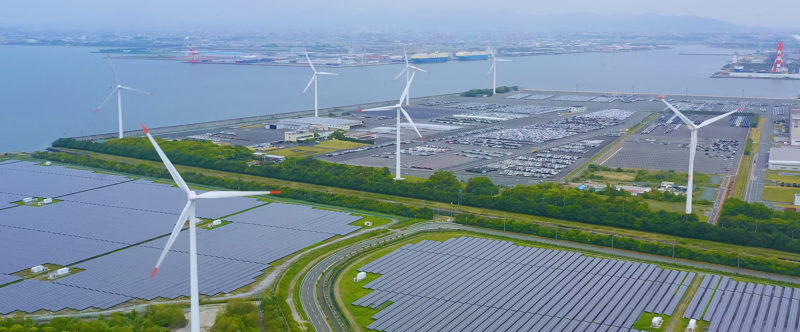
The infrastructures for mobility and transport and the generation of energy needed to move everything are perhaps the two factors where the economy finds it more difficult to become sustainable. The local world has responded with great caution and concern to the increasingly imminent plans for the creation of wind or photovoltaic parks that, while seeming to lead to the generation of cleaner energy, are thought to clash in full with landscape care.
One of the territory’s arguments is that if urban areas are the big consumers of energy, they should also be impacted by generating them—and proposals have been made, such as covering the roofs of industrial areas with solar panels. However, the paralysis of decisions due to the debate—in Catalonia only a wind turbine has been installed in twelve years—does not stop what others can do, and there are those who consider that opportunities are being missed. Recently, for example, a wind farm project was presented in Aragon to feed our country with renewable energy.
But big cities have more open debates between growing or guaranteeing ecological minimums and, as we have mentioned, transport is a key one. Recently, the proposal to expand El Prat Airport has returned to the forefront, a project that from a business sector is seen as a country project, essential to position Barcelona and Catalonia as an attractive and accessible hub for business, whereas many citizens and groups see it as completely unsustainable, as they call for a much deeper discussion about how and how much we want to grow. Surely the latter is the key to the debate we need to face soon.
If you want to wash your clothes without polluting the planet, 11Onze Recommends Natulim.

Widespread price hikes are also affecting the energy transition, specifically in the rising cost of materials and minerals used in green technologies. Marifé Fariñas, from 11Onze’s Back Office team, explains how the green revolution is driving up the price of raw materials.
No, the green revolution is not the cause of high inflation, but it is true that part of the price increase is attributable to the energy transition. As Fariñas explains, “the green revolution has increased the price of raw materials, some by as much as 90%”. This price increase, directly related to the materials and minerals used in favour of renewable energies, is known as ‘greenflation’.
This phenomenon is a paradox that necessarily goes with the effort to fight climate change, “fleeing from fossil fuels increases the demand for renewable energies, but this demand increases the price of the materials that make up these products,” says Fariñas.
Greenflation
Although a reduction in the demand for these raw materials cannot be the solution if we want to achieve the energy transition goals, economies of scale, more financing for green projects, and above all, reducing the cost of this financing, can offset part of the effects of green inflation.
Making these changes implies increasing production, but as the Back Office agent says, “although this implies production costs, experts do not believe it will be a threat to the viability of green energy”.
If you want to wash your clothes without polluting the planet, 11Onze Recommends Natulim.
If you liked this article, we recommend you read:
 Sustainability
ESG criteria
2 min readESG criteria are a new investment trend that is helping to make the most of our money
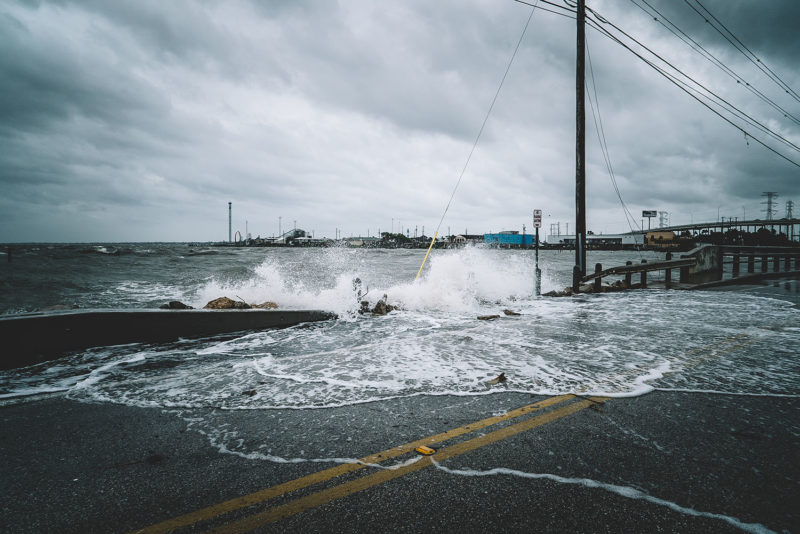
L’increment d’esdeveniments climàtics extrems suposa un repte per als governs i la població. Quines són les conseqüències econòmiques del canvi climàtic? Com ens podem preparar per als desastres naturals que afecten el nostre territori? En parlem amb Gemma Vallet, directora d’11Onze District i Carolina Rafales, de l’equip de producte.
Es preveu que l’estiu d’aquest any sigui un dels més calorosos de la sèrie històrica, es tracta d’una previsió que sembla repetir-se any rere any. Una entrada d’estiu marcada per un temps inestable i tempestes. Cada vegada més sovint, els meteoròlegs avisen que ve una nova DANA (depressió aïllada a nivells alts), més coneguda com a gota freda, que pot provocar precipitacions intenses durant hores o dies.
Els efectes del canvi climàtic són cada cop més palpables i no ens queda més remei que adaptar-nos i prendre les mesures necessàries per pal·liar els efectes econòmics i socials que acompanyen aquests esdeveniments climàtics extrems. Com explica Carolina Rafales, “Aquests fenòmens meteorològics poden presentar tempestes violentes i pedregades, per això cal estar preparats”.

Com fer front a una DANA
Aquest fenomen meteorològic es caracteritza per les precipitacions torrencials, sovint violentes i acompanyades de forts vents, que poden produir inundacions. El fet que aquestes precipitacions es produeixin en poc temps i en zones molt localitzades fa que puguin causar d’anys a les infraestructures i edificis perquè es fa difícil canalitzar tanta quantitat d’aigua.
Si la regió on vivim pot ser afectada per una gota freda “és essencial estar informats del desenvolupament de la tempesta i evitar sortir de casa a peu o en cotxe”, apunta Rafales.
Així mateix, ens recorda que “cal assegurar-se que les canonades i desaigües de casa nostra estan lliures d’obstruccions”.
De la mateixa manera, no estaria de més preparar-nos per si marxés la llum, un dels efectes negatius que sovint acompanyen aquestes tempestes. Rafales ens aconsella tenir sempre els mòbils ben carregats, o bateries externes auxiliars. En casos d’inundacions extremes haurem d’abandonar l’àrea afectada i buscar refugi en una zona alta, per la qual cosa és aconsellable tenir reparat un kit d’emergències que inclogui roba de recanvi, llanternes, una ràdio, una farmaciola i provisions.
Si vols conèixer una assegurança justa per a la teva llar i per a la societat, descobreix 11Onze Segurs.

Podem canviar el món? Quina és la nostra capacitat real d’impacte sobre l’entorn que ens envolta? Lara de Castro, HR Business Partner d’11Onze, explica què és el consum conscient i com podem contribuir a la sostenibilitat del planeta amb les nostres decisions de compra quotidianes.
Sovint subestimem l’impacte que els nostres actes individuals tenen sobre l’entorn que ens envolta. Però totes les accions, per petites que siguin, contribueixen a modelar el món. Lara de Castro ho deixa clar al següent vídeo amb un exemple molt evident.
Com ella mateixa adverteix, hi ha moltes persones que pensen que un acte individual sovint “és massa feble” per a tenir un impacte significatiu en l’entorn, “però no és així”. Cada acció compta i té conseqüències que es poden acumular a les de la resta de la comunitat. La realitat és que “les nostres decisions més quotidianes són rellevants, per petites que siguin”. En aquest sentit, és molt evident el paper que juguen totes les decisions de compra si som consumidors conscients.

Consumidors conscients que poden canviar el món
Què és el consum conscient?
Els consumidors conscients són persones que escullen els productes i els serveis amb criteris que van “més enllà de la relació qualitat-preu”, ja que inclouen l’impacte ambiental i social com un element decisori en els seus hàbits de compra. Una conseqüència és l’aposta pel comerç de proximitat, que “és una manera de donar suport als productors locals i evitar l’impacte econòmic i ambiental del transport”, com explica Lara de Castro.
Un altre exemple de consum conscient el trobem en l’aigua. Si volem reduir la contaminació al planeta, podem substituir el consum d’aigua embotellada, “amb totes les conseqüències que sabem que té el plàstic”, per aigua de l’aixeta tractada amb filtres sostenibles.
Com indica Lara de Castro al final del vídeo, si tots som més conscients “en els petits detalls de la vida quotidiana” la realitat és que “sí que podem canviar el món”. La decisió és nostra.
Si vols descobrir com beure la millor aigua, estalviar diners i ajudar al planeta, entra a Imprescindibles 11Onze.


The concept of “fast fashion” has boosted clothing consumption over the last quarter of a century. This is a very aggressive model for the environment, which has led the textile industry to become the second most polluting in the world. The situation is beginning to change, but the supposed circularity is still a long way off.
If you are planning a trip to Chile this summer and decide to visit the stunning Atacama Desert, you will be surprised by an unwanted attraction. Thousands of tonnes of textile waste accumulate in what has become the world’s largest used clothing dump.
Unfortunately, it is not the only one. As Greenpeace reports, every year a huge amount of clothing ends up in landfills in far-flung places. And this problem is just the tip of the iceberg of the damage the textile sector causes to the environment.
Over the last quarter of a century, the “fast fashion” model promoted by giants such as Inditex, based on a high turnover of cheap, low-quality clothes, has driven clothing consumption through the roof. In the European Union, for example, the amount of clothes bought per person has increased by 40% since 1996. Each year, Europeans consume 26 kg of textiles and discard 11 kg, most of which are incinerated or end up in landfill. Only a tiny amount of clothing is recycled.
The second most polluting industry
The so-called circularity of the fashion industry is still a long way off. As the UN warned in 2019, it is the second most polluting sector in the world in several areas, after oil. And data from the European Parliament point in the same direction.
For a start, dyes and finishing products are responsible for 20% of global drinking water pollution. Some substances used to colour clothes end up in rivers, with the consequent impact on their flora and fauna. A paradigmatic case is that of Bangladesh, where rivers such as the Buriganga have periodically changed colour due to the hundreds of tanneries installed on their banks.
Another issue is the enormous amount of water resources required by the textile industry: to produce a single cotton T-shirt, 2,700 litres of water are needed, the same as a person drinks in several years. Cotton is one of the most water-intensive crops in the world.
The situation does not improve in the case of synthetic fibres such as polyester and nylon. Although in these cases the water consumption is lower, their carbon footprint increases as they are derived from petroleum. In total, it is estimated that the fashion industry generates 10 % of global CO₂ emissions.
Furthermore, the washing of synthetic clothing, which is not biodegradable, releases half a million tonnes of microfibres every year. This is 35% of the primary microplastics that end up in the oceans, according to a report by the International Union for Conservation of Nature.
Towards a more circular sector
Environmental organisations are calling for a paradigm shift in the textile industry to make it more sustainable and for an international agreement to ban the export of textile waste.
The European Union has already urged governments to establish stricter laws on the production and recycling of clothing to reduce its ecological footprint. In fact, EU countries are obliged to have a separate collection of textiles by 2025 and the circular economy action plan aims for a fully carbon-neutral economy by 2050.
The European strategy includes new eco-design requirements for textile products, clearer consumer information and a digital passport for garments. The idea is to make manufacturers responsible for their products along the entire value chain and to make it easier for consumers to choose more sustainable clothing thanks to the Ecolabel.
Beyond the regulatory framework, individual awareness is crucial. In this respect, a recent OCU survey gives grounds for optimism, with 36% of respondents already avoiding “fast fashion” brands, 84% saying they do not buy more clothes than necessary and 89% donating or recycling their clothes. If the trend takes hold, perhaps the Atacama Desert can remain just that: a desert.
If you want to wash your clothes without polluting the planet, 11Onze Recommends Natulim.
If you liked this article, we recommend you read:
 Sustainability
“Buy the clothes, but make them last”
3 min readThe fashion industry is one of the most polluting industries on
More than 3,000 tonnes of gold are mined globally every year. However, the mining industry faces growing problems related to climate change, from the management of increasingly scarce water in some areas to landslides and dam failures in other regions due to increasingly torrential rains.
No one can deny that gold mines pollute. The use of materials such as mercury or cyanide in the extraction process poses a risk to the environment. In addition, these mines generate a large amount of greenhouse gases because huge amounts of energy are needed to process so many tonnes of material.
Despite this negative contribution to climate change, it is also true that gold is playing an important role in the transition to a low-carbon economy. Among other applications, gold improves the efficiency of solar panels, gold catalysts are used to convert CO₂ into fuel, and gold nanoparticles boost the performance of hydrogen batteries.
An industry vulnerable to climate change
Because of its great value and utility, it seems impossible to do without the precious metal par excellence. But its extraction is not immune to the effects of global warming and extreme weather events. A report by the World Gold Council outlines the main risks of climate change for gold mining and the people who make a living from it.
Acute physical impacts typically manifest themselves in the form of weather events such as tropical storms, forest fires, droughts and floods, while chronic impacts refer to long-lasting changes in, for example, average air or land temperature, sea level, water acidification or soil quality. The combined effects of both types of risk cannot be ignored, amplifying the threat to mining infrastructure processes and local communities.
It should be borne in mind that gold mines play a crucial role in the economic and social development of some emerging economies. Moreover, some of the nations that host these mining operations are among the most vulnerable to the destructive effects of climate change and associated extreme weather events.
The drama of water
Water management has been identified as a key issue for gold mines, as a large amount of water is required in the processing of extracted minerals. Increased drought in many areas of the world can lead to conflicts with local people over the sharing of this scarce commodity, as well as increased salinity of water, which increases the corrosion of processing plant equipment.
Increased extreme rainfall is also a risk, as it can lead to the flooding of tailings dams and pits, as has happened recently in some mines in Africa and Australia, or the overflowing of tailings dams.
Several mines in Peru have warned of the risk of increased rainfall causing landslides (and in particular mudslides), which would require increased safety measures in the design of storage ponds, walls and embankments.
Rising temperatures
Rising average temperatures, reflected in the number of days exceeding the heat stress index, are having an impact on the safety, well-being and productivity of workers. One example is the increase in diseases linked to hot climates, such as malaria and yellow fever.
The efficiency and performance of mining equipment are also being affected by rising thermometers. In regions such as Turkey, Greece, Brazil, Australia and North America, which are at high risk of extreme heat, more frequent equipment breakdowns are expected. In addition, more energy will be needed to cool underground mines and surface buildings and facilities.
In parts of Canada, where frozen ground makes it easier for drill rigs to access, rising temperatures pose a different set of challenges. Freeze-thaw cycles will affect process engineering and asset maintenance programmes.
In addition, climate change is a factor in mine closure and biodiversity restoration programmes, as rising temperatures can reduce the effectiveness of these programmes and extreme precipitation can erode rehabilitated areas.
Complications for energy supply
According to the report, energy supply will be significantly disrupted by long-term temperature increases, which cause additional wear and tear on systems. In addition, weather events such as storms and fires can affect power lines or communications-related infrastructure.
A severe storm in 2018 caused the collapse of power lines supplying a mine in South Africa. Backup generators were also damaged during a power surge in a shaft, leaving personnel without emergency power, who could not be lifted to the surface until temporary power lines were installed two days later.
Moreover, both low reservoir levels and rising sea levels are affecting the production of hydroelectric power from which some gold mines are fed.
In the face of all these climate change-related risks, mining companies have no choice but to take steps to improve the planning and design of their infrastructure, as well as increase their engagement with local communities, as the World Gold Council report highlights.
If you want to discover the best option to protect your savings, enter Preciosos 11Onze. We will help you buy at the best price the safe-haven asset par excellence: physical gold.



Do you know how much water you are drinking and how much you could save with a water filter? Small changes in our consumption habits can lead to significant savings. Amadeu Vilaginés, from the 11Onze product team, explains how to save hundreds of euros a year by purchasing a tap filter instead of bottles of water.
We often think that saving money means depriving ourselves of luxuries that require major expenses, such as going on holiday or having the latest generation mobile phone. Yet, there are smaller, recurrent expenses on products or services that we consume on a daily basis that we can reduce by simply changing our consumption habits. The result can be a considerable amount of savings at the end of the year.
As Amadeu Vilaginés explains, “water is a basic good, essential for us, but we do not see it as a luxury product, since our homes have running water“. But tap water doesn’t always taste good or give us enough confidence, so many people end up buying bottled water. This is one of the so-called “ant costs“, which end up having a significant effect on our wallets.

How to save through drinking water.
Reducing a recurring cost, also for the environment
The fact that we can find bottles of water at affordable prices in all supermarkets may lead us to think that our expenditure on bottled water is relatively insignificant. But, as Vilaginés points out, “this is a recurrent cost, which may seem very small when we look at it individually, but once we add them all up, the difference is clear to see“.
A family of four consuming the recommended daily amount of water, 2 litres per day, in bottles of water, accumulates 45 kg of plastic waste at the end of the year, and an average expenditure of 700 euros per year. On the other hand, Vilaginés details that by consuming tap water, the total cost, at the end of the year, for this family would be only 2 euros. And for people concerned about the bad taste of tap water or the chemicals it may contain, water filters are an equally sustainable solution for the environment and our wallets.
If you want to discover how to drink the best water, save money and help the planet, go to 11Onze Essentials.
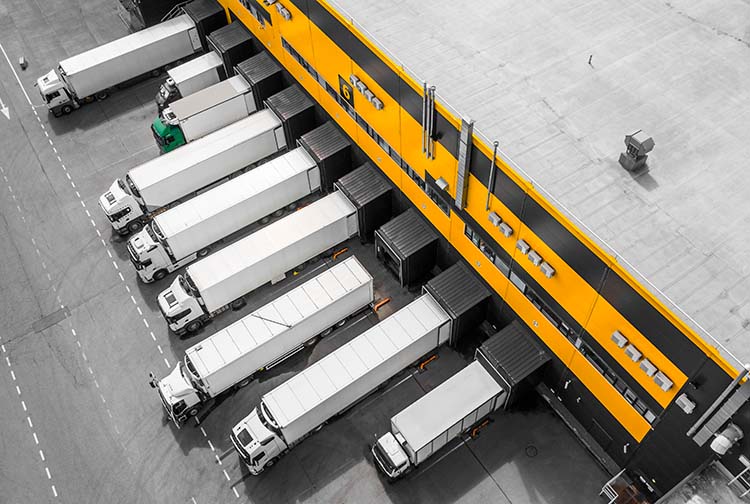
Freight transport continues to boom, driven by a globalised economic model. Supply chains have become more complex and greenhouse gas emissions have soared in recent years. Only a change in our consumption habits can reverse the trend.
Globalisation and the rise of trade has meant that billions of tonnes of freight are moved around the world every year by trucks, ships, trains and planes. The International Energy Agency (IEA) estimated in 2018 that this movement of goods generates 8% of global greenhouse gas emissions, and up to 11% if we include those produced in warehouses. If no action is taken, freight transport will become the most polluting sector by 2050.
Land transport, mainly by lorries and vans, accounts for 62% of these emissions. Although the fuel used in maritime transport is much more polluting, the fact that the carrying capacity per vehicle is much lower in land transport makes it much more inefficient from an environmental point of view. For the same amount of cargo and distance, road transport generates more than 100 times more CO₂ than maritime transport.
Moreover, road freight transport is a fast-growing sector, partly due to the rise of e-commerce and home delivery. And it is the most difficult transport segment to decarbonise, as the use of clean energy is much less developed than in passenger transport.
The law of the sea
Maritime transport is the backbone of world trade. In 2018, 11 billion tonnes of goods were transported by sea and related CO₂ emissions amounted to more than 700 million tonnes.
The importance of this sector is such that it was left out of the 2016 Paris Agreement and is projected to account for up to 10 % of global greenhouse gas emissions by 2050 if no action is taken. Demand for raw materials and container transport is growing all the time.
Large ships run on highly polluting fossil fuels, especially heavy fuel oil, which contains high amounts of sulphur, ash, heavy metals and other toxic residues.
A problem called sulphur
Until 2020, the maximum limit for sulphur in marine fuels was 3.5%, while the EU limit for road fuels is 0.00001%. ‘The Guardian’ published a revealing statistic a few years ago: 15 of the world’s largest ships polluted as much as 760 million cars.
After years of consultation, the International Maritime Organisation (IMO) reduced the maximum allowed level of sulphur in ship fuel from 3.5 % to around 0.5 % in 2020. However, the expectation that maritime freight traffic will continue to increase to double 2005 levels by 2050 significantly reduces the scope of this measure.
More pollution
IMO reports published in recent years have revealed that, instead of decreasing, emissions from ships have increased by 10% since 2008 and will continue to do so. If all shipping were a country, it would be the sixth most polluting in the world, ahead of Germany.
The Marine Environment Protection Committee of this organisation proposed in 2020 a partial reduction of CO₂ emissions for this decade and to extend the reduction to 50% in 2050. However, the organisation that regulates international maritime traffic ignored the recommendations and only agreed on short-term, non-binding measures.
As a consequence of this, CO₂ emissions from cargo ships will continue to grow in the coming years. If the shipping industry does not implement green strategies, its greenhouse gas production will increase by 15% by 2030. And if it follows the IMO recommendations, this percentage will hardly change.
In this context, the only solution to curb the impact of freight transport on the environment involves changes in our personal consumption habits: above all, reducing the volume and weight of our purchases, and prioritising local products.
If you want to wash your clothes without polluting the planet, 11Onze Recommends Natulim.

Whether it is because of the work situation or because they want to live near metropolitan areas, more and more people are choosing to live in smaller apartments. However, living in a small apartment can make it easier to live in an environmentally friendly apartment. We analyze how we can have a sustainable home in a few square meters.
According to the website of Architectural Digest magazine, it is increasingly common to opt for this trend of housing with a minimalist touch. They are called micro homes. First, because they are economical and secondly, because they represent a sustainable lifestyle, where less is more. In this type of home we find everything we need to live and they invite us to do so without burdening us with unnecessary objects. To get us started and to show us how we can have a sustainable micro home, the same website Architectural Digest, proposes and makes several tips and observations.
- Sustainability, an essential factor
Energy consumption is an added value to these homes since they do not require high electricity consumption. On the other hand, it is necessary to make the spaces of the house very adapted to the needs of the people who live there and their lifestyle, together with multifunctional furniture that can be a good ally when it comes to storage. An important recommendation is the size of the windows; there must be few but big instead of many and small. It is also highly recommended to increase the feeling of space in the micro dwelling by having several mirrors. Journalist Sara Barragan, author of the Architectural Digest article, also reminds us of the importance of using a good palette of neutral colours, both on the walls and on the floor of the home.
According to Sustainable Architecture, aero thermal energy is a renewable energy source that harnesses the energy of the air to produce hot water and make use of heating in order to enjoy a good air conditioning in our micro home.
But to finish having a sustainable micro home we must follow some more recommendations. We have visited the Sustainable Architecture website that gives us a series of tips to rehabilitate our home in a sustainable way. First of all, you should get good insulation of the walls. To check them well and not to take that for granted from the beginning is part of the success. Next, we must ensure that the windows provide us with the light we want and that they are properly insulated, either by using gaskets, or by changing the glass. A more expensive solution, but in this case, it is necessary to think about the benefit and the well-being that they will provide us. The installations are also important, it is necessary to review the electrical installation by a qualified person to know if the home is prepared for the power we need and check if changing the electrical installation we will have a greater energy efficiency. Plumbing, as the Sustainable Architecture website reminds us, is no less important. Do not hesitate to replace the old lead pipes with new stainless steel or ceramic ones if necessary. Finally, they remind us that in a small apartment we can not have renewable energy without first consulting with our community of neighbours. That is why Sustainable Architecture advises us to install an aero thermal system. These systems are a source of renewable energy that harnesses the energy of the air to produce hot water and make use of heating in order to enjoy a good climate in our micro home.
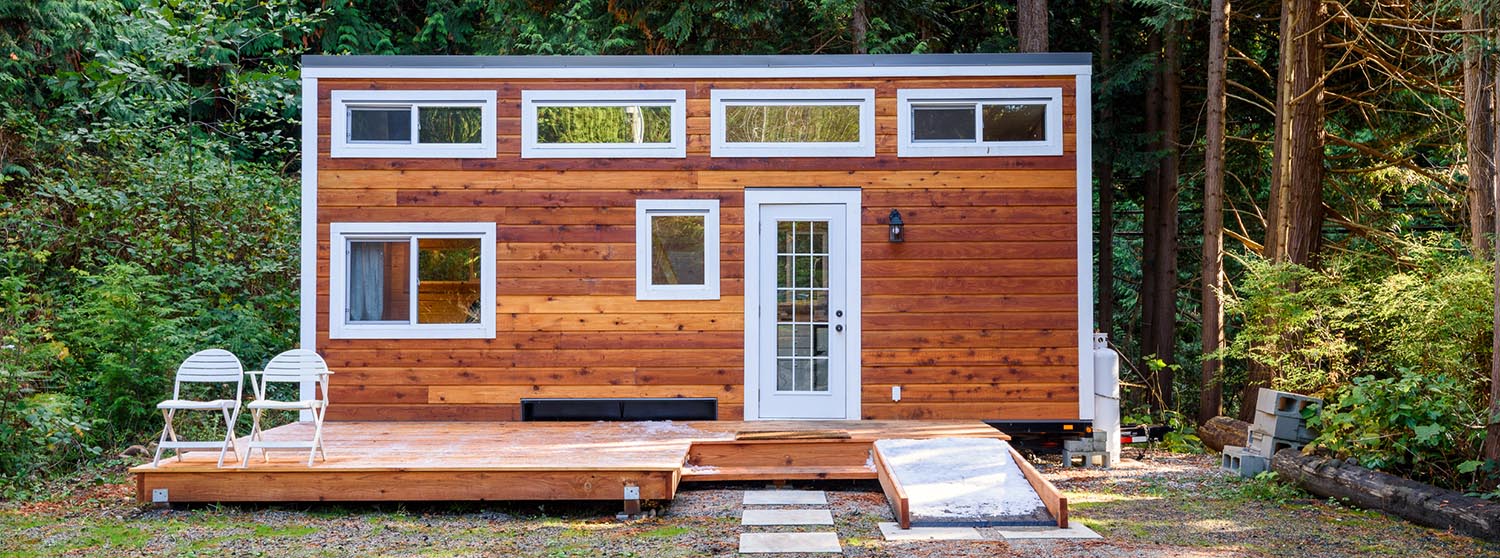
The famous Tiny Houses have less than 40 square meters and just as it happens with the needs of a sustainable and not very big house, this type of home gives us all the necessary comforts we need.
- And for those who are looking for small treasures …
Along with the idea of how to make our homes a small paradise of sustainability, we also want to recommend some pages where you can learn about the small houses of the future: the so-called Tiny houses. They have less than 40 m² and just as it happens with the needs of a sustainable and not very big house, this type of home gives answer to all the necessary comforts to live.
With this fashion on the rise, there are many websites that offer solutions for this type of home according to your personal needs. If we look online we can find more modern ones, such as this French website, called Tiny House Bimfy; and for the most sophisticated ones, the Nordic Houses website offers the possibility to buy tiny houses made in Finland with transport included. These tiny homes made in Finland, in addition to having all the comforts we need to live, stand out especially for their solutions in relation to thermal insulation.
So, whether designing, reforming or taking the decision to buy a Tiny House, the ecological and sustainable mini houses are also, if you will, the future knocking on the door.
The President of the Federació de Cooperatives Agràries de Catalunya (FCAC), Ramon Sarroca, defends the country’s agricultural cooperative model as a fundamental pillar. One hundred years after its emergence, it has successfully faced up to globalisation and industrialisation, but it still does not allow food sovereignty for the territory.
In recent decades, phenomena such as globalisation, digitalisation and industrialisation have accelerated social and economic changes which, in most cases, have not been transferred to rural areas. The paradox lies in the fact that it is precisely on the countryside that our survival depends. On an agrarian scale, Catalonia is a small and diverse country.
This is how Sarroca explains it to us, stressing that smallholder production in our territory cannot be compared with the large hectares of land found in Latin American countries, for example. This, together with the conditions of the land, the climate and the types of crops, means that agricultural production in Catalonia is not sufficient in relation to market demand.
Far from food sovereignty
Sarroca calculates that, even if all Catalan production were to remain in the region, it would perhaps be possible to supply just over half of the population. Thus, food sovereignty in Catalonia is a long way off, not only in terms of production but also in terms of consumption. Despite the fact that the pandemic has slightly altered consumption patterns and has had a greater impact on local products and local purchases, the reality is that this change is not enough for the agricultural sector: “We have a short memory, we are trying to go back to doing the same things, with the same guidelines, as before the pandemic,” Sarroca points out.
And he adds that, in addition to opting for local produce, the first filter that should be taken into account as consumers is to buy seasonal produce. “For many years now we in the cooperative world have been trying to explain that it is not normal to eat peaches or cherries in Catalonia in December,” Sarroca laments. Doing so, We promote the growth of imports and reduce the strength of local producers, who see year after year how the four big state distributors control almost everything that the end consumer eats.
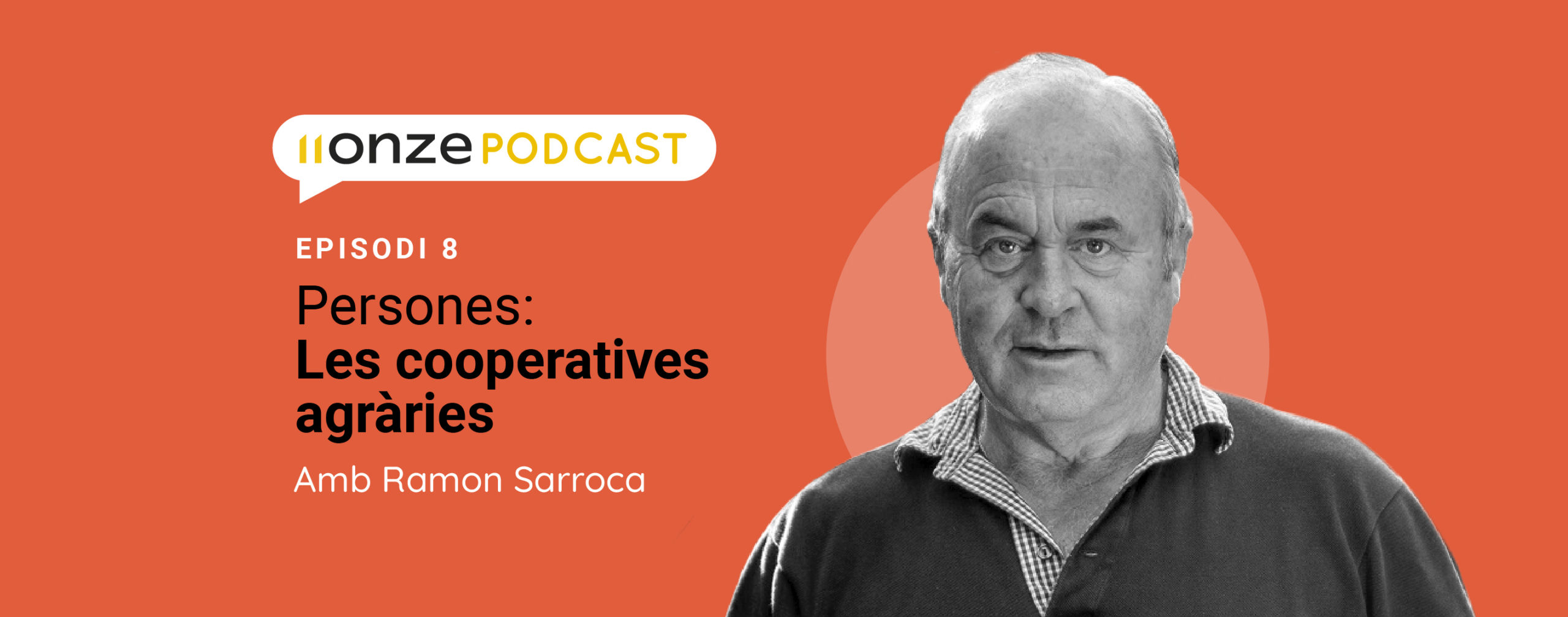
Episode 8 | People: Agricultural Cooperatives
Counting on the countryside
Another issue of concern for the agricultural sector is the new energy transition model that is being proposed and, in some cases, implemented in Catalonia. The debate revolves around the fact that a large surface area is needed for renewable energies, and the question is whether this has to be done by sacrificing agricultural land, as Sarroca denounces. He explains that in Catalonia there are areas where the conditions of the land make it impossible to grow crops. Similarly, there are industrial estate roofs, roads and other infrastructures that could perform the same function and, at the same time, contribute to preserving agricultural land.
Sarroca warns that “a cohesive rural world is the one that has to provide peace of mind in the urban world.” Health, education, job opportunities or access to banking… Cooperatives open up the range of actions that can be carried out to influence, directly or indirectly, in all these areas, and ensure that the rural world really is the social and economic engine to drive the country forward.
11Onze is becoming a phenomenon as the first Fintech community in Catalonia. Now, it releases the first version of El Canut, the super app of 11Onze, for Android and Apple. El Canut, the first universal account can be opened in Catalan territory.