The inflation that grips us: how to define it?
Inflation is a word that has crept into our daily lives. And it doesn’t exactly affect us in a positive way. But what exactly is inflation and how does it affect us? Agent 11Onze Miriam Frías gives us a summary.
“Inflation is the generalised rise in prices sustained over time,” Frías defines just for starters. In fact, inflation comes from the word “inflate.” And why? Simple, because the prices of basic goods increase. So inflation affects the most common household expenses: the shopping basket, the cost of supplies, the price of household appliances… As a result, there is a loss of purchasing power.
But why does inflation occur? There are three main causes, Frías says. The first is due to consumption or demand, i.e. when there is a high demand for a product in excess of its supply, prices tend to rise, because the people who need that product will be willing to pay any price.
Secondly, production costs, i.e. when raw materials, such as energy or oil, rise, then manufacturers have to guarantee themselves a percentage profit and pass this price increase on to the consumer. And the last one, self-constructed inflation, in which, when prices are expected to rise, manufacturers raise prices progressively so that the impact is not so great in the long run.
Want to know all about inflation? Just watch the video below!
Inflation, the enemy of our savings
If you want to discover the best option to protect your savings, go to Preciosos 11Onze. We will help you buy at the best price the ultimate safe haven asset: physical gold.
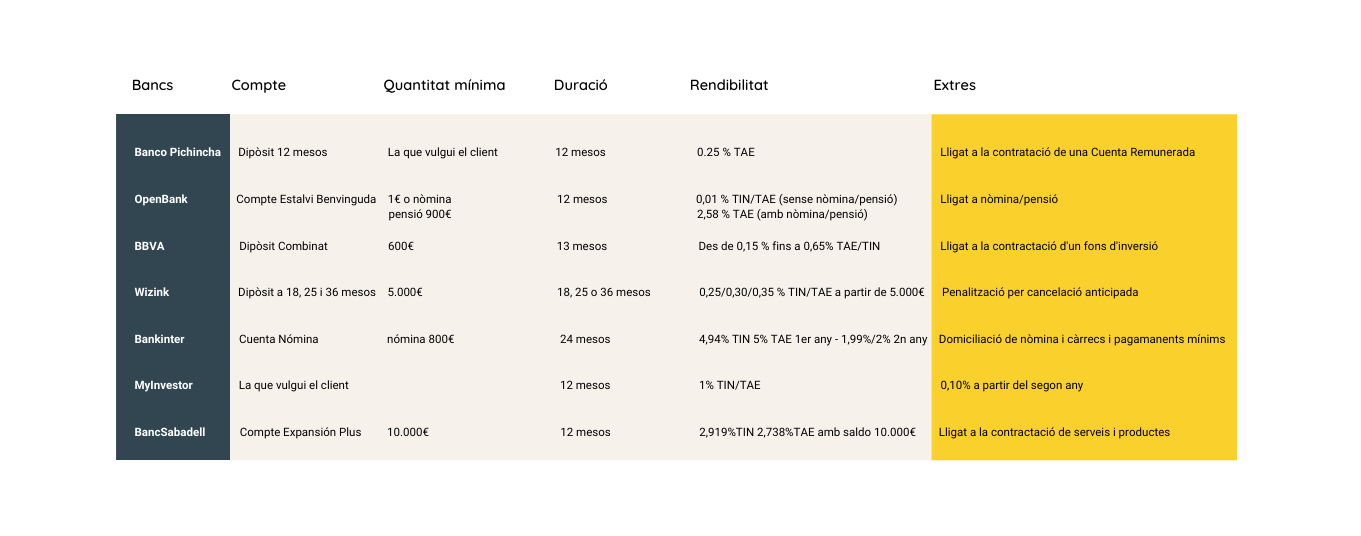
Interest rates offered by traditional banks for savings remain at historic lows. The European Central Bank continues to inject money into banks at no cost and to charge for excess liquidity. As a result of this monetary policy, attracting customer liabilities is not a priority for large banks. But what returns do financial institutions offer? Let’s compare them!
The record savings of households due to the Covid-19 pandemic has led to an increase in the liquidity of financial institutions, for which large banks have to pay large sums of money to the European Central Bank (ECB). We are facing a situation with no hope of change in the medium term: savings products are no longer a priority, and the deposits that offered a return of 5% just a few years ago are a long way off.
Although some institutions continue to offer minimum returns, between 0.01% and 0.5%, there are some differences between their products. And we note that when they offer higher returns, they are often linked to taking out insurance or other financial products. And, in spite of everything, if financial institutions want to increase their market share they have to offer some incentive to attract new customers, and the profitability of deposits is key at a time when we have broken a savings record.
In this context, fintechs, which use new technologies for a new digital banking experience, are taking advantage of the savings achieved thanks to the lack of physical branch networks and face-to-face staff, and greater efficiency and agility in financial management, to offer more competitive and more profitable products. Even so, in the comparative table below, there are few differences between institutions.
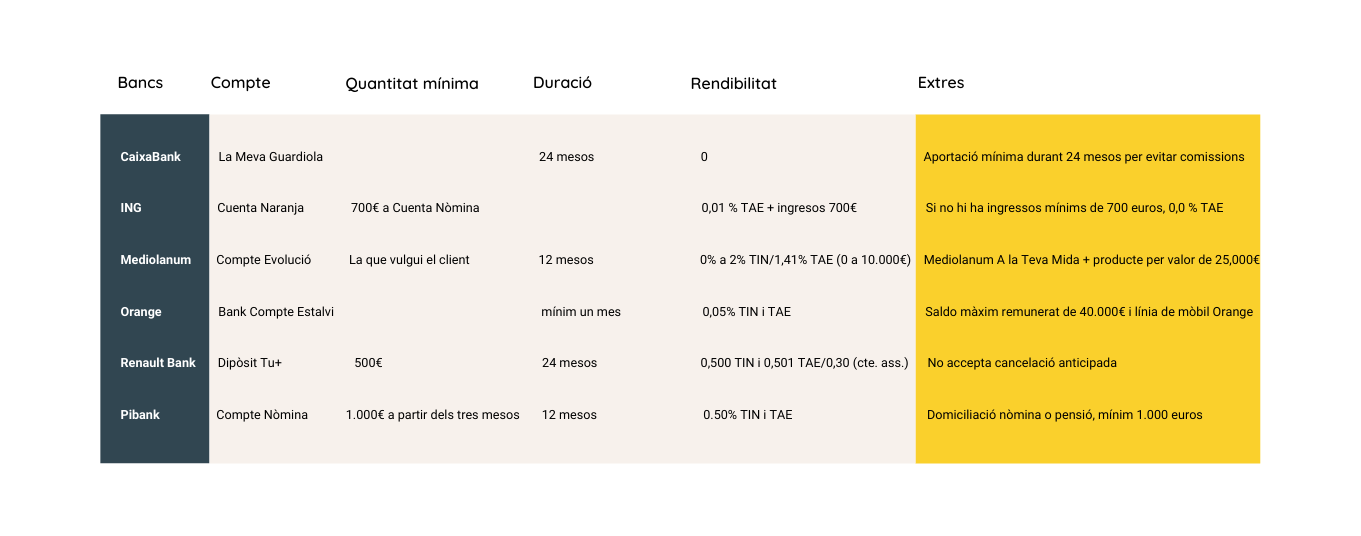
But it is not worth getting discouraged. If bank deposits do not yield enough, and we want to make the most of our money and compensate for inflation, there are other options, such as investments in precious metals, ETF packages, fixed assets such as housing and other trends that will be in vogue in 2022.
If you want to discover the best option to protect your savings, go to Preciosos 11Onze. We will help you buy at the best price the ultimate safe haven asset: physical gold.

In a few days we will once again experience an atypical Easter, very conditioned by the pandemic and which, most likely, will not allow us to go where we would like to go. This means that our options for disconnection will be greatly reduced. In spite of everything, holidays are still days off, which is why we would like to give you a few tips on personal economy so that you can get a proper getaway after so many months of work and pandemic fatigue, even if it is close to home.
Control your expenses
Let’s start with the most obvious and, at the same time, the one that we least take into account. To know how much we can afford to spend or how far we can travel, we need to know how much we have first. How much money is spent monthly on basic needs such as mortgages, rents or bills? What about leisure? How much money do you spend on new clothes or going out to dinner at that restaurant you like so much? Are these recurring expenses? Can they be cut back?
There is a savings rule that can help us put our money in order, economists call it the 50/30/20 rule. It proposes dividing our expenses in order to be able to cover all our needs and save money. Specifically, 50% of our income would go towards basic needs, 30% towards our leisure time and 20% towards the future, i.e. saving for those plans or trips we want to make in the future. Organising our money will allow us to have a clearer idea of our possibilities and from here, work towards achieving them. We recommend opening a bank account to keep only the money you save so that you are not tempted to spend it.
Planning as a central strategy
This point is key to achieving savings, and planning must be very present in order to avoid an imbalance in our individual economy. Aspects as basic as writing down a weekly menu that allows us to buy only what we need and avoid last-minute purchases that are often compulsive and unnecessary. With good planning, lower prices can also be achieved when looking for travel options.
You have to define the destination and search different websites for the best deals; in fact, there are already applications that provide this service. Although it can be tedious, perseverance means that in the end you will get the best deal and avoid the usual last-minute price hikes. An advanced reservation is a saving and also a positive reinforcement that helps us to work with motivation.
Earning extra money through simple actions
Because of the confinement and health restrictions, many households have most likely already experienced considerable savings in their economy. However, there are still small things we can start doing to give our savings a boost. If we look at our electricity or water bills, we can consider cutting back here. For example, try cutting down on water consumption when we take a shower or take advantage of natural light when doing work around the house to reduce electricity use. The changes will be small, but in the long run they will mean significant savings and, at the same time, they help the environment.
On the other hand, if you look around your home, you are sure to find objects that are no longer in use, such as clothes, furniture or toys. The second-hand market is thriving and there are already dozens of mobile applications that allow us to earn money through the sale of items we have stored at home. With a little skill and competitive prices, you can save some money while gaining space at home.
Set a goal and do not lose hope if you fail to achieve it.
Where do you want to go, and what are you most excited about? Having a goal is the perfect tool to encourage you to make small efforts. Set a figure for the amount of money you want to save each month; it doesn’t have to be a large amount, with small efforts you can save a considerable amount of money. At the end of the day, the most important thing is consistency.
Unfortunately, we have to bear in mind that we are going through a global pandemic and that it is likely that we will not be able to go where we would like to go, or even that bookings will be cancelled due to health restrictions. Instead of getting angry and squandering the few days of holidays we have, we should reinvent ourselves and look for other destinations closer to home. It may be a good time to explore places close to home that help us to disconnect, such as hiking trails, cultural heritage or other charming places that you had never thought of visiting before due to lack of time. At the end of the day, you don’t have to go far from home to find places that provide mental relaxation.
Although it may seem unlikely, special moments will come again and you will have to be prepared for them. If you have had to cancel a special event and you are setting possible new dates for the end of this year or next year, this article will be very useful for you to be able to prepare yourself financially, in time and face those special expenses with ease.
Last year we had to cancel all events, we did not enjoy special days, such as weddings, celebrations, meetings, parties… And even today we are still waiting for the so desired herd immunity. But, let’s be positive! Everything will come and with it, the good times. Here are some tips that can work for you.
The company, the most important thing
First make a list of attendees with the people you think will be able to come. Now is not the time to invite family members who are far away, people you haven’t seen for a long time, or people who have commitments. Invite people close to you who make you happy and this will make your event more intimate and authentic. Once you have the number of guests, make a budget of the money you can count on and that way you will know how much money you can spend. We advise you not to count on money for gifts. You can opt for a digital invitation, there are many applications that will allow you to make spectacular designs and if it is not your forte surely you have someone close to you who has good taste and can do it, you will save on the cost of having it professionally designed, printing and shipping.
And now… Planning!
Choose a day during the week, teleworking has brought us many advantages and this is one of them, you will be able to celebrate your special day during the week and it will not be an issue for your guests because they can recover it another day plus the cost of the place where you are going to celebrate it (hotel, restaurant, farmhouse) will be lower than during the weekend. You can save up to 20%.
Out of season: most events such as weddings, communions, baptisms, are held between May and September, the prices outside these months are much cheaper. Events in winter and autumn are very original, do not discard these months.
The dress can cost a lot of money because we want to be different and dazzle with our dress or suit, think about this point if it is worth spending so much for a few hours. Consider renting, you can find the dress and suit of your dreams for that day but a dress you will probably never wear again.
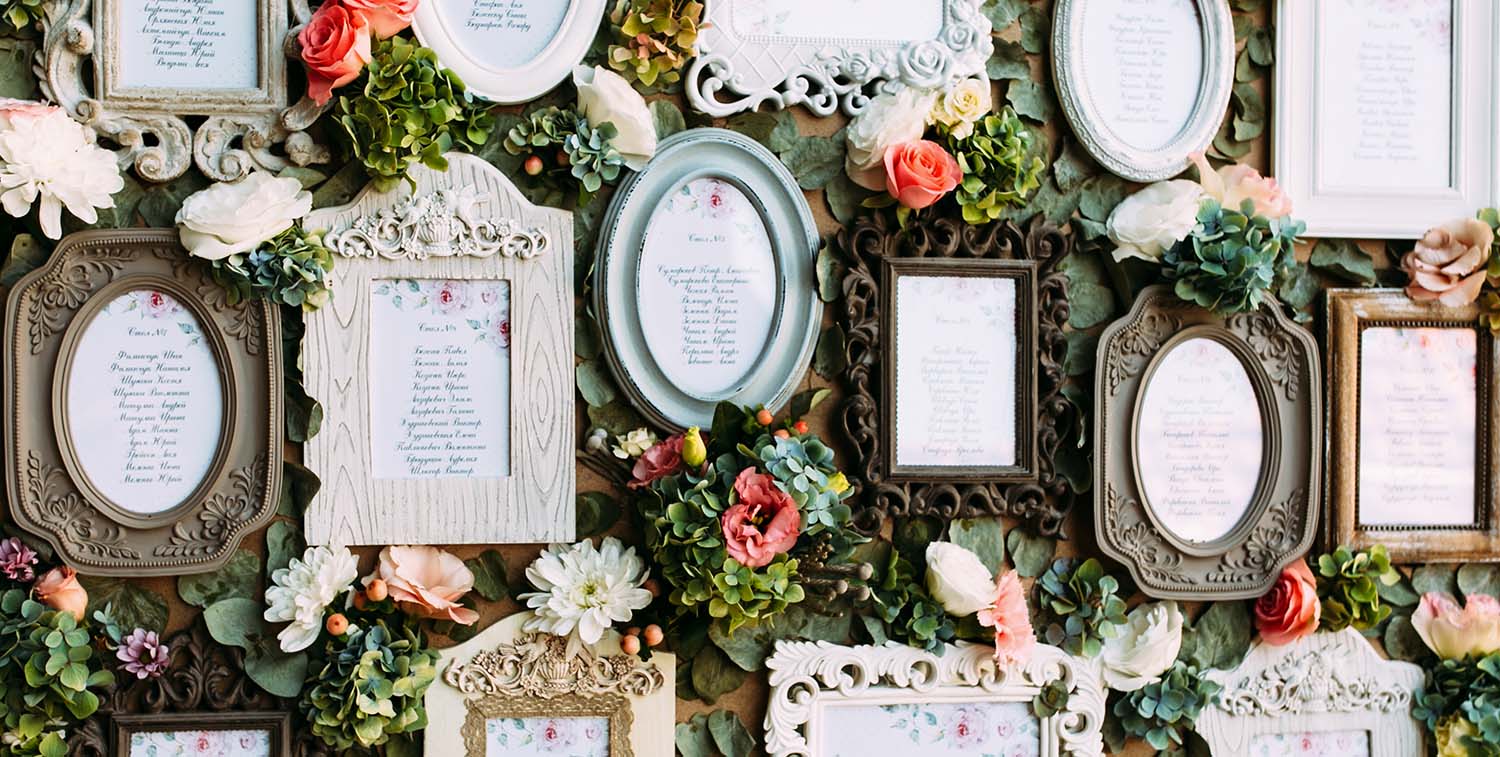
If you have enough time, bet on the do it yourself, DIY, decoration, the names you want to put on the table to identify each guest, search for social networks like Pinterest and you will find millions of ideas and how to do it, besides saving a significant amount of money you will love the results and all done with your little hands. The new normality is making us change many habits, it is preferable that you do something informal in which guests can stand and have lunch or dinner that is outdoors, so there will be the possibility of having more distance and hygiene. If you opt for this option, you can make food stations where people can comfortably take what they most want, it will always be cheaper than a closed and individual menu.
Think of an alternative to flowers, or choose seasonal ones. If you want to be more daring, there are other options such as candles, bamboo, glass that you can even rent. When decorating we usually spend a lot of money on flowers to make sure the photos look good but you may be surprised by the result and your pocket will thank you for it.
The photos and the video are the most beautiful memories you will have forever, but it is also an important cost in your budget, choose not to take the most expensive package, a cheaper option will still capture the most special moments. Involve your guests in taking pictures with their mobile phones and then share them, it will be a very funny album.
Some more tips
Sometimes we think that hiring a specialist to help you organize your event can be very expensive, but it is not, if you do not know where to start, they will save you a lot of headaches, they will stick to your budget and will recommend everything you like, but looking for the best prices, they have a wide range of options to offer you what you need.
Have extra money. When you start to organize an event, there are always last minute things that you didn’t count on, plan your budget well to be able to solve those last little things, the goal is that you feel comfortable with everything you are creating to make it a 10 day. Surely you have a lot of things that you haven’t used for a long time, if so, open your account on Wallapop and sell clothes and objects, you will be able to get some extra money for your budget.
We agree that a communion, the celebration of your child’s 18th birthday, or a wedding, have to be one of the most special days of your life, but you also know they can be expensive days. It is not worth getting into debt in exchange for a day of laughter and emotions, follow these simple tips to make your day unique and unforgettable and not a nightmare for your pocket.
Do you want to be the first to receive the latest news about 11Onze? Click here to subscribe to our Telegram channel
There are applications on the market that allow you to pay, by instalment, online purchases and purchases in shops, without commissions for purchasers
In recent times, we have seen that large companies allow financing everything, that is, they allow the customer to buy low-price products (shoes, suits, and consoles, amongst others) and to pay them comfortably, by instalment. As a result of the pandemic, online sales have grown in all sectors and consumers have also been finding new ways of saving. This has increased the specialised fintech on credit payment systems, known as Buy Now, Pay Later (BNPL).
A few years ago, some retail shops introduced the concept of Buy Now, Pay Later, which is not new. In fact, this system allowed the products to be tested before they were paid, so if customers were not satisfied, they could return them. Therefore, customers only paid for products they actually kept.
New Payment Methods
Times change and so do the ways we buy and pay. One of the main benefits of traditional banks is the payment of charges at the time of a card purchase, whether in a shop or online. This is one of the markets which, in view of the few interests that can be paid by providing loans and mortgages, because of the low interest rates, enables banks to generate income. However, this market has recently got complicated, as new forms of payment directly applicable to vendors have appeared, and they incorporate the solution of “Buy Now, Pay Later” applications.
The two best known and most widely used applications in the world are that of the Swedish company Klarna and the Australian Afterpay.
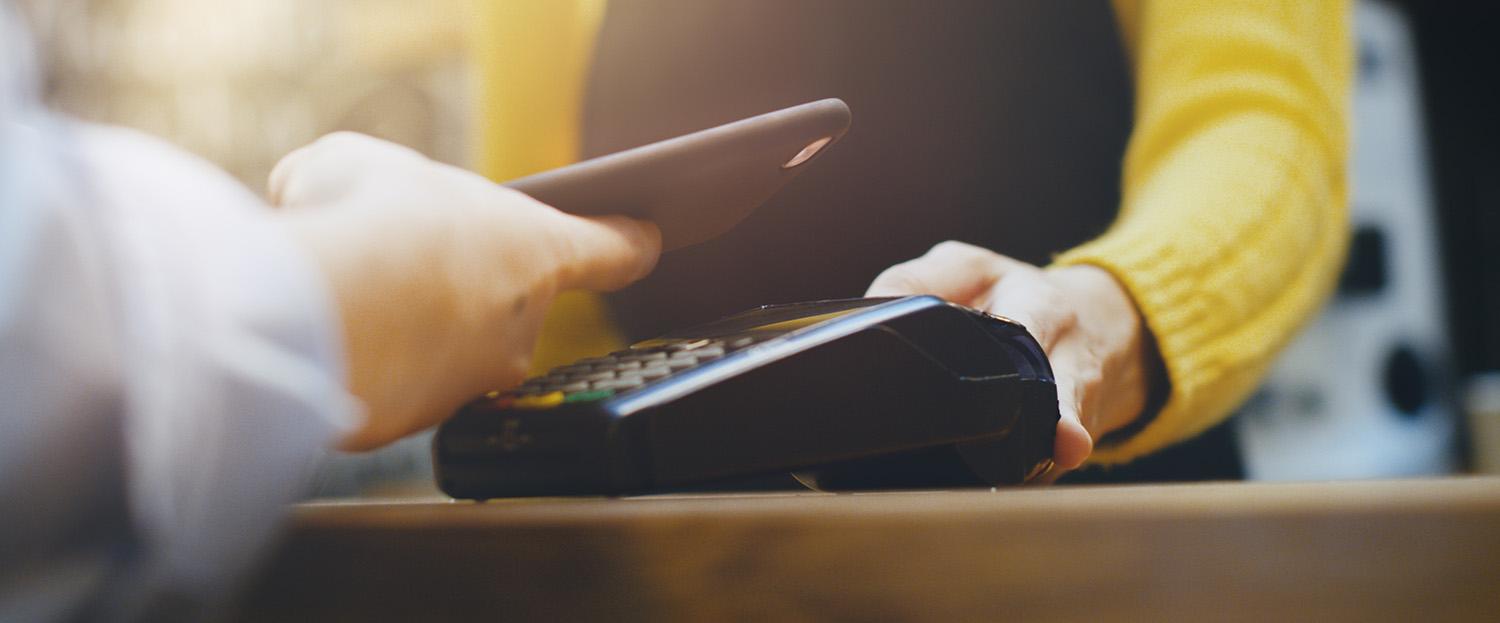
The way these applications work is very simple. The user, after choosing a product, when they have already decided to buy it and check out, instead of pulling their card or wallet, pull their mobile phone. The shopkeeper sends a payment request via an email that the customer must confirm or the operation is confirmed by a QR reader. Once the operation is accepted, the acquired article can be kept.
So far, everything is very similar to a purchase made and paid with the mobile payment service of the purchaser’s bank. The difference is that with the system of the Buy Now, Pay Later (BNPL) system, the purchaser can, if they want, choose not to charge the bank account immediately for the purchase amount. This decision does not represent any cost to the user of the BNPL system.
When a credit card payment is made, if the purchaser finds there is no money on the account, the operation is automatically cancelled by the bank and they will have to leave the store without the product. On the other hand, traditional banks charge a fee to the store for the use of their online payment service and also, if the payment is on credit, in some cases, the bank will charge interest to the customer, as well as a card maintenance commission.
Another difference is that the Buy Now, Pay Later apps allow you to fragment purchase payments. The shop receives the total amount of the purchase at the time it is made, but the purchaser can choose different payment options by instalment (one or more payment fees, within a time limit allowed by the application), which will not impose any additional financial burden, that is, no interest or commission. Their cost will therefore be zero.
For the time being, in order to enjoy this payment system, it is necessary to have an account in a bank, as applications do not yet have a bank licence to operate customer accounts.
Competitive Advantage
And how do these applications earn their living if they do not charge commissions or interest to purchasers? Well, they charge a commission to shops, as traditional banks do. The difference is that this fee is less costly than the traditional fee.
Thus, fintech such as BNPL can survive only on this income because it has no major infrastructure costs, no maintenance, no advertising, and few employees, unlike traditional banking, which has very high costs in all these respects. In general, these payment application companies have low costs because they are based on technology. This gives them a competitive advantage over the traditional banking sector, as it allows them to offer services to the establishments in exchange for smaller commissions and, in turn, they do not charge customers any interest for choosing to pay for purchases by instalment.
BNPL applications have revolutionized the small shop industry and the way of shopping. Millennials are regular users of shopping applications and they value the chance of saving and the convenience at the time of making purchases, such as not paying fees or interests, as well as being able to pay in comfortable quotas. It is proven that, at the time of making a purchase, the price is decisive and, in online purchases, the final decision of keeping a product is taken at the time of confirming the purchase. The purchase is not completed because the purchaser considers the price to be a high-cost blow to their pocket. The possibility of paying for the purchase through BNPL (Buy Now, Pay Later), encourages the consumer to complete the purchase, increases customer loyalty, and provides a better shopping experience.
Buy Now, Pay Later apps are very popular in Australia and the United States and, in the last year, have broken through Europe in full strength.