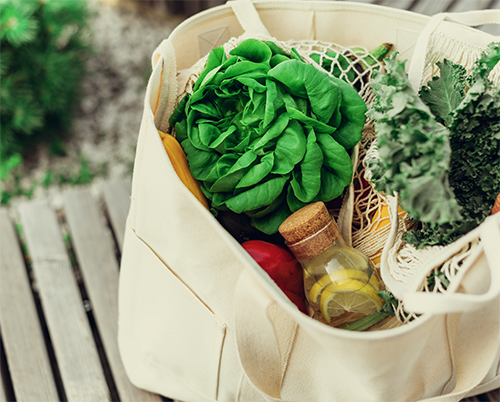
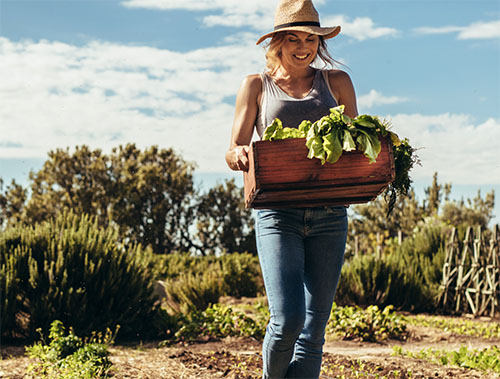
Local companies that inspire: eCommerce La Tavella, a commitment to sustainability and social commitment
Consumer trends are taking a new direction marked by a return to the origins and responsible purchasing, with the desire to value quality over quantity and a commitment to natural and sustainable products.
Social awareness is growing and, as consumers, we are increasingly aware that natural resources are finite and that, therefore, their use should also be finite. We are at a point of no return, with high levels of pollution that end up affecting, directly or indirectly, the production and consumption of food. Faced with this context, a growing part of the business fabric is turning away from the path of industrialisation to return to the origins and opt for the only path with an assured future: sustainability.
- Proximity sale: from the field to the table
Organic sales, proximity sales, zero kilometre sales… these are concepts that we have increasingly internalised and which refer to the sale of products, mainly agri-foodstuffs, from a perspective that is as respectful as possible to the environment. The aim is for sales to be direct to the end consumer or through a single intermediary, for the production process to limit the use of chemical products as much as possible and for the distribution system not to lose either quality or value. In fact, proximity selling is a concept as old as mankind, but nowadays there are few, although there are more and more, companies that are committed to this type of trade and are distancing themselves from the line of the large producers, marked by an increasingly accelerated and dehumanised pace of competitiveness.
Currently, in Catalonia, the transparency portal lists more than 3,000 producers involved in local sales, a figure that illustrates the large amount of supply existing throughout the territory and, therefore, the growing demand from the population, which increasingly prioritises making a purchase with values rather than being a merely mass-market purchase.

- La Tavella, an example of ecology, proximity and social commitment
La Tavella is an example of this change in trend. Sustainable and socially committed, the company was founded in 2006 with a clear mission that has been maintained over time: to create jobs for people with disabilities and mental disorders through the marketing of organic food products. The Viver del Bell-lloc Foundation was the promoter of the project, which was joined a few years later by the Santo Tomás – PARMO Association. Both entities share the vision of the project and join forces to make it grow year after year.
Today, fifteen years after its creation, what was intended to be a sales channel for organic vegetables has ended up being much more than that, to the extent that you can find almost any kind of basic products such as meat, eggs, bread or milk, all certified as organic products. Fruit and vegetables continue to be the most widely sold organic product, accounting for 80% of total sales. In this sense, customers are also positively influenced by the transparency of information, as customers know the origin of their products at all times. Without going any further, 40% of the production comes from the company’s farms throughout Catalonia, while the rest is managed via trusted, local producers. A fact that shows, once again, that the values that the brand wants to transmit are not through a label but through real facts, working and taking care of all the processes day by day to make it possible.
- Values that mark
Being a committed company means creating a sufficiently solid business fabric so that any of the agents involved can express this idea in each of their actions. From the workers, to production, to the sales system, distribution or communication. A sustainable company must be sustainable in each and every step, and it is only by analysing the company as a whole that it can be shown what it is, and above all, what it is for, and it is the daily actions that will validate this idea or deny it with their ideals.
But does it pay off to go for sustainability in today’s market? Its case shows that it does, and very much so. The company ended last year with a turnover of over one million euros, 4.17% more than the previous year, according to its manager, Alfredo Resines. The commitment to responsible purchasing, added to the pandemic and the increase in online sales, meant growth for the company, which tripled the number of customers in one year. Achieving this means knowing customers’ needs very well and, as far as possible, personalising the experience. An increasingly recurrent system to achieve a personalised but profitable treatment for the company is the subscription system, a method that La Tavella has also incorporated and which allows customers to choose the type of basket they want to receive each month. Convenience and flexibility without leaving home, two qualities that characterise today’s consumer, highly influenced by new technologies and with an ease for online shopping.
- Social media, the speaker for social projects
For La Tavella, like so many other projects, having an online sales channel has meant a considerable strategic change that has opened the doors to a much more attractive, but also competitive, market. Dissemination is key in these cases, as the web has become the biggest shop window in the world. What does not appear on the networks, does not exist. And in the case of La Tavella the challenge was twofold, on the one hand to sell the products themselves, and on the other, and more importantly, to sell the values behind the project, its raison d’être.
There is no doubt that in this case this has been achieved and a job well done, based on honesty and sustainability, has borne fruit that the public has been able to appreciate. Once again, it is demonstrated that in the digital world words are needed, but also deeds. This is how a small project sets a trend in the social sphere, demonstrating that another way of working and relating to the environment is possible and that a commitment to sustainability is undoubtedly the most attractive strategy for the future.
Thousands of young people every year have to decide which career to choose once they have passed the university entrance exams, a task that can be difficult and also generates many doubts. We propose some of the most promising careers to make the task easier.
When we have to decide about the future, we always have doubts: should I choose a career that I like and follow my passion, or do I prefer to have more interesting job prospects? You are the only one who has the answer, so listen to your heart and decide what you want to do. New technologies are already part of our daily life, so the degrees oriented to this sector are the ones that have more future. We will detail some of them in order to compare them. Of course, you have to ask yourself beforehand if there is a work sector that motivates you or if you have a vocation for a specific profession.

- If you are more of a data person, you can go for Big Data.
Everything that has to do with the Internet has to do with Big Data. Here you will manage large amounts of data. The more data you have, the more power you have, but you need someone who knows how to interpret it, make sense of it and optimize it. Big Data specialists are in charge of extracting, processing and storing the data that affects companies so that they can then create reports with it. Therefore, their work focuses on two areas: data engineering and data science.
- If you like to fight against evil, cybersecurity is your choice.
You will learn the tools to ensure the privacy and security of IT resources by implementing policies that safeguard business assets, and you will develop cybersecurity solutions in real environments. This allows you to specialize in the different aspects of ICT, from more technical specialties in cybersecurity and programming to specializing in security management.
- If you are more into technology, go for Robotics.
This has been the “career of the future” since the 1980s, and it doesn’t look like it’s going to lose any position. It is a fact that robotic technology is growing, more and more robots are replacing people in jobs and our daily tasks, therefore, this generates a strong demand for technicians in this environment. This training encompasses both robotics and artificial intelligence. It delves into the subject of robots but also in meAPPS, an assured future trajectory
- The APPS, an assured future trajectory
This is a career with a great future since new apps will never stop coming out or those already created will be updated so as not to become obsolete. All the apps that you have downloaded on your mobile have been created by specialists in web development. You will learn how to configure, administer and maintain computer systems. In addition, you will acquire knowledge for programming and development on different platforms, devices as well as the creation of applications for mobile phones.
- Digital marketing is also a good option
If you like marketing and technology 2.0 this is your option to get started in digital business. You will be able to manage e-commerce projects, define online marketing plans, develop the most effective strategies and tactics in digital environments to manage the return of online marketing campaigns. SEO (Search Engine Optimization) focuses on positioning and search engine optimization to improve the visibility of a website.
If you are a lover of new technologies these are the professions that will suit you like a glove, but maybe your hobby is painting or going to the theater, there are also artistic careers, such as fine arts or the performing arts institute where you can study to become an actor. The world is moving faster than social media updates and because of technology is like the batmanta, it will never go out of style. Here are just a few of the tech careers with the highest demand right now. Now you can decide where to start: chanics, electronics and design.
Our “new normal” in coexistence with the virus has given wings to processes such as teleworking and remote team management, the migration of information in the cloud, the implementation of cybersecurity measures or sales and customer service on the Internet. A revolution that would not have been possible without the implementation of information technology (IT) profiles.
IT and technology professionals will continue to lead the change during this 2021. Big Data, machine learning and the constant implementation of digital solutions will mark the ecosystem where IT profiles are called to grow during 2021. These are some that could be in greater demand during 2021.

- Full Stack Developer. It has a great potential especially in the field of programming, since its objective will be to learn and develop HTML5 languages in addition to knowing several types of processors. You will also be able to program in several languages.
- Cybersecurity specialists. They are a key piece in any company, regardless of its size. Banking and other sectors are showing great interest in attracting this type of talent. A varied training in which they will be able to develop different functions such as system administrator, risk manager, development of detection tools, ethical hacker, as well as others related to research and innovation.
- CIO (Chief Information Officer) this is the modern name for the former Head of Systems. They have deep technical knowledge and their great value is their ability to manage the human factor. Their job, among others, is to analyze how various technologies benefit the company and improve the business process.
- AI and Machine Learning Specialist. This is one of the profiles of the year. It stands out for the creation of systems that learn automatically, identifying patterns from thousands of data. They will also understand and know how to apply the most widely used algorithms in the industry, as well as have the ability to adapt and modify them to address complex real-world problems.
- App development. The cell phone is nowadays the most widely used device to access the network. Faced with this trend, the need for profiles like this one, focused on the development of apps for Android and IOS, is multiplying. They must design the application, navigation software, dialog boxes, notifications. Do the relevant tests and follow up.
- Data engineers. These professionals are very necessary due to the expansion of Big Data, designers of database architecture and processing systems are needed. The training falls on three basic pillars, mathematics, statistics, to be able to model the systems and treat the information, on the other hand the computation to be able to use the calculation devices in a generalized and efficient way.
Professionals are also needed in other fields
- In the field of health
Psychology and mental health. Stress, depression, phobias or addictions are problems in today’s society due to the pandemic, therefore mental health professionals will be very necessary this 2021. Geriatric and pediatric physician assistants will also be important. The care and attention of the elderly has experienced a remarkable increase as well as the care of minors. This is why these professionals are in constant demand. - In the field of logistics
The logistics sector has significantly increased its workload. As a result, the creation of jobs in this area has been a constant in recent months.
In conclusion, new technology professionals are the ones with the biggest market ahead of them. IT specialists have an assured future, but new professions will emerge that will make this sector constantly evolve due to market demand. We must be prepared to see a change in the professional sector as we have understood it up to now. The future will see new professions related to new technologies occupy a prominent place in the labour market, creating new jobs for new professionals and at the same time we will see others disappear.
Do you want to be the first to receive the latest news about 11Onze? Click here to subscribe to our Telegram channel



Brava Fabrics is a proximity company that started its entrepreneurial journey in 2015 in Barcelona. Since then, the start-up of Ivan Monells and Ramon Barbero has not stopped growing to become a true benchmark of sustainable fashion reaching as far as Germany or the United Kingdom
Have you ever seen T-shirts with bicycle, watermelon, rubber duckies or shrimp prints on the street? If the answer is “yes”, it is very likely that you have been in front of one of Brava Fabrics’ garments. Its founders, Ivan Monells and Ramón Barbero decided to combine their knowledge of economics, computer and industrial engineering to create this Barcelona-based brand. With an investment of 25,000 euros and the help of two loans, they were able to create their own company. A successful case of proximity textile economy, because since its inception, it achieved more than 150,000 euros in sales.

- Distinction as an identifying feature
From the beginning, they wanted to distinguish themselves from other clothing brands. They achieved this by means of varied and unconventional prints, oriented towards a more transgressive public. They began by printing on T-shirts drawings such as coffee pots, deer and even dog faces. The objective was clear: that the public would distinguish one Brava shirt from another, and so it was. The impact was such that they soon went from creating only T-shirts to extending the offer by innovating with pieces such as ties, shirts, sweaters and pants. Pieces of clothing that came to cross borders with online shopping reaching other European countries where they also had a very good reception. Specifically, and since its inception, have achieved nearly 60,000 customers and more than 4.5 million euros in sales. But this does not end here, Monells and Barbero told Portas 1,2,3, Emprendre that they aim to reach 23 million in 2023…
- Sustainable fashion is possible
One aspect they were clear about from the beginning is that they wanted Brava Fabrics to be an ethical and ecological brand. To this end, they determined that the raw materials used to make their products would be local, such as cotton, which is 100% organic and certified, i.e., it is grown without the use of chemicals. Precisely in order to exclude from the equation components such as fertilizers, herbicides or artificial fungicides, the processes are slower compared to the conventional method and also more expensive. With all this, they ensure that they are not harming the environment and that the conditions of the people who work picking it are ethical.
- Talent + hard work = success in the workplace
Despite starting from scratch, the effort and innovative ideas have led them to create more than a thousand products in nineteen different clothing categories. All of this while doing their bit for the sustainability of the planet. In fact, their trajectory has attracted the attention of investors such as ABAC Nest and Siesta Ventures (NYC), who are currently backing the Barcelona-based brand. From having only two people, they have grown to 20 workers who help them to create, design and manufacture pieces of clothing implementing technology and marking their own style. At the moment they have two physical stores, one in Madrid and the other in Barcelona, although 97% of their sales come from the Brava Fabrics website.
Brava Fabrics has shown that the creation of its own brand and proximity does not imply losing sight of sustainability and the ethics of its work processes. With effort and hard work, entrepreneurship and success is possible.
Small stores open virtual shops of local products to build bridges between producers and consumers.
The Covid-19 crisis has changed some established paradigms and has made us consider many things that we were not doing well at all. Social consensus on respect for the environment and the use we make of natural resources was already a growing trend in many social and business areas prior to the pandemic, but perhaps now we have seen more clearly and by means of practical examples why it is important that we do things in a more sustainable way.
- From cropland to home
Buying local and local stores have become more important, especially because of the long confinement period that has restricted our mobility and has made us aware of the importance of supporting local producers and small businesses that save us long journeys while offering a customised service that is difficult to find in large superstores.
The food industry has continued to function fully, but the absence of tourism, together with the closure of restaurants, has broken the usual distribution channels. Fortunately, living in the digital age has made it easier for many local Catalan producers to find an alternative thanks to new technologies, many of them having engaged in initiatives to build a virtual bridge between producers and consumers.
A multitude of platforms and projects have emerged online, many of which are non-profit and have the only aim of providing a common space, as if it were a traditional street market, so that small traders without the economic resources of superstores could have their virtual stall and offer their products to a public that could not go out but had more time than ever to spend hours in front of a screen.
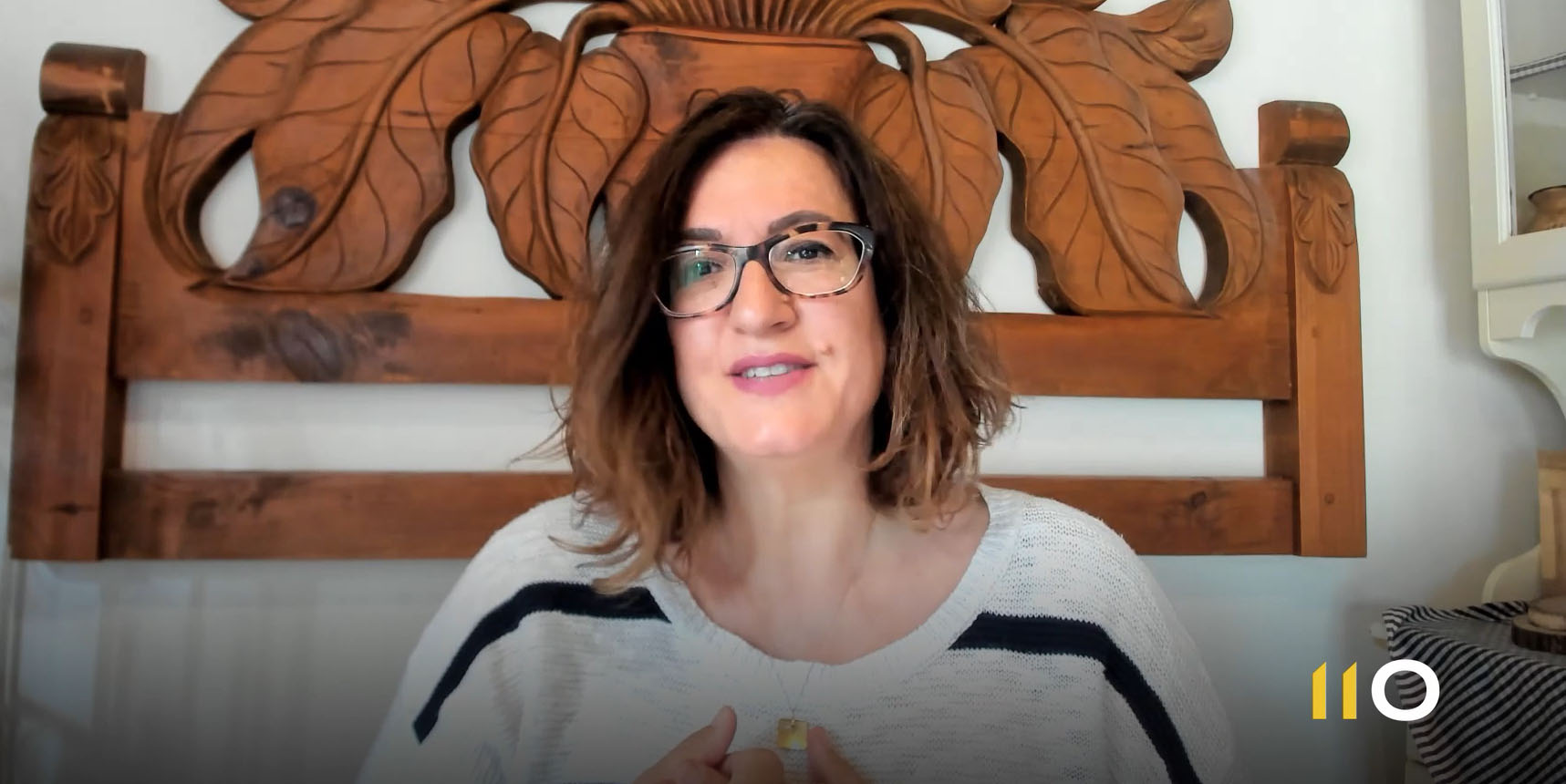
Agent 11Onze Pilar Oltra analyzes the evolution of local to digital purchasing
- We cook and we cook healthier food
Yes, we are also consuming more take-away food, but it seems that many have discovered that their vocation in life is to be a chef, or perhaps a baker, if you take into account the total absence of flour in supermarket shelves in the first days of confinement. Be that as it may, we have more time to cook and thus kill boredom after having watched all films and series, learned five languages, and earned master’s degrees in all kinds of fully expendable studies, or spent hours teleworking, also a product of this new normality.
YouTube’s cooking videos are more popular than ever, as well as fresh produce cooking, and here local purchasing plays a key role that hopefully will remain.
Working from home, as well as the restrictions of restaurants, have also changed the hours of our meals, so we eat at more rational times, with the subsequent benefits for our health.
Local purchasing of agricultural and livestock products produced in favour of the consumer while respecting the sustainability of our environment leads us to eat better, support our small producers, and reconnect with the natural environment, which is now more appreciated than ever; these are just some of the trends that have emerged from the pandemic and for which we can be grateful.