
Teachers’ demands go far beyond a labour dispute: they are a warning about the future of a society that risks turning knowledge into a privilege. When a society abandons public education, it abandons its future.
The teachers’ mobilisations that have taken place repeatedly in Catalonia over recent years are not merely a labour dispute. They are the symptom of a much deeper problem. When teachers call for fewer students per classroom, more support staff, less bureaucracy, fair salaries and the resources needed to make inclusive education possible, they are not simply speaking about their working conditions. They are warning that one of the fundamental pillars of any modern society is beginning to crack.
In Catalonia, teachers’ discontent has been expressed through strikes, demonstrations and mass protests. Their demands are clear: more funding, more professionals, greater psychological and social support, smaller class sizes and a reduced administrative burden. During a recent protest in Barcelona, teachers called for “social integration specialists and psychologists” before more screens, a phrase that perfectly captures the essence of the debate: the problem facing schools is not merely technological, it is human.
The question, therefore, is not whether teachers are right or wrong in a particular negotiation. The real question is whether a society can afford to ignore the professionals who witness, before anyone else, the consequences of inequality, poverty, family breakdown, precarious living conditions and the lack of public resources.
Investing in education is investing in prosperity
Public education is probably the most profitable investment a country can make. No other public policy has such a powerful capacity to transform the economy, reduce inequality, improve collective well-being, increase productivity, strengthen democracy and foster critical thinking among citizens. Yet, paradoxically, it is too often treated as just another expense, a budget item to be adjusted whenever public finances come under pressure.
International data reveal a reality that is difficult to dispute. The countries that invest most heavily in public education are also those that consistently achieve the best results in social cohesion, innovation, institutional trust and democratic quality. According to World Bank data, Sweden devoted 7.3% of its GDP to education in 2022, while Denmark and Finland each allocated 6.4%. Spain stood at 4.6%, below the European Union average of 4.7%.
This difference is not merely a matter of accounting. It is political. For decades, the Nordic countries have understood education as a strategic infrastructure. Not as a welfare service, not as a social expense, and not as a showcase for educational reforms. They see it as the foundation of their model of society.
Finland is perhaps the most frequently cited example, but its success is often explained only superficially. It is not based on a magical formula, but on a very clear collective decision: ensuring that every public school can provide a high-quality education. The objective is not to create a handful of outstanding schools for a privileged minority, but to raise the overall standard of the system so that neither birthplace nor family income determines a child’s future.
This is the difference between a society that seeks to develop all of its talent and one that cultivates only the talent of those who already enjoy privilege.
When knowledge becomes a privilege again
When education becomes commercialised, knowledge ceases to be a right and gradually becomes a product. And when that happens, opportunities begin to concentrate wherever wealth is already concentrated. Private education may present itself as an individual choice, but when the public system weakens, that “choice” ceases to be neutral. It becomes a silent mechanism of segregation.
There is no need to attack private education directly to recognise its risks. It is enough to observe what happens when public education loses quality: wealthier families seek alternatives, public schools absorb greater social complexity, educational inequality increases and social mobility stalls. The result is a society in which origin matters more than effort and where talent is conditioned by a family’s financial resources.
History constantly reminds us of this reality. For centuries, education was the preserve of the elites. Knowledge was a form of power and, precisely for that reason, it was kept beyond the reach of the majority. The great revolution brought about by public education systems was the breaking of that logic. For the first time, millions of people gained access to tools that had previously been reserved for a privileged minority: literacy, critical thinking, science, history, mathematics, culture and civic awareness.
Without this democratisation of knowledge, it would be impossible to understand the rise of the modern middle classes, Europe’s industrial development, scientific innovation or the consolidation of contemporary democracies. An educated society is far more difficult to manipulate. It reads more, asks more questions, verifies information more carefully and accepts fewer dogmas. This is why public education is not merely an educational institution. It is a democratic safeguard.
In the twenty-first century, this role has become even more important. Artificial intelligence, disinformation, political polarisation, the climate crisis, the transformation of labour markets and the growing complexity of the financial system demand citizens who are far better prepared than at any previous moment in history. And yet, we continue to debate whether greater investment in education is necessary.
The right question is not how much high-quality public education costs. The right question is how much it will cost us not to have it?
Because inadequate education does not immediately appear as a bill to be paid. Its consequences emerge years later in the form of low productivity, inequality, school failure, precarious employment, technological dependence, democratic disengagement and vulnerability to manipulation. Cuts to education always appear to be short-term savings, but they ultimately become long-term social debts.
The pending subject: training financially free citizens
Defending public education does not mean denying the existence of other educational models. It means affirming a far more fundamental idea: no advanced society can build its future on a weak public education system. Private education may complement a system, but it cannot replace the equalising, democratic and socially cohesive role of a strong, well-funded and demanding public network.
And this defence of knowledge does not end at school. Quite the opposite. A truly advanced society is one that turns knowledge into a public good that remains accessible throughout life. Education does not end when a young person earns an academic degree. Technological, economic and social transformations require every citizen to continue learning if they wish to preserve their autonomy and their ability to make informed decisions.
In this context, there is one discipline that remains notably absent from most educational curricula: financial education. It is difficult to understand how a person can complete their entire educational journey without receiving solid training on how money works, the effects of inflation, the creation of debt, the mechanisms of saving or the protection of personal wealth.
This absence has very real consequences. Millions of people make economic decisions that will shape the course of their lives without possessing the knowledge required to fully understand what they sign, what they buy or what they invest in.
Ultimately, economic freedom does not begin with money. It begins with knowledge. And just as a strong public education system is essential for building a fairer society, a financially educated citizenry is essential for building a freer, more critical society that is less dependent on the interests of those who have traditionally concentrated economic power.
For this reason, when we defend education, we are not merely defending schools. We are defending people’s right to understand the world around them. Because only those who understand the rules of the game can truly aspire to change them.
This need for knowledge does not end in the classroom. In an increasingly complex society, understanding how money, inflation, debt and monetary systems work is also a form of freedom. Unfortunately, financial education remains one of the great unfinished tasks of our time.
At 11Onze, we believe that financial knowledge should form part of every citizen’s general culture. That is why, through La Plaça, we work to make these concepts accessible to our community in a rigorous and understandable way. If you would like to explore this perspective further, the series “Money” offers an essential journey through the mechanisms that have shaped the modern economy. Because knowledge remains the most powerful tool for building a society that is freer, more critical and more conscious of its future.
11Onze is the Fintech community of Catalonia. Open an account by downloading the El Canut app for Android or iOS. Join the Revolution



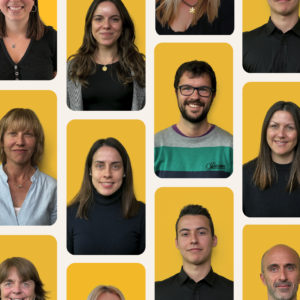 Equip Editorial