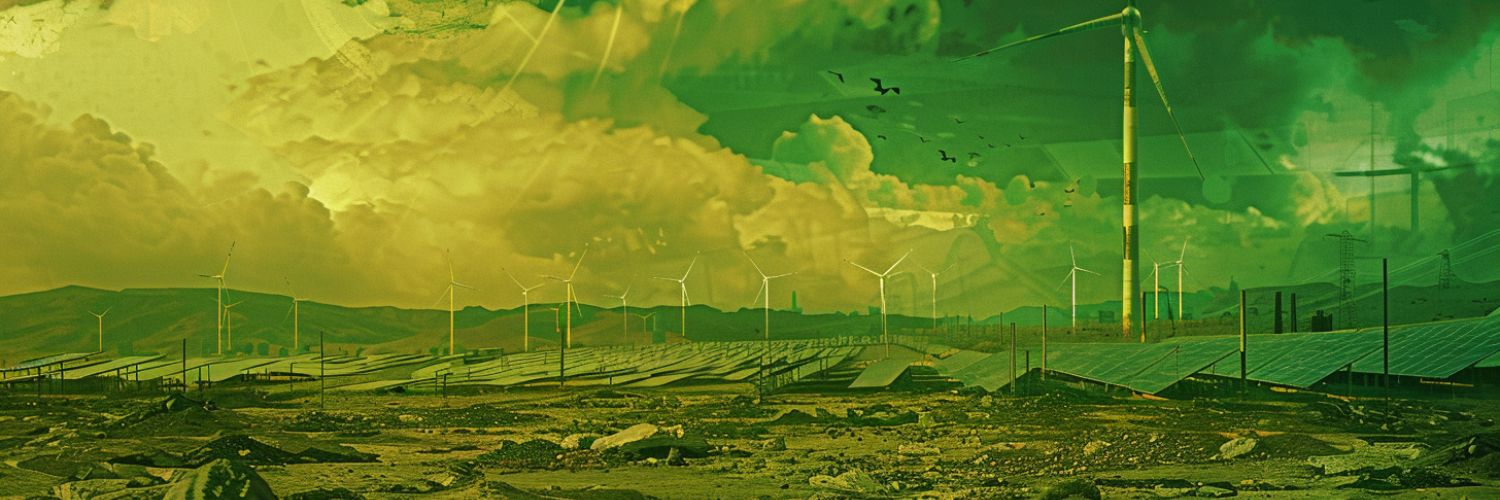
The green transition promises clean energy, sovereignty, and sustainability. But behind solar panels, batteries and electric cars lie new geopolitical bottlenecks. The green future also has owners. And they are not European.
The fight against climate change has become a global political and economic priority. But reducing this process to an environmental issue is a mistake. The ecological transition is, above all, a reconfiguration of global power. And Europe runs the risk of replacing its dependence on oil and gas with a new “green” dependence on critical minerals controlled by third countries, with a direct impact on prices, inflation and economic security.
For decades, the global economy has revolved around oil, gas, and uranium. These resources have shaped alliances, wars, inflation and structural dependencies. Today, the narrative is different, but the material base remains essential. The green transition does not eliminate dependence on resources: it transforms it.
The new protagonists are lithium, cobalt, nickel, copper and rare earths. Without these minerals there are no batteries, no solar panels, no wind turbines and no electric mobility. No green technology is immaterial. Every “clean” device has behind it an intensive extractive chain, often invisible to the final consumer.
Demand for these resources is growing exponentially. According to data from the European Commission, an electric car requires up to six times more minerals than a combustion vehicle. The technological shift is profound, but the economic logic remains the same: whoever controls the resource controls the system.
The real map of green power
The official narrative speaks of transition, diversification, and autonomy. But the real map of critical mineral supply tells a different story. Control is heavily concentrated in a few countries, many of them outside the European sphere.
China is the central actor. It dominates the refining of rare earths, lithium and cobalt, and controls key stages of the value chain, even if it is not always the main extractor. The Democratic Republic of the Congo concentrates more than 70% of global cobalt, often under highly questionable social and environmental conditions. Chile, Argentina, and Australia lead lithium extraction.
Europe, by contrast, is structurally dependent. It imports 98% of the rare earths it consumes and relies heavily on external sources for most critical minerals, according to data from the European Commission and the US Geological Survey. The European green transition is built, paradoxically, on resources it does not control.
The new green dependency
Replacing Russian gas with Chinese or African minerals does not eliminate vulnerability. It shifts it. This new green dependency exposes Europe to geopolitical tensions, trade restrictions and increasingly frequent economic blackmail.
The example is clear: in 2023, China imposed restrictions on the export of gallium and germanium, key minerals for the technological and energy industries. A move that shook global supply chains and highlighted the extent to which the green transition is also a geopolitical weapon.
According to the International Monetary Fund, geopolitical fragmentation of global trade increases the risks of shortages, price volatility and structural inflationary pressures. The energy transition, without material sovereignty, may become a source of permanent economic instability.
Who ultimately pays for the transition?
The cost of dependency always falls downward. When resources become more expensive or scarce, the system does not absorb the shock: it passes it on. Higher energy prices, rising industrial costs and subsidies sustained by public debt inevitably filter through to final prices. The green transition, as it is currently being implemented, is not economically neutral: it generates inflationary pressures that directly impact citizens’ purchasing power.
This impact goes far beyond the energy bill. It affects food, housing and mobility, and places particular strain on the middle classes, which once again act as the system’s main shock absorber. Data show that rising energy costs and industrial inputs have been a key factor in recent inflation, eroding savings and reducing the room for manoeuvre of households and businesses. The question is no longer whether the transition is necessary, but who truly bears its cost.
Here a structural contradiction emerges: there is no sustainability without sovereignty. Europe speaks of reindustrialisation and strategic autonomy, but arrives late, with high costs and strong social resistance. Recycling is essential, but insufficient to meet growing demand for critical minerals. Meanwhile, the global race for resources advances and the margin for manoeuvre shrinks. Can we speak of sustainability if we depend on other powers to make it possible? This is the uncomfortable question Europe has yet to answer.
The green future is also power
The green future is also power. The ecological transition is not only a climatic or technological issue, but one of control, resources and economic sovereignty. Changing the energy model without rethinking who controls raw materials is replacing one dependency with another. And in this balance of forces, Europe starts at a disadvantage.
If the sustainable future is not built with geopolitical realism, the cost will not be borne by markets or large corporations, but by citizens. Higher prices, persistent inflation and reduced economic decision-making capacity are the toll of a transition designed without control over critical resources. Sustainability, without sovereignty, becomes fragile and socially regressive.
At 11Onze, we believe that talking about sustainability without talking about resources is self-deception. Understanding who controls the future is the first step to protecting savings, preserving economic freedom and maintaining decision-making capacity in an increasingly tense and fragmented world. Because true progress is not only green: it must also be fair, resilient, and sovereign.
If you want to discover fair insurance for your home and for society, check 11Onze Segurs.
If you would like to learn more about this topic, we recommend:
 Sustainability
Where does our energy come from?
5 min readThe latest edition of the Statistical Review of World Energy...

 Equip Editorial