Right to repair: a rare victory for the consumer
EU law is forcing companies to provide repair manuals and restrict unfixable products.
In the closing months of a pandemic-stricken 2020 the European Parliament took an ambitious step to address the issue of millions of tons of electronic waste the EU produces annually by voting in favour of the ‘Right to Repair’. A law that will give us Catalans more leverage when shopping, as we will be less likely to be told a product isn’t worth fixing, so we might as well buy a new one. Handymen and handywomen all across Catalonia have a reason to celebrate.
Spain alone accounts for over 900,000 tons per year, 20 tons per capita and the fifth country in the EU. With only 200,000 tons of this electronic waste being collected, less than 21%, due to its low value and difficulty in recycling.
A landmark move which adopted the resolution with 395 votes in favour and just 94 against, with 207 abstentions, and which should come into force by spring this year.
No more pentalobe and tri-wing screws?
The introduction of a legally binding “right to repair” system will force manufacturers of white goods and eventually of other electronic products, including smartphones, tablets and PCs, to provide spare parts for a minimum of seven to ten years, depending on which product. They will also be required to issue repair manuals and to ensure they can be repaired with commonly available tools so in a few years we can hopefully say goodbye to the long list of obscure screws some mobile phone brands use in order to make it next to impossible to dismantle their devices with readily available screwdrivers.
On this basis the EU Commission is also asked to “develop and introduce mandatory labelling, to provide clear, immediately visible and easy-to-understand information to consumers on the estimated lifetime and repairability of a product at the time of purchase.” .
In the same way the Energy Labelling Directive adopted in July 2017 aims to provide a clear and simple indication of the energy efficiency and other key features of products at the point of sale so that consumers can make an informed purchase in order to save money on their energy bills while contributing to reduce greenhouse emissions, it is hoped this new legislation will go some way in tackling the premature obsolescence conundrum while striking a compromise between manufacturers and regulators that can ultimately benefit the consumer and the environment.
France well ahead of the pack
Following a French government vote late last year to introduce an index of repairability on consumer tech appliances, France implemented the new rules in January 2021. A set of decrees which include a mandate to inform the consumer about the possibility, or not, to repair a product, the first country to do so.
Apple which together with Amazon, Google, and Facebook was the subject of a tech antitrust hearing by the U.S. House Committee on the Judiciary and which was often conflicted about its right to repair stance, was one of the first companies to publish repairability scores for its iPhones and MacBooks, well ahead of the end of the 2021 deadline.
The index will not only help consumers get better value for money but should also increase the lifespan of these durable goods, up to now regularly treated as disposable consumables, while at the same time creating additional competition between manufacturers who will aim to get top marks on the repairability scale.
There are plans in place to increase its outreach and implement a mandatory durability scoring system based on repairability and solidity of materials, which should come into effect in 2024.
Too far or not far enough
As with any new laws, especially when it comes to sustainability and the environment, there are bound to be opposing sides claiming the new measures are insufficient or too draconian. This is no different, and the rate of expansion of this new legislation will be a slow process before it covers all consumer devices and will most likely face a number of bureaucratic barriers and hostility from manufacturers.
One of several caveats is the access to repair manuals and spare parts which will be freely available to professional repairers, although not for the first two years of product launch, but restricted for consumers and non-professional repairers, far from the still utopian universal right to repair. A key factor that can be easily abused by manufacturers when considering what it takes to qualify as a certified professional repairer.
Furthermore, manufacturers are only required to provide spare parts within fifteen working days, quite clearly an unreasonable length of time for someone waiting for his fridge or washing machine to be repaired.
And it gets worse when it comes to software support, as manufacturers are not compelled by law to provide any assistance nor updates throughout the lifetime of a product. Something worth considering when we live in a digital world where everything seems to have a chip and software, interconnected through the IoT.
Manufacturers and their political backers from the liberal and conservative right arguing in favour of de-regulation tried their best to weaken some provisions but ultimately lost the vote on obsolescence if only by a small margin. That is not to say this is the end of the road, but merely the beginning of a long journey that is likely to face many hurdles along the way.
Anti-tinkering policies, Intellectual Property laws, Copyright acts and ‘void if opened’ warranty schemes will no doubt be used to try to bypass some of this legislation, but we should not lose sight of the significance of this groundbreaking law. Perhaps only a small first step, but with so much at stake when it comes to the environmental sustainability of our planet, a small step we cannot afford to do without.
11Onze is the community fintech of Catalonia. Open an account by downloading the super app El Canut for Android or iOS and join the revolution!
Some years ago, sustainable architecture started evolving from a set of never-fulfilled concepts and promises to a tangent reality. Social consensus on respect for the environment and the use we make of natural resources are changing pre-established paradigms in all areas, including architecture. The advancement of construction technology allows us to consider projects that were unrealistic not many years ago.
Today we talk about sustainable architecture with technical architect Alfredo Acosta, member of the Col·legi d’Aparelladors, Arquitectes Tècnics i Enginyers d’Edificació de Barcelona (CAATEEB), and who is developing an ECODISSENY project.
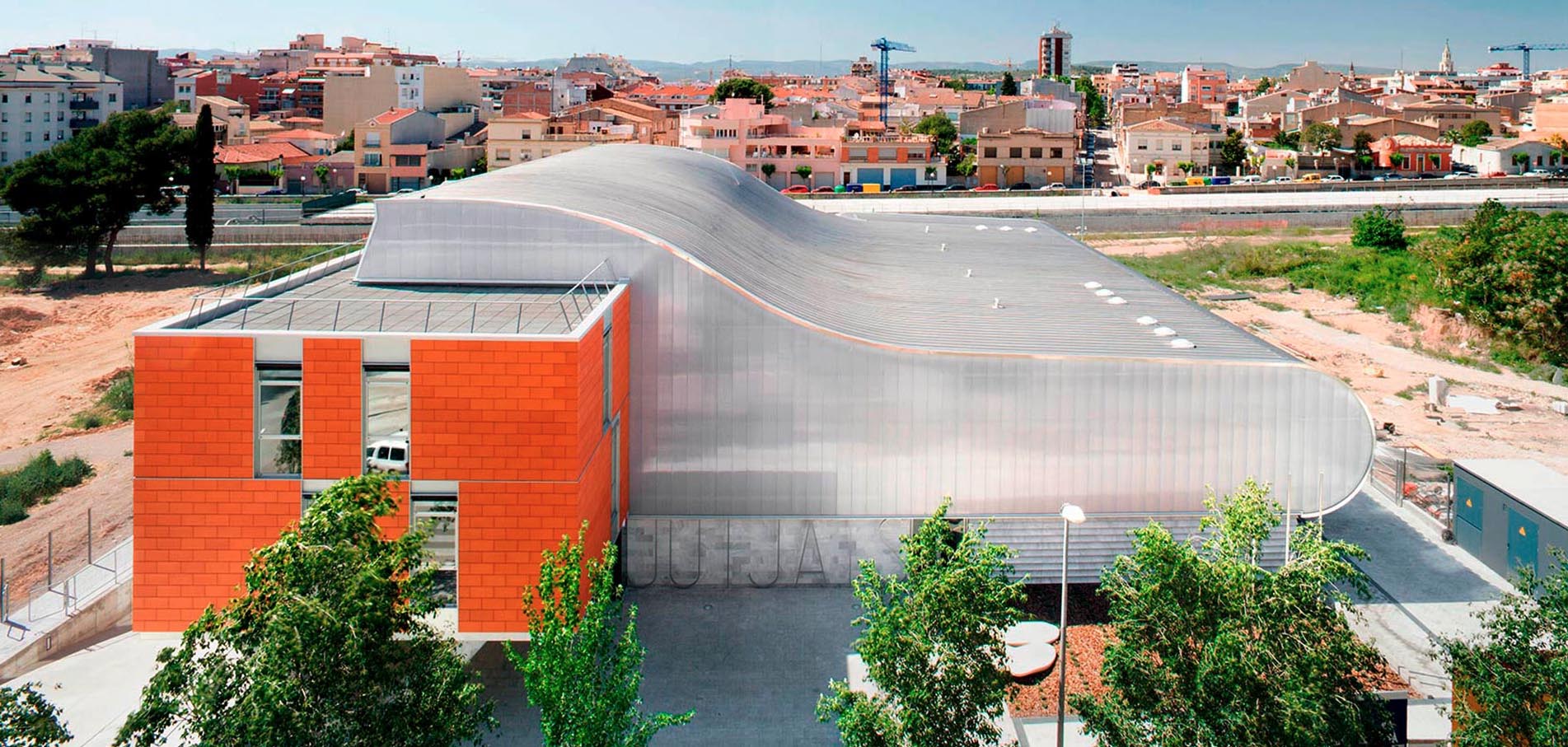
Courts of Vilafranca. Architect: PICHARCHITECTS
· Many economic environments have been in difficult times for over a year. 70% of architects are self-employed; one-third of them earn less than EUR 15,000 a year. How has Covid-19 affected a sector that was already in crisis prior to the pandemic?
Responding to your question, the profession has indeed known better times. I think that, in general, we are ‘trained’ to keep pace with the fluctuations in the volume of work.
· You’ve been working on architecture for thirty years. To what extent is sustainable architecture changing your working environment? Is it still a marginal issue, or are we talking about a trend that is becoming more and more important in your day-to-day life?
Sustainability is a concept that would be ideal if all of us were aware of its value. We are gradually understanding that we only have one planet, and that we have to “dialogue” with it, be consistent, and respect it.
I like to talk about “understanding the context”; then, you can “read” situations (general or private), see, hear, understand, and, very important, raise appropriate issues and reflect.
- Have we passed the “point of no return”?
- Do we really understand that the focus is not the individual interest, but the collective interest? Maybe nature is the big protagonist …and reconnecting with it?
- Is economic and social development possible and compatible with respect for the environment?
- Is there a need for a new perspective?
- We have technology and tools that ‘require’ millions of data every day. Can we manage this data properly and transform it into knowledge? Then, with institutional support, we can develop strategies aligned to “values”.
· Housing rehabilitation is a sector that continues to expand, partly because of the poor construction standards past decades, but to what extent is energy rehabilitation gaining ground in this area?
The lack of land for development in large cities makes rehabilitation an ideal option.
In recent years, concepts such as energy rehabilitation, healthy habitats, universal accessibility, waste and water management, green infrastructure (garden roofs), circular economy, renewable energies, emission reduction, etc. are within a conceptual framework with a common nexus, CONSISTENT “ECO SUSTAINABLE” GROWTH, which generates a paradigm shift.
In my opinion, the great challenge lies in ensuring that we are agile in applying the knowledge and experience we have gained. Let me explain myself. Methods, regulations, legal framework, solutions, and traditional construction processes evolve slowly (not at the same speed as the applicable knowledge).
Maybe it is not hurting us badly enough, so we don’t have a need to move faster. Can we see what’s obvious only, but ignore intangible things?
This world is very different from the world of the time when you finished your studies, and technology has progressed a lot in recent years.
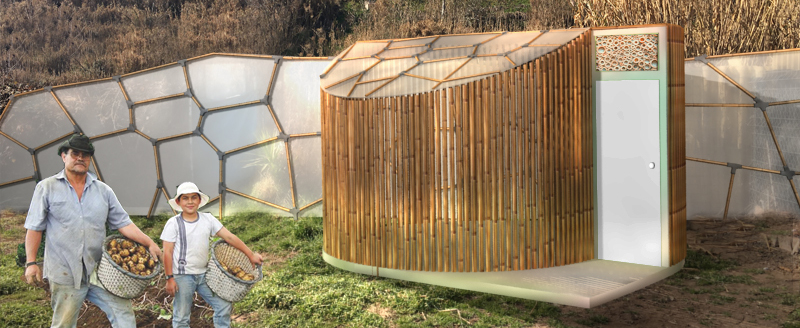
Proposal Premi Catalunya d’Ecodisseny 2019. Render author: Iván Merino
· What training resources do architects from your generation, who were trained only in constructive or historical rehabilitation, have?
We have no choice but to be proactive and continually trained. Professional schools offer training courses, web resources (selecting the source of information) and the “eternal trainee” attitude, day after day, in the profession.
· In this sense, and since the digitalization of your sector, how do new architectural technologies and the introduction of new digital tools such as the BIM (Building Information Modelling) methodology help to project more sustainable housing and space?
Based on the concept of “if it is measurable, it is better”, one can conclude that we have, within our reach. the amount of tools and software that provide us with enough data to make tuned decisions for each need.
BIM is the natural evolution of early drawing programs. With BIM, we can design, “build in 3D”, financially assess, plan, and monitor the execution of a project. We can see problems and anticipate them.
· Anything else you want to emphasize?
To conclude, I would just like to raise a few points that I think are appropriate: I think it is important to understand cultural differences. The value of the community in decision-making (cohousing). New look at funding options. It is possible to transform the economy and to achieve a balance with the natural environment and biodiversity. Lean methodology. There are many environmental certifications for buildings, and I think that can lead to confusion for the end user.
Small stores open virtual shops of local products to build bridges between producers and consumers.
The Covid-19 crisis has changed some established paradigms and has made us consider many things that we were not doing well at all. Social consensus on respect for the environment and the use we make of natural resources was already a growing trend in many social and business areas prior to the pandemic, but perhaps now we have seen more clearly and by means of practical examples why it is important that we do things in a more sustainable way.
- From cropland to home
Buying local and local stores have become more important, especially because of the long confinement period that has restricted our mobility and has made us aware of the importance of supporting local producers and small businesses that save us long journeys while offering a customised service that is difficult to find in large superstores.
The food industry has continued to function fully, but the absence of tourism, together with the closure of restaurants, has broken the usual distribution channels. Fortunately, living in the digital age has made it easier for many local Catalan producers to find an alternative thanks to new technologies, many of them having engaged in initiatives to build a virtual bridge between producers and consumers.
A multitude of platforms and projects have emerged online, many of which are non-profit and have the only aim of providing a common space, as if it were a traditional street market, so that small traders without the economic resources of superstores could have their virtual stall and offer their products to a public that could not go out but had more time than ever to spend hours in front of a screen.
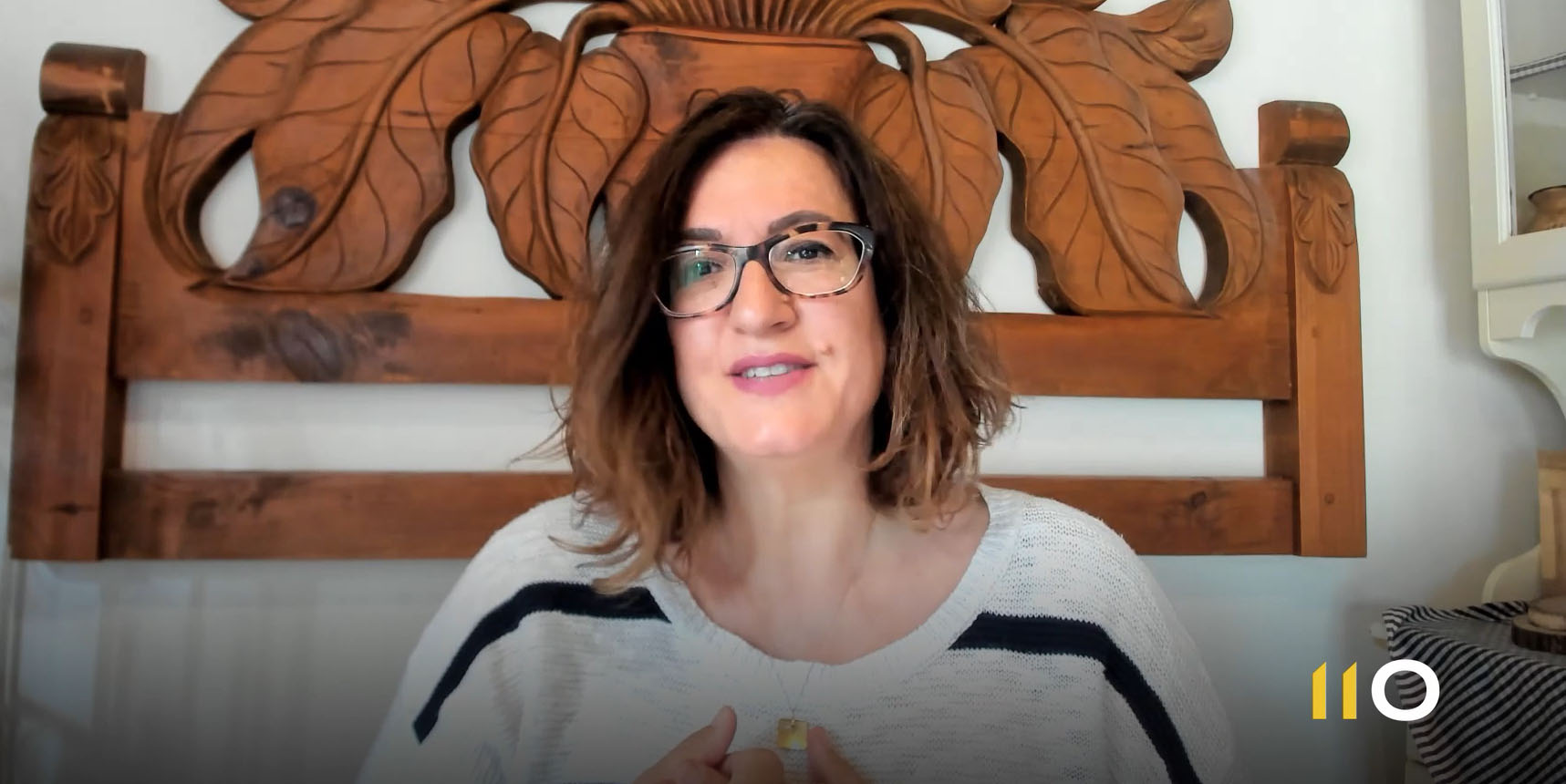
Agent 11Onze Pilar Oltra analyzes the evolution of local to digital purchasing
- We cook and we cook healthier food
Yes, we are also consuming more take-away food, but it seems that many have discovered that their vocation in life is to be a chef, or perhaps a baker, if you take into account the total absence of flour in supermarket shelves in the first days of confinement. Be that as it may, we have more time to cook and thus kill boredom after having watched all films and series, learned five languages, and earned master’s degrees in all kinds of fully expendable studies, or spent hours teleworking, also a product of this new normality.
YouTube’s cooking videos are more popular than ever, as well as fresh produce cooking, and here local purchasing plays a key role that hopefully will remain.
Working from home, as well as the restrictions of restaurants, have also changed the hours of our meals, so we eat at more rational times, with the subsequent benefits for our health.
Local purchasing of agricultural and livestock products produced in favour of the consumer while respecting the sustainability of our environment leads us to eat better, support our small producers, and reconnect with the natural environment, which is now more appreciated than ever; these are just some of the trends that have emerged from the pandemic and for which we can be grateful.