Neobanks: What do they offer?
A neobank is a financial technology-based bank that operates only digitally or through a mobile app, and can offer most of the products and services of a conventional bank, minus the physical subdivisions. These are relatively young companies, with the neobank designation dating back to 2017.
Banking structures, as well as the needs of the population, have changed exponentially over the last few years. While it used to be commonplace to go to the bank in person to make transactions, we can now carry out the same operations from the sofa at home. In response to the new technological context, traditional banks, those that have been around forever, set to work to make a digital banking model available to the public that would allow a considerable number of banking operations to be carried out from any location.
Thanks to this adaptation, digital banks emerged, ready to address society’s new concerns. However, despite streamlining certain banking procedures, digital banks act as subsidiaries of larger banks that already have a specific track record. It is precisely in this context that neobanks were born; a banking structure that starts from scratch and that, moreover, has as a fundamental pillar the use of Fintech technology to serve its customers.
Over the last few years in Europe we have already started to work with neobanks, taking advantage of the technology in the market. But what exactly do neobanks offer, and what are the differences between traditional banking and a neobank?
Streamlined products and services
We all know what operations a traditional bank can carry out and what procedures can be carried out. The great challenge for them, in fact, was to try to transfer to the virtual world all the procedures that are usually carried out in branches, and they partially succeeded. There are still operations that require a visit to the bank because they cannot be carried out from a tablet or mobile phone. Opening a new account is one of them.
Neobanks, on the other hand, have a much more simplified structure compared to traditional banking. This means that they do not offer all the products or possibilities of the more veteran entities, but they have managed to bring together a good number of services with simpler procedures. In other words, they offer a smaller but at the same time more decisive range of products. Opening a current account, transferring money, managing cards or applying for credit are just some of the procedures that customers can access at any time. For this reason, neobanks are gaining more and more followers among small and medium-sized businesses and young people; they prefer effectiveness and speed in their operations over quantity.
Zero or almost zero fees
Surely more than once you have heard someone complaining about the commissions that banks ask for in order to manage procedures. These expenses are present on the part of traditional banks because they need to put a cost on the management of their agents, maintaining their branches and the bank itself. It is precisely here where we find one of the most relevant differential features. Unlike these, neobanks can afford a considerable reduction in commissions, since the use of technology means the elimination of the costs that large banking institutions have to face.
As a result, traditional banks have also tried to reduce their costs in order to be able to offer more competitive prices, but they have not managed to match the zero transaction costs or decrease their high savings rates. This is why the neobank model is currently gaining popularity.
Autonomous customers
This is undoubtedly one of the most differentiating factors between traditional banking and neobanks. While the former are characterised by little autonomy and, consequently, work every day to improve their digital services and thus gain more independence, neobanks offer absolute freedom from the outset through highly advanced technological tools that help customers control their money.
But the downside of this is that neobanks often do not have an interpersonal communication service between the customer and the bank itself. Interactions are limited and very much focused on customer services, behind which there may be machines. In this sense, traditional banks do have the capacity to build stronger relationships between customers and agents. As for their digital subsidiaries, despite not having a physical person, they have customer service time slots to be able to solve any doubt or problem in a personalised way.
11Onze has been training its first 50 agents since 15 March 2021 to provide a personalised service to future customers, offering all the advantages of a neobank with a person-to-person service.
We have been hearing expressions such as “Km 0 product”, “digitalisation” and “sustainability”, but what do they have to do with the Catalan economy? How can companies implement sustainable strategies to help consumers make better choices about the products they buy?
The Departament de Medi Ambient defines “km 0”, or “proximity” products, as those that have been produced less than 100 kilometres away, are seasonal, ecological (no chemicals or toxic products are used in their production) and protect the environment. As we have already experienced, the Covid-19 pandemic has helped to launch or accelerate different initiatives to help small local agri-food producers. The Generalitat has done so thanks to the Prodeca project, a website promoting Catalan food.
However, local production is not the only way to help consumers. According to data from 2020, 35% of Catalan companies were digitally transformed during the pandemic. The main sectors that did so were services, commerce and industry. Digitisation has helped these companies to improve savings, efficiency and productivity.
However, the sustainable economy goes beyond consuming local products and digitising businesses. On the one hand, it helps to raise awareness, with social campaigns that challenge citizens, encouraging them to buy brands that respect the environment and to commit to recycling and to fair and second-hand trade. The sustainable economy is also driving changes in the household economy, such as household savings and reducing energy consumption. In fact, small individual changes often contribute much more than big changes.

Can a financial institution contribute to change?
This is how the sustainable economy is expanding in many different sectors, from wine to construction. The commitment generates business models that incorporate the circular economy, in order to reduce the waste of resources as much as possible. At 11Onze we also want to contribute to change. But how can a financial institution like ours do so?
At 11Onze we want to promote a sustainable economy based on the real and specific needs of each person living in the community. That is why 11Onze can help create social sustainability. Many companies start from a sustainable economy without thinking about the customers, but it is important to incorporate the social side of the community to complete the concept of a sustainable economy.
Our customers are at the centre of the whole proposition and therefore what we offer them needs to help them financially, to make better choices, in short, to improve financially and economically. Thus, we aim to help our customers to make more sustainable choices and to show how the economy of abundance allows everyone to participate, based on responsibility. We do this with transparency and simplicity. In the end, sustainability must make sense from economic efficiency, from individual and collective responsibility and from the awareness that natural resources must be protected and valued.
All these actions, however small they may seem, have a big impact. In fact, we are increasingly aware of the importance of sharing. Sharing, renting, reusing, repairing and recycling extend the life cycle of products. Use rather than own is the maxim of all these movements and trends towards a more sustainable economy.
11Onze is becoming a phenomenon as the first Fintech community in Catalonia. Now, it releases the first version of El Canut, the super app of 11Onze, for Android and Apple. El Canut, the first universal account can be opened in Catalan territory.



The commitment to local purchasing is the first piece to contribute to sustainable development and this is the bet that the Catalans have made in the wake of the pandemic. A change of trend in consumption marked by a preference for local products, local businesses and social awareness
The coronavirus crisis has shaken the whole world and one of the sectors that has remained at the forefront has been the food industry which in a few months has seen how customers have changed trends in terms of products, frequency of purchase or even establishments. Although we are always hearing the phrase that nothing will ever be the same after the pandemic, what is really true is that the trend towards responsible consumption, which has already begun, will continue after the crisis, or is it just a response motivated by the exceptional nature of the moment?
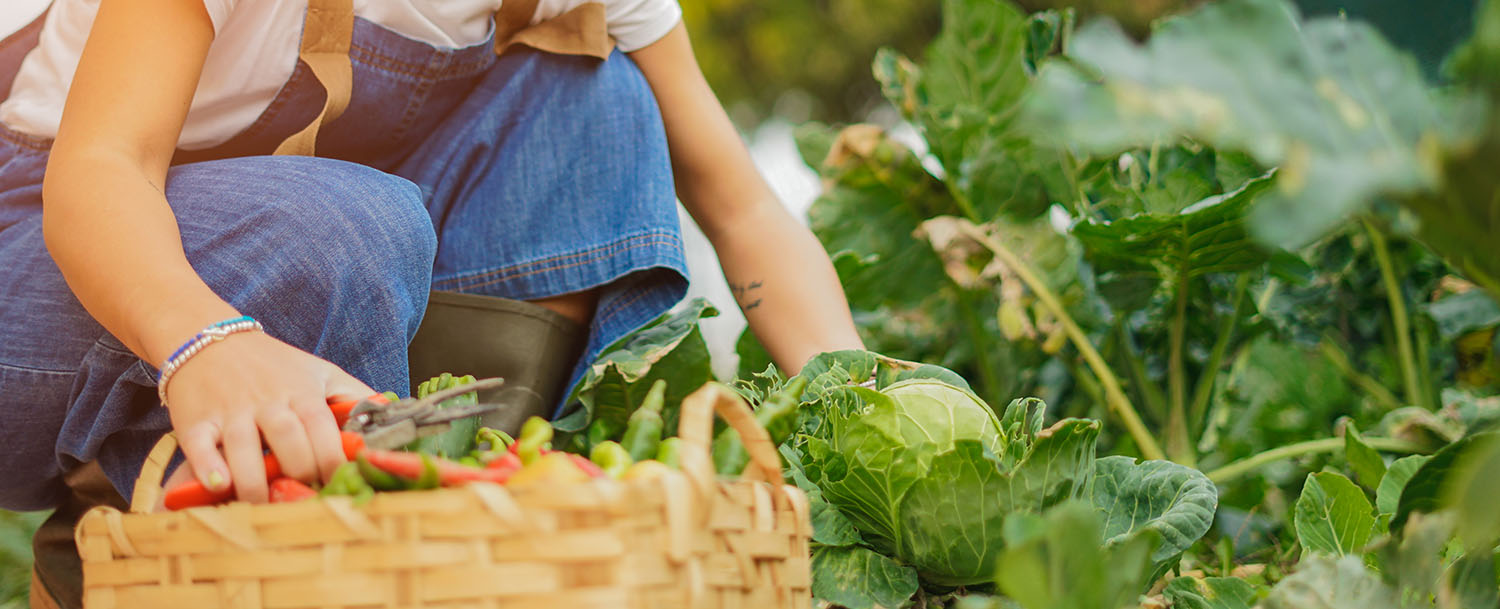
Trend towards sustainable consumption
Studies such as that of the UPC-IRTA research group or the FHOM of the Rovira i Virgili University show that in record time there has been a change in consumer habits. According to the first study, motivated by the Department of Agriculture of the Generalitat, 19.6% of the Catalans have increased their interest in local products, therefore, the trade of proximity takes enough respect to the big surfaces. One of the motivations of users is the reduction of social interaction to avoid crowds, as occurs in hypermarkets. A decision that, beyond the health reason, also contains a personal commitment to support small businesses, a vision that more and more customers are internalizing. Social conscience and economic concern are prioritizing a consumption system that can benefit others beyond oneself, and if this trend continues beyond the pandemic, it will be one of the main positive readings that can be made.
In terms of diet, the Catalans have opted for a healthier lifestyle, increasing the consumption of fruit and vegetables by 19% and prioritizing fresh food. A change that can be motivated by several causes, among which we find, the growing concern for the health of both themselves and the family, the fact of being more hours at home and, therefore, to be able to devote to the kitchen more easily; or by the frequency in which they go shopping. According to the study, 77% of the population chooses to go shopping once a week, and in most cases it is one person in the family who does the main shopping. These habits are undoubtedly very marked by teleworking and reductions in mobility and, therefore, may continue to evolve once everything is normalized again.
Fear is driving the growth of digital shopping
The pandemic has accelerated consumer trends that were already pointing towards a sustainable and more conscious preference. However, fear has been the main trigger for this situation. The fear of becoming infected has led citizens to make a more responsible purchase, to know specifically what they have to buy and where, without wasting time and avoiding crowds. Mobility restrictions have led people to stay more at home and, therefore, to increase the consumption of products and improve the quality of food. The fear of an economic crisis has conditioned daily expenses and has increased social awareness in favor of solidarity and the commitment to local commerce. Helping each other to try to mitigate this fear and learn to manage it, collectively, is important because of the uncertainty that this situation generates, because of the consequences that are still to come.
Fear, however, also has another reading, and that is that it incites to take the plunge, to reinvent oneself or die. And beyond the neighborhood support, many companies, regardless of their size, have opted for this path, reinventing themselves and approaching the customer in a different, alternative way. We are talking about online sales, home delivery, order preparation, and many other initiatives. And these have affected food companies in particular. They have carried them out, and it is precisely thanks to them that local commerce has reached many more people. It is no longer necessary to have the store under the house, technology opens a new world of possibilities available to the consumer; everything is just a click away. Buying quality, zero kilometer, ecological and proximity products is within the reach of any customer, and it is the customer who has the responsibility to internalize this model and maintain it. However, the last stage of transport is the one that will make the choices more sustainable and its logic must be vindicated in terms of common sense and favoring the local producer
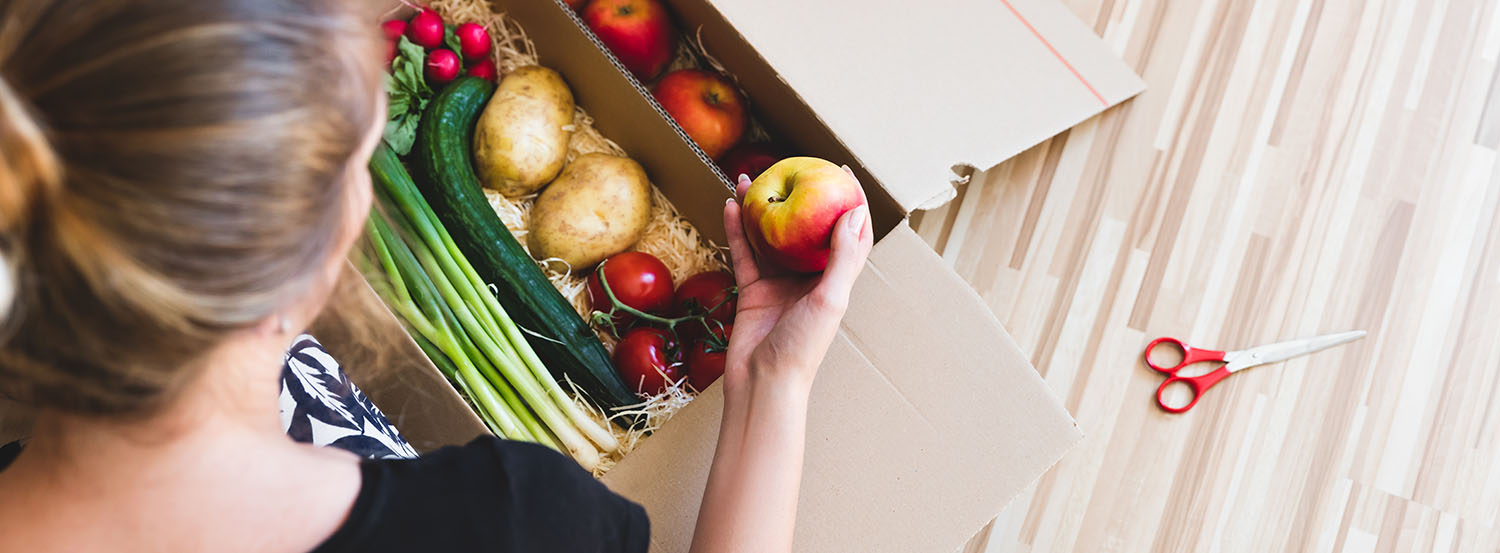
From globalization to local purchasing
The period of globalization, which began decades ago, has led many companies in the country to relocate their production lines to countries where costs are cheaper. A decision which, in the food world, entails a significant loss of quality, but which customers have accepted as prices have become cheaper. For years, quantity, understood as everything we can buy for a specific amount, has been more important than quality. This fact not only affected the customers’ shopping basket, but also negatively affected local producers or local distribution companies, among others. There are many local producers or businesses that year after year, and crisis after crisis, have closed their doors in the face of fierce competition, both in terms of prices and resources, from large multinational companies.
A trend that seems to be changing, and that the pandemic, as has been said, has accelerated. Currently, Catalonia voice grows every year the number of producers who return to bet on organic products, sustainable production and projects where, beyond solvency, prevail ethics, responsibility. A question of collective responsibility that slowly seems to be returning to the origins where everything starts: from the field to the table.
It seems impossible to predict what future consumption habits will be. However, we are facing a society that is becoming more and more aware and where local commerce is part of our daily lives. There are many local and proximity businesses that can still be saved, and social responsibility and digitalization will have to be their allies to achieve this challenge. As the pandemic has shown, nothing is static, least of all consumer trends that are highly conditioned by the situation at any given moment. But the reading that can be derived from this change of direction is that Catalan society is committed to proximity and sustainability and that, therefore, it is committed to the future of our companies.
There are two realities that give meaning to this title. On the one hand, the demand by organized sports for quality sports sponsorship. On the other hand, an economic crisis that comes from a long way and has been exacerbated by the arrival of the pandemic
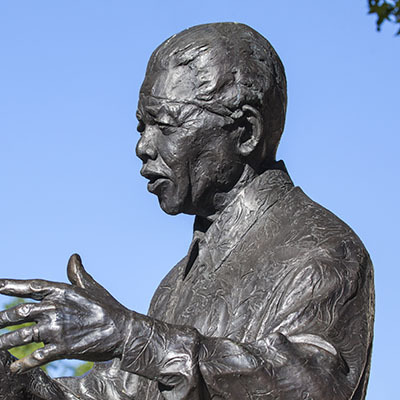
“Sport has the power to change the world. It has the power to inspire, it has the power to unite people in a way that little else does. It speaks to youth in a language they understand. Sport can create hope, where once there was only despair.”
It is precisely this power of sport referred to by Mandela that has led society to organise its practice to make it affordable to everyone. From governments to smaller entities. And this power is also the factor that attracts companies to link their brands to it. However, it is also equally true that the global crisis caused by the pandemic has temporarily deprived sport of power and has forced a rethink of the interest and form of linking companies to sport.
If we define sports sponsorship technically, we refer to customised services or financial endowments, such as advertising or technical material, or human resources, that the sponsoring party, usually a company, does in exchange for rights to image use or certain services the sportsperson or sports entity may offer. It is an excellent way, for a brand, to be able to come into contact with potential consumers, thanks to the visibility and public echo of the sportsperson or sport activity.
But if we want to explain sponsorship as a concept, and look for its causes, we must refer back to Mandela’s words, to the force that sport has to unite people as few things do, to inspire, and to speak the same language.
Since the first sports sponsorship agreement between the Slazenger brand and the organisers of the 1902 Wimbledon tournament, which remains alive and renovated, more than a hundred years of learning have passed.
Sports sponsorship does no longer equal patronage. In the same way that high sporting competition has had little to do, for a long time, with idealised sport where the important thing was participating. Sport, or rather organised sport, which is also culture, and as such inspires and trains, is demanding, even more so today, to be able to receive an economic support other than patrons, which have long proved to be insufficient, and today even more so.
Patronage does not disappear, but the exponential increase in the number of practitioners of organised sport, teams, clubs, federations, and challenges of all kinds has far exceeded their possibilities. Nor does that coming from public money, which is very much oriented to promoting sport for everyone, not competitive, and, in contradiction to what some people think, to promoting sport at the highest level of competition between national teams, in search of political profitability and national affirmation.
In the 21st century, sportspeople and businesses always want to go further, in demand and in importance. And demand asks for preparation, and time, and more time, and this dedication calls for compensation in a world where time is gold and where no one lives exclusively for a single activity, be it work or leisure. On the other hand, its importance requires a compromise that must be linked to something more than commercial interest.
Currently, the experience of sponsorship shows that there are common threads beyond the monetary or commercial interest. It is about passion, about involvement, even emotional, in each other’s project. Companies genuinely attracted to that sport or sportsperson, or by their values, that need sportspeople, teams, clubs, or national teams that, in turn, adopt their products and values.
It is for this simple idea of involvement with true and authentic sentiment by both sides, that we often talk about win-win, a widespread way of saying “everybody wins”. Even in sports finals, the loser may win too. Just for having played, for the momentum and progression it meant, for their style of play, for their fair play, or for having overcome an extreme adversity during the game or during the path to the finals. All the examples we will find will ultimately help us to realise that when it comes to sport, finding the win-win is, theoretically, quite simple.
It is around this idea that sports sponsorship is permanently rethought. In the idea that everyone wins.
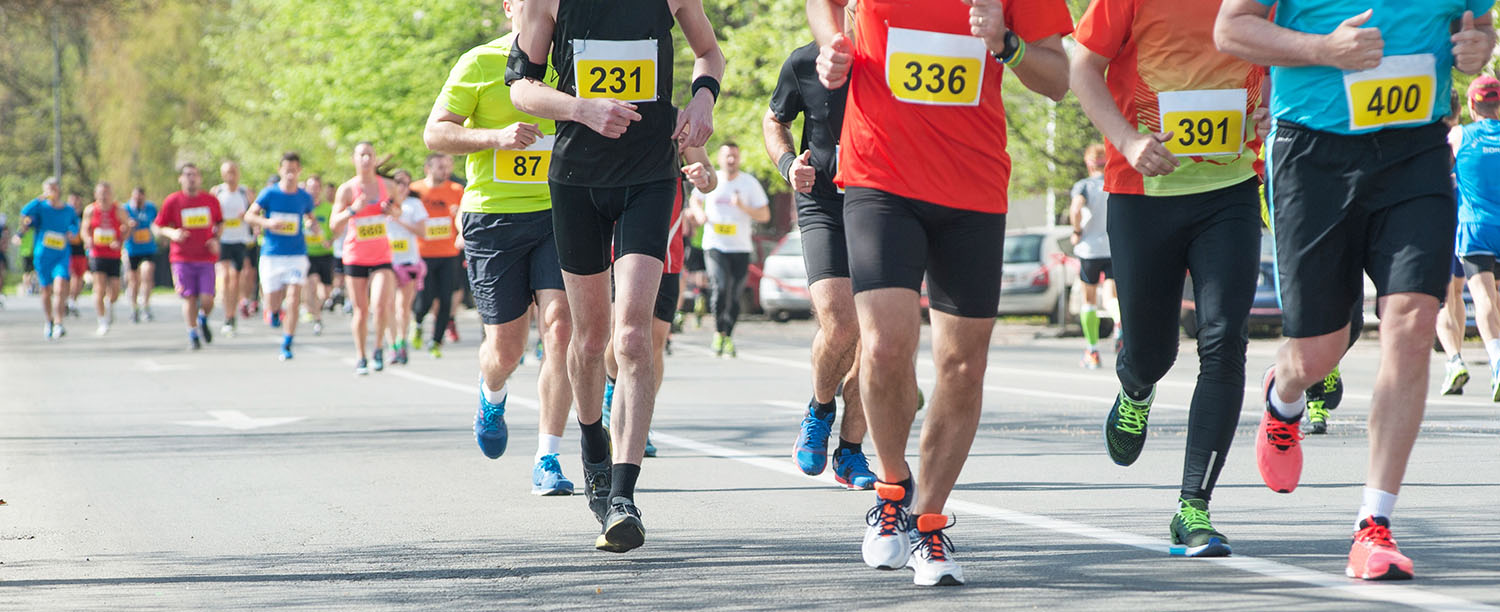
But the pandemic and its consequences are forcing a new rethinking. The great sports sponsorship is in question. And it is the result of this moment that the new emerging banks, amongst other companies, before the announced collapse of traditional banking, are also called upon to participate in sports sponsorship.
A bank’s customers are both companies and people, and therefore a bank’s customers are also sponsors and sportspeople. A bank, therefore, if it has the will to make it possible, has the contacts and can mediate to help sports sponsorship, or to sponsor directly or in a combined way between the two models.
The new situation resulting from the pandemic, of which we differentiate the two most important stages, the one which cancelled all sporting activity and the current one, where competitions have returned with restrictions that are especially visible at an international level, has led sports sponsorship to be re-examined.
According to a study by Nielsen Sports, one of the largest companies in the world specialized in the analysis of data aimed at sports sponsorship, trademarks, and advertisers, it is shown that in Europe alone, USD 35 billion a year is spent on sports sponsorship. According to the same study, the Covid-19 crisis has accelerated more than ever the importance of companies providing maximum efficiency with reduced investments, as well as measuring the impact and effectiveness of these.
The study, carried out in Germany, revealed, among other things, that 69% of respondents consider that a financial rescue to a sports club would improve the image and sympathy for the sponsor. Following this study, some experts agree that this crisis may be a great opportunity for sponsors to identify new business opportunities and to play a role of integrity in the life of consumers in the near future. The commitment of the sponsor in times of crisis may increase the notoriety of its brand in a very positive way.
From this it can also be predicted that, since the new banks are born by combining efficiency and performance with reduced investments, if they can measure the effectiveness and impact of their strategies, they can become the perfect ally of tailor-made sports sponsorship.
New banks, with fewer costs than traditional ones, find their necessary partner in sport, no doubt about it. The visibility and transversality of sport are its most real approach to people and, with little more than the opening of private customer accounts, and the loyalty of these customers, the performance of sponsorship is justified. And to make it easier, providing this return is within the reach of the majority of sports organisers in need of sponsorship, especially those small, very altruistically run, and with the most authentic aim as proposed by Mandela. In other words, those most directly linked to specific people, to people close to them, to people from local environments. Those environments where the new banking system has focused its interest on growing.
In conclusion, the new banking system aims to be the proximity banking that local people and sporting entities can use for the greater benefit of all parties and to achieve the much-priced “everyone wins”.
The value of things lies in the right balance between two extremes that are usually more similar than we think: trust and distrust. This fact becomes very important in regard to the first term, trust, as it is a basic quality in human relations. Taking into account this complicated tandem, where does the entrepreneur stand?
Distrustful business leaders
Those that management theories nurture as selfish beings who only seek their own personal gain. Normally, employers who have been educated in this tradition end up thinking that workers have the opposite interests to their own (to work as little as possible), when they want them to do just the opposite (to work as much as possible, maximize productivity with the minimum cost). And what does the worker think? For the employer to get all the credit, I do enough. And he deserves it, for having bad thoughts about me. And I won’t go on, we all know how the story goes.
At this point, the employer becomes obsessed with controlling the selfish worker, and having tried all possible control systems, he ends up seeing that there is none that guarantees this control. Conclusion: the intelligent employer will end up seeing that the theory of absolute control based on distrust is irrational. And quite useless, too. Because it is not based on what people are like.
People need to trust and be trusted. And trust is based on what the other person is like: on their professional competence, their desire to do things well (integrity) and their ability to act for interests that are not exclusively their own (despite losing in the short term). Thus, to always start from a position of mistrust shows a complete lack of judgement. We are taking for granted a theory that is neither valid nor practical, and that is unfair to the worker and the employer. The other person is not always as I see him/her, and I have to learn to see him/her as he/she is.

Confident employers
Now we go to the other extreme, confident employers. Those who want “a better place”. They suffer from the syndrome of blind trust, which they justify in a shallow way, to make themselves feel good. Telling employees what we don’t like is difficult, and the superficial good feeling vanishes mercilessly. But even if it is hard to say what you don’t like, it is the way to make the relationship real.
This is how trust, so necessary to make things work, becomes real. And only genuine trust generates positive consequences. I can’t trust a manifestly incompetent person, and I have to tell them so. So he can improve while allowing those who do well to be treated according to how well they do well. There is nothing more unbearable than a boss who treats everyone the same, whether they are trying to do well or not. Dealing with such a manager is a torture I do not wish on anyone.
Treat each other differently
Therefore, to follow a theory that does not work is to have no judgement. It clashes with the reality that in relationships between people, trust is necessary. We need others (their experience, integrity and good intentions towards us). However, to blindly trust everyone is to have no judgement in assessing the relationship: it creates unfairness and makes no one better.
People should treat each other differently, depending on what they do and how they do it. The extremes touch each other because they generate very similar consequences and are based on our resignation as managers to learn to have judgement: to get wet (with the option of being wrong and having to rectify) and not to get carried away by our short-term reactions (whether it is the good vibe of “everyone is good” or the bad vibe of “everyone is lazy”). We have to train our judgement to avoid extremes.
11Onze is the community fintech of Catalonia. Open an account by downloading the app El Canut for Android or iOS and join the revolution!

Here we go again. The pandemic resulting from Covid-19 has generated an economic crisis (still germinating) that they claim will be worse than the one we suffered in 2008. But perhaps there is still time to lessen this impact and demand that those who lead us come up with other solutions. We need to be even more involved in what affects us, even if we don’t like it
When we look at the media, and they explain possible ways out of the crisis, one comes to the conclusion that a large majority of the messages are about cuts and the need for austerity. Emphasis is placed on the excesses we have all made, on the debt we have generated, which is seen to have been disproportionate, as if hell had been placed on earth, and we had all participated in the bacchanal.
Then, immersed in an excessive guilt, we all believe that we are punished to pay for the party and purge ourselves of so much debauchery. To a certain extent, it is true that a certain degree of restraint, a review of spending and saving when there are no lean times, seems quite rational and common sense. However, staying here alone and thinking that nothing more can be done makes me think of another fundamental issue: it reassures us in the short term to believe in unilateral solutions instead of trying to question them and find others.
Big problems, joint solutions
If I tell someone that there is only one way to make a bow on a gift package, they will probably accuse me of being uncreative and point out that there are many, many ways to do it. She will tell me that we have to innovate and that the art of making beautiful packages has evolved. That now, apart from ribbons, they make knots with string, they put them inside recycled paper bags, and we will discuss the many options of modern parcels.
But let’s go back to the current situation, and the same austerity loop, cut them and unwrap the crisis’ package. Then we look at the unemployment figures and they seem to be rising relentlessly. We look at the closure of businesses in Catalonia in the first quarter of 2012 and already more than 10,000 have closed their doors. We see that the middle class is losing purchasing power, and many families already have more than one member out of work. Fortunately, they can look back, nostalgically, to the bacchanal they may have celebrated one day.
Perhaps there have been excesses, but the question is, from everyone? Perhaps we do need to look at spending and bring it into line with the reality of ordinary income in the first stage. But do we have to go on like this forever? I think we should be more critical of those things that affect us and question the proposed solutions that we receive as inevitable. Wanting to know the reality is key in the process of leadership. And it is even more so when it comes to making decisions that are not pleasant for the decision-maker. But we must also be very clear that our knowledge of what is happening is always based on perceptions that must be improved through acceptance of the facts, practising humility. We never have complete knowledge of what is happening, and therefore it is always necessary to listen to opinions that differ from our own in order to have a more realistic picture.
What if we look for new solutions?
The recipes are not always simple or immediate, especially in times of crisis and difficulties. But wanting to know the reality, wanting to talk to people who do not have the same opinion as us, looking for a mix of enthusiasm and pragmatism, will surely lead us to assess the situation in a much more realistic way, and therefore to find solutions that do not meet our expectations, but will certainly help us to learn how to manage better in the future.
Perhaps alternative solutions should be discussed in depth. Experts in economics and business are already beginning to talk about other options. Professor Vicenç Navarro said that the problem is not GDP, but that the State must find efficient ways to collect the revenues that correspond to it in a proportional manner from the large fortunes, preventing them from fleeing to other countries (a similar problem that Greece also faces). Other experts warn that if we do not start facilitating access to credit for companies, the crisis will worsen. At least someone is trying to look for more creative alternatives to all the cutbacks that we have to listen to lately as a heavy mantra.
The key message is that people need to develop our judgement to decide whether what our rulers say makes sense or not, and we need to start asking for alternatives to the all too simple solution of cutting back. The heavy mantra of retrenchment must be replaced by a chorus of mantras that will stop us sinking into the current despair.
11Onze is the community fintech of Catalonia. Open an account by downloading the app El Canut for Android or iOS and join the revolution!

Consumer trends are taking a new direction marked by a return to the origins and responsible purchasing, with the desire to value quality over quantity and a commitment to natural and sustainable products.
Social awareness is growing and, as consumers, we are increasingly aware that natural resources are finite and that, therefore, their use should also be finite. We are at a point of no return, with high levels of pollution that end up affecting, directly or indirectly, the production and consumption of food. Faced with this context, a growing part of the business fabric is turning away from the path of industrialisation to return to the origins and opt for the only path with an assured future: sustainability.
- Proximity sale: from the field to the table
Organic sales, proximity sales, zero kilometre sales… these are concepts that we have increasingly internalised and which refer to the sale of products, mainly agri-foodstuffs, from a perspective that is as respectful as possible to the environment. The aim is for sales to be direct to the end consumer or through a single intermediary, for the production process to limit the use of chemical products as much as possible and for the distribution system not to lose either quality or value. In fact, proximity selling is a concept as old as mankind, but nowadays there are few, although there are more and more, companies that are committed to this type of trade and are distancing themselves from the line of the large producers, marked by an increasingly accelerated and dehumanised pace of competitiveness.
Currently, in Catalonia, the transparency portal lists more than 3,000 producers involved in local sales, a figure that illustrates the large amount of supply existing throughout the territory and, therefore, the growing demand from the population, which increasingly prioritises making a purchase with values rather than being a merely mass-market purchase.
- La Tavella, an example of ecology, proximity and social commitment
La Tavella is an example of this change in trend. Sustainable and socially committed, the company was founded in 2006 with a clear mission that has been maintained over time: to create jobs for people with disabilities and mental disorders through the marketing of organic food products. The Viver del Bell-lloc Foundation was the promoter of the project, which was joined a few years later by the Santo Tomás – PARMO Association. Both entities share the vision of the project and join forces to make it grow year after year.
Today, fifteen years after its creation, what was intended to be a sales channel for organic vegetables has ended up being much more than that, to the extent that you can find almost any kind of basic products such as meat, eggs, bread or milk, all certified as organic products. Fruit and vegetables continue to be the most widely sold organic product, accounting for 80% of total sales. In this sense, customers are also positively influenced by the transparency of information, as customers know the origin of their products at all times. Without going any further, 40% of the production comes from the company’s farms throughout Catalonia, while the rest is managed via trusted, local producers. A fact that shows, once again, that the values that the brand wants to transmit are not through a label but through real facts, working and taking care of all the processes day by day to make it possible.
- Values that mark
Being a committed company means creating a sufficiently solid business fabric so that any of the agents involved can express this idea in each of their actions. From the workers, to production, to the sales system, distribution or communication. A sustainable company must be sustainable in each and every step, and it is only by analysing the company as a whole that it can be shown what it is, and above all, what it is for, and it is the daily actions that will validate this idea or deny it with their ideals.
But does it pay off to go for sustainability in today’s market? Its case shows that it does, and very much so. The company ended last year with a turnover of over one million euros, 4.17% more than the previous year, according to its manager, Alfredo Resines. The commitment to responsible purchasing, added to the pandemic and the increase in online sales, meant growth for the company, which tripled the number of customers in one year. Achieving this means knowing customers’ needs very well and, as far as possible, personalising the experience. An increasingly recurrent system to achieve a personalised but profitable treatment for the company is the subscription system, a method that La Tavella has also incorporated and which allows customers to choose the type of basket they want to receive each month. Convenience and flexibility without leaving home, two qualities that characterise today’s consumer, highly influenced by new technologies and with an ease for online shopping.
- Social media, the speaker for social projects
For La Tavella, like so many other projects, having an online sales channel has meant a considerable strategic change that has opened the doors to a much more attractive, but also competitive, market. Dissemination is key in these cases, as the web has become the biggest shop window in the world. What does not appear on the networks, does not exist. And in the case of La Tavella the challenge was twofold, on the one hand to sell the products themselves, and on the other, and more importantly, to sell the values behind the project, its raison d’être.
There is no doubt that in this case this has been achieved and a job well done, based on honesty and sustainability, has borne fruit that the public has been able to appreciate. Once again, it is demonstrated that in the digital world words are needed, but also deeds. This is how a small project sets a trend in the social sphere, demonstrating that another way of working and relating to the environment is possible and that a commitment to sustainability is undoubtedly the most attractive strategy for the future.
Brava Fabrics is a proximity company that started its entrepreneurial journey in 2015 in Barcelona. Since then, the start-up of Ivan Monells and Ramon Barbero has not stopped growing to become a true benchmark of sustainable fashion reaching as far as Germany or the United Kingdom
Have you ever seen T-shirts with bicycle, watermelon, rubber duckies or shrimp prints on the street? If the answer is “yes”, it is very likely that you have been in front of one of Brava Fabrics’ garments. Its founders, Ivan Monells and Ramón Barbero decided to combine their knowledge of economics, computer and industrial engineering to create this Barcelona-based brand. With an investment of 25,000 euros and the help of two loans, they were able to create their own company. A successful case of proximity textile economy, because since its inception, it achieved more than 150,000 euros in sales.

- Distinction as an identifying feature
From the beginning, they wanted to distinguish themselves from other clothing brands. They achieved this by means of varied and unconventional prints, oriented towards a more transgressive public. They began by printing on T-shirts drawings such as coffee pots, deer and even dog faces. The objective was clear: that the public would distinguish one Brava shirt from another, and so it was. The impact was such that they soon went from creating only T-shirts to extending the offer by innovating with pieces such as ties, shirts, sweaters and pants. Pieces of clothing that came to cross borders with online shopping reaching other European countries where they also had a very good reception. Specifically, and since its inception, have achieved nearly 60,000 customers and more than 4.5 million euros in sales. But this does not end here, Monells and Barbero told Portas 1,2,3, Emprendre that they aim to reach 23 million in 2023…
- Sustainable fashion is possible
One aspect they were clear about from the beginning is that they wanted Brava Fabrics to be an ethical and ecological brand. To this end, they determined that the raw materials used to make their products would be local, such as cotton, which is 100% organic and certified, i.e., it is grown without the use of chemicals. Precisely in order to exclude from the equation components such as fertilizers, herbicides or artificial fungicides, the processes are slower compared to the conventional method and also more expensive. With all this, they ensure that they are not harming the environment and that the conditions of the people who work picking it are ethical.
- Talent + hard work = success in the workplace
Despite starting from scratch, the effort and innovative ideas have led them to create more than a thousand products in nineteen different clothing categories. All of this while doing their bit for the sustainability of the planet. In fact, their trajectory has attracted the attention of investors such as ABAC Nest and Siesta Ventures (NYC), who are currently backing the Barcelona-based brand. From having only two people, they have grown to 20 workers who help them to create, design and manufacture pieces of clothing implementing technology and marking their own style. At the moment they have two physical stores, one in Madrid and the other in Barcelona, although 97% of their sales come from the Brava Fabrics website.
Brava Fabrics has shown that the creation of its own brand and proximity does not imply losing sight of sustainability and the ethics of its work processes. With effort and hard work, entrepreneurship and success is possible.
As of January 1, 2021, the United Kingdom’s exit from the European Union has become effective. The popularly called Brexit has many implications in aspects of the daily life of Europeans, and one of the most important has to do with the changes that occur in the purchase of products with origin or destination in the United Kingdom. To what extent does this affect us, and what are the consequences for the European market?
- The United Kingdom: one of the most important online markets in Europe
Since its entry into the European Union in the early 1970s, the United Kingdom has become one of Europe’s leading markets, and during the 21st century it has been taking the lead in e-commerce on the continent: 82% of Britons have made online purchases in the last year, spending approximately €1,660 per consumer, more than half of which have been purchases of non-British products, with the European market being one of the most favoured.
Although the United Kingdom formally ceased to be a member state of the Union on January 31, 2020, during this last year trade and the movement of people, among others, have continued to be governed by the previous regulations, as there has been a transition period during which the country has remained within the customs agreement and the single market, thus allowing the free movement of people and goods between member countries. Therefore, trade has not particularly suffered.
With the UK’s January 2021 exit agreement, however, a very different situation for consumers is on the horizon.
- But how exactly does the situation change for consumers of British products?
To begin with, it is necessary to understand that the regulations governing electronic or online commerce are the same as those governing traditional commerce: any product purchased abroad (outside the European Union, which now includes the United Kingdom) will be considered an import, whether the transaction takes place from a physical store or from an online channel. And, as an import, it will be subject to the application of VAT and the corresponding tariffs.
It should be noted, however, that depending on the valuation of the product, the charges applied will be one or the other. Mainly, foreign products should be divided into 3 different categories: products under 22 euros, products between 22 and 150 euros, and products over 150 euros.
Products under 22 euros are exempt from paying VAT, wherever they come from. From this price, the rest of the products will have to pay it, but the final amount will also depend on the tariff: products under 150 euros will not pay customs duties or request any customs clearance, while those of 150 euros or more will have to pay it.
Products from the United Kingdom, however, thanks to the agreement signed at the end of 2020, enjoy the exemption of not paying tariffs even with products over 150 euros, although as a foreign country, customs formalities have to be carried out anyway, formalities for which a percentage must be paid to customs agents as a handling fee.
In short, despite the exemptions applied thanks to the agreements reached, over the last few months British products have risen by an average of 10-15% depending on the case, which has led to a drop of up to 40% in the purchase of British products in the European Union, and the effect has been similar in the purchase of European products from the United Kingdom.
- But what about Northern Ireland?
However, one of the exceptions to these policy changes has been Northern Ireland. Despite being part of the United Kingdom (and therefore part of its own territory) it still has the problem of the separation of the island of Ireland into two distinct states: Northern Ireland or Ulster (within the United Kingdom), and the Republic of Ireland or Southern Ireland (within the European Union).
Due to this traumatic separation and its resulting conflict, both the governments of the United Kingdom and the European Union countries have decided to maintain a different policy with respect to the border with Northern Ireland: Ulster will continue to apply EU customs regulations.
This means that there will be no “hard border” between Northern and Southern Ireland: they will act as if they were one and the same territory and, therefore, a product bought online in a Northern Ireland store should not have any extra cost for a European consumer: it will be considered an intra-EU movement.
- In July 2021 things change again
The situation, however, is not stable, and due to an update of European regulations, the conditions will change again in the second half of 2021. On June 30, the exemption from paying VAT on products under €22 will disappear, which will mean that the tax will have to be paid for all foreign products, wherever they come from (except for Northern Ireland, as mentioned above).
In addition, the management of customs formalities for products under €150 will be changed. Until now, it was the consumer’s obligation to take care of the management, therefore, beyond the price of the product that appeared on the website, the consumer had to pay VAT, customs handling fees, etc., so it was often difficult to know the exact final price of a foreign product or service.
From July 2021, it will be mandatory for stores located abroad to collect VAT on products under €150 and pay it to the tax authorities in EU countries; this will mean that stores will automatically include VAT in the price stipulated on their websites, so consumers will be better informed of the final price they will end up paying.
As we can see, the commercial relationship between the United Kingdom and the European Union continues to evolve, and it is advisable for consumers to keep up to date with the situation on a regular basis in order to make the most of it.