
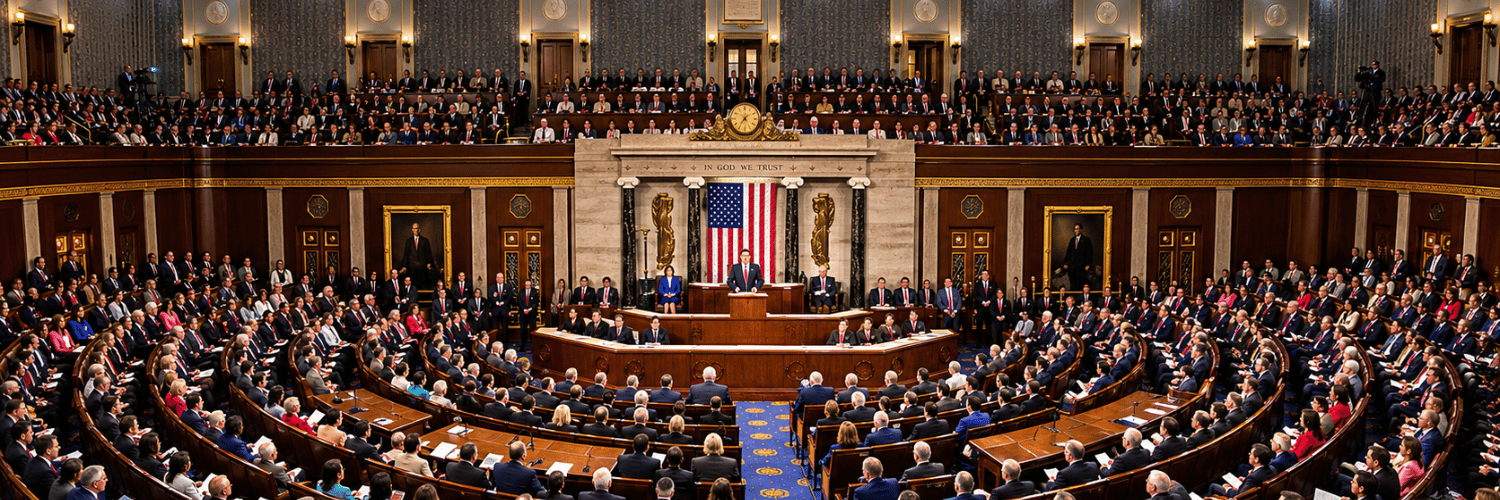
The United States held its midterm elections on November 3, known as midterms. An electoral event held every four years, halfway through the presidential term, which can alter the country’s political balance. Although the president is not on the ballot, the result determines who controls Congress and, therefore, who has the ability to promote, amend or block a large part of the legislation. But how does this system work, and what is really at stake?
In the United States, the president is elected for four years, but citizens vote for their representatives in Congress every two years. When these elections coincide with the halfway point of the presidential term, they are called midterms.
The reason is one of the fundamental principles of American democracy: power cannot be concentrated in a single institution. The Constitution divides responsibilities among three branches of government: the president, who heads the executive branch; Congress, which passes laws; and the courts, which interpret legislation and review its constitutionality. In this way, citizens can renew the legislative branch without having to wait for the next presidential election.
What exactly is being elected?
Congress of the Unit States of America consists of two chambers with different electoral systems.
- The House of Representatives has 435 voting seats. All are renewed every two years and distributed among the states according to their population. That is why more populous states have more representatives.
- The Senate has 100 members, two from each state, regardless of population. Senators serve six-year terms, and approximately one-third of the seats are renewed every two years.
In these 2026 elections, all 435 seats in the House of Representatives and 35 seats in the Senate were at stake, including two special elections. In addition, many states held elections to choose governors, members of state legislatures and other public officials. Therefore, the midterms are not a single vote, but a series of elections that redistribute political power at different levels.
What is at stake if the president remains in office?
Here lies the key to understanding the importance of these elections: winning the presidency does not mean controlling all the country’s decisions. The president can direct foreign policy, lead the government and exercise executive powers. But to pass new laws, change taxes or authorise public spending, the president needs Congress to take part.
Imagine that the White House wants to introduce tax reform. The president can support it, but the proposed legislation must go through the legislative process. If there is not enough parliamentary support, the reform may be blocked or have to be negotiated.
The House of Representatives can also initiate investigations into the Administration. The Senate, for its part, has decisive powers in confirming federal judges and senior officials. This mechanism is known as checks and balances. Its purpose is to prevent a single institution from governing without oversight.
Why do they also affect us in Europe?
American politics has consequences far beyond its borders. Washington’s budgetary, fiscal and legislative decisions influence an economy that carries decisive weight in global markets.
Congress is involved in matters such as federal funding, fiscal policy and the approval of certain trade measures. These decisions can affect businesses, investors and economic relations with Europe.
That is why understanding the midterms also helps us interpret debates about US public debt, federal spending and the United States’ economic priorities. Ultimately, midterm elections remind us that a president’s power depends not only on who occupies the White House, but also on who passes laws on Capitol Hill.
And this is the great distinguishing feature of the American system: citizens can change the institutional balance without changing the head of the executive branch. Understand how international political and economic decisions can influence markets, finances and our savings.
Protecting savings with physical gold has been one of 11Onze’s greatest contributions to its community, and its range of products continues to expand. In today’s environment of market volatility, persistently high inflation and growing distrust in the banking system, gold is once again strengthening its role as a safe-haven asset. Discover Or Llavor at Preciosos 11Onze.


 Equip Editorial

