
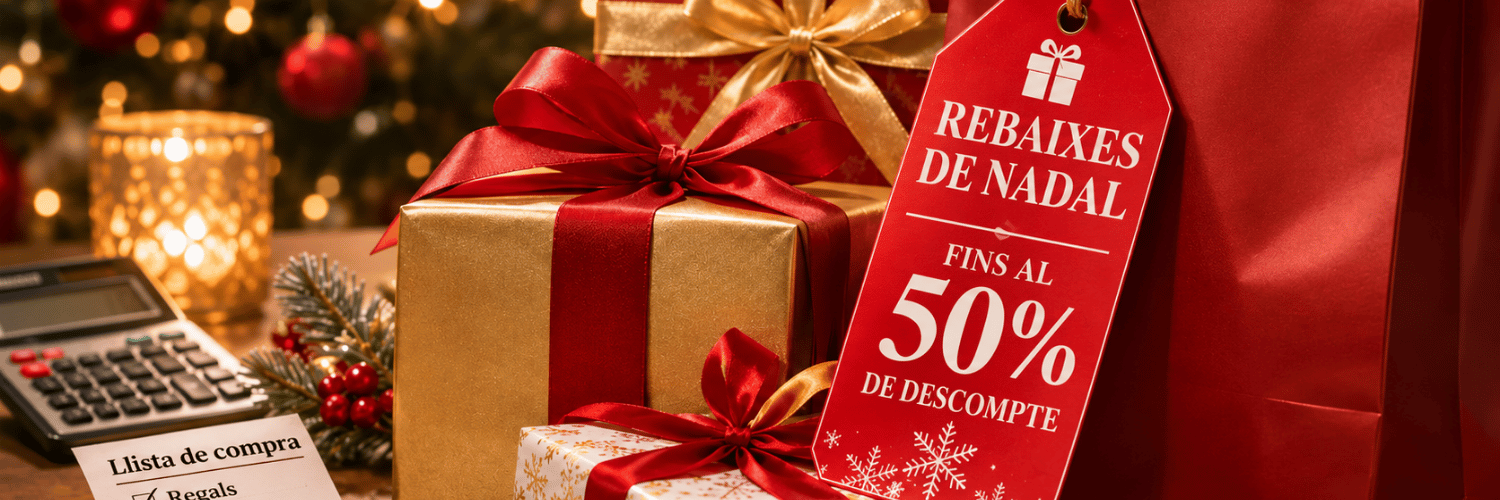
When Christmas is still weeks away, shop windows are already filled with promotions and discounts. Brands invite us to bring our shopping forward with the promise of saving money and avoiding the December rush. But is buying earlier really cheaper? The answer depends less on the calendar than on our ability to distinguish a good deal from an impulse purchase.
Christmas starts earlier and earlier. Years ago, Christmas shopping was concentrated in December. Today, commercial campaigns begin much earlier. Black Friday, which this year falls on 27 November, has become one of the major shopping events.
For retailers, bringing promotions forward makes it possible to extend the sales season. For consumers, it represents an opportunity to spread out expenses and find certain products at better prices.
However, there is an important difference between buying in advance and buying because an offer seems irresistible. The fact that a product is discounted does not necessarily mean that it is a bargain.
Discounts are not always what they seem
The figures give us reason to be sceptical of large discount percentages. According to a study by the Organisation of Consumers and Users (OCU) on Black Friday 2025, 37% of the products analysed had increased in price compared with previous months, 35% had fallen in price and 28% had remained unchanged.
The organisation also found that only 9% of the items studied showed a genuinely significant reduction compared with the lowest price recorded during the monitoring period. The analysis focused mainly on technology and household appliances, so its findings cannot be extrapolated to all Christmas gifts.
The lesson, however, is clear: to know whether we are saving money, we must compare the current price with the usual price, not with the one advertised on the label.
Headphones costing €80 may seem like a bargain if the retailer claims they previously cost €120. But if they were selling for €75 in October, the discount loses all its appeal.
When buying in November really pays off
Bringing purchases forward can be a good decision when we are looking for highly sought-after toys, limited-edition products or personalised gifts. In these cases, waiting until December may lead to stock shortages, longer delivery times or urgent shipping costs.
It can also help spread the Christmas budget between November and December. This does not automatically reduce spending, but it avoids concentrating all payments into just a few weeks.
On the other hand, if we want to buy a product that is easy to find throughout the year, there is not always a reason to rush. The price may remain stable or even improve later.
That is why, before buying, it is worth asking ourselves two questions: Do we really need this product? And is its current price better than it was a few weeks ago?
The final price also matters
An attractive offer may cease to be so when we add shipping costs or discover that the return conditions are unfavourable.
For distance purchases within the European Union, consumers generally have 14 days to withdraw from a purchase, although there are exceptions, such as certain personalised products. If we buy a gift in November, this period may have expired by the time Christmas arrives.
It is also worth remembering that Spanish legislation requires retailers, when announcing a price reduction, to use the lowest price applied during the previous 30 days as a reference, subject to the exceptions provided for by law. Knowing these rights helps us shop more carefully and avoid surprises.
The best savings start with a budget
Commercial campaigns play on a sense of urgency: limited-time offers, countdowns and messages that make us fear missing an opportunity. But buying something we had not planned to purchase is not saving money, even if it has a 50% discount.
Imagine a family that allocates €400 to Christmas presents. If they manage to buy the same products for €340, they will have saved €60. If, on the other hand, they take advantage of promotions to add unnecessary gifts and end up spending €450, the supposed bargains will have made Christmas more expensive.
The difference is not when we shop, but whether we stick to the budget and the needs we had defined.
Buying earlier is not the secret. Buying better is.
November can be a good time to prepare Christmas gifts, but it offers no guarantee of savings. Promotions can help us spend less or push us to consume more than planned.
The best strategy is simple: plan the gifts, set a spending limit, compare prices and buy only when the offer is genuinely worthwhile. Because the best gift for our finances is not finding the most spectacular discount, but reaching January without having compromised the family budget.
Protecting savings with physical gold has been one of 11Onze’s greatest contributions to its community, and its range of products continues to expand. In today’s environment of market volatility, persistently high inflation and growing distrust in the banking system, gold is once again strengthening its role as a safe-haven asset. Discover Or Llavor at Preciosos 11Onze.



 Equip Editorial

