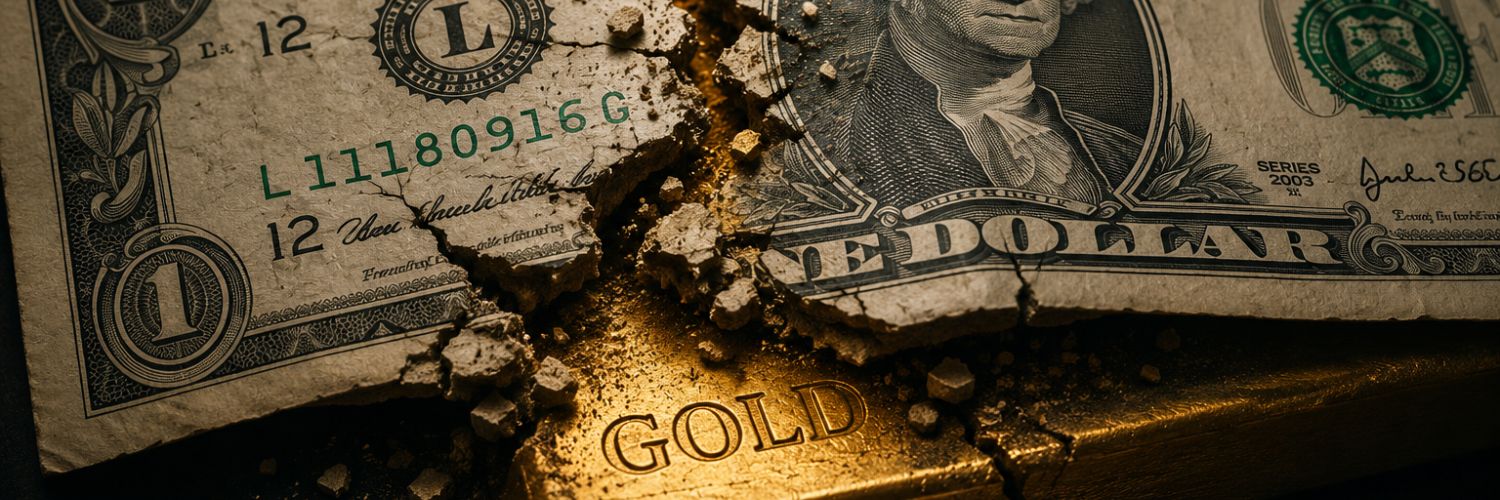
For years, talking about de-dollarisation, the return of gold or the decline of the Western monetary order seemed like an extravagance. A subject reserved for heterodox economists, geopolitical analysts or investors obsessed with systemic crises. Meanwhile, the dominant narrative repeated that the dollar was impregnable, that central banks had everything under control and that gold was little more than a relic of the past.
But history has a persistent habit: it always returns. And now, even the major international financial institutions are beginning to verbalise what was already visible to any attentive observer of the foundations of the global monetary system. The recent report by the Deutsche Bank Research Institute is not just another financial analysis. It is the recognition that the world is entering a new monetary, geopolitical and economic stage.
At 11Onze, we have been explaining this transformation for some time. Because this is not just about gold. It is about trust. It is about power. It is about monetary sovereignty. And it is, above all, about understanding the world before the official narrative admits that it has already changed.
The End of the Unipolar World
After the fall of the Berlin Wall, the West lived through an exceptional period. The United States became the undisputed power on the planet and the dollar consolidated itself as the backbone of global trade, international reserves and financial markets. The system worked because the world trusted the US.
Central banks accumulated dollars and US Treasury bonds. Exporting countries recycled their surpluses by buying American debt. And international trade moved within an architecture dominated by Western institutions such as the IMF, the World Bank or SWIFT.
At 11Onze, we were already explaining years ago that this architecture was beginning to show cracks. More and more countries were seeking to reduce their dependence on the dollar in the face of economic sanctions, the weaponisation of the financial system and the uncontrolled expansion of US debt. Today, that process is impossible to ignore.
The dollar’s share of global reserves has been gradually declining, while central bank gold purchases have accelerated. The freezing of Russian reserves after the war in Ukraine acted as a psychological turning point: many countries understood that their dollar-denominated assets could become political instruments. When money ceases to be neutral, states look for alternatives. And gold inevitably returns to the centre of the system.
The Silent Return of Gold
For decades, the modern financial system tried to relegate gold to a secondary role. But central banks never stopped considering it a strategic asset. The difference is that now they no longer hide it. At 11Onze, we have been explaining for years that gold is much more than a precious metal: it is a monetary asset with no counterparty risk, physically limited and impossible to print by political decision.
In a world of chronic fiscal deficits, permanent monetary expansion and structural inflation, central banks are recovering an instinct that has accompanied humanity for millennia: accumulating real assets. Gold purchases by emerging economies are not the result of short-term speculation, but of a structural trend. The major institutional players are preparing for a more fragmented, less stable and far more multipolar world.
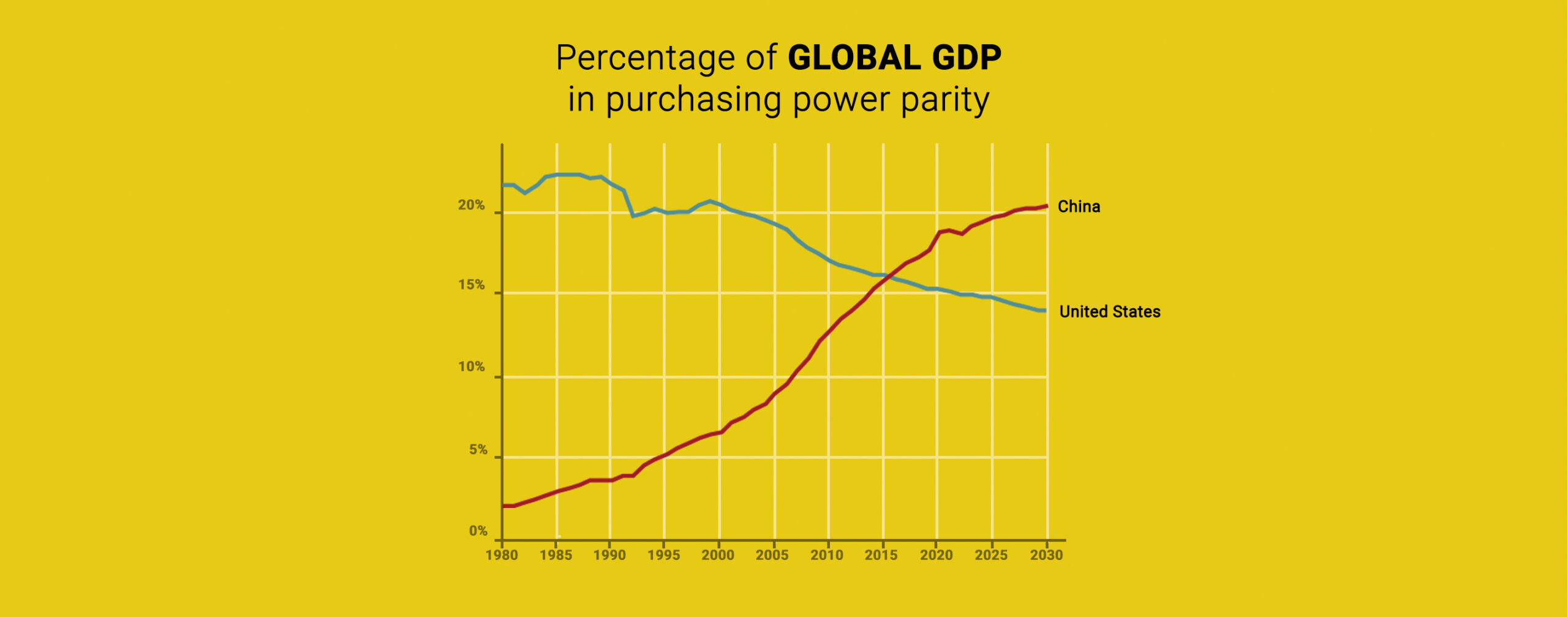
Source. FMI
China Is No Longer the Future. It Is the Present.
This snapshot becomes one of the most significant economic images of recent years, because it shows us how China already represents close to 20% of global GDP in purchasing power parity, far surpassing the United States. This is not a simple statistical detail. It is the reflection of a historic shift in the world’s economic centre of gravity.
For two centuries, the West has dominated industry, finance, technology, maritime trade and the international monetary architecture. Now, for the first time in generations, a world is emerging in which that dominance is no longer absolute. And this has inevitable monetary consequences, because the international monetary system always ends up reflecting the real distribution of economic and productive power.
The current crisis is not only financial. It is, above all, a crisis of trust. Central banks have multiplied their balance sheets, governments have driven deficits upwards, inflation has reduced purchasing power and citizens are realising that working more does not always mean preserving more wealth. In this context, the major banks are not anticipating the future when they talk about the return of gold or de-dollarisation: they are simply adapting their discourse to a reality that is already too evident to continue ignoring.
And this is where a community like 11Onze adds value, because financial sovereignty does not consist only of buying an asset or protecting wealth, but of understanding the structural movements of the world before they become media consensus. The twenty-first century will not resemble the end of the twentieth century. The unipolar world is running out of steam, blind trust in fiat money is weakening and the new monetary architecture is already under way. The question is not whether the world will change. The question is who will be prepared to understand it before everyone else.
Protecting savings with physical gold has been one of 11Onze’s main contributions to its community and, now, the range of products is being expanded. That is why, in the face of volatility, still-high inflation and the growing crisis of confidence in the banking system, gold is once again strengthening as a safe-haven asset. Discover Gold Seed at Preciosos 11Onze.
If you would like to learn more about this topic, we recommend:
 Economy
The current state of the extractive system
5 min readAs with the resolution of past conflicts, the meeting of...


 Equip Editorial