
When gold and the stock market rise at the same time, something big is brewing. The ‘smart money’ has already moved, and the market is much more fragile than it appears. Gold is the refuge of fear. Stocks are the reflection of optimism. That is why, when both assets rise at the same time, analysts sound the alarm. Historically, this combination is rare and usually precedes moments of great volatility in the markets. And this is exactly what is happening now.
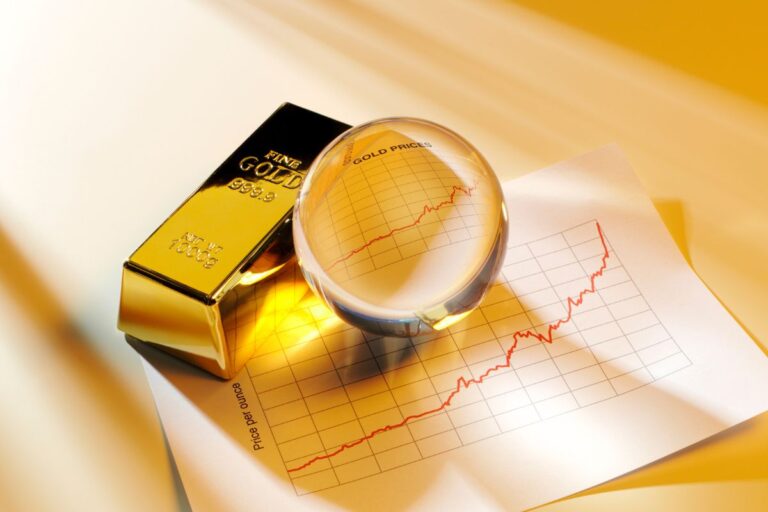
This autumn of 2025, both the price of gold and the major stock market indices — S&P 500, Nasdaq and Euro Stoxx — have simultaneously reached historic highs. According to data from the World Gold Council, gold is now trading at $3,380 per ounce, with a 20% increase in value in less than two months.
Meanwhile, stocks continue to set records, despite persistent inflation and still-high interest rates. It is a complete contradiction that the asset of fear and the asset of hope are both pointing upwards at the same time. This phenomenon is not unprecedented. In 2020, a few months before the outbreak of the pandemic, the same combination occurred: gold and the stock market at record highs. Shortly afterwards, the market crashed. History may not repeat itself exactly, but it often rhymes.
When gold rises, something is brewing
From May to August, the price of gold had remained stable, almost dormant. But at the end of the summer, something happened. In just a few days, the precious metal began a vertical climb, rising 20% in less than eight weeks. A movement of this magnitude cannot be explained solely by inflation or interest rates. There is something deeper behind it.
According to Bloomberg Markets, gold purchases by institutional investors—pension funds, insurance companies and central banks—increased by 35% in the third quarter of the year. The World Gold Council confirms that between July and September, central banks added more than 300 tonnes of gold to their reserves.
In total, they have now accumulated more than 1,100 tonnes in twelve months, the highest figure recorded since the end of the gold standard. These data show that the movement is not accidental: the major players in the system are protecting themselves.
The smart money has already left
When small investors buy with euphoria, large investors tend to do the opposite. This is one of the unwritten laws of the markets. And if we want to know what the ‘smart money’ — large institutional capital, such as pension funds, hedge funds, sovereign wealth funds, insurance companies, global investment funds and central banks — is doing, we need to look at an indicator called DIX or ‘Dark Index’. Developed by SqueezeMetrics, the DIX measures the flow of purchases and sales in dark pools, private markets where large transactions are carried out away from the public eye.
What the data shows is disturbing. While the S&P 500 was breaking records at the end of August, the DIX plummeted to its lowest levels of the year. This means that while the public was eagerly buying shares, large investors were quietly selling. Money was leaving the stock market to seek refuge elsewhere. And the dates do not lie: just as the DIX falls, the price of gold takes off.
According to J.P. Morgan Asset Management’s quarterly report, during this period institutional funds reduced their exposure to equities by 12% and increased their position in physical gold and gold-backed ETFs by 18%. In other words, smart money has left the party while the others are still dancing.
A hypersensitive market full of gunpowder
The second key indicator is GEX, or ‘Gamma Exposure’, which measures the market’s sensitivity to small price changes. When GEX is very high, any news can cause exaggerated movements — up or down.
And right now, according to SpotGamma, the global GEX is one of the highest since 2022. This means that the market is in a state of extreme tension, like a house of cards about to collapse. The combination of a very low DIX — institutional money flowing out — and a very high GEX — a nervous market — is explosive. Historically, this pattern has preceded major corrections. It occurs when the market seems stronger than ever… just before the shake-up.
Central banks make their move
The shift towards gold is not limited to private investors. Central banks have become major net buyers of gold in recent years. For example, China, Russia, Turkey and India are leading this paradigm shift, with steady monthly purchases in a clear strategy to reduce their dependence on the dollar and strengthen their monetary sovereignty.
Gold is once again establishing itself as the universally trusted asset when fiat currencies such as the dollar or the euro lose credibility. This trend also reflects a geopolitical message. According to the IMF, the dollar’s share of global reserves has fallen from 71% in 1999 to 58% today, while gold reserves have increased to represent nearly 20% of the world total.
The world is gradually de-dollarising, with gold playing a leading role in this new monetary era.
J.P. Morgan has already shown its hand
Among the major financial institutions, some have already hinted at how they interpret this situation. According to internal documents leaked by Market Watch, J.P. Morgan has bet that the market will fall to 5,310 points, placing its optimal profit point in a clearly bearish scenario.
This is a diplomatic way of saying that the bank does not expect further rises and believes that the risk outweighs the reward.
Marko Kolanovic, the bank’s chief strategist, put it clearly in his latest quarterly report: ‘Markets are more vulnerable than the indices show. The risk of a sudden correction is high, and institutional investors are repositioning themselves in safe assets such as gold or sovereign bonds.’
The market bluff
If we put all the pieces together, the story is clear. Smart money has quietly sold shares, taken refuge in gold and left a market full of small, euphoric and exposed investors. This is what many call ‘the market bluff’: a seemingly solid rise, but with no real support behind it.
When the big players have left, the party is kept alive only by the inertia of the latecomers. And when the first of them turns off the lights, those who left earlier come back to buy at bargain prices. It is a repetitive game, well known and yet eternally effective. Markets, in the end, are a reflection of human behaviour: fear and greed alternating like the seasons.
With volatility indicators high, central banks accumulating gold and large investors out of the stock market, the stage seems set for a sharp turn. The real question is no longer whether something will happen, but what will light the fuse. It could be a geopolitical crisis, a bank in distress, or an unexpected election result. But the ground is dry and full of gunpowder. Gold does not lie. When the most prudent money returns, it is because something is coming. And as always, when the markets seem calmest, that is when it is necessary to be most vigilant.
If you want to discover the best option to protect your savings, enter Preciosos 11Onze. We will help you buy at the best price the safe-haven asset par excellence: physical gold.

 Equip Editorial