
When Howard Carter opened the tomb of Tutankhamun in November 1922, he was left speechless. Before him lay a treasure that had remained hidden for more than three thousand years: statues, jewellery, ornaments and the iconic funerary mask of the young pharaoh. Time had taken its toll on the wood, textiles and other materials, yet one element seemed to have completely ignored the passing of the centuries. Gold still shone almost exactly as it had on the day Egyptian craftsmen had worked it.
That scene captures the true nature of this metal better than any other. While almost every material we know ages, deteriorates or reacts with its surroundings, gold seems to defy time itself. It is no coincidence that every great civilisation associated it with immortality, power or divinity. Without realising it, they had identified one of the most extraordinary materials found in nature. The king of metals has countless applications, which we will explore throughout this article, and it can also help grow your savings through Or Llavor.
For thousands of years, gold has been associated with wealth. Today, it still occupies a prominent place in the reserves of central banks and in the portfolios of many investors. Yet reducing gold to a financial asset tells only a small part of its story.
Its true uniqueness is scientific.
Gold is one of the very few materials capable of combining near-perfect chemical stability with outstanding electrical conductivity, extraordinary flexibility and remarkable durability, making it indispensable for everything from smartphones to the most sophisticated space telescope ever built.
In other words, nature created a metal so perfectly engineered that, after millennia of technological progress, we still have not found another material capable of replacing it completely.
Gold at a glance
Before understanding why gold is so extraordinary, it is worth getting to know its “id card“.
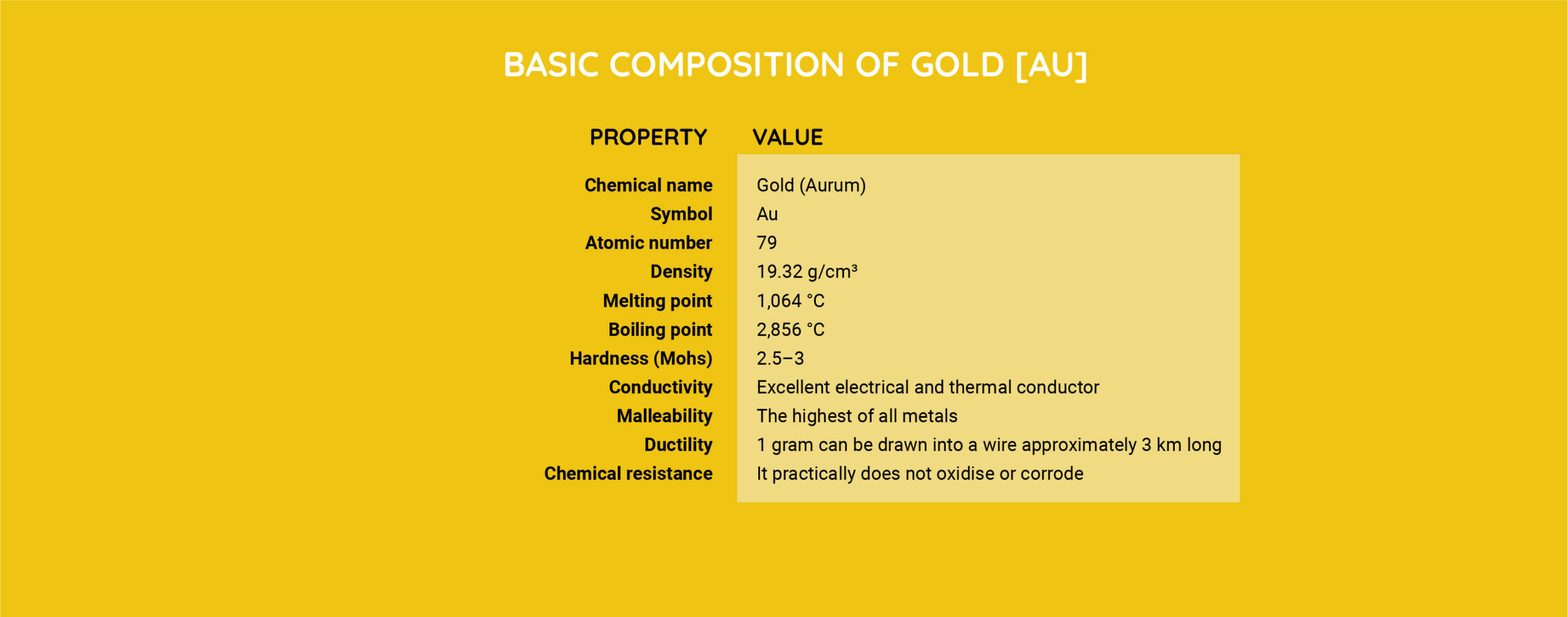
No other metal combines all these characteristics at the same time. Some conduct electricity more efficiently. Others are lighter or stronger. But only gold achieves such an extraordinary balance.
The metal that seems immune to time
Iron rusts. Copper develops a green patina. Silver tarnishes over the years. Every metal wages a constant battle against its environment. Gold, by contrast, barely takes part in that battle.
Its atoms have such a stable electronic configuration that they react very little with oxygen, moisture or most of the chemical substances found in nature. As a result, a gold jewel buried for centuries can emerge from the ground with an astonishing shine, requiring little more than a simple cleaning.
This exceptional stability is precisely why gold objects have survived the passage of time in such remarkable condition. Many artefacts discovered at archaeological sites are thousands of years old and yet still look much as they did when they were first created.
This characteristic is so unusual that, for centuries, alchemists regarded gold as the perfect metal. They were not entirely wrong.
The liquid that defies the king of metals
Very few substances are capable of attacking gold chemically. The best known is “aqua regia”, a mixture of nitric acid and hydrochloric acid.
Its name is no coincidence. Alchemists called it “royal water” because it was the only known liquid capable of dissolving what they considered to be the king of metals.
The same principle is still used today in laboratories and in certain refining processes.
The metal that can be shaped like no other
If gold’s chemical resistance is remarkable, its physical properties are even more astonishing. Gold is the most malleable metal known. A small ingot can be hammered over and over again until it becomes an almost unimaginably thin sheet. The famous gold leaf, used to decorate altarpieces, domes, sculptures and historic buildings, can be as thin as 0.0001 millimetres. To put that into perspective, it is about one hundred times thinner than a human hair. When artisans apply these sheets to a surface, they are almost literally working with a film of atoms.
Its ductility is equally extraordinary. Just one can be drawn into a continuous wire almost three kilometres long without breaking. This unique combination of flexibility and strength explains why gold has been prized by goldsmiths for more than five thousand years and why it remains so valuable in modern industry.
An almost unbelievable fact
When gold leaf becomes extraordinarily thin, it ceases to be completely opaque. Light begins to pass through it, giving it a faint greenish tint. It is hard to imagine a metal behaving almost like glass, yet gold once again proves that it is a material full of exceptions.
The Colour Only Einstein Could Explain
One question puzzled scientists for centuries. Why is gold yellow? Most metals appear silver or grey because they reflect almost all wavelengths of visible light in much the same way. Gold behaves differently: it absorbs much of the blue light while reflecting yellow and reddish wavelengths more strongly.
Surprisingly, the answer does not lie in classical chemistry. The electrons in gold atoms move at such high speeds that relativistic effects, described by Albert Einstein, come into play. These effects subtly alter the energy levels of the electrons and, consequently, the way the metal interacts with light. Put simply, gold is yellow because of the theory of relativity.
It is one of the very few everyday objects whose colour can only be explained by a theory we usually associate with black holes and distant galaxies.
A mine… inside your drawer
You probably own more gold than you realise. Every smartphone contains tiny amounts of this metal in its microprocessors, connectors and electronic circuits. It is also found in computers, tablets, televisions, game consoles, internet servers and a wide range of modern medical equipment.
The quantity is extremely small—often just a few dozen milligrams per device—but enough to ensure that these electrical contacts continue to function for years without oxidising or losing conductivity.
This has led to a fascinating fact that sounds almost unbelievable: one tonne of recycled mobile phones can contain more gold than one tonne of ore extracted from certain gold mines. That is why experts no longer speak only about underground mining. They also talk about urban mining, the process of recovering valuable metals hidden inside the electronic devices we no longer use. Every forgotten mobile phone lying in a drawer is, in reality, a small reserve of one of the world’s most valuable and useful materials.
From your phone… to the stars
Gold’s unique properties are not only useful here on Earth. They have also proved essential for exploring space. When an astronaut steps outside the International Space Station, they face some of the harshest conditions imaginable. Without Earth’s atmosphere, solar radiation is far more intense, and temperatures can fluctuate by hundreds of degrees within minutes. That is why the visors of space helmets are coated with an ultra-thin layer of gold that is almost invisible. Its purpose is to reflect much of the Sun’s infrared radiation, reducing heat build-up inside the helmet while protecting the astronaut’s eyes from the intense sunlight.
The same principle applies to satellites. Many are equipped with gold-coated components that shield highly sensitive electronic systems. In orbit, the same surface can exceed 120 °C (248 °F) in direct sunlight and drop below -150 °C (-238 °F) when passing into Earth’s shadow. Gold’s ability to reflect heat helps keep these systems operating within safe temperature limits.
One of the most remarkable examples is the James Webb Space Telescope. Its eighteen hexagonal mirrors are coated with a layer of gold only a few hundredths of a micron thick. So thin, in fact, that all the gold used on the telescope weighs less than a golf ball.
The coating was not chosen because of its monetary value, but because gold is the material that reflects infrared radiation most efficiently. Thanks to this property, the James Webb Telescope can observe galaxies that formed only a few hundred million years after the Big Bang.
The metal that lives in harmony with the human body
Few people associate gold with medicine. Yet it is one of the materials most highly valued by researchers and medical device manufacturers. Once again, the key lies in its extraordinary stability.
Gold is biocompatible, meaning it coexists exceptionally well with human tissue. Because it is almost chemically inert, it is highly unlikely to cause inflammation, corrosion or allergic reactions. This is one of the reasons it has been used for decades in applications where long-term reliability is essential. For many years, gold alloys were commonly used in dental crowns and prosthetics. Gold is also found in pacemakers, certain implants and a variety of electronic medical devices designed to remain inside the human body for many years.
But the future looks even more promising. Nanotechnology has opened the door to using gold particles thousands of times smaller than the width of a human hair. These nanoparticles can act as microscopic delivery vehicles, transporting medicines directly to specific cells while reducing unwanted side effects.
Researchers are also investigating their use in early diagnostic systems and innovative treatments for several forms of cancer. It is remarkable to think that the same metal that once adorned the tombs of the pharaohs is now helping shape the future of medicine.
A metal that rarely causes allergies
Many people are allergic to nickel, chromium or other metals commonly found in jewellery and medical implants. High-purity gold, however, has an extremely low incidence of allergic reactions. This is one of its greatest advantages when manufacturing devices intended to remain in contact with the human body for many years.
Gold is so chemically stable that it can even be used in food. The food additive E175 refers to edible gold, which is used to decorate chocolates, desserts, liqueurs, sparkling wines and fine dining creations. It has no flavour and no nutritional value. Its purpose is purely decorative.
What does 18-carat gold actually mean?
One of the most common misconceptions is that carats indicate the quality of a piece of jewellery. In reality, they indicate its purity. The system divides the alloy into twenty-four parts. If all twenty-four parts are gold, it is 24-carat gold. If only eighteen parts are gold and the remainder consists of other metals, it is 18-carat gold.
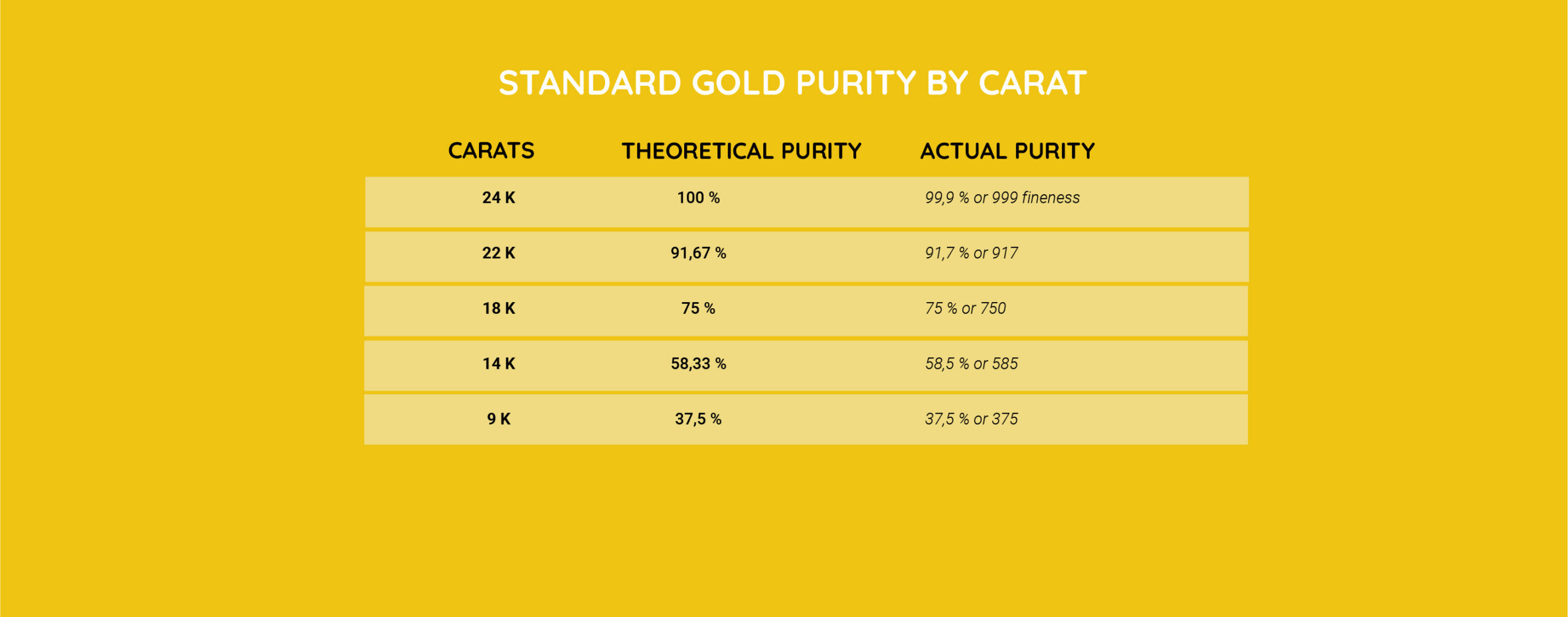
Pure gold is extraordinarily soft. A wedding ring made from 24-carat gold would scratch very easily. That is why most jewellery is made from 18-carat gold alloys, which retain gold’s characteristic colour while offering much greater durability for everyday wear.
The metal that never disappears
There is one fact that perhaps best captures the uniqueness of gold. Virtually all the gold ever mined throughout human history still exists today. Unlike oil, coal or natural gas, gold is never consumed. It is melted down, recycled and reshaped over and over again without losing any of its properties.
A Roman coin may have been transformed into a medieval chalice. Centuries later, that same chalice could have become a piece of jewellery, then an electronic component and, perhaps one day, part of a satellite. The objects change. The atoms remain exactly the same.
Experts estimate that humanity has mined approximately 216,000 tonnes of gold throughout history. That may sound like an enormous quantity. Yet if all that gold were gathered into a single block, it would form a cube measuring just 22 metres (72 feet) on each side—roughly the height of a seven-storey building.
Every piece of gold ever owned by pharaohs, Roman emperors, medieval kings, central banks and modern industry would fit inside a single building.
Where does all that gold go?
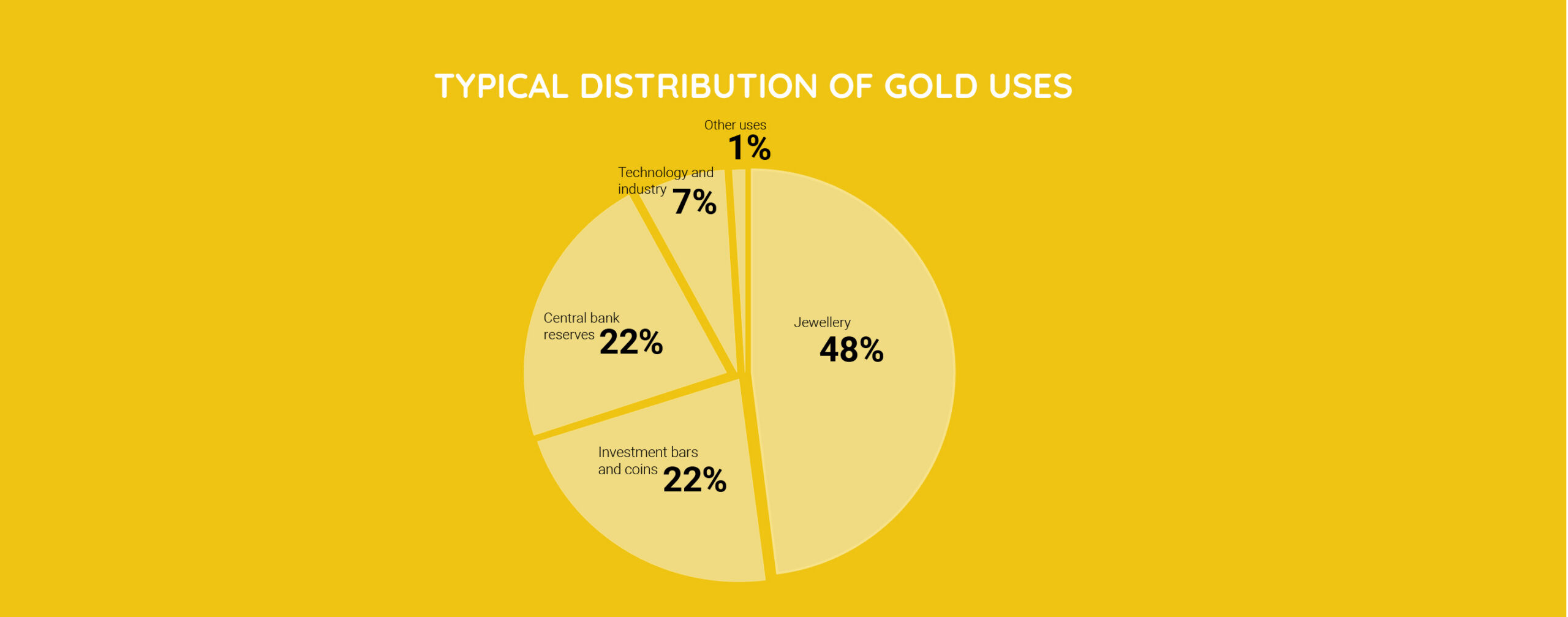
It is striking that only a small proportion ends up in industry. Yet that small fraction is essential for manufacturing computers, satellites, medical equipment, telecommunications systems and countless technologies without which modern life would be unimaginable.
A gift forged before the earth existed
Gold’s story does not begin in a mine. It does not even begin on Earth.
Scientists believe that most of the gold in the universe was created during some of the most violent events known to physics: supernova explosions and, above all, collisions between neutron stars.
When these incredibly dense objects collide, they release colossal amounts of energy capable of creating heavy elements such as gold, platinum and uranium. Those newly formed atoms are scattered through space and, over millions of years, become part of new stars, planets and solar systems. Among that cloud of matter were the atoms that would eventually become part of the Earth. And, much later still, a wedding ring, a microchip, a satellite or a space telescope.
It is an extraordinary thought. The gold atoms we hold between our fingers today are older than our planet. They have survived stellar explosions, the birth of the Solar System, the emergence of life and the entire history of humankind.
Perhaps that is gold’s greatest value. Not because it is rare. Not because it is beautiful. Not even because it serves as a financial safe haven. Gold is unique because it embodies an almost unparalleled combination of properties that nature perfected long before humans ever existed. A metal that continues to shine after thousands of years, enables some of the world’s most advanced technologies and reminds us that even the most ordinary objects can contain a story that began far beyond our own planet.
The next time you look at a piece of gold jewellery, you may no longer see only a precious metal. You may see a fragment of a star that died billions of years ago and, after an unimaginable journey across the cosmos, finally found its way into your hands.
Protecting savings with physical gold has been one of 11Onze’s greatest contributions to its community, and its range of products continues to expand. In today’s environment of market volatility, persistently high inflation and growing distrust in the banking system, gold is once again strengthening its role as a safe-haven asset. Discover Or Llavor at Preciosos 11Onze.


 Equip Editorial