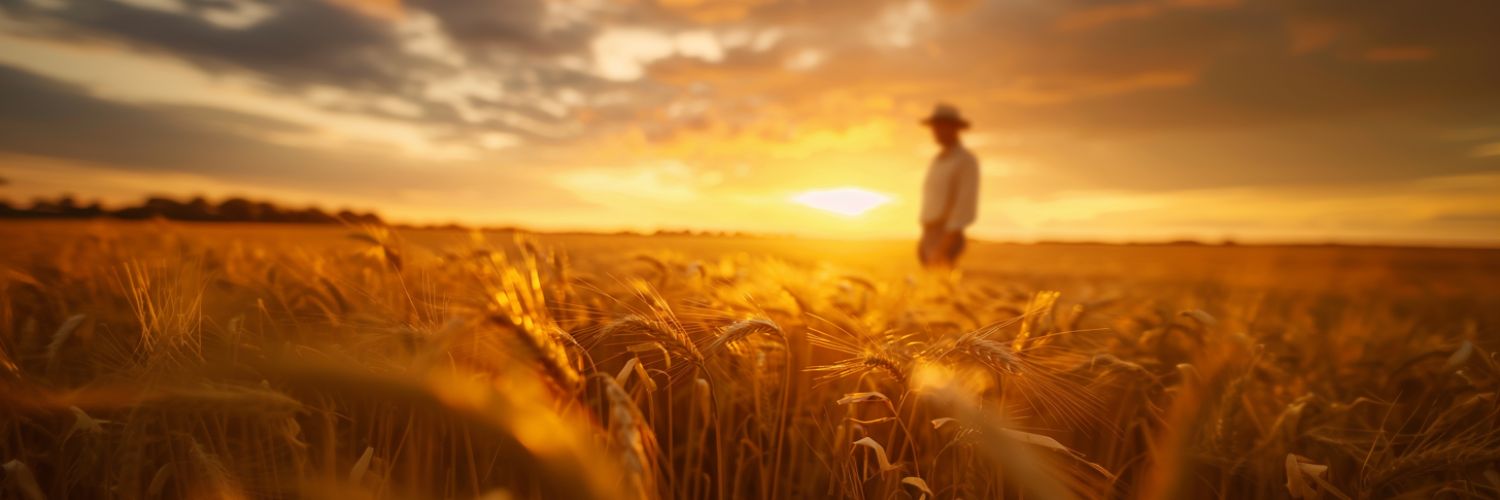
There is an uncomfortable question that Catalonia and Europe have avoided for far too long: what happens when a country still has money but no longer controls what it eats? The answer is simple and brutal. Sovereignty becomes an illusion. That is why, when at 11Onze we argue that one must think like the governor of one’s own central bank, we are not talking only about gold. We are also talking about food. About what cannot be printed. About what sustains life when global supply chains fail, prices surge, or politics turns its back on the territory.
For years, the primary sector has been treated as a romantic relic. As if farmers were a memory of the past rather than a critical infrastructure of the present. But reality has become stubborn. Food inflation, drought, external dependence, the aging of the countryside and agricultural protests across Europe have reminded us of a basic truth: without farmers there is no food security, and without food security there is no economic or political stability.
Catalonia is experiencing this firsthand. According to Idescat, the number of agricultural holdings fell from 54,972 in 2020 to 48,725 in 2023. It is a very rapid decline in a very short time. At the same time, the utilized agricultural area has also decreased. We are not speaking merely of a statistical change. We are speaking of productive capacity disappearing, knowledge being lost, and territory becoming more exposed.
The most worrying fact, however, is not only how many farms close, but who remains in charge of those that survive. The Department of Agriculture itself reminds us, in the new aid rules for farm succession, that in Catalonia 40.92% of farm managers are aged 65 or older, while those under 35 represent only 4.12%. In other words: generational renewal is not a future challenge. It is a present emergency.
Farmers as collective insurance
Across Europe the picture is similar. Eurostat reports that in 2020 there were 9.1 million farms in the EU, 5.3 million fewer than in 2005. In fifteen years nearly 37% of European farms have vanished. Moreover, 57.6% of farm managers were aged 55 or older, while only 11.9% were under 40. Yes, the EU remains a major agri-food power. But it rests on an increasingly aging, concentrated and fragile base.
This deterioration is not explained by a single cause. It is the result of accumulated pressures. On the one hand, farmers have long denounced insufficient farm-gate prices, the excessive power of large retail chains, and competition from imported products that do not always comply with the same standards required here. We already warned about this at 11Onze in 2021: when producing stops being profitable, the system does not become cheaper—it is dismantled.
On the other hand, Brussels has had to admit that the protests of 2024 were no anecdote. The European Commission itself recognizes that the first year of implementation of the CAP plans coincided with the impact of the war in Ukraine, rising costs and adverse climate phenomena. For this reason, it launched simplification packages in 2024 and 2025 to reduce administrative burdens and give farmers more flexibility. When bureaucracy has to be urgently simplified, it is because it had previously become a burden.

‘Recover the ancient wisdom of saving.’
‘To grow, you have to know how to cut back.’

‘Who prepares savings, gains security.’

‘The future is built seed by seed.’

‘Green shoots signal savings.’

‘What you care for today sustains you tomorrow.’

‘Who sows with patience, reaps the future.’

‘Real value remains. The chaff flies away.’

‘Each fruit is testimony to a job well done.’
‘Time turns fruit into treasure.’
‘From the olive, the oil; From perseverance, the future.’
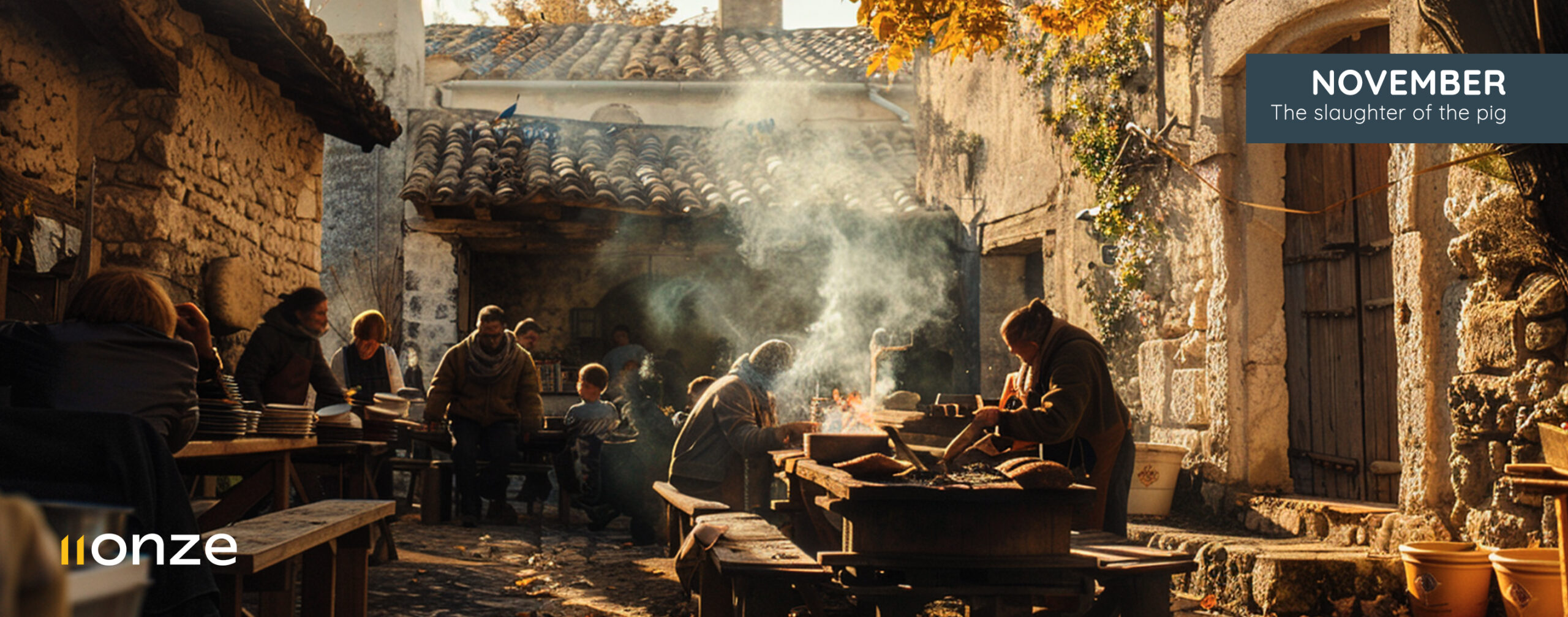
‘Those who plan ahead never go hungry.’
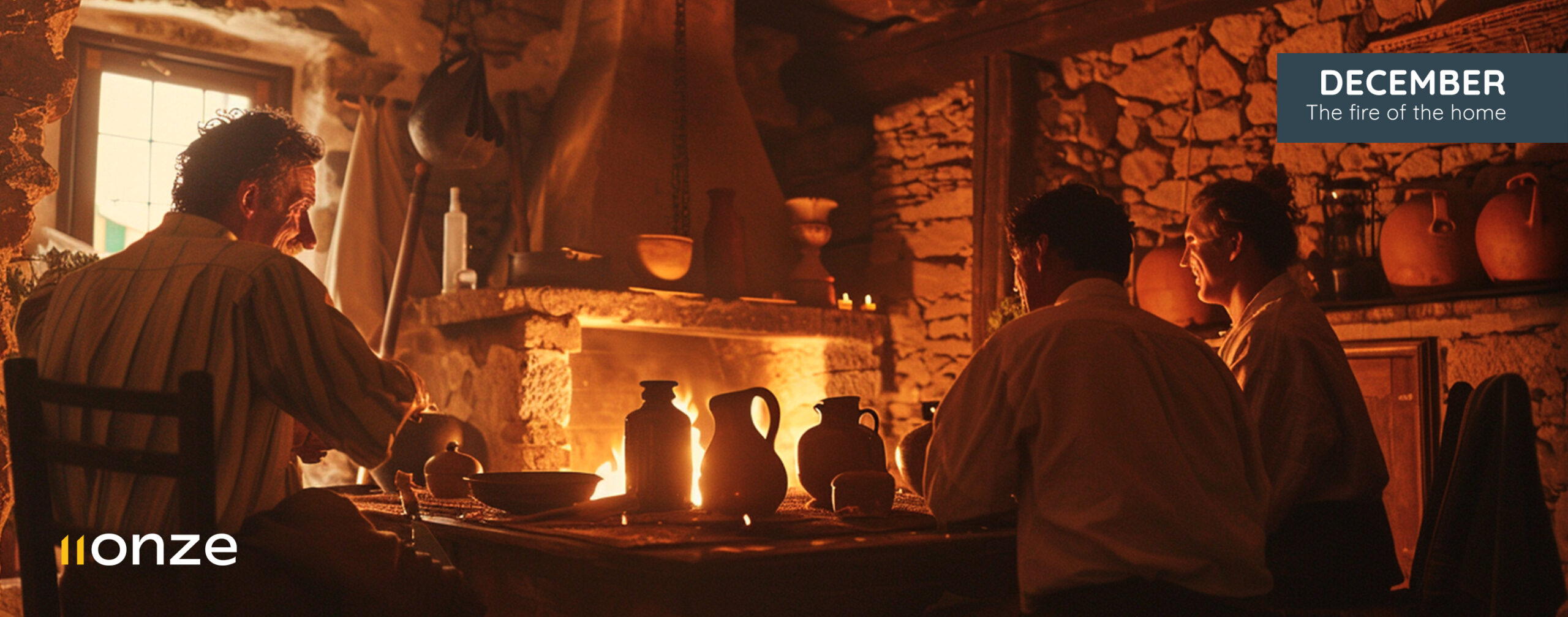
‘Winter is better spent with full reserves.’
Farmers are also strategic infrastructure
In Catalonia, drought has also acted as an accelerator of every vulnerability. The Catalan Water Agency acknowledges that the drought episode experienced between early 2021 and March 2025 has exceeded all historical records in extent, intensity and duration. This is not a meteorological detail. It is a structural shock to food production. And when water fails, much more than a harvest fails: confidence in the continuity of the system collapses.
That is why it is a mistake to think of farming only as an economic sector. Farming is also a strategic reserve. Just as gold is a monetary reserve because it preserves value outside the system of financial promises, food production is a physical reserve because it ensures access to essentials beyond the fragility of global supply chains. Gold cannot be printed. Wheat cannot either. A currency may lose credibility. A harvest, if it exists and is nearby, continues to feed.
This is the key intuition of the article about becoming the governor of your own central bank: serious wealth is not built only with numbers on a screen but with real assets. Assets without counterparty risk or with immediate utility. Gold fulfills the first function: protecting purchasing power and acting as insurance against errors in the monetary system. It is no coincidence that in 2025 global gold demand, including OTC, exceeded 5,000 tonnes for the first time, nor that central banks added another 863 tonnes. The market is saying with real money that confidence in tangible assets is increasing.
Food fulfills the second function: sustaining life and social cohesion. Without food, no economic order can stand. That is why it is so serious that Europe has tolerated for years the disappearance of millions of farms while trusting that the global market would take care of the rest. Global markets work very well until they stop working. We saw it during the pandemic. We saw it during the war. We have seen it with energy. And we will see it again with food if we continue to push farmers aside.
Why the countryside is a national insurance
Some still see support for farming as a cost. It is exactly the opposite. It is collective insurance. Having viable local farming means having greater capacity to absorb external shocks, greater control over prices and supply, more employment rooted in the territory, and greater autonomy in the face of decisions taken far from the country. The 2026 DUN is already expected to cover around 45,000 agricultural holdings in Catalonia. The figure alone indicates two things at once: the sector is still alive, but the margin to lose more productive base is increasingly narrow.
The real debate, therefore, is not agricultural. It is civilizational. Do we want to be a society that still knows how to produce what it eats, or a society that only knows how to buy it? Do we want real reserves or to continue depending exclusively on financial, logistical and political structures that we do not control? When a country abandons its farmers, it does not only lose farmers. It loses sovereignty. It loses resilience. It loses its future.
At 11Onze we are clear about this. If you want to think like the governor of your own central bank, you must understand that your security does not depend only on your bank account. It also depends on how you protect your savings with real assets such as physical gold, and on how you defend the ecosystems that make life possible, starting with farmers and food production. Because true wealth is not only about preserving value. It is about preserving the capacity to live. And that means protecting what cannot be printed: the gold that preserves wealth and the farmers who feed us.
If you want to discover the best option to protect your savings, enter Preciosos 11Onze. We will help you buy at the best price the safe-haven asset par excellence: physical gold.
If you would like to learn more about this topic, we recommend:
 Sustainability
You must become the Governor of Your Own Central Bank
6 min readIn the rarefied world of global banking regulation, a quiet...
 Equip Editorial