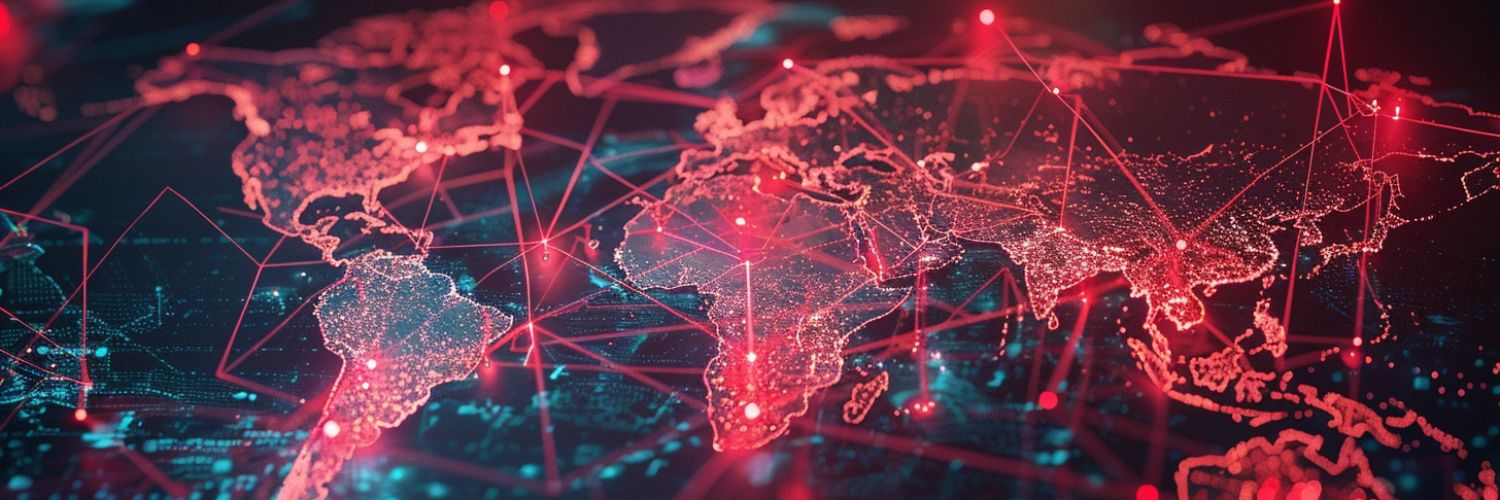
When a route breaks, the world trembles. This is not a metaphor: it is the reality of a global economy that still depends on millennia-old pathways. Global trade is not only a matter of supply and demand, but above all a matter of geography. From the caravans of the Silk Road to the large ships crossing the oceans, trade routes have been the true arteries through which the world’s wealth has flowed.
But these arteries are not infallible. When they are blocked or become unsafe, the system tightens and conflicts emerge. History demonstrates this time and again: behind many wars that appear ideological or religious lies, in reality, the need to control the flow of goods, resources, and wealth. When trade is threatened, power reacts.
The Crusades are a paradigmatic example. As historian Steven Runciman explains in his landmark work A “History of the Crusades”, these conflicts cannot be understood solely from a religious perspective, but also as a struggle for control over trade routes between East and West. And today, far from disappearing, this logic has become more sophisticated: wars are no longer fought with swords, but with tariffs, sanctions, and logistical control. The forms evolve. The battle remains the same.
The global economy has always been shaped by geography. It is no coincidence that great empires have emerged at strategic points: trade crossroads, natural ports, or mandatory transit zones. These locations not only facilitated trade but also allowed its control, becoming true centers of economic and political power.
The logic is simple: whoever controls trade flows controls wealth. Trade routes function like a circulatory system that keeps the global economic body alive. When the flow is steady, there is growth and stability; but when it breaks, tensions, shortages, and inflation arise, directly affecting both markets and daily life.
When the Silk Road breaks… the Crusades arrive
The Silk Road was the first great global system: a network connecting Asia and Europe through which goods, technology, and knowledge flowed. But this system had a structural weakness: its dependence on political stability. When balances broke in the Middle East and routes became unsafe, Europe was cut off from Eastern goods. It is in this context that the Crusades emerged, wrapped in religious discourse but with a clear economic objective: to regain control over trade flows.
Faced with this terrestrial instability, Europe chose a strategic solution: to seek alternative routes. Thus were born the great maritime explorations, turning the sea into the new Silk Road. Maritime transport offered greater capacity, lower costs, and less dependence on hostile territories, driving the rise of maritime empires. From that moment on, trade ceased to be merely exchange and became a tool of power: modern geopolitics was born.
Maritime routes: the new arteries of the world
Today, more than 80% of global trade travels by sea. Maritime routes have become the main arteries of the global economy, true invisible highways connecting continents and markets. Through these corridors flow raw materials, energy, and manufactured goods that sustain the daily functioning of the global economic system.
Some points are especially critical—true bottlenecks of global trade: the Strait of Malacca, the Suez Canal, the Strait of Hormuz, and the Panama Canal. These strategic passages concentrate a large share of global maritime traffic and, when functioning normally, allow the system to be extraordinarily efficient. But this same concentration also makes them points of vulnerability.
When one of these routes fails, the impact is immediate and global. The blockage of the Suez Canal in 2021 demonstrated this within days: supply chain delays, rising logistical costs, product shortages, and inflationary pressure. It is the clearest proof that, despite its efficiency, the system is also extremely fragile.
This fragility is not just recent history. It is present. Right now, attention is focused on the Strait of Hormuz, through which nearly 20% of the world’s oil passes. Any geopolitical tension in the area—such as threats of blockade or recurring military incidents—has an immediate impact on energy prices and, consequently, on the entire global economy. It is not just a logistical issue: it is a lever of geopolitical power capable of destabilizing entire markets within hours.
Trump’s new trade war
The so-called “Trump wars” are not an anomaly: they are the modern version of a millennia-old logic now fought with tariffs, restrictions, and pressure on supply chains. As in past eras, control over routes and trade remains a direct tool of power between states, as is also the case in modern extractive systems.
The problem is that this model operates in a context of maximum global dependency. We have built an economy based on outsourced production, global logistics, and the “just-in-time” system. It is an extraordinarily efficient model, but also deeply vulnerable: when a route breaks, the entire chain stops. There are no products, no production, and prices rise immediately.
The first impact of this disruption is always inflation. The mechanism is direct: logistical problems generate higher costs, these reduce supply, and ultimately prices increase. This is how geography—seemingly distant—ends up directly affecting everyday life. We have optimized the system for efficiency, but not for resilience, leaving us with extreme dependency and systemic fragility in which any crisis spreads like a chain reaction.
Are we returning to the logic of the Crusades?
In recent years, states have once again acted with a logic that strikingly resembles that of centuries ago. Protecting trade routes, reducing external dependencies, and securing control over strategic resources have become central priorities of economic and geopolitical policies. This is not a new phenomenon, but a return to historical patterns from the 11th century and beyond, now deployed with modern tools such as financial sanctions, technological control, and supply chain reconfiguration.
The underlying lesson is clear and persistent over time. From the Silk Road to today’s global maritime routes, history shows that whoever controls the routes controls the world. It is not ideology. It is geography. It is economy. It is power.
In a way, understanding trade routes means understanding the real functioning of the economic system, which explains why prices rise, why crises occur, and why conflicts erupt. In an increasingly tense and uncertain world, this perspective is not just general knowledge. It is a tool of defense. A way to protect your assets and make informed decisions.
Protecting savings with physical gold has been one of the main contributions of 11Onze to its community and, now, the range of products is expanding. Therefore, in the face of volatility, still high inflation and the growing crisis of confidence in the banking system, gold is once again strengthening as a safe-haven asset. Discover Seed Gold at Preciosos 11Onze.

 Oriol Garcia Farré