
Europe could once again be talking about food rationing. This is not an alarmist headline: it is a direct warning from the heart of the financial system. The question is not only whether it will happen, but what this scenario really implies. Above all, what it says about the fragility of the current economic model and our dependence on factors we do not control. And, even more importantly, what consequences it may have for the daily lives of millions of European citizens.
When Christine Lagarde speaks, markets listen. But this time the message goes beyond monetary policy. The President of the European Central Bank has opened the door to extreme measures such as food rationing if geopolitical and energy tensions persist. It is not the central scenario, but nor can it be ruled out in an increasingly volatile context.
To understand the scope of the warning, we need to look at the global context: an economy still wounded by the pandemic, strained by the war in Ukraine and subject to persistent inflation. Now, the focus is shifting towards the Middle East and critical points such as the Strait of Hormuz. If this key route is disrupted, the world could lose up to 13% of its daily oil supply, with an impact that would go far beyond fuel and end up affecting the entire economic chain.
Energy, scarcity and control: the return of an old ghost
Energy is the circulatory system of the economy. When it fails, everything is affected. It is not only a matter of fuel or electricity: it is the root of all productive activity. When energy costs rise, everything that depends on them becomes more expensive, from industry to the most basic services.
More expensive fertilizers. More expensive transport. More expensive production. The result is inevitable: more expensive food. We have already experienced this recently. After COVID and the war in Ukraine, the cost of living soared while wages lagged behind, causing a sustained loss of purchasing power. And that was in a scenario without extreme supply disruptions.
The problem is that this time it could go further. We are not only talking about inflation, but about possible physical interruptions in supply chains. When there are not enough resources for everyone, the logic of the market gives way to the political management of scarcity. And it is at this point that rationing ceases to be a memory of the past and becomes a real option.
CBDCs: the piece that fits too well
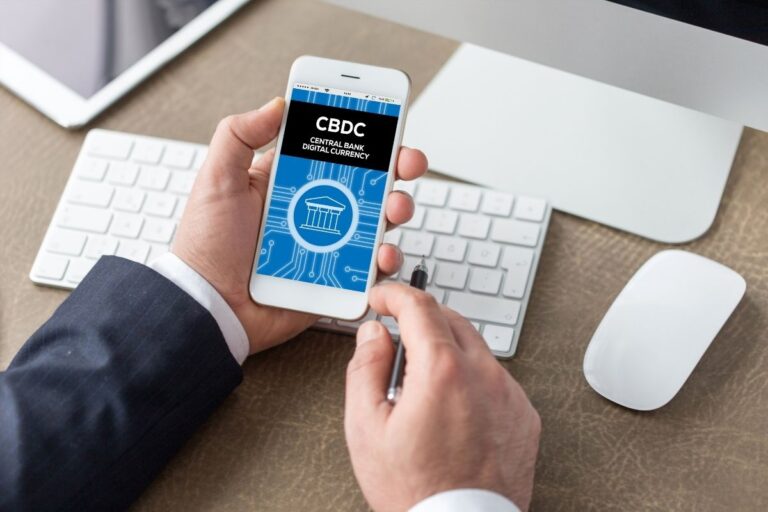
In parallel with these warnings, central banks are accelerating the rollout of digital currencies —CBDCs—. On paper, they are presented as a natural evolution of the financial system: more efficient, faster and with lower transaction costs. A logical adaptation to an increasingly digitalized economy.
But this innovation incorporates a differentiating element that cannot be ignored: control. As has been analyzed at 11Onze in several articles, CBDCs allow full traceability of transactions and open the door to mechanisms of direct supervision over citizens. It is not only a new way to pay, but a tool that could redefine the relationship between the State and money.
Unlike cash, these currencies could:
- Limit what you can buy
- Determine where you can spend
- Impose expiry dates on money
- Apply negative interest rates directly
- Block accounts in real time
In other words, a system in which economic policy ceases to be an indirect tool and begins to act in real time on citizens. Decisions are no longer limited to interest rates or taxes, but can directly affect how, when and on what money can be used. A paradigm shift that transforms economic management into a mechanism of immediate control.
Crisis and control: the logic of the system
This combination —systemic crisis and increased control— is not new. The current economic model has been built, to a large extent, on major shocks: wars, financial crises or global emergencies. These are exceptional moments that allow measures to be implemented which, under normal conditions, would generate strong social rejection.
It is what some economists —such as Naomi Klein— define as the “shock doctrine”. When fear and uncertainty dominate, the room for manoeuvre of governments expands. Citizens, seeking stability, accept profound changes that transform the rules of the economic and social game.
In parallel, pressure on the middle classes continues to grow. Inflation not only increases the cost of living, but also silently increases tax revenue, making citizens pay more without any explicit tax increase. The result is a delicate scenario: less purchasing power, a greater tax burden and a growing dependence on public subsidies which, in an environment of programmable digital currency, could also end up conditioning how and on what they can be spent.
And while all this is happening… gold returns to the centre
In a context of growing uncertainty, central banks are strengthening their reserves with this precious metal, recovering a pattern of behaviour that has been repeated throughout history. This is not a casual decision, but a response to mistrust towards a system that is increasingly under strain.
Gold does not depend on any government, it cannot be created out of nothing or easily manipulated. It is tangible, limited and universally accepted. In this sense, it represents almost the antithesis of digital currencies issued by central banks. That is why, as money becomes digitalized, interest in physical assets also grows. In the end, everything comes down to a question of trust.
But the underlying debate is not technological, but political and social. The uncomfortable question is inevitable: what price are we willing to pay for stability? If energy and food crises become entrenched, exceptional measures may cease to be temporary. And what is presented today as an emergency solution may end up defining the rules of the game in the long term.
We have all the ingredients of a perfect storm: geopolitical tensions, energy dependence, structural inflation, high debt and an accelerated digitalization of the monetary system. Understanding this scenario is not alarmism, but rather responsibility. The system is changing rapidly. And only those who understand what is happening will be able to protect their wealth and their economic freedom.
Protecting savings with physical gold has been one of 11Onze’s main contributions to its community and, now, the range of products is being expanded. That is why, in the face of volatility, still-high inflation and the growing crisis of confidence in the banking system, gold is once again strengthening as a safe-haven asset. Discover Gold Seed at Preciosos 11Onze.
If you would like to learn more about this topic, we recommend:
 Tecnologia
Advantages and disadvantages of CBDCs
6 min readIn a context where the use of cash is in decline and digital...

 Equip Editorial