Nine historical disagreements Catalonia-Spain
L’economia ha estat una de les grans protagonistes de la relació entre Catalunya i Espanya. Tot realitzant un exercici de síntesi, recollim nou d’aquests moments claus de la nostra història. Potser no són els més coneguts, però, sens dubte, sí que són els que han marcat un abans i un després. Un rere l’altre, ofereixen una cronologia dels encontres i desencontres.
“Mentre Espanya no comprengui el fet català,
Espanya estarà sotmesa a tots els infortunis.”
Américo Castro, 1924
1479. La construcció d’un Estat dinàstic
Després de la Guerra Civil castellana, els dos regnes més extensos de la península Ibèrica (Castella i la Confederació Catalana) van crear plegats una nova entitat política coneguda amb el nom de Monarquia Hispànica. Aquest Estat dinàstic es va configurar a partir de la unió de només dos elements clau: l’exèrcit i la política exterior. Per a la resta d’elements que configuren un Estat modern, com ara fronteres, monedes, lleis i institucions, van romandre totalment separats. Així, pel que fa a la configuració i repartiment del poder, cal tenir present que, mentre Castella s’articulava segons l’autoritat de la reina (Isabel), sempre per sobre de la noblesa i l’església, en canvi, la Confederació Catalana es va organitzar al voltant de la Constitució de l’Observança, que obligava el rei (Ferran) a governar i pactar d’acord amb les lleis del Principat. Vet aquí una primera diferència en el sistema d’organització polític i econòmic entre Espanya i Catalunya.
1556. La deriva de la història
A la mort de la reina castellana (Isabel), l’Estat dinàstic peninsular va estar a punt de desfer-se. Després de vicissituds familiars, el tron l’acabarà ocupant el net, per incapacitat de la filla (Joana) i per la mort del gendre (Felip). D’aquesta manera, la unió dinàstica entre els dos regnes va quedar confirmada definitivament en les persones de Carles (futur emperador) i els seus successors. Durant anys, l’emperador Carles va buscar consolidar la idea d’una monarquia universal que fos políglota i oberta per a tot el territori de l’imperi dels Habsburg. La política de l’emperador va anar encaminada a canviar el rumb de la història europea. De res li va servir creure que era possible la convivència entre els drets de les ciutats i els de les regions amb l’estructura imperial, atès que la idea de l’Estat Nació s’estava imposant, empesa en gran part per la Reforma. Tampoc no va aconseguir mai crear les complicitats necessàries entre castellans i catalans per forjar un país comú.
1585. La perversitat del sistema
La tardor de 1585, el rei Felip II de Castella va presidir la celebració de les Corts Generals de la Confederació Catalana a Montsó. Seguint la tradició instaurada pel seu pare (Carles), Felip II reconeixia així la dualitat de poder en el territori peninsular que conformaven les corones de Castella i Catalunya. El sistema parlamentari sempre comporta tensions —perquè el debat ho té—, però semblava que s’arribaria a un acord. El problema va sorgir quan els oficials reials van intentar boicotejar descaradament les resolucions de les Corts. I encara és més pervers quan la Monarquia —de manera unilateral— decideix manipular i tornar a redactar els acords presos per les Corts Catalanes per afavorir els seus interessos. Entre les alteracions més destacades i que van afectar de ple tota la Confederació Catalana, hi havia aquelles relatives al control del comerç, a l’augment de la despesa de la Reial Audiència en territori de la confederació i que van diluir el control que la Diputació del General (la Generalitat) pogués tenir sobre el Sant Ofici (la Inquisició), el braç repressor de la monarquia.
1626. Cap a una unitat centralitzada única
El març del 1626, Barcelona rep el rei de Castella, Felip IV, que havia arribat a la ciutat per jurar les Constitucions catalanes. El motiu no fou altre que poder desencallar l’ambiciós pla del ministre del rei, el comte duc d’Olivares. El projecte, conegut com la “Unión de Armas”, pretenia que cada regne que formava part de Castella —o sigui, principalment la Confederació Catalana— aportés un nombre determinat de diners i soldats. Però el que no van calibrar bé les oligarquies castellanes va ser que si Felip IV jurava les Constitucions catalanes, certament se li atorgava automàticament el títol de comte de Barcelona, cosa que l’obligava a fiscalitzar els seus recursos. Per tant, els catalans estaven més interessats que s’aprovessin les seves propostes de noves Constitucions catalanes i que s’atenguessin els greuges, que no pas a participar en guerres absurdes. Curiosament, dues dècades més tard, el territori nord-català serà extirpat del cos principal de manera deshonesta. I no serà fins quaranta anys més tard que Castella notificarà oficialment a la Generalitat la pèrdua del territori nord-català.

La cultura mercantil catalana del segle XVIII
1760. Les regles del joc canvien
Des de feia unes dècades, una nova família d’origen francès ostentava el tron de Castella, els Borbons. Enrere havia quedat la disputa oberta sobre aquell ascens, fins al punt que s’havia hagut de dirimir en el camp de batalla. Passades quatre dècades del Decret de Nova Planta, el rei Carles III va convocar les Corts generals a Madrid. En aquell nou paradigma polític sorgit del camp de batalla, els representants dels antics territoris de la Confederació Catalana —format per Catalunya, Aragó, València i Mallorca— van presentar plegats un memorial que contenia una crítica frontal al sistema borbònic vigent. Simplificant molt, el document conegut com el “Memorial de Greuges” defensava que el nou Estat havia de vetllar per la pluralitat territorial i havia d’allunyar-se d’estructures centralistes i unificadores.
1810. La construcció d’una nova realitat política
En un context de guerra europea, arribaren fins a Cadis més de 240 diputats d’arreu del territori convençuts que anaven a fer història, atès que s’anava a redactar una moderna Constitució. El rei Carles IV d’Espanya havia estat deposat per absolutista, després de l’ocupació francesa del territori peninsular. A les Corts de Cadis es va establir que el poder residia en el conjunt dels ciutadans, representats a les Corts. Però Cadis també va suposar —per primera vegada— l’oportunitat real per la qual els polítics catalans van ser cridats a participar activament en el nou sistema polític espanyol que s’estava creant. En aquell revolucionari context, la delegació catalana va defensar obertament la proposta de modernitzar Espanya d’acord amb el projecte austriacista liquidat feia menys d’un segle. Per tant, calia fonamentar el desenvolupament econòmic i social d’acord amb la industrialització dels territoris. Però pel Tractat de Valençay es va restituir en el tron a Ferran VII com a monarca absolut, i va frustrar totes aquelles idees modernes sorgides de les Corts de Cadis i de la seva revolucionària Constitució, que havia sacsejat Espanya.
L’emprenedoria com a motor de canvi
1870. La història sempre ofereix una segona oportunitat
Aquell estiu del 1870 a París, Maria Isabel Lluïsa de Borbó i Borbó-Dues Sicílies, reina d’Espanya, abdicà. Aquesta renúncia del poder —igual que l’emperador Carles— era la conseqüència d’un intens debat polític sobre com s’havia d’articular la modernitat d’Espanya. La disputa entre carlins i liberals s’havia dirimit en els camps de batalla durant les darreres tres dècades. Però durant les dècades següents l’atzucac continuaria. Espanya havia entrat en un laberint del qual trigarà cent anys a sortir. La modernitat va comportar una profunda transformació estructural, inclòs el repartiment del poder. La historiografia ha abordat aquest període des de la perspectiva de la primera crisi del capitalisme espanyol. Però, en realitat, a l’origen del problema econòmic de tot plegat hi ha la corrupció.
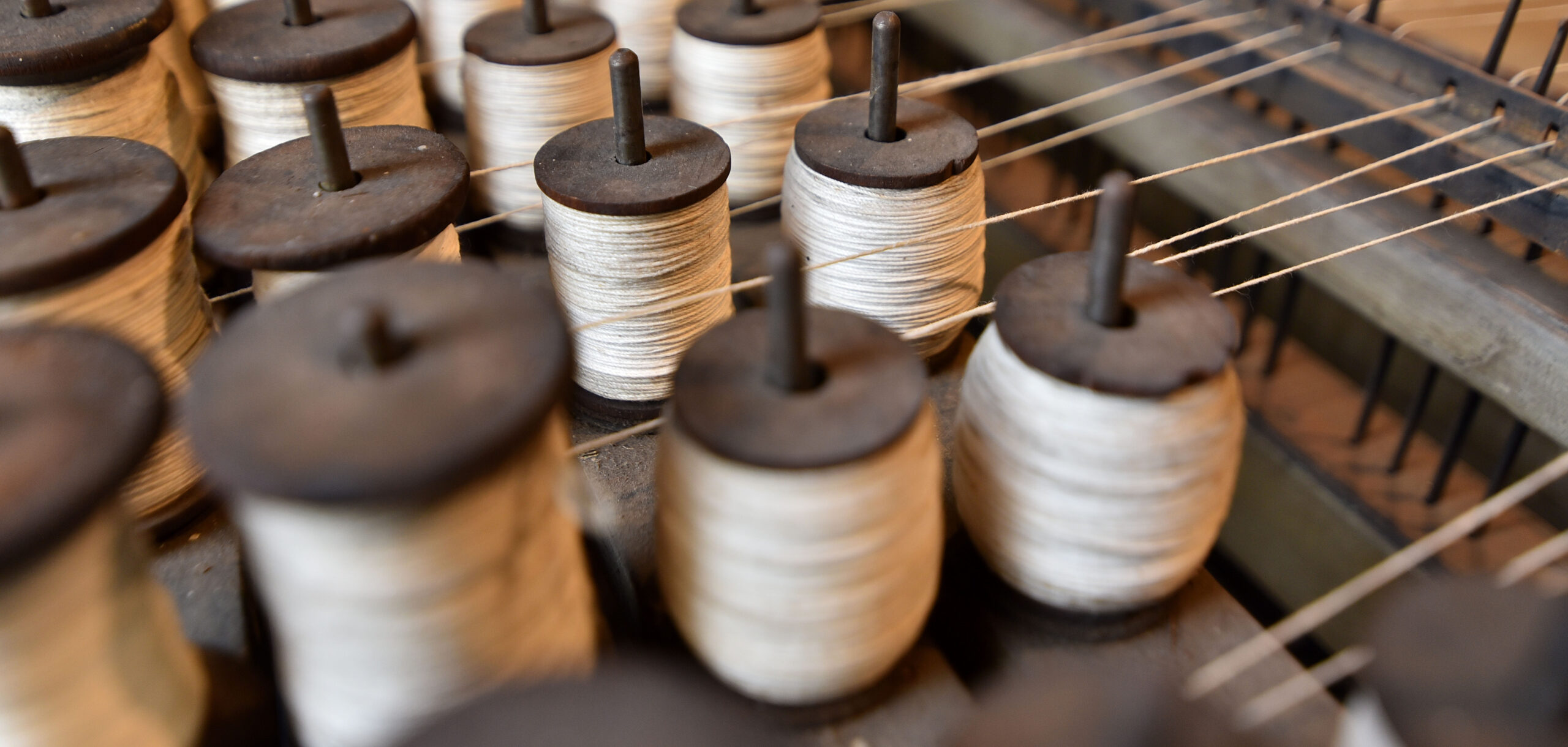
Polítics, militars i nobles van especular tant en les companyies ferroviàries com en la construcció, fins al punt que a finals de la dècada hi va haver un crac borsari de dimensions bíbliques. La Guerra Civil dels Estats Units va provocar un augment dels preus de la matèria primera —el cotó—, motor de la indústria tèxtil catalana, que —per manca de previsió de l’Estat— va provocar la ruïna de molts empresaris d’aquest sector. I un període perllongat de males collites va provocar un augment estrepitós del preu dels aliments bàsics, que va afectar negativament les classes més populars. En aquest context tan difícil i atès que l’Estat estava tan endeutat, es van aportar dues solucions: per una banda, augmentar la pressió fiscal sobre les classes populars i, per l’altra, embolicar-se en una aventura colonial com va ser la Guerra de les Illes Xinxa, davant les costes del Perú.
1931. La muntanya és un bon lloc per pensar
Aquella primavera del 1931, Espanya va optar per gestionar el poder seguint una fórmula fracassada en el passat. La corrupció havia esgotat el sistema de la Restauració borbònica i, per tant, calia buscar una nova relació amb el poder. La pregunta que es plantejava llavors —i encara avui— era si Espanya podia ser una federació de nacions. Calia provar-ho! En aquest context, s’instal·laren al Santuari de Núria els diputats del recentment creat Govern de la Generalitat de Catalunya, encarregats de redactar una proposta de relació entre Catalunya i Espanya. Tothom tenia la certesa d’estar davant d’un moment històric.
El resultat fou un text constitucional que responia a la voluntat de Catalunya i al seu legítim dret d’exercir l’autodeterminació. S’estava proposant una situació d’igualtat jurídica i política respecte als altres pobles de l’Estat. Es plantejava ampliar la mirada. Davant del text, l’Estat es va posar nerviós. Un any més tard, les Corts espanyoles van aprovar un Estatut que ja no tenia res a veure amb el que havia refrendat mesos enrere el poble de Catalunya. Es rebutjava la fórmula federal, es reduïen competències de la Generalitat i s’instaurava la cooficialitat del català i el castellà en un model bilingüe. Catalunya quedava reduïda a una “regió autònoma dins l’Estat espanyol”. Va ser aleshores quan a la llunyania començaren a sentir-se remors de sabres que obligaven Espanya a tornar al camp de batalla.
2004. Cap a un nou paradigma històric
Amb la ressaca dels esdeveniments de la darrera dècada del segle passat, tothom va creure que Espanya havia optat per reconèixer la seva diversitat. La llengua catalana era —fins i tot— parlada en els cercles més íntims de l’oligarquia castellana. En un clima de puixança econòmica, estabilitat social i de reconeixement mutu, Catalunya va creure que podia tornar a plantejar la seva relació amb Espanya. Era possible? L’escrupolositat de l’escomesa —igual que en el passat—, en l’elaboració d’un nou marc constitucional com fou el nou Estatut de Catalunya, va suposar un important esforç per trobar un punt d’encontre on hi fossin representades tots els espectres socials. La continuació és sabuda per tothom. L’1 d’octubre de 2017 és la constatació de la impossibilitat del diàleg i la necessitat de tornar a l’inici de tot: a molt abans de la Guerra Civil castellana de 1479.
11Onze és la fintech comunitària de Catalunya. Obre un compte descarregant l’app El Canut per Android o iOS. Uneix-te a la revolució!



Accused of having eaten an apple. Stigmatised for men’s sin. Controlled by confessors. Purified through redemptive fire. Attacked by misogyny. The history of women paints a bleak picture, given that they have had to abide by a reality imposed by the male gender. We begin a journey through history with the first of six articles, on the struggle of contemporary women to achieve full equality.
At the beginning of the 20th century, Catalonia made the definitive leap toward modernity. The generation of 1900 worked hard to modernise Catalan society to the point of transforming all areas of daily life. Everything from culture to politics was redefined and, even today, those profound changes are still very much alive in our collective memory.
Modernity longed to change the previous patterns through culture, science and education, and it was in this last area that it came up against the Church, which for centuries had held a monopoly on education. The debate then focused on whether, in order to be modern, it was absolutely necessary to move towards a fully secular society, or whether there was another option.
Conservative Catalan society at the time expected the wife of one of the most important figures on the political scene at the time – the lawyer and founding member of the Regionalist League, Narcís Verdaguer i Callís – to remain on the fringes of all the social and cultural effervescence of the country.
The social model of the time understood that women – with sufficient economic resources – had to limit their activity to being a housewife and social activities, including charitable work in the parish. Therefore, the whiter her skin was, the more important her social status was.
The reality was different when Francesca Bonnemaison y Farriols (1872-1949) – of deep religious convictions, passed down through her mother’s line – embarked on a revolutionary project that would change everything. Without realising it, she would shake the most conservative foundations of the Catalan society.
Democratising access to education
Gathered around the parish church of Santa Anna in Barcelona, the so-called ‘cooperating ladies’ met in a vicarage, on a Friday in May 1909. Long gone were the heated discussions as to which was the most suitable option for setting up the new organisation within the parish: either to create a social work for wealthy young women or to found a literary circle exclusively for women from high society. But neither of these things happened.
With the support of Father Gatell, the option suggested by Mrs. Bonnemaison prevailed. On that Friday 28 May 1909, the first public library for women in Barcelona was set up. Yes, for all the women of the city and open to both well-to-do and working women.
In this way, the renaissance ideology defended by Francesca Bonnemaison was put into practice, which believed it was essential to bring culture closer to women, social regeneration, and the economic development of the country. A year later, the Institut de Cultura de la Dona was founded, thus laying the foundations for training women from all social strata to move towards their personal liberation, the recognition of some of their basic rights, and equal employment opportunities.
The ideology of the new institution – so revolutionary in its time – was based on three essential pillars: The first was based on the promotion of reading and the sensible practice of Christian doctrine. The second understood that the intellectual learning acquired by women – through education – was necessary to help men and not to compete with them. And the third hinged on the understanding that women had to be good domestic managers who could collaborate in the economic support of the family and in the transmission of knowledge to their children.
The setting up of the Institut de Cultura and the Biblioteca Popular de la Dona was an unprecedented success, as can be seen from the registers of women readers who met every Sunday after mass and the sharp increase in demand for teachers. They soon had to leave the parish to move first to Elisabets’ street and then to what is now Sant Pere Més Baix street in Barcelona. It is documented that until July 1936, the library had a collection of more than 23,000 volumes and the Institute taught some 6,200 pupils.
Forced exile and change of political paradigm
Francesca Bonnemaison believed that history offered her a second chance to amplify her women ideals, and began to campaign after the proclamation of the Second Republic. On the advice of Francesc Cambó, she set up the women’s section of the conservative Regionalist League. From then on, she worked tirelessly to spread her model of womanhood, based on religion, knowledge, and family.
But everything changed in July 1936. After the failed coup d’état and the subsequent outbreak of the Civil War, everything became polarised. Members of the Regionalist League – let’s remember, a conservative Catalanist party – would become collaborators of fascism through internal espionage and press offices abroad – such as the one in Paris – which would devote themselves to producing content to explain Franco’s new narrative to the world.
The “proletarianisation” carried out by the anarchist insurrection at the beginning of the conflict at the Institut de la Cultura and Biblioteca Popular de la Dona made Bonnemaison realise that her life was in danger. That insecurity took her to Paris, where she became the personal secretary of Francesc Cambó, whose godmother she was. Abroad, she worked tirelessly to spread the ideals of the insurrectionists, as she was confident that they would once again guarantee order and social stability, with which her ideal of a woman fitted in perfectly.
When she returned to Barcelona in 1941, she realised that the Franco dictatorship had organised society around the family and along Catholic lines, but that most women had been forced to give up their jobs to devote themselves exclusively to domestic and family tasks. In this way, women were considered inferior to men and had no autonomy whatsoever.
Discovering that the victors practised this ideological sectarianism, together with an unprecedented aggressiveness towards anything Catalan, plunged her into a deep depression from which she never recovered. Even more so when the Institut de la Cultura and the Biblioteca Popular de la Dona were controlled by the Falange and the latter devoted itself to completely distorting the founding spirit of that Friday in 1909.
Although it is true that Francesca Bonnemaison’s ideal of woman was of conservative and paternalistic inspiration, we must never forget that she gave wings to thousands of Barcelona women with the creation of her institutions, long before the mythical ‘Fawcett Library’ in London or the ‘Biblioteque Marguerite Durand’ in Paris. Francesca Bonnemaison was a pioneer in her time, creating the necessary elements to empower women, an essential step towards social equality.
11Onze is the community fintech of Catalonia. Open an account by downloading the super app El Canut for Android or iOS and join the revolution!



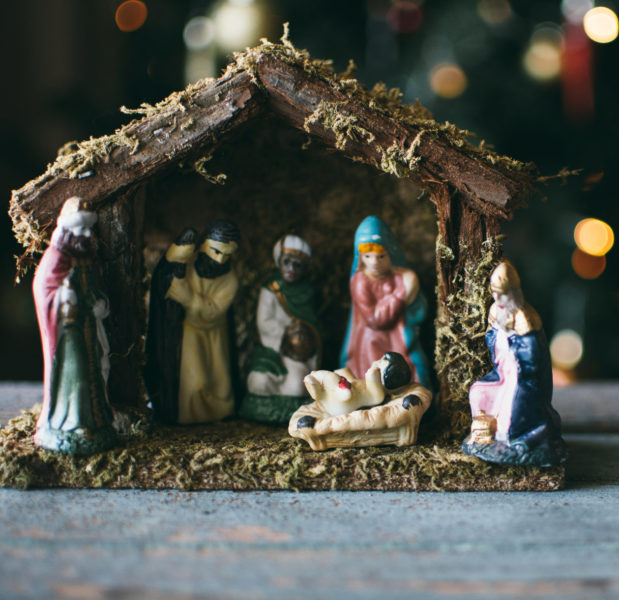
The Epiphany is the best known celebration of the Christmas cycle. And, instead, only the Gospel of St. Matthew gives specific news of the Three Wise Men, but in a rather enigmatic way. It does not even specify the names, the number or the exact origin. So, what is the true story of the biblical Magi?
Let’s start by taking a good look at how St. Matthew introduces the Magi in his Gospel. First, he assures us that Jesus was born in Bethlehem of Judea, in the time of King Herod, and then he relates the appearance of the Magi as follows: “Shortly afterward there came to Jerusalem wise men from the East who asked ‘Where is the King of the Jews, who has just been born? We have seen his star there in the East and have come to prostrate ourselves before him’.”
In fact, St. Matthew tells us in the Gospel that “the news greatly troubled King Herod, and with him all Jerusalem.” So Herod let the Magi go, but asked them to inform him of the exact place where the child was born before returning to their villages, so that he too could go and worship him. But it seems that the magi did not keep the word given to Herod…
The Gospel says that the wise men continue on their way, always following the star, until it stops just at the point where Jesus is. Then, St. Matthew narrates: “And when they entered the house, they saw the child with Mary, […] they fell down before him and opened the chests they were carrying to offer him gifts of gold, frankincense and myrrh. And as a dream warned them that they were not to see Herod again, they returned to their own country by another way.” After this, they are never spoken of again.
The mess that surrounds the story
If we carefully analyze the Gospel narrative of St. Matthew, we quickly realize that at no time are we told that there were three characters, but, instead, we are told that “some magi” left three gifts (gold, frankincense and myrrh). Nor is the exact point of the meeting specified. And most surprising of all: at no time is the kingly status of these characters specified.
If we look for more canonical information —the official one— about these characters, nowhere do we find more information. Even so, if we go to the other Gospel that narrates the birth and infancy of Jesus, that of St. Luke, nowhere are the Magi mentioned, nor the slaughter of the innocents, nor the flight into Egypt. On the other hand, St. Luke does provide details about the annunciation, the transfer of Joseph and pregnant Mary to Bethlehem to be registered in the census ordered by the Roman Emperor Augustus, the adoration of the shepherds and the birth of Jesus in a stable.
Therefore, the New Testament offers very different versions of Christmas that, with the maturation of the passing of the centuries, with intentional contributions and biased interpretations, have ended up shaping the fantastic and braided story that we know. We must not lose sight of the fact that along the way new characters were added, such as the ox and the mule, which Pope Benedict XVI has publicly rejected, or the fourth wise man and other inventions.

“If the original Greek word was translated from an Old Persian word, ‘maguusha’, then the meaning would be: priest.”
Does Magi mean magicians?
Then, The question that the initial story suggests to us is: why does Matthew make these curious characters appear? The important fact to keep in mind is that the original Gospel of St. Matthew was written in Greek, a manuscript of which has not reached us until our days. We only have the version translated into Latin by St. Jerom, but already in the fourth century.
If we continue analyzing the text, the key to everything lies in the word “magi”. Is this the word used in the original text written in Greek? And then another rather disturbing question arises: what did it mean to be a “magi” in the context in which the gospel is written?
Historical etymology offers us two possibilities. If the original word written was Greek “μάγο”, it would be used with a pejorative connotation. An expression aimed at defining sorcerers, dream interpreters, enchanters, practitioners of dark rites and, even, charlatans. It seems that this is not the case! On the other hand, if the original Greek word was translated from an Old Persian word, “maguusha”, then the meaning would be: priest. Surely, the most likely!
Therefore, if we follow this etymological path, we find in the Babylonian past a religious caste of Persian priests known as “magi” with a recognized prestige in astrological knowledge and followers of the Zoroastrian religion. To understand the historical etymology even better, we must keep in mind that the Jewish presence in Persia was very notable from the time of Nebuchadnezzar (6th century B.C.), when the Babylonian ruler conquered Judah and enslaved the Jews.
These Hebrew communities, who awaited the Messiah, would surely have influenced the Persian astrological tradition. In the 6th century A.D., these magi —now named and numbered— were depicted in the Persian style —mainly in their clothing— in the well-known mosaic of St. Apollinaris the New in the basilica of Ravenna (Italy).
“The textual analysis places us in front of a purely propagandistic story: to demonstrate that Christianity was broad, integrating cultures and universal.”
The legend consolidates with the biblical canon
Whether the visit of the Magi happened or not, we arrive at the Council of Nicaea in 325, when the official discourse of the Church was institutionalized and it was agreed that only four official gospels —Matthew, Luke, John and Mark— would mark the discourse of dogma. The rest of the texts, more than 70, will be considered apocryphal, that is to say, unreliable, since they are based on suppositions that cannot be contrasted.
It is curious because all these texts were written at the same time as the four canonical gospels. What is evident is that, with the passing of the centuries, theology, liturgy and Christian tradition were forged, complemented by other writings that filled the gaps left by the official texts. It was in this process that the story of the Persian magi took shape.
If we avoid the fantastic and we are absolutely rational, the textual analysis places us before a purely propagandistic story. The incipient and modern Christian discourse that emerged from Nicaea had the need to demonstrate that its radius of action was broad, integrating cultures and endowed with a universal dimension. The story of the Magi fulfilled this message and —no less important— allowed linking the prophecies of the Old Testament with the New Testament, since it demonstrated that the sacred scriptures were not mistaken in the fact that “all kings coming from everywhere will prostrate themselves before him.”
Nor is it by chance that the number of the magi was set at three: because it is the number of the divinity par excellence, of the Holy Trinity; because it is the reflection of the three ages of the human being, youth, maturity and old age; because they are the three continents known at that time, Europe, Asia and Africa; and because they are the three dimensions of time, past, present and future.
The pieces that build history
It was from then on that a special iconography began to be created, with diverse meanings. Soon the authentic reality of the characters from the East ceased to be relevant and the ritual symbolism of the Middle Ages became important. The Carolingian world turned them into kings. The story goes that Frederick I Barbarossa, during the Third Crusade, found the bodies of the three kings in Constantinople and brought them to Germany. Today, Cologne Cathedral preserves the relics of the Magi. The mendicant orders of the 13th century contributed to the tradition of making the nativity scene, and the epiphany has a prominent place. The Renaissance brought blackness to King Balthasar.
The long night of time fixed and generated new details about the Magi, which impregnated the European cultural tradition forever and ever. The story of the Three Wise Men is a story built in pieces, which has changed generation after generation and has reached our days as a commercial spectacle. And, like all good stories, it is made over a slow fire.
11Onze is the community fintech of Catalonia. Open an account by downloading the app El Canut for Android or iOS and join the revolution!