Sports sponsorship by banking institutions: A win-win relationship
There are two realities that give meaning to this title. On the one hand, the demand by organized sports for quality sports sponsorship. On the other hand, an economic crisis that comes from a long way and has been exacerbated by the arrival of the pandemic
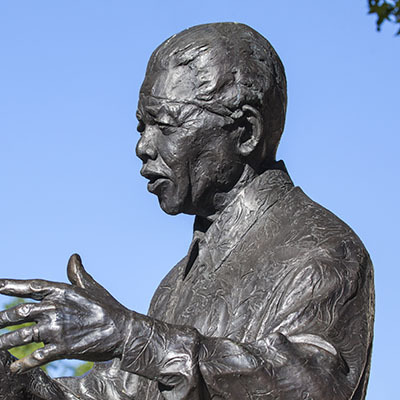
“Sport has the power to change the world. It has the power to inspire, it has the power to unite people in a way that little else does. It speaks to youth in a language they understand. Sport can create hope, where once there was only despair.”
It is precisely this power of sport referred to by Mandela that has led society to organise its practice to make it affordable to everyone. From governments to smaller entities. And this power is also the factor that attracts companies to link their brands to it. However, it is also equally true that the global crisis caused by the pandemic has temporarily deprived sport of power and has forced a rethink of the interest and form of linking companies to sport.
If we define sports sponsorship technically, we refer to customised services or financial endowments, such as advertising or technical material, or human resources, that the sponsoring party, usually a company, does in exchange for rights to image use or certain services the sportsperson or sports entity may offer. It is an excellent way, for a brand, to be able to come into contact with potential consumers, thanks to the visibility and public echo of the sportsperson or sport activity.
But if we want to explain sponsorship as a concept, and look for its causes, we must refer back to Mandela’s words, to the force that sport has to unite people as few things do, to inspire, and to speak the same language.
Since the first sports sponsorship agreement between the Slazenger brand and the organisers of the 1902 Wimbledon tournament, which remains alive and renovated, more than a hundred years of learning have passed.
Sports sponsorship does no longer equal patronage. In the same way that high sporting competition has had little to do, for a long time, with idealised sport where the important thing was participating. Sport, or rather organised sport, which is also culture, and as such inspires and trains, is demanding, even more so today, to be able to receive an economic support other than patrons, which have long proved to be insufficient, and today even more so.
Patronage does not disappear, but the exponential increase in the number of practitioners of organised sport, teams, clubs, federations, and challenges of all kinds has far exceeded their possibilities. Nor does that coming from public money, which is very much oriented to promoting sport for everyone, not competitive, and, in contradiction to what some people think, to promoting sport at the highest level of competition between national teams, in search of political profitability and national affirmation.
In the 21st century, sportspeople and businesses always want to go further, in demand and in importance. And demand asks for preparation, and time, and more time, and this dedication calls for compensation in a world where time is gold and where no one lives exclusively for a single activity, be it work or leisure. On the other hand, its importance requires a compromise that must be linked to something more than commercial interest.
Currently, the experience of sponsorship shows that there are common threads beyond the monetary or commercial interest. It is about passion, about involvement, even emotional, in each other’s project. Companies genuinely attracted to that sport or sportsperson, or by their values, that need sportspeople, teams, clubs, or national teams that, in turn, adopt their products and values.
It is for this simple idea of involvement with true and authentic sentiment by both sides, that we often talk about win-win, a widespread way of saying “everybody wins”. Even in sports finals, the loser may win too. Just for having played, for the momentum and progression it meant, for their style of play, for their fair play, or for having overcome an extreme adversity during the game or during the path to the finals. All the examples we will find will ultimately help us to realise that when it comes to sport, finding the win-win is, theoretically, quite simple.
It is around this idea that sports sponsorship is permanently rethought. In the idea that everyone wins.

But the pandemic and its consequences are forcing a new rethinking. The great sports sponsorship is in question. And it is the result of this moment that the new emerging banks, amongst other companies, before the announced collapse of traditional banking, are also called upon to participate in sports sponsorship.
A bank’s customers are both companies and people, and therefore a bank’s customers are also sponsors and sportspeople. A bank, therefore, if it has the will to make it possible, has the contacts and can mediate to help sports sponsorship, or to sponsor directly or in a combined way between the two models.
The new situation resulting from the pandemic, of which we differentiate the two most important stages, the one which cancelled all sporting activity and the current one, where competitions have returned with restrictions that are especially visible at an international level, has led sports sponsorship to be re-examined.
According to a study by Nielsen Sports, one of the largest companies in the world specialized in the analysis of data aimed at sports sponsorship, trademarks, and advertisers, it is shown that in Europe alone, USD 35 billion a year is spent on sports sponsorship. According to the same study, the Covid-19 crisis has accelerated more than ever the importance of companies providing maximum efficiency with reduced investments, as well as measuring the impact and effectiveness of these.
The study, carried out in Germany, revealed, among other things, that 69% of respondents consider that a financial rescue to a sports club would improve the image and sympathy for the sponsor. Following this study, some experts agree that this crisis may be a great opportunity for sponsors to identify new business opportunities and to play a role of integrity in the life of consumers in the near future. The commitment of the sponsor in times of crisis may increase the notoriety of its brand in a very positive way.
From this it can also be predicted that, since the new banks are born by combining efficiency and performance with reduced investments, if they can measure the effectiveness and impact of their strategies, they can become the perfect ally of tailor-made sports sponsorship.
New banks, with fewer costs than traditional ones, find their necessary partner in sport, no doubt about it. The visibility and transversality of sport are its most real approach to people and, with little more than the opening of private customer accounts, and the loyalty of these customers, the performance of sponsorship is justified. And to make it easier, providing this return is within the reach of the majority of sports organisers in need of sponsorship, especially those small, very altruistically run, and with the most authentic aim as proposed by Mandela. In other words, those most directly linked to specific people, to people close to them, to people from local environments. Those environments where the new banking system has focused its interest on growing.
In conclusion, the new banking system aims to be the proximity banking that local people and sporting entities can use for the greater benefit of all parties and to achieve the much-priced “everyone wins”.
On 8th April 2021 the new book from Terrassa’s journalist Salvador Cot (Terrassa, 1965) has been published, with the title ‘Independentism in ten victories’, and with the subtitle ‘that you made it possible’. A story that leaves no one indifferent, thinking one way or another, and with independence of the chosen political option. In fact the subtitle, ‘that you made it possible’, is even clearer than the title itself; for this reason, in reality, those victories that Cot relates, can be considered of all the Catalans, at least some of the ones described.
Salvador Cot, even though he is a professional journalist, is a qualified historian, and it is this background that brings him the required perspective to be able to build a narration over time, which always helps to understand the present, where we are, to see what to do to change it if we do not like it. It is attributed to Einstein the reasoning that explains that, if someone want to change the results of a certain process, it would be clever to not to do always the same thing. This would be the same as understanding that it is necessary to learn from mistakes to avoid repeating them. Easy to say, not always easy to do. But in historical perspective, and as per Cot’s words, Catalans have not spent that much time fighting for independence and, as per him, in one or maximum two generations this objective can be achieved. Following Cot´s narration, independentist and optimist words got married a long time ago and it does not seem they are to claim for divorce. In fact, this marriage, independentist and optimist, keeps celebrating years through the pages that detail the ten victories that the author suggests, and it seems that their communal living does not stop in bringing happiness.

Victories and retreats
By reading with attention the ten victories that the author suggests, we cannot neglect that some more critical Catalans could refute that they are not all victories and that, some are, in fact, retreats. And it is because of this, that his narrative looks like opted for possibilism, or as he comments, an ‘anti-propaganda’ tale by independentist side, which it has to be said, has not yet achieved the independence, final objective being pursued. But precisely, looking at everything that has been done, putting it to its true value, possessing what he describes as victories, it helps to counteract the perceived message from those against independence , that of ‘it is not possible’ or even the fact of branding those who are in favour as naif. But it needs to be understood, and he understands so, being in favour of independence is not that naif, as it would be being in favour without accepting its associated costs.
This way, reviewing their victories, one can realise that all of them show certain common traces, they are victories of people and their wishes. These are victories attributable to the strength of collective intelligence, the one that allows that, together, people achieve results that they would never achieve individually instead. Maybe we do not agree, when reading the book, in the selection of victories, since some are overwhelming while other are not, which are weakly considered victories. The election is Cot’s personal, clearly, a declared optimist, married with independence since he was young.
Reading through the chapters, the referendum of the 1st of October would appear to be a resounding victory of that collective intelligence we were talking about. A victory that includes the whole process of making it possible for a very large part of the Catalans to vote, throughout the territory and in a decentralised way. And with violence against them by the repressive Spanish police forces, and unjustifiably so. Meanwhile, the chapter of the elections of the 21st of December of 2017 may be more of an imposition of the system than progress towards independence. In fact, this victory, which refers to the 21D election, seen from the pro-independence point of view and remembering that moment, was not so obvious that everyone experienced it as such, but rather as a ducking of the neck and saving the furniture of the depleted autonomy. So, to sum up, the choice was made to vote on the 1st of October and not on the 21st December. October the 1st is an act of citizen empowerment while December the 21st seems more like an act of acceptance that everything remains the same. But Cot, with the optimistic tone present throughout his account, argues that 21D gives a result that endorses what the Catalans want, and therefore, in terms of the result, consolidates independence, which does not retreat nor disappear, it simply does not have the power to execute what it wants, despite being in the majority.
The symbols of Catalan victories
The victories cited have common symbols, the most important of which is the ballot box, which in each chapter is filled with votes. The ballot box, as an element where everyone chooses, a symbol of democracy, and always present in Catalan culture. Freedom, giving options and choosing. All victories have some relation with the ballot box and the votes of the Catalans. For this reason, throughout the ten victories, Cot proposes casting votes in the ballot boxes of independence. In fact, this is shown in the illustrations that accompany the text, drawn by one of the emblematic cartoonists of the pro-independence movement, @bicman.cat. The high-quality illustrations begin with empty ballot boxes and end with ballot boxes full of votes. In addition, each victory has its own illustration at the beginning of the chapter.
And there is also a symbol, which appears irregularly throughout the story, but which heads the first victory (the Arenys consultation) and is the absolute protagonist in the tenth victory, and that is citizen empowerment. We could say that independence begins and ends with the people. And the tools needed for empowerment have to be built discreetly, methodically, professionally and relentlessly. In fact, on page 100 there is a mention of financial empowerment, and 11Onze and its community banking proposal. This fact-based optimism is something we fully share with the author.
We do not want to reveal any more victories, leaving it up to the readers to read them in first person, so that they can form their own opinion, interacting with the author, in this symbolic dialogue that is sure to take place, as the book leaves no one indifferent.
In the middle of 2019 we discovered the word coronavirus, and associated it with pandemic, crisis, disease and death, but if we dig deeper, we can also draw the positive side of these last 15 months
More than a year ago we would never have thought that our lives would change so suddenly, that we would be confined for weeks without leaving our homes, that masks would be mandatory, that we would not be able to see our loved ones for months, but above all, we would never have imagined that a respiratory virus would be responsible for millions of deaths around the world. Although we are beginning to see the light at the end of the tunnel, we just need to maintain the restrictions set by the authorities, vaccination should not be delayed and everything will get better and better. Looking at the positive side of all this, we could highlight the following:
- United for the same cause
For the first time in the history of mankind we have been able to see the enormous capacity for cooperation, coordination and solidarity that has taken place within the scientific community, many articles published on the subject, a lot of shared knowledge, and the rapid identification and evolution of the disease, regardless of the country and scientists.
Countries, together with the pharmaceutical industry, have invested heavily in the development of vaccines so that in less than a year, they can begin to vaccinate the population and return to normality as soon as possible. An unusual example of organisation and coordination for the vaccine has been Israel, where more than 50% of the population has already received the full doses of COVID-19.
- Less pollution
Stopping the world has led to a decrease in CO₂ pollution, as a result of the huge decrease in air and land transport, which has resulted in a better climate for the planet. We have been able to breathe cleaner, less polluted air. Without a doubt, it has been a historic and unprecedented respite. Perhaps the milestone lies in investing in new energy alternatives that are more sustainable and environmentally friendly for the planet.
- Improving public health
Especially during the first months of the pandemic, March-April-May last year, after many years in which public health had been invisible in Spain, public health was put on the political agenda for the first time. We had a General Public Health Law of 2011 that has not been developed in these years, as well as a legal framework that still does not provide the necessary response to restrictive measures and we have had to resort to a state law of alarm.
When everything is working well, public health is somewhat invisible, but this has been on such a scale, and like other parts of the health system has seen such a reduction in resources and capacity, that it has been put on the table.
It is good that it has been put on the public agenda because it will result in better overall preparedness. We have realised that we were not prepared before and were not aware of the importance of having a good public health system.
- Solidarity and help
We have felt our neighbours close to us, and we have generated a climate of help and solidarity, which has spread, giving rise to non-profit associations that help and care for people in situations of poverty and social exclusion generated by the pandemic.
We know that getting out of this pandemic not only depends on what each one of us does; no one is safe unless we are all safe. We can only overcome this as a globalised society. This pandemic puts on the table that for problems of this kind we have to act together as a society to win.
This virus has brought us a new way of living, of understanding life from a different perspective, where empathy plays an important role, as we have all had to experience the not-so friendly side of it. And, despite this, we have been able to stand in front of the mirror and see what we really are: people with resources, resilient people who have made of this vital moment a reason to better themselves and, in many cases, reinvent themselves.
Thousands of young people every year have to decide which career to choose once they have passed the university entrance exams, a task that can be difficult and also generates many doubts. We propose some of the most promising careers to make the task easier.
When we have to decide about the future, we always have doubts: should I choose a career that I like and follow my passion, or do I prefer to have more interesting job prospects? You are the only one who has the answer, so listen to your heart and decide what you want to do. New technologies are already part of our daily life, so the degrees oriented to this sector are the ones that have more future. We will detail some of them in order to compare them. Of course, you have to ask yourself beforehand if there is a work sector that motivates you or if you have a vocation for a specific profession.

- If you are more of a data person, you can go for Big Data.
Everything that has to do with the Internet has to do with Big Data. Here you will manage large amounts of data. The more data you have, the more power you have, but you need someone who knows how to interpret it, make sense of it and optimize it. Big Data specialists are in charge of extracting, processing and storing the data that affects companies so that they can then create reports with it. Therefore, their work focuses on two areas: data engineering and data science.
- If you like to fight against evil, cybersecurity is your choice.
You will learn the tools to ensure the privacy and security of IT resources by implementing policies that safeguard business assets, and you will develop cybersecurity solutions in real environments. This allows you to specialize in the different aspects of ICT, from more technical specialties in cybersecurity and programming to specializing in security management.
- If you are more into technology, go for Robotics.
This has been the “career of the future” since the 1980s, and it doesn’t look like it’s going to lose any position. It is a fact that robotic technology is growing, more and more robots are replacing people in jobs and our daily tasks, therefore, this generates a strong demand for technicians in this environment. This training encompasses both robotics and artificial intelligence. It delves into the subject of robots but also in meAPPS, an assured future trajectory
- The APPS, an assured future trajectory
This is a career with a great future since new apps will never stop coming out or those already created will be updated so as not to become obsolete. All the apps that you have downloaded on your mobile have been created by specialists in web development. You will learn how to configure, administer and maintain computer systems. In addition, you will acquire knowledge for programming and development on different platforms, devices as well as the creation of applications for mobile phones.
- Digital marketing is also a good option
If you like marketing and technology 2.0 this is your option to get started in digital business. You will be able to manage e-commerce projects, define online marketing plans, develop the most effective strategies and tactics in digital environments to manage the return of online marketing campaigns. SEO (Search Engine Optimization) focuses on positioning and search engine optimization to improve the visibility of a website.
If you are a lover of new technologies these are the professions that will suit you like a glove, but maybe your hobby is painting or going to the theater, there are also artistic careers, such as fine arts or the performing arts institute where you can study to become an actor. The world is moving faster than social media updates and because of technology is like the batmanta, it will never go out of style. Here are just a few of the tech careers with the highest demand right now. Now you can decide where to start: chanics, electronics and design.
Reality beats fiction and the world of cinema, when this happens, takes the opportunity to produce a successful film that reflects these stories. The vast majority of these films are based on real facts and talk about incorrect decisions, bad practices and, above all, the abuses and corruption of some people with power.
If you like cinema and the banking world, you certainly know many of the films we mention in this article. We’ve chosen films you can find on different platforms like Netflix, HBO, Amazon Prime, and Filmin, which, in addition to making you have a good time, will teach you how the huge financial and banking world works or used to work.
Top 5 Wall Street films
In all the films we propose, the argument has one common element: manipulations as a way of amassing fortunes.

- Wall Street (1987) – Director: Oliver Stone
Charlie Sheen plays an ambitious Bud Fox who, after completing his undergraduate studies, manages to get to work for the Almighty Gekko (played by Michael Douglas). He soon discovers that he is an unscrupulous manipulator and that with trickery he manages to amass a great fortune, but also that what comes fast is known to go fast too.
- Wall Street: Money Never Sleeps (2010) – Director: Oliver Stone
Wall Street’s second instalment takes place more than twenty years after its premiere and features an aged Gordon Gekko (played by Michael Douglas) as the main character of the plot.
Back to action after spending much time in prison, Gekko is free and analyses the world he once ruled. It appears that Gekko wishes to settle his relationship with his daughter and makes an alliance with her fiancé, Jacob. Although Jacob views Gekko as a paternal figure, he discovers that he is still a manipulative expert who will stop at nothing to achieve his goals.Although it did not have the success of its predecessor, it was useful to illustrate how the mortgage and real-estate bubble in the U.S. occurred, as well as the financial speculation and its uncovering. Michael Douglas also won a Golden Globe Award. - Margin Call (2011) – Director: J. C. Chandor
In a powerful international investment bank, a great portion of the staff have just been laid off. A beginner analyst discovers that the value of the entire company’s asset packets is actually null. Then, a flood of decisions is unleashed that will end up shaking the finances of the whole world.
A chronicle of the beginning of the economic recession started in 2008 that, although it happens in a fictional company, can be clearly connected to the actual bankruptcy of Lehman Brothers in 2008. Intelligent, scathing, and creepy at the same time, this low-budget proposal was well received by critics, who gave a large vote of confidence to its director, debutant J. C. Chandor. With only a short film released, the filmmaker also wrote the screenplay, a libretto he had had in mind for a year and a half and managed to write in just four days.It features actors Kevin Spacey, Jeremy Irons, and Demi Moore, among other well-known actors. - The Wolf of Wall Street (2014) – Director: Martin Scorsese
It revolves around the life and excesses of Jordan Belfort, called “The Wolf of Wall Street”, a stockbroker who became famous for his scandals relating to the manipulation of markets, money laundering, and other high-finance crimes.
The story deals with his multi-million-dollar businesses in the US investment market and his extravagant life, marked by the excesses of a rock star: sex, drugs, and, in his case, several hundred million dollars fraudulently earned from the purchase and sale of shares through Stratton Oakmont, a firm of his ownership, which marked a turning point in Wall Street’s history.This is the incredible story of a common man who started selling ice cream at the age of sixteen and eventually ended up earning hundreds of millions of dollars until, years later, all the weight of justice fell upon him.It stars Leonardo DiCaprio (winner of a Golden Globe for this film).
- The Big Short (2015) – Director: Adam McKay
One of the most critically acclaimed stock films of the last decade, nominated for an Oscar for Best Picture. It is about what was the American mortgage bubble that preceded the 2008 crisis and how the outsider investors were going against the flow of the financial industry consensus. When the market went bankrupt in 2008, these investors earned millions of dollars, but their experience changed them forever.
It features a great cast of actors: Ryan Gosling, Brad Pitt, Marisa Tomei, Christian Bale, and other well-known faces.
It is clear that the secrets of the world economy are of great interest to the world of cinema and that we will continue to see large-scale recreated stories about the financial reality in the future.
There are already unconfirmed rumours that Netflix and MGM are preparing films about Reddit’s hacking of the financial status quo. The story tells how, in less than a week, a large group of small investors, organized through a Reddit forum, shook Wall Street. The phenomenon by which the rising price of GameStop’s stock, a chain of video games about to close, made the traditional multi-million-dollar schemes plummet.
In this new era of ethical banking that will certainly change the users’ financial mentality, it is very likely that future film scripts on the stories of these banks will have a very different ending to those we are used to. We look forward to these new scripts.