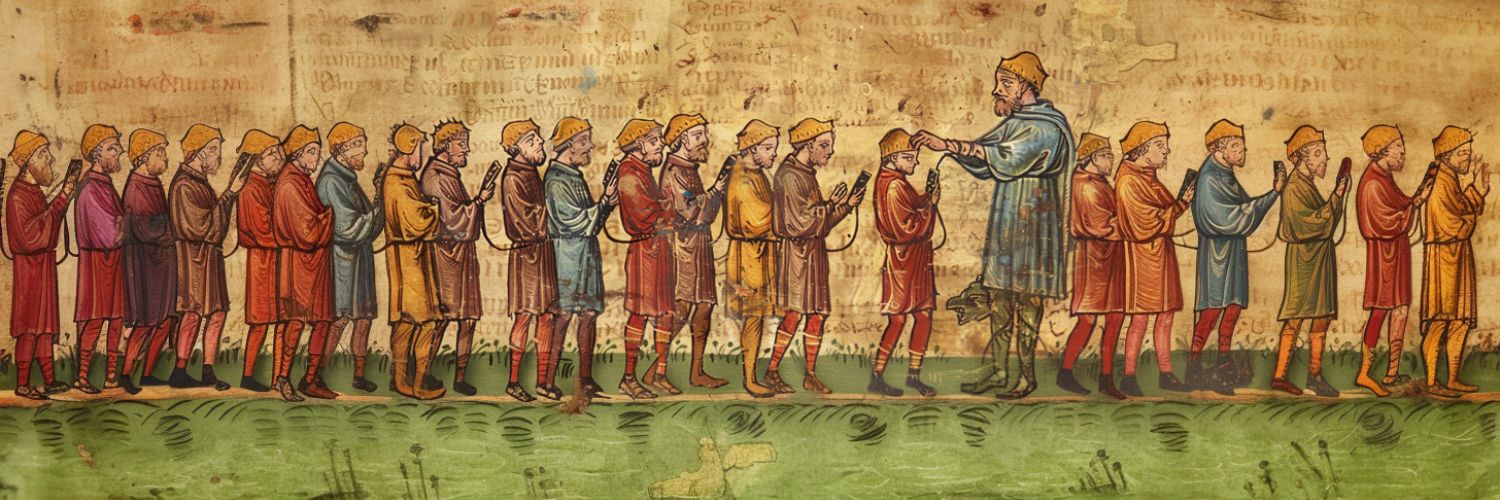
The internet was born with a powerful promise: to democratise knowledge, reduce intermediaries and empower the individual. A horizontal technology for a freer economy. Twenty years later, the balance is more uncomfortable. Never have we been so connected, and never so dependent. Never have we had so many tools, and never so little control over them.
It is not only a matter of privacy. Not even of consumption. What is at stake is the very nature of economic power. More and more, our everyday life—working, communicating, buying, saving—passes through digital infrastructures we do not control, because we do not access them as owners, but as conditioned users. We enter чуж territory.
For decades, we have explained this reality with the same narrative, which spoke of digital capitalism, the platform economy or technological innovation. But these words no longer describe what is happening to us. The market, as we have understood it until now, is dissolving, because, in some way, competition has given way to dependence. Price, to rent. Ownership, to temporary access.
Something has broken in the implicit contract between economy and freedom. And perhaps the problem is not that capitalism has become more aggressive, but that it has mutated into something else. A system where we no longer buy products, but inhabit platforms; where we are no longer sovereign customers, but tolerated users; where power is no longer exercised from the market, but from the infrastructure.
The question, then, is not whether technology makes life easier. The question is another, much more uncomfortable one: when everything works thanks to private platforms, who really rules? And, above all, what are we within this system?
It is not capitalism, it is a mutation
For far too long, we have tried to understand the present with the words of the past. We talk about digital capitalism, technological neoliberalism, hyperconnected global markets. But these concepts no longer explain how the system truly works. Classical capitalism—with all its inequalities—was based on a fundamental idea: the market. Supply, demand, competition, prices. Imperfect, yes, but recognisable.
Today that framework is fading. Big tech companies do not compete in open markets; they control infrastructures. They do not sell one-off products, but continuous access. Therefore, they no longer depend so much on consumption as on a new dependence. Because profit no longer comes mainly from producing better, but from charging for the simple fact of being inside.
Economist Yanis Varoufakis sums it up with an uncomfortable idea: capitalism has given way to a system based on private rents. Whoever controls the infrastructure—the cloud, the platform, the digital ecosystem—does not need to compete, because they only need to ensure that you cannot leave. Therefore, we are facing a natural evolution of the market. Or better still, a mutation in which a new business logic resembles the factory less and the toll more, free exchange less and recurring charges more. In short, less the sovereign customer and more the captive user.
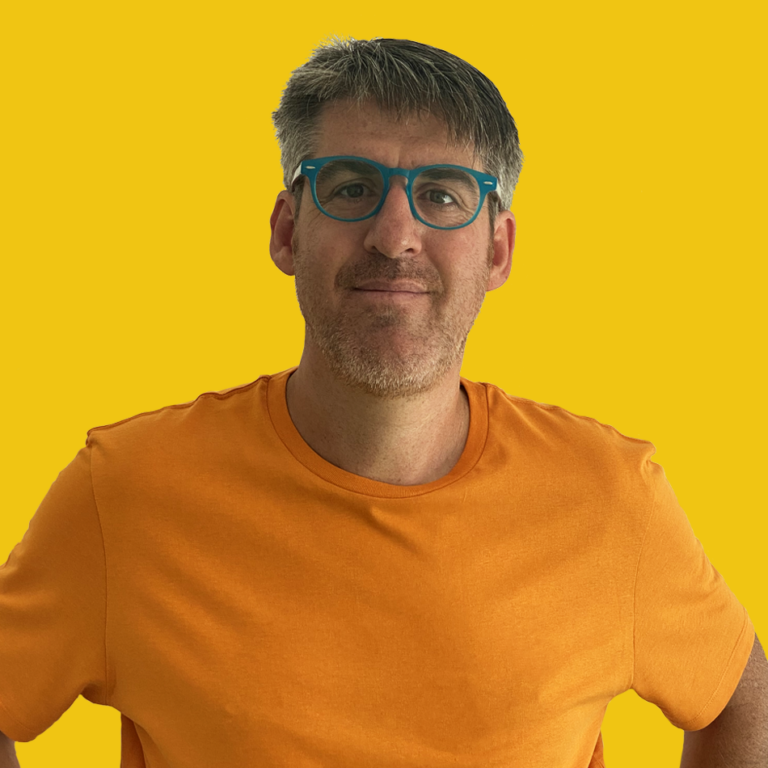
“And perhaps the problem is not that capitalism has become more aggressive, but that it has mutated into something else. A system where we no longer buy products, but inhabit platforms.”
From the fief to the platform
Within the feudal system, land—mostly—was not the peasant’s property, but only the place where he lived and worked. Above all, he depended on it, in addition to being forced to pay rents and having to obey the lord’s whims. And for his part, the feudal lord produced nothing; he only controlled access to the land. Therefore, the system was organised such that anyone who wanted to survive had to pass through the lord’s hands. That is why talking about freedom—far from the reality projected by Hollywood—is completely unreal, since the possibility of staying outside the system was almost impossible.
Today the land is no longer agricultural, but digital, functioning in a surprisingly similar way. Digital platforms are not neutral spaces, but private territories. We enter them to work, to communicate, to sell, to get informed or simply to exist socially. We are not owners, but guests, because access is conditioned by rules that can change unilaterally, without negotiation or any real alternative.
If the feudal lord offered protection, platforms now offer us visibility. If the vassal paid part of the harvest, the user now pays with data, time, commissions, or subscriptions. If the peasant could not leave the land without losing everything, the user likewise cannot leave the system without being excluded. Therefore, the only difference is the technology, but not the power relationship.
Even while living in a highly advanced free-market economy, we live in an economy of conditioned access. In some ways, it resembles a feudalism without castles or swords, but with algorithms, adhesion contracts and structural dependence. A system where formal freedom coexists with an increasingly deep practical submission.
From effort to trace: how value is extracted today
In industrial capitalism, the mechanism was relatively transparent. Value was extracted from labour through time, effort, and production. We could argue about unfair wages or abusive conditions, but the source of profit was clear. Today, by contrast, value is no longer extracted mainly from what we do, but from what we leave behind.
Every click. Every search. Every movement. Every digital interaction generates a trace. A trace that does not fade, but accumulates, is analysed and monetised. The great resource of the 21st century is not oil or skilled labour. It is data. And that data is not produced in a factory, but in everyday life.
What is most revealing is that this process does not require active consent. There is no need to sign any labour contract. It is enough to exist within the platform. The user works without knowing it, consumes while producing, and participates while being analysed. Free time becomes raw material.
This explains an unsettling paradox: the more we use these services, the more value we generate… but the less power we have. Profit is not redistributed; it concentrates. And it does so without visible conflict, because it does not look like classic exploitation. There are no shifts, no factories, no strikes—only dependence.
The result is a new kind of extractivism, not territorial but rather digital. It is not based on natural resources, but on human behaviours. A system that does not wear out the land, but does wear out individual autonomy, turning the user into an unsettling combination: customer, product and invisible labour force.
“Some aspects remind us of living within a feudalism without castles or swords, but with algorithms, adhesion contracts and structural dependence. A system where formal freedom coexists with an increasingly deep practical submission.”
When the market disappears
This model does not only change how value is created. Above all, it changes how the economy is organised. Because when value comes from controlling infrastructure, the market ceases to be necessary.
In theory, the market works thanks to competition. Several actors offer similar products and the consumer decides. In digital practice, this no longer happens. Major platforms do not compete on equal terms, since they can buy rivals, copy features or expel them through internal rules. In this way, they do not play the market; they replace it.
Prices stop being the result of supply and demand, becoming opaque variables defined by algorithms. Conditions change without notice. Commissions rise when dependence is already total. And the user cannot negotiate, because there are no real alternatives. Leaving the system is not a free decision, but rather a leap into the void: losing visibility, contacts, customers, accumulated data. As in feudalism, existence outside the dominant territory is formally possible, but materially unviable.
Thus, market capitalism gives way to a rent system. Whoever controls the platform charges simply for allowing access. There is no need to innovate constantly. It is enough to maintain dependence. Progress stops being a requirement; the stability of dominance becomes the goal. Economic power, then, is no longer contested in the realm of production, but in that of control: control of channels, of data, of rules. And when control consolidates, economic freedom becomes a functional illusion.
The State inside the system: from counterweight to manager
For a long time we trusted that the State would act as a natural counterweight to the excesses of economic power, with the concrete tasks of regulating, arbitrating and guaranteeing rights and duties. But in the digital ecosystem, this function has been diluted. Not because the State has disappeared, but because it has changed roles.
Governments no longer control the key infrastructures of the digital economy; rather, they use them or subcontract them, and even imitate them. Thus, we find public administrations that depend on private clouds or essential services that run on external technologies, or citizens’ data hosted in systems that do not answer to direct democratic sovereignty.
Instead of questioning the power of platforms, the State often adapts to them. It legislates late, regulates reactively and, in some cases, consolidates the model. Institutional digitalisation—necessary in many respects—runs the risk of reinforcing the very logic it claims it wants to control: centralisation, total traceability, technological dependence.
The problem is not that the State uses technology. The issue is who controls the architecture. Because when infrastructure is not public or neutral, political power ceases to be sovereign and becomes the manager of a system it did not design.
Money as a tool of control
No system of power is complete without controlling money. And in the new digital order, that control no longer passes only through traditional banks, but through technological channels that allow—or prevent—access to the economy.
Digital payments, financial platforms, electronic identities, programmable money. All of this can bring efficiency, but it can also introduce an unprecedented layer of conditionality: not only what you can buy, but when, how and under what rules. In the feudal system, the lord had power because he controlled land; by contrast, in the current system, real power is controlling flows: of information, of money or of access. And when those flows are digital, control can be total, instant, and invisible.
In this way, economic freedom does not disappear all at once; it is gradually restricted, under the excuse of security, efficiency or common progress. Until one day we discover that leaving the system is no longer a viable option.
Citizens or users?
All of this has a direct impact on citizens—not only as consumers, but as political and economic subjects. In an environment dominated by platforms, the figure of the free citizen tends to dissolve, and the figure of the user emerges: without political rights and with terms of use. The user no longer negotiates; they only accept, because they no longer participate in defining the rules—they suffer them or assume them. And when something fails, there is no space for democratic conflict, only an automated customer-service form.
This transformation is subtle, but profound. Because a society of users is easier to manage than a society of citizens: less critical and more dependent. The new digital vassal no longer needs to be repressed; they only need connection. Without sovereignty, there is no freedom
Technology is not the enemy, but it is not neutral either, because everything depends on who controls the rules, the infrastructures, and the benefits. The problem with technofeudalism is not digitising the economy, but doing so without sovereignty.
When we do not control the platforms where we live digitally, we are not free. When we do not control the channels through which money circulates, we are not independent. When the value we generate is extracted without return or decision, we are not economic actors; we are only resources. And regaining sovereignty is not going backwards: it is understanding the system, reducing dependencies and becoming aware that economic freedom is not abstract, because it is built, it is protected, but it can also be lost. The new digital vassals do not wear visible chains. They wear passwords. And perhaps the first step to stop being one is to stop believing that all of this is inevitable.
“Governments no longer control the key infrastructures of the digital economy; rather, they use them or subcontract them, and even imitate them.”
Regaining control: a conscious decision
Technofeudalism is not imposed with violence; it is installed through convenience, through free services, friendly interfaces, and the promise that everything will be easier if we give up part of our control. The problem is that this renunciation is not symbolic, but structural, because when we delegate access to information, work, consumption, and money to infrastructures we do not control, we cede real power. And without economic power there is no effective freedom, only managed dependence.
The good news is that this process is not inevitable, but it is not automatic either. Regaining sovereignty—digital, economic and personal—requires awareness, judgement and informed decisions. Understanding how the system works is the first step to avoid being trapped in it.
At 11Onze, this risk has been warned about for some time. Not from fear, but from knowledge. Because protecting savings, diversifying with purpose, reducing unnecessary intermediaries and choosing more transparent models is not an ideological matter: it is a matter of autonomy.
In a world that tends to turn citizens into users and savers into digital vassals, regaining control over one’s own value is an act of responsibility, but also of freedom. The future does not belong to those who adapt best to the system, but to those who understand how it works and decide not to live forever on someone else’s land.
If you want to discover the best option to protect your savings, enter Preciosos 11Onze. We will help you buy at the best price the safe-haven asset par excellence: physical gold.


 Oriol Garcia Farré